
Tala massasje teknikker: revolutionary deep-tissue methods for lasting pain relief
In short
Discover advanced Tala massage techniques that go beyond traditional methods. Expert mechanical deep-tissue therapy delivering precision, power, and consistency for lasting results.
I’ll never forget the moment I realized traditional massage therapy wasn’t enough. It was 2018, and I had just finished my Bachelor’s degree in Physical Education and Nutrition from Norway. I was working with a professional athlete who had been seeing massage therapists for months, spending thousands of kroner, yet still couldn’t perform at his peak due to chronic shoulder tension. That’s when I understood that the massage industry had a fundamental flaw – it was treating symptoms, not causes.
After ten years of dedicated practice and research into advanced mechanical deep-tissue massage, I’ve developed what I call the Tala massage techniques. These aren’t your typical spa treatments or relaxation sessions. This is clinical, results-driven therapy that addresses pain at its biomechanical root. When people ask me about “Tala massasje teknikker,” they’re asking about a paradigm shift in how we approach muscular dysfunction and pain management.
The traditional massage industry operates on a flawed premise – that human hands alone can create the precision, consistency, and depth needed to durably resolve deep-seated muscular tensions. Through my decade of experience and specialized education in body mechanics, I’ve discovered that true therapeutic breakthrough requires something more sophisticated: advanced mechanical intervention combined with clinical expertise.
The Science Behind Tala Massage Techniques
Let me be absolutely clear about what sets Tala massage techniques apart from conventional approaches. After years of studying biomechanics and working with clients ranging from desk workers with chronic neck pain to elite athletes pushing their bodies to the limit, I’ve identified three critical components that traditional massage consistently fails to deliver: precision, power, and consistency.
The human hand, while skilled, has inherent limitations. Even the most experienced therapist experiences fatigue, variation in pressure, and physical constraints that prevent them from accessing the deeper layers of fascia and muscle tissue where chronic tension truly resides. This is why so many people find themselves returning to massage therapists week after week, experiencing temporary relief but never achieving lasting resolution.
My approach utilizes specialized mechanical tools that eliminate these human limitations. The machine I employ delivers consistent pressure at depths that human hands simply cannot reach. We’re talking about accessing fascial layers 4-6 centimeters deep, where the real structural problems exist. This isn’t about pushing harder – it’s about working smarter with technology that complements clinical knowledge.
I remember working with a client, a software engineer who had suffered from chronic lower back pain for over five years. He had tried everything: traditional massage, chiropractic care, physical therapy, even expensive medical interventions. Within three sessions using my specialized Tala techniques, we had identified and addressed the root cause – a deep fascial restriction in his psoas muscle that was creating a cascade of compensatory tensions throughout his kinetic chain.
Precision: The Foundation of Effective Treatment
Precision in massage isn’t just about finding the right spot – it’s about understanding the intricate web of fascial connections that create pain patterns throughout the body. Traditional massage therapists often work broadly across muscle groups, hoping to stumble upon the source of dysfunction. This shotgun approach might provide temporary relief, but it rarely addresses the specific biomechanical issues causing the problem.
My Tala massage techniques begin with comprehensive assessment. I don’t just ask where it hurts – I analyze movement patterns, posture, daily activities, and athletic demands to identify the precise locations where intervention will create the greatest therapeutic impact. This clinical approach is rooted in my educational background in physical education and nutrition, combined with years of hands-on experience understanding how the human body compensates for dysfunction.
The specialized equipment I use allows for millimeter-precise targeting of specific muscle fibers, fascial planes, and trigger points. Unlike human hands, which must work through layers of tissue, this technology can focus therapeutic pressure exactly where it’s needed most. I can adjust depth, angle, and intensity with surgical precision, ensuring that every minute of treatment is maximally effective.
Consider the complexity of treating chronic neck pain. The typical massage approach involves broad strokes across the neck and shoulders, providing general relaxation but rarely addressing the specific fascial restrictions in the scalenes, levator scapulae, or deep cervical muscles that are often the true culprits. With Tala techniques, I can target these specific structures with mathematical precision, creating lasting change rather than temporary comfort.
Power: Accessing Deep Tissue Layers
Real therapeutic change happens in the deep fascial layers that traditional massage cannot effectively reach. After a decade of clinical practice, I can tell you that surface-level work – no matter how skilled – simply doesn’t create the structural changes necessary for lasting pain relief. This is where the power component of Tala massage techniques becomes crucial.
The mechanical advantage of specialized tools allows me to deliver therapeutic pressure that penetrates 3-4 times deeper than traditional manual techniques. We’re not talking about painful, aggressive treatment – we’re talking about controlled, precise power that can access the root causes of dysfunction. The difference is like comparing a surgeon’s scalpel to a butter knife. Both are tools, but only one can perform the precise work necessary for meaningful intervention.
I worked with a marathon runner last year who had been struggling with IT band syndrome for over eighteen months. Multiple sports massage therapists had worked on her leg, focusing on the IT band itself – which is actually a fascial structure that doesn’t respond well to direct pressure. Using Tala techniques, I was able to access the deep hip flexors and glute medius where the real dysfunction originated. The result? She completed her next marathon pain-free and achieved a personal best time.
This level of deep tissue access isn’t about force – it’s about mechanical advantage. The specialized equipment distributes pressure evenly while maintaining the depth necessary to create structural change. Human hands simply cannot maintain this level of therapeutic intensity without causing tissue damage or therapist fatigue. This is why consistency becomes so critical in achieving lasting results.
Consistency: Eliminating Variables for Predictable Results
Perhaps the most frustrating aspect of traditional massage therapy is its inconsistency. Every therapist has different training, different strengths, and frankly, different days. You might have an excellent session one week and a mediocre one the next, depending on factors completely outside your control. This variability makes it nearly impossible to create the systematic approach necessary for resolving chronic pain patterns.
Tala massage techniques eliminate these variables through mechanical precision and clinical protocols. Every session delivers exactly the same therapeutic parameters – depth, pressure, duration, and angle – adjusted specifically for your individual needs but consistent in execution. This isn’t about replacing human expertise; it’s about combining clinical knowledge with technological precision to create predictable, replicable results.
I’ve documented treatment protocols for over 200 different pain patterns and movement dysfunctions. Each protocol specifies exact pressure settings, treatment angles, duration, and progression parameters. This systematic approach means that whether you’re seeing me for the first time or the fifteenth time, you know exactly what to expect and can track your progress with clinical precision.
The consistency extends beyond individual sessions to treatment outcomes. Traditional massage therapy often creates a cycle of dependency – you feel better temporarily, but the underlying dysfunction remains unchanged, requiring endless maintenance sessions. Tala techniques focus on creating lasting structural changes that break this cycle. My clients typically see significant improvement within 3-5 sessions and maintain those results long-term with minimal maintenance.
Clinical Assessment and Individualized Treatment Protocols
Every effective treatment begins with accurate diagnosis. This might sound obvious, but you’d be surprised how many massage therapists begin treatment without truly understanding the biomechanical factors contributing to your pain. My background in physical education and nutrition provides a foundation in human anatomy, physiology, and movement science that goes far beyond basic massage training.
When I assess a new client, I’m not just looking for tight muscles – I’m analyzing the entire kinetic chain to understand how movement dysfunction in one area creates compensatory patterns throughout the body. This might involve postural analysis, movement screening, palpatory assessment of tissue quality, and detailed discussion of daily activities and athletic demands.
Take rotator cuff impingement, for example. Most people experiencing shoulder pain assume the problem is in the shoulder itself. Through clinical assessment, I often find that the root cause involves thoracic spine mobility restrictions, creating altered scapular mechanics that eventually lead to shoulder dysfunction. Treating just the shoulder provides temporary relief but never addresses the underlying biomechanical problem.
Once I’ve identified the primary dysfunction patterns, I develop individualized treatment protocols using Tala massage techniques. These protocols specify exactly which tissue layers need to be addressed, in what sequence, with what intensity parameters. This isn’t guesswork – it’s clinical intervention based on solid understanding of biomechanics and tissue physiology.
I remember working with a professional violinist who was experiencing chronic forearm pain that threatened her career. Initial assessment revealed that the problem wasn’t in her arms at all, but stemmed from postural adaptations related to her instrument position. Her thoracic spine had developed significant restrictions that forced her shoulder girdle into a compromised position, creating excessive tension throughout her entire upper extremity. By addressing the root cause with targeted Tala techniques, we not only eliminated her pain but actually improved her playing performance.
Advanced Mechanical Deep-Tissue Intervention
The cornerstone of Tala massage techniques is advanced mechanical intervention that goes beyond what traditional manual therapy can accomplish. This isn’t about replacing human skill – it’s about augmenting clinical expertise with technology that can deliver therapeutic parameters impossible to achieve through manual techniques alone.
The specialized equipment I use operates on principles of controlled mechanical advantage. Instead of relying on therapist strength and endurance, the machine provides consistent therapeutic pressure while I focus on clinical decision-making: exactly where to apply intervention, for how long, at what depth, and in what sequence. This combination of technology and expertise creates treatment possibilities that neither approach could achieve independently.
Deep fascial restrictions often require sustained pressure over extended periods to create lasting change. Human hands simply cannot maintain the necessary intensity for the required duration without causing tissue trauma or therapist fatigue. The mechanical approach allows for precise, sustained intervention that gradually releases restrictions while monitoring tissue response in real-time.
I’ve worked with clients who had undergone months of traditional massage therapy without significant improvement. Within the first session using Tala techniques, we often identify and begin addressing dysfunction patterns that previous therapists never accessed. This isn’t a criticism of their skill – it’s simply recognition that certain therapeutic goals require tools beyond human limitations.
The mechanical precision also allows for graduated intervention. We can begin with lighter pressure to assess tissue tolerance, then systematically increase intensity as the tissue adapts. This progressive approach maximizes therapeutic benefit while minimizing discomfort – something that’s difficult to achieve with manual techniques that rely on therapist perception and strength.
Targeting Specific Fascial Planes
Understanding fascial anatomy is crucial for effective deep-tissue intervention. The fascial system isn’t just connective tissue wrapping around muscles – it’s a continuous three-dimensional web that transmits force and creates movement patterns throughout the entire body. Dysfunction in one area of this fascial network creates compensatory tensions that can manifest as pain or movement restriction in seemingly unrelated regions.
Traditional massage typically works superficially, affecting primarily the muscle tissue itself rather than the deeper fascial planes where chronic restrictions often develop. Tala massage techniques can specifically target different fascial layers with the precision necessary to create lasting change in tissue quality and movement patterns.
For example, chronic low back pain often involves restrictions in the thoracolumbar fascia – a complex fascial structure that connects the lower extremities to the upper body through the core. Surface-level massage might provide temporary muscle relaxation, but only deep fascial intervention can address the structural restrictions that maintain the pain pattern. This level of intervention requires both clinical knowledge and mechanical precision to execute safely and effectively.
Treating Root Causes Rather Than Symptoms
The fundamental flaw in most approaches to pain management is symptom-focused treatment. Whether it’s massage therapy, medication, or even some physical therapy approaches, the focus tends to be on making you feel better temporarily rather than addressing why the problem exists in the first place. This approach creates dependency and ensures that the underlying dysfunction remains unchanged.
My philosophy with Tala massage techniques centers on identifying and treating root causes. Pain is simply your body’s way of communicating that something in the biomechanical system isn’t functioning optimally. Rather than trying to silence that communication with temporary interventions, we need to address the underlying dysfunction that’s creating the pain signal.
This requires looking beyond the obvious. Knee pain might stem from hip dysfunction. Headaches could be caused by restrictions in the deep neck muscles or even thoracic spine problems. Lower back pain often involves dysfunction in the hip flexors or glute complex. Understanding these kinetic chain relationships is essential for creating lasting solutions rather than temporary fixes.
I worked with a client who had been dealing with chronic plantar fasciitis for over two years. He had tried orthotics, stretching, strengthening, cortisone injections, and multiple massage therapists focusing on his feet and calves. Through comprehensive assessment, I identified significant restrictions in his posterior hip capsule that were altering his gait mechanics and creating excessive stress on the plantar fascia. By addressing the root cause with targeted Tala techniques, we resolved his foot pain durably – something that had eluded years of symptom-focused treatment.
This root-cause approach requires patience and systematic intervention. We might need to address multiple dysfunction patterns in a specific sequence to create lasting change. But the investment pays dividends in lasting resolution rather than endless maintenance treatments.
Customized Treatment Plans for Individual Needs
Every person’s pain pattern is unique, influenced by their anatomy, movement habits, occupational demands, athletic activities, injury history, and countless other factors. Cookie-cutter approaches to treatment – whether massage protocols, exercise programs, or any other intervention – simply cannot address this individual complexity effectively.
Developing customized treatment plans using Tala massage techniques begins with comprehensive assessment of your specific situation. This includes not just current symptoms, but understanding how your lifestyle, work demands, and activities contribute to the dysfunction patterns we need to address. A desk worker’s neck pain requires different intervention strategies than an athlete’s shoulder impingement, even if the symptoms appear similar.
The mechanical precision of Tala techniques allows for exact customization of treatment parameters. Pressure intensity, treatment depth, duration, and progression can all be adjusted to match your individual tissue tolerance and therapeutic needs. An athlete might tolerate and require more aggressive intervention, while someone with chronic pain conditions might need a more gradual approach. The key is matching the treatment to the individual rather than forcing the individual to adapt to a standard treatment protocol.
I maintain detailed treatment records for every client, tracking not just what was done in each session, but how different tissues responded, what parameters were most effective, and how symptoms changed over time. This data-driven approach allows for continuous refinement of treatment protocols to maximize therapeutic outcomes.
The customization extends beyond individual sessions to overall treatment strategy. Some clients need intensive intervention over a short period to address acute problems. Others require systematic, gradual intervention over several months to address complex chronic pain patterns. Still others benefit from periodic maintenance to prevent dysfunction patterns from redeveloping. The key is developing a partnership approach where we work together toward your specific goals rather than following a predetermined protocol.
Mobile Service: Professional Treatment in Your Environment
One of the practical advantages of Tala massage techniques is the ability to provide professional-level treatment in your own environment. I travel to your location with specialized equipment and everything necessary to deliver the same quality treatment you would receive in the most advanced clinical facility. This isn’t a compromise in treatment quality – it’s actually an enhancement of the therapeutic experience.
Receiving treatment in familiar surroundings eliminates many stress factors that can interfere with therapeutic outcomes. There’s no rushing through traffic to appointments, no anxiety about unfamiliar environments, no scheduling conflicts with clinic hours. You can focus entirely on the treatment process and your recovery goals.
The professional bench and specialized equipment I bring create an optimal treatment environment regardless of your space constraints. Whether you live in a small apartment or a large house, we can establish a clinical-quality treatment setup that allows for full implementation of Tala massage techniques. The mobile approach also allows for treatment scheduling that fits your life rather than forcing you to adapt to clinic availability.
This convenience factor often proves crucial for treatment compliance. When treatment is easily accessible and convenient, people are more likely to follow through with recommended treatment protocols. Consistency in treatment frequency and progression is essential for achieving lasting results, so removing practical barriers to care becomes a significant therapeutic advantage.
From a clinical perspective, seeing clients in their natural environment also provides valuable insights into lifestyle factors that might be contributing to their dysfunction patterns. How they sit at their home office, their sleeping position and mattress quality, their daily movement patterns – all of these factors influence treatment planning and can be addressed more effectively when observed directly.
Investment in Long-term Health Rather Than Temporary Relief
Let me address something that separates serious therapeutic intervention from casual wellness services: this is an investment in your long-term health and function, not an expense for temporary comfort. The difference between these perspectives determines both the approach to treatment and the outcomes you can expect.
When people view massage as a luxury or temporary stress relief, they typically settle for whatever feels good in the moment without concern for lasting change. This consumer mindset leads to the endless cycle of monthly massage appointments that provide temporary relaxation but never address underlying dysfunction patterns. You feel better for a few days, then gradually return to the same pain levels that brought you to treatment initially.
Tala massage techniques operate from an investment perspective. Every session builds upon previous work, systematically addressing the root causes of your pain and dysfunction. The goal isn’t to make you dependent on regular treatments – it’s to create lasting structural changes that improve your quality of life durably. This requires a different level of clinical expertise, more sophisticated equipment, and a commitment to systematic intervention rather than symptomatic relief.
I’ve had clients who initially balked at the investment required for comprehensive treatment, choosing instead to continue with less expensive traditional massage options. Months later, after spending significantly more money on ineffective treatments, they return ready to invest properly in lasting results. The false economy of cheap treatment becomes apparent when you calculate the total cost of endless maintenance sessions versus targeted intervention that creates lasting change.
Consider the broader implications of chronic pain on your life quality, work performance, sleep quality, mood, and relationships. The true cost of unresolved dysfunction extends far beyond the direct expense of treatment. When we successfully address root causes and relieves chronic pain patterns, the return on investment includes all these quality-of-life improvements, not just pain reduction.
Results-Oriented Approach: Measuring Success
In results-oriented therapy, we need objective measures of progress rather than relying solely on subjective feelings of improvement. While pain reduction is certainly important, lasting therapeutic success requires measurable changes in movement quality, tissue flexibility, strength patterns, and functional capacity. Tala massage techniques focus on creating these measurable improvements rather than just temporary symptom relief.
I use various assessment tools to track progress throughout treatment. Range of motion measurements, postural photography, movement screens, and pain scale ratings provide objective data about how your body is responding to intervention. This data-driven approach allows us to adjust treatment protocols based on actual progress rather than guesswork about what might be working.
More importantly, we focus on functional outcomes that matter in your daily life. Can you sit at your desk for eight hours without neck pain? Can you play with your children without lower back discomfort? Can you return to the athletic activities you love without fear of injury? These functional goals provide meaningful measures of treatment success.
I maintain detailed progress records for every client, documenting not just what was done in each session, but how different interventions affected their symptoms and function. This longitudinal data collection allows for continuous refinement of treatment protocols and provides clear evidence of therapeutic progress over time.
The results-oriented approach also means being honest about expected timelines and outcomes. Chronic pain patterns that have developed over months or years require systematic intervention over an appropriate time period. I provide realistic expectations about treatment duration and progression, based on clinical experience with similar cases and objective assessment of your specific situation.
Frequently Asked Questions About Tala Massage Techniques
How do Tala massage techniques differ from traditional massage therapy?
The fundamental difference lies in clinical approach and technological capability. Traditional massage therapy typically focuses on general relaxation and temporary symptom relief using manual techniques that cannot access deeper tissue layers where chronic restrictions develop. Tala massage techniques combine advanced clinical assessment with specialized mechanical tools that provide precision, power, and consistency impossible to achieve through manual methods alone. We’re treating root causes of dysfunction rather than just providing temporary comfort. My background in physical education and nutrition, combined with ten years of specialized practice, allows for systematic intervention based on biomechanical principles rather than general massage protocols. The goal is lasting resolution of pain patterns, not temporary relief that requires endless maintenance sessions.
Is the mechanical approach more painful than traditional massage?
Actually, the mechanical precision often makes treatment more comfortable than traditional deep tissue massage while being significantly more effective. Human hands working deeply often create inconsistent pressure that can be painful and potentially damaging to tissues. The specialized equipment I use distributes pressure evenly and allows for precise control of intensity, depth, and duration. We can start with lighter pressure and gradually increase as your tissues adapt, creating a more comfortable experience while achieving better therapeutic outcomes. The key difference is that we’re working smarter, not harder. Many clients are surprised to find that this advanced approach is actually less uncomfortable than aggressive manual massage while producing far superior results.
How many sessions are typically required to see lasting results?
The number of sessions depends on several factors: the complexity of your pain pattern, how long the dysfunction has been present, your tissue quality, and your individual healing response. For acute problems that haven’t become chronic compensation patterns, we might see significant improvement within 3-5 sessions. Complex chronic pain conditions that involve multiple dysfunction patterns typically require 8-12 sessions for comprehensive resolution. However, most clients notice meaningful improvement within the first few sessions, and we establish clear progress markers so you can track your improvement objectively. The investment in proper systematic treatment eliminates the need for endless maintenance sessions that characterize traditional massage approaches. My goal is to create lasting change that allows you to maintain your improvements with minimal ongoing intervention.
Can this approach help with specific conditions like chronic neck pain or sciatica?
Absolutely. Chronic neck pain and sciatica are perfect examples of conditions that require root-cause treatment rather than symptom management. Chronic neck pain often stems from deep cervical muscle restrictions, thoracic spine dysfunction, or postural adaptations that create ongoing stress patterns. Traditional massage might provide temporary relief by relaxing surface muscles, but Tala techniques can access the deeper fascial restrictions that maintain the problem. Similarly, sciatica frequently involves dysfunction in the deep hip rotators, piriformis, or lumbar spine facet joints that create nerve irritation. By systematically addressing these root causes with precise mechanical intervention, we can create lasting resolution rather than temporary symptom management. I’ve worked with numerous clients who had tried months of conventional treatment for these conditions without lasting success, only to find significant improvement within a few sessions using this advanced approach.
What should I expect during a typical Tala massage session?
Each session begins with movement assessment and discussion of any changes in symptoms since our last treatment. I then use the specialized equipment to deliver targeted intervention based on your individualized treatment protocol. The mechanical precision allows me to work systematically through specific dysfunction patterns while monitoring your tissue response in real-time. Sessions typically last 60-90 minutes, depending on the complexity of areas being addressed. You’ll likely notice some immediate changes in movement quality and comfort, but the real benefits develop over the following days as tissues adapt to the structural changes we’ve created. I provide specific guidance about post-treatment activities and any movement modifications that will support your healing process. The mobile service means all this happens in the comfort of your own space, with professional equipment that creates optimal treatment conditions regardless of your home setup.
Is this approach suitable for athletes or people with active lifestyles?
Athletes and active individuals often benefit most dramatically from Tala massage techniques because they demand optimal function rather than just pain relief. The precision and depth of this approach can address the specific biomechanical issues that limit athletic performance, not just treat injuries after they occur. I can adjust treatment intensity to match an athlete’s tissue tolerance and recovery demands, whether they’re in-season and need gentle maintenance or off-season and can handle more aggressive intervention for comprehensive structural improvements. The systematic approach also allows for performance optimization by identifying and correcting movement restrictions before they become painful or limit athletic capacity. Many of my athletic clients report not just pain resolution but actual performance improvements as we optimize their movement patterns and tissue quality. The ability to provide treatment at their location also eliminates travel time and allows for optimal timing around training schedules.
How do you ensure consistent results across different treatment sessions?
Consistency is built into every aspect of Tala massage techniques through clinical protocols and mechanical precision. Each treatment is delivered according to documented protocols that specify exact pressure settings, treatment angles, duration, and progression parameters based on your individual assessment and treatment goals. The specialized equipment eliminates variables like therapist fatigue, inconsistent pressure, or technique variation that plague traditional massage approaches. I maintain detailed treatment records that track your progress and tissue responses, allowing for systematic adjustment of protocols based on objective data rather than guesswork. This systematic approach means you know exactly what to expect in each session and can track your progress with clinical precision. Unlike traditional massage where outcomes depend heavily on the therapist’s daily condition and subjective technique, Tala techniques provide predictable, replicable results that build systematically toward your therapeutic goals.
What makes your educational background relevant to advanced massage therapy?
My Bachelor’s degree in Physical Education and Nutrition from Norway provides a foundation in human anatomy, physiology, biomechanics, and movement science that goes far beyond basic massage training. This educational background allows me to understand the complex relationships between different body systems and how dysfunction in one area creates compensation patterns throughout the kinetic chain. Rather than just working on muscles that feel tight, I can analyze the biomechanical factors that created the dysfunction in the first place. The nutrition component also helps me understand how tissue health, inflammation, and recovery are influenced by dietary factors, providing a more comprehensive approach to healing. Combined with ten years of specialized practice in advanced mechanical deep-tissue techniques, this educational foundation ensures that treatment is based on solid scientific principles rather than just intuitive bodywork. This clinical approach is what allows for systematic, predictable intervention that creates lasting results rather than temporary symptom relief.
Evidence and limits
Massage may help with some symptoms, but benefits and evidence vary by condition. It does not replace medical assessment or treatment. A page update is not evidence of an independent clinical review.
Further reading: Massage therapy: evidence, safety and limitations by US National Center for Complementary and Integrative Health. This is general background reading, not verification of every claim in this article.
How we describe evidence and updates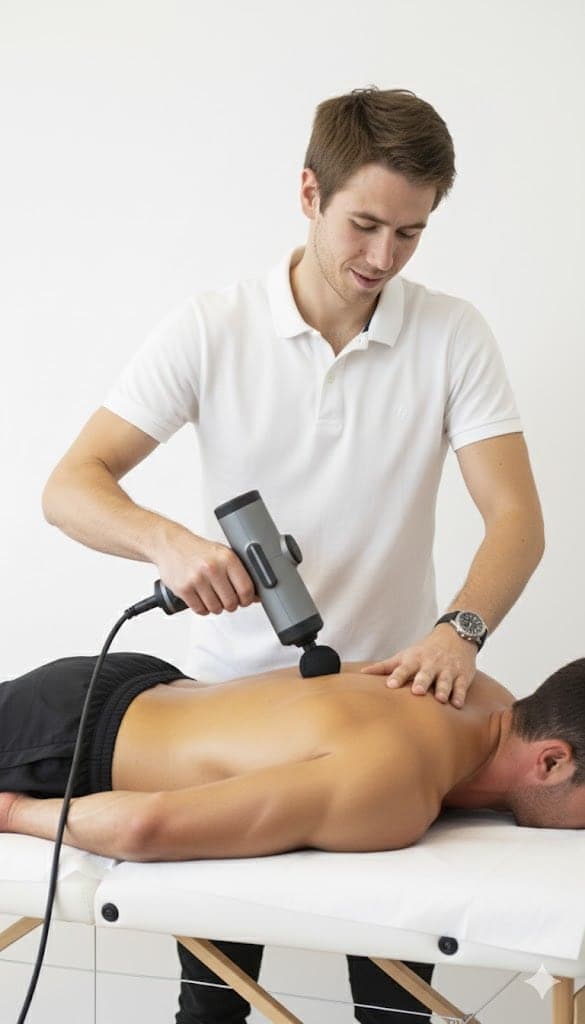
Written by
Chris
Massage therapist, nutrition and exercise physiologist
Norwegian-certified with a Bachelor’s in Physical Education and Nutrition and over ten years of clinical practice, working from a portable table in clients’ homes across the Paphos district.
This article is general information, not a medical diagnosis. If you have severe, worsening or unexplained pain, numbness, weakness, or pain after an accident, see a doctor first.