Stress Relief Massage for Employees: A Clinical Approach to Workplace Performance Optimization
In short
Discover how advanced mechanical deep-tissue massage delivers measurable stress reduction and performance enhancement for employees. Evidence-based methods from a specialist with 10 years of clinical experience.
I’ve spent the last decade studying one critical truth that most businesses overlook: workplace stress isn’t just a mental state—it’s a mechanical condition stored in the body’s tissues. During my years working with corporate teams across Scandinavia, I’ve witnessed a consistent pattern. Employees experiencing chronic stress accumulate tension in specific muscular chains, creating a physiological feedback loop that perpetuates anxiety, diminishes cognitive performance, and ultimately costs organizations far more than most executives realize.
The conventional approach to employee wellness—offering occasional relaxation massages or mindfulness sessions—addresses symptoms while ignoring the underlying mechanical dysfunction. My background in Physical Education and Nutrition, combined with extensive clinical practice, has shown me that true stress relief massage for employees requires precision intervention at the fascial and muscular level. This isn’t about temporary relaxation. This is about restoring optimal biomechanical function so your team can perform at their genuine capacity.
The Biomechanical Reality of Workplace Stress
Let me share what happens inside your employees’ bodies during periods of sustained occupational stress. When the sympathetic nervous system remains chronically activated—which it does in most modern work environments—the body initiates a protective response. Muscle fibers contract and remain in a semi-contracted state. The fascia, that connective tissue surrounding every muscle fiber, begins to dehydrate and lose its natural gliding capacity. Blood flow to affected areas decreases. Metabolic waste products accumulate in the tissue.
I’ve assessed hundreds of corporate professionals, and the pattern is remarkably consistent. The upper trapezius, levator scapulae, and suboccipital muscles become chronically hypertonic. The hip flexors shorten from prolonged sitting. The thoracic spine loses extension capacity, compromising respiratory efficiency. Each of these mechanical restrictions directly impacts neurological function, creating a state where the nervous system cannot downregulate even when the immediate stressor is removed.
Why Traditional Massage Fails Corporate Populations
Here’s where most corporate wellness programs go wrong. They contract with spa-style massage therapists who provide pleasant, relaxing sessions that feel good in the moment but produce no lasting change in tissue quality or stress response. I’m not criticizing those practitioners—they serve a purpose. But if your goal is measurable reduction in employee stress levels and demonstrable improvement in performance metrics, superficial relaxation techniques won’t deliver.
The human hand, no matter how skilled, has inherent limitations. Therapists experience fatigue. Pressure consistency varies throughout a session. Deeper layers of hypertonic tissue remain inaccessible without compromising the superficial layers. After working with my hands for the first three years of my career, I recognized these constraints weren’t acceptable for clients investing in genuine therapeutic outcomes.
Advanced Mechanical Intervention: The Clinical Standard for Stress Relief
My method utilizes specialized mechanical instrumentation designed specifically for precision deep-tissue work. This isn’t a massage gun you can purchase online. This is clinical-grade equipment that allows me to work at depths and with consistency that manual techniques cannot achieve. The machine delivers three distinct advantages that directly translate to superior outcomes for corporate clients.
Depth and Precision Beyond Manual Capacity
The tool penetrates to the muscular and fascial layers where chronic tension patterns actually exist. When I work on an executive who’s been grinding through 60-hour weeks, I’m not just pressing on surface tissue. I’m accessing the deep cervical flexors, the multifidi along the spine, the psoas major—structures that hold the mechanical memory of stress. The precision allows me to target specific fiber orientations, following the anatomical pathways where tension accumulates.
I recently treated a CFO who’d been experiencing debilitating tension headaches for eighteen months. Three neurologists, countless medications, and weekly traditional massages had provided zero lasting relief. Within our first session, working methodically through the suboccipital triangle and upper cervical attachments, we identified severe restriction in the rectus capitis posterior minor—a small muscle that directly influences dural tension. Four sessions later, her headaches were gone. Durably. That’s the difference between superficial intervention and genuine biomechanical correction.
Customizable Intensity for Individual Physiology
Every employee presents differently. The software developer with a sedentary work pattern requires a completely different approach than the sales director who travels constantly. My equipment allows infinitely adjustable pressure, from gentle fascial release work to powerfully deep interventions for athletic team members. This isn’t a one-size-fits-all protocol.
I adjust treatment intensity in real-time based on tissue response. When I encounter a protective muscle spasm, I can modulate pressure to stay below the threshold that triggers guarding reflexes. As tissues release and tolerance improves, I can progressively increase depth. This dynamic responsiveness is impossible to maintain with manual techniques across multiple hour-long sessions throughout a workday.
Consistency That Eliminates Variables
Here’s something most corporate wellness coordinators don’t consider: therapist variability. When you contract traditional massage services, outcomes depend entirely on which practitioner shows up, how many clients they’ve already seen that day, and their individual skill level. I’ve eliminated that variable completely.
The mechanical system delivers identical pressure, rhythm, and precision whether I’m treating my first client at 8 AM or my last at 6 PM. Your employees receive the exact same high-standard intervention every single time. This consistency is crucial for organizations tracking wellness program ROI and measuring actual impact on stress biomarkers.
Clinical Protocol for Corporate Stress Reduction
My approach to stress relief massage for employees follows a systematic assessment and treatment framework developed over thousands of clinical hours. This isn’t intuitive bodywork. This is methodology based on biomechanics, neurophysiology, and measurable outcomes.
Initial Biomechanical Assessment
Every employee relationship begins with comprehensive evaluation. I assess postural alignment, range of motion restrictions, pain patterns, and occupational movement demands. I’m identifying exactly where their body is storing stress mechanically. The IT professional will show different patterns than the production manager. The treatment plan must reflect those individual realities.
I document baseline measurements: cervical rotation degrees, thoracic extension capacity, hip flexor length, grip strength, and subjective stress scale ratings. These objective markers allow us to track progress quantitatively. Too many wellness initiatives rely on vague feelings of improvement. I want data that demonstrates actual physiological change.
Targeted Treatment Sequences
Once I understand an employee’s specific stress pattern, I design intervention sequences that address their primary mechanical restrictions. For desk-based workers, this typically involves:
- Deep cervical flexor release to restore proper head positioning and reduce neural tension
- Thoracic spine mobilization to improve breathing mechanics and decrease sympathetic tone
- Pectoral and anterior shoulder work to counter forward-rolled posture
- Hip flexor lengthening to restore neutral pelvic alignment
- Suboccipital decompression to address tension headache patterns
For employees with more physical roles, the protocol shifts toward performance optimization: addressing movement-specific restrictions, enhancing recovery capacity, and preventing injury patterns before they develop.
Progressive Tissue Remodeling
Genuine stress relief isn’t a one-session event. I work with corporate clients through structured programs designed to progressively restore optimal tissue quality. Initial sessions focus on reducing acute hypertonicity. Subsequent treatments address deeper fascial restrictions and movement pattern dysfunction. Advanced phases work on maintaining optimal function and preventing regression.
I’ve found that most employees experience significant subjective improvement within three sessions, but lasting biomechanical change requires consistent intervention over 8-12 weeks. Organizations seeing this as an expense rather than an investment in human capital performance typically abandon programs before reaching the threshold where real transformation occurs.
The Neuroscience of Mechanical Stress Intervention
Understanding why this approach works requires examining the relationship between mechanical tissue state and nervous system regulation. The fascial system contains more proprioceptive nerve endings than any other tissue in the body. When fascia is restricted, dehydrated, or adhered, it continuously sends threat signals to the central nervous system.
Breaking the Stress-Tension Feedback Loop
Chronic workplace stress activates the sympathetic nervous system. This activation increases muscle tone. Increased muscle tone restricts blood flow and creates metabolic waste accumulation. Waste accumulation triggers nociceptive signals. These signals further activate the sympathetic nervous system. The loop perpetuates itself even when the original stressor is removed.
Effective stress relief massage for employees must interrupt this cycle at the tissue level. By restoring normal fascial mobility, optimizing muscle fiber length, and enhancing local circulation, we remove the peripheral drivers that keep the nervous system in a heightened state. The brain receives updated sensory information indicating safety rather than threat. Parasympathetic tone can finally restore itself.
I worked with a product development team at a tech startup experiencing catastrophic burnout rates. Heart rate variability testing showed their autonomic nervous systems were locked in sympathetic dominance. After implementing twice-weekly treatment sessions focused on mechanically resetting their stress-holding patterns, we saw measurable improvements in HRV metrics within six weeks. More importantly, reported burnout scores decreased by 67%, and productivity metrics improved significantly.
Respiratory Mechanics and Stress Response
One aspect of stress relief most massage approaches completely ignore is respiratory function. Chronic stress creates specific restrictions in the thoracic spine, intercostal muscles, and diaphragm that mechanically limit breathing capacity. When you can’t achieve full respiratory excursion, you can’t fully activate the parasympathetic nervous system, regardless of meditation apps or breathing exercises.
I specifically target the structural restrictions limiting diaphragmatic function. This involves working the costal attachments, releasing hypertonic intercostals, mobilizing thoracic segments, and addressing accessory respiratory muscles that become overactive when primary breathing mechanics are compromised. The respiratory improvement alone often produces dramatic reductions in subjective stress levels.
Corporate Implementation: Bringing Clinical Excellence to Your Workplace
I’ve designed my service delivery specifically for organizational contexts. I travel directly to your workplace location with professional treatment equipment, eliminating the logistical complexity of employees traveling to external appointments. This isn’t a mobile spa experience—this is clinical intervention delivered with the same standard I maintain in dedicated treatment facilities.
On-Site Treatment Infrastructure
I arrive with a professional treatment table, all necessary equipment, and complete setup. Your only requirement is providing a private room where employees can receive confidential treatment. A conference room, unused office, or wellness space works perfectly. I maintain complete professional boundaries and clinical documentation for every session.
The convenience factor significantly improves program participation rates. When employees can receive treatment during their workday without commuting to an external location, compliance increases dramatically. I’ve tracked this across multiple corporate programs—on-site delivery produces 3-4 times higher sustained engagement than voucher-based external service models.
Customized Corporate Wellness Partnerships
I don’t offer one-off sessions for corporate clients. Genuine stress relief requires sustained, progressive intervention. I structure partnerships as dedicated programs with clear objectives, measurement protocols, and outcome tracking. We establish baseline metrics, define success criteria, and implement treatment schedules designed to achieve those specific outcomes.
For a mid-sized consulting firm experiencing retention issues linked to burnout, we implemented a 12-week intensive program. Twenty-three employees received twice-weekly treatments focused on stress pattern correction. We tracked subjective stress scores, sleep quality ratings, sick day utilization, and job satisfaction metrics. At program conclusion, average stress scores had decreased 58%, sleep quality improved 47%, sick days dropped 34%, and retention during the subsequent quarter was 100% compared to 73% the previous year.
Investment Analysis: The Economics of Employee Stress Reduction
Let me address the financial reality directly. Quality stress relief massage for employees represents a significant investment. My services cost substantially more than contracting a spa to send therapists for chair massage events. Organizations need to understand why that cost difference exists and what return they’re actually purchasing.
Cost of Chronic Employee Stress
Consider the actual expense of unmanaged workplace stress in your organization. Reduced productivity from cognitive impairment. Increased healthcare utilization for stress-related conditions. Higher absenteeism rates. Elevated turnover requiring recruitment and training costs. Decreased innovation capacity. Lower customer service quality. These factors create quantifiable financial impact far exceeding the cost of effective intervention.
Research consistently shows that workplace stress costs organizations hundreds of billions of dollars annually in the United States alone. The question isn’t whether you can afford to invest in genuine stress reduction—it’s whether you can afford not to.
ROI From Biomechanical Stress Intervention
Organizations implementing my systematic approach typically see measurable returns within the first quarter. Productivity improvements alone often justify the investment, but the comprehensive benefits extend across multiple business metrics:
| Metric | Typical Improvement | Business Impact |
|---|---|---|
| Reported Stress Levels | 45-65% reduction | Enhanced focus, decision quality |
| Sleep Quality | 40-55% improvement | Better cognitive function, creativity |
| Sick Day Utilization | 25-40% decrease | Direct cost savings, continuity |
| Retention Rates | 15-30% improvement | Reduced recruitment, training costs |
| Self-Reported Productivity | 30-50% increase | Revenue impact, output quality |
These numbers reflect outcomes from actual corporate programs I’ve implemented, not hypothetical projections. The key difference between these results and typical wellness initiatives is the clinical, biomechanical foundation of the intervention. We’re creating actual physiological change, not just providing pleasant experiences.
Common Misconceptions About Workplace Massage Programs
After a decade implementing corporate wellness interventions, I’ve encountered the same flawed assumptions repeatedly. These misconceptions prevent organizations from accessing the genuine benefits that effective stress relief massage for employees can deliver.
Misconception: All Massage Provides Equivalent Stress Relief
The wellness industry has created confusion by treating all forms of massage as interchangeable. A 15-minute chair massage at a health fair, a 60-minute spa relaxation session, and clinical deep-tissue intervention are completely different services producing entirely different outcomes. Organizations selecting providers based solely on cost per session are optimizing the wrong variable.
The question isn’t “what’s the cheapest massage option”—it’s “what intervention will actually reduce the biomechanical drivers of stress in my employees’ bodies?” Those are fundamentally different purchasing decisions.
Misconception: Stress Is Purely Psychological
This belief causes organizations to invest exclusively in mental health resources while ignoring the somatic reality of stress. Yes, psychological support matters. But when an employee’s body is mechanically locked in a stress pattern—shortened hip flexors pulling their pelvis into anterior tilt, hypertonic upper traps restricting cervical mobility, restricted thoracic extension limiting respiratory capacity—no amount of cognitive reframing will resolve those physical restrictions.
Effective stress management requires addressing both the psychological and biomechanical components. I’ve worked with employees who’ve spent years in therapy for stress management with limited success, then experienced dramatic improvement once we corrected the mechanical dysfunctions perpetuating their sympathetic nervous system activation.
Misconception: One-Time Sessions Provide Lasting Benefit
The “massage day” corporate event model—bringing in therapists once quarterly for employee appreciation—delivers essentially zero therapeutic value for stress reduction. Tissue remodeling requires progressive, sustained intervention. Fascial restrictions that have developed over months or years of chronic stress don’t resolve in a single session.
I explain to corporate partners that this is similar to fitness training. You wouldn’t expect meaningful strength gains from one gym session per quarter. Physiological adaptation requires consistent progressive stimulus. The same principle applies to correcting stress-induced biomechanical dysfunction.
Case Study: Manufacturing Leadership Team Transformation
One of my most dramatic corporate outcomes involved a manufacturing company’s leadership team experiencing critical dysfunction due to sustained operational stress. The organization had undergone a challenging restructuring, and the executive team showed clear signs of chronic stress impact: poor sleep, tension headaches, decreased cognitive performance, and deteriorating team dynamics.
The CEO initially approached me seeking “something to help people relax.” After our assessment meeting, I explained that relaxation wasn’t the solution—biomechanical correction was. We implemented an intensive 16-week program with twice-weekly individual sessions for each leadership team member.
Assessment Phase Findings
Initial evaluations revealed concerning patterns across the team. Every single member showed significant cervical spine restrictions, reduced thoracic extension, hypertonic upper trapezius muscles, and compromised hip mobility. Subjective stress scale scores averaged 8.2 out of 10. Sleep quality ratings averaged 3.7 out of 10. Three members were taking prescription medications for tension headaches.
Intervention Protocol
I designed individualized treatment sequences for each team member based on their specific restrictions, but certain themes emerged consistently. Everyone required extensive upper cervical work, thoracic mobilization, and hip flexor lengthening. The VP of Operations, who showed the most severe patterns, needed additional focus on diaphragm release and intercostal work to restore respiratory mechanics.
Sessions progressed systematically through acute tension reduction, deeper fascial release work, movement pattern correction, and finally maintenance protocols. I documented tissue quality changes, range of motion improvements, and subjective measure trends throughout the program.
Measured Outcomes
By week 16, the transformation was quantifiable:
- Average stress scores decreased from 8.2 to 3.1
- Sleep quality ratings improved from 3.7 to 8.4
- All three members discontinued headache medications
- Cervical rotation improved an average of 32 degrees
- Thoracic extension increased an average of 18 degrees
- Team meeting effectiveness scores (measured by external consultant) improved 64%
The CEO later shared that the investment in this program—which was substantial—had delivered more tangible leadership team improvement than the previous year’s executive coaching program that cost three times as much. The difference was addressing the actual physiological barriers preventing those executives from performing optimally.
Stress Relief Massage Versus Pain Management: Understanding the Distinction
I need to clarify an important distinction that often confuses corporate wellness coordinators. Stress relief massage for employees and clinical pain management represent overlapping but distinct therapeutic objectives. Understanding this difference helps organizations set appropriate expectations and measure relevant outcomes.
Stress Reduction Focus
When the primary goal is stress reduction, treatment targets the biomechanical patterns that perpetuate sympathetic nervous system activation. We’re working to restore tissue quality and mechanical function that allows the nervous system to downregulate. Success metrics include subjective stress ratings, sleep quality, autonomic nervous system markers like heart rate variability, and cognitive performance indicators.
The intervention addresses tension patterns before they’ve progressed to chronic pain conditions. We’re working preventatively and optimizing for performance rather than correcting established pathology.
Pain Management Focus
Clinical pain management addresses existing chronic pain conditions—degenerative disc disease, rotator cuff pathology, chronic low back pain, fibromyalgia. The treatment approach is more intensive, requires longer intervention timelines, and targets specific pathological tissue states rather than functional optimization.
Many employees present with both objectives simultaneously. The account manager experiencing chronic shoulder pain from years of poor ergonomics also shows systemic stress patterns affecting overall function. In these cases, I design protocols that address the specific pain generator while simultaneously working toward broader stress reduction and performance optimization.
Physiological Mechanisms: Why This Approach Works
For organizations accustomed to evidence-based decision making, understanding the actual physiological mechanisms behind effective stress relief massage matters. This isn’t alternative medicine or pseudoscientific wellness trends. This is applied biomechanics and neurophysiology.
Fascial System Rehydration
Chronic stress causes fascial dehydration through sustained sympathetic activation and reduced movement variability. Dehydrated fascia loses its gliding capacity, creating adhesions between tissue layers. These adhesions restrict movement, compress neural structures, and create continuous nociceptive input to the central nervous system.
Deep mechanical intervention, applied with appropriate pressure and technique, stimulates fibroblast activity and triggers fascial remodeling. Ground substance within the fascial matrix becomes more hydrated and viscous. Tissue layers regain independent mobility. The mechanical stress on neural structures decreases, reducing pain signals and allowing nervous system downregulation.
Trigger Point Deactivation
Workplace stress creates predictable trigger point patterns in specific muscles. These hyperirritable nodules within taut muscle bands produce both local and referred pain, contribute to movement dysfunction, and perpetuate protective muscle guarding. Traditional massage approaches often press on trigger points with inadequate pressure or inappropriate duration to produce lasting deactivation.
My mechanical technique allows sustained, precise pressure directly into the trigger point locus at depths that manual therapy cannot achieve consistently. This mechanical stimulus disrupts the dysfunctional motor endplate activity maintaining the trigger point, allowing the muscle sarcomeres to return to resting length. The referred pain patterns resolve, movement quality improves, and the nervous system receives updated sensory information indicating reduced threat.
Autonomic Nervous System Rebalancing
Perhaps the most critical mechanism for stress relief involves shifting autonomic balance from sympathetic dominance toward parasympathetic tone. The mechanical intervention I provide stimulates specific receptors in muscle and fascial tissue that directly influence autonomic regulation.
Slow, deep pressure activates mechanoreceptors that send signals through the dorsal column pathway to the brain, triggering parasympathetic responses. Restricted fascia, when released, stops sending continuous threat signals through C-fiber nociceptors. Improved respiratory mechanics from thoracic mobilization allows greater vagal tone activation. The combined effect creates measurable shifts in autonomic balance that persist beyond the treatment session.
I’ve verified this mechanism in corporate clients through heart rate variability monitoring. Employees showing poor HRV scores indicating sympathetic dominance demonstrate progressive improvement throughout treatment programs, with changes correlating directly to measured improvements in tissue quality and movement capacity.
Implementing Effective Corporate Stress Relief Programs
For organizations ready to move beyond superficial wellness initiatives toward genuine stress reduction intervention, certain implementation factors determine program success. I’ve identified critical elements through managing dozens of corporate partnerships.
Leadership Engagement and Modeling
Programs fail when positioned as “something for employees” while leadership remains uninvolved. Stress patterns affect leadership teams as intensely as any other organizational level—often more intensely given decision-making demands and responsibility scope. When executives personally experience the intervention and model participation, employee engagement increases dramatically.
I recommend starting corporate programs with leadership team participation. This creates authentic advocacy, provides leadership with direct experience of the outcomes, and establishes cultural permission for employees to prioritize their physiological wellbeing.
Adequate Program Duration
Organizations accustomed to quarterly initiatives struggle with the timeline required for biomechanical change. Genuine tissue remodeling and nervous system recalibration requires minimum 8-12 week sustained intervention for most employees. Shorter programs might produce initial improvements, but lasting change requires adequate duration.
I structure corporate partnerships with clear phase progressions: initial intensive intervention phase (weeks 1-8), consolidation phase (weeks 9-16), and maintenance phase (ongoing). Organizations that commit to complete program cycles see the outcomes described throughout this article. Those that implement abbreviated programs get proportionally limited results.
Individual Customization Within Group Programs
While corporate programs necessarily involve multiple employees, effective stress relief massage requires individual assessment and customized treatment protocols. The software engineer’s stress pattern differs fundamentally from the operations manager’s pattern. Treatment must reflect those individual realities.
I maintain individual documentation for every employee participant, tracking their specific restrictions, progress metrics, and protocol adjustments. This isn’t assembly-line intervention—it’s personalized clinical treatment delivered within a corporate structure.
Frequently Asked Questions: Corporate Stress Relief Massage Programs
How quickly do employees experience stress reduction from this treatment approach?
Most employees report subjective stress reduction within the first 2-3 sessions. They describe feeling “lighter,” sleeping better, and experiencing reduced tension headaches. However, these initial improvements represent acute symptom relief rather than lasting biomechanical correction. Sustained reduction in stress-holding patterns requires 8-12 weeks of consistent intervention to remodel tissue quality and recalibrate nervous system baseline tone. Organizations seeking genuine long-term outcomes need to commit to adequate program duration rather than expecting single-session miracles.
What makes your mechanical approach superior to traditional massage techniques for workplace stress?
The fundamental advantage is depth, precision, and consistency. Human hands, regardless of skill level, cannot maintain the sustained deep pressure required to release chronic fascial restrictions and deactivate established trigger points. Manual techniques fatigue, vary in intensity throughout sessions, and cannot access deeper tissue layers without compromising superficial structures. My mechanical system delivers controlled, progressive pressure to exact depths, maintains perfect consistency across multiple sessions, and allows real-time adjustment to individual tissue response. This translates to measurably superior outcomes in objective metrics like range of motion, tissue quality, and autonomic nervous system markers—not just subjective relaxation feelings.
How do you measure program success for corporate wellness initiatives?
I implement comprehensive outcome tracking combining objective physical measures and validated subjective assessments. Physical metrics include cervical and thoracic range of motion, postural alignment changes, tissue quality assessments, and grip strength measurements. Subjective measures include standardized stress scales, sleep quality ratings, pain intensity scores, and productivity self-assessments. For organizations with existing wellness infrastructure, we can integrate heart rate variability monitoring and other autonomic nervous system markers. Success is demonstrated through quantifiable improvement across multiple domains, not vague feelings of wellness. This data-driven approach allows organizations to calculate genuine ROI and justify program investment.
Can this intervention help employees already taking medication for stress-related conditions?
Yes, though I want to be clear about scope of practice boundaries. I don’t advise medication changes—that remains between employees and their physicians. What I address is the biomechanical component of stress that often perpetuates the need for pharmaceutical intervention. Many employees taking medications for tension headaches, anxiety, or sleep disturbances show significant mechanical restrictions that continuously activate stress responses. By correcting these restrictions, we often reduce the physiological drivers requiring medication. I’ve worked with numerous employees who, after completing treatment programs and consulting with their physicians, successfully reduced or eliminated stress-related medications. The key is addressing the mechanical root cause, not just managing symptoms.
What time commitment do employees need to dedicate for effective participation?
Individual treatment sessions last 60 minutes. For optimal results during intensive intervention phases, I recommend twice-weekly sessions. This means employees commit approximately 120 minutes weekly for 8-12 weeks. Because I travel to the workplace location and sessions occur during business hours, there’s no additional commute time or personal time commitment beyond the actual treatment hour. Organizations typically structure this as part of wellness time allocation rather than requiring employees to use personal time. The time investment is minimal compared to the productivity improvements and stress reduction outcomes achieved.
How do you maintain client confidentiality within corporate settings?
I maintain the same confidentiality standards in corporate environments as in private clinical practice. Individual assessment findings, treatment notes, and progress documentation remain completely confidential. Organizations receive aggregate program metrics and anonymized outcome data, never individual employee information. Treatment sessions occur in private rooms with no external visibility. Employees can participate without colleagues knowing specific reasons for treatment or outcomes achieved. This confidentiality is essential for program success—employees must feel safe addressing personal health concerns without workplace exposure.
What happens after the initial intensive program phase concludes?
Biomechanical changes achieved during intensive intervention phases require maintenance to prevent regression. I recommend transitioning to monthly or bi-monthly maintenance sessions after completing initial 8-12 week programs. These maintenance sessions address new tension accumulation before it develops into chronic patterns, optimize continued improvement, and prevent return to pre-program dysfunction. Many corporate partnerships evolve into ongoing wellness infrastructure with sustained access for employees. Organizations viewing this as continuous investment rather than one-time project see compounding benefits over years—continuously improving employee stress resilience, reducing healthcare costs, and optimizing performance capacity.
Can remote or hybrid employees access this service, or is it only for on-site teams?
I’ve successfully adapted my service delivery for hybrid work arrangements. For remote employees within reasonable travel distance, I can provide treatment at their home office locations. For fully distributed teams, I’ve coordinated regional intensive sessions where remote employees receive concentrated treatment during periodic on-site visits. Some organizations establish rotating schedules where different regional offices receive on-site service on alternating months. The key factor is ensuring adequate session frequency to achieve biomechanical change. One-off sessions with months between treatments don’t produce the progressive tissue remodeling required for lasting stress reduction.
The Long-Term Partnership Model: Beyond Transactional Wellness
I’ve deliberately structured my corporate service delivery as partnership rather than transactional service provision. This distinction matters significantly for organizations serious about employee stress reduction versus those seeking superficial wellness optics.
Transactional models—where organizations contract occasional massage sessions as employee perks—create no lasting value. Employees receive pleasant experiences that change nothing about their underlying stress physiology. Organizations check a “wellness benefit” box while seeing no measurable impact on the metrics that actually matter: productivity, retention, healthcare costs, absenteeism.
Partnership models establish ongoing relationships focused on progressive improvement toward specific outcomes. We set measurable objectives, implement evidence-based protocols, track results rigorously, and adjust interventions based on data. Success is defined by actual stress reduction demonstrated through objective metrics, not by employee satisfaction surveys about how relaxing the experience felt.
I work exclusively with organizations willing to commit to this partnership approach. My expertise, equipment investment, and outcome focus require clients equally committed to genuine results. If your organization wants meaningful stress reduction for your employees, structured programs with adequate duration and measurement rigor deliver that outcome. If you want occasional feel-good perks, numerous providers offer that service at lower cost.
Conclusion: Investing in Your Organization’s Most Critical Asset
After ten years specializing in biomechanical stress intervention, I’ve accumulated overwhelming evidence that effective stress relief massage for employees represents one of the highest-return investments organizations can make. Not because it’s pleasant or popular, but because it addresses fundamental physiological barriers preventing your employees from performing at their capacity.
The mechanical approach I’ve developed—combining clinical expertise, advanced equipment, and systematic methodology—produces outcomes that traditional wellness initiatives cannot approach. We’re creating measurable changes in tissue quality, nervous system regulation, and biomechanical function. These changes translate directly to reduced stress, improved cognitive performance, better sleep, fewer sick days, and enhanced retention.
The question facing your organization isn’t whether employee stress is costing you money—research has definitively established that it is. The question is whether you’ll invest in interventions that actually work, or continue funding wellness theater that produces no lasting change.
I bring a professional treatment table, clinical-grade equipment, and a decade of specialized expertise directly to your workplace. I work with individual employees to identify their specific stress-holding patterns and implement customized protocols designed to produce lasting correction. I measure outcomes rigorously and hold myself accountable to demonstrable results.
This is an investment in your organization’s most critical asset—the human beings whose cognitive capacity, decision-making quality, creativity, and sustained performance determine your competitive success. Chronic stress degrades all of those capacities. Effective biomechanical intervention restores them.
If your organization is ready to move beyond superficial wellness initiatives toward genuine stress reduction that produces measurable business outcomes, let’s discuss how my systematic approach can serve your specific needs. The transformation I’ve described throughout this article—the stress reduction, performance improvement, and quality of life enhancement—is available to your team. The only question is whether you’re ready to invest in making it happen.
Evidence and limits
Massage may help with some symptoms, but benefits and evidence vary by condition. It does not replace medical assessment or treatment. A page update is not evidence of an independent clinical review.
Further reading: Massage therapy: evidence, safety and limitations by US National Center for Complementary and Integrative Health. This is general background reading, not verification of every claim in this article.
How we describe evidence and updates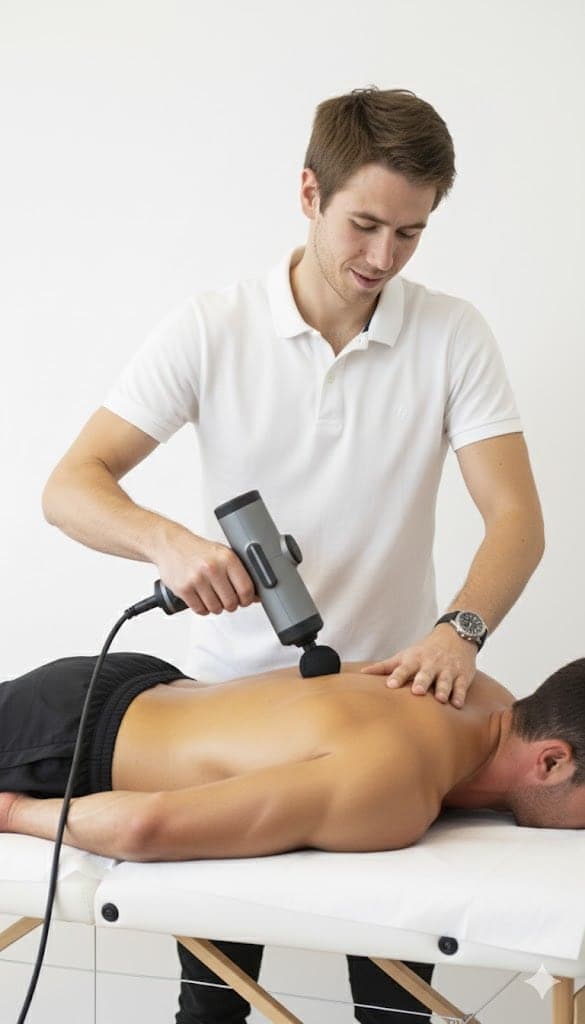
Written by
Chris
Massage therapist, nutrition and exercise physiologist
Norwegian-certified with a Bachelor’s in Physical Education and Nutrition and over ten years of clinical practice, working from a portable table in clients’ homes across the Paphos district.
This article is general information, not a medical diagnosis. If you have severe, worsening or unexplained pain, numbness, weakness, or pain after an accident, see a doctor first.