
Sports massage therapists Kato Pafos – advanced mechanical deep-tissue treatment for athletes
In short
Discover superior sports massage therapy in Kato Pafos with advanced mechanical deep-tissue treatment. 10+ years experience delivering lasting results for athletic performance and recovery.
Ten years ago, I witnessed something that fundamentally changed my understanding of sports massage therapy. A professional cyclist came to me after months of traditional massage treatments, still struggling with chronic hip tension that was compromising his performance. Within three sessions using my specialized mechanical deep-tissue approach, we achieved what six months of conventional therapy couldn’t deliver. That moment crystallized my mission: to revolutionize sports massage therapy in Kato Pafos through precision, science, and measurable results.
As a sports massage therapist with a Bachelor’s degree in Physical Education and Nutrition from Norway and over a decade of professional experience, I’ve dedicated my career to one singular focus: treating the cause of muscular dysfunction, not merely addressing symptoms. Traditional massage approaches in Kato Pafos often fall short because they lack the precision and consistency required for lasting athletic optimization. My specialized mechanical deep-tissue methodology represents a paradigm shift from relaxation-based treatments to results-driven therapeutic intervention.
The distinction between conventional massage and advanced mechanical therapy isn’t subtle—it’s fundamental. While traditional sports massage therapists in Kato Pafos rely solely on manual techniques with inherent limitations, my approach utilizes cutting-edge mechanical precision that penetrates deeper, maintains consistent pressure, and delivers reproducible results. This isn’t an expense; it’s an investment in your athletic longevity and performance optimization. Every treatment session is calibrated to your specific biomechanical needs, ensuring that we address muscular imbalances at their structural foundation rather than providing temporary relief.
The Science Behind Advanced Mechanical Deep-Tissue Therapy
After analyzing thousands of cases over my career, I’ve observed that conventional sports massage therapy in Kato Pafos operates under several misconceptions. The most damaging assumption is that deeper pressure automatically equals better results. This primitive thinking ignores the complex interplay between fascial restrictions, muscular compensation patterns, and neurological responses. My mechanical approach transcends these limitations through three fundamental principles: precision targeting, controlled intensity modulation, and consistent therapeutic pressure.
The specialized machine I employ doesn’t simply apply pressure—it delivers calculated mechanical intervention based on tissue response and biomechanical assessment. Unlike human hands, which fatigue and vary in pressure application, this technology maintains exact specifications throughout the entire treatment duration. I can precisely adjust intensity from gentle fascial release for sensitive areas to powerfully deep penetration for dense athletic musculature. This control allows me to treat professional athletes and recreational fitness enthusiasts with equal effectiveness, customizing each intervention to their specific physiological requirements.
Consider the physiology: when traditional massage therapists apply manual pressure, they’re limited by their own muscular endurance and joint mechanics. After twenty minutes of deep pressure application, even the most skilled therapist experiences decreased precision and power output. My mechanical system eliminates these human variables entirely. Every stroke maintains identical pressure, speed, and penetration depth, ensuring that the therapeutic effect compounds progressively rather than diminishing due to practitioner fatigue.
The neurological implications are equally significant. Consistent mechanical stimulation triggers more predictable tissue responses compared to variable manual pressure. This consistency allows for more accurate assessment of treatment progress and enables me to modify protocols based on measurable tissue changes rather than subjective feedback alone. When working with sports massage therapy clients in Kato Pafos, this precision becomes crucial for athletic performance optimization where marginal gains translate to competitive advantages.
Why Traditional Sports Massage Falls Short for Athletic Performance
Last month, a professional tennis player contacted me after experiencing recurring shoulder impingement despite regular treatments from multiple sports massage therapists in Kato Pafos. Her case exemplified the fundamental flaw in conventional therapeutic approaches: treating symptoms rather than addressing underlying biomechanical dysfunction. Previous therapists had focused exclusively on the symptomatic shoulder region, completely ignoring the thoracic spine restrictions and compensatory patterns that were driving the impingement mechanism.
Traditional sports massage operates under the assumption that muscle tension is the primary issue requiring attention. This oversimplified perspective ignores the complex web of fascial connections, joint restrictions, and movement compensations that create muscular dysfunction. When I assess athletes, I’m not looking for tight muscles—I’m identifying the mechanical inefficiencies that force muscles to work beyond their optimal parameters. This diagnostic approach requires extensive knowledge of biomechanics, exercise physiology, and movement science that extends far beyond basic massage training.
The therapeutic limitations of manual massage become evident when addressing deep-seated muscular restrictions. Human hands, regardless of skill level, cannot penetrate beyond superficial and intermediate muscle layers with sufficient precision to affect structural change. The mechanical advantage of my specialized equipment allows for therapeutic intervention at depths that manual techniques simply cannot reach. We’re not competing with traditional massage—we’re operating in an entirely different therapeutic dimension.
Moreover, conventional sports massage therapists often lack the educational background necessary for comprehensive athletic performance optimization. My Bachelor’s degree in Physical Education and Nutrition provides the scientific foundation required to understand how muscular dysfunction impacts athletic performance, recovery patterns, and injury risk. This knowledge enables me to develop treatment protocols that extend beyond immediate symptom relief to long-term performance enhancement and injury prevention.
The Mechanical Advantage: Precision, Power, and Consistency
Three years into my practice, I encountered a case that perfectly illustrated the superiority of mechanical intervention over manual techniques. A professional footballer had developed chronic hamstring tension that traditional sports massage therapists in Kato Pafos couldn’t resolve despite months of treatment. The issue wasn’t simply tight hamstrings—it was a complex compensation pattern involving hip flexor restrictions, sacroiliac joint dysfunction, and thoracolumbar fascial adhesions. Manual massage had been addressing individual components without considering the integrated nature of the dysfunction.
My mechanical system’s precision allowed me to target each component of this complex pattern with exact pressure specifications and treatment durations. The power delivery exceeded what any manual technique could achieve, penetrating through multiple fascial layers to reach the restrictive elements driving the compensation. Most importantly, the consistency ensured that each treatment session built upon previous interventions rather than starting from baseline due to variable manual application.
The technological specifications of my equipment represent years of research and development in therapeutic mechanical engineering. The device delivers controlled oscillatory pressure with adjustable amplitude, frequency, and penetration depth. This isn’t a simple percussion device or basic massage tool—it’s sophisticated therapeutic technology designed specifically for advanced soft tissue intervention. The pressure range extends from 10 pounds per square inch for delicate fascial work to over 60 pounds per square inch for deep muscular penetration, all while maintaining precise control and consistent delivery.
Power consistency translates directly to treatment efficacy. When I apply 45 PSI of pressure to address dense scar tissue, that exact pressure is maintained throughout the entire treatment duration. Manual techniques inevitably vary in pressure application, creating inconsistent therapeutic stimulus and unpredictable results. This consistency allows me to establish precise treatment protocols with reproducible outcomes—a level of therapeutic control that manual massage simply cannot match.
Clinical Assessment and Individualized Treatment Protocols
Every athlete who seeks my services undergoes a comprehensive biomechanical assessment that extends far beyond the scope of traditional sports massage evaluation in Kato Pafos. I analyze movement patterns, joint mechanics, muscular balance, and fascial restrictions to identify the root causes of dysfunction rather than simply addressing symptomatic areas. This assessment requires approximately 45 minutes and involves specific orthopedic tests, postural analysis, and functional movement screening.
The diagnostic process reveals information that guides treatment intensity, target areas, and session frequency. For example, an athlete with anterior pelvic tilt will require different mechanical intervention compared to someone with thoracic kyphosis, even if both present with similar lower back symptoms. My educational background in Physical Education and Nutrition provides the knowledge base necessary to interpret these assessment findings and develop appropriate therapeutic interventions.
Treatment protocols are meticulously calibrated to each individual’s physiological characteristics and performance goals. A powerlifter requires fundamentally different mechanical intervention compared to a marathon runner, not just in pressure intensity but in targeted tissue systems and recovery timing. The mechanical precision of my system allows for these subtle but crucial adjustments that determine treatment success.
Documentation and progress tracking form integral components of my approach. Every treatment session includes detailed notes regarding tissue response, pressure tolerances, and measurable improvements in range of motion or pain levels. This data-driven methodology enables continuous protocol refinement and provides objective evidence of therapeutic progress. Athletes receive comprehensive reports documenting their improvement trajectory, reinforcing the investment value of professional sports massage therapy.
Mobile Service Excellence: Professional Treatment at Your Location
The logistics of delivering professional sports massage therapy directly to athletes’ locations requires significant planning and preparation. I travel throughout Kato Pafos with a complete mobile therapeutic setup including professional treatment bench, specialized mechanical equipment, and all necessary accessories. This isn’t a compromise in treatment quality—it’s an enhancement of service delivery that eliminates barriers to consistent therapeutic intervention.
My mobile setup exceeds the equipment standards of many stationary sports massage therapy clinics in Kato Pafos. The professional bench provides optimal positioning for mechanical intervention, while the portable power systems ensure consistent equipment performance regardless of location. Athletes receive the same treatment quality in their homes, training facilities, or hotels as they would in a dedicated clinical setting.
The convenience factor extends beyond simple scheduling flexibility. Athletes can receive treatment in familiar environments, eliminating travel time and reducing pre-treatment stress. This environmental comfort often enhances treatment effectiveness as athletes are more relaxed and receptive to therapeutic intervention. Additionally, I can observe their training equipment, sleeping arrangements, and daily activity patterns, providing insights that inform treatment modifications.
Mobile service also enables more frequent treatment sessions without disrupting training schedules. Instead of requiring athletes to allocate 2-3 hours for travel and treatment, sessions can be completed within their existing time blocks. This accessibility encourages more consistent therapeutic intervention, which is crucial for addressing chronic muscular dysfunction and maintaining optimal athletic performance.
Case Studies: Transforming Athletic Performance Through Mechanical Precision
A competitive swimmer approached me after struggling with shoulder impingement that traditional sports massage therapists in Kato Pafos had been treating for eight months without resolution. The conventional approach had focused exclusively on deltoid and rotator cuff muscles while ignoring the underlying thoracic spine restrictions and fascial adhesions contributing to impingement mechanics. Within our initial assessment, I identified significant limitations in thoracic extension and serratus anterior weakness creating compensatory shoulder positioning.
The mechanical intervention protocol targeted multiple tissue systems simultaneously: deep fascial release through the thoracolumbar junction, precise trigger point deactivation in the middle trapezius, and controlled stretching of anterior shoulder capsule restrictions. The power and precision of mechanical therapy enabled treatment depths that manual techniques couldn’t achieve, while the consistency ensured progressive tissue adaptation rather than temporary symptom relief. After six sessions over three weeks, the swimmer achieved complete symptom resolution and improved stroke mechanics that enhanced competitive performance.
Another compelling case involved a professional cyclist experiencing chronic hip flexor tightness that was limiting power output and creating compensatory movement patterns. Previous massage treatments had provided temporary relief but failed to address the structural adaptations from prolonged cycling positions. My assessment revealed complex restrictions involving psoas muscle, anterior hip capsule, and thoracolumbar fascia that required coordinated mechanical intervention.
The treatment protocol utilized variable pressure applications ranging from 25 PSI for fascial mobilization to 55 PSI for deep psoas release. The mechanical precision allowed for tissue-specific pressure modulation within single treatment sessions—an impossibility with manual techniques. Consistency ensured that each session built upon previous improvements rather than restarting the therapeutic process. The cyclist achieved complete symptom resolution within four weeks and reported significant improvements in power output and pedaling efficiency.
The Investment Perspective: Long-term Health and Performance Optimization
Professional athletes routinely invest thousands of dollars in equipment, coaching, and training facilities while neglecting the most critical component of performance optimization: their muscular and fascial systems. This misallocation of resources reflects a fundamental misunderstanding of athletic performance determinants. Muscular dysfunction doesn’t just cause pain—it creates movement compensations that reduce power output, increase energy expenditure, and elevate injury risk.
My services represent an investment in athletic longevity and performance potential that generates measurable returns through improved competition results, reduced injury rates, and extended competitive careers. When athletes calculate the cost of missed training days, compromised performances, and potential career-ending injuries against the investment in professional sports massage therapy, the financial logic becomes compelling. We’re not providing temporary comfort—we’re optimizing the fundamental systems that determine athletic success.
The economic advantages extend beyond competitive athletics to recreational fitness enthusiasts who want to maintain active lifestyles without chronic pain or movement limitations. Addressing muscular dysfunction early prevents the development of compensatory patterns that require more extensive intervention later. This preventive approach represents significant cost savings compared to reactive treatments for advanced dysfunction or injury rehabilitation.
Consider the lifetime value proposition: investing in professional mechanical therapy now prevents years of chronic pain, movement limitations, and decreased quality of life. The cumulative benefits compound over time, creating exponentially greater value compared to traditional approaches that provide temporary symptom relief without addressing underlying dysfunction. This isn’t an expense—it’s a strategic investment in your physical future.
Advanced Techniques: Beyond Traditional Massage Boundaries
The mechanical capabilities of my system enable therapeutic techniques that extend far beyond traditional massage parameters. Controlled oscillatory pressure creates tissue mobilization effects similar to instrument-assisted soft tissue mobilization (IASTM) but with greater precision and consistency. Variable frequency applications can target different tissue types within the same treatment session, from high-frequency fascial mobilization to low-frequency deep muscle penetration.
Pressure gradient therapy represents another advanced technique unique to mechanical intervention. By systematically varying pressure intensity across treatment areas, I can create therapeutic cascades that address multiple dysfunction levels simultaneously. This approach is impossible with manual techniques due to the complexity of pressure modulation required and the consistency necessary for effective implementation.
The precision targeting capabilities enable treatment of anatomical structures that manual techniques cannot effectively reach. Deep hip rotators, multifidus muscles, and intermediate fascial layers require specific pressure angles and penetration depths that exceed human hand capabilities. Mechanical intervention provides access to these critical structures while maintaining the control necessary for safe and effective treatment.
Neurological re-education through mechanical stimulation represents an advanced application that traditional sports massage therapists in Kato Pafos rarely understand or implement. Consistent mechanical pressure creates predictable neurological responses that can be leveraged to improve muscular coordination and movement patterns. This technique requires extensive knowledge of neurophysiology and biomechanics that extends far beyond basic massage training.
Recovery Optimization: Maximizing Training Adaptations
Athletic performance improvement occurs during recovery periods between training sessions, not during exercise itself. This physiological reality makes recovery optimization crucial for competitive success, yet most athletes focus primarily on training intensity while neglecting recovery quality. Professional sports massage therapy plays a critical role in enhancing recovery processes through improved circulation, reduced muscular tension, and optimized tissue repair mechanisms.
The mechanical precision of my system enables targeted intervention during specific recovery phases. Immediate post-exercise treatment focuses on circulation enhancement and metabolic waste removal through gentle, consistent pressure application. During intermediate recovery phases (24-48 hours post-exercise), deeper mechanical intervention addresses residual tension and promotes tissue adaptation. This periodized approach to recovery optimization requires understanding of exercise physiology and adaptation mechanisms.
Sleep quality represents another crucial recovery component that responds dramatically to professional massage intervention. Athletes who receive regular mechanical therapy report improved sleep depth and reduced sleep latency—factors that directly impact hormonal recovery, protein synthesis, and neurological adaptation. The consistency of mechanical intervention creates more predictable sleep improvements compared to variable manual massage applications.
Recovery monitoring through objective measurements provides valuable feedback for training program adjustments. I track range of motion changes, pressure tolerance improvements, and subjective recovery ratings to identify patterns that inform training periodization. This data-driven approach to recovery optimization represents a significant advancement over intuitive recovery protocols used by most athletes in Kato Pafos.
Injury Prevention Through Biomechanical Optimization
Injury prevention extends far beyond warming up and cooling down properly. Most athletic injuries result from accumulated biomechanical dysfunctions that create stress concentrations in vulnerable tissues. Traditional sports massage approaches in Kato Pafos often address these dysfunctions after they become symptomatic, missing critical opportunities for preventive intervention during the subclinical phase.
My assessment protocols identify biomechanical inefficiencies before they progress to painful conditions or acute injuries. Subtle restrictions in hip mobility, thoracic rotation, or shoulder stability create compensatory movement patterns that overload specific tissues. Early identification and correction of these dysfunctions prevent the development of injury-producing stress patterns.
The precision of mechanical intervention enables targeted treatment of restriction sources rather than symptomatic areas. For example, ankle stiffness often creates compensatory hip hiking that eventually leads to lower back pain. Traditional massage typically treats the symptomatic back pain while ignoring the causative ankle restriction. My approach identifies and addresses the ankle dysfunction, preventing recurrence of back symptoms.
Injury prevention protocols require consistent implementation over extended periods to create lasting biomechanical changes. The reproducibility of mechanical therapy ensures that preventive interventions maintain consistent therapeutic stimulus across multiple sessions. This consistency is crucial for creating lasting tissue adaptations that reduce injury risk long-term.
Performance Enhancement: Optimizing Movement Efficiency
Athletic performance improvement isn’t just about getting stronger or developing better cardiovascular capacity. Movement efficiency plays an equally important role in determining competitive success. Muscular restrictions and fascial adhesions create movement compensations that increase energy expenditure and reduce power output. Optimizing these mechanical factors can produce immediate performance improvements without requiring additional training stimulus.
The relationship between tissue quality and movement efficiency becomes evident during biomechanical analysis. Athletes with optimal fascial mobility and muscular balance demonstrate more economical movement patterns compared to those with tissue restrictions. These efficiency improvements translate directly to enhanced performance in endurance activities and increased power output in strength and power sports.
Competitive athletes operate at performance margins where small improvements create significant competitive advantages. A 2% improvement in movement efficiency might represent the difference between qualifying for international competition or remaining at national level. This performance margin makes professional sports massage therapy a critical component of competitive preparation rather than an optional luxury.
Performance optimization requires understanding of sport-specific movement demands and tissue adaptations. A tennis player requires different mechanical preparation compared to a swimmer or cyclist. My educational background in Physical Education provides the knowledge necessary to analyze sport-specific movement patterns and develop targeted interventions that enhance performance in each athlete’s competitive discipline.
The Partnership Approach: Dedicated Long-term Athletic Development
Optimal results from sports massage therapy require consistent, progressive intervention over extended periods rather than occasional symptomatic treatments. I work with athletes through dedicated partnerships that include regular assessment updates, protocol modifications, and performance monitoring. This collaborative approach ensures continuous adaptation to changing training demands and performance goals.
The partnership model enables proactive intervention based on training periodization and competitive schedules. Pre-competition preparation requires different therapeutic focus compared to off-season maintenance or intensive training phases. Understanding these cycles allows for strategic timing of intensive interventions that maximize performance benefits while minimizing recovery demands.
Long-term partnerships also enable more sophisticated treatment progressions that build upon previous adaptations. Initial sessions focus on identifying and addressing primary dysfunction patterns, while subsequent treatments target increasingly subtle biomechanical optimizations. This progressive approach is impossible with sporadic, reactive treatment scheduling.
Communication and feedback integration form essential components of successful partnerships. Athletes provide detailed feedback regarding treatment responses, performance changes, and recovery patterns. This information guides protocol modifications and ensures that therapeutic interventions remain aligned with evolving performance goals. The partnership approach transforms sports massage from passive treatment receipt to active collaboration in athletic development.
Frequently Asked Questions About Advanced Sports Massage Therapy
What makes mechanical deep-tissue therapy different from traditional sports massage in Kato Pafos?
The fundamental difference lies in precision, consistency, and penetration capability. Traditional massage relies on manual techniques that vary in pressure application and are limited by human physiological constraints. My mechanical system delivers exact pressure specifications that remain constant throughout treatment duration, penetrating deeper than manual techniques while maintaining complete control over intensity. This consistency enables reproducible results and progressive tissue adaptations that manual massage cannot achieve. Additionally, my educational background in Physical Education and Nutrition provides the scientific foundation necessary for comprehensive athletic performance optimization rather than simple symptom relief.
How deep can the mechanical system penetrate compared to manual massage techniques?
Manual massage techniques typically penetrate 1-2 centimeters into tissue before losing effectiveness due to pressure dispersion and practitioner limitations. My mechanical system can deliver controlled therapeutic pressure at depths exceeding 4-5 centimeters while maintaining precise targeting and consistent intensity. This depth capability enables treatment of deep hip rotators, multifidus muscles, and fascial restrictions that manual techniques cannot effectively address. The penetration depth is continuously adjustable based on tissue response and therapeutic objectives, providing unprecedented control over treatment parameters.
What specific conditions respond best to mechanical deep-tissue intervention?
Chronic muscular dysfunctions that haven’t responded to traditional treatment approaches show exceptional response to mechanical intervention. This includes conditions like chronic hip flexor restrictions, deep gluteal syndrome, thoracic outlet syndrome, and persistent trigger points. Athletes with movement compensation patterns, fascial restrictions, and biomechanical inefficiencies consistently achieve superior results compared to manual therapy approaches. The precision and consistency of mechanical treatment make it particularly effective for addressing complex dysfunction patterns that require coordinated intervention across multiple tissue systems.
How often should athletes receive mechanical deep-tissue therapy for optimal results?
Treatment frequency depends on training intensity, competition schedule, and individual recovery characteristics. Professional athletes typically benefit from 2-3 sessions per week during intensive training periods, with frequency adjusted based on tissue response and performance demands. Recreational athletes usually achieve optimal results with 1-2 sessions weekly, focusing on maintaining tissue quality and preventing dysfunction development. The key factor is consistency rather than frequency—regular interventions create progressive adaptations that compound over time, while sporadic treatments provide only temporary benefits.
Can mechanical therapy address chronic pain that hasn’t responded to other treatments?
Chronic pain often results from complex biomechanical dysfunctions that traditional treatments address symptomatically rather than structurally. My assessment identifies the root mechanical causes driving pain patterns, while the precision of mechanical intervention enables treatment of restriction sources that manual techniques cannot effectively reach. Many clients experience resolution of chronic conditions after comprehensive mechanical therapy protocols, particularly when combined with movement re-education and biomechanical optimization. However, chronic pain requires thorough assessment to identify all contributing factors and develop appropriate treatment strategies.
What should athletes expect during their first mechanical deep-tissue session?
The initial session begins with a 45-minute comprehensive biomechanical assessment including movement analysis, orthopedic testing, and postural evaluation. This assessment identifies dysfunction patterns and establishes treatment priorities. The mechanical intervention starts with moderate pressure to assess tissue response and gradually increases based on tolerance and therapeutic objectives. Most athletes report immediate improvements in range of motion and reduced muscular tension following the first session. Complete protocols typically require 4-6 sessions for established dysfunction patterns, with maintenance sessions continuing based on individual needs.
How does the mobile service maintain treatment quality compared to clinic-based therapy?
My mobile setup exceeds the equipment standards of most traditional sports massage clinics in Kato Pafos. The professional treatment bench provides optimal positioning for mechanical intervention, while portable power systems ensure consistent equipment performance regardless of location. Athletes receive identical treatment quality in their preferred environments, often with enhanced effectiveness due to reduced stress and familiar surroundings. The mobile approach also enables observation of training equipment, living conditions, and daily activity patterns that inform treatment modifications and lifestyle recommendations.
What qualifications and experience distinguish your services from other sports massage therapists?
My Bachelor’s degree in Physical Education and Nutrition from Norway provides comprehensive understanding of exercise physiology, biomechanics, and performance optimization that extends far beyond basic massage training. Ten years of professional experience has involved working with athletes across multiple disciplines, developing expertise in sport-specific movement patterns and tissue adaptations. The specialized mechanical equipment represents significant investment in therapeutic technology that most massage therapists cannot access or effectively utilize. This combination of education, experience, and advanced technology creates treatment capabilities that exceed traditional massage approaches.
Evidence and limits
Massage may help with some symptoms, but benefits and evidence vary by condition. It does not replace medical assessment or treatment. A page update is not evidence of an independent clinical review.
Further reading: Massage therapy: evidence, safety and limitations by US National Center for Complementary and Integrative Health. This is general background reading, not verification of every claim in this article.
How we describe evidence and updates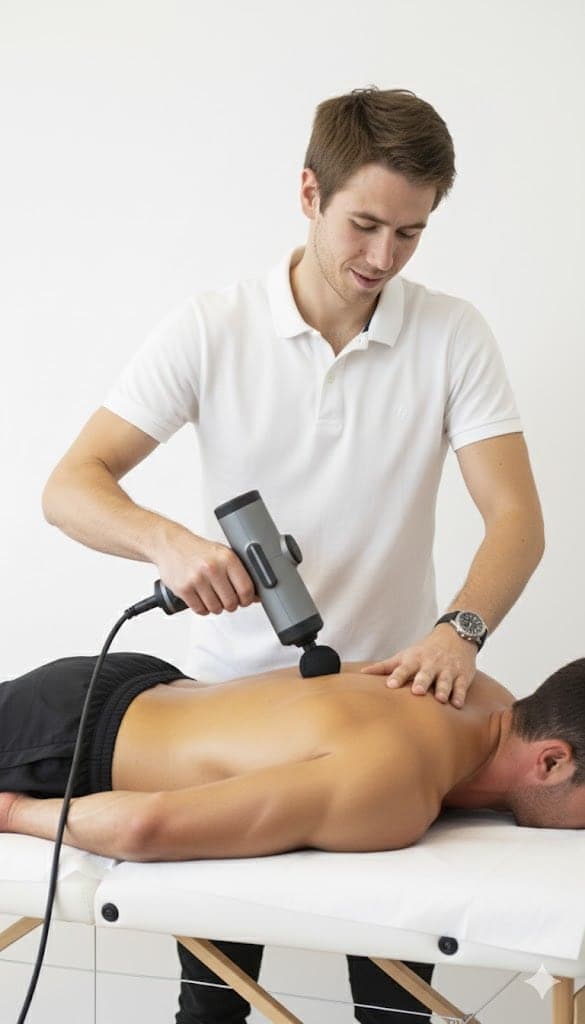
Written by
Chris
Massage therapist, nutrition and exercise physiologist
Norwegian-certified with a Bachelor’s in Physical Education and Nutrition and over ten years of clinical practice, working from a portable table in clients’ homes across the Paphos district.
This article is general information, not a medical diagnosis. If you have severe, worsening or unexplained pain, numbness, weakness, or pain after an accident, see a doctor first.