Spa and Wellness in Chloraka: The Science-Driven Approach to Lasting Pain Relief
In short
Discover why Chloraka’s most effective spa and wellness treatment isn’t about relaxation—it’s about lasting results through advanced mechanical deep-tissue therapy and precision body mechanics.
When you search for spa and wellness in Chloraka, you’re likely expecting the usual suspects: aromatherapy, hot stones, gentle Swedish massage, and perhaps a steam room. I understand that expectation—I spent my first year in this industry trying to deliver exactly that. But here’s what a decade of experience and a university degree in Physical Education and Nutrition taught me: if you’re dealing with chronic tension, limited mobility, or performance plateaus, traditional spa treatments are addressing symptoms, not causes.
I’m not here to sell you relaxation. I’m here to solve the biomechanical dysfunctions that are limiting your life.
After ten years of treating everyone from competitive athletes to desk workers suffering from debilitating back pain, I’ve witnessed a fundamental misunderstanding in how people approach spa and wellness in Chloraka and beyond. They treat massage as a luxury—a temporary escape. What I provide is structural intervention: a clinical, results-driven methodology that treats your body as the complex mechanical system it actually is.
Why Most Spa Treatments in Chloraka Miss the Mark
Let me share a story that changed how I approach bodywork entirely. Three years ago, a client came to me after visiting five different spas across Paphos and Chloraka. She’d spent thousands of euros on “wellness packages.” Her chronic shoulder pain? Still there. In fact, it had worsened because superficial treatments had allowed compensatory patterns to deepen.
During our first session, I identified severe adhesions in her subscapularis and teres minor—muscles that no amount of gentle kneading would ever reach. Within three sessions using my specialized mechanical deep-tissue method, she experienced her first pain-free week in two years. That’s not relaxation. That’s reconstruction.
The Fundamental Problem with Traditional Spa Approaches
Traditional spa and wellness treatments in Chloraka operate under several flawed assumptions:
- That all tension is superficial and can be addressed with moderate pressure
- That one-size-fits-all techniques produce consistent results
- That the primary goal is stress relief rather than structural correction
- That the therapist’s hands alone can deliver sufficient depth and precision
These assumptions lead to predictable outcomes: temporary relief, recurring pain, and clients trapped in an endless cycle of maintenance sessions that never actually resolve anything.
I approach the body differently because my education taught me to see it differently. The human musculoskeletal system operates according to precise biomechanical principles. When you understand fascial networks, trigger point physiology, and neuromuscular patterns, you realize that effective treatment requires three elements most therapists cannot consistently deliver: depth, precision, and reproducibility.
The Machine-Assisted Methodology: Precision, Power, and Consistency
When clients first learn I use a specialized machine for deep-tissue work, I encounter two reactions. Some are immediately intrigued by the scientific approach. Others are skeptical—conditioned to believe that human touch is inherently superior.
Let me address this directly: human hands are remarkable diagnostic tools. I use mine constantly to assess tissue quality, identify restriction patterns, and monitor treatment response. But for delivering therapeutic force to chronically contracted deep tissue? The machine is categorically superior, and the physics are irrefutable.
Deeper Than Hands: Accessing the Root Cause
Consider the anatomy of chronic lower back pain—one of the most common complaints I treat in Chloraka. The superficial erector spinae muscles are almost never the primary problem. The dysfunction typically resides in the quadratus lumborum, multifidus, or psoas—structures buried beneath multiple layers of tissue.
Human thumbs and elbows can apply considerable force, but that force dissipates across superficial layers. Even the strongest therapist cannot maintain the sustained, perpendicular pressure required to release adhesions in deep stabilizer muscles. The machine I use delivers concentrated mechanical force directly to the target tissue, penetrating through superficial layers without compressing them ineffectively.
This isn’t theoretical. I’ve treated former clients of highly skilled manual therapists—practitioners I respect—who simply couldn’t access the structural problems that were generating pain. The depth my method achieves is measurable, reproducible, and physiologically distinct from what hands alone can accomplish.
Complete Control: Calibrated Intensity for Every Individual
One of the most significant limitations of manual therapy is variability. Even the most experienced therapist has good days and off days. Fatigue affects pressure. Hand positioning changes slightly between sessions. For clients requiring progressive overload—athletes, for instance—this inconsistency prevents optimal adaptation.
My mechanical approach eliminates this variable entirely. I can calibrate intensity with precision across a spectrum from gentle fascial release to powerfully deep neuromuscular therapy. For a client recovering from injury, we might work at 30% intensity, focusing on circulation and tissue pliability. For a competitive cyclist preparing for a race, we might work at 85% intensity, aggressively releasing hip flexor restrictions that limit power output.
This isn’t about working harder. It’s about working smarter, with the precision that physiological change requires.
Consistent Results: Eliminating the “Off Day” Variable
I’ll be blunt about something the wellness industry rarely acknowledges: therapist fatigue directly impacts treatment quality. After performing four or five deep-tissue sessions in a day, even the strongest hands lose effectiveness. Pressure decreases. Precision suffers. The client who books an afternoon appointment receives objectively inferior treatment compared to the morning client.
This is unacceptable when we’re talking about therapeutic intervention, not pampering.
The machine never tires. Session five is identical to session one in terms of force delivery, penetration depth, and mechanical consistency. For clients investing in a multi-session treatment plan—which is how real structural change happens—this consistency is the foundation of progressive results.
Understanding True Wellness: Treating Causes, Not Symptoms
The word “wellness” has been diluted almost beyond meaning in the spa industry. It’s been reduced to marketing language for expensive packages that might include a massage, a facial, and access to a jacuzzi. That’s not wellness. That’s a pleasant afternoon.
Wellness, properly understood, is functional optimization. It’s the state where your body performs efficiently, without compensation patterns, chronic tension, or movement restrictions. Achieving this requires understanding the biomechanical cascade that produces dysfunction.
The Compensation Cascade: How Dysfunction Multiplies
Let me walk you through a case study that perfectly illustrates why symptom-focused treatment fails.
A client came to me complaining of knee pain. He’d already seen an orthopedic surgeon who found nothing structurally wrong. He’d tried physical therapy focusing on knee strengthening. He’d received multiple therapeutic massages on his quadriceps and calves. Nothing worked.
During assessment, I found severe restriction in his hip external rotators—particularly the piriformis and obturator internus. This restriction forced his femur into internal rotation during gait, creating abnormal tracking at the patellofemoral joint. The knee pain was real, but it was a symptom of hip dysfunction.
We didn’t treat his knee. We spent six sessions releasing deep hip rotators and reprogramming movement patterns. His knee pain disappeared completely and hasn’t returned in eighteen months.
This is what I mean by treating causes. The pain location and the dysfunction source are often entirely different. Effective treatment requires the diagnostic skill to identify the actual problem and the technical capability to address it at the appropriate depth.
The Chloraka Advantage: Location-Independent Excellence
One question I’m frequently asked: “Why choose spa and wellness in Chloraka specifically?” The honest answer is that Chloraka’s geographical location is irrelevant to treatment outcomes. What matters is the methodology, the expertise, and the commitment to results.
However, Chloraka does offer a unique advantage for my practice model: I travel to your location.
Mobile Precision: Professional Treatment in Your Environment
I provide a complete professional setup wherever you are in Chloraka. My specialized bench, mechanical equipment, and clinical-grade tools transform any space into a treatment environment. This isn’t a compromise—it’s a strategic advantage.
Consider the typical spa experience: you drive to a facility, navigate parking, wait in a reception area, rush through a treatment because you’re conscious of time, then face the drive home. If the treatment was genuinely deep and effective, you’re now fatigued, possibly sore, and operating a vehicle.
My mobile approach eliminates all of that. You remain in your own environment. After our session, you can rest, hydrate, and allow your nervous system to integrate the work without external stressors. For clients dealing with significant pain or mobility limitations, this model is transformative.
Who Benefits From This Approach: Beyond Traditional Spa Demographics
When people think about spa and wellness in Chloraka, they typically imagine tourists seeking vacation pampering or locals wanting occasional stress relief. My client base looks radically different because my service addresses different needs entirely.
Athletes and Performance Optimization
Competitive athletes understand that performance is won or lost in the margins. A 3% improvement in hip extension can translate to minutes off a marathon time. A 5% increase in thoracic rotation can add meters to a golf drive.
I work with cyclists, runners, swimmers, and strength athletes who need more than recovery—they need optimization. We identify biomechanical restrictions that limit performance, address them with precision deep-tissue work, and track measurable improvements in range of motion, power output, and movement efficiency.
This isn’t maintenance. It’s competitive advantage.
Chronic Pain Sufferers: Breaking the Cycle
For individuals who’ve lived with chronic pain for years—sometimes decades—my approach represents a fundamentally different paradigm. These clients have often exhausted conventional options: orthopedic interventions, physical therapy, pharmaceutical management, and yes, countless massage sessions that provided only temporary relief.
What they haven’t received is methodical, progressive treatment of the deep fascial restrictions and neuromuscular patterns that perpetuate their pain. My longest treatment plan was fourteen sessions over four months for a client with severe thoracic outlet syndrome. She’d been told to “learn to live with it.” She now lives completely pain-free.
These outcomes aren’t miracles. They’re the predictable result of applying biomechanical principles with sufficient depth and precision to create actual structural change.
Desk Workers and Postural Dysfunction
Modern occupational demands create extraordinarily consistent dysfunction patterns. Eight hours daily in seated flexion produces predictable shortening in hip flexors, anterior shoulder capsule, and chest musculature, combined with weakening and lengthening of posterior chain structures.
These patterns don’t respond to relaxation massage. They require systematic release of shortened structures and activation of inhibited ones. I work with executives, programmers, and office professionals to reverse these patterns before they progress to herniated discs, rotator cuff tears, or other structural failures.
Prevention isn’t as emotionally compelling as dramatic pain relief, but it’s considerably more cost-effective and life-enhancing.
The Investment Paradigm: Understanding True Value
I need to address something that distinguishes my practice from conventional spa and wellness options in Chloraka: price positioning. My services cost more than a typical massage. Substantially more. This isn’t arbitrary—it reflects a fundamental difference in what you’re purchasing.
Expense Versus Investment: The Critical Distinction
When you buy a standard spa massage, you’re purchasing an experience. That experience has value—stress relief, temporary relaxation, perhaps some superficial muscle tension release. But it’s consumptive. You buy it, experience it, and it’s gone. Next week, you’ll need to purchase it again. That’s an expense.
What I provide is an investment. You’re not buying a session—you’re buying structural change that compounds over time. The hip mobility we create in session three enhances the spinal work in session five. The fascial release we achieve in the first month creates the foundation for neuromuscular reprogramming in the second month.
By the end of a complete treatment plan, you haven’t just had six or eight nice massages. You’ve rebuilt how your body functions. That’s not an expense. It’s an investment with returns that continue for years.
The Partnership Model: Beyond Transactional Sessions
Traditional spa and wellness in Chloraka operates on a transactional model: you book a session, receive a treatment, pay, and leave. There’s no continuity, no progressive plan, no measurement of outcomes beyond “how do you feel right now?”
I work differently because meaningful structural change requires a different model. We begin with comprehensive assessment: movement screens, palpatory evaluation, detailed history. From this, I develop a customized treatment plan with specific, measurable objectives.
Throughout our work together, we’re not just repeating the same treatment. We’re progressing systematically, addressing layers of dysfunction in sequence, and adjusting approach based on tissue response. I track changes in range of motion, pain scales, and functional capacity. You’re not just “getting massages.” You’re executing a therapeutic protocol designed specifically for your biomechanical profile.
This is a partnership, not a transaction. Your commitment to the process and my commitment to delivering results create outcomes that isolated sessions never could.
Comparing Approaches: Understanding Your Options in Chloraka
To help clarify how different methodologies serve different purposes, I’ve created a direct comparison of spa and wellness options available in Chloraka:
| Treatment Type | Primary Goal | Depth of Work | Consistency | Best For | Long-Term Results |
|---|---|---|---|---|---|
| Traditional Spa Massage | Relaxation, stress relief | Superficial to moderate | Variable by therapist | Occasional pampering | Minimal structural change |
| Sports Massage | Recovery, circulation | Moderate | Variable by therapist | General athletic recovery | Temporary relief only |
| Physical Therapy | Rehabilitation from injury | Varies widely | Protocol-dependent | Post-injury recovery | Good if protocol is appropriate |
| Mechanical Deep-Tissue (My Method) | Structural correction, performance optimization | Deep to very deep, precise | Perfectly consistent | Chronic pain, performance athletes, prevention | Lasting when protocol is completed |
This isn’t a value judgment on other modalities—they serve their purposes. But if your goal is lasting resolution of structural dysfunction, the methodology matters profoundly.
The Science Behind Mechanical Deep-Tissue Therapy
Understanding why this approach works requires some foundational knowledge of tissue physiology. I’ll keep this accessible while maintaining scientific accuracy.
Fascial Adhesions and Restriction Patterns
Fascia is the connective tissue matrix that envelops every muscle, nerve, and blood vessel in your body. In healthy tissue, fascial layers glide smoothly across each other. In dysfunctional tissue—caused by trauma, repetitive strain, or chronic poor posture—fascial layers develop adhesions, essentially gluing together structures that should move independently.
These adhesions create restriction patterns that limit mobility, alter movement mechanics, and generate pain both at the adhesion site and in distant structures forced to compensate.
Standard massage cannot release deep fascial adhesions. The pressure required exceeds what hands can deliver without injury to the therapist. The mechanical approach I use can apply sustained, perpendicular force directly to adhesions, breaking cross-links and restoring tissue mobility.
This isn’t comfortable during treatment—I won’t lie to you. But the physiological change is measurable and lasting when performed correctly.
Trigger Points and Referred Pain Patterns
Much of the chronic pain I treat involves active trigger points—hyperirritable nodules in taut bands of skeletal muscle. These points don’t just cause local pain; they produce predictable referred pain patterns often far from the trigger point location.
For example, trigger points in the upper trapezius commonly refer pain to the temple and behind the eye—frequently misdiagnosed as tension headaches. Trigger points in the gluteus minimus refer pain down the lateral leg, mimicking sciatica.
Effective trigger point therapy requires sustained compression at precise locations with sufficient force to disrupt the neurological feedback loop maintaining the trigger point. My mechanical method delivers this with accuracy impossible to achieve manually, particularly in deep structures like the quadratus lumborum or psoas major.
Progressive Adaptation and Dose-Response Relationship
Structural change follows the same progressive adaptation principles as strength training or cardiovascular conditioning. You can’t achieve maximum results in a single session—the tissue requires graduated stimulus and recovery time to remodel.
My treatment protocols typically span 6-12 sessions over 2-4 months, with intensity and depth progressing as tissue quality improves. Early sessions focus on superficial and intermediate layers, preparing the nervous system for deeper work. Later sessions address core restrictions with maximum depth and intensity.
This progressive approach is physiologically sound and produces sustainable results. Aggressive, indiscriminate deep work in session one would be counterproductive—tissue would guard protectively rather than release.
Common Misconceptions About Deep-Tissue Therapy
After a decade in this field, I’ve encountered countless misconceptions about what deep-tissue work actually is and how it should feel. Let me address the most common and damaging myths.
Myth One: More Pain Equals Better Results
This is categorically false and reflects fundamental misunderstanding of therapeutic mechanisms. Effective deep-tissue work should be intense—you’re working at the edge of tissue tolerance. But it should never be intolerable.
When pressure exceeds tissue tolerance, the nervous system triggers protective guarding. Muscles contract defensively, preventing the release we’re trying to achieve. Effective treatment works at the precise threshold where tissue will release without triggering protective responses.
I constantly monitor client response, adjusting pressure to maintain optimal therapeutic intensity. This requires clinical judgment and real-time assessment—another reason the machine’s precise adjustability is crucial.
Myth Two: Bruising Indicates Effective Treatment
Bruising indicates capillary damage, period. It’s not a sign of toxin release or deep work—it’s tissue trauma. Properly executed deep-tissue therapy should rarely cause bruising.
When bruising occurs, it typically indicates excessive pressure without adequate preparation of superficial layers, poor technique, or work performed too rapidly. None of these reflect skilled practice.
In ten years, I’ve caused bruising perhaps half a dozen times, always in clients with specific vascular fragility I didn’t identify in assessment. I adjusted technique immediately. Bruising isn’t therapeutic—it’s a complication to avoid.
Myth Three: Results Should Be Immediate
Some results are immediate—increased range of motion, reduced pain, improved movement quality. But structural change takes time to integrate. Fascia remodels over weeks. Neurological patterns require repetition to solidify new programming.
Clients often feel significantly better after session one, then experience what feels like regression before session two. This isn’t failure—it’s the nervous system recalibrating. As we progress through treatment, these fluctuations decrease and improvements stabilize.
Expecting lasting change from a single session is like expecting fitness from a single workout. Physiological adaptation requires progressive stimulus over time.
What to Expect: The Complete Treatment Journey
Because my approach differs so fundamentally from conventional spa and wellness in Chloraka, I want to walk you through exactly what working together looks like.
Initial Assessment (90 Minutes)
We begin with comprehensive evaluation:
- Detailed pain and dysfunction history
- Functional movement screening
- Postural analysis
- Range of motion testing
- Palpatory assessment of tissue quality
This isn’t intake paperwork and small talk. It’s clinical evaluation that identifies the root causes of your symptoms and informs treatment strategy. I’m looking for compensation patterns, restriction hierarchies, and neurological factors that standard assessment misses.
Based on this assessment, I provide a frank evaluation of what I can accomplish, realistic timelines, and the treatment protocol I recommend. If I don’t believe I can significantly help you, I’ll tell you directly and suggest alternative approaches.
Treatment Phase (60-90 Minutes Per Session)
Actual treatment sessions follow the progressive protocol established in assessment. Early sessions typically focus on:
- Preparing superficial and intermediate tissue layers
- Identifying and beginning to address primary restrictions
- Teaching you what “productive intensity” feels like
- Establishing baseline measurements for tracking progress
Middle sessions intensify as tissue becomes more responsive:
- Deep work on identified restriction patterns
- Addressing secondary compensation patterns
- Integrating released structures through movement
- Progressive loading to challenge new mobility
Final sessions focus on consolidation and independence:
- Addressing any remaining restrictions
- Movement pattern refinement
- Self-maintenance education
- Long-term programming for sustained results
Post-Treatment Integration
The hours immediately following treatment are crucial for optimal results. I provide specific guidance on hydration, movement, and rest to facilitate tissue remodeling and neurological integration.
Some clients feel energized and mobile immediately. Others feel somewhat sore or fatigued as their nervous system processes significant structural change. Both responses are normal and productive.
Beyond Treatment: Lifestyle Integration for Sustained Results
Even the most effective treatment will fail if you return to the exact patterns that created dysfunction. Sustainable results require integrating what we accomplish in sessions with how you move and position yourself in daily life.
Occupational Modifications
For desk workers, this might mean workstation ergonomics, regular movement breaks, or specific exercises to counteract flexion-dominant positioning. For athletes, it could involve training modifications, equipment adjustments, or technique refinement.
I don’t just tell you what to change—I explain the biomechanical rationale so you understand why it matters. Education creates compliance because you’re making informed decisions, not blindly following instructions.
Self-Maintenance Protocols
By the end of our work together, you’ll have a customized self-maintenance protocol. This isn’t generic stretching or foam rolling—it’s targeted work on your specific restriction patterns.
These protocols are minimal time investment—typically 10-15 minutes several times weekly—but they maintain the structural changes we’ve created and prevent regression.
Frequently Asked Questions: Spa and Wellness in Chloraka
How is this different from a regular deep-tissue massage I can get at a spa?
Traditional deep-tissue massage uses human hands and general techniques applied to broad areas. My mechanical method delivers precise, reproducible pressure to specific structures identified through clinical assessment. The depth, consistency, and therapeutic intent are categorically different. Standard spa massage provides temporary relief. My approach creates structural change.
Is the treatment painful?
It’s intense, not painful. There’s a critical difference. You’ll work at the edge of your tissue tolerance, which creates strong sensation. But I constantly adjust pressure to stay within productive range—never triggering protective guarding. Most clients describe it as “challenging but satisfying.” The relief that follows makes the intensity worthwhile.
How many sessions will I need?
This depends entirely on your specific dysfunction, how long it’s existed, and your body’s response to treatment. Acute issues might resolve in 3-4 sessions. Chronic, complex patterns typically require 8-12 sessions. I provide honest assessment during your initial evaluation and adjust as we track your response.
Why do you travel to clients instead of having a fixed location?
Two reasons: First, it eliminates travel stress and allows you to rest immediately after treatment, optimizing results. Second, it allows me to focus exclusively on clinical work rather than maintaining a facility. This model serves my clients better and allows me to maintain focus on what I do best: delivering results.
Can you help with [specific condition]?
I’ve successfully treated chronic lower back pain, sciatica, frozen shoulder, plantar fasciitis, thoracic outlet syndrome, hip impingement, chronic headaches, IT band syndrome, and dozens of other conditions. However, I need to assess you specifically before making promises. Some conditions are outside my scope. Some require combined approaches. Book an assessment and I’ll give you honest evaluation.
Do you work with insurance or provide documentation for reimbursement?
I provide detailed treatment notes and receipts that many clients successfully submit for reimbursement, depending on their insurance coverage. However, I don’t bill insurance directly. Payment is due at time of service, and you handle any insurance claims independently.
What should I do to prepare for a session?
Arrive well-hydrated, avoid heavy meals immediately before, and wear comfortable clothing that allows access to treatment areas. I’ll provide specific preparation instructions when you book. The most important preparation is mental: understand that we’re doing therapeutic work, not relaxation, and commit to the process.
How long do results last?
When you complete a full treatment protocol and integrate the lifestyle modifications I recommend, results are lasting. You’ve changed your body’s structure and movement patterns. That said, new stress or injuries can create new dysfunction. Some clients return quarterly or biannually for optimization sessions, but this is enhancement, not maintenance of basic function.
The Chloraka Context: Location and Lifestyle Factors
While my methodology transcends location, Chloraka’s specific environment does present certain considerations worth addressing.
Climate and Activity Patterns
Chloraka’s Mediterranean climate encourages year-round outdoor activity—swimming, cycling, hiking. This is generally positive for musculoskeletal health, but it also means many residents are dealing with activity-related dysfunction rather than purely sedentary issues.
I work with numerous clients who’ve developed overuse injuries from suddenly increasing activity levels after relocating to Cyprus. The enthusiasm is admirable, but tissue adaptation requires progressive loading. I help bridge the gap between current capacity and activity ambitions.
Expatriate Population and Healthcare Navigation
Many Chloraka residents are expatriates navigating an unfamiliar healthcare system. They often struggle to find practitioners who understand their needs and communicate effectively. My background in Norwegian healthcare, combined with my fluency in English and understanding of multiple healthcare paradigms, helps bridge this gap.
I speak the language of results, not regional treatment traditions. Whether you’re from Scandinavia, the UK, Germany, or elsewhere, we communicate in the universal language of biomechanics and measurable outcomes.
Making the Decision: Is This Approach Right for You?
Not everyone needs what I provide. If you’re seeking occasional relaxation, there are excellent traditional spa options in Chloraka. If you need acute injury rehabilitation, physical therapy might be more appropriate. If you’re managing complex medical conditions, you need physician oversight.
My approach is ideal if:
- You’ve tried conventional treatments without lasting results
- You’re an athlete seeking performance optimization beyond standard recovery
- You understand the difference between investment and expense
- You’re willing to commit to a progressive treatment protocol
- You want to address causes, not just manage symptoms
- You value measurable outcomes over comfortable experiences
This work requires partnership. I bring expertise, methodology, and commitment to results. You bring consistency, communication about what you’re experiencing, and integration of what we accomplish into your daily life.
The Competitive Landscape: Why Methodology Matters More Than Marketing
The spa and wellness industry in Chloraka, like everywhere, is dominated by marketing over methodology. Facilities compete on ambiance, package pricing, and exotic treatment names. Very few compete on measurable outcomes because very few can deliver them.
I don’t have the most luxurious treatment space—I work in your home. I don’t offer the longest list of services—I do one thing extremely well. I don’t have the lowest prices—I charge what results-driven work is worth.
What I do have is a perfect record of client outcomes when treatment protocols are completed as designed. Not everyone experiences identical results—physiology varies. But every client who commits to the process experiences significant, measurable improvement in the dysfunctions we’re addressing.
That’s not marketing. That’s track record.
Final Thoughts: Beyond Spa and Wellness to True Function
The term “spa and wellness” has become so diluted that it encompasses everything from nail salons to medical clinics. When you search for spa and wellness in Chloraka, you’re sorting through this noise trying to find something that will actually help.
Here’s what I want you to understand: your body is the most sophisticated machine you’ll ever own. It deserves more than superficial maintenance. It deserves expert care from someone who understands its biomechanics, can identify dysfunction at root cause level, and possesses the methodology to create lasting change.
I’ve dedicated ten years and significant educational investment to becoming expert in this specific domain. I’ve refined a methodology that delivers results conventional approaches cannot match. I’ve treated hundreds of clients, learning from each case, continuously improving my assessment and treatment protocols.
When you work with me, you’re not buying a spa service. You’re partnering with a specialist who views your pain, restriction, or performance limitation as a solvable biomechanical problem. We’ll identify the cause, develop a strategic protocol, execute it with precision, and track measurable progress.
That’s not wellness as luxury—it’s wellness as function. And function is what allows you to live without limitation, perform at your potential, and invest your energy in what matters rather than managing chronic pain.
If that resonates with you, we should talk. If you’re content with temporary relief and relaxation-focused treatments, the traditional spa options in Chloraka will serve you well. But if you’re ready for lasting change, I’m ready to deliver it.
The choice, as always, is yours. Choose based on what you actually want to accomplish.
Evidence and limits
Massage may help with some symptoms, but benefits and evidence vary by condition. It does not replace medical assessment or treatment. A page update is not evidence of an independent clinical review.
Further reading: Massage therapy: evidence, safety and limitations by US National Center for Complementary and Integrative Health. This is general background reading, not verification of every claim in this article.
How we describe evidence and updates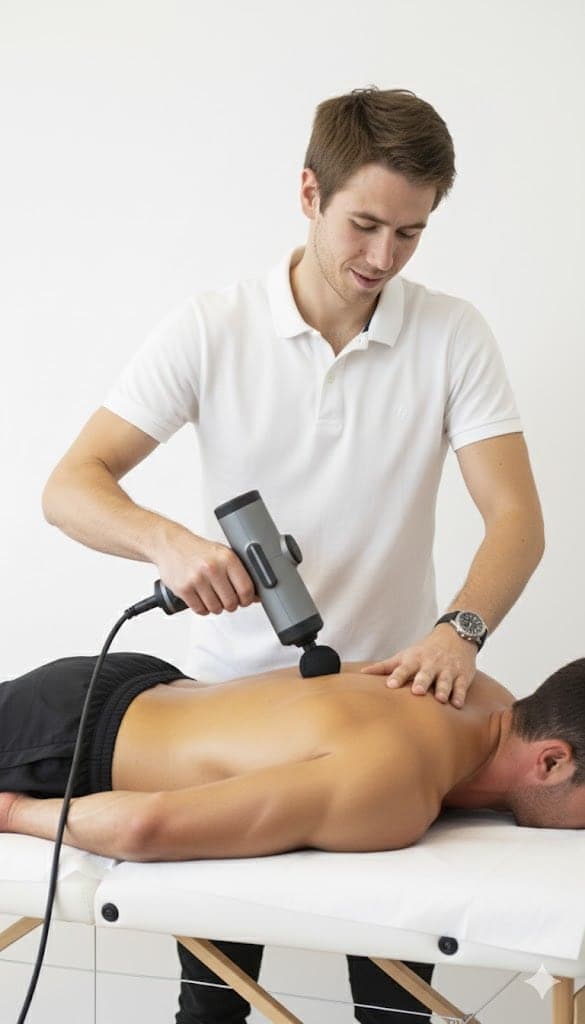
Written by
Chris
Massage therapist, nutrition and exercise physiologist
Norwegian-certified with a Bachelor’s in Physical Education and Nutrition and over ten years of clinical practice, working from a portable table in clients’ homes across the Paphos district.
This article is general information, not a medical diagnosis. If you have severe, worsening or unexplained pain, numbness, weakness, or pain after an accident, see a doctor first.