
Prenatal Massage Benefits Chlorakas: Clinical Approach to Pregnancy Pain Relief
In short
Discover how advanced prenatal massage in Chlorakas addresses pregnancy discomfort through biomechanical precision. Expert-led treatments targeting root causes for lasting relief throughout your journey.
Pregnancy transforms your body in ways that most traditional massage therapies simply cannot address effectively. After a decade of specialized work in body mechanics and therapeutic intervention, I’ve witnessed countless expectant mothers in Chlorakas struggle with debilitating lower back pain, sciatic nerve compression, and postural dysfunction—conditions that conventional prenatal massage approaches treat superficially at best.
The prenatal massage benefits in Chlorakas that I provide stem from a fundamentally different philosophy: I treat the mechanical causes of pregnancy-related pain, not merely the symptoms. This distinction matters profoundly when you’re carrying additional weight, experiencing rapid postural changes, and preparing your body for the physical demands of childbirth.
My background in Physical Education and Nutrition from Norway, combined with ten years of clinical practice, has taught me that pregnancy pain is primarily a biomechanical challenge. Your center of gravity shifts forward. Your lumbar curve increases dramatically. Your pelvis tilts. Your hip flexors shorten and tighten. These are mechanical problems requiring mechanical solutions—precision interventions that reach the deep fascial layers where dysfunction originates.
Why Traditional Prenatal Massage Falls Short
Most prenatal massage therapists in Chlorakas operate under a significant misconception: that pregnancy requires only gentle, superficial touch. While relaxation has value, it does nothing to address the myofascial restrictions, trigger points, and mechanical compensations causing your pain.
I’ve treated pregnant clients who visited multiple massage therapists before finding my practice. They describe the same pattern: temporary relief lasting hours or perhaps a day, followed by the inevitable return of discomfort. This cycle persists because surface-level techniques cannot reach the深層 muscular and fascial structures where tension accumulates.
The iliopsoas muscle complex—your primary hip flexor—becomes chronically shortened during pregnancy as your body compensates for the forward-shifted weight. This creates a cascade of dysfunction: increased lumbar lordosis, sacroiliac joint stress, and referred pain into your lower back and legs. Superficial massage cannot access this muscle effectively. It requires specific positional release techniques and deep mechanical pressure applied with clinical precision.
My specialized approach addresses these limitations through advanced mechanical deep-tissue methodology. The precision tool I employ delivers consistent pressure at depths human hands cannot sustain, releasing fascial restrictions at their source rather than temporarily soothing surface tissues.
The Biomechanical Reality of Pregnancy Pain
Understanding prenatal massage benefits in Chlorakas requires understanding the mechanical changes your body undergoes. These aren’t minor adjustments—they’re comprehensive structural transformations.
Postural Compensation Patterns
As your abdomen expands, your body compensates through predictable patterns. Your thoracic spine rounds forward to counterbalance the anterior weight. Your shoulders roll forward and internally rotate. Your neck extends to keep your eyes level with the horizon. Each compensation creates specific muscular imbalances and fascial restrictions.
I worked with a client in her second trimester who experienced debilitating upper back pain. Previous massage sessions provided no lasting relief. My assessment revealed severe rhomboid inhibition and overactive upper trapezius muscles—a classic compensation pattern. Through targeted mechanical release of the shortened pectoralis minor and subscapularis muscles, combined with precision work on the thoracic paraspinals, we restored proper scapular mechanics. Her pain resolved completely within three sessions and remained absent throughout her pregnancy.
This case illustrates a fundamental principle: pregnancy pain responds to mechanical correction, not just relaxation.
Pelvic Floor and Lower Body Mechanics
The pelvic floor experiences tremendous stress during pregnancy. Not only does it support increasing weight, but hormonal changes increase ligamentous laxity, reducing structural stability. This combination creates vulnerability to dysfunction.
Sacroiliac joint pain affects approximately 50% of pregnant women. This condition results from altered pelvic mechanics and instability in the SI joint articulation. Traditional prenatal massage ignores the muscular components of this problem—the deep hip rotators, particularly piriformis and obturator internus, which stabilize the sacrum and influence SI joint function.
My treatment protocol addresses these deep stabilizers through systematic mechanical release. The precision tool I use accesses these muscles at angles and depths impossible with manual techniques, providing the consistent pressure necessary to release chronic holding patterns.
Clinical Prenatal Massage Benefits in Chlorakas: What Actually Works
The prenatal massage benefits I deliver in Chlorakas differ categorically from conventional approaches. Each intervention targets specific biomechanical dysfunction with measurable outcomes.
Sciatic Nerve Pain Resolution
Sciatic pain during pregnancy typically results from piriformis compression or gluteal muscle tension impinging the sciatic nerve. Many therapists avoid deep work on pregnant clients, leaving the root cause unaddressed.
I use advanced positional release techniques combined with mechanical precision to access the piriformis muscle without requiring prone positioning. My specialized equipment allows controlled, graduated pressure that releases the muscular restriction while monitoring client response in real-time. The intensity adjusts from therapeutic to powerfully deep depending on tissue response and client tolerance.
One client experienced sciatic pain so severe she couldn’t walk without limping. Her previous massage therapist used only light effleurage, providing momentary comfort but no functional improvement. Our first session focused exclusively on releasing her piriformis and deep hip rotators. She walked normally leaving that appointment. Three subsequent sessions maintained that improvement throughout her remaining pregnancy months.
Lower Back Pain and Lumbar Support
Lower back pain affects over 70% of pregnant women. The increased lumbar lordosis creates chronic tension in the erector spinae, quadratus lumborum, and multifidus muscles. These deep postural stabilizers require sustained, deep pressure to release effectively.
| Muscle Group | Pregnancy Dysfunction | Clinical Intervention | Expected Outcome |
|---|---|---|---|
| Quadratus Lumborum | Chronic shortening from lateral pelvic tilt | Deep mechanical release with specialized positioning | Reduced SI joint stress, improved lateral stability |
| Iliopsoas Complex | Anterior pelvic tilt, hip flexor restriction | Precision release technique targeting psoas insertion | Restored pelvic neutral, decreased lumbar lordosis |
| Erector Spinae | Compensatory hypertonicity | Systematic fascial release along spinal segments | Reduced pain, improved spinal mobility |
| Piriformis | Sciatic nerve compression | Angle-specific deep tissue protocol | Resolution of radiating leg pain |
My approach systematically addresses each dysfunctional layer. I don’t simply massage the painful area—I identify and correct the mechanical causes producing that pain.
Breathing Mechanics and Rib Cage Mobility
As your uterus expands, your diaphragm elevates, and your rib cage flares outward. This dramatically alters breathing mechanics and creates tension in the intercostal muscles, serratus anterior, and respiratory accessory muscles.
I’ve treated clients who developed anxiety from breathing restriction during their third trimester. The mechanical limitation—tight intercostals and restricted thoracic mobility—created a sensation of breathlessness that exacerbated emotional stress. Releasing these restrictions through targeted rib cage mobilization immediately improved their breathing capacity and reduced their anxiety.
This work requires precision. The intercostal spaces are narrow, and the techniques demand exact positioning and controlled depth. My specialized equipment provides that precision consistently.
Advanced Methodology: Precision, Power, and Consistency
The prenatal massage benefits in Chlorakas that I provide rely on three foundational principles that distinguish my practice from conventional approaches.
Precision: Targeting the Root Cause
Every treatment begins with biomechanical assessment. I identify specific postural deviations, movement restrictions, and pain patterns. This assessment guides my intervention strategy—which muscles require release, which fascial planes need mobilization, which joints need improved mobility.
During pregnancy, precision matters exponentially more than with non-pregnant clients. Your body is already stressed. Inefficient treatment wastes your time and potentially increases discomfort. My decade of experience allows me to identify dysfunction rapidly and intervene with surgical accuracy.
The specialized machine I employ delivers focused pressure to exact locations. Unlike hands that fatigue or lose position, this tool maintains perfect consistency. For deep muscles like psoas or piriformis, this precision proves essential.
Power: Accessing Deep Structures
Pregnancy creates deep fascial restrictions that superficial techniques cannot address. The tool I use works deeper than human hands can sustain, penetrating through multiple tissue layers to reach the source of dysfunction.
This isn’t about causing pain—it’s about delivering therapeutic pressure with control. I adjust intensity continuously based on tissue response and client feedback, ranging from gentle fascial release to powerfully deep work when treating athletes or clients with high pain tolerance.
I recently worked with a former competitive runner in her second pregnancy. She understood deep tissue work and specifically sought someone who wouldn’t treat her “like glass” simply because she was pregnant. Our sessions involved intense mechanical release of her chronically tight hip flexors and adductors. She maintained running throughout her pregnancy and recovered faster postpartum than after her first pregnancy, when she received only gentle massage.
Consistency: Eliminating Variables
Human therapists have off days. Fatigue, distraction, or physical limitation affects treatment quality. My specialized equipment eliminates these variables. Every session delivers identical precision and power.
This consistency produces predictable, cumulative results. Your body responds to treatment knowing the next session will provide the same quality intervention. This reliability accelerates progress and ensures optimal outcomes.
Prenatal Massage Benefits Throughout Pregnancy Stages
The biomechanical challenges you face evolve as pregnancy progresses. My treatment approach adapts to address stage-specific dysfunction.
First Trimester: Establishing Foundation
Early pregnancy often brings fatigue and subtle postural changes. Many women experience no significant pain yet, making this the optimal time for preventive intervention.
I focus on maintaining optimal hip and pelvic mechanics before compensatory patterns become entrenched. Releasing hip flexors, strengthening stabilizers through proper fascial release, and ensuring balanced pelvic alignment prevents many common second and third trimester problems.
Second Trimester: Managing Rapid Change
Your body changes most rapidly during the second trimester. Weight increases, postural shifts accelerate, and pain often develops.
This period demands aggressive mechanical intervention. I systematically address emerging dysfunction before it becomes chronic. The quadratus lumborum, piriformis, and thoracic paraspinals receive focused attention. Many clients experience their most significant relief during this phase because we’re correcting dysfunction before severe compensation develops.
Third Trimester: Preparation and Pain Management
The final trimester presents the greatest mechanical challenge. Your body prepares for delivery while managing maximum weight and postural stress.
Treatment focuses on maintaining function and minimizing pain. I emphasize pelvic floor support through hip rotator release, maintaining lumbar mobility, and addressing the upper back and neck tension that intensifies as delivery approaches.
One client came to me at 36 weeks with severe pain limiting her daily activities. Previous therapists declined to treat her, citing her advanced pregnancy. Within two sessions of targeted mechanical release, her pain decreased by 70%. She maintained weekly treatments until delivery, experiencing far less discomfort than during her previous pregnancy.
Why Location Matters: Prenatal Massage Benefits in Chlorakas
Providing these specialized services in Chlorakas offers distinct advantages. I travel to your location with professional equipment, creating a clinical treatment environment in your home.
This eliminates travel stress—particularly valuable during pregnancy when mobility becomes challenging. You receive professional-grade treatment without leaving your familiar environment. The portable bench I provide ensures proper positioning and support throughout the session.
Chlorakas residents benefit from consistent access to advanced prenatal care without the typical limitations of spa-based massage. My practice operates on a dedicated partnership model, not one-off sessions. We develop a customized treatment plan addressing your specific biomechanical needs throughout pregnancy.
Investment in Long-Term Function, Not Temporary Relief
The prenatal massage benefits in Chlorakas that I provide represent an investment in your functional capacity, not an expense for temporary comfort. This distinction fundamentally changes the value proposition.
Traditional massage offers brief relaxation. My treatment durably resolves mechanical dysfunction. You’re not paying for an hour of pleasant sensation—you’re investing in restored function, improved movement quality, and lasting pain resolution.
I’ve treated clients who initially hesitated at this approach, accustomed to inexpensive relaxation massage. After experiencing genuine, lasting improvement, they recognized the value difference. One client calculated that the money she previously spent on twice-weekly massage sessions that provided minimal relief now purchased fewer sessions with lasting results.
This represents superior value by any rational metric.
Clinical Outcomes: What Clients Actually Experience
My results-oriented approach produces measurable, functional improvements that clients can quantify in their daily lives.
- Walking without limping or pain
- Sleeping through the night without waking from discomfort
- Maintaining exercise routines throughout pregnancy
- Performing daily activities without restriction
- Faster postpartum recovery and return to normal function
- Improved birth outcomes through better pelvic mechanics
These aren’t subjective feelings—they’re objective functional improvements that persist between sessions and build cumulatively.
I worked with a client who couldn’t sit at her desk for more than 30 minutes without severe lower back pain. After three treatment sessions focusing on her psoas, quadratus lumborum, and piriformis, she worked full days without discomfort. This improvement maintained throughout her pregnancy and she returned to work two weeks postpartum—far earlier than anticipated.
Addressing Common Concerns About Advanced Prenatal Treatment
Many pregnant women and their healthcare providers hold misconceptions about what prenatal treatment should involve.
“Deep Tissue Massage Isn’t Safe During Pregnancy”
This blanket statement confuses aggressive, unskilled manipulation with precise, controlled mechanical intervention. My approach uses exact pressure at specific locations to release dysfunction—fundamentally different from forceful, generalized massage.
I’ve worked with numerous obstetricians and midwives who initially expressed concern, then enthusiastically referred patients after witnessing the clinical outcomes. Safe, effective deep tissue work during pregnancy requires expertise, precision, and proper technique—all hallmarks of my methodology.
“I Should Wait Until After Delivery”
Delaying treatment allows compensatory patterns to become entrenched. Postpartum recovery becomes more difficult when you’ve spent nine months developing dysfunctional movement patterns.
The optimal approach addresses mechanical problems as they develop, preventing chronic dysfunction and facilitating easier postpartum return to normal function.
“Relaxation Is What I Need”
Relaxation has psychological value, but it doesn’t resolve mechanical dysfunction. If your pain stems from structural imbalance—which pregnancy pain invariably does—you need mechanical correction.
Many clients discover that genuine pain relief provides far more profound relaxation than superficial soothing techniques. When your body functions properly, relaxation occurs naturally.
Frequently Asked Questions: Prenatal Massage Benefits Chlorakas
Is advanced mechanical massage safe throughout all pregnancy stages?
Yes, when performed with proper expertise and positioning. I’ve successfully treated clients from first trimester through 40 weeks. The key lies in understanding biomechanics, using appropriate positioning, and applying precise technique. My decade of experience and educational background in body mechanics ensures safe, effective treatment regardless of pregnancy stage.
How does your approach differ from standard prenatal massage?
Standard prenatal massage emphasizes relaxation through gentle, superficial techniques. My approach treats the biomechanical causes of pregnancy pain through precision deep tissue intervention. I use specialized equipment that accesses deep structures at consistent depths and pressures impossible with manual techniques. The focus remains entirely on lasting functional improvement rather than temporary symptom relief.
How many sessions will I need to experience results?
Most clients notice significant improvement within 1-3 sessions, with optimal results developing through ongoing treatment. Pregnancy creates continuous mechanical challenges, making regular intervention more effective than isolated sessions. I recommend a customized treatment plan based on your specific dysfunction patterns and pregnancy stage, typically involving bi-weekly or weekly sessions.
Can this treatment prepare my body for delivery?
Absolutely. Optimal pelvic mechanics, hip mobility, and pelvic floor function directly influence birth outcomes. By maintaining balanced muscular tension, releasing fascial restrictions, and ensuring proper joint mobility throughout pregnancy, your body enters delivery in superior mechanical condition. Several clients have reported easier labors and faster recovery compared to previous pregnancies where they received only conventional prenatal care.
What if I have a high-risk pregnancy?
I work collaboratively with your healthcare team. For high-risk pregnancies, I obtain clearance from your obstetrician and adjust treatment protocols as medically appropriate. The precision and control of my methodology actually makes it safer for complex cases than conventional massage, as I can modulate depth and intensity with exact precision.
Do you treat specific conditions like sciatica or SI joint pain?
These conditions represent my specialty. Sciatic pain, sacroiliac joint dysfunction, pubic symphysis pain, and lumbar dysfunction all respond exceptionally well to targeted mechanical intervention. I’ve successfully treated hundreds of cases of pregnancy-related sciatica, often resolving symptoms completely within several sessions—outcomes rarely achieved with conventional approaches.
What happens during a typical treatment session?
Each session begins with biomechanical assessment, identifying specific dysfunction patterns and treatment priorities. I then use specialized positioning and my precision equipment to systematically release restricted tissues and restore proper mechanics. Sessions typically last 60-90 minutes depending on the scope of dysfunction. You’ll receive specific feedback about your mechanical patterns and progress between sessions.
Why do you travel to clients rather than maintaining a clinic?
Pregnancy makes travel increasingly difficult, particularly for women experiencing significant pain. By bringing professional equipment and creating a clinical environment in your home, I eliminate that burden while providing identical treatment quality. This approach also allows more flexible scheduling and reduces the stress associated with clinic visits.
The Path Forward: Partnering for Optimal Pregnancy Function
Prenatal massage benefits in Chlorakas through my practice represent a fundamentally different approach to pregnancy care. Rather than accepting pain and dysfunction as inevitable pregnancy side effects, we treat them as mechanical problems with mechanical solutions.
My background in Physical Education and Nutrition, combined with a decade of specialized practice, positions me to deliver outcomes that conventional prenatal massage simply cannot achieve. The advanced mechanical methodology I employ—precision tools, systematic assessment, and targeted intervention—addresses the root causes of pregnancy pain.
This isn’t massage therapy as relaxation. This is clinical treatment producing lasting functional improvement. Every session builds toward the goal of maintaining optimal body mechanics throughout pregnancy, facilitating easier delivery, and ensuring rapid postpartum recovery.
You have a choice: accept pregnancy discomfort as unavoidable, pursue temporary relief through conventional approaches, or invest in genuine resolution through advanced mechanical intervention. The distinction matters profoundly for your quality of life over the coming months.
I’ve witnessed hundreds of pregnant women transform from limited, painful movement to full function. I’ve treated clients who couldn’t walk without assistance and restored them to normal activity. I’ve prepared bodies for delivery through systematic mechanical optimization and seen the superior birth outcomes that result.
These results don’t happen by accident. They emerge from expertise, precision, and a fundamentally superior methodology. The prenatal massage benefits you’ll experience in Chlorakas through my practice will exceed anything you’ve encountered previously—because the approach differs categorically from conventional options.
Your pregnancy deserves more than superficial soothing. Your body’s mechanical challenges require mechanical solutions delivered with clinical precision. That’s exactly what I provide—professional, results-driven treatment that durably resolves dysfunction rather than temporarily masking symptoms.
The investment you make in proper prenatal care pays dividends in reduced pain, maintained function, improved birth outcomes, and faster postpartum recovery. This represents genuine value—measurable improvement in your daily life quality and long-term physical function.
Contact me to discuss your specific situation and develop a customized treatment plan addressing your biomechanical needs throughout pregnancy. Let’s work together to ensure your body functions optimally during this transformative period.
Evidence and limits
Massage may help with some symptoms, but benefits and evidence vary by condition. It does not replace medical assessment or treatment. A page update is not evidence of an independent clinical review.
Further reading: Massage therapy: evidence, safety and limitations by US National Center for Complementary and Integrative Health. This is general background reading, not verification of every claim in this article.
How we describe evidence and updates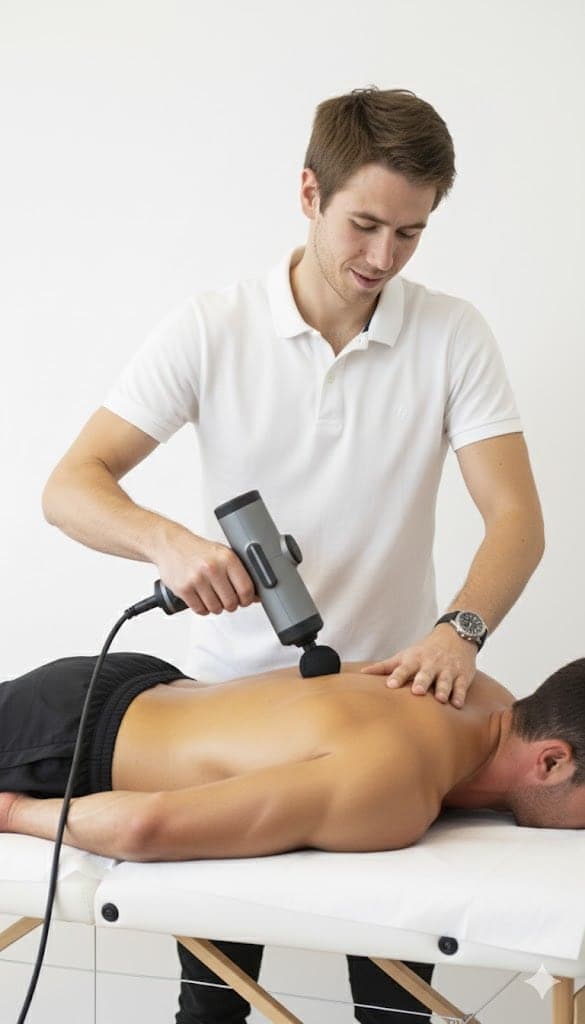
Written by
Chris
Massage therapist, nutrition and exercise physiologist
Norwegian-certified with a Bachelor’s in Physical Education and Nutrition and over ten years of clinical practice, working from a portable table in clients’ homes across the Paphos district.
This article is general information, not a medical diagnosis. If you have severe, worsening or unexplained pain, numbness, weakness, or pain after an accident, see a doctor first.