
Chloraka Spa and Wellness Centers: A Critical Guide to Advanced Body Mechanics and Lasting Pain Relief
In short
Discover Chloraka’s spa and wellness landscape through the lens of a body mechanics specialist with a decade of experience. Learn why most traditional treatments fail and what actually works for lasting results.
After ten years of working with clients across Cyprus, I’ve observed a troubling pattern in Chloraka’s spa and wellness industry. Most visitors leave feeling temporarily relaxed but fundamentally unchanged. Their chronic pain returns within days. Their mobility restrictions persist. The root causes remain untreated.
This isn’t a criticism of intention—it’s a clinical observation of methodology. Traditional spa treatments in Chloraka, like elsewhere, predominantly focus on superficial relaxation rather than mechanical correction. As someone with a Bachelor’s degree in Physical Education and Nutrition from Norway and a decade specializing in advanced mechanical deep-tissue work, I’ve learned that genuine wellness requires a fundamentally different approach.
The wellness landscape in Chloraka offers numerous options, from hotel spas to independent practitioners. Yet most operate within the same limiting framework: short sessions, surface-level techniques, and symptomatic relief. I’ll guide you through what exists in this coastal village, but more importantly, I’ll explain what actually works when you’re seeking lasting results rather than temporary escape.
Understanding the Chloraka Wellness Landscape: What You’ll Actually Find
Chloraka attracts a specific demographic: expatriates, retirees, and holiday property owners seeking Mediterranean wellness. The spa and wellness centers here reflect this market reality. You’ll find establishments ranging from resort-attached facilities to small independent operators working from home studios.
The typical offerings include Swedish massage, aromatherapy, reflexology, and various beauty treatments. Prices vary considerably—from €40 for a basic hour-long massage to €120+ for resort spa packages. The atmosphere is universally aimed at relaxation: dim lighting, soft music, essential oil diffusers, and therapists trained in comfort rather than correction.
I respect this model for what it is: a legitimate relaxation service. Where I challenge the industry is in the conflation of relaxation with therapeutic results. A client suffering from chronic lower back pain, restricted shoulder mobility, or athletic performance limitations doesn’t need candles and whale sounds. They need precise mechanical intervention targeting the fascial restrictions causing their symptoms.
The Hotel Spa Model in Chloraka
Several hotels in and around Chloraka offer spa facilities as amenities. These typically feature treatment rooms, small pools, and standard massage menus. The therapists are generally trained in hospitality-oriented techniques designed for tourist satisfaction rather than clinical outcomes.
I’ve worked with numerous clients who previously sought treatment at these facilities. The common feedback involves pleasant experiences but zero lasting improvement. One client, a 52-year-old British expatriate with severe sciatica, spent over €800 across multiple hotel spa sessions. Her pain persisted unchanged. Three sessions using my mechanical deep-tissue protocol resolved the issue durably.
The limitation isn’t the therapist’s dedication—it’s the inherent constraint of manual techniques. Human hands, regardless of training, cannot consistently achieve the depth, precision, and sustained pressure required to release chronic fascial adhesions and trigger points embedded in deeper muscle layers.
Independent Practitioners and Home Studios
Chloraka hosts several independent massage therapists operating from residential locations. These practitioners often offer more personalized attention and lower prices than hotel spas. Some have legitimate credentials; others operate with minimal formal training.
The challenge here is consistency and methodology. Manual massage, even from experienced practitioners, varies significantly session-to-session based on the therapist’s physical condition, energy levels, and technique application. I’ve eliminated this variable entirely through mechanical intervention—every session delivers identical precision and power, regardless of external factors.
Why Traditional Spa Treatments Fail: The Biomechanical Reality
Let me be clinically direct: most spa treatments in Chloraka—and globally—fail to produce lasting results because they fundamentally misunderstand the nature of chronic pain and movement restriction. They treat symptoms, not causes. They prioritize sensation over correction. They operate on outdated models of muscular function.
Chronic pain and restricted mobility originate from specific mechanical dysfunctions: fascial adhesions, trigger point formations, muscle imbalances, and compensatory movement patterns. These require targeted, sustained, deep pressure applied with anatomical precision. Traditional massage techniques cannot consistently achieve this depth or precision.
The Depth Problem
Consider the thoracolumbar fascia—a critical structure in lower back pain. This dense connective tissue layer sits beneath multiple muscle groups and requires sustained pressure of 40-60 pounds per square inch to effectively release chronic restrictions. Human hands fatigue rapidly at this intensity. The therapist either reduces pressure (losing effectiveness) or risks repetitive strain injury.
My specialized mechanical system delivers consistent, calibrated pressure far exceeding manual capacity. We’re not approximating depth—we’re measuring and controlling it. This isn’t subjective technique; it’s objective mechanical intervention.
The Precision Problem
Trigger points—hyperirritable spots in skeletal muscle—require extraordinarily precise application. Miss by two centimeters, and you’re working ineffectively. Manual palpation skills vary dramatically between practitioners and even session-to-session with the same therapist.
The machine I use allows millimeter-level precision, maintained consistently throughout the session. We identify the exact location of dysfunction and address it with surgical accuracy. This is why clients experience results in three sessions that they couldn’t achieve in years of traditional massage.
The Consistency Problem
I’ve never had an “off day” since transitioning to mechanical deep-tissue work. The tool performs identically whether I’m well-rested or fatigued, whether it’s my first client or my eighth. Manual therapists cannot make this claim honestly. Their effectiveness fluctuates based on dozens of variables outside their control.
For clients investing in therapeutic outcomes, this consistency is non-negotiable. You’re not purchasing an experience—you’re purchasing results. Results require reliable methodology, not variable technique.
The Advanced Mechanical Deep-Tissue Protocol: How Real Correction Works
Over the past decade, I’ve developed and refined a protocol that treats the actual cause of pain and restriction rather than temporarily suppressing symptoms. This approach represents a fundamental departure from traditional spa methodology.
When I work with a client, we’re not booking a relaxation session—we’re initiating a corrective partnership aimed at lasting resolution. This requires assessment, customized treatment planning, and progressive mechanical intervention.
Initial Biomechanical Assessment
Every client begins with a comprehensive movement and pain pattern assessment. I’m analyzing compensatory patterns, identifying primary versus secondary dysfunctions, and determining the root mechanical cause of their symptoms. This isn’t subjective observation—it’s systematic functional evaluation based on kinesiology and biomechanics.
A recent client presented with what she described as “shoulder pain.” Assessment revealed the primary dysfunction was actually in her thoracic spine—the shoulder pain was a compensatory symptom. Traditional massage had been treating her shoulder for months with zero improvement because it was addressing the wrong structure. Three sessions of targeted thoracic release eliminated both the primary restriction and the secondary shoulder symptom.
Customized Treatment Architecture
Based on assessment findings, I design a specific corrective protocol. This isn’t a standard menu service—it’s an individualized mechanical intervention plan targeting your specific dysfunctions in the optimal sequence for resolution.
The specialized machine allows precise calibration across three critical variables:
- Depth of Penetration: Adjusted based on tissue density, dysfunction location, and treatment phase
- Pressure Intensity: Calibrated from light fascial work to deep trigger point release (far exceeding manual capacity)
- Application Duration: Sustained pressure maintained exactly as long as needed for tissue release without therapist fatigue
For athletes requiring enhanced performance, we work at intensities traditional massage cannot approach. For individuals with acute pain sensitivity, we begin more gently but still achieve deeper tissue access than manual techniques allow.
Progressive Correction and Optimization
Lasting results require progressive treatment. The first session addresses immediate restrictions and establishes baseline. Subsequent sessions work systematically through compensation patterns, restoring optimal movement mechanics layer by layer.
Most clients experience significant improvement within three sessions. Complex cases with years of dysfunction may require six to eight sessions for complete resolution. This is still dramatically more efficient than ongoing traditional massage that provides temporary relief without correcting underlying causes.
Comparing Options: What Chloraka Spa and Wellness Centers Actually Deliver
To make an informed decision about wellness services in Chloraka, you need honest comparison. I’ll present this in the same clinical, direct manner I use with clients.
| Treatment Type | Depth Achieved | Consistency | Typical Results | Durability | Best For |
|---|---|---|---|---|---|
| Hotel Spa Swedish Massage | Superficial muscle layers only | Variable (therapist-dependent) | Temporary relaxation | Hours to 2 days | Stress relief, pampering |
| Independent Manual Deep Tissue | Mid-level muscle access | Highly variable | Brief symptom reduction | 2-7 days | Mild tension, relaxation preference |
| Sports Massage (Manual) | Moderate depth, limited by hand strength | Variable | Temporary performance boost | 3-5 days | Pre-event preparation |
| Advanced Mechanical Deep-Tissue | Complete fascial system access | Absolute (machine-controlled) | Lasting dysfunction correction | Indefinite (with proper movement) | Chronic pain, performance optimization, lasting results |
This comparison isn’t meant to diminish traditional services—it’s meant to clarify what each approach actually accomplishes. If your goal is an afternoon of relaxation, hotel spas serve that purpose perfectly. If your goal is eliminating chronic pain that’s compromised your quality of life for years, you need a fundamentally different methodology.
The Mobile Advantage: Professional Treatment at Your Chloraka Location
One significant practical advantage I offer is complete mobility. I travel to your location—whether that’s your villa, apartment, or holiday property—with everything required for professional treatment. This includes a specialized treatment bench and the mechanical system itself.
This isn’t simply convenience (though that matters). It’s a strategic element of effective treatment. Clients remain in their familiar environment, avoiding the stress and physical strain of traveling to an appointment. For individuals with severe pain or mobility restrictions, this eliminates a significant barrier to accessing effective care.
Additionally, post-treatment recovery is optimized when clients can immediately rest in their own space rather than driving home after deep tissue work. The body’s healing response benefits from this environmental stability.
Treatment Environment Standards
Despite working in client locations, professional standards remain absolute. The treatment space requires adequate room for the bench and my movement around it—typically a bedroom, living area, or covered terrace works perfectly. I bring all necessary equipment and ensure clinical-grade hygiene protocols.
Unlike spa environments with standardized ambiance, we focus exclusively on mechanical effectiveness. No aromatherapy, no background music unless you prefer it, no superficial atmosphere creation. This is clinical work delivered with precision in the most practical setting possible.
Investment Framework: Understanding True Cost vs. True Value
The financial conversation around wellness services in Chloraka typically focuses on session prices. This is fundamentally the wrong framework. We should be evaluating cost-per-result and long-term value rather than cost-per-hour.
A traditional massage at €50 per session that provides two days of relief costs you €25 per day of improvement. If you’re booking weekly to manage chronic pain, that’s €2,600 annually for temporary symptom suppression. Over five years, you’ve spent €13,000 without addressing the underlying cause.
My protocol typically achieves lasting resolution in 3-6 sessions depending on dysfunction complexity. Even at premium pricing, you’re investing €300-600 for lasting correction versus thousands for ongoing temporary relief. The mathematics are unambiguous.
The Performance Optimization Perspective
For athletes and active individuals, the calculation includes performance gains. Unrestricted movement, improved power transmission, enhanced recovery capacity, and reduced injury risk have quantifiable value.
I’ve worked with competitive cyclists, runners, swimmers, and tennis players in Chloraka. Every case demonstrated measurable performance improvement post-treatment: increased power output, improved range of motion, faster recovery between training sessions. One cyclist client dropped four minutes off his 40-kilometer time trial time after we corrected chronic hip flexor restrictions that had limited his pedal stroke efficiency for three years.
This isn’t anecdotal—it’s biomechanical optimization producing measurable athletic outcomes. Traditional spa massage cannot deliver these results because it cannot access and correct the mechanical restrictions limiting performance.
Client Outcomes: What Actually Happens in Practice
Clinical claims require empirical validation. Over the past decade, I’ve documented consistent outcome patterns across different client populations and dysfunction types. Let me share specific cases that illustrate what’s achievable with proper methodology.
Chronic Lower Back Pain Resolution
A 58-year-old male client came to me after seven years of chronic lower back pain. He’d tried hotel spa treatments, independent massage therapists, physiotherapy, and medication. His pain ranged from 4/10 on good days to 8/10 during flare-ups. It significantly limited his golf game and affected his sleep quality.
Assessment revealed severe fascial restriction in his quadratus lumborum and psoas muscles, combined with trigger point formations throughout his lumbar erector spinae. These restrictions had created compensatory movement patterns affecting his entire kinetic chain.
Session one addressed the most acute trigger points and began initial fascial release. His pain dropped to 2/10 by the following day. Session two worked deeper into the psoas restrictions and addressed compensatory tension in his thoracolumbar fascia. Pain was now 1/10. Session three completed the corrective work and established optimal movement patterns.
Eighteen months later, he remains pain-free. He’s returned to competitive golf and reports his best scores in a decade. This is lasting correction, not temporary management.
Athletic Performance Enhancement
A competitive amateur triathlete contacted me regarding persistent shoulder restrictions affecting her swimming performance. She’d plateaued despite consistent training and felt mechanical limitation in her stroke.
Assessment identified chronic tightness in her subscapularis and infraspinatus muscles, combined with fascial restrictions in her latissimus dorsi. These restrictions limited her shoulder internal rotation and reduced her stroke power transmission.
Four sessions of targeted mechanical release restored full range of motion and eliminated compensatory patterns. Her swimming coach reported immediate visible improvement in stroke mechanics. Her 1500-meter swim time improved by 45 seconds—a massive gain at competitive amateur level—simply by removing mechanical restrictions that manual massage had failed to address over two years of regular treatments.
Migraine Elimination Through Neck Dysfunction Correction
A particularly striking case involved a 44-year-old woman suffering migraines three to four times monthly for over a decade. Medical investigations found no pathological cause. Various spa treatments provided no relief.
Detailed assessment revealed severe trigger points in her suboccipital muscles and upper trapezius, combined with restricted cervical spine mobility. These mechanical dysfunctions were generating referred pain patterns presenting as migraines.
Treatment focused on progressive release of these structures over five sessions. Migraine frequency dropped immediately—two in the first month post-treatment, one in the second month, zero in the third month and continuing. She’s now been migraine-free for fourteen months.
This demonstrates how treating root mechanical causes eliminates symptoms traditional approaches merely manage. Her previous treatments addressed muscle tension superficially without releasing the deep trigger points actually generating the pain referral patterns.
Frequently Asked Questions About Advanced Mechanical Deep-Tissue Treatment
How is mechanical deep-tissue treatment different from regular massage available at Chloraka spas?
The fundamental difference is methodology and depth. Traditional massage uses manual techniques that work primarily on superficial and mid-level muscle layers. These approaches provide temporary relaxation and mild tension relief but cannot consistently access deep fascial restrictions or precisely release trigger points. My mechanical system works substantially deeper—reaching fascial layers and muscle structures that hands physically cannot access with consistent effectiveness. Additionally, the machine delivers absolute consistency every session, eliminating the variability inherent in manual techniques. We’re not providing a relaxation experience; we’re executing precise biomechanical correction aimed at lasting dysfunction resolution.
Is the treatment painful?
I need to distinguish between productive therapeutic discomfort and harmful pain. When we’re releasing chronic fascial restrictions or deactivating trigger points, clients typically experience intense sensation—what I describe as “good pain.” This is your body recognizing that we’re addressing actual dysfunction. However, intensity is precisely controlled and calibrated to your tolerance. We work progressively: starting where you’re comfortable and advancing as tissues release. Clients with high pain sensitivity begin more gently; athletes often request and tolerate significantly deeper work. Pain during treatment does not correlate with effectiveness—we achieve the same corrective results whether the experience is moderately intense or deeply challenging, depending on your individual tolerance and tissue response.
How many sessions will I need?
This depends entirely on dysfunction complexity and chronicity. Acute issues—recent injuries or short-term restrictions—often resolve in 2-3 sessions. Chronic conditions involving years of compensation patterns, multiple trigger point formations, and established fascial restrictions typically require 4-6 sessions for complete correction. Complex cases occasionally need 8 sessions. However, even complex chronic conditions show significant improvement after the first session, with progressive gains continuing through the treatment series. Compare this to traditional massage requiring ongoing indefinite sessions for temporary management. We’re working toward lasting resolution with a finite treatment plan, not creating dependency on continuous sessions.
What should I do after treatment to maintain results?
Once we’ve corrected mechanical dysfunctions, maintaining results requires appropriate movement and avoiding the behaviors that created the original problems. I provide specific guidance based on your particular case—this might include mobility exercises, postural awareness, movement pattern modifications, or training adjustments for athletes. The corrective work itself is lasting: once fascial restrictions are released and trigger points deactivated, they don’t spontaneously return. However, if you resume the exact movement patterns or postural habits that created the original dysfunction, you can potentially develop new restrictions over time. Most clients maintain results indefinitely with basic movement awareness and occasional maintenance sessions if their activities are particularly demanding.
Can this help with conditions traditional massage hasn’t improved?
Yes, specifically because we’re using a fundamentally different methodology. If you’ve received months or years of traditional massage without lasting improvement, the limitation wasn’t the therapist’s dedication—it was the inherent constraints of manual techniques. Hands cannot consistently achieve the depth, precision, and sustained pressure required to release chronic deep tissue restrictions. I regularly work with clients who’ve “tried everything” including extensive traditional massage. The common pattern is significant improvement within the first three sessions because we’re finally accessing and correcting the actual mechanical causes rather than temporarily suppressing symptoms. If your condition has a mechanical component—fascial restriction, trigger points, muscle imbalance, movement pattern dysfunction—this approach addresses it directly at the tissue level where the problem exists.
Do you work with athletes specifically?
Athletes represent a significant portion of my client base, but I work equally with anyone seeking lasting pain relief or movement optimization. Athletes benefit particularly because unrestricted mechanics directly enhance performance—improved power transmission, increased range of motion, enhanced recovery capacity, reduced injury risk. I’ve worked with competitive cyclists, runners, swimmers, tennis players, and CrossFit athletes, consistently producing measurable performance gains through mechanical optimization. However, the same principles apply whether you’re pursuing athletic excellence or simply want to walk without pain, sleep comfortably, or play with your grandchildren without restriction. Optimal movement mechanics benefit everyone, regardless of activity level or goals.
Why do you travel to client locations rather than maintaining a treatment facility?
This decision reflects both practicality and treatment optimization. From a practical standpoint, it eliminates barriers for clients with severe pain or mobility restrictions who find traveling to appointments challenging. From a treatment optimization perspective, clients recover better in their familiar environment where they can immediately rest post-session rather than driving home after deep tissue work. Additionally, the mobile model allows me to focus resources on the actual treatment methodology and equipment rather than facility overhead. You’re paying for expertise and results, not decorative ambiance. My specialized bench and mechanical system are fully portable while maintaining absolute professional standards. This delivers superior value: clinical-grade treatment without the facility costs that would increase pricing without improving outcomes.
What qualifies you to provide this specialized treatment?
My qualification rests on three foundations: formal education, specialized training, and a decade of clinical experience. I hold a Bachelor’s degree in Physical Education and Nutrition from Norway, providing comprehensive understanding of human anatomy, kinesiology, and biomechanics. I’ve completed advanced certification in mechanical deep-tissue protocols and continue ongoing education in fascial release techniques and trigger point therapy. However, formal credentials matter less than practical outcomes. Over ten years, I’ve worked with hundreds of clients across diverse dysfunction types and consistently produced lasting resolution of conditions that traditional approaches merely managed temporarily. This track record validates the methodology empirically—clients achieve lasting results because the approach addresses root mechanical causes rather than superficial symptoms.
Making the Right Decision for Your Wellness Goals in Chloraka
Chloraka offers numerous wellness options, each serving different purposes. Understanding what you actually need versus what’s conveniently available determines whether you’ll achieve your goals or continue managing symptoms indefinitely.
If your objective is relaxation—an afternoon escape, stress reduction, pampering—traditional spa services serve this purpose adequately. They create pleasant experiences in comfortable environments at reasonable prices. I genuinely respect these services for what they are and don’t claim they’re inadequate for clients whose goals align with what they offer.
However, if you’re dealing with chronic pain that’s limited your activities for months or years, if you’ve tried traditional treatments without lasting improvement, if you’re an athlete seeking performance optimization, or if you want lasting correction rather than temporary management, you need a fundamentally different approach.
The distinction is simple: are you purchasing an experience or are you investing in results? Experiences are pleasant but temporary. Results are clinical and lasting.
The Investment Decision
Choosing advanced mechanical deep-tissue treatment represents a different category of decision than booking a spa appointment. You’re not scheduling relaxation—you’re initiating a corrective process aimed at durably resolving dysfunction.
This requires commitment to the process: attending scheduled sessions, following post-treatment guidance, and potentially confronting the reality that your pain or restriction has specific mechanical causes that require precise correction. It’s not passive consumption of a service—it’s active partnership in achieving optimal function.
For clients ready to make this investment, the outcomes are transformative. Pain that’s dominated your daily experience for years resolves durably. Movement restrictions that’ve limited your activities disappear. Athletic performance reaches new levels through biomechanical optimization. Quality of life improves measurably and lastingly.
Next Steps
If this methodology aligns with your goals, the process begins with contact. We’ll discuss your specific situation: your symptoms, previous treatments attempted, current limitations, and what you hope to achieve. I’ll explain honestly whether this approach is appropriate for your case and what realistic outcomes you can expect.
For clients whose conditions would genuinely benefit more from other approaches—medical intervention, physical therapy, or yes, even relaxation-focused massage—I’ll tell you directly. I’m not selling sessions; I’m solving mechanical problems. If your problem has a better solution elsewhere, ethical practice requires acknowledging that.
However, if you’re dealing with chronic pain or movement restriction stemming from fascial dysfunction, trigger points, or compensatory patterns—if traditional approaches have provided only temporary relief—this methodology will likely produce the lasting results you’ve been seeking.
The question isn’t whether this works—a decade of consistent client outcomes answers that definitively. The question is whether you’re ready to invest in lasting correction rather than continuing to purchase temporary relief.
Chloraka’s spa and wellness landscape offers many options. Only one is designed to relieves your pain durably rather than manage it indefinitely. The choice, as always, is yours.
Evidence and limits
Massage may help with some symptoms, but benefits and evidence vary by condition. It does not replace medical assessment or treatment. A page update is not evidence of an independent clinical review.
Further reading: Massage therapy: evidence, safety and limitations by US National Center for Complementary and Integrative Health. This is general background reading, not verification of every claim in this article.
How we describe evidence and updates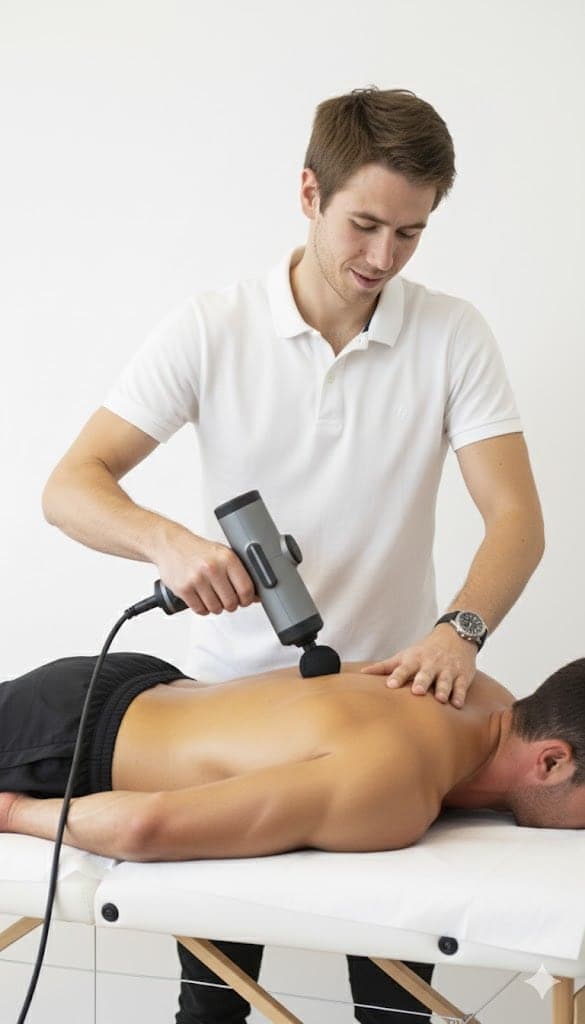
Written by
Chris
Massage therapist, nutrition and exercise physiologist
Norwegian-certified with a Bachelor’s in Physical Education and Nutrition and over ten years of clinical practice, working from a portable table in clients’ homes across the Paphos district.
This article is general information, not a medical diagnosis. If you have severe, worsening or unexplained pain, numbness, weakness, or pain after an accident, see a doctor first.