
Self-Massage Tips for Tension Relief: Expert-Backed Strategies That Actually Work
In short
Discover professional self-massage tips for tension relief from a body mechanics specialist with a decade of clinical experience. Learn advanced techniques that address the root causes of muscular tension.
Most people live with chronic tension they’ve simply learned to tolerate. After ten years of treating clients with advanced mechanical deep-tissue techniques, I’ve observed a troubling pattern: individuals spend years managing symptoms with superficial solutions instead of addressing the underlying mechanical dysfunction causing their discomfort. The self-massage techniques most people employ barely scratch the surface—literally and figuratively.
My background in Physical Education and Nutrition from Norway, combined with a decade of clinical practice, has taught me something critical: tension isn’t just “stress” or something you can simply “relax away.” It’s a mechanical problem rooted in fascial adhesions, trigger point formations, and neuromuscular dysfunction. While professional intervention—particularly advanced mechanical deep-tissue work—remains the gold standard for lasting relief, strategic self-massage can serve as a valuable maintenance tool between sessions.
Let me share what actually works, based on biomechanical principles and clinical outcomes I’ve witnessed firsthand.
Understanding Tension: Why Most Self-Massage Approaches Fail
Before I outline effective self-massage tips for tension relief, you need to understand why your previous attempts likely disappointed you. The fundamental issue is depth and precision. Human hands—even skilled ones—have limitations. Your own hands, working on your own body, face even greater mechanical disadvantages due to positioning constraints and the inability to generate sufficient force without creating compensatory tension elsewhere.
I’ve built my entire practice around a specialized mechanical approach precisely because I recognized these limitations early in my career. The machine I use delivers precision, power, and consistency that manual techniques simply cannot match. It reaches tension at its root, working deeper than hands while maintaining complete control over intensity.
This doesn’t mean self-massage is worthless. It means you must be strategic, focusing on accessible areas where you can generate sufficient pressure and understanding that you’re performing maintenance, not corrective therapy.
The Biomechanical Reality of Chronic Tension
Chronic tension develops through repetitive strain patterns, postural dysfunction, and compensatory movement strategies your nervous system adopts to protect injured or compromised tissues. Over time, these protective patterns become habitual, creating layers of fascial restriction and trigger point formations that require substantial mechanical force to release.
When clients first come to me, they often express frustration: “I’ve tried everything—foam rolling, massage guns, stretching—but nothing provides lasting relief.” The reason is simple. They’re working superficially on what is fundamentally a deep structural problem. Surface-level techniques might provide temporary symptom reduction, but they don’t address the mechanical dysfunction driving the tension cycle.
Self-Massage Tips for Tension Relief: Advanced Techniques for Maximum Impact
Given the limitations we’ve established, here are the self-massage approaches I recommend to my clients between our sessions. These techniques focus on areas where you can actually generate meaningful pressure and where the anatomy allows effective self-treatment.
Neck and Shoulder Complex: The Modern Epidemic
The neck and shoulder region harbors tension in nearly every adult I treat. Hours spent in flexed postures—working at computers, looking at phones—create chronic loading patterns that result in upper trapezius hypertrophy, levator scapulae dysfunction, and suboccipital tension.
Upper Trapezius Release: Contrary to popular belief, simply squeezing your trapezius provides minimal benefit. Instead, use your opposite hand to apply sustained pressure (30-90 seconds) to identified trigger points within the muscle belly. The key is duration, not aggressive kneading. You’re attempting to create a sustained compression that allows the nervous system to down-regulate the hyperactive trigger point.
Position yourself so your working arm is supported—leaning against a wall or doorframe helps prevent compensatory tension in the working shoulder. Apply pressure gradually, increasing slowly as the tissue yields. You should feel a deep, somewhat uncomfortable sensation that radiates (often toward the head or down the arm), but never sharp pain.
Suboccipital Triangle: These small muscles at the base of your skull become chronically shortened in forward head posture. Using your fingertips, locate the bony ridge at the skull’s base. Apply gentle, sustained pressure just below this ridge, working systematically across the area. The suboccipitals respond well to sustained compression combined with slow, small nodding movements of your head.
Forearm and Hand: The Digital Age Casualties
If you work with your hands—typing, gripping tools, manual labor—forearm tension is inevitable. The forearm contains dense layers of muscles controlling finger and wrist movement, prone to developing adhesions and trigger points.
Forearm Stripping: Support your forearm on a table, palm facing up. Using the thumb of your opposite hand, apply pressure and slowly drag from just below the elbow toward the wrist. Work systematically across the entire forearm width, then repeat with the palm facing down to address the extensor compartment.
This technique works because you’re following the muscle fiber direction while applying controlled longitudinal pressure. You’ll often discover extremely tender areas—these are precisely where chronic tension has accumulated.
Thenar and Hypothenar Eminences: The muscle masses at the base of your thumb and little finger become remarkably tight with repetitive gripping. Use your opposite thumb to apply circular, sustained pressure into these areas. Many clients report immediate improvement in grip comfort and hand function with consistent attention to these regions.
Tool-Assisted Self-Massage: Extending Your Capabilities
While I advocate for mechanical precision in professional treatment, certain tools can extend your self-massage capabilities by providing mechanical advantage and access to difficult regions.
| Tool | Best Application | Technique Principle | Limitations |
|---|---|---|---|
| Lacrosse Ball | Gluteal region, thoracic paraspinals | Body weight provides pressure; small diameter creates focal compression | Difficult to control precisely; can create compensatory tension |
| Foam Roller | IT band, thoracic spine, calves | Broader surface distributes pressure; good for general tissue mobilization | Too superficial for deep adhesions; inconsistent pressure application |
| Massage Gun | Large muscle groups (quadriceps, hamstrings) | Percussive therapy may reduce muscle tone temporarily | Largely superficial; unclear mechanism; often overhyped |
| Thumb Savers/Hook Tools | Upper trapezius, levator scapulae | Mechanical advantage reduces hand strain during pressure application | Limited versatility; technique still requires skill |
I’ll be direct: tools are supplements, not solutions. I’ve treated countless individuals who invested heavily in devices promising breakthrough results, only to find themselves still struggling with chronic tension. The fundamental issue remains—without addressing the underlying mechanical dysfunction through properly applied deep-tissue work, you’re managing symptoms indefinitely.
The Posterior Chain: Back, Glutes, and Hamstrings
These regions present particular challenges for self-massage due to access limitations and the depth of tissue involved.
Gluteal Release Using a Ball: Sit on a firm surface with a lacrosse ball or similar tool positioned under one gluteal region. Slowly shift your weight, exploring the area systematically. When you locate a trigger point (you’ll know—the discomfort is distinctive), maintain pressure for 60-90 seconds while breathing deeply.
The gluteus medius, in particular, harbors trigger points that contribute to lower back pain and hip dysfunction. This muscle lies beneath the gluteus maximus, requiring significant pressure to access effectively. Lean into the ball gradually, allowing your nervous system time to adapt to the pressure.
Thoracic Paraspinals: Lie supine with a foam roller positioned perpendicular to your spine at mid-back level. Support your head with your hands, lift your hips slightly, and slowly roll up and down a few inches. This addresses the erector spinae and multifidus muscles that become chronically shortened in prolonged sitting.
A critical note: this is not “cracking your back.” You’re mobilizing soft tissue. The audible pops some people experience are cavitation within the facet joints—not inherently problematic, but also not the therapeutic goal.
Jaw and Temporalis: The Hidden Tension Reservoir
Temporomandibular dysfunction and chronic jaw clenching create enormous tension that radiates throughout the entire head and neck. After a decade of clinical work, I’ve learned that addressing jaw tension often provides dramatic improvements in headache frequency and intensity.
Masseter Release: Place your fingers on your jaw muscles (just in front of the angle of your mandible). Clench your teeth briefly to identify the muscle, then relax. Apply gentle, sustained pressure while slowly opening and closing your mouth. The masseter responds well to this combination of compression and active movement.
Temporalis Technique: The temporalis muscle fans across your temple. Using your fingertips, apply circular pressure systematically across this area. Many people unconsciously clench this muscle during concentration or stress, creating persistent headache patterns.
I regularly share this observation with clients: the jaw complex reveals enormous amounts about overall stress patterns and nervous system regulation. Individuals who chronically clench or grind their teeth (bruxism) invariably present with widespread muscular tension. Addressing the jaw provides symptomatic relief, but truly resolving the issue requires examining the broader stress response and potentially addressing underlying sleep disorders or psychological factors.
Creating a Strategic Self-Maintenance Protocol
Random, occasional self-massage provides minimal benefit. What you need is a systematic approach integrated into your daily routine. Here’s the framework I recommend to clients between our dedicated sessions.
Daily Micro-Sessions: 5-10 Minutes
Rather than marathon self-massage sessions, brief daily interventions prove more effective. Select 2-3 problem areas and work them systematically for a few minutes each. Consistency matters far more than duration.
Morning protocol example:
- Suboccipital release: 2 minutes
- Upper trapezius trigger points: 3 minutes per side
- Forearm stripping: 2 minutes per arm
Evening protocol example:
- Gluteal release with ball: 3 minutes per side
- Thoracic roller work: 3 minutes
- Jaw and temporalis: 2 minutes
Understanding When Self-Massage Isn’t Enough
Let me share a story that illustrates an important principle. Several years ago, a competitive cyclist came to me after months of attempting to self-manage chronic IT band syndrome. He’d invested in every tool on the market—rollers, balls, massage guns, specialized hooks. He’d spent hours weekly working on the problem area. Yet his pain persisted, eventually limiting his training significantly.
During our first session using my specialized mechanical approach, we discovered the actual problem wasn’t his IT band at all. He had developed severe adhesions in his tensor fasciae latae and gluteus medius from compensating for hip extension weakness. The IT band pain was a symptom, not the cause. Within three dedicated sessions, we’d addressed the mechanical dysfunction creating his symptoms. His pain resolved, his performance improved, and his relationship with self-care shifted entirely.
He still performs maintenance work between our monthly optimization sessions, but he now understands the distinction between maintenance and corrective therapy. Self-massage maintains improvements achieved through professional intervention. It doesn’t replace the deep mechanical work required to resolve chronic dysfunction.
The Pressure Paradox: How Much Force Is Appropriate?
One of the most common mistakes I observe in self-massage is inappropriate pressure application. People typically fall into two categories: those who barely apply any meaningful pressure (achieving nothing), and those who aggressively attack tissues (creating additional trauma).
The principle is simple but requires practice: you want sustained compression at sufficient depth to engage the dysfunctional tissue, maintained long enough for the nervous system to down-regulate the protective tension response. This typically means moderate pressure (6-7 out of 10 on a discomfort scale) sustained for 30-90 seconds.
Pain is not the goal. Discomfort indicating you’ve engaged restricted tissue is expected. Sharp, burning, or radiating pain that doesn’t diminish suggests you’re either working too aggressively or have encountered a problem requiring professional assessment.
My mechanical approach allows precise pressure titration—starting superficially and progressively increasing depth as tissues release. This controlled progression simply isn’t achievable with manual techniques or most self-massage tools.
Breathing and Nervous System Regulation
Here’s something most self-massage guides completely overlook: the quality of your breathing during the technique directly influences the outcome. When you hold your breath or breathe shallowly during pressure application, you’re signaling your nervous system to maintain protective tension. This counteracts the entire purpose.
During any sustained pressure technique:
- Establish slow, diaphragmatic breathing before applying pressure
- Maintain this breathing pattern throughout the compression
- Visualize the targeted tissue softening and releasing with each exhale
- Never hold your breath or create compensatory tension elsewhere
This isn’t mystical thinking—it’s applied neuroscience. Your autonomic nervous system governs muscle tone. Controlled breathing activates parasympathetic responses that facilitate tissue release.
Common Mistakes That Limit Self-Massage Effectiveness
After working with hundreds of clients, I’ve identified recurring errors that sabotage self-massage efforts:
Mistake One: Treating Symptoms Instead of Causes
If your neck is tight, the problem might originate in your thoracic spine or shoulder blade positioning. If your lower back aches, the culprits are often hip flexor tightness or gluteal weakness creating compensatory loading patterns. Self-massage applied to the symptomatic area provides temporary relief at best.
This is precisely why my approach emphasizes comprehensive biomechanical assessment. I identify the mechanical dysfunction driving your symptoms, then address it systematically. You can self-massage your neck daily, but if your forward head posture and rounded shoulders remain uncorrected, tension will persistently regenerate.
Mistake Two: Insufficient Duration
Quick, superficial rubbing accomplishes essentially nothing. Trigger points and fascial restrictions require sustained compression to release. Most people give up after 10-15 seconds, right when the tissue is beginning to respond.
Mistake Three: Excessive Frequency on the Same Area
More isn’t always better. Aggressive daily work on the same trigger point can create inflammation and sensitization rather than resolution. Allow 48 hours between intensive work on specific points.
Mistake Four: Ignoring Broader Movement Patterns
Self-massage without addressing the movement dysfunctions creating your tension is futile. If you sit in a collapsed posture for eight hours daily, then spend ten minutes massaging your neck, you’ve accomplished approximately nothing in the broader context.
This is why I work with clients through dedicated partnerships, not isolated sessions. We develop customized plans addressing not just tissue restrictions but the habitual patterns perpetuating them. It’s an investment in long-term optimization, not an expense for temporary symptom management.
Integrating Self-Massage with Professional Treatment
Let me be clear about something: I’m sharing these self-massage tips for tension relief because strategic self-care enhances and maintains the results we achieve together in dedicated sessions. I’m not suggesting self-massage replaces professional treatment any more than dental flossing replaces professional cleanings.
The distinction matters. Self-massage performs maintenance on tissues we’ve already addressed and released through deep mechanical work. It helps sustain improved mobility and reduced tension between optimization sessions. It does not resolve chronic mechanical dysfunction on its own.
The Specialized Machine Advantage
My mechanical approach delivers three critical elements that self-massage cannot:
Precision: The tool allows millimeter-level accuracy in targeting specific adhesions and trigger points, working around nerves and blood vessels with complete control.
Power: It generates sustained force well beyond manual capability, reaching tension at its root in deep tissue layers. This depth is simply unachievable through self-massage.
Consistency: Every treatment maintains the same quality and effectiveness. There are no “off days.” You receive optimal intervention every session.
These aren’t marketing claims—they’re biomechanical realities I’ve validated through a decade of clinical outcomes. Clients who’ve experienced both traditional manual massage and my mechanical approach consistently report the difference is dramatic.
Frequently Asked Questions About Self-Massage for Tension Relief
How often should I perform self-massage?
For maintenance purposes, brief daily sessions (5-10 minutes) targeting your primary tension areas prove most effective. For specific trigger points causing acute discomfort, work them once daily with 60-90 seconds of sustained pressure, allowing 48 hours recovery before intensive re-treatment.
Can self-massage cause damage?
Appropriate self-massage is safe for most individuals. However, excessive pressure, too-frequent treatment of the same area, or aggressive techniques on acute injuries can create inflammation or worsen conditions. If you experience increased pain, bruising, or symptoms that persist beyond 24 hours after self-massage, discontinue and seek professional assessment.
Why does the tension return even after effective self-massage?
Because you’re treating symptoms, not the underlying mechanical dysfunction. Tension regenerates when the postural habits, movement patterns, and biomechanical imbalances creating it remain unaddressed. This is why comprehensive professional treatment focusing on root causes delivers lasting results while isolated self-massage provides only temporary relief.
Is more pressure always better?
No. Effective pressure engages restricted tissue without creating protective splinting or causing tissue damage. Moderate, sustained compression (6-7 out of 10 discomfort) proves more effective than aggressive, painful pressure that triggers defensive responses.
How long before I notice results from regular self-massage?
For immediate tension relief, you may notice reduced discomfort within the same session. For meaningful changes in chronic patterns, consistent daily practice over 2-3 weeks typically produces noticeable improvements—assuming you’re addressing accessible areas where self-massage can actually work effectively.
What’s the difference between trigger points and muscle knots?
“Muscle knots” is lay terminology for what we clinically identify as myofascial trigger points—hyperirritable spots within taut bands of skeletal muscle that produce local and referred pain. Trigger points have specific diagnostic criteria and require sustained compression or other interventions to deactivate.
Should self-massage hurt?
You should feel deep discomfort or a “good hurt” sensation when working restricted tissue. Sharp pain, burning, radiating symptoms that intensify rather than diminish, or pain that persists after releasing pressure suggests inappropriate technique or a condition requiring professional evaluation.
Can I perform self-massage if I have a chronic pain condition?
This requires individualized assessment. Conditions like fibromyalgia, chronic regional pain syndrome, or systemic inflammatory disorders may respond poorly to standard self-massage approaches. Consult with a qualified healthcare provider who understands your specific condition before implementing aggressive self-treatment.
Investment in Long-Term Optimization, Not Temporary Relief
I’ve spent this article sharing professional self-massage tips for tension relief because I want you equipped with effective maintenance tools. But I won’t misrepresent what self-massage can achieve.
Chronic tension, persistent pain, and biomechanical dysfunction require professional intervention that addresses root causes, not superficial symptom management. My specialized mechanical approach has delivered lasting relief and performance optimization for clients who’d previously tried everything else without lasting success.
The difference isn’t incremental—it’s categorical. We’re talking about resolving problems that have limited your quality of life for years, often in a handful of dedicated sessions. We’re discussing genuine biomechanical correction that allows you to move, perform, and live without constant discomfort.
I travel to your location with a professional bench and everything required. We work together through a customized plan specific to your mechanical dysfunction and goals. It’s not a series of isolated massage sessions—it’s a dedicated partnership focused on lasting results.
The Choice Between Management and Resolution
You face a decision that many of my clients struggled with before working with me: continue managing symptoms indefinitely through self-care techniques that provide temporary relief, or invest in addressing the mechanical problems at their source.
Self-massage has its place. It’s valuable for maintenance, beneficial for body awareness, useful for minor tension accumulation between professional sessions. But it’s not a substitute for corrective therapy any more than over-the-counter pain medication resolves the underlying injury causing your discomfort.
After a decade of professional practice, I’ve witnessed too many individuals waste years on approaches that couldn’t possibly deliver lasting results. The human body operates according to mechanical principles. When those mechanics are compromised—through injury, repetitive strain, postural dysfunction, or compensatory patterns—superficial interventions simply don’t reach the problem.
Moving Forward: Strategic Self-Care Within a Comprehensive Approach
Implement the self-massage tips for tension relief I’ve outlined here. Be consistent, use appropriate pressure, focus on accessible areas where you can actually generate meaningful compression, and understand you’re performing maintenance, not correction.
Pay attention to what your body tells you. If despite diligent self-care your tension persists, your pain limits activities you value, or your performance plateaus due to chronic tightness and restricted movement—recognize these as signals that deeper intervention is necessary.
I’ve built my practice on delivering results that seemed impossible to clients who’d exhausted other options. The specialized mechanical approach I employ isn’t experimental or theoretical—it’s a refined methodology validated through hundreds of successful outcomes over ten years of dedicated practice.
Your body deserves more than perpetual symptom management. It deserves comprehensive treatment that addresses dysfunction at its source, delivered with precision and power that manual techniques cannot match, providing consistent results that restore optimal function and relieves chronic pain.
The question isn’t whether professional intervention works—I’ve proven that decisively through a decade of clinical practice. The question is whether you’re ready to invest in lasting resolution rather than continuing to manage symptoms that will persist until their mechanical causes are properly addressed.
Self-massage maintains. Professional treatment resolves. Understand this distinction, and you’ll make decisions about your body’s care from a position of clarity rather than hope that the next tool or technique might finally provide the relief you’ve been seeking.
Evidence and limits
Massage may help with some symptoms, but benefits and evidence vary by condition. It does not replace medical assessment or treatment. A page update is not evidence of an independent clinical review.
Further reading: Massage therapy: evidence, safety and limitations by US National Center for Complementary and Integrative Health. This is general background reading, not verification of every claim in this article.
How we describe evidence and updates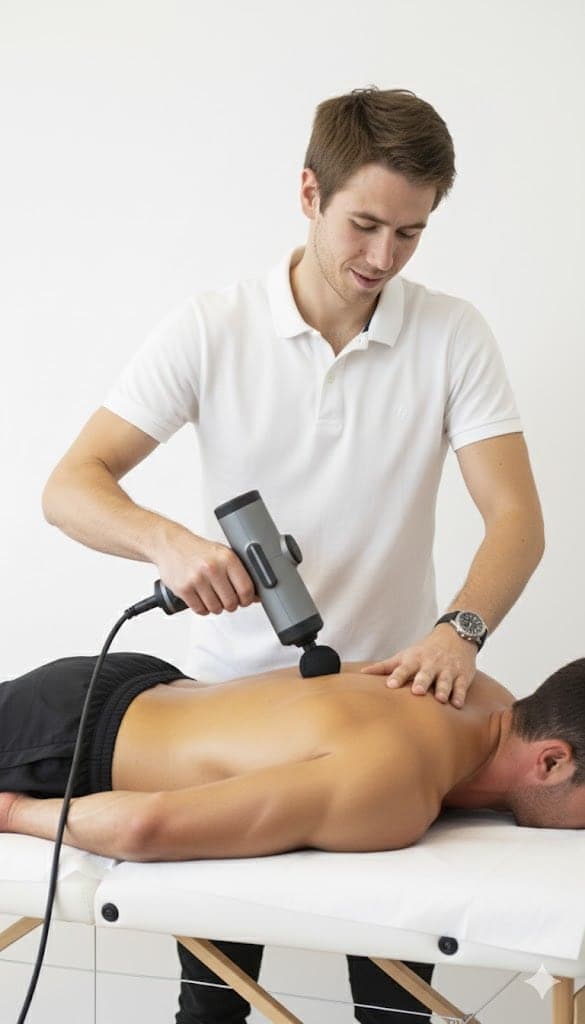
Written by
Chris
Massage therapist, nutrition and exercise physiologist
Norwegian-certified with a Bachelor’s in Physical Education and Nutrition and over ten years of clinical practice, working from a portable table in clients’ homes across the Paphos district.
This article is general information, not a medical diagnosis. If you have severe, worsening or unexplained pain, numbness, weakness, or pain after an accident, see a doctor first.