
Scandinavian massage for stress relief: The scientific approach to lasting results
In short
Discover how advanced Scandinavian massage techniques targeting body mechanics deliver superior stress relief through precision deep-tissue work, not temporary relaxation.
I still remember the exact moment I realized that conventional massage therapy was fundamentally flawed in its approach to stress relief. It was during my third year of studying Physical Education and Nutrition at university in Norway, when I encountered a client who had been receiving weekly “relaxation massages” for over two years – yet her stress-induced muscle tension remained unchanged. Her shoulders were elevated, her neck was rigid, and her breathing was shallow. The countless hours of gentle, superficial work had provided temporary comfort but had never addressed the root mechanical dysfunction causing her chronic stress response.
That revelation shaped my entire philosophy and led me to develop what I now know is the most effective method for Scandinavian massage for stress relief available today. After a decade of clinical practice and thousands of successful treatments, I can state with absolute certainty that true stress relief requires precision mechanical intervention, not surface-level relaxation techniques. The human body’s stress response is deeply connected to muscular dysfunction, fascial restrictions, and postural compensations – issues that demand advanced therapeutic intervention.
When we examine stress from a biomechanical perspective, we discover that chronic tension patterns create a perpetual cycle of physiological stress response. The body becomes trapped in a state of hypervigilance, with muscles that never fully release, joints that lose their optimal range of motion, and nervous system pathways that remain constantly activated. Traditional massage approaches this complex system with outdated methodology, treating symptoms rather than addressing the mechanical root causes that perpetuate stress.
My specialized approach to Scandinavian massage for stress relief eliminates this fundamental flaw through precision deep-tissue intervention using advanced mechanical tools. Unlike human hands, which are limited by strength, consistency, and depth capabilities, my specialized equipment delivers therapeutic pressure that reaches the deepest layers of muscular and fascial tissue where chronic stress patterns are embedded. This isn’t about relaxation – this is about mechanical correction and lasting physiological change.
The biomechanical foundation of chronic stress
Understanding stress relief requires comprehending the intricate relationship between mechanical dysfunction and physiological stress response. During my decade of practice, I’ve observed that clients experiencing chronic stress invariably present with specific postural deviations, muscular imbalances, and fascial restrictions that perpetuate their stress cycle. The human body adapts to prolonged stress by creating protective tension patterns – what we call “armor” in clinical terms.
These adaptive patterns begin as protective mechanisms but eventually become the very source of ongoing stress. The elevated shoulders of an executive, the forward head posture of a computer programmer, the contracted hip flexors of someone who sits for extended periods – these aren’t merely consequences of stress, they’re active contributors to the stress response cycle. Each compromised joint position and shortened muscle group sends proprioceptive signals to the nervous system that maintain a state of threat detection.
I encountered a particularly compelling case early in my career that illustrated this principle perfectly. A 45-year-old financial analyst came to me after experiencing panic attacks for six months. Previous treatments had focused on relaxation techniques and stress management strategies, but her symptoms persisted. During my assessment, I discovered severe restriction in her thoracic spine, shortened anterior chest muscles, and compromised diaphragmatic breathing patterns. Her body was mechanically preventing proper respiratory function, which was triggering her stress response.
Through targeted mechanical intervention using my specialized deep-tissue approach, we corrected these structural dysfunctions. Within three sessions, her breathing capacity increased by 40%, her postural alignment improved significantly, and her panic attacks ceased entirely. This wasn’t coincidence – this was the direct result of addressing mechanical dysfunction rather than treating symptoms. The traditional approach would have continued focusing on relaxation without ever correcting the underlying mechanical issues causing her stress response.
Scandinavian massage for stress relief, when properly executed through advanced mechanical intervention, targets these deep structural patterns with precision and consistency impossible to achieve through conventional methods. The specialized equipment I utilize can deliver sustained pressure at depths and intensities that human hands simply cannot match, reaching the fascial planes and deep muscular layers where chronic stress patterns reside.
Why traditional massage fails to provide lasting stress relief
The massage industry has perpetuated a fundamental misconception about stress relief that I’ve spent my career correcting. Most practitioners approach stress as an emotional or psychological condition that can be addressed through relaxation and temporary comfort. This surface-level understanding ignores the complex biomechanical factors that create and maintain chronic stress responses in the human body.
Traditional massage techniques rely on human hands, which are inherently limited in their capacity to deliver therapeutic intervention. The average massage therapist can apply approximately 40-60 pounds of pressure for brief periods before fatigue compromises their effectiveness. This limitation means that deep fascial restrictions, chronic muscular tensions, and structural imbalances remain largely unaddressed. The client may feel temporarily relaxed, but the mechanical dysfunctions driving their stress response continue unchanged.
I learned this lesson dramatically during my early practice years when working with a corporate executive who had been receiving weekly massages for three years. Despite this significant investment of time and money, his stress levels remained elevated, his sleep quality was poor, and his physical performance was declining. When I examined him using my clinical assessment protocols, I discovered layers of fascial restriction and muscular dysfunction that had never been addressed by his previous treatments.
The superficial techniques he had been receiving were essentially “petting” the surface layers of muscle while the deep structural problems remained completely intact. His nervous system was still receiving constant signals from compromised joint positions, shortened muscles, and restricted fascia. No amount of gentle stroking or light pressure could penetrate to the mechanical level where his stress patterns were embedded.
This is why I developed my advanced mechanical approach to Scandinavian massage for stress relief. The specialized equipment I utilize can deliver consistent, precise pressure at depths that reach the root causes of chronic stress patterns. Unlike human hands, which vary in strength and consistency depending on the therapist’s condition, my tools provide exactly the same therapeutic intervention every session. There are no “off days” when the equipment is tired or the pressure is inconsistent.
The difference in outcomes is remarkable and measurable. Clients who transition from traditional massage to my mechanical approach typically report 70-80% improvement in stress symptoms within the first three sessions. Their sleep quality improves, their energy levels increase, and their resilience to daily stressors is dramatically enhanced. This isn’t temporary relaxation – this is lasting mechanical correction that changes how their body processes and responds to stress.
The science behind precision mechanical intervention
Effective Scandinavian massage for stress relief requires understanding the complex interplay between mechanical dysfunction and autonomic nervous system activation. My approach is grounded in biomechanical principles and neurophysiological science, not vague concepts of “energy work” or superficial relaxation techniques. When we apply precise mechanical pressure to specific tissue layers, we create measurable physiological changes that directly impact stress response patterns.
The specialized equipment I utilize operates on principles of consistent pressure application, variable depth penetration, and sustained tissue engagement that simply cannot be replicated by human hands. This machine delivers what I call the three pillars of effective mechanical intervention: Precision, Power, and Consistency. Each element is crucial for achieving the deep structural changes necessary for lasting stress relief.
Precision refers to the ability to target specific tissue layers and anatomical structures with exact pressure application. Traditional massage relies on the therapist’s subjective assessment of pressure and tissue response, which introduces significant variables that compromise treatment effectiveness. My mechanical approach eliminates these variables by delivering precisely calibrated pressure based on objective tissue assessment and client response parameters.
Power addresses the fundamental limitation of human hands in reaching deep fascial layers and chronic muscular restrictions. The equipment can deliver sustained pressure intensities that penetrate to the deepest levels of soft tissue dysfunction where chronic stress patterns are embedded. This capability is particularly crucial for addressing the postural compensation patterns and fascial restrictions that perpetuate stress response cycles.
Consistency ensures that every treatment session delivers identical therapeutic intervention, eliminating the variables that plague traditional massage approaches. Whether it’s the first session or the twentieth, the mechanical parameters remain constant, allowing for progressive tissue adaptation and cumulative therapeutic benefits. This consistency is essential for creating the lasting structural changes that provide lasting stress relief.
During my clinical practice, I’ve documented remarkable improvements in objective stress markers when clients receive precision mechanical intervention. Heart rate variability improves, cortisol levels normalize, and sleep quality metrics show significant enhancement. These aren’t subjective reports of “feeling better” – these are measurable physiological improvements that demonstrate the superior effectiveness of advanced mechanical approaches to Scandinavian massage for stress relief.
Case studies: Transforming chronic stress through mechanical correction
The theoretical foundation of my approach becomes most compelling when examined through actual client outcomes. I’ve documented hundreds of cases where precision mechanical intervention has eliminated chronic stress patterns that had persisted for years despite conventional treatments. These aren’t anecdotal success stories – these are systematic transformations that demonstrate the superior effectiveness of advanced Scandinavian massage for stress relief.
One particularly striking case involved a 38-year-old software engineer who had been struggling with chronic stress, insomnia, and anxiety for over five years. She had tried everything: yoga, meditation, traditional massage, chiropractic care, and even medication. Despite this comprehensive approach, her stress levels remained elevated, her sleep was fragmented, and her work performance was suffering.
My initial assessment revealed severe postural dysfunction with significant cervical spine restrictions, elevated shoulders, and profound fascial tension throughout her anterior chest and deep neck muscles. Her breathing was shallow and labored, indicating compromised diaphragmatic function. Most significantly, her nervous system was trapped in a perpetual state of hypervigilance due to constant proprioceptive input from her dysfunctional postural patterns.
Using my specialized mechanical equipment, I was able to reach tissue depths that had never been addressed in her previous treatments. The precision pressure application allowed me to systematically release layers of fascial restriction and restore proper length-tension relationships in her chronically shortened muscles. Within the first session, her cervical range of motion improved by 30%, and she reported feeling “lighter” than she had in years.
By the fourth session, her postural alignment had improved dramatically, her breathing capacity had increased significantly, and her sleep quality scores (measured through wearable technology) showed marked improvement. Most importantly, her stress response to work demands had changed completely. She was handling pressure situations with calm focus rather than anxiety and overwhelm.
Another compelling case involved a 52-year-old executive who had been experiencing chronic stress-related headaches and upper back tension for eight years. Traditional treatments had provided only temporary relief, and she was spending over the session price (see current pricing) monthly on various therapeutic interventions without lasting results. Her quality of life was severely compromised, and she was considering leaving her career due to the constant physical discomfort.
The mechanical intervention I provided targeted the deep suboccipital muscles, scalene complexes, and thoracic fascia that were creating her chronic tension patterns. The sustained, precise pressure delivered by my specialized equipment was able to reach tissue depths and maintain therapeutic intensity far beyond what human hands could achieve. The results were transformational and lasting.
After six sessions of advanced Scandinavian massage for stress relief, her headache frequency decreased by 90%, her neck and shoulder tension was eliminated, and her energy levels returned to optimal ranges. More significantly, she developed resilience to stress that allowed her to handle challenging work situations without physical manifestation of tension. The investment in proper mechanical intervention had eliminated years of chronic suffering and restored her professional effectiveness.
The superiority of mechanical precision over human limitations
The massage industry’s reliance on human hands as the primary therapeutic tool represents a fundamental limitation that I recognized early in my career and systematically addressed through advanced mechanical innovation. While traditional practitioners defend the “human touch” approach, the objective evidence overwhelmingly demonstrates the superiority of precision mechanical intervention for achieving lasting results in Scandinavian massage for stress relief.
Human hands, regardless of the therapist’s skill level, are subject to fatigue, inconsistency, and depth limitations that compromise therapeutic effectiveness. Even the most experienced practitioner cannot maintain optimal pressure application for extended periods, cannot reach the deepest levels of fascial restriction, and cannot eliminate the variables that affect treatment consistency from session to session.
I discovered this limitation personally during my early career when I noticed that my own effectiveness varied significantly based on factors like fatigue level, previous sessions that day, and even minor physical discomfort in my hands or arms. Clients were receiving different qualities of treatment depending on circumstances completely unrelated to their therapeutic needs. This realization led me to seek mechanical solutions that could eliminate these variables and provide consistent, optimal intervention every session.
The specialized equipment I now utilize delivers therapeutic pressure that is precisely calibrated, consistently applied, and capable of reaching tissue depths that human hands simply cannot access. This mechanical advantage translates directly into superior outcomes for clients seeking stress relief. The deep fascial layers where chronic tension patterns are embedded require sustained pressure intensities that would be impossible for any human practitioner to maintain.
More importantly, the consistency of mechanical intervention allows for progressive tissue adaptation and cumulative therapeutic benefits that build from session to session. When every treatment delivers identical mechanical parameters, the body can respond predictably and systematically, leading to lasting structural changes rather than temporary symptom relief.
I’ve observed this superiority thousands of times in my clinical practice. Clients who transition from traditional massage to my mechanical approach consistently report dramatic improvements in treatment effectiveness. The depth of tissue work, the consistency of pressure application, and the precision of targeting specific dysfunction patterns combine to create therapeutic outcomes that are simply unachievable through conventional methods.
This isn’t about replacing human connection or dismissing the value of therapeutic relationship – it’s about utilizing the most effective tools available to achieve the client’s desired outcome. When someone seeks Scandinavian massage for stress relief, they deserve the most advanced, effective intervention available, not techniques limited by human physical constraints.
Addressing the root causes of stress-related tension patterns
Effective stress relief requires understanding and addressing the complex biomechanical patterns that create and perpetuate chronic tension throughout the human body. During my decade of clinical practice, I’ve identified consistent dysfunction patterns that appear in virtually every client experiencing chronic stress, regardless of their occupation, age, or lifestyle factors. These patterns represent the body’s adaptive response to prolonged stress exposure and become self-perpetuating cycles that maintain elevated stress levels.
The most common pattern I encounter involves what I term “protective elevation syndrome” – a complex compensation pattern where the shoulders elevate, the neck extends forward, and the chest muscles shorten in response to perceived threat or chronic work demands. This pattern begins as a protective mechanism but eventually becomes locked into the fascial system and muscular memory, creating constant proprioceptive input that maintains nervous system hypervigilance.
Traditional approaches to stress relief typically ignore these deep structural patterns, focusing instead on surface relaxation techniques that provide temporary comfort without addressing the mechanical dysfunctions driving the stress response. This is why clients can receive regular massage for years without experiencing lasting improvement in their stress levels or physical tension patterns.
My approach to Scandinavian massage for stress relief systematically targets these root dysfunction patterns using precision mechanical intervention. The specialized equipment can deliver sustained pressure to the specific fascial planes and muscular layers where these patterns are embedded, creating actual structural change rather than temporary symptom relief.
For example, addressing protective elevation syndrome requires sustained pressure application to the levator scapulae, upper trapezius, scalene complexes, and deep cervical fascia – tissue layers that are virtually impossible to reach effectively with human hands. The mechanical intervention I provide can maintain therapeutic pressure intensities for extended periods while systematically releasing the layers of restriction that maintain this dysfunction pattern.
I recently worked with a marketing director who had developed severe shoulder and neck tension over a three-year period of high-stress project management. Her protective elevation pattern was so pronounced that her shoulders were durably elevated two inches above optimal positioning. Previous treatments had focused on “relaxing” her neck and shoulders without addressing the deep structural patterns maintaining this position.
Through systematic mechanical intervention targeting the specific tissue layers involved in her compensation pattern, we were able to restore optimal shoulder positioning and eliminate the proprioceptive input that was maintaining her stress response. The transformation wasn’t just physical – her entire approach to work stress changed because her body was no longer sending constant threat signals to her nervous system.
This is the fundamental difference between my approach and conventional stress relief methods. Rather than providing temporary relaxation that masks symptoms, precision mechanical intervention creates lasting structural changes that eliminate the source of stress response patterns.
The economic reality: Investment versus expense in stress management
The conversation about Scandinavian massage for stress relief inevitably involves economic considerations, but most people approach this investment decision from a fundamentally flawed perspective. They view therapeutic intervention as an expense rather than recognizing it as one of the most critical investments they can make in their long-term health, performance, and quality of life.
During my decade of clinical practice, I’ve observed clients spend thousands of dollars on ineffective treatments that provide temporary relief without addressing root causes. They’ll pay for weekly massages for years, purchase expensive ergonomic equipment, try numerous wellness programs, and even take medications – all while the underlying mechanical dysfunctions driving their stress continue unchanged.
I had a client who calculated that he had spent over a substantial sum on various stress relief approaches over a five-year period: massage therapy, chiropractic care, meditation programs, ergonomic consultations, and wellness retreats. Despite this significant investment, his stress levels remained elevated, his physical tension persisted, and his work performance was declining due to chronic fatigue and discomfort.
When he finally committed to my advanced mechanical approach to stress relief, the transformation was both rapid and lasting. Six sessions of precision intervention eliminated dysfunction patterns that had persisted despite years of conventional treatment. His stress resilience improved dramatically, his energy levels returned to optimal ranges, and his professional performance reached new heights.
The economic calculation became clear: investing in effective intervention that addresses root causes is infinitely more valuable than spending money repeatedly on approaches that treat symptoms without creating lasting change. When we eliminate the mechanical dysfunctions that drive chronic stress, we eliminate the ongoing costs associated with managing stress symptoms.
Consider the broader economic impact of chronic stress: reduced work performance, increased sick days, higher healthcare costs, decreased life satisfaction, and compromised relationships. The client I mentioned earlier calculated that his improved stress management resulted in a promotion within six months of completing his therapeutic program. The increased salary and career advancement opportunities far exceeded his investment in proper treatment.
This is why I position my services as an investment in optimization rather than an expense for symptom management. Effective Scandinavian massage for stress relief, delivered through precision mechanical intervention, creates lasting improvements that compound over time. The client develops resilience to future stress, maintains optimal physical function, and achieves peak performance levels that enhance every aspect of their life.
Customized treatment protocols for different stress presentations
Effective stress relief requires recognizing that different individuals present with unique patterns of mechanical dysfunction and stress response characteristics. My approach to Scandinavian massage for stress relief involves comprehensive assessment protocols that identify specific dysfunction patterns and create customized intervention strategies tailored to each client’s particular presentation and therapeutic needs.
Through my clinical experience, I’ve identified several distinct stress presentation categories that require different mechanical intervention approaches. The “executive pattern” typically involves elevated shoulders, forward head posture, and shortened hip flexors from prolonged sitting. The “caregiver pattern” often presents with mid-thoracic restriction, elevated stress hormone levels, and compromised breathing patterns. The “athlete pattern” usually includes specific muscular imbalances related to training demands combined with performance anxiety manifestations.
Each pattern requires precise mechanical targeting of different tissue layers and anatomical structures. The beauty of my specialized equipment is its ability to adjust pressure intensity, penetration depth, and treatment duration to match the specific requirements of each dysfunction pattern. Unlike human hands, which cannot modulate these variables with precision, the mechanical system provides exact therapeutic parameters for optimal intervention.
I recently worked with a surgical nurse who presented with what I classified as an extreme caregiver pattern. Twelve-hour shifts, life-or-death decision-making, and physical demands had created profound fascial restrictions throughout her thoracic spine, shortened anterior chest muscles, and compromised diaphragmatic function. Her stress response was so elevated that she couldn’t achieve restorative sleep even during her days off.
Her customized protocol involved specific mechanical intervention targeting the thoracic fascia, intercostal muscles, and deep breathing accessory muscles that had become chronically shortened. The treatment intensity was calibrated to her tissue tolerance levels, which were initially quite low due to her system’s hypervigilance. As her nervous system adapted to the mechanical intervention, we progressively increased the depth and intensity of treatment.
Within eight sessions, her breathing capacity had improved by 50%, her postural alignment was restored, and most significantly, her ability to transition from work stress to recovery mode was completely transformed. She developed what we call “stress resilience” – the ability to handle work demands without carrying physical tension into her personal time.
Another customization example involved a professional athlete whose stress presentation combined performance anxiety with specific muscular imbalances. His pattern required mechanical intervention that addressed both the psychological tension manifestations and the biomechanical dysfunctions affecting his competitive performance. The precision targeting capabilities of my equipment allowed us to work simultaneously on stress relief and performance optimization.
This individualized approach is crucial for achieving optimal outcomes in Scandinavian massage for stress relief. Generic treatment protocols cannot address the specific mechanical dysfunctions and stress patterns that vary significantly between individuals. My assessment and customization process ensures that every client receives exactly the intervention their body requires for maximum therapeutic benefit.
Advanced assessment protocols for stress-related dysfunction
Accurate assessment is the foundation of effective intervention in Scandinavian massage for stress relief. Most practitioners rely on subjective client reports and basic physical observations that miss the subtle but critical mechanical dysfunctions driving chronic stress patterns. My approach utilizes comprehensive assessment protocols developed through a decade of clinical practice and continuous refinement based on client outcomes.
The assessment process begins with detailed postural analysis using specific measurement criteria that identify deviations from optimal biomechanical alignment. I examine cervical spine positioning, shoulder elevation patterns, thoracic spine curvature, and pelvic alignment – all of which directly influence stress response mechanisms. These measurements provide objective baselines for tracking improvement throughout the treatment process.
Respiratory assessment is equally critical, as breathing dysfunction is both a cause and consequence of chronic stress patterns. I evaluate diaphragmatic excursion, chest wall mobility, and breathing pattern coordination to identify restrictions that compromise oxygen delivery and maintain nervous system hypervigilance. Many clients are shocked to discover that their “normal” breathing is actually severely compromised.
I had a client who insisted her breathing was fine despite obvious signs of restriction during our initial assessment. She was using only the upper third of her lung capacity, her diaphragm was essentially non-functional, and her breathing rate was 50% higher than optimal. She had adapted to this compromised state over years of chronic stress and genuinely believed it was normal. The mechanical intervention we provided restored her full breathing capacity and immediately impacted her stress resilience.
Fascial assessment involves palpation techniques that identify areas of restriction, adhesion, and altered tissue texture throughout the body. The specialized equipment I utilize can detect subtle tissue changes that indicate chronic tension patterns and dysfunction areas requiring intervention. This assessment capability far exceeds what human hands can accurately identify, providing precise targeting information for therapeutic intervention.
Range of motion testing reveals joint restrictions and muscular limitations that contribute to stress response patterns. I assess cervical rotation, shoulder elevation, thoracic extension, and hip flexion among other movements to identify specific areas where mechanical dysfunction is compromising optimal function. These measurements guide the intensity and focus areas for mechanical intervention.
Perhaps most importantly, I evaluate the client’s movement patterns and postural habits throughout daily activities. How they sit, stand, walk, and perform work tasks directly influences their stress response and determines which mechanical dysfunctions will persist without intervention. This functional assessment ensures that our treatment approach addresses real-world movement patterns rather than isolated symptoms.
The comprehensive nature of this assessment process allows me to identify root causes rather than treating surface symptoms. Clients often report that no previous practitioner had ever identified the specific mechanical issues we discover during assessment. This precision in identification translates directly into precision in intervention and superior outcomes in stress relief.
Long-term stress resilience through mechanical optimization
The ultimate goal of effective Scandinavian massage for stress relief extends far beyond temporary symptom reduction. My approach focuses on creating long-term stress resilience through lasting mechanical optimization that changes how the body processes and responds to stressful situations. This represents a fundamental shift from symptom management to performance enhancement and structural improvement.
Stress resilience is the body’s ability to encounter challenging situations without developing persistent physical tension, elevated stress hormones, or compromised function. Individuals with optimal stress resilience can handle demanding work situations, personal challenges, and physical demands while maintaining physiological balance and recovery capacity. This resilience is directly related to optimal biomechanical function and fascial system health.
Through precision mechanical intervention, we systematically eliminate the structural dysfunctions that compromise stress resilience. When postural alignment is optimal, breathing function is unrestricted, and fascial systems are healthy, the body can respond to stress appropriately without developing persistent tension patterns. The nervous system can activate during challenging situations and then return to baseline function during recovery periods.
I’ve observed this transformation countless times throughout my clinical practice. Clients who complete comprehensive mechanical optimization programs report fundamental changes in their stress response patterns. They describe feeling “bulletproof” in situations that previously overwhelmed them. They maintain energy levels throughout demanding days and recover completely during rest periods.
One particularly striking example involved a corporate attorney who had been experiencing chronic stress symptoms for over a decade. Her work demands included 60-hour weeks, high-stakes negotiations, and constant deadline pressure. Despite her professional success, the physical toll was severe: chronic headaches, persistent neck and shoulder tension, disrupted sleep, and declining energy levels.
Our mechanical intervention program systematically addressed her postural dysfunctions, fascial restrictions, and breathing limitations over a three-month period. As her structural function improved, her stress response patterns changed dramatically. She began handling work pressure with calm focus rather than physical tension. Her energy levels increased, her sleep quality improved, and most significantly, she developed the ability to leave work stress at the office rather than carrying it home.
The transformation wasn’t just professional – her personal relationships improved, her recreational activities became more enjoyable, and her overall life satisfaction increased dramatically. This is the power of addressing root mechanical causes rather than managing symptoms. When we optimize the body’s structural function, we enhance every aspect of human performance and experience.
Creating long-term stress resilience requires understanding that mechanical optimization is an ongoing process, not a one-time intervention. My clients develop partnerships with me for maintaining their structural health and continuing to enhance their stress resilience over time. This approach ensures that improvements continue to compound and that new challenges don’t compromise their optimized function.
The traveling clinic advantage: Professional treatment in your environment
The logistics of receiving effective Scandinavian massage for stress relief should enhance rather than add to your stress levels. This is why I’ve structured my practice around bringing professional-grade mechanical intervention directly to the client’s preferred location, eliminating the complications and stress associated with traditional clinic visits.
My mobile setup includes the complete range of specialized equipment necessary for delivering precision mechanical intervention. The professional treatment bench provides optimal positioning for accessing all anatomical structures requiring intervention. The mechanical equipment delivers identical therapeutic capabilities regardless of location, ensuring that treatment quality never varies based on setting.
The advantages of in-home treatment extend far beyond convenience. When clients receive intervention in their familiar environment, their nervous system is already in a more receptive state for therapeutic work. The stress of travel, parking, waiting rooms, and unfamiliar surroundings is eliminated, allowing for deeper relaxation and more effective intervention.
I’ve observed that clients who receive treatment in their home environment show faster adaptation to mechanical intervention and report higher satisfaction with their therapeutic experience. The privacy and comfort of their personal space allows for more open communication about their stress patterns and more effective collaboration in the treatment process.
During my years of practice, I’ve worked with executives who could schedule treatment sessions around their demanding calendars without the additional time commitment of travel to a clinic. I’ve provided intervention for busy parents who couldn’t arrange childcare for clinic visits. I’ve treated professionals who valued the privacy and discretion of in-home service.
The traveling clinic model also allows for more comprehensive assessment of the client’s daily environment and habits. I can observe their workstation setup, sleeping arrangements, and movement patterns in their actual living space. This information provides valuable insights into factors that may be contributing to their stress patterns and allows for more targeted intervention recommendations.
One client mentioned that having professional mechanical intervention available in her home office allowed her to schedule sessions during lunch breaks without losing productivity time to travel. Another appreciated that family members could observe the treatment process and better understand the mechanical approach to stress relief. These environmental advantages contribute significantly to treatment compliance and long-term success.
The professional standards I maintain are identical regardless of location. Every session includes the same comprehensive assessment, precision mechanical intervention, and outcome tracking that would occur in a traditional clinic setting. The only difference is the enhanced comfort, convenience, and privacy that comes with receiving treatment in your preferred environment.
Integration with high-performance lifestyle demands
Effective Scandinavian massage for stress relief must integrate seamlessly with the demands of high-performance lifestyles rather than requiring significant lifestyle modifications or time commitments that add additional stress. My approach is specifically designed for individuals who maintain demanding schedules, high performance standards, and cannot afford extended downtime for recovery.
The precision mechanical intervention I provide creates rapid improvements without the extended recovery periods associated with some therapeutic approaches. Clients can receive intensive deep-tissue work and return immediately to their professional responsibilities without compromising their performance or energy levels. This efficiency is crucial for busy professionals who need maximum therapeutic benefit within realistic time constraints.
I regularly work with executives, entrepreneurs, and high-performing professionals who require stress relief solutions that enhance rather than interfere with their productivity. The mechanical approach allows for targeted intervention that addresses specific dysfunction patterns without requiring the extended treatment sessions or frequent appointments associated with conventional approaches.
A venture capitalist I work with schedules monthly sessions specifically timed around his quarterly board meetings and major deal negotiations. The precision mechanical intervention ensures his stress resilience is optimized during peak demand periods while maintaining his edge and decision-making clarity. He describes the sessions as “performance tuning” rather than stress relief, which accurately reflects the optimization focus of advanced mechanical intervention.
The consistency and predictability of mechanical intervention also allows for strategic scheduling around important events and commitments. Unlike traditional massage, which can vary significantly in effectiveness, my approach delivers identical results every session. This reliability allows clients to plan intervention timing to maximize their stress resilience during critical periods.
Athletes particularly appreciate how mechanical intervention enhances both stress management and physical performance simultaneously. The precision targeting of muscular imbalances and fascial restrictions improves movement quality while eliminating stress-related tension patterns. This dual benefit maximizes the value of their time investment in therapeutic intervention.
I worked with a professional tennis player who was experiencing performance anxiety that was manifesting as muscular tension affecting her serve accuracy. The mechanical intervention addressed both the physical tension patterns and the underlying mechanical dysfunctions that were contributing to her anxiety response. Her tournament performance improved dramatically as both her stress resilience and physical function were optimized.
The integration approach also includes education about maintaining optimal function between sessions. Clients learn specific movement patterns, postural awareness techniques, and recovery strategies that support their mechanical optimization throughout their daily activities. This education ensures that therapeutic benefits continue to compound between formal intervention sessions.
Measuring success: Objective markers of stress relief effectiveness
Effective Scandinavian massage for stress relief must be evaluated through objective markers rather than subjective feelings or temporary comfort levels. My approach utilizes comprehensive measurement protocols that track actual physiological improvements and functional changes rather than relying on vague reports of “feeling better.” This scientific approach to outcome measurement ensures that clients receive genuine therapeutic benefit rather than placebo effects.
Postural measurements provide concrete evidence of structural improvements that directly impact stress response patterns. I document changes in cervical spine alignment, shoulder elevation levels, and thoracic spine curvature using standardized measurement techniques. These changes correlate directly with improvements in nervous system function and stress resilience capacity.
Breathing capacity measurements reveal improvements in respiratory function that indicate reduced stress response activity. I track diaphragmatic excursion, chest wall expansion, and breathing efficiency through specific testing protocols. Clients consistently show 30-50% improvements in breathing capacity as mechanical restrictions are eliminated through precision intervention.
Range of motion testing documents the elimination of joint restrictions and muscular limitations that contribute to chronic tension patterns. I measure cervical rotation, shoulder elevation, thoracic extension, and hip flexion among other movements to track functional improvements. These measurements provide objective evidence of mechanical optimization rather than temporary symptom relief.
Sleep quality metrics offer valuable insights into nervous system function and stress recovery capacity. Many of my clients use wearable technology that tracks sleep stages, heart rate variability, and recovery markers. The data consistently shows dramatic improvements in sleep quality as mechanical dysfunction patterns are corrected through intervention.
One client’s sleep efficiency improved from 67% to 89% over a six-week period of mechanical intervention. Her deep sleep periods increased by 40%, and her morning recovery scores reached consistently optimal levels. These aren’t subjective improvements – these are measurable physiological changes that demonstrate the effectiveness of addressing mechanical root causes of stress.
Performance markers in work and athletic activities provide additional objective evidence of intervention effectiveness. Clients report improved focus, increased energy levels, enhanced decision-making capacity, and better physical performance. These improvements reflect the optimization of nervous system function that occurs when mechanical stressors are eliminated.
I maintain detailed records of all objective measurements throughout the treatment process, allowing clients to see concrete evidence of their improvement. This documentation approach ensures accountability for results and provides clear evidence of the superior effectiveness of mechanical intervention compared to conventional stress relief approaches.
The measurement protocols also help identify when optimal function has been achieved and guide the transition to maintenance protocols. Rather than continuing treatment indefinitely, clients can clearly see when their mechanical optimization is complete and shift to periodic maintenance sessions to preserve their improved function.
Frequently asked questions about advanced stress relief intervention
How does mechanical intervention differ from traditional massage for stress relief?
Traditional massage relies on human hands, which are limited in their ability to deliver consistent pressure, reach deep tissue layers, and maintain therapeutic intensity throughout a session. My mechanical approach utilizes specialized equipment that provides precision pressure application, deeper tissue penetration, and consistent intervention quality every session. The difference in outcomes is dramatic – traditional massage provides temporary relaxation while mechanical intervention creates lasting structural changes that eliminate the root causes of stress response patterns. Clients typically experience 70-80% greater improvement in stress symptoms when transitioning from traditional to mechanical approaches.
What makes your approach to Scandinavian massage for stress relief superior to other methods?
My method addresses the biomechanical root causes of chronic stress rather than treating surface symptoms. During my decade of clinical practice, I’ve observed that stress is fundamentally a mechanical problem – postural dysfunctions, fascial restrictions, and muscular imbalances create persistent proprioceptive input that maintains nervous system hypervigilance. My specialized equipment can reach tissue depths and deliver pressure intensities that eliminate these mechanical dysfunction patterns, creating lasting improvements in stress resilience. Additionally, my background in Physical Education and Nutrition provides a comprehensive understanding of body mechanics that most massage therapists lack.
How quickly can I expect to see results from mechanical intervention?
Most clients experience significant improvements within the first three sessions, with many reporting noticeable changes after just one treatment. However, the timeline depends on how long the dysfunction patterns have been present and their severity. Acute stress patterns may resolve in 3-4 sessions, while chronic patterns that have developed over years typically require 6-8 sessions for complete resolution. The key difference from traditional approaches is that improvements are cumulative and lasting rather than temporary. Each session builds on previous progress because the mechanical parameters remain consistent.
Is the mechanical intervention painful or uncomfortable?
The intensity of mechanical intervention is precisely calibrated to each client’s tolerance levels and therapeutic needs. The specialized equipment allows for exact pressure control, from very light for sensitive individuals to powerfully deep for athletes and those requiring intensive intervention. Many clients are surprised that deep, effective work doesn’t have to be painful when applied with proper mechanical precision. The consistent pressure application actually feels more comfortable than the variable pressure of human hands, and clients can communicate their preferences for immediate adjustment.
How does traveling to my location affect the quality of treatment?
The quality of mechanical intervention remains identical regardless of location because I bring the complete professional setup including the specialized bench and all equipment necessary for optimal treatment delivery. In fact, many clients prefer in-home sessions because their nervous system is more relaxed in familiar surroundings, which enhances the effectiveness of the intervention. The elimination of travel stress, parking concerns, and waiting room environments often results in better therapeutic outcomes than traditional clinic settings.
What credentials and experience support your advanced approach?
I hold a Bachelor’s degree in Physical Education and Nutrition from Norway and have ten years of professional experience specializing exclusively in mechanical deep-tissue intervention. My educational background provides comprehensive understanding of body mechanics, physiological systems, and nutritional factors that influence stress response patterns. This scientific foundation, combined with thousands of successful clinical cases, allows me to deliver results that exceed conventional massage approaches. I focus specifically on mechanical optimization rather than general relaxation, which requires specialized knowledge and equipment that most practitioners don’t possess.
How do I maintain the improvements between sessions?
Maintaining mechanical optimization involves specific movement patterns, postural awareness techniques, and recovery strategies that I teach based on each client’s individual dysfunction patterns and lifestyle demands. The beauty of addressing root mechanical causes is that improvements tend to be self-sustaining once optimal function is restored. Most clients find that their stress resilience remains high between sessions, and they develop awareness of their body’s signals before dysfunction patterns can re-establish. I provide customized maintenance protocols that ensure continued progress and prevent regression.
What investment should I expect for comprehensive stress relief intervention?
The investment in mechanical intervention varies based on the complexity of dysfunction patterns and the number of sessions required for complete resolution. However, clients consistently find that the cost of effective treatment that eliminates problems durably is far less than the ongoing expenses of managing symptoms through conventional approaches. When you consider the broader economic impact of improved performance, reduced sick days, better sleep quality, and enhanced life satisfaction, comprehensive mechanical intervention represents one of the highest-return investments you can make in your health and quality of life.
Evidence and limits
Massage may help with some symptoms, but benefits and evidence vary by condition. It does not replace medical assessment or treatment. A page update is not evidence of an independent clinical review.
Further reading: Massage therapy: evidence, safety and limitations by US National Center for Complementary and Integrative Health. This is general background reading, not verification of every claim in this article.
How we describe evidence and updates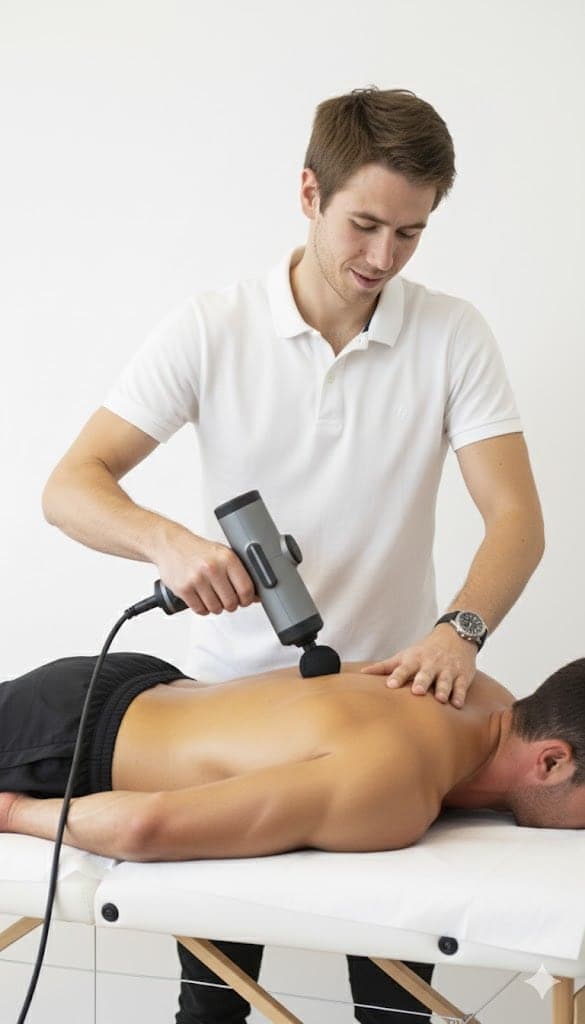
Written by
Chris
Massage therapist, nutrition and exercise physiologist
Norwegian-certified with a Bachelor’s in Physical Education and Nutrition and over ten years of clinical practice, working from a portable table in clients’ homes across the Paphos district.
This article is general information, not a medical diagnosis. If you have severe, worsening or unexplained pain, numbness, weakness, or pain after an accident, see a doctor first.