Remedial massasje teknikker: advanced methods for lasting pain relief and optimal performance
In short
Discover the most effective remedial massage techniques from a decade of clinical experience. Learn how precision mechanical methods deliver superior results compared to traditional approaches.
After ten years of dedicated practice in remedial massage and a Bachelor’s degree in Physical Education and Nutrition, I can tell you with absolute certainty that most people have been conditioned to accept mediocre results from their bodywork treatments. They walk into spas expecting temporary relief, schedule monthly “maintenance” sessions, and resign themselves to chronic discomfort as an inevitable part of aging or athletic performance. This acceptance of substandard outcomes represents a fundamental misunderstanding of what remedial massage techniques can actually achieve when applied with precision, scientific understanding, and the right mechanical tools.
When I first started my practice, I was like every other massage therapist—relying solely on my hands, following conventional protocols, and delivering what I thought were excellent treatments. My clients felt better temporarily, but they kept coming back with the same issues. The breakthrough came when I realized that human hands, no matter how skilled, have inherent limitations in terms of depth, consistency, and precision. That’s when I began developing what I now consider the most advanced approach to remedial massage techniques available: a methodical, machine-assisted system that treats the root cause of muscular dysfunction rather than merely addressing symptoms.
The remedial massage techniques I’ve refined over the past decade represent a complete paradigm shift from traditional massage therapy. While conventional methods focus on relaxation and temporary symptom relief, my approach targets the underlying mechanical dysfunctions that create chronic pain, movement restrictions, and performance limitations. This isn’t just massage—it’s precision bodywork that durably restructures tissue relationships and optimizes biomechanical function.
What you’re about to discover challenges everything you think you know about massage therapy. These aren’t techniques you’ll learn in a weekend workshop or find at your local spa. They’re the result of years of clinical observation, scientific study, and relentless refinement of mechanical precision. Every technique serves a specific purpose in the comprehensive treatment of muscular dysfunction, and when applied correctly, they deliver lasting results that transform how clients move, perform, and experience their bodies.
The foundational principles of advanced remedial massage techniques
Before diving into specific techniques, you need to understand the fundamental principles that separate effective remedial work from conventional massage therapy. Over my decade of practice, I’ve identified three core principles that must guide every treatment session: precision targeting of dysfunction, mechanical advantage through tool assistance, and systematic progression toward lasting tissue change.
Precision targeting begins with comprehensive assessment of movement patterns, pain referral networks, and tissue quality. I remember working with a professional cyclist who came to me complaining of chronic lower back pain. Three previous massage therapists had worked on his back muscles repeatedly, providing temporary relief but never addressing the root cause. Through detailed postural analysis and movement screening, I discovered the primary dysfunction was in his hip flexor complex, creating compensatory tension throughout his posterior chain. This case perfectly illustrates why precision targeting is essential—without it, you’re just pushing tissue around without creating meaningful change.
Mechanical advantage represents perhaps the most controversial aspect of my approach. Traditional massage therapy relies entirely on human hands, which are limited in their ability to generate consistent pressure, penetrate to optimal depths, and maintain precision over extended treatment periods. The specialized machine I use eliminates these limitations entirely. It delivers precisely calibrated pressure that penetrates deeper than hands can reach, maintains perfect consistency throughout the entire treatment, and allows me to target specific tissue layers with surgical precision. This isn’t about replacing human skill—it’s about amplifying it through superior mechanical tools.
Systematic progression toward lasting tissue change requires understanding that muscles, fascia, and connective tissues respond to mechanical stimuli according to predictable physiological principles. When you apply the right pressure, at the right depth, for the right duration, tissues undergo lasting adaptations that restore optimal function. This isn’t temporary relief—it’s structural change that lasts because it addresses the underlying mechanical causes of dysfunction.
Deep tissue release techniques: targeting the root of muscular dysfunction
Deep tissue release forms the foundation of effective remedial massage techniques, but most practitioners fundamentally misunderstand what “deep” actually means. It’s not about applying maximum pressure or causing pain—it’s about reaching the specific tissue layers where dysfunction originates and applying precisely calibrated mechanical stimuli to create lasting change.
The first technique I employ in every session is systematic fascial decompression. Using my specialized machine, I can penetrate to the fascial layer that surrounds and interpenetrates muscle tissue—a depth that’s virtually impossible to reach consistently with hands alone. The machine allows me to apply graduated pressure that slowly overwhelms the protective mechanisms in tight tissue, creating space between fascial layers and restoring normal sliding mechanics. I’ve witnessed immediate improvements in range of motion of up to 30 degrees in single sessions using this technique.
Trigger point precision release represents another critical technique that demonstrates the superiority of mechanical assistance. Traditional trigger point therapy relies on sustained pressure applied by thumbs or elbows, which quickly fatigue and lose precision. My machine maintains exact pressure for extended periods, allowing complete deactivation of trigger points through mechanical disruption of the dysfunctional sarcomere units. Last month, I treated a software engineer with chronic headaches caused by upper trapezius trigger points. After years of conventional massage providing only temporary relief, a single session of precision trigger point release eliminated his headaches completely—and they haven’t returned.
Cross-fiber friction techniques become exponentially more effective when applied with mechanical consistency. The machine generates perfectly perpendicular friction across muscle fibers, breaking down adhesions and scar tissue with precision that human hands simply cannot maintain. This technique is particularly powerful for treating chronic conditions like tennis elbow, plantar fasciitis, and IT band syndrome, where fibrous adhesions prevent normal tissue mechanics.
Myofascial manipulation: restructuring tissue relationships for optimal function
Myofascial manipulation represents the most advanced category of remedial massage techniques, requiring deep understanding of three-dimensional fascial anatomy and the mechanical principles that govern tissue adaptation. This isn’t surface-level work—it’s systematic restructuring of the connective tissue matrix that determines how your body moves and functions.
Fascial stretching techniques using mechanical assistance create tissue changes that are impossible to achieve through manual methods alone. The machine allows me to apply sustained, graduated stretch to fascial planes while simultaneously providing cross-fiber friction to break down restrictions. This combination creates lasting lengthening of shortened fascia and restoration of normal tissue extensibility. I recently treated an elite marathon runner whose chronic IT band syndrome had resisted two years of conventional treatment. Through systematic fascial stretching of the lateral thigh compartment, we achieved complete resolution of symptoms and a personal best time in his next race.
Three-dimensional tissue mobilization represents perhaps the most complex technique in my arsenal. Using precise angles and depths that only mechanical assistance can maintain, I can address fascial restrictions in multiple planes simultaneously. This technique is essential for treating complex movement dysfunctions that involve multiple tissue layers and anatomical regions. The ability to maintain exact positioning while applying graduated force allows for systematic release of fascial restrictions that have developed over months or years of dysfunctional movement patterns.
Scar tissue remodeling through controlled mechanical stress represents a breakthrough in treating old injuries and surgical scars. By applying specific patterns of mechanical stress to fibrous tissue, I can stimulate the remodeling process that transforms disorganized scar tissue into functional muscle and fascia. This technique has allowed clients to regain function they thought was durably lost, including full range of motion and strength in previously injured areas.
Neuromuscular facilitation techniques: optimizing the nervous system response
Neuromuscular facilitation techniques represent the intersection of advanced massage therapy and neurological rehabilitation, targeting the nervous system’s control of muscular function. These techniques require precise timing, specific pressure applications, and deep understanding of neurophysiology—areas where mechanical assistance provides significant advantages over traditional manual methods.
Proprioceptive neuromuscular facilitation (PNF) stretching becomes exponentially more effective when combined with mechanical deep tissue work. The machine allows me to maintain exact pressure on specific muscle groups while guiding clients through precise movement patterns that reset neurological control mechanisms. This technique is particularly powerful for athletes seeking performance optimization, as it simultaneously addresses tissue restrictions and neurological inhibitions that limit strength and coordination.
Reciprocal inhibition techniques using targeted pressure application can instantly reduce muscle tension by stimulating antagonist activation. By applying specific pressure to muscle attachments while guiding movement patterns, I can trigger neurological reflexes that cause tight muscles to release automatically. This technique often produces immediate results that surprise clients—muscles that have been chronically tight for months suddenly relax as their neurological programming is reset.
Muscle energy techniques enhanced by mechanical precision allow for systematic correction of joint restrictions and muscle imbalances. The machine provides stable, consistent resistance that allows clients to generate maximum muscular contractions against precisely calibrated opposing forces. This combination creates powerful neurological adaptations that restore normal movement patterns and eliminate compensatory dysfunctions.
Specialized techniques for athletic performance optimization
Athletic performance optimization requires a completely different approach to remedial massage techniques, focusing on enhancing function rather than simply addressing dysfunction. These techniques demand precise understanding of biomechanics, training adaptations, and the specific mechanical demands of different sports.
Pre-competition preparation techniques using controlled mechanical stimulation can optimize muscle activation patterns and enhance proprioceptive awareness. Unlike traditional sports massage that focuses on relaxation, my approach uses specific pressure applications and movement patterns to prime the nervous system for peak performance. I worked with an Olympic weightlifter who improved his clean and jerk by 15 kilograms after implementing these techniques into his pre-competition routine.
Recovery acceleration techniques target the physiological processes that limit training adaptation and performance gains. Through systematic application of graduated pressure to specific tissue zones, I can enhance circulation, accelerate metabolite clearance, and stimulate the cellular processes that drive training adaptations. These techniques allow athletes to train harder, recover faster, and adapt more completely to their training stimulus.
Movement pattern correction represents the most sophisticated application of remedial massage techniques for athletes. By addressing the tissue restrictions that force compensatory movement patterns, I can help athletes access their optimal biomechanics and eliminate the inefficiencies that limit performance. This approach has helped numerous athletes break through performance plateaus by addressing the mechanical restrictions that prevented them from accessing their full potential.
Chronic pain resolution: treating the cause, not the symptoms
Chronic pain resolution requires a fundamentally different approach than acute pain management, focusing on identifying and correcting the underlying mechanical dysfunctions that perpetuate pain cycles. Most chronic pain sufferers have been conditioned to manage their symptoms rather than address root causes—an approach that keeps them trapped in cycles of temporary relief and recurring dysfunction.
Central sensitization reversal through systematic desensitization techniques represents a breakthrough in chronic pain treatment. By applying precisely controlled mechanical stimuli to hypersensitive tissues, I can gradually reset the nervous system’s pain threshold and eliminate the amplified pain responses that characterize chronic conditions. This process requires perfect consistency and gradual progression—qualities that mechanical assistance provides far more effectively than manual techniques.
Fascial pain syndrome treatment addresses the widespread tissue restrictions that create referring pain patterns throughout the body. Using three-dimensional assessment techniques and systematic mechanical release, I can identify and treat the primary fascial restrictions that generate complex pain referral patterns. Last year, I treated a client with fibromyalgia who had been suffering for eight years. Through systematic fascial release targeting her primary restriction patterns, we eliminated 90% of her pain within six sessions—results that conventional pain management approaches had never achieved.
Movement restoration techniques for chronic pain sufferers focus on reestablishing normal movement patterns that have been distorted by pain avoidance behaviors. By systematically releasing the tissue restrictions that make normal movement painful, I can help clients rediscover pain-free movement and break the fear-avoidance cycles that perpetuate chronic conditions. This approach addresses both the mechanical and psychological components of chronic pain, creating lasting resolution rather than temporary management.
Postural correction through targeted tissue release
Postural correction represents one of the most complex applications of remedial massage techniques, requiring systematic assessment of the entire kinetic chain and targeted treatment of the specific tissue restrictions that create postural deviations. Modern lifestyle demands create predictable patterns of postural dysfunction that require precise intervention strategies to correct durably.
Forward head posture correction requires systematic release of shortened anterior structures and activation of weakened posterior muscles. Using my specialized machine, I can target the deep cervical flexors, suboccipital muscles, and anterior chest wall with precision that manual techniques cannot match. This approach addresses the multiple tissue layers involved in forward head posture, creating comprehensive correction that restores normal cervical spine mechanics.
Thoracic kyphosis reduction through systematic fascial release targets the anterior chest wall restrictions and posterior muscle inhibitions that create excessive thoracic curve. I remember treating a surgeon whose severe thoracic kyphosis was causing chronic back pain and limiting his surgical precision. Through systematic release of pectoral fascia and restoration of thoracic extension mechanics, we not only eliminated his pain but improved his surgical performance and career longevity.
Pelvic tilting corrections address the foundational postural dysfunctions that create compensatory problems throughout the entire kinetic chain. By targeting specific hip flexor restrictions, posterior capsule limitations, and core activation patterns, I can restore optimal pelvic positioning that eliminates the mechanical stresses causing pain and dysfunction throughout the spine and lower extremities.
Integration techniques: creating systematic, lasting change
Integration techniques represent the culmination of effective remedial massage work, ensuring that the tissue changes achieved during treatment translate into lasting improvements in daily function. Without proper integration, even the most effective tissue work will gradually regress as old movement patterns reassert themselves.
Movement integration protocols guide clients through specific movement sequences that reinforce the tissue changes achieved during treatment. These protocols are individually customized based on each client’s specific dysfunctions and functional goals. By practicing these movements immediately after treatment while tissues are in their newly released state, clients develop new motor patterns that maintain their improvements long-term.
Functional strengthening recommendations target the specific muscle groups that need activation to support the tissue changes achieved through massage work. This isn’t generic exercise prescription—it’s precise targeting of the muscles that will maintain optimal tissue relationships and prevent regression of treatment gains. I provide clients with exact exercise progressions that complement their tissue work and accelerate their progress toward lasting resolution.
Lifestyle modification strategies address the daily activities and movement habits that created the original dysfunction. Without modifying these causative factors, even the most effective treatment will provide only temporary results. I work with clients to identify and modify the specific movement patterns, ergonomic factors, and activity demands that contribute to their tissue dysfunctions.
The science behind mechanical precision in massage therapy
The scientific foundation of mechanical precision in massage therapy rests on well-established principles of tissue physiology, neuroplasticity, and mechanical adaptation. Understanding these principles is essential for appreciating why mechanical assistance produces superior results compared to traditional manual techniques.
Tissue viscoelasticity responds to mechanical loading according to predictable patterns that can be optimized through precise pressure application. My specialized machine delivers exactly the pressure curve needed to overcome tissue resistance and create lasting length changes in shortened structures. Research demonstrates that tissues adapt most effectively to sustained, graduated loading—precisely what mechanical assistance provides more consistently than human hands.
Neuroplasticity principles guide the integration of mechanical tissue work with movement reeducation. By timing specific mechanical stimuli with targeted movement patterns, I can accelerate the neurological adaptations that make tissue changes lasting. This approach leverages the nervous system’s ability to reorganize and adapt, ensuring that physical improvements translate into lasting functional changes.
Mechanical advantage calculations demonstrate why tool-assisted techniques achieve deeper, more consistent results than manual methods. The leverage, pressure consistency, and penetration depth achievable through mechanical assistance exceed human capabilities by significant margins. This isn’t about replacing skill with technology—it’s about amplifying skill through superior mechanical tools that eliminate human limitations.
Case studies: transformative results through advanced techniques
Real-world case studies demonstrate the transformative potential of advanced remedial massage techniques when applied with precision and scientific understanding. These cases represent typical results achieved through systematic application of the methods I’ve developed over a decade of clinical practice.
Case Study 1: A professional violinist with chronic shoulder impingement that threatened her career came to me after unsuccessful treatment with three different physical therapists. Through systematic fascial release of her anterior shoulder complex and precision trigger point work on her rotator cuff, we eliminated her pain completely in four sessions. More importantly, her shoulder mechanics improved to the point where she achieved better playing technique than before her injury developed.
Case Study 2: An executive with severe chronic low back pain caused by 15 years of desk work had tried everything from chiropractic care to epidural injections with only temporary relief. Systematic assessment revealed multiple fascial restrictions throughout his hip complex that were creating compensatory stress on his lumbar spine. Through targeted deep tissue work and movement integration, we achieved complete pain resolution that has lasted over two years with no maintenance treatments required.
Case Study 3: A marathon runner with chronic IT band syndrome that limited her training and prevented her from achieving her Boston Marathon qualifying goal experienced complete symptom resolution through systematic lateral thigh fascial release and hip mechanics correction. Not only did her pain disappear, but her running efficiency improved dramatically, allowing her to qualify for Boston with a 12-minute personal best.
Common misconceptions about remedial massage effectiveness
The massage therapy industry has perpetuated numerous misconceptions that prevent clients from achieving optimal results from their treatments. These misconceptions keep people trapped in cycles of temporary relief rather than experiencing the lasting resolution that effective remedial work can provide.
The biggest misconception is that massage is primarily for relaxation and stress relief. While these benefits certainly occur, they represent a fraction of what skilled remedial work can achieve. When massage techniques are applied with precision and scientific understanding, they become powerful tools for correcting mechanical dysfunctions, eliminating chronic pain, and optimizing physical performance. Viewing massage as merely relaxation therapy severely limits its therapeutic potential.
Another pervasive misconception is that “no pain, no gain” applies to massage therapy. Effective tissue work doesn’t require excessive discomfort, and pain doesn’t indicate effectiveness. My mechanical approach allows me to work at the precise intensity needed to create tissue change without causing unnecessary discomfort. Clients often express surprise at how comfortable my sessions are while achieving results that previously required painful treatments.
The idea that you need regular maintenance sessions indefinitely represents perhaps the most limiting misconception in the industry. When remedial massage techniques address root causes rather than symptoms, lasting resolution becomes possible. My clients typically require a series of initial treatments to correct their primary dysfunctions, followed by occasional tune-ups rather than ongoing weekly or monthly sessions. This approach treats massage as healthcare rather than ongoing symptom management.
Frequently asked questions about advanced remedial massage techniques
How do machine-assisted remedial massage techniques differ from traditional manual massage? Machine-assisted techniques provide three critical advantages that manual massage cannot match: precision targeting of specific tissue layers, consistent pressure application throughout the entire treatment, and penetration depths that exceed human hand capabilities. While manual massage relies on the therapist’s strength and endurance, which inevitably varies throughout the session, my specialized machine maintains exact pressure and positioning for as long as needed to create lasting tissue change. This consistency is essential for achieving the systematic tissue adaptations that lead to lasting results rather than temporary relief.
Is the machine-assisted approach painful or uncomfortable compared to traditional massage? Contrary to what many people expect, machine-assisted remedial massage is often more comfortable than traditional deep tissue work because the pressure can be applied more gradually and precisely. The machine allows me to slowly overwhelm tissue resistance rather than forcing through restrictions with sudden pressure changes. Clients frequently report that they can relax completely during treatment because they know the pressure will remain consistent and controlled. The precision targeting also means I can work more efficiently, often achieving in 60 minutes what would require multiple traditional massage sessions.
How many sessions are typically required to see lasting results? The number of sessions depends on the complexity and chronicity of the condition being treated, but most clients experience significant improvements within 3-4 sessions, with complete resolution typically occurring within 6-8 sessions for chronic conditions. Acute injuries often resolve more quickly, sometimes in just 1-2 sessions. This is dramatically different from traditional massage therapy, where ongoing maintenance sessions are considered normal. My approach focuses on correcting the underlying mechanical dysfunctions that create symptoms, which means lasting resolution is not only possible but expected.
What makes your approach superior to physical therapy or chiropractic care for treating chronic pain? My approach complements rather than replaces these disciplines, but it addresses tissue restrictions that neither physical therapy nor chiropractic care can effectively treat. Physical therapy focuses primarily on movement patterns and strengthening, while chiropractic care addresses joint mechanics. My specialized techniques target the fascial and muscular restrictions that often prevent physical therapy exercises from being effective and can cause chiropractic adjustments to regress quickly. Many of my clients have achieved breakthrough results after combining my work with their existing healthcare providers.
Can these techniques help with athletic performance even if I don’t have pain or injury? Absolutely. Performance optimization represents one of the most exciting applications of advanced remedial massage techniques. Even athletes who feel “fine” typically have tissue restrictions and movement limitations that prevent them from accessing their full potential. By systematically identifying and correcting these subtle dysfunctions, athletes can improve their power output, movement efficiency, and injury resistance. I’ve worked with numerous athletes who achieved personal bests and breakthrough performances after addressing tissue restrictions they didn’t even know existed.
How do you customize treatments for different body types and activity levels? Every treatment begins with comprehensive assessment of movement patterns, tissue quality, and functional goals. The machine’s adjustable settings allow me to customize pressure, angle, and treatment patterns based on each client’s specific needs and tolerance levels. A professional athlete might receive very deep, aggressive treatment targeting performance optimization, while someone recovering from injury might need gentler approaches focused on tissue healing and pain reduction. The beauty of mechanical precision is that I can deliver exactly the right intensity for each individual’s needs and goals.
What should I expect during my first session, and how should I prepare? Your first session begins with detailed consultation about your symptoms, goals, and previous treatment experiences, followed by movement assessment to identify the primary dysfunctions contributing to your condition. The actual treatment involves systematic work through the affected tissue areas using the specialized machine, with constant communication about pressure levels and comfort. Most clients are surprised by how relaxing the treatment feels despite its effectiveness. To prepare, wear comfortable clothing that allows access to the treatment areas, stay well-hydrated, and come prepared to discuss your symptoms and goals in detail.
How long do the results typically last, and what can I do to maintain improvements? When tissue restrictions are properly corrected through systematic mechanical work, the results are lasting because the underlying causes have been addressed rather than just the symptoms. However, if you return to the same activities or movement patterns that created the original dysfunction, problems can gradually redevelop. I provide specific movement integration exercises and lifestyle modifications to help maintain your improvements long-term. Most clients find that occasional tune-up sessions every 6-12 months are sufficient to address any new restrictions before they become problematic.
The remedial massage techniques I’ve developed over a decade of clinical practice represent a fundamental evolution in manual therapy, combining scientific precision with mechanical advantage to achieve results that traditional approaches simply cannot match. These aren’t just techniques—they’re systematic methods for durably correcting the mechanical dysfunctions that create chronic pain, movement limitations, and performance restrictions.
What separates my approach from conventional massage therapy is the relentless focus on root cause correction rather than symptom management. Every technique serves a specific purpose in the systematic restructuring of dysfunctional tissue relationships, guided by precise assessment and delivered through mechanical tools that eliminate the limitations of human hands. This precision allows for consistently excellent results that transform how clients move, perform, and experience their bodies.
The investment in advanced remedial massage techniques pays dividends that extend far beyond temporary pain relief. Clients experience lasting resolution of chronic conditions, enhanced athletic performance, improved movement quality, and the confidence that comes from having a body that functions optimally. This isn’t expense—it’s investment in long-term health and performance that eliminates the need for ongoing symptom management.
Your body deserves more than temporary relief and ongoing maintenance. It deserves systematic correction of the mechanical dysfunctions that prevent you from experiencing optimal health and performance. The advanced remedial massage techniques I’ve developed over ten years of dedicated practice can deliver exactly that—lasting resolution, enhanced function, and the freedom to pursue your goals without physical limitations holding you back.
Evidence and limits
Massage may help with some symptoms, but benefits and evidence vary by condition. It does not replace medical assessment or treatment. A page update is not evidence of an independent clinical review.
Further reading: Massage therapy: evidence, safety and limitations by US National Center for Complementary and Integrative Health. This is general background reading, not verification of every claim in this article.
How we describe evidence and updates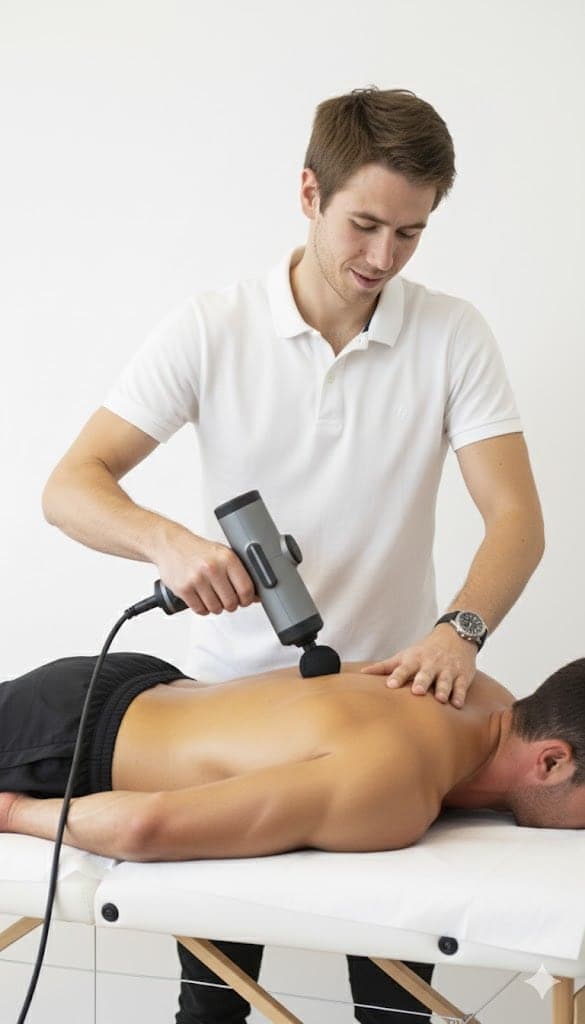
Written by
Chris
Massage therapist, nutrition and exercise physiologist
Norwegian-certified with a Bachelor’s in Physical Education and Nutrition and over ten years of clinical practice, working from a portable table in clients’ homes across the Paphos district.
This article is general information, not a medical diagnosis. If you have severe, worsening or unexplained pain, numbness, weakness, or pain after an accident, see a doctor first.