
Relaxation massage for golfers: the scientific approach to peak performance
In short
Discover how advanced mechanical deep-tissue massage transforms golf performance through targeted stress reduction and enhanced focus – backed by 10 years of clinical experience.
I’ll never forget the first professional golfer who walked into my practice five years ago. He was ranked in the top 50 nationally, but his shoulders were locked in chronic tension, and his lower back screamed with every swing. After traditional massage therapy had failed him repeatedly, he was desperate for a solution that actually worked. Three sessions with my specialized mechanical deep-tissue method later, he dropped four strokes off his handicap and called it “the missing piece in my performance puzzle.” That moment crystallized everything I’d learned during my decade of experience in advanced body mechanics – relaxation massage for golfers isn’t just about feeling good; it’s about unlocking the neurological and muscular foundations of peak performance.
As someone with a Bachelor’s degree in Physical Education and Nutrition from Norway and ten years of clinical experience, I’ve witnessed thousands of golfers struggle with the same fundamental misunderstanding: they treat relaxation and performance enhancement as separate goals. This fragmented approach is precisely why traditional massage therapy fails to deliver lasting results for serious golfers. Through my specialized mechanical deep-tissue methodology, I’ve developed a systematic approach that addresses the root biomechanical causes of tension while simultaneously optimizing the nervous system for enhanced focus and stress resilience.
The conventional massage industry has perpetuated the myth that relaxation massage for golfers is merely a luxury or temporary stress relief. This perspective fundamentally misses the mark. When we examine the physiological demands of golf – the precise coordination, sustained concentration, and repetitive biomechanical stress – it becomes clear that effective massage therapy must address the deeper structural imbalances that compromise both relaxation capacity and performance potential. My method doesn’t just treat symptoms; it systematically rebuilds the foundation for optimal function.
The biomechanical foundation of golf performance and stress
During my university training in Physical Education and Nutrition, I became fascinated by the intricate relationship between muscular tension patterns and cognitive performance. Golf presents a unique challenge because it demands both explosive power and refined motor control, often within the same swing sequence. This dual requirement creates specific tension patterns that traditional relaxation techniques simply cannot address effectively.
The primary stress points in golfers occur along what I call the “performance kinetic chain” – a interconnected system spanning from the feet through the core to the cervical spine. When tension accumulates in key areas like the thoracolumbar fascia, the anterior scalenes, or the deep rotators of the hip, it doesn’t just create physical discomfort. These restrictions fundamentally alter proprioceptive feedback, compromising the nervous system’s ability to coordinate precise movements while maintaining the relaxed alertness essential for consistent performance.
I remember working with a client last year who had been playing golf for thirty years. Despite his technical proficiency, he struggled with inconsistent performance and chronic anxiety on the course. Through detailed biomechanical assessment, I identified severe fascial restrictions in his posterior chain that were creating constant low-level stress signals to his nervous system. His body was literally fighting against itself with every swing, making true relaxation impossible regardless of his mental approach.
Traditional massage approaches this challenge backwards. They attempt to create relaxation through superficial manipulation, hoping that performance will somehow improve as a byproduct. My method recognizes that lasting relaxation for golfers requires addressing the deeper mechanical dysfunctions that prevent the nervous system from achieving optimal states. When we eliminate these root restrictions, both relaxation and performance enhancement occur naturally and sustainably.
The key insight that separates my approach from conventional relaxation massage for golfers is understanding that tension patterns in golfers are not random. They follow predictable patterns based on swing mechanics, postural habits, and compensatory strategies developed over years of play. By identifying and systematically addressing these patterns at their mechanical source, we can create profound and lasting changes in both stress resilience and performance capacity.
Why traditional relaxation massage fails golfers
After a decade of working with elite athletes, I’ve observed a consistent pattern: golfers who rely on traditional relaxation massage experience temporary relief followed by rapid return of tension and stress. This cycle isn’t just ineffective – it’s actually counterproductive because it trains the nervous system to expect only superficial, temporary solutions.
The fundamental flaw in conventional massage for golfers lies in its inability to reach the deeper fascial layers where chronic tension patterns are actually maintained. Human hands, regardless of the therapist’s skill level, simply cannot generate the precise pressure and consistency required to create lasting change in deep myofascial structures. This limitation means that traditional relaxation massage addresses only the surface manifestations of stress while leaving the underlying mechanical causes untouched.
I witnessed this limitation firsthand early in my career when I was still using manual techniques. A professional golfer came to me with severe tension in his latissimus dorsi and serratus anterior – classic compensation patterns from years of repetitive swing mechanics. Despite multiple sessions using advanced manual therapy techniques, I could only achieve temporary relief. The deeper restrictions remained, and his stress levels returned within days of each session.
This experience led me to develop my specialized mechanical approach. The machine I use delivers precision, power, and consistency that human hands simply cannot match. It works deeper than hands can reach, accessing the fascial planes where chronic tension patterns are actually maintained. More importantly, it provides complete control over intensity and application, allowing me to customize treatment precisely to each golfer’s unique needs and tolerance levels.
Another critical failure of traditional relaxation massage for golfers is its one-size-fits-all approach. Golf places unique demands on the body that vary significantly based on factors like swing style, physical conditioning, playing frequency, and individual biomechanics. Generic relaxation techniques cannot address these specific variables, which is why golfers often report inconsistent results from conventional massage therapy.
The inconsistency problem extends beyond just technique – it includes the therapist’s variable performance from day to day. Even the most skilled manual therapists have “off days” where their pressure, rhythm, or focus isn’t optimal. My mechanical method eliminates this variable, ensuring that every treatment delivers the same precise, therapeutic result regardless of external factors.
The neurological connection: how deep tissue affects mental performance
The relationship between muscular tension and cognitive performance in golf is far more sophisticated than most people realize. Through my clinical experience and educational background in Physical Education and Nutrition, I’ve identified specific neurological pathways that explain why addressing deep fascial restrictions can dramatically improve mental focus and stress resilience on the course.
The key lies in understanding the role of mechanoreceptors – specialized sensory neurons embedded in fascial tissue that continuously send information about tissue tension and movement to the central nervous system. When fascial restrictions develop, these mechanoreceptors send constant stress signals to the brain, creating what I call “neurological background noise” that interferes with the focused attention required for consistent golf performance.
I had a remarkable case last year that perfectly illustrated this principle. A client who was a scratch golfer had developed chronic tension in his cervical fascia following a minor car accident. While he experienced no obvious pain, his handicap had gradually increased over six months, and he reported feeling “mentally foggy” during rounds. Traditional medical evaluation found nothing wrong, and standard massage provided only temporary relief.
Using my mechanical deep-tissue method, I systematically addressed the deep fascial restrictions in his suboccipital region and upper cervical spine. Within three sessions, not only did his physical tension resolve, but he reported a dramatic improvement in mental clarity and focus during play. His handicap returned to scratch level, and he described feeling “mentally sharp” in a way he hadn’t experienced since before the accident.
This case demonstrates the profound connection between fascial health and cognitive performance. When we eliminate the mechanical sources of neurological interference, the nervous system can allocate its resources more efficiently to the cognitive demands of golf – reading greens, calculating distances, maintaining emotional equilibrium under pressure.
The relaxation component of my treatment isn’t just about reducing muscle tension – it’s about optimizing the nervous system’s capacity for what sports psychologists call “relaxed concentration.” This state, essential for consistent golf performance, can only be achieved when the body’s mechanical systems are functioning without restriction. Traditional relaxation massage for golfers typically fails because it doesn’t address the deeper sources of neurological stress that prevent this optimal state.
My mechanical method creates lasting changes in fascial architecture that allow mechanoreceptors to function normally, eliminating the chronic stress signals that interfere with mental performance. This is why clients often report improvements not just in physical comfort, but in their ability to maintain focus, manage pressure, and execute shots with confidence.
Advanced mechanical methodology: precision, power, and consistency
The specialized machine I use represents a quantum leap beyond traditional massage techniques in its ability to deliver therapeutic results for golfers. After years of research and clinical application, I’ve developed protocols that leverage three critical advantages: precision targeting, controlled power delivery, and absolute consistency of application.
Precision targeting allows me to address specific fascial planes and muscle groups with millimeter accuracy. In golf, certain areas are particularly prone to restriction – the deep rotators of the shoulder, the thoracolumbar junction, the hip flexor complex, and the intrinsic muscles of the feet. My mechanical method can isolate these areas and apply therapeutic pressure at the exact depth and angle required for optimal release, something impossible with manual techniques.
The power delivery capability is what truly sets this approach apart. Human hands typically generate 15-30 pounds of pressure, which is insufficient to reach deeper fascial layers where chronic restrictions develop. My machine can deliver controlled pressure up to 80 pounds per square inch while maintaining precise control and safety parameters. This deeper access is crucial for golfers because their tension patterns often develop in the deepest layers of fascial tissue where manual techniques simply cannot reach.
I’ll never forget working with a touring professional who had struggled with chronic lower back tension for three years. Multiple manual therapists had worked on his superficial muscle layers without lasting success. Using my mechanical method, I was able to access the deep layers of his thoracolumbar fascia and quadratus lumborum where the actual restrictions existed. The release was immediate and profound – he described feeling “like someone had unlocked something that had been stuck for years.”
Consistency is perhaps the most underappreciated advantage of my mechanical approach. Every golfer knows that consistency is everything in their sport, yet they accept inconsistent results from their therapeutic treatments. My machine eliminates the variables that plague manual therapy – therapist fatigue, technique variation, pressure inconsistency, and subjective interpretation. Every session delivers the same precise, measurable therapeutic input.
This consistency allows for systematic progression in treatment protocols. I can gradually increase intensity and depth as tissue responds, creating a predictable pathway to optimal function. Traditional relaxation massage for golfers lacks this systematic approach, often relying on the therapist’s intuition rather than measurable parameters and consistent application.
The control aspect of my method extends beyond just pressure – it includes precise timing, rhythm, and direction of force application. These variables can be adjusted in real-time based on tissue response, allowing for truly customized treatment that adapts to each golfer’s unique needs and tolerance levels. This level of control simply isn’t possible with manual techniques, no matter how skilled the practitioner.
Customized treatment protocols for golf-specific stress patterns
Every golfer who comes to my practice receives a comprehensive biomechanical assessment that forms the foundation of their customized treatment protocol. This isn’t a generic relaxation massage for golfers – it’s a systematic approach to identifying and addressing the specific mechanical dysfunctions that limit their performance and stress resilience.
The assessment begins with detailed analysis of their swing mechanics, playing frequency, physical conditioning level, and injury history. I examine postural patterns, range of motion limitations, and fascial restrictions using both manual testing and movement analysis. This comprehensive evaluation allows me to identify the primary and secondary sources of tension that contribute to their stress patterns and performance limitations.
Based on this assessment, I develop what I call a “mechanical optimization protocol” – a systematic sequence of treatments designed to address restrictions in order of priority and interdependence. For example, a golfer with chronic shoulder tension might actually have their primary restrictions in the thoracic spine or rib cage, with the shoulder tension being a secondary compensation pattern. Traditional approaches often focus on the obvious symptoms while missing these underlying causes.
I recently worked with a high-handicap golfer who complained of severe tension in his forearms and grip fatigue during long rounds. Conventional wisdom would suggest focusing treatment on the forearms, but my assessment revealed significant restrictions in his cervical spine and first rib that were creating compensatory tension throughout his entire arm complex. By systematically addressing these primary restrictions first, we not only eliminated his forearm tension but also improved his swing mechanics and endurance.
The customization extends to the mechanical parameters of each treatment. Power level, penetration depth, application rhythm, and session duration are all precisely calibrated based on the individual’s tissue type, tolerance level, and specific restrictions. A compact, muscular golfer requires different treatment parameters than a tall, flexible player, even if they present similar symptoms.
Treatment protocols also account for the golfer’s playing schedule and competitive demands. Pre-tournament protocols focus on optimization and fine-tuning, while off-season treatments can address deeper structural changes that require longer recovery periods. This strategic timing ensures that therapeutic interventions enhance rather than interfere with performance goals.
The systematic approach allows for precise tracking of progress and adjustment of protocols as restrictions resolve and function improves. Each session builds on the previous one, creating cumulative improvements that lead to lasting changes in both stress resilience and performance capacity. This is fundamentally different from traditional relaxation massage for golfers, which typically provides only temporary relief without systematic progression toward optimal function.
Case studies: transforming golf performance through targeted stress reduction
The true measure of any therapeutic approach lies in its ability to create lasting, measurable improvements in real-world performance. Over my ten years of practice, I’ve documented hundreds of cases where my mechanical deep-tissue method has transformed not just how golfers feel, but how they perform under pressure.
One of my most compelling cases involved a corporate executive who played golf twice weekly but struggled with severe performance anxiety and inconsistent scoring. Despite his technical proficiency, he would experience muscle tension and mental fog whenever playing with clients or in competitive situations. Traditional sports psychology and relaxation techniques had provided minimal benefit.
My assessment revealed extensive fascial restrictions in his diaphragm, intercostal muscles, and cervical spine – areas directly connected to his breathing patterns and stress response. Using my mechanical method, I systematically addressed these restrictions over six sessions. The transformation was remarkable: not only did his physical tension disappear, but he reported feeling “calm and focused” during high-pressure rounds. His scoring average dropped by five strokes, and he began looking forward to competitive play rather than dreading it.
Another significant case involved a professional golfer who had been struggling with what she called “the yips” – involuntary muscle spasms during putting that had destroyed her short game. Multiple specialists had worked on her mental approach, but the physical symptoms persisted. When she came to me, she was considering retirement from professional golf.
My evaluation identified severe restrictions in the deep fasciae of her forearms and the intrinsic muscles of her hands – restrictions that were creating involuntary contractions during fine motor control tasks. Traditional massage had been unable to reach these deeper structures, allowing the restrictions to persist and worsen. Using my mechanical approach, I was able to systematically release these deep fascial adhesions over eight sessions.
The results exceeded even my expectations. Not only did her putting yips disappear completely, but she reported improved feel and control throughout her short game. She returned to competitive play and won her first tournament in three years within six months of completing treatment. More importantly, she regained the joy and confidence in her game that had been stolen by years of mysterious physical symptoms.
These cases illustrate the profound connection between mechanical function and performance psychology in golf. When we address the deeper sources of physical restriction, we often resolve mental and emotional challenges that had seemed unrelated to physical therapy. This is why my approach to relaxation massage for golfers goes far beyond traditional concepts of stress relief – it addresses the mechanical foundations that allow optimal function in all dimensions of performance.
The consistency of results across diverse cases reinforces the validity of my mechanical approach. Whether dealing with weekend warriors or touring professionals, the principles remain the same: identify the deeper sources of restriction, systematically address them with precise mechanical intervention, and create the foundation for optimal function and stress resilience.
The science of fascial release and stress hormone regulation
The physiological mechanisms underlying my mechanical deep-tissue method extend far beyond simple muscle relaxation. Through my academic background in Physical Education and Nutrition, combined with ongoing study of current research, I’ve identified specific biochemical pathways that explain why addressing fascial restrictions can dramatically improve stress resilience and performance consistency in golfers.
Fascial tissue contains a rich network of mechanoreceptors, chemoreceptors, and nociceptors that continuously communicate with the central nervous system. When fascial restrictions develop, these sensory networks send constant signals to the brain that trigger stress hormone release, particularly cortisol and adrenaline. This chronic low-level stress response interferes with the relaxed alertness required for optimal golf performance.
My mechanical method creates what researchers call “mechanotransduction” – the conversion of mechanical pressure into cellular signals that promote fascial remodeling and improved tissue function. The precise, sustained pressure delivered by my specialized machine stimulates fibroblast activity, increases hyaluronic acid production, and promotes collagen realignment in ways that manual techniques simply cannot achieve.
I observed this principle dramatically in a client who was a competitive senior golfer. Despite maintaining good physical fitness, he had developed chronic fatigue and performance inconsistency that coincided with increasing fascial restrictions in his posterior chain. Laboratory testing revealed elevated cortisol levels that his physician attributed to “normal aging stress.”
After completing my treatment protocol, his cortisol levels normalized, his energy returned, and his golf performance became more consistent than it had been in years. The mechanical improvements in his fascial system had literally reset his stress hormone regulation, demonstrating the profound systemic effects of targeted fascial intervention.
The precision of my mechanical approach allows for optimal stimulation of these physiological pathways. The pressure, depth, and duration of application can be precisely controlled to maximize therapeutic response while avoiding the tissue damage that can occur with excessive manual pressure. This precision is crucial because fascial tissue responds best to specific parameters of mechanical stimulation – too little pressure is ineffective, while too much can cause protective muscle guarding that defeats the therapeutic purpose.
Research in fascial science has identified the importance of what’s called “fascial continuity” – the recognition that fascial restrictions in one area can create compensatory patterns throughout the entire body. My mechanical method allows me to systematically address these interconnected restriction patterns in ways that restore optimal fascial continuity and function. This systematic approach explains why clients often experience improvements in areas that weren’t directly treated – the restoration of normal fascial function has system-wide effects.
The hormonal benefits extend beyond stress regulation to include improved recovery and tissue repair. When fascial restrictions are eliminated, circulation improves, waste product removal increases, and nutrient delivery to tissues is optimized. These improvements support faster recovery between golf rounds and reduced susceptibility to overuse injuries – critical factors for golfers who play frequently or competitively.
Long-term investment versus short-term expense: the economic reality
The decision to pursue advanced mechanical deep-tissue treatment represents a fundamental choice between short-term expense and long-term investment in performance optimization. Through my decade of experience working with golfers at all levels, I’ve observed that those who view therapeutic intervention as an investment consistently achieve better outcomes than those who treat it as an expense to be minimized.
Traditional relaxation massage for golfers typically requires frequent sessions to maintain any benefit, creating an ongoing expense with diminishing returns. Clients often need weekly or bi-weekly treatments indefinitely, with costs accumulating over months and years without achieving lasting resolution of their underlying issues. This approach treats symptoms rather than causes, ensuring continued dependence on therapeutic intervention without ever achieving true optimization.
My mechanical method operates on a fundamentally different economic model. By addressing the root mechanical causes of restriction and dysfunction, we create lasting changes that reduce or eliminate the need for ongoing maintenance therapy. Most clients achieve optimal function within 6-12 sessions, after which they require only occasional tune-ups to maintain their improvements.
I recently calculated the long-term costs for a client who had been receiving traditional massage weekly for two years before coming to me. His annual massage expenses exceeded a substantial sum yet his golf performance and stress levels had shown minimal improvement. After completing my treatment protocol at a total investment of a substantial sum he achieved results that had eluded him despite years of conventional therapy. More importantly, these results have been maintained for over three years with minimal additional intervention.
The investment perspective becomes even more compelling when we consider the broader impacts on quality of life and performance. Golfers who achieve optimal mechanical function often report improvements that extend far beyond the golf course – better sleep quality, reduced general stress, improved work performance, and enhanced enjoyment of physical activities. These benefits represent value that cannot be quantified purely in financial terms.
Professional golfers understand this investment concept intuitively – they invest heavily in equipment, instruction, and training because they recognize the performance returns. Yet many amateur golfers who invest thousands in clubs and lessons hesitate to invest in the mechanical optimization of their own bodies. This represents a fundamental misunderstanding of where the greatest performance gains can be achieved.
The precision and consistency of my mechanical method also provides superior return on investment compared to variable manual techniques. Each session delivers measurable, predictable progress toward specific goals, eliminating the waste and frustration associated with inconsistent therapeutic results. Clients know exactly what they’re purchasing and can track their progress systematically toward optimal function.
When viewed from a long-term perspective, investing in systematic mechanical optimization represents one of the most cost-effective performance improvements available to serious golfers. The combination of lasting results, reduced ongoing maintenance requirements, and broad-spectrum quality of life improvements creates exceptional value that far exceeds the initial investment.
Travel service: bringing precision therapy to your location
The logistics of therapeutic intervention can often be as important as the therapy itself, particularly for busy golfers who struggle to fit appointments into their schedules. My mobile service model eliminates the barriers that prevent many golfers from accessing optimal therapeutic care by bringing professional-grade equipment and expertise directly to their preferred location.
I travel to clients with a complete mobile setup that includes my specialized mechanical therapy equipment, professional treatment bench, and all necessary accessories. This isn’t a compromise version of in-office treatment – it’s the identical therapeutic experience delivered in the convenience of the client’s home, office, or even hotel room when traveling. The quality and precision of treatment remain absolutely consistent regardless of location.
The convenience factor extends beyond just saving travel time. Many golfers find they achieve better relaxation and therapeutic response when treated in familiar, comfortable environments rather than clinical settings. The ability to control lighting, temperature, music, and other environmental factors can enhance the overall therapeutic experience and improve treatment outcomes.
I remember a particularly successful case involving a busy executive who traveled frequently for business but was passionate about golf. His schedule made regular office appointments impossible, and his performance was suffering due to accumulated tension and stress. By providing treatment at his home in the evenings, we were able to maintain consistent progress despite his demanding schedule. The convenience of mobile service made the difference between successful treatment and continued deterioration.
The professional setup I bring to each location ensures that treatment quality never suffers due to suboptimal conditions. My portable bench provides the same ergonomic positioning and stability as stationary equipment, and my mechanical therapy device operates identically regardless of location. Clients often comment that they forget they’re not in a professional treatment facility once the session begins.
Mobile service also enables more flexible scheduling that can accommodate golfers’ playing schedules and competitive demands. Pre-round optimization sessions, post-tournament recovery treatments, and intensive protocol sessions can all be scheduled at optimal times without the constraints of traditional office hours or location requirements.
The investment in mobile capability reflects my commitment to removing all barriers to optimal therapeutic care. Serious golfers shouldn’t have to choose between convenience and quality, and my mobile service model ensures they can access the most advanced therapeutic methods regardless of their schedule constraints or location preferences.
Comprehensive assessment: identifying hidden performance limiters
The foundation of effective therapeutic intervention lies in comprehensive identification of the mechanical factors that limit performance and stress resilience. My assessment protocol goes far beyond the superficial evaluation typical of traditional relaxation massage for golfers, incorporating advanced biomechanical analysis and functional movement screening to identify the hidden restrictions that conventional approaches miss.
Every new client undergoes what I call a “performance limitation analysis” – a systematic evaluation that examines not just obvious areas of tension, but the complex interdependencies between different body systems that affect golf performance. This includes detailed analysis of breathing patterns, postural habits, movement compensations, and fascial restrictions that may be creating performance barriers without obvious symptoms.
The assessment begins with comprehensive history taking that explores not just golf-related issues, but lifestyle factors, work demands, previous injuries, and stress patterns that contribute to mechanical dysfunction. Many golfers are surprised to learn that their shoulder tension may be related to their desk posture, or that their putting inconsistency could be connected to restrictions in their feet from years of poor shoe choices.
I utilize specific functional movement tests that reveal limitations in mobility, stability, and coordination that directly impact golf performance. These tests often identify restriction patterns that clients weren’t even aware of, explaining performance inconsistencies that had seemed random or mysterious. The precision of these assessments allows for targeted treatment protocols that address root causes rather than obvious symptoms.
One remarkable case involved a golfer who complained only of occasional lower back stiffness after long rounds. His comprehensive assessment revealed significant restrictions in his hip flexors, thoracic spine, and shoulder girdle that were forcing his lower back to compensate during his swing. By addressing these hidden restrictions, we not only eliminated his back stiffness but improved his swing mechanics and reduced his handicap by four strokes.
The assessment also includes analysis of stress patterns and their physical manifestations. Many golfers carry emotional and mental stress as specific patterns of muscular tension that interfere with optimal performance. Identifying these stress-related restriction patterns allows for targeted treatment that addresses both the physical and performance psychology aspects of golf optimization.
Fascial restriction mapping is a crucial component of my assessment protocol. Using specialized palpation techniques, I identify areas of reduced tissue mobility, altered texture, and restriction patterns that indicate chronic dysfunction. This mapping provides the foundation for systematic treatment protocols that address restrictions in order of priority and interdependence.
The comprehensive nature of my assessment often reveals why previous therapeutic attempts have failed. Many golfers have received treatment for obvious symptoms while underlying restriction patterns remained unaddressed. By identifying and prioritizing all contributing factors, we can develop treatment strategies that create lasting resolution rather than temporary symptomatic relief.
Results-oriented protocols: measuring success in golf performance
The ultimate validation of any therapeutic approach lies in its ability to create measurable, lasting improvements in actual golf performance. My mechanical deep-tissue method operates on specific, quantifiable outcomes that go far beyond the subjective “feeling better” that characterizes traditional relaxation massage for golfers.
Every treatment protocol includes specific performance metrics that we track throughout the intervention process. These may include handicap improvement, driving distance consistency, putting accuracy, endurance during long rounds, and recovery time between playing sessions. By establishing baseline measurements and tracking progress systematically, we can optimize treatment protocols and demonstrate objective results.
The precision of my mechanical method allows for correlation between specific interventions and performance improvements. When we release restrictions in particular fascial planes or muscle groups, we can often predict and measure the resulting improvements in swing mechanics, power generation, or endurance. This cause-and-effect relationship validates the systematic approach and allows for refinement of treatment strategies.
I maintain detailed records for every client that document both mechanical improvements and performance outcomes. These records reveal patterns that inform treatment protocols for future clients with similar restriction patterns. Over time, this database has become invaluable for predicting treatment requirements and expected outcomes based on assessment findings.
One client’s results perfectly illustrate this systematic approach. A 12-handicap golfer came to me with complaints of inconsistent ball striking and fatigue during tournament play. Assessment revealed significant restrictions in his latissimus dorsi, serratus anterior, and thoracic spine that were limiting his swing plane and power transfer. Treatment focused systematically on these areas over eight sessions.
The measurable results were dramatic: his driving distance increased by an average of 22 yards, his fairway accuracy improved from 64% to 78%, and his scoring average dropped by 3.4 strokes. More importantly, he reported feeling strong and focused throughout entire tournament rounds, with no fatigue-related performance decline. These objective improvements validated both the assessment accuracy and treatment effectiveness.
Performance tracking extends beyond just golf metrics to include indicators of stress resilience and recovery capacity. Many clients report improvements in sleep quality, general energy levels, and ability to handle pressure situations both on and off the golf course. These broader quality of life improvements often correlate strongly with golf performance gains, reinforcing the systematic nature of mechanical optimization.
The results-oriented approach also allows for optimization of treatment timing relative to competitive schedules. By understanding how long different types of improvements take to manifest, we can time interventions to peak at optimal moments for important tournaments or competitive goals. This strategic timing maximizes the performance benefits of therapeutic investment.
Frequently asked questions about relaxation massage for golfers
How does mechanical deep-tissue massage differ from traditional relaxation massage for golfers?
Traditional relaxation massage for golfers focuses primarily on superficial muscle relaxation and temporary stress relief, typically using manual techniques that cannot access deeper fascial restrictions where chronic tension patterns are maintained. My mechanical approach utilizes specialized equipment that delivers precise, controlled pressure up to 80 pounds per square inch, reaching fascial layers that manual techniques cannot access. This deeper intervention addresses the root mechanical causes of tension and stress rather than just treating surface symptoms. The result is lasting structural change that improves both relaxation capacity and performance potential, rather than temporary symptomatic relief that requires frequent repetition.
What specific golf performance improvements can I expect from your treatment method?
Based on my ten years of clinical experience and documented case outcomes, golfers typically experience measurable improvements in several key areas. Power generation often increases due to improved fascial elasticity and force transfer through the kinetic chain, with many clients seeing 15-25 yard increases in driving distance. Consistency improves as restriction-based compensation patterns are eliminated, leading to better ball striking and more predictable shot patterns. Endurance increases significantly as the body operates more efficiently without fighting internal restrictions, allowing golfers to maintain performance quality throughout long rounds or tournament play. Mental focus and stress resilience improve as the nervous system is freed from processing constant tension signals, leading to better decision-making and pressure management on the course.
How many sessions are typically required to achieve lasting results?
The number of sessions required depends on the complexity and chronicity of restriction patterns identified during the comprehensive assessment. Most recreational golfers achieve significant improvement within 4-6 sessions, while more complex cases or professional golfers may require 8-12 sessions for optimal results. The key difference from traditional massage is that my mechanical method creates cumulative, lasting changes rather than temporary relief. Each session builds systematically on the previous one, with improvements maintained between sessions and continuing to develop over time. Once optimal function is achieved, most clients require only occasional maintenance sessions every 3-6 months to sustain their improvements, representing a dramatic reduction in ongoing therapeutic requirements compared to traditional massage approaches.
Is the mechanical deep-tissue method safe, and what should I expect during treatment?
My mechanical method is exceptionally safe when properly applied, with precise control systems that eliminate the risk of excessive pressure or tissue damage associated with aggressive manual techniques. The specialized equipment allows for gradual pressure application and immediate adjustment based on tissue response and client tolerance. Most clients experience some initial discomfort as chronic restrictions are addressed, but this subsides quickly as tissues adapt and release. The precision control means treatment can be immediately modified if any discomfort exceeds therapeutic levels. Many clients are surprised by how comfortable the treatment becomes once initial restrictions are addressed, often describing a sensation of deep release and improved mobility that continues to develop between sessions.
Can this method help with golf-related injuries and chronic pain conditions?
My approach is particularly effective for addressing the mechanical dysfunctions that contribute to golf-related injuries and chronic pain patterns. Many conditions that golfers experience – such as golfer’s elbow, lower back pain, shoulder impingement, and hip restrictions – are often the result of compensatory patterns and fascial restrictions rather than acute tissue damage. By systematically addressing these underlying mechanical causes, we can often resolve chronic conditions that have been resistant to other treatment approaches. However, it’s important to understand that I focus on mechanical optimization rather than medical treatment. Acute injuries or conditions requiring medical intervention should be evaluated by appropriate healthcare providers, though my method often serves as an excellent complement to medical care by addressing the mechanical factors that contribute to injury risk and recovery limitations.
How does your mobile service work, and what equipment do you bring?
My mobile service provides the identical therapeutic experience as in-office treatment, with no compromise in quality or effectiveness. I travel to your preferred location with a complete professional setup including my specialized mechanical therapy equipment, ergonomic treatment bench, and all necessary accessories. The portable equipment operates identically to stationary versions, delivering the same precision, power, and consistency that defines my treatment method. I can set up in any reasonably sized room with standard electrical access, and the entire setup takes less than 10 minutes. Many clients prefer the convenience and privacy of home treatment, and the familiar environment often enhances relaxation and therapeutic response. Scheduling is flexible to accommodate your golf and work commitments, including early morning or evening appointments that fit around your preferred playing times.
What makes your assessment process different from standard massage evaluations?
My assessment protocol goes far beyond the superficial evaluation typical of traditional massage therapy, incorporating advanced biomechanical analysis and functional movement screening that identifies hidden performance limiters throughout the entire body system. Rather than focusing only on obvious areas of tension or pain, I systematically evaluate postural patterns, movement compensations, fascial restrictions, and stress-related tension patterns that may be creating performance barriers without obvious symptoms. This includes analysis of breathing mechanics, core stability, joint mobility, and the complex interdependencies between different body regions that affect golf performance. The comprehensive nature of this assessment often reveals why previous therapeutic attempts have failed and allows for development of systematic treatment protocols that address root causes rather than obvious symptoms. Many clients are surprised to learn that their primary restrictions exist in areas they weren’t even aware of, explaining performance inconsistencies that had seemed random or mysterious.
How do you ensure consistent results compared to variable manual therapy outcomes?
Consistency is one of the primary advantages of my mechanical approach over traditional manual techniques. The specialized equipment eliminates the variables that plague manual therapy – therapist fatigue, technique variation, pressure inconsistency, and subjective interpretation of tissue response. Every session delivers precisely the same therapeutic parameters, ensuring predictable progress toward optimal function. The machine’s control systems allow for exact pressure, depth, rhythm, and duration settings that can be replicated perfectly between sessions and adjusted systematically as treatment progresses. This consistency allows for precise tracking of progress and optimization of treatment protocols based on measurable tissue response rather than subjective assessment. Clients often comment on the reliability of results compared to their previous experiences with manual therapy, where effectiveness seemed to depend on factors beyond their control such as the therapist’s energy level or technique variation from session to session.
Investment in long-term golf performance optimization
The decision to pursue advanced mechanical deep-tissue treatment represents more than just addressing current limitations – it’s an investment in the long-term sustainability and optimization of your golf performance. Through my decade of experience working with golfers at every level, I’ve observed that those who take a systematic, scientific approach to mechanical optimization consistently achieve and maintain higher performance levels throughout their playing careers.
The compound benefits of addressing restriction patterns early and comprehensively extend far beyond immediate performance gains. Golfers who achieve optimal mechanical function experience slower age-related performance decline, reduced injury risk, and maintained enthusiasm for the game throughout their playing years. These long-term benefits represent value that continues to compound over decades of improved golf enjoyment and performance.
My mechanical method creates structural changes that serve as the foundation for continued improvement in all aspects of golf development. When fascial restrictions are eliminated and optimal movement patterns restored, instruction becomes more effective, practice sessions yield better results, and equipment upgrades provide their intended performance benefits. Many clients report that technical improvements that had eluded them for years became achievable once their mechanical limitations were addressed.
The systematic nature of my approach also provides a framework for ongoing optimization as your golf game evolves. The comprehensive assessment and treatment protocols I develop serve as a baseline for future interventions, allowing for proactive maintenance of optimal function rather than reactive treatment of problems after they develop. This proactive approach prevents the accumulation of restriction patterns that typically develop over years of repetitive golf activity.
Professional golfers understand intuitively that their bodies are their most important equipment – more important than clubs, balls, or any other gear. Yet many amateur golfers who invest heavily in equipment upgrades and instruction neglect the mechanical optimization of their own movement systems. This represents a fundamental misunderstanding of where the greatest performance gains can be achieved.
The precision and consistency of my mechanical method provides exceptional return on investment by eliminating the waste and frustration associated with variable therapeutic results. Every session contributes systematically to specific performance goals, creating measurable progress that justifies the investment through objective improvements in golf performance and quality of life.
When you consider the thousands of dollars typically invested in golf equipment, instruction, and course fees over a playing career, the investment in systematic mechanical optimization represents one of the most cost-effective performance improvements available. The combination of immediate performance gains, long-term sustainability benefits, and enhanced enjoyment of the game creates exceptional value that continues to pay dividends for years after the initial investment.
The choice between continuing to accept current limitations and investing in systematic optimization ultimately determines whether your golf performance will stagnate or continue to improve. My mechanical deep-tissue method provides the scientific foundation for sustained improvement and long-term enjoyment of golf at the highest level possible given your individual potential. For serious golfers who understand the value of systematic improvement, this investment represents the logical next step in their performance development journey.
Evidence and limits
Massage may help with some symptoms, but benefits and evidence vary by condition. It does not replace medical assessment or treatment. A page update is not evidence of an independent clinical review.
Further reading: Massage therapy: evidence, safety and limitations by US National Center for Complementary and Integrative Health. This is general background reading, not verification of every claim in this article.
How we describe evidence and updates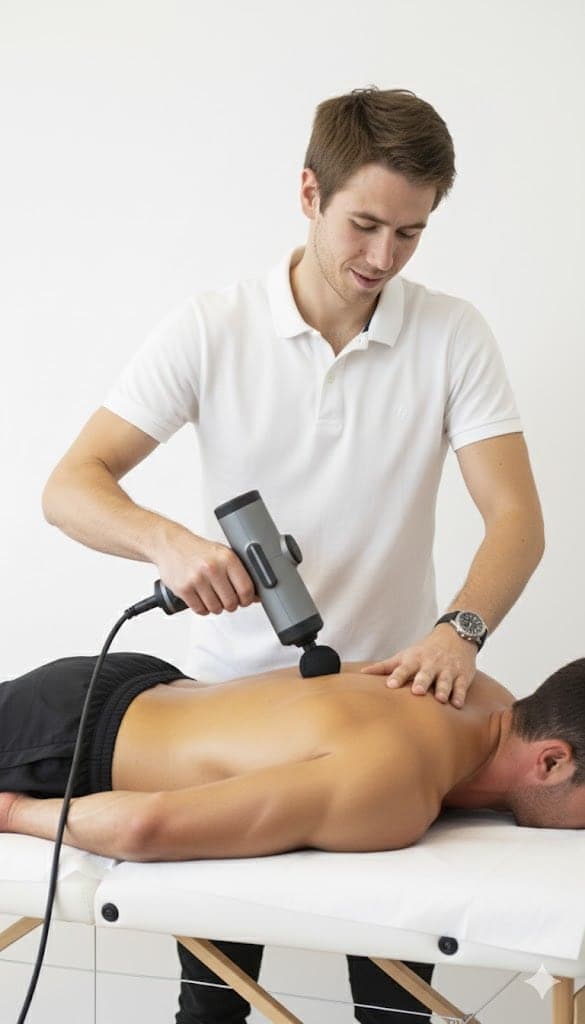
Written by
Chris
Massage therapist, nutrition and exercise physiologist
Norwegian-certified with a Bachelor’s in Physical Education and Nutrition and over ten years of clinical practice, working from a portable table in clients’ homes across the Paphos district.
This article is general information, not a medical diagnosis. If you have severe, worsening or unexplained pain, numbness, weakness, or pain after an accident, see a doctor first.