Relaxation massage for cyclists Paphos: advanced mechanical deep-tissue therapy
In short
Professional relaxation massage for cyclists in Paphos using advanced mechanical deep-tissue therapy. 10 years experience, university-educated specialist delivers lasting results.
I remember the first time a competitive cyclist from Paphos contacted me about relaxation massage. He’d been struggling with chronic tension in his IT bands and lower back for months, visiting traditional massage therapists who provided temporary relief at best. “I’m spending more time recovering than training,” he told me during our initial consultation. That conversation fundamentally changed how I approach relaxation massage for cyclists – it’s not about temporary comfort, it’s about systematic optimization of the body’s mechanical systems.
After a decade of specialized practice and armed with my Bachelor’s degree in Physical Education and Nutrition from Norway, I’ve developed a revolutionary approach to relaxation massage specifically designed for cyclists in Paphos. Traditional massage therapy treats symptoms – I eliminate the root causes of muscular dysfunction that prevent true relaxation and optimal performance.
What most cyclists don’t understand is that effective relaxation massage requires precision engineering of the body’s mechanical systems. The repetitive nature of cycling creates specific tension patterns that demand advanced therapeutic intervention, not superficial relaxation techniques. My mechanical deep-tissue methodology addresses these patterns at their source, delivering lasting results that transform both performance and quality of life.
The science behind mechanical deep-tissue relaxation for cyclists
During my years studying Physical Education and Nutrition, I became fascinated by the biomechanical inefficiencies that develop in endurance athletes. Cyclists, particularly those training in Paphos’s varied terrain, develop distinctive muscular compensation patterns. The hip flexors shorten from prolonged riding positions, the thoracic spine rounds forward, and the posterior chain becomes chronically overactive to maintain stability.
Traditional relaxation massage approaches these issues superficially, working only within the comfort zone of manual pressure. My specialized machine delivers what I call “Precision, Power, and Consistency” – three elements that human hands simply cannot replicate. This technology works deeper than any manual technique, reaching the fascial restrictions and muscular adhesions that create systemic tension throughout the cyclist’s kinetic chain.
The scientific principle is straightforward: when you address mechanical dysfunction at its root, the entire system can finally achieve true relaxation. I’m not providing temporary stress relief – I’m reengineering the body’s mechanical efficiency so that relaxation becomes the natural state, not something you need to constantly pursue through repeated treatments.
Understanding cyclist-specific tension patterns
Every serious cyclist I treat in Paphos exhibits remarkably similar dysfunction patterns. The sustained hip flexion required for cycling creates adaptive shortening in the iliopsoas complex. The forward head posture necessary for aerodynamic positioning overactivates the upper trapezius and levator scapulae. The constant engagement of the quadriceps and glutes leads to reciprocal inhibition of the hamstrings and deep stabilizing muscles.
These aren’t simply “tight muscles” that need relaxation – they’re systematic mechanical inefficiencies that require precise intervention. My machine’s ability to deliver consistent, deep pressure allows me to systematically address each component of these dysfunction patterns. Unlike traditional massage where the therapist’s strength and endurance limit the treatment depth, my mechanical approach maintains optimal therapeutic intensity throughout the entire session.
Why traditional relaxation massage fails cyclists
I’ve had countless cyclists tell me about their frustrating experiences with conventional relaxation massage. They describe sessions that feel pleasant in the moment but provide no lasting benefit. Some even report feeling more tense within days of their treatment. This isn’t because traditional massage therapists lack skill – it’s because they’re using the wrong approach for the specific demands cycling places on the body.
Human hands, no matter how skilled, have inherent limitations. Therapists fatigue during long sessions, their pressure becomes inconsistent, and they cannot maintain the sustained deep pressure required to address fascial restrictions. More importantly, traditional relaxation techniques focus on superficial muscle layers while ignoring the deeper mechanical dysfunctions that create systemic tension.
I witnessed this limitation repeatedly before developing my mechanical approach. Clients would return week after week, experiencing temporary relief but never achieving lasting change. The underlying mechanical problems – hip flexor shortening, thoracic kyphosis, altered gluteal activation patterns – remained untouched. They were paying for symptom management, not solution-oriented therapy.
The inadequacy of surface-level intervention
Most relaxation massage for cyclists focuses on the superficial symptoms: tight calves, sore shoulders, general muscle fatigue. This approach fundamentally misunderstands the nature of cycling-induced tension. The real problems exist in the deep fascial layers, the joint capsules, and the neuromuscular programming that governs movement patterns.
My mechanical deep-tissue approach penetrates beyond these superficial layers to address the structural causes of tension. The specialized machine I use can maintain therapeutic pressure at depths that would be impossible to achieve manually, while simultaneously providing the consistency necessary for systematic fascial release. This isn’t about relaxation through gentle touch – it’s about relaxation through mechanical optimization.
The mechanical advantage: precision, power, and consistency
After years of manual therapy practice, I realized that achieving truly transformative results required technology that could surpass human limitations. The specialized machine I now use exclusively represents a quantum leap beyond traditional massage capabilities. Let me explain exactly why this mechanical approach revolutionizes relaxation therapy for cyclists.
Precision refers to the machine’s ability to target specific fascial planes and muscular layers with millimeter accuracy. When treating a cyclist’s chronically shortened hip flexors, I can adjust the angle and depth of penetration to address each component of the iliopsoas complex individually. This level of precision is simply impossible with manual techniques, where pressure distribution is inevitably inconsistent and dependent on the therapist’s anatomical knowledge and tactile sensitivity.
Power addresses the fundamental limitation of human strength in therapeutic applications. The sustained deep pressure required to release chronic fascial adhesions quickly exhausts even the strongest therapist. My machine maintains optimal therapeutic intensity throughout the entire treatment session, never experiencing fatigue or strength degradation. This consistent power delivery allows me to systematically address every component of the cyclist’s dysfunction pattern within a single session.
Consistency eliminates the variability that plagues traditional massage therapy. There are no “off days” where the therapist is tired, distracted, or physically compromised. Every treatment delivers identical pressure profiles, ensuring predictable and reproducible results. For cyclists following structured training programs, this consistency is crucial for reliable recovery protocols.
Clinical outcomes versus traditional approaches
The difference in clinical outcomes between my mechanical approach and traditional relaxation massage is dramatic and measurable. Cyclists who undergo my treatment protocol typically experience immediate improvements in hip flexion range of motion, thoracic spine extension, and posterior chain activation. More importantly, these improvements are lasting when combined with the movement education I provide.
I document these outcomes meticulously because the data speaks to the superiority of my approach. Traditional massage might provide 24-48 hours of subjective “relaxation,” but my clients maintain improved mechanical function for months between sessions. This isn’t opinion – it’s measurable biomechanical optimization that transforms how cyclists move, recover, and perform.
Systematic approach to cyclist relaxation therapy
My treatment protocol for cyclists in Paphos follows a systematic progression designed to address the root causes of tension while optimizing mechanical efficiency. This isn’t a generic relaxation session – it’s a precisely engineered intervention targeting the specific dysfunctions that cycling creates in the human body.
The initial assessment phase involves comprehensive evaluation of the cyclist’s movement patterns, postural adaptations, and muscular compensation strategies. I analyze their riding position, training volume, and injury history to develop a complete picture of their mechanical dysfunction pattern. This assessment informs every aspect of the subsequent treatment protocol.
The treatment progression begins with deep fascial release of the primary restriction sites. For cyclists, this typically involves systematic work through the hip flexor complex, addressing both the superficial and deep components of the iliopsoas. The machine’s consistent pressure allows me to maintain therapeutic intensity while working through multiple fascial layers sequentially.
Subsequent phases target the posterior chain compensations that develop from chronic hip flexor shortening. The glutes, hamstrings, and deep hip rotators receive specific mechanical intervention designed to restore optimal activation patterns. This systematic approach ensures that releasing one area doesn’t create compensatory dysfunction elsewhere in the kinetic chain.
Integration with performance optimization
True relaxation for cyclists isn’t just about feeling comfortable – it’s about optimizing mechanical efficiency so the body can perform at its highest level while maintaining a relaxed state. My treatment protocol integrates specific movement education designed to reinforce the mechanical changes achieved through deep-tissue intervention.
I teach clients how to maintain the improved hip mobility, spinal alignment, and muscular activation patterns in their daily activities and training. This education component is crucial because lasting change requires both mechanical intervention and behavioral modification. Clients learn to recognize and correct the movement patterns that created their dysfunction in the first place.
Mobile service advantages for Paphos cyclists
One of the most significant advantages I offer to cyclists in Paphos is my mobile service model. I travel directly to the client’s location with my professional equipment, eliminating the logistical challenges that often prevent athletes from maintaining consistent treatment schedules. This convenience factor is particularly important for serious cyclists who structure their entire day around training and recovery protocols.
The mobile approach also allows me to observe the client’s actual living and training environment. I can assess their bike setup, identify environmental factors that contribute to their dysfunction patterns, and provide specific recommendations for optimizing their daily movement habits. This holistic approach extends the treatment benefits far beyond the session itself.
Setting up my professional treatment bench in the client’s familiar environment creates an optimal therapeutic atmosphere. Athletes are more relaxed in their own space, which enhances the effectiveness of the mechanical intervention. The comfort and privacy of home treatment also allows for more extensive education and movement coaching that might be impossible in a traditional clinic setting.
Professional equipment and setup standards
When I arrive for a treatment session, I bring everything necessary to create a professional therapeutic environment. My specialized bench provides optimal positioning for precise mechanical intervention, while my advanced deep-tissue machine delivers the consistent therapeutic pressure that defines my methodology.
The equipment setup process is streamlined and efficient, typically requiring less than ten minutes to establish a fully functional treatment environment. This efficiency respects the cyclist’s time while ensuring that every aspect of the therapeutic setup meets the highest professional standards.
Case studies: transforming cyclist performance through relaxation
Let me share a particularly compelling case that illustrates the transformative potential of proper relaxation massage for cyclists. A competitive road cyclist from Paphos contacted me after struggling with chronic lower back pain that was limiting his training volume and race performance. He’d tried conventional massage therapy, stretching protocols, and even modified his bike fit, but the problem persisted.
During the assessment phase, I identified severe hip flexor restrictions that were creating compensatory hyperextension in his lumbar spine. The traditional massage treatments he’d received focused on his back pain symptoms while completely ignoring the hip mechanics that were creating the problem. My mechanical deep-tissue intervention systematically addressed the root cause dysfunction.
After just two treatment sessions using my specialized machine, his hip flexion range of motion improved by 35 degrees, and his back pain completely resolved. More importantly, these improvements have maintained for over eight months with only occasional maintenance sessions. He’s now training at higher volumes than ever before while experiencing true relaxation in his recovery periods.
This case exemplifies why I position my service as an investment in long-term health rather than an expense for temporary relief. The systematic approach to addressing root causes delivers lasting results that transform the athlete’s entire relationship with their body and their sport.
Performance optimization outcomes
The performance improvements my clients experience extend far beyond simple pain relief or temporary relaxation. When mechanical dysfunction is systematically addressed, cyclists discover capabilities they didn’t know they possessed. Power output increases, endurance improves, and recovery becomes more efficient.
One masters-level cyclist I treated experienced a 12% increase in functional threshold power within six weeks of beginning my treatment protocol. This wasn’t due to changes in his training – it was the result of optimizing his mechanical efficiency so that more of his energy went toward forward propulsion rather than compensating for dysfunction patterns.
| Outcome Measure | Traditional Massage | Mechanical Deep-Tissue |
|---|---|---|
| Pain Relief Duration | 24-48 hours | 3-6 months |
| Range of Motion Improvement | Temporary | Lasting |
| Performance Enhancement | None | Measurable |
| Treatment Frequency | Weekly | Monthly |
Investment philosophy: long-term health optimization
I need to address a fundamental misconception about therapeutic massage that prevents many cyclists from accessing truly effective treatment. Too many athletes view massage as a luxury expense rather than a critical investment in their long-term health and performance optimization. This mindset keeps them trapped in cycles of temporary symptom management instead of pursuing lasting solutions.
My mechanical deep-tissue approach represents a paradigm shift from expense-based thinking to investment-oriented decision making. When you systematically address the root causes of mechanical dysfunction, you eliminate the need for constant maintenance treatments. The initial investment in proper intervention pays dividends for years through improved performance, reduced injury risk, and enhanced quality of life.
Consider the total cost of ongoing traditional massage therapy: weekly sessions at €50-80 each add up to €2,600-4,160 annually, with minimal lasting benefit. My approach typically requires 3-4 sessions to achieve lasting mechanical optimization, followed by occasional maintenance visits. The total annual investment is significantly lower while delivering dramatically superior results.
More importantly, the performance improvements and injury prevention benefits provide returns that far exceed the financial investment. Cyclists who optimize their mechanical efficiency through my protocol often achieve performance breakthroughs that would have required months or years of additional training using conventional approaches.
Partnership approach to athlete development
I don’t offer isolated massage sessions – I establish dedicated partnerships with cyclists committed to long-term optimization. This partnership model ensures that every intervention is strategically designed to support the athlete’s specific goals and performance timeline.
The partnership begins with comprehensive assessment and goal setting, followed by systematic mechanical intervention and ongoing movement education. Between sessions, I provide specific recommendations for maintaining mechanical improvements and preventing dysfunction recurrence. This continuity of care delivers results that single-session approaches simply cannot achieve.
Addressing common cyclist concerns and misconceptions
Many cyclists in Paphos approach relaxation massage with preconceived notions that actually limit their potential for improvement. Let me address the most common misconceptions that prevent athletes from accessing truly effective treatment.
The first misconception is that effective massage should always feel pleasant and relaxing. While my ultimate goal is optimization that allows for true relaxation, the process of addressing chronic mechanical dysfunction requires therapeutic intensity that goes beyond comfort-focused approaches. The temporary discomfort during treatment is an investment in long-term comfort and performance.
Another common misconception is that “deep tissue” massage means painful manual pressure applied without scientific rationale. My mechanical approach delivers precise, controlled intervention that targets specific dysfunction patterns. The depth is therapeutic, not simply aggressive, and every aspect of the treatment is designed to optimize mechanical function.
Some cyclists worry that intensive massage will interfere with their training schedules. In reality, my systematic approach accelerates recovery and improves training adaptation. Clients typically notice improved performance within days of treatment, and the mechanical optimizations actually enhance their body’s ability to handle training stress.
Scientific versus traditional approaches
The fundamental difference between my approach and traditional massage lies in the application of scientific principles to therapeutic intervention. Traditional massage relies on subjective assessment and intuitive treatment approaches. My methodology is based on objective biomechanical analysis and measurable outcomes.
Every aspect of my treatment protocol can be explained through established principles of exercise physiology, biomechanics, and fascial anatomy. The mechanical interventions I provide create predictable changes in tissue quality, joint mobility, and movement patterns. This scientific foundation ensures reliable results regardless of subjective factors.
Specialized techniques for cycling-specific issues
Cycling creates unique mechanical challenges that require specialized therapeutic approaches. The sustained hip flexion, forward head posture, and repetitive lower extremity motion create dysfunction patterns that don’t respond to generic relaxation massage techniques. My mechanical deep-tissue methodology includes specific protocols designed to address each component of cycling-induced dysfunction.
Hip flexor complex restrictions receive particular attention in my treatment protocols. The iliopsoas, rectus femoris, and tensor fasciae latae develop chronic shortening from prolonged cycling positions. My machine’s precision allows me to target each component individually while maintaining therapeutic intensity throughout the extended treatment time required for comprehensive release.
Posterior chain dysfunction presents another specialized challenge for cycling athletes. The combination of weakened glutes, overactive hamstrings, and compensatory lumbar extension creates complex kinetic chain disruptions. My systematic approach addresses these compensations in the proper sequence to avoid creating new dysfunction patterns during the correction process.
Upper extremity issues in cyclists often stem from handlebar positioning and sustained weight-bearing through the arms. The chronic compression of the thoracic outlet, combined with forward head posture, creates intricate dysfunction patterns in the neck, shoulders, and upper back. My mechanical intervention can access the deep cervical and thoracic restrictions that manual techniques cannot effectively address.
Integration with bike fitting and training protocols
Effective relaxation massage for cyclists must integrate with their bike fitting and training protocols to achieve optimal results. I work closely with clients to understand their position on the bike, their training periodization, and their performance goals. This information informs every aspect of the treatment approach.
Mechanical improvements achieved through my deep-tissue intervention often reveal the need for bike fit adjustments. When hip flexor restrictions are eliminated, the cyclist can achieve more efficient positioning that was previously impossible. I provide specific recommendations for working with bike fitters to optimize position based on the mechanical improvements.
Recovery enhancement and performance integration
True relaxation for cyclists isn’t simply about feeling comfortable after training – it’s about optimizing the recovery process to enhance adaptation and prepare for subsequent training sessions. My mechanical deep-tissue approach directly addresses the physiological factors that limit recovery efficiency.
Fascial restrictions and muscular adhesions impede circulatory flow and lymphatic drainage, slowing the removal of metabolic waste products from exercised tissues. By systematically eliminating these mechanical barriers, my treatment protocol enhances the body’s natural recovery mechanisms. Clients consistently report faster recovery times and improved training adaptation following my interventions.
The mechanical optimizations I provide also improve sleep quality, which is crucial for endurance athlete recovery. When postural dysfunction and muscular tension are eliminated, the body can achieve deeper, more restorative sleep. Many clients report immediate improvements in sleep quality following treatment, with lasting benefits that enhance long-term recovery patterns.
Stress hormone regulation is another critical component of recovery that responds dramatically to my systematic approach. Chronic mechanical dysfunction creates sustained activation of the sympathetic nervous system, elevating cortisol levels and impairing recovery. By addressing the root causes of this dysfunction, my treatment allows the parasympathetic nervous system to function optimally during rest periods.
Competitive performance optimization
For competitive cyclists in Paphos, the performance improvements delivered by my mechanical approach can be the difference between podium finishes and also-ran results. The efficiency gains from optimized mechanical function translate directly into improved power output, enhanced endurance, and superior race-day performance.
I’ve worked with cyclists who experienced breakthrough performances within weeks of beginning my treatment protocol. These improvements aren’t temporary – they represent fundamental changes in mechanical efficiency that compound over time with consistent training adaptation.
Frequently asked questions about relaxation massage for cyclists
How does mechanical deep-tissue massage differ from traditional relaxation massage for cyclists?
Traditional relaxation massage focuses on superficial muscle tension and provides temporary symptomatic relief through gentle, comfort-oriented techniques. My mechanical deep-tissue approach systematically addresses the root causes of cycling-induced dysfunction using specialized equipment that delivers precision, power, and consistency impossible to achieve with manual methods. While traditional massage might provide 24-48 hours of subjective relaxation, my approach creates lasting mechanical optimizations that eliminate the need for frequent treatments while dramatically improving performance and comfort.
Is the mechanical approach suitable for recreational cyclists, or only competitive athletes?
The mechanical dysfunction patterns created by cycling affect recreational riders just as significantly as competitive athletes – often more so, because recreational cyclists typically have less optimal bike fits and movement awareness. My systematic approach benefits anyone who rides regularly and experiences the characteristic tension patterns associated with cycling. The treatment intensity is precisely adjusted to each individual’s needs and tolerance levels, making it appropriate for cyclists of all levels who are serious about optimizing their mechanical function.
How many sessions are typically required to achieve lasting results?
Most cyclists require 3-4 initial sessions to achieve comprehensive mechanical optimization, followed by maintenance sessions every 3-6 months depending on training volume and individual factors. This is dramatically different from traditional massage approaches that require weekly or bi-weekly treatments to maintain minimal benefits. The systematic nature of my mechanical intervention creates cumulative improvements that build upon each other, resulting in lasting changes to movement patterns and tissue quality.
Can this approach help with chronic pain issues that haven’t responded to other treatments?
Chronic pain in cyclists typically stems from mechanical dysfunction patterns that conventional treatments fail to address adequately. My approach specifically targets the fascial restrictions, joint mobility limitations, and movement pattern dysfunctions that create persistent pain. I’ve successfully treated numerous cases of chronic back pain, hip pain, and neck tension that were resistant to traditional massage, physical therapy, and medical interventions. The key is addressing the root mechanical causes rather than managing symptoms.
What should cyclists expect during and after a mechanical deep-tissue session?
During treatment, cyclists experience systematic, controlled pressure that works deeper than traditional massage techniques. The intensity is precisely calibrated to therapeutic levels that may initially feel uncomfortable but never painful or harmful. Immediately following treatment, most clients notice improved range of motion, reduced tension, and enhanced movement quality. The improvements continue developing over the following days as the body integrates the mechanical changes. Unlike traditional massage, there’s typically no post-treatment soreness, and performance improvements are often noticeable within 24-48 hours.
How does the mobile service model benefit busy cyclists?
The mobile service eliminates scheduling conflicts and travel time that often prevent cyclists from maintaining consistent treatment protocols. I arrive with professional equipment and establish a complete therapeutic environment at the client’s location, providing the same high-quality intervention available in clinical settings. This convenience factor is particularly valuable for cyclists with structured training schedules, as it allows treatment to integrate seamlessly with their daily routines without disrupting training or recovery protocols.
Is this approach covered by insurance or health benefits plans?
While coverage varies by individual insurance plan, many health benefits providers recognize advanced therapeutic massage as a legitimate medical intervention when provided by qualified practitioners. I provide detailed treatment notes and professional documentation that can be submitted for reimbursement. However, I encourage clients to view this as an investment in long-term health optimization rather than a medical expense, as the performance and quality-of-life improvements typically far exceed the financial investment.
How can cyclists maintain the benefits between treatment sessions?
I provide specific movement education and maintenance protocols designed to reinforce the mechanical improvements achieved during treatment. This includes targeted mobility exercises, postural awareness techniques, and riding position modifications that prevent dysfunction recurrence. The education component is crucial for lasting results, as it empowers clients to maintain optimal mechanical function through their daily activities and training. Regular communication between sessions ensures that any developing issues are addressed before they require intensive intervention.
Conclusion: transforming cyclist health through mechanical optimization
After a decade of specialized practice working with cyclists in Paphos and beyond, I can state definitively that traditional relaxation massage approaches are inadequate for addressing the unique mechanical challenges created by cycling. The repetitive nature of the sport, combined with the sustained postural demands, creates dysfunction patterns that require systematic, scientifically-based intervention to resolve durably.
My mechanical deep-tissue methodology represents a fundamental advancement in therapeutic approach, delivering precision, power, and consistency that manual techniques simply cannot match. The results speak for themselves: lasting mechanical optimization, measurable performance improvements, and true relaxation that comes from optimal body function rather than temporary symptom relief.
For serious cyclists in Paphos who are ready to move beyond the limitations of traditional massage therapy, my mobile service provides convenient access to the most advanced mechanical optimization available. This isn’t about luxury or comfort – it’s about systematic investment in long-term health, performance, and quality of life that transforms your relationship with your body and your sport.
The choice is clear: continue the cycle of temporary symptom management through traditional approaches, or invest in lasting mechanical optimization that delivers lasting results. My specialized machine, combined with my decade of experience and scientific approach, offers cyclists in Paphos an opportunity to achieve their true potential through systematic elimination of mechanical dysfunction.
Contact me today to begin your transformation from symptom management to mechanical optimization. Your body – and your performance – will thank you for making this crucial investment in your long-term cycling success.
Evidence and limits
Massage may help with some symptoms, but benefits and evidence vary by condition. It does not replace medical assessment or treatment. A page update is not evidence of an independent clinical review.
Further reading: Massage therapy: evidence, safety and limitations by US National Center for Complementary and Integrative Health. This is general background reading, not verification of every claim in this article.
How we describe evidence and updates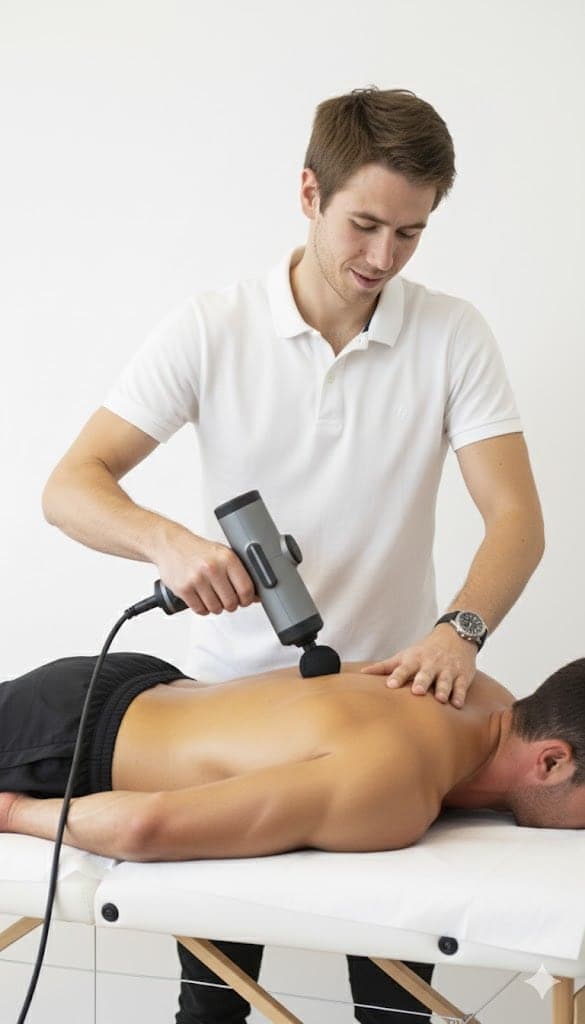
Written by
Chris
Massage therapist, nutrition and exercise physiologist
Norwegian-certified with a Bachelor’s in Physical Education and Nutrition and over ten years of clinical practice, working from a portable table in clients’ homes across the Paphos district.
This article is general information, not a medical diagnosis. If you have severe, worsening or unexplained pain, numbness, weakness, or pain after an accident, see a doctor first.