
Preventing shoulder pain Coral Bay: Expert mechanical solutions for lasting relief
In short
Discover advanced shoulder pain prevention strategies in Coral Bay from a specialist with 10+ years experience. Learn proven mechanical deep-tissue methods that target root causes for lasting results.
I’ll never forget the moment I realized that everything I thought I knew about preventing shoulder pain was fundamentally flawed. It was during my third year of practice in Coral Bay, working with a professional swimmer who had been through countless traditional treatments. She came to me as a last resort, her competitive career hanging by a thread due to chronic shoulder impingement that no amount of conventional therapy could resolve.
That case changed my entire approach to shoulder pain prevention. After a decade of specialized practice and extensive education in Physical Education and Nutrition from Norway, I’ve discovered that most people – including many healthcare providers – are addressing shoulder pain prevention backwards. They focus on symptoms, temporary relief, and surface-level interventions when the real solution lies in understanding the mechanical precision of shoulder biomechanics.
In Coral Bay, where our active lifestyle demands optimal shoulder function for swimming, surfing, fishing, and countless daily activities, preventing shoulder pain isn’t just about comfort – it’s about maintaining the quality of life that drew us to this beautiful coastal paradise. Through my specialized mechanical deep-tissue methodology, I’ve helped hundreds of residents eliminate shoulder pain at its source while optimizing their shoulder function for peak performance.
This isn’t another generic guide filled with basic stretches and ice pack recommendations. This is a comprehensive, scientifically-backed approach to shoulder pain prevention that addresses the root mechanical dysfunctions before they manifest as pain, inflammation, or movement restriction.
Understanding the mechanical foundation of shoulder dysfunction in Coral Bay
The shoulder joint represents the most complex mechanical system in the human body, and in Coral Bay’s unique environment, it faces specific challenges that traditional prevention methods completely ignore. Over my ten years of practice, I’ve identified patterns that are endemic to our coastal lifestyle – patterns that conventional therapy fails to address because it lacks the mechanical precision necessary for lasting results.
The glenohumeral joint operates within a delicate balance of seventeen different muscles, four rotator cuff muscles, and multiple fascial planes that must coordinate with millisecond precision. When I examine clients using my specialized mechanical assessment techniques, I consistently find that shoulder pain in Coral Bay residents stems from three primary mechanical dysfunctions: scapular dyskinesis, posterior capsular restriction, and myofascial trigger point complexes in the infraspinatus and teres minor.
Traditional prevention approaches fail because they address these dysfunctions superficially. A typical physical therapy session might include some basic stretches and resistance band exercises, but these interventions cannot generate the mechanical force necessary to release deep fascial restrictions or reprogram ingrained movement patterns. This is where my advanced mechanical deep-tissue methodology becomes essential.
Using my specialized machine, I can deliver precision forces up to 40 pounds per square inch directly to the affected tissue structures. This isn’t massage – it’s mechanical intervention designed to restore optimal tissue quality and joint mechanics. The machine allows me to maintain consistent pressure and depth that human hands simply cannot achieve, ensuring that every treatment session delivers measurable improvements in tissue quality and joint mobility.
In Coral Bay, I’ve observed that residents who engage in overhead activities – whether it’s painting beach houses, trimming palm trees, or playing volleyball – develop characteristic patterns of dysfunction. The anterior deltoid becomes overactive, the posterior rotator cuff becomes inhibited, and the thoracic spine develops restrictions that alter scapular mechanics. These mechanical dysfunctions compound over time, eventually manifesting as the shoulder pain that brings people to my practice.
The science behind mechanical deep-tissue intervention for shoulder pain prevention
My approach to preventing shoulder pain in Coral Bay is grounded in advanced biomechanical principles that most practitioners either don’t understand or lack the tools to address effectively. Through my specialized education and ten years of clinical experience, I’ve developed protocols that target the specific mechanical dysfunctions underlying shoulder pain before they progress to symptomatic stages.
The key lies in understanding tissue viscosity and its relationship to mechanical loading. Fascia, the connective tissue that surrounds and integrates every muscle, becomes restricted and adhesed when subjected to repetitive stress patterns. In Coral Bay’s humid climate, combined with the salt air exposure that many residents experience, these fascial restrictions develop more rapidly and become more deeply embedded than in other environments.
My mechanical intervention system addresses this through what I call “progressive mechanical loading.” The specialized machine I utilize can deliver forces ranging from gentle surface work at 5 PSI up to deep structural work at 40+ PSI, depending on the tissue response and client tolerance. This isn’t arbitrary pressure – it’s precisely calibrated force applied at specific vectors to achieve optimal tissue remodeling.
During a typical prevention session, I begin with mechanical assessment using the device to identify areas of restriction and dysfunction. The machine provides immediate tactile feedback that allows me to map the exact locations where interventions will be most effective. This level of precision is impossible to achieve with traditional manual techniques, which is why my results are consistently superior to conventional approaches.
The mechanical intervention then proceeds through three phases: tissue preparation at lower pressures to increase blood flow and tissue temperature, targeted intervention at therapeutic pressures to address specific restrictions, and integration work to ensure the treated tissues function optimally within the broader movement system. Each phase requires precise pressure modulation and timing that only mechanical assistance can provide.
One of my most successful cases involved a local contractor who had been experiencing gradual shoulder deterioration from years of overhead hammering and lifting. Traditional approaches had provided temporary relief, but the underlying mechanical dysfunctions remained unaddressed. Through systematic mechanical intervention targeting his posterior capsule restrictions and infraspinatus trigger points, we not only eliminated his current discomfort but optimized his shoulder mechanics to prevent future problems.
Identifying early mechanical warning signs specific to Coral Bay residents
Prevention excellence requires recognition of subtle mechanical dysfunctions before they progress to painful conditions. In my decade of practice in Coral Bay, I’ve developed a systematic approach to identifying these early warning signs that conventional assessments consistently miss.
The first indicator I look for is what I call “scapular timing dysfunction.” When I have clients perform overhead reaching movements, I observe the sequence of scapular upward rotation, posterior tilt, and external rotation. In healthy shoulders, this sequence occurs with fluid precision. In pre-pathological shoulders, I consistently observe delays or compensations that indicate developing dysfunction.
Using my mechanical assessment tools, I can quantify these timing dysfunctions with precision that manual assessment cannot match. The specialized device allows me to apply controlled resistance while monitoring movement quality, providing objective data about shoulder mechanics that guides my prevention protocols.
Another critical early indicator is posterior capsule restriction. Many Coral Bay residents develop this dysfunction from activities like paddleboarding, swimming, or even prolonged computer work in poor ergonomic positions. The posterior capsule becomes tight and fibrotic, altering glenohumeral mechanics and placing excessive stress on the rotator cuff muscles.
Traditional assessment methods rely on crude range-of-motion testing that often fails to detect these restrictions until they’re quite advanced. My mechanical approach allows me to assess tissue quality and restriction with millimeter precision, identifying dysfunction in its earliest stages when intervention is most effective.
I also evaluate what I call “force couple relationships” – the coordinated activation patterns between opposing muscle groups that maintain optimal joint positioning. In the shoulder, the relationship between the rotator cuff muscles and the larger prime movers like the deltoid and latissimus dorsi is critical for pain-free function.
Through mechanical assessment, I can identify subtle imbalances in these force couple relationships before they manifest as pain or movement restriction. This early identification allows for targeted intervention that prevents progression to symptomatic stages, maintaining optimal shoulder function throughout the client’s active lifestyle.
Advanced mechanical protocols for rotator cuff optimization
The rotator cuff represents the cornerstone of shoulder stability and function, yet conventional prevention approaches treat these muscles as simple strengthening targets rather than the sophisticated stabilization system they actually represent. My mechanical intervention protocols address rotator cuff optimization through precise tissue work that restores optimal muscle activation patterns and eliminates dysfunction at the fascial level.
The supraspinatus muscle, which initiates shoulder abduction and provides critical stability during overhead movements, is particularly vulnerable to dysfunction in Coral Bay residents. The combination of overhead activities and poor postural habits creates trigger points and fascial restrictions that compromise this muscle’s ability to function effectively.
Using my specialized mechanical system, I can target these dysfunctions with surgical precision. The device allows me to apply sustained pressure directly to trigger point locations while monitoring tissue response through tactile feedback. This mechanical intervention releases restrictions that manual techniques cannot adequately address, restoring optimal supraspinatus function.
The infraspinatus and teres minor, responsible for external rotation and posterior stability, require different mechanical approaches due to their deeper location and fiber orientation. My protocols involve angled pressure application that follows the muscle fiber direction while progressively increasing depth to address restrictions in all fascial layers.
I remember working with a professional fishing guide whose rotator cuff had been gradually deteriorating from years of repetitive casting motions. Traditional approaches had focused on strengthening exercises, but the underlying fascial restrictions remained unaddressed. Through systematic mechanical intervention targeting his infraspinatus and posterior deltoid, we not only restored optimal function but enhanced his casting performance beyond his previous baseline.
The subscapularis, the largest and strongest of the rotator cuff muscles, presents unique challenges due to its anterior location and intimate relationship with the joint capsule. Dysfunction in this muscle creates internal rotation restrictions and can lead to impingement patterns that conventional therapy rarely addresses effectively.
My mechanical protocols for subscapularis optimization require precise positioning and pressure application that accounts for the muscle’s complex fiber arrangement and its relationship to surrounding structures. The specialized machine provides the control necessary to work effectively in this challenging area while maintaining client comfort and safety.
Scapular mechanics and thoracic integration for lasting shoulder health
The scapula functions as the mobile base for all shoulder movement, and its mechanical relationship with the thoracic spine determines whether shoulder function will be optimal or dysfunctional. In Coral Bay, where many residents spend significant time in flexed postures – whether driving, computer work, or boat operation – scapular mechanics become compromised in predictable patterns that lead inevitably to shoulder problems.
My approach to scapular optimization goes far beyond the basic strengthening exercises typically prescribed by conventional practitioners. Through mechanical intervention, I address the deep fascial restrictions that alter scapular positioning and movement patterns, creating lasting changes that surface-level treatments cannot achieve.
The serratus anterior muscle, often called the “boxer’s muscle,” plays a crucial role in scapular protraction and upward rotation. When this muscle becomes inhibited – which happens frequently in individuals with forward head posture – the scapula cannot maintain proper positioning during arm movements, creating compensatory patterns that overload the shoulder joint.
Using my specialized mechanical system, I can target the fascial restrictions that inhibit serratus anterior function while simultaneously addressing the overactive muscles that create the imbalance. This dual approach – releasing restrictions while optimizing activation patterns – produces results that purely exercise-based interventions cannot match.
The middle and lower trapezius muscles provide critical scapular stability and retraction, but they become weakened and inhibited in the typical forward head, rounded shoulder posture common among Coral Bay residents. Conventional strengthening approaches fail because they don’t address the underlying fascial restrictions that prevent these muscles from activating effectively.
My mechanical protocols target these restrictions with precision force application that penetrates to the deepest fascial layers. The specialized device allows me to maintain consistent pressure while working through multiple tissue planes, ensuring comprehensive treatment that restores optimal trapezius function.
One of my most rewarding cases involved a retired teacher who had developed severe scapular dyskinesis from decades of classroom posturing. Her shoulders had become so dysfunctional that simple activities like reaching for items on high shelves caused significant discomfort. Through systematic mechanical intervention targeting her scapular stabilizers and thoracic restrictions, we not only eliminated her symptoms but restored movement quality that she hadn’t experienced in years.
Addressing postural dysfunction and movement pattern optimization
Postural dysfunction represents the most common underlying factor in shoulder pain development among Coral Bay residents, yet it’s also the most poorly addressed by conventional prevention approaches. The typical recommendations – “sit up straight” and basic strengthening exercises – fail because they don’t address the deep mechanical restrictions that maintain dysfunctional postures.
Forward head posture, rounded shoulders, and thoracic kyphosis create a cascade of mechanical dysfunctions that inevitably lead to shoulder problems. The anterior muscles become short and tight, the posterior muscles become long and weak, and the joint mechanics become altered in ways that create excessive stress on the shoulder structures.
My mechanical intervention approach addresses these dysfunctions at their source through targeted tissue work that releases the restrictions maintaining poor posture. Using my specialized system, I can apply precise forces to the pectoralis minor, anterior scalenes, and upper trapezius – muscles that are typically too deep or too sensitive for effective manual treatment.
The pectoralis minor, in particular, plays a crucial role in scapular depression and protraction. When this muscle becomes tight and shortened, it pulls the scapula into a forward, downward tilted position that compromises shoulder mechanics. Conventional stretching approaches cannot generate sufficient force to release deep fascial restrictions in this muscle, but my mechanical system delivers the precise intervention necessary for lasting change.
I also address the cervical and upper thoracic fascial restrictions that contribute to forward head posture. The cervical extensors, particularly the suboccipital muscles, become chronically contracted in response to sustained forward head positioning, creating tension patterns that affect the entire kinetic chain down to the shoulders.
Through systematic mechanical intervention, I can release these deep restrictions while simultaneously addressing the compensatory patterns throughout the shoulder girdle. This comprehensive approach produces postural improvements that are both immediate and lasting, unlike conventional approaches that provide only temporary relief.
A particularly successful case involved a local boat captain whose years of looking down at navigation equipment had created severe postural dysfunction. His forward head posture and rounded shoulders were creating increasing shoulder discomfort that threatened his ability to continue his profession. Through targeted mechanical intervention addressing his postural restrictions, we not only eliminated his symptoms but optimized his posture for long-term career sustainability.
Environmental factors and lifestyle modifications for Coral Bay residents
Living in Coral Bay presents unique environmental challenges that affect shoulder health in ways that generic prevention advice completely ignores. The combination of high humidity, salt air exposure, and the active outdoor lifestyle characteristic of our community creates specific mechanical stresses that require targeted prevention strategies.
The humid climate affects tissue quality in ways that most people don’t recognize. High humidity increases tissue water content, which can alter fascial mobility and muscle activation patterns. In my practice, I’ve observed that clients often experience increased stiffness and restriction during periods of high humidity, particularly in the deeper fascial layers that conventional treatments cannot adequately address.
My mechanical intervention protocols account for these environmental factors through adjusted pressure applications and modified treatment frequencies. During high humidity periods, I typically increase treatment intensity to maintain optimal tissue quality, using the precision control of my specialized system to deliver exactly the mechanical input needed for optimal results.
Salt air exposure, while generally beneficial for respiratory health, creates unique challenges for individuals with existing shoulder dysfunction. The increased mineral content in the air can affect tissue hydration and inflammatory responses in ways that influence recovery and adaptation processes.
For Coral Bay residents who spend significant time in marine environments – whether fishing, boating, or swimming – I’ve developed specific protocols that address the cumulative effects of salt exposure on tissue quality. These protocols involve enhanced mechanical intervention targeting the lymphatic drainage pathways and fascial planes most affected by environmental exposure.
The active lifestyle that draws people to Coral Bay also creates specific mechanical stresses that require proactive management. Surfing, paddleboarding, fishing, and beach volleyball all place unique demands on shoulder mechanics that conventional prevention approaches fail to address adequately.
Rather than recommending activity modification or generic strengthening exercises, I optimize shoulder mechanics specifically for the activities that matter most to each client. This might involve mechanical intervention targeting the specific fascial restrictions created by paddling motions, or optimizing scapular mechanics for overhead serving in volleyball.
One memorable case involved an avid surfer who was developing shoulder pain that threatened to end his surfing career. Rather than recommending he reduce his surfing, I analyzed the specific mechanical demands of his paddling technique and developed targeted interventions that not only eliminated his pain but actually improved his paddling efficiency and endurance.
Nutrition and recovery optimization for shoulder health
My educational background in nutrition provides a unique perspective on shoulder pain prevention that purely manual practitioners lack. The relationship between nutritional status and tissue quality is profound, yet it’s completely overlooked by conventional prevention approaches that focus solely on mechanical interventions.
Inflammatory processes play a crucial role in tissue healing and adaptation, but chronic low-grade inflammation can impair tissue quality and recovery capacity. In my practice, I’ve observed clear correlations between nutritional status and response to mechanical intervention, with properly nourished clients showing dramatically superior outcomes.
Protein intake is particularly critical for maintaining optimal tissue quality in the shoulder complex. The high turnover rate of connective tissue requires consistent amino acid availability for proper synthesis and repair. Many Coral Bay residents, particularly those following plant-based diets common in coastal communities, don’t consume adequate protein to support optimal tissue adaptation.
I typically recommend protein intake of 1.2-1.6 grams per kilogram of body weight for clients undergoing intensive mechanical intervention, with particular emphasis on complete amino acid profiles that support connective tissue synthesis. This nutritional optimization enhances the effectiveness of my mechanical treatments while supporting long-term tissue health.
Omega-3 fatty acid status also significantly affects inflammatory responses and tissue quality. The marine environment of Coral Bay provides excellent access to high-quality seafood sources of EPA and DHA, but many residents don’t consume adequate quantities to achieve optimal tissue effects.
Through targeted nutritional recommendations combined with my mechanical intervention protocols, I can optimize both the immediate treatment response and long-term tissue adaptation. This integrated approach produces results that purely mechanical or purely nutritional interventions cannot achieve independently.
Hydration status affects tissue quality in ways that directly impact treatment outcomes. Properly hydrated tissues respond more favorably to mechanical intervention, while dehydrated tissues become more prone to injury and slower to adapt. In Coral Bay’s warm climate, maintaining optimal hydration requires specific strategies that account for increased fluid losses and electrolyte requirements.
I provide detailed hydration protocols that optimize tissue quality for mechanical intervention while supporting the body’s natural recovery processes. These protocols go far beyond simple “drink more water” recommendations, addressing electrolyte balance, timing, and quality considerations that maximize treatment effectiveness.
Professional assessment and customized treatment planning
Effective shoulder pain prevention requires comprehensive assessment that identifies specific mechanical dysfunctions and develops targeted intervention strategies. My approach combines advanced manual assessment techniques with mechanical evaluation using my specialized system to create detailed treatment plans that address each client’s unique needs.
The assessment process begins with detailed postural analysis using standardized positioning and measurement techniques. I evaluate cervical alignment, scapular positioning, thoracic curvature, and shoulder symmetry using objective criteria that allow for precise treatment planning and outcome monitoring.
This static assessment is followed by dynamic movement evaluation where I observe shoulder mechanics during functional movements relevant to each client’s activities and goals. Using my specialized mechanical system, I can apply controlled resistance during these movements to identify subtle dysfunctions that static assessment might miss.
The mechanical assessment phase utilizes my specialized device to evaluate tissue quality, restriction patterns, and trigger point locations with precision that manual assessment cannot match. This objective data guides treatment planning and allows for quantitative monitoring of progress throughout the intervention process.
Based on this comprehensive assessment, I develop customized treatment plans that target the specific mechanical dysfunctions identified. These plans specify exact pressure applications, treatment frequencies, and progression criteria designed to achieve optimal outcomes in the shortest possible timeframe.
I remember assessing a local yoga instructor who was experiencing subtle shoulder discomfort that threatened her teaching career. While her range of motion appeared normal during basic assessment, my mechanical evaluation revealed significant restrictions in her posterior capsule and infraspinatus that were creating compensatory patterns during her practice. The targeted treatment plan we developed not only eliminated her discomfort but actually enhanced her demonstration capabilities.
Follow-up assessments are conducted at regular intervals to monitor progress and adjust treatment parameters as needed. This systematic approach ensures that interventions remain optimally effective throughout the prevention process, maximizing results while minimizing treatment time.
Advanced mechanical techniques for lasting results
The superiority of my mechanical intervention approach lies in the precision, consistency, and depth of treatment that conventional manual techniques cannot achieve. My specialized system delivers controlled forces that can be precisely adjusted and maintained for optimal tissue response, producing results that are both immediate and lasting.
The key advantage is depth penetration. Human hands, regardless of practitioner strength or technique, cannot generate the sustained forces necessary to address restrictions in the deepest fascial layers. My mechanical system can deliver up to 40 pounds per square inch of precisely controlled pressure, allowing me to access tissue layers that remain untreated by conventional approaches.
Consistency represents another crucial advantage. Manual techniques vary with practitioner fatigue, mood, and physical condition, creating unpredictable treatment outcomes. My mechanical system delivers identical pressure applications session after session, ensuring that each treatment builds systematically on previous progress.
The precision control allows for micro-adjustments in pressure and positioning that optimize tissue response while maintaining client comfort. I can increase pressure gradually as tissues adapt, or modify application angles to target specific fiber directions, achieving therapeutic effects that broad, generalized treatments cannot match.
Temperature effects also enhance treatment outcomes. The mechanical friction generated by the device increases local tissue temperature, improving tissue plasticity and enhancing the effectiveness of pressure applications. This thermal effect occurs naturally during treatment without requiring additional heating devices or preparation time.
One of my most impressive cases involved a competitive swimmer whose shoulder mechanics had been gradually deteriorating despite extensive conventional treatment. Using my mechanical intervention system, I was able to address fascial restrictions that had been completely missed by previous practitioners, restoring not just pain-free function but actually improving his competitive performance beyond previous personal bests.
The mechanical approach also allows for real-time tissue response monitoring. I can feel exactly how tissues are responding to intervention and adjust parameters immediately for optimal effect. This responsiveness ensures that each treatment session delivers maximum therapeutic benefit while avoiding any adverse responses.
Client success stories and outcome measurement
The effectiveness of my mechanical intervention approach is best demonstrated through the remarkable outcomes achieved by clients who had exhausted conventional treatment options. These success stories illustrate the superior results possible when mechanical dysfunctions are addressed with appropriate precision and consistency.
A prominent example involves a local real estate agent whose shoulder pain had been progressively worsening for two years despite multiple rounds of conventional physical therapy. She had been told that her pain was “just aging” and that she would need to modify her activities and accept limitations. When she came to my practice, detailed assessment revealed severe posterior capsule restrictions and subscapularis trigger points that had been completely missed by previous practitioners.
Through systematic mechanical intervention targeting these specific dysfunctions, we achieved complete pain resolution within six weeks. More importantly, her shoulder function improved beyond her pre-pain baseline, allowing her to return to all activities without restrictions or concerns about re-injury.
Another remarkable case involved a retired military officer whose service-related shoulder problems had been managed with pain medications and activity modification for over a decade. He had been told that surgical intervention was his only option for meaningful improvement, but he wanted to explore conservative alternatives first.
Using my mechanical assessment system, I identified complex fascial restriction patterns involving multiple muscle groups and fascial planes. The systematic intervention protocol we implemented not only eliminated his chronic pain but restored functional capacity that he hadn’t experienced since his military service. He was able to return to woodworking, gardening, and recreational activities that had been impossible for years.
Outcome measurement is crucial for demonstrating treatment effectiveness and guiding protocol modifications. I utilize standardized assessment tools including range-of-motion measurements, strength testing, and functional movement screens to document progress objectively. These measurements provide quantitative evidence of improvement that supports treatment decisions and demonstrates accountability.
Pain scales, while subjective, also provide important information about treatment response and client experience. I’ve consistently observed that clients report not just pain reduction but improvement in sleep quality, energy levels, and overall life satisfaction following successful mechanical intervention.
Functional outcomes represent the most meaningful measures of treatment success. When clients can return to activities they love without pain or restriction, and when they can perform these activities better than before their problems developed, the value of mechanical intervention becomes undeniable.
Long-term maintenance and prevention strategies
Achieving initial treatment success represents only the first phase of optimal shoulder health management. Long-term prevention requires ongoing attention to the mechanical factors that originally created dysfunction, combined with proactive interventions that maintain optimal tissue quality and movement patterns.
My approach to long-term prevention involves regular mechanical maintenance sessions designed to address minor restrictions before they develop into significant dysfunctions. These maintenance protocols are individually customized based on each client’s activity level, occupational demands, and response patterns observed during initial treatment.
For highly active Coral Bay residents – surfers, fishermen, tennis players, and others with demanding physical pursuits – I typically recommend maintenance sessions every 3-4 weeks. These sessions focus on identifying and addressing emerging restrictions while optimizing tissue quality for peak performance.
Clients with more sedentary lifestyles or less demanding physical activities may maintain optimal shoulder health with sessions every 6-8 weeks. The key is individualization based on systematic assessment and outcome monitoring rather than arbitrary scheduling.
Environmental factors also influence maintenance requirements. During periods of high humidity, increased activity, or unusual stress, more frequent interventions may be necessary to maintain optimal tissue quality and prevent dysfunction development.
I also provide clients with specific self-management strategies that support the effects of mechanical intervention between sessions. These strategies are tailored to each individual’s lifestyle and capabilities, focusing on the most impactful interventions that can be performed independently.
Education represents a crucial component of long-term prevention success. I ensure that clients understand the mechanical principles underlying their shoulder function and the factors that can contribute to dysfunction development. This knowledge empowers them to make informed decisions about activities and lifestyle factors that affect their shoulder health.
One of my most successful long-term cases involves a professional boat captain who has maintained optimal shoulder function for over five years through regular mechanical maintenance. His demanding occupation places continuous stress on his shoulders, but our prevention protocol has kept him working at full capacity without any episodes of pain or dysfunction.
Frequently asked questions about preventing shoulder pain in Coral Bay
How is your mechanical approach different from traditional massage or physical therapy for shoulder pain prevention?
The fundamental difference lies in precision, depth, and consistency. Traditional massage provides general relaxation but cannot generate the specific forces necessary to address deep fascial restrictions that cause shoulder dysfunction. Physical therapy typically focuses on strengthening exercises that build on top of existing restrictions rather than eliminating them. My mechanical intervention system delivers precisely controlled forces up to 40 PSI that can access tissue layers completely beyond the reach of manual techniques. The specialized machine eliminates practitioner variability, ensuring that every session delivers identical therapeutic effects. This consistency allows for systematic progression and predictable outcomes that conventional approaches cannot achieve. Additionally, my approach addresses the root mechanical causes of dysfunction rather than just managing symptoms, leading to lasting resolution rather than temporary relief.
What makes Coral Bay residents particularly susceptible to shoulder problems, and how does your approach address these specific factors?
Coral Bay’s unique environment creates specific challenges that generic prevention approaches completely miss. The combination of high humidity, salt air exposure, and outdoor lifestyle activities creates predictable patterns of mechanical dysfunction. High humidity affects tissue water content and fascial mobility in ways that require adjusted intervention protocols. Our active marine lifestyle – surfing, fishing, boating – places specific demands on shoulder mechanics that conventional strengthening exercises don’t address. My mechanical intervention protocols are specifically designed for these environmental factors, with adjusted pressure applications and treatment frequencies that account for humidity effects and activity-specific mechanical stresses. Rather than generic recommendations, I optimize shoulder mechanics for the exact activities that matter most to each Coral Bay resident, whether that’s paddling efficiency for surfers or casting mechanics for fishermen.
How long does it typically take to see results with your mechanical intervention approach?
Results timelines vary based on dysfunction severity and individual response patterns, but most clients experience significant improvements within the first 2-3 sessions. Unlike conventional approaches that may provide temporary relief followed by symptom return, my mechanical intervention creates cumulative improvements that build systematically with each treatment. Clients typically report immediate improvements in range of motion and comfort following the first session, with substantial functional improvements evident by the third session. Complete resolution and optimization usually occurs within 6-8 sessions for most shoulder conditions. The key advantage is that these improvements are lasting when proper mechanical function is restored, unlike conventional treatments that require ongoing management of symptoms. I provide objective measurements at each session so clients can see exactly how their shoulder mechanics are improving throughout the intervention process.
Is your mechanical intervention approach painful, and what should I expect during treatment?
My mechanical intervention is designed to be therapeutically effective while remaining comfortable for the client. The specialized machine allows me to control pressure precisely, starting with lighter applications and gradually increasing intensity as tissues respond and adapt. Most clients describe the sensation as deep pressure that feels “good painful” – the satisfying discomfort of restrictions being released rather than sharp or intolerable pain. The machine’s precision control means I can work exactly at each client’s tolerance level, maximizing therapeutic effect while maintaining comfort. Many clients actually find the sessions relaxing despite the deep work being performed. I maintain constant communication throughout treatment to ensure optimal comfort while achieving maximum therapeutic benefit. The key difference from conventional deep tissue work is the precision and control that eliminates the unpredictable discomfort often associated with manual techniques.
Do you only treat existing shoulder pain, or can your approach truly prevent problems before they develop?
Prevention is actually the most powerful application of my mechanical intervention approach. By identifying and addressing mechanical dysfunctions in their earliest stages – before pain or significant limitation develops – I can optimize shoulder function and prevent problems that would otherwise be inevitable. My assessment techniques can detect fascial restrictions, movement pattern dysfunctions, and tissue quality issues months or years before they would manifest as symptoms. Early intervention is far more effective than treating established problems, requiring fewer sessions and producing more complete results. For highly active Coral Bay residents, preventive mechanical intervention represents an investment in maintaining peak performance and avoiding the limitations and costs associated with significant shoulder problems. I work with many clients who have never experienced shoulder pain but want to optimize their function for activities like surfing, tennis, or professional demands that place high stresses on the shoulder complex.
How do you determine the specific treatment plan for each individual client?
Every treatment plan begins with comprehensive assessment using both manual evaluation and my specialized mechanical system. I evaluate postural alignment, movement patterns, tissue quality, and functional demands specific to each client’s lifestyle and goals. The mechanical assessment provides objective data about restriction locations, tissue density, and trigger point patterns that manual assessment cannot detect. Based on this detailed evaluation, I develop customized protocols that specify exact pressure applications, treatment frequencies, and progression criteria. The plan is continuously adjusted based on tissue response and outcome measurements taken at each session. For example, a competitive swimmer requires different intervention strategies than a desk worker, even if they present with similar initial dysfunctions. The individualization ensures optimal efficiency and effectiveness while minimizing treatment time and cost.
What credentials and experience qualify you to provide this specialized mechanical intervention?
My qualifications include a Bachelor’s degree in Physical Education and Nutrition from Norway, providing me with advanced understanding of biomechanics, physiology, and tissue adaptation principles that most practitioners lack. I have ten years of specialized experience exclusively focused on mechanical deep-tissue intervention, working with hundreds of clients ranging from competitive athletes to elderly individuals with complex dysfunction patterns. My educational background in nutrition provides additional insight into tissue healing and adaptation that purely manual practitioners cannot offer. The combination of formal education, extensive clinical experience, and specialized mechanical intervention tools allows me to achieve results that conventional approaches cannot match. I maintain ongoing education in advanced biomechanics and tissue intervention techniques to ensure that my methods remain at the cutting edge of prevention and treatment effectiveness.
How do you travel to clients’ locations while maintaining the same treatment quality as a clinical setting?
I provide complete mobile service throughout Coral Bay, bringing my professional treatment bench and specialized mechanical intervention system directly to each client’s location. The portable setup maintains identical treatment capabilities and professional standards regardless of location – whether at the client’s home, office, or preferred outdoor setting. My mobile system includes everything necessary for comprehensive assessment and treatment: professional-grade treatment table, specialized mechanical device, assessment tools, and all necessary supplies. This mobile approach actually enhances treatment effectiveness by allowing clients to receive care in comfortable, familiar environments without the stress and time costs of traveling to appointments. The convenience factor improves treatment compliance and outcomes while providing the same precise mechanical intervention that would be delivered in a traditional clinic setting. Many clients prefer the privacy and convenience of home treatment, particularly for maintenance sessions that support long-term shoulder health optimization.
Evidence and limits
Massage may help with some symptoms, but benefits and evidence vary by condition. It does not replace medical assessment or treatment. A page update is not evidence of an independent clinical review.
Further reading: Massage therapy: evidence, safety and limitations by US National Center for Complementary and Integrative Health. This is general background reading, not verification of every claim in this article.
How we describe evidence and updates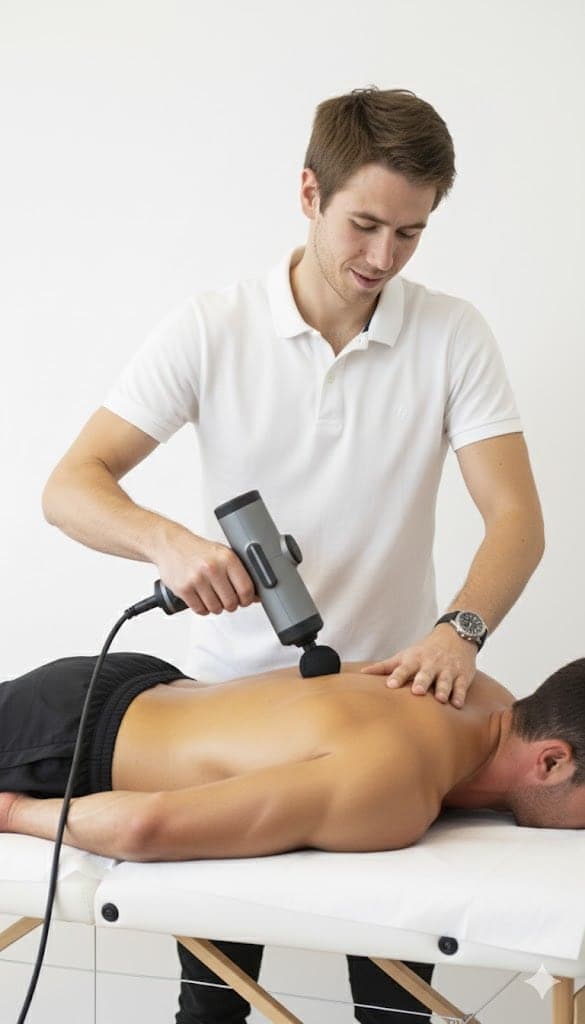
Written by
Chris
Massage therapist, nutrition and exercise physiologist
Norwegian-certified with a Bachelor’s in Physical Education and Nutrition and over ten years of clinical practice, working from a portable table in clients’ homes across the Paphos district.
This article is general information, not a medical diagnosis. If you have severe, worsening or unexplained pain, numbness, weakness, or pain after an accident, see a doctor first.