
Prenatal Massage for Pregnancy Pain: A Mechanical Approach to Lasting Relief
In short
Discover how advanced mechanical deep-tissue prenatal massage addresses the root biomechanical causes of pregnancy pain, delivering measurable relief where traditional methods fall short.
Pregnancy transforms your body in profound ways. The average woman gains 25-35 pounds, her center of gravity shifts forward dramatically, and her pelvis undergoes structural changes that would cripple most mechanical systems. Yet we’re told this discomfort is “normal” and to simply endure it. I’ve spent a decade treating pregnant women who were told their pain was inevitable, and I can tell you with certainty: that’s wrong.
The distinction between temporary relief and actual mechanical correction isn’t semantic—it’s the difference between masking symptoms and solving problems. When a client comes to me at 28 weeks with sciatic nerve compression so severe she can’t sleep, I’m not interested in making her feel better for an afternoon. I’m focused on restoring the mechanical balance that pregnancy has disrupted, addressing the fascial restrictions and muscular compensation patterns that create lasting pain.
This is prenatal massage for pregnancy pain approached from a biomechanical perspective, not a spa experience.
The Biomechanical Reality of Pregnancy Pain
Let me be direct about what’s happening in your body. During pregnancy, your body releases relaxin—a hormone that loosens ligaments to prepare for birth. This is necessary, but it comes with consequences. Your joints become less stable. Your muscles must compensate for that instability. And as your abdomen expands, your lumbar curve increases dramatically, creating a cascade of mechanical stress that radiates through your entire posterior chain.
I worked with a client last year—a financial analyst, 32 weeks pregnant with her second child. She described her lower back pain as “grinding,” a sensation she felt with every step. When I assessed her, the issue was clear: her iliopsoas muscles were locked in chronic contraction, her quadratus lumborum was compensating for pelvic instability, and her thoracolumbar fascia had developed adhesions that restricted her ability to move naturally.
Traditional prenatal massage had given her 2-3 hours of relief. My mechanical approach addressed the actual problem.
Primary Pain Patterns I Treat in Pregnant Clients
| Pain Location | Mechanical Cause | Treatment Focus |
|---|---|---|
| Lower back (lumbar region) | Increased lordosis, erector spinae overload | Deep fascial release, spinal stabilizer rebalancing |
| Sciatic nerve pain | Piriformis compression, sacroiliac joint dysfunction | Precision targeting of deep hip rotators |
| Upper back and neck | Forward shoulder shift, compensatory trapezius tension | Thoracic fascial mobilization, cervical decompression |
| Hip and pelvic girdle pain | Ligamentous laxity, gluteal insufficiency | Stabilizer activation, tensor fasciae latae release |
| Rib and mid-back discomfort | Rib flare, intercostal strain | Respiratory muscle treatment, costal mobilization |
Why Traditional Prenatal Massage Falls Short
I need to address something that frustrates me professionally: the prenatal massage industry has conditioned women to accept superficial results. You lie on your side with pillows, someone applies gentle pressure with oil, you feel relaxed for a few hours, and then the pain returns. This isn’t massage therapy—it’s temporary distraction from mechanical problems that demand mechanical solutions.
The human hand, no matter how skilled, has physiological limitations. Maximum sustained pressure output from even the strongest therapist rarely exceeds 40-50 pounds per square inch, and that force cannot be maintained with precision across a 60-90 minute session. More critically, hands cannot access the deeper layers of fascia where pregnancy-related restrictions actually develop.
I use a specialized mechanical device that delivers consistent, calibrated pressure between 60-120 PSI depending on tissue density and client tolerance. This isn’t about being “more aggressive”—it’s about being more effective. The machine allows me to work at depths that release myofascial adhesions at their source, not just their surface manifestation.
The Mechanical Advantage: Precision, Power, and Consistency
When I treat a pregnant client’s piriformis syndrome—one of the most common sources of sciatic pain during pregnancy—I need to access a muscle that sits deep beneath the gluteus maximus. Manual pressure diffuses through superficial tissue layers and loses effectiveness. My mechanical tool concentrates force with millimeter-level precision, allowing me to release that specific structure without requiring the client to endure excessive pressure on surrounding tissue.
A client at 34 weeks described her previous massage experiences as “too gentle to matter or too painful to tolerate.” That’s the fundamental problem with manual therapy: the therapist’s hands become fatigued, pressure becomes inconsistent, and the treatment window closes before you’ve addressed the actual mechanical problem.
My approach eliminates therapist fatigue as a variable. Every stroke delivers identical force. Every treatment maintains the same clinical standard. This consistency translates directly to superior outcomes.
Clinical Approach to Common Pregnancy Pain Syndromes
Lower Back Pain and Lumbar Lordosis
Your growing uterus shifts your center of mass forward by approximately 2-3 inches. To maintain balance, your lumbar spine increases its natural curve—often by 10-15 degrees beyond normal. This hyperlordosis creates extraordinary stress on your erector spinae muscles, which must work continuously to prevent forward collapse.
But here’s what most practitioners miss: the pain you feel isn’t just from overworked erectors. It’s from the deep stabilizers—your multifidus, your quadratus lumborum, your psoas—that have developed trigger points and fascial restrictions trying to compensate for structural instability.
I don’t treat your symptoms. I treat the mechanical chain that creates them. This means addressing:
- Deep spinal stabilizer release to reduce chronic muscle guarding
- Thoracolumbar fascial mobilization to restore normal tissue glide
- Hip flexor lengthening to reduce anterior pelvic tilt
- Lateral stabilizer balancing to prevent asymmetric loading
The result isn’t temporary pain reduction—it’s restored mechanical function that allows your body to adapt to pregnancy with less compensation and therefore less pain.
Sciatic Nerve Compression and Piriformis Syndrome
I had a client who called me at 29 weeks, barely able to walk. Her obstetrician had told her sciatic pain was “part of pregnancy” and recommended Tylenol and rest. When I assessed her, her piriformis muscle was so contracted it felt like tensioned steel cable, compressing her sciatic nerve with every hip movement.
This is mechanical entrapment, not a symptom to be managed—it’s a problem to be solved.
The piriformis sits deep in your hip, and as your pelvis widens and your gait pattern changes during pregnancy, this muscle often develops chronic hypertonicity. Traditional massage cannot access this structure effectively. My mechanical approach can.
I worked systematically through her lateral rotator group, releasing layers of restriction until I could feel the tissue response change. By our third session, she was walking normally. By the fifth, she’d forgotten she’d had sciatic pain at all.
Upper Back and Neck Pain from Postural Compensation
As pregnancy progresses, breast tissue increases significantly—often by 1-3 pounds. Simultaneously, your shoulders round forward to compensate for your shifted center of gravity. This creates a double mechanical insult to your upper trapezius, levator scapulae, and cervical paraspinals.
The pain women describe—burning between the shoulder blades, tension headaches, neck stiffness—is the result of these muscles working overtime in biomechanically disadvantaged positions.
I approach this clinically:
- Assess the degree of thoracic kyphosis and shoulder protraction
- Release fascial restrictions in the anterior shoulder girdle that pull you forward
- Address trigger points in the posterior chain that create referred pain patterns
- Restore normal scapular mechanics through targeted soft tissue mobilization
The goal isn’t relaxation—it’s mechanical restoration. When your tissues move properly, pain resolves naturally.
Why Timing and Treatment Frequency Matter
There’s a critical window in pregnancy when mechanical intervention delivers maximum benefit: between weeks 16 and 36. Before 16 weeks, significant biomechanical changes haven’t yet occurred. After 36 weeks, you’re managing late-stage compensation rather than preventing it.
I typically recommend an initial assessment followed by weekly or bi-weekly sessions depending on pain severity and tissue response. This isn’t arbitrary—it’s based on fascial remodeling time frames and the rate of biomechanical change during pregnancy.
One client started treatment at 18 weeks with moderate lower back discomfort. We established a bi-weekly protocol, systematically addressing emerging mechanical issues before they became severe. She delivered at 40 weeks having experienced minimal pain throughout her third trimester. Compare this to her first pregnancy, which she described as “nine months of progressively worsening back pain that made the last month almost unbearable.”
The difference was mechanical intervention at the right time with the right tools.
Treatment Progression and Adaptation
Your body changes weekly during pregnancy. Your treatment must adapt accordingly. In the second trimester, I’m often focused on preventing compensation patterns from establishing. By the third trimester, I’m addressing the mechanical stress of maximum load on your structure.
This requires ongoing assessment and treatment modification—not a standard protocol applied indiscriminately. Each session begins with positional evaluation and tissue palpation to determine where mechanical stress has accumulated since the previous treatment.
Safety Considerations and Clinical Contraindications
I need to address this directly because there’s considerable misinformation about prenatal massage safety. When performed by someone who understands anatomy and physiology, deep tissue work is not only safe during pregnancy—it’s often more appropriate than superficial techniques that fail to address actual mechanical problems.
However, there are absolute contraindications I observe:
- High-risk pregnancy with physician-imposed activity restrictions
- Preeclampsia or pregnancy-induced hypertension
- Placental complications (previa, abruption)
- History of preterm labor in current pregnancy
- Deep vein thrombosis or clotting disorders
I require all clients to have physician clearance before beginning treatment. This isn’t liability management—it’s clinical responsibility. I’m treating mechanical pain syndromes, but I’m doing so within the context of a pregnancy that takes precedence over any therapeutic intervention.
Positioning and Treatment Methodology
Effective treatment requires proper positioning. I use a professional treatment bench with pregnancy-specific modifications that allow you to lie prone with abdominal accommodation or in side-lying positions that maintain spinal alignment without rotation.
Position matters because mechanical advantage matters. If I’m treating your piriformis in a suboptimal position, I’m not just less effective—I’m potentially creating compensatory stress elsewhere in your kinetic chain.
The mechanical device I use allows me to deliver consistent pressure regardless of position. This means I can work effectively whether you’re side-lying, semi-reclined, or prone, adapting to your comfort while maintaining clinical precision.
Post-Treatment Expectations and Tissue Response
Let me set realistic expectations. After your first treatment, particularly if you’ve never experienced deep mechanical work, you will likely feel sore. This is tissue response to mechanical mobilization, not injury. It typically resolves within 24-48 hours and decreases with subsequent sessions as your tissues adapt.
What you should notice within 2-3 sessions:
- Measurable improvement in range of motion (I assess this objectively)
- Reduction in baseline pain levels, not just temporary relief
- Improved sleep quality as mechanical pain decreases
- Better tolerance for daily activities that previously aggravated symptoms
One client tracked her pain levels daily on a 0-10 scale. She started at an average of 7. After six sessions over three weeks, her average was 2. By eight sessions, she reported days with zero pain—something she hadn’t experienced since her second trimester began.
The Difference Between Relief and Resolution
Most prenatal massage offers temporary relief. You feel better for hours or perhaps a day, then the pain returns to baseline. This is symptom management, and while it’s better than nothing, it’s not what I provide.
My objective is mechanical resolution. I’m addressing the structural causes—the fascial restrictions, the trigger points, the compensation patterns—that create your pain. When these are resolved, the pain doesn’t just decrease temporarily; it stops occurring.
This requires more intensive treatment than relaxation massage, but the outcome is fundamentally different. You’re not buying a few hours of relief—you’re investing in correcting the mechanical problems that pregnancy has created.
Integration with Medical Care and Physical Therapy
I work in collaboration with your medical team, not in opposition to it. Many of my pregnant clients are referred by obstetricians, midwives, or physical therapists who recognize that mechanical soft tissue work complements medical management.
If you’re seeing a physical therapist for pregnancy-related pain, my treatment can accelerate your progress. Physical therapy often focuses on movement pattern correction and stabilization exercises. My work addresses the tissue restrictions that prevent you from executing those movements properly.
I had a client whose PT had given her excellent exercises for pelvic stabilization, but she couldn’t perform them without severe pain. Her hip rotators were so restricted that the movement patterns her PT prescribed were mechanically impossible. After three sessions releasing those restrictions, she could finally engage in her PT protocol effectively. Her therapist called to ask what had changed.
Long-Term Benefits and Postpartum Recovery
The mechanical work we do during pregnancy pays dividends postpartum. Women who maintain tissue quality and mechanical balance throughout pregnancy typically experience:
- Faster recovery of core function after delivery
- Reduced incidence of chronic postpartum back pain
- Better tolerance for the mechanical demands of infant care
- Improved return to pre-pregnancy activity levels
Your body undergoes extraordinary mechanical stress during pregnancy and delivery. Addressing tissue restrictions and compensation patterns before delivery means you’re starting your postpartum recovery from a position of mechanical advantage, not deficit.
The Investment in Mechanical Treatment
I don’t offer promotional discounts or “relaxation packages.” What I provide is clinical intervention that addresses mechanical pain at its source. This requires specialized equipment, extensive training, and ongoing assessment that single-session treatments cannot deliver.
When you work with me, you’re making an investment in your physical function during and after pregnancy. The cost is higher than spa massage because the service is fundamentally different. You’re not purchasing an hour of relaxation—you’re engaging a mechanical specialist who will systematically address the biomechanical sources of your pain.
I typically recommend an initial 6-8 session commitment. This allows sufficient time to address established restriction patterns and assess tissue response. Some clients require more sessions, particularly if they’re beginning treatment in the third trimester with severe symptoms. Others achieve their goals more quickly.
The financial calculation is straightforward: compare the cost of consistent mechanical treatment against months of unresolved pain, compromised sleep, and reduced quality of life. For my clients, this isn’t an expense—it’s one of the most valuable investments they make during pregnancy.
Frequently Asked Questions About Prenatal Massage for Pregnancy Pain
Is deep tissue massage safe during pregnancy?
When performed by a trained professional who understands pregnancy biomechanics, yes. The concern about deep pressure is largely based on misconceptions. I’m not applying indiscriminate force—I’m using controlled, calibrated pressure on specific structures that require mechanical release. I avoid areas with contraindications (abdomen, certain acupressure points) and adapt pressure to your tissue tolerance and pregnancy stage.
How is mechanical massage different from manual prenatal massage?
The fundamental difference is depth, precision, and consistency. Manual massage, particularly the gentle techniques typically used for pregnant women, works primarily on superficial tissue layers. My mechanical approach accesses deeper fascial planes where pregnancy-related restrictions actually develop. The tool delivers consistent pressure that doesn’t fatigue, allowing me to work comprehensively without the limitations of human hand strength.
What should I expect during my first session?
We begin with a detailed assessment of your pain patterns, postural compensation, and movement restrictions. I’ll explain the mechanical causes of your specific symptoms and outline a treatment approach. The first session includes hands-on assessment and targeted treatment of priority areas. You’ll receive clear instructions for post-treatment care and expectations for tissue response.
How quickly will I feel improvement?
Most clients report measurable improvement within 2-3 sessions, though the timeline varies based on symptom severity and tissue condition. You may experience immediate relief after your first treatment, but lasting change requires addressing the underlying mechanical patterns—this takes multiple sessions. I track objective measures (range of motion, pressure tolerance, functional capacity) to document progress.
Can massage eliminate pregnancy pain completely?
In many cases, yes. Particularly when treatment begins early enough to prevent severe compensation patterns from developing. However, some mechanical stress is inherent to pregnancy’s physical demands. My goal is to minimize pain by optimizing your body’s mechanical efficiency and preventing dysfunction from accumulating. Most clients achieve either complete resolution or reduction to manageable levels that don’t interfere with daily function.
Do you work with high-risk pregnancies?
Only with explicit physician approval and often in a modified capacity. High-risk pregnancies require additional precautions, and medical stability takes precedence over any treatment I provide. I’ve successfully worked with clients who have controlled gestational diabetes, managed hypertension, and other conditions, but always within parameters established by their medical team.
How does this help with preparation for labor?
Mechanically efficient tissues function better under stress. By addressing restrictions in your hip rotators, pelvic floor connections, and lower back stabilizers, I’m optimizing the mechanical systems that must perform during labor. Several midwives I work with report that their clients who receive regular mechanical treatment during pregnancy tend to have more efficient labors with better positioning tolerance.
Where do treatments take place?
I travel to your location with a professional treatment bench and all necessary equipment. This eliminates the stress of travel during pregnancy and allows you to rest immediately after treatment without getting in a car. I bring everything required to deliver the same clinical standard I’d provide in a fixed clinic setting.
Why Choose Mechanical Expertise Over Traditional Approaches
I’m not a relaxation therapist. I’m a mechanical specialist with a degree in Physical Education and Nutrition and a decade of experience solving complex pain problems. The distinction matters because your pregnancy pain isn’t a relaxation deficit—it’s a mechanical problem that requires mechanical solutions.
When you work with me, you’re accessing expertise that most massage therapists simply don’t possess. I understand the biomechanics of pregnancy, the fascial systems that become restricted, and the compensation patterns that create cascading pain problems. More importantly, I have the tools and methodology to address these issues at their source.
Traditional prenatal massage has its place for stress reduction and general wellness. But if you’re dealing with significant pain that’s compromising your quality of life, you need a different approach. You need someone who can identify the mechanical causes of your symptoms and systematically address them with precision and clinical rigor.
That’s what I provide. Not comfort. Not temporary relief. Mechanical resolution of the problems that pregnancy has created in your body’s structure and function.
If you’re tired of being told your pain is “normal” and “part of pregnancy,” if you’re exhausted from treatments that feel good for an afternoon but change nothing long-term, then you’re ready for the approach I offer. This is prenatal massage for pregnancy pain that treats you as a mechanical system that can be optimized, not a person who simply needs to endure nine months of discomfort.
Your pregnancy should be a time of anticipation, not chronic pain. The mechanical stress is real, but it’s addressable. That’s my commitment to every client: not just relief, but resolution. Not just treatment, but restoration of the mechanical efficiency that allows you to enjoy your pregnancy instead of surviving it.
Evidence and limits
Massage may help with some symptoms, but benefits and evidence vary by condition. It does not replace medical assessment or treatment. A page update is not evidence of an independent clinical review.
Further reading: Massage therapy: evidence, safety and limitations by US National Center for Complementary and Integrative Health. This is general background reading, not verification of every claim in this article.
How we describe evidence and updates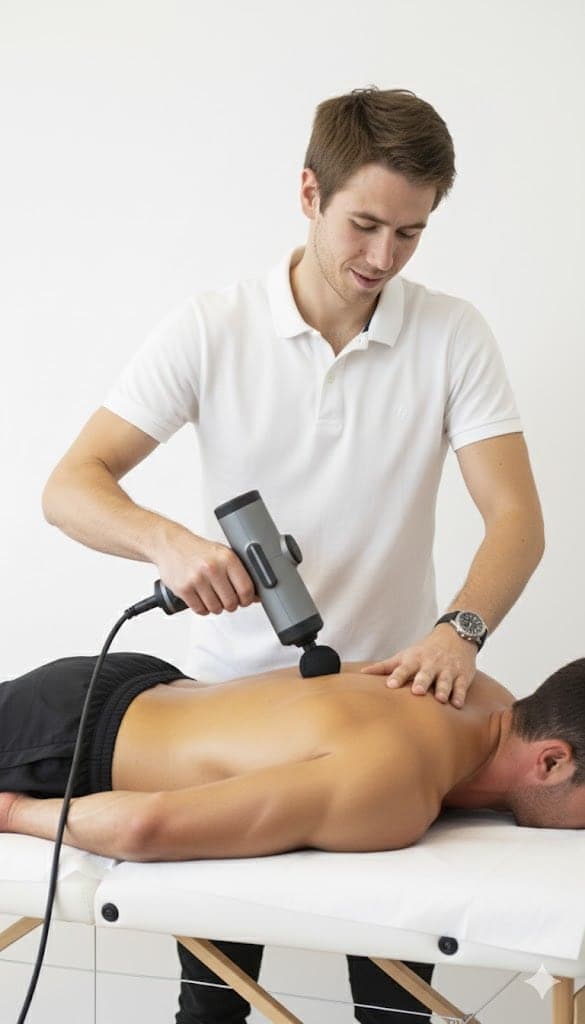
Written by
Chris
Massage therapist, nutrition and exercise physiologist
Norwegian-certified with a Bachelor’s in Physical Education and Nutrition and over ten years of clinical practice, working from a portable table in clients’ homes across the Paphos district.
This article is general information, not a medical diagnosis. If you have severe, worsening or unexplained pain, numbness, weakness, or pain after an accident, see a doctor first.