After a decade of treating chronic pain and postural dysfunction across Europe, I’ve witnessed firsthand how traditional approaches to posture correction fail the majority of clients. The typical “stand straight, shoulders back” methodology addresses symptoms while completely ignoring the underlying mechanical dysfunction that creates poor posture in the first place. This is precisely why I developed specialized posture workshops in Pafos that combine my university-trained expertise in body mechanics with advanced precision tools that deliver results traditional methods simply cannot achieve.
The fundamental misunderstanding about posture lies in treating it as a conscious choice rather than recognizing it as the physical manifestation of deep-seated muscular imbalances, fascial restrictions, and compensatory movement patterns. My posture workshops in Pafos operate from this scientific foundation, utilizing mechanical deep-tissue intervention that addresses the root cause of postural dysfunction rather than merely teaching temporary positioning techniques.
The Science Behind Postural Dysfunction
During my years studying Physical Education and Nutrition in Norway, I became fascinated by the biomechanical cascade that creates poor posture. The human body operates as an interconnected kinetic chain where dysfunction in one area inevitably creates compensatory patterns throughout the entire system. What appears as “slouched shoulders” or “forward head posture” is actually the visible result of specific muscular restrictions and weaknesses that must be addressed at the tissue level.
Traditional posture workshops focus on conscious muscle activation and positioning exercises. While these approaches may provide temporary improvement, they fail to address the fundamental tissue restrictions that pull the body back into dysfunctional patterns. I’ve observed countless clients who attended conventional posture classes, achieved temporary improvement, only to return to their original dysfunction within weeks because the underlying mechanical restrictions were never properly addressed.
My approach to posture workshops in Pafos begins with identifying and releasing these deep-seated restrictions using precision mechanical tools that work far beyond the capabilities of human hands. This foundation of tissue optimization then allows for genuine postural re-education that creates lasting change.
Advanced Mechanical Intervention: Beyond Traditional Methods
The centerpiece of my posture workshops in Pafos is the integration of specialized mechanical deep-tissue treatment that operates with three critical advantages over traditional approaches: precision, power, and consistency. This advanced methodology represents a paradigm shift from symptom management to mechanical optimization.
The precision component allows me to target specific tissue layers and fascial planes with accuracy impossible to achieve through manual therapy. Where human hands can only approximate the location and depth of restriction, mechanical intervention delivers exact pressure to the precise tissue layer requiring release. This specificity is particularly crucial when addressing the deep postural muscles that maintain alignment against gravity.
Power represents the second critical advantage. The deep stabilizing muscles that control posture often develop chronic tension patterns that require significant force to release effectively. Traditional massage therapy and stretching techniques simply lack the mechanical advantage necessary to create genuine change in these deeply restricted tissues. My specialized tools deliver consistent, powerful pressure that penetrates to the root of postural dysfunction.
Consistency eliminates the variable of therapist fatigue, mood, or technique variation that plagues traditional manual therapy. Every treatment delivers identical pressure, duration, and precision, ensuring that each client receives optimal intervention regardless of external factors.
Clinical Results vs. Traditional Approaches
The difference between my posture workshops in Pafos and conventional approaches becomes immediately apparent when examining client outcomes. Traditional posture training typically produces modest, temporary improvements that require constant conscious effort to maintain. My mechanical intervention creates measurable changes in tissue quality, joint mobility, and muscular balance that translate into effortless postural improvement.
I recently worked with a software engineer who had attended multiple traditional posture workshops over several years. Despite learning proper ergonomics, stretching routines, and strengthening exercises, his forward head posture and rounded shoulders persisted. Within our first session using mechanical deep-tissue intervention, we identified and began releasing the specific fascial restrictions in his anterior chest wall and deep cervical flexors that were mechanically pulling his posture into dysfunction.
After three sessions, his postural alignment had improved dramatically without conscious effort. The mechanical restrictions that had been fighting against proper posture were eliminated, allowing his body to naturally assume optimal positioning. This represents the fundamental difference between teaching someone to fight against their restrictions versus eliminating the restrictions themselves.
Comprehensive Assessment and Customized Treatment Plans
My posture workshops in Pafos begin with detailed biomechanical assessment that identifies the specific pattern of dysfunction unique to each client. Poor posture is never a generic condition; it represents a highly individual pattern of adaptation to specific stresses, injuries, and movement habits accumulated over years or decades.
This assessment process examines static posture from multiple angles, evaluates dynamic movement patterns, and identifies areas of restriction, weakness, and compensatory dysfunction. Advanced palpation techniques allow me to assess tissue quality, fascial mobility, and muscular tension patterns that contribute to postural dysfunction.
Based on this comprehensive evaluation, I develop a customized treatment protocol that addresses each client’s specific mechanical limitations. This individualized approach ensures that time and effort focus on the areas that will produce maximum postural improvement rather than generic exercises that may be irrelevant to the client’s particular dysfunction.
| Assessment Component | Traditional Approach | Advanced Mechanical Method |
|---|---|---|
| Postural Analysis | Visual observation | Multi-angle biomechanical assessment |
| Tissue Evaluation | Basic flexibility tests | Advanced palpation and fascial mobility testing |
| Treatment Planning | Generic exercise prescription | Individualized mechanical intervention protocol |
| Progress Tracking | Subjective feedback | Objective measurements and functional testing |
The Mobile Advantage: Professional Treatment at Your Location
One of the most significant barriers to consistent postural improvement is accessibility. Traditional workshops require clients to travel to specific locations at predetermined times, creating obstacles that often interfere with treatment consistency. My posture workshops in Pafos eliminate this barrier by bringing professional-grade equipment and expertise directly to the client’s location.
I travel throughout Pafos with a complete setup including a professional treatment bench and all specialized mechanical tools necessary for optimal intervention. This mobile approach ensures that clients receive treatment in a comfortable, convenient environment without the stress and time investment of traveling to a clinic.
The convenience factor proves particularly crucial for clients with demanding schedules or mobility limitations. Business professionals, athletes, and individuals with chronic pain often struggle to maintain consistent treatment schedules when faced with travel requirements. By eliminating this obstacle, my mobile posture workshops ensure that clients can maintain the consistency necessary for genuine postural transformation.
Investment in Long-Term Health Optimization
Clients frequently ask about the cost of my posture workshops in Pafos, often comparing prices with traditional massage or generic posture classes. This comparison fundamentally misunderstands the nature of what I provide. Traditional approaches offer temporary relief or modest improvement, requiring ongoing sessions indefinitely. My mechanical intervention creates lasting structural change that reduces or eliminates the need for continued treatment.
Consider the long-term economics of chronic postural dysfunction: ongoing pain management, reduced work productivity, sleep disruption, headaches, and the cascade of secondary problems that develop when the body operates in mechanical dysfunction. The cost of addressing these accumulated problems over months and years far exceeds the investment in properly correcting the underlying mechanical issues.
My clients typically achieve their postural goals within a defined treatment series, after which they maintain their improvements through occasional tune-up sessions rather than ongoing regular treatment. This represents a genuine solution rather than symptom management, making it an investment in long-term health rather than an ongoing expense.
I recently worked with a marketing executive whose chronic neck pain from poor posture was affecting her sleep quality, work performance, and overall quality of life. She had spent considerable money on traditional massage therapy, ergonomic equipment, and posture classes with minimal lasting improvement. Our treatment series eliminated her pain entirely and corrected the underlying postural dysfunction, allowing her to function optimally without ongoing intervention.
Beyond Pain Relief: Performance Enhancement Through Optimal Posture
While many clients initially seek my posture workshops in Pafos for pain relief, the benefits of optimal postural alignment extend far beyond eliminating discomfort. Proper posture optimizes respiratory function, enhances athletic performance, improves confidence and presence, and creates the foundation for efficient movement in all activities.
Athletes particularly benefit from the performance enhancements that result from optimal postural mechanics. When the body operates in proper alignment, energy expenditure decreases, power generation increases, and injury risk diminishes significantly. I’ve worked with recreational and competitive athletes who achieved measurable performance improvements simply through correcting their postural dysfunction.
The psychological benefits of improved posture are equally significant. Research consistently demonstrates that postural alignment affects mood, confidence, and how others perceive us. Clients frequently report increased energy, improved self-confidence, and enhanced professional presence following postural optimization.
Respiratory and Neurological Optimization
Optimal posture creates the mechanical foundation for efficient respiratory function and optimal neurological signaling throughout the body. Forward head posture and rounded shoulders mechanically restrict the ribcage, reducing lung capacity and forcing compensatory breathing patterns that contribute to stress and fatigue.
My mechanical intervention specifically addresses the fascial and muscular restrictions that limit thoracic mobility, allowing for full respiratory expansion and optimal oxygen delivery. This improvement in respiratory mechanics often produces immediate increases in energy and mental clarity that extend far beyond the direct postural benefits.
Addressing Common Misconceptions About Posture Correction
The field of posture correction is unfortunately filled with misconceptions that lead clients to ineffective treatments and wasted time. The most persistent myth is that postural problems result from laziness or lack of awareness, requiring only conscious effort to correct. This fundamentally misunderstands the mechanical nature of postural dysfunction.
Another common misconception suggests that strengthening weak muscles will automatically improve posture. While strengthening plays a role in long-term postural maintenance, attempting to strengthen muscles that are mechanically restricted by fascial adhesions and compensatory tension patterns typically reinforces dysfunction rather than correcting it.
The idea that ergonomic adjustments alone will correct postural problems represents another widespread misunderstanding. While proper ergonomics can prevent further dysfunction, they cannot address existing mechanical restrictions that pull the body into poor alignment regardless of environmental factors.
My approach to posture workshops in Pafos addresses these misconceptions by focusing exclusively on the mechanical factors that create and maintain postural dysfunction. By releasing restrictions first and then re-educating movement patterns, we create genuine structural change rather than temporary symptomatic improvement.
The Partnership Approach to Postural Transformation
Effective postural correction requires more than isolated treatment sessions; it demands a collaborative partnership between practitioner and client focused on achieving specific, measurable outcomes. My posture workshops in Pafos operate on this partnership model, with clearly defined goals, progress markers, and mutual commitment to achieving optimal results.
This partnership begins with honest assessment of the client’s current condition, realistic timeline for improvement, and specific commitment required from both parties. I provide the advanced mechanical intervention and expert guidance necessary for tissue optimization, while clients contribute consistency, communication about progress, and adherence to any recommended movement modifications.
The partnership approach ensures that both parties remain focused on achieving genuine results rather than simply providing or receiving treatment. This results-oriented mindset distinguishes my workshops from traditional service models and creates accountability that drives optimal outcomes.
Measuring Success: Objective Progress Tracking
Genuine postural improvement can be measured objectively through changes in alignment angles, range of motion measurements, functional movement assessments, and pain scale reductions. My posture workshops in Pafos include regular progress evaluations that document these measurable improvements rather than relying solely on subjective feedback.
This objective tracking serves multiple purposes: it demonstrates the effectiveness of treatment, identifies areas requiring additional focus, and provides motivation through visible progress documentation. Clients can see precisely how their posture is improving and understand the mechanical changes that create these improvements.
- Photographic posture analysis from multiple angles
- Range of motion measurements using standardized testing
- Functional movement screen assessments
- Pain and discomfort level tracking using validated scales
- Performance markers relevant to the client’s activities
Frequently Asked Questions About Posture Workshops in Pafos
How do mechanical deep-tissue techniques differ from traditional massage for posture correction?
Traditional massage focuses on relaxation and general tension relief using variable manual pressure that rarely reaches the deep postural muscles. My mechanical approach delivers precise, powerful pressure to specific tissue layers that maintain postural dysfunction. The consistency and depth of mechanical intervention create structural change rather than temporary relief, addressing the root cause of postural problems.
How many sessions are typically required to see lasting postural improvements?
The number of sessions depends on the severity and duration of postural dysfunction, but most clients begin experiencing significant improvements within the first three sessions. Complete postural optimization typically requires six to ten sessions, after which maintenance becomes minimal. This contrasts sharply with traditional approaches that require ongoing regular sessions indefinitely.
Can postural problems be corrected without addressing muscle weaknesses through exercise?
Muscle weakness is rarely the primary cause of postural dysfunction; it’s typically a consequence of chronic compensatory patterns created by tissue restrictions. My approach first eliminates these restrictions, allowing muscles to function properly in their optimal length-tension relationships. Strengthening exercises become much more effective after mechanical restrictions are removed, and many clients find their posture improves dramatically without any exercise intervention.
Is the mechanical treatment painful, and how does it compare to traditional deep tissue massage?
The intensity is precisely controlled and adjusted to each client’s tolerance and tissue condition. While the treatment can be intense when working on severely restricted areas, it’s always within the client’s comfort zone and much more tolerable than traditional deep tissue massage due to the precision and control of mechanical intervention. Most clients find it more comfortable than manual therapy while being significantly more effective.
What makes this approach superior to physical therapy or chiropractic treatment for posture?
Physical therapy typically focuses on strengthening and stretching exercises that don’t address deep fascial restrictions, while chiropractic care addresses joint mobility but rarely the soft tissue restrictions that create postural dysfunction. My mechanical intervention specifically targets the fascial and muscular restrictions that pull the body into poor alignment, creating the foundation necessary for lasting postural improvement.
How do you ensure consistent results across different clients and conditions?
The mechanical tools eliminate variability in pressure, depth, and technique that affects manual therapy. Every client receives identical mechanical intervention adjusted only for their specific tissue condition and tolerance. This consistency, combined with systematic assessment and individualized treatment protocols, ensures predictable outcomes regardless of the practitioner’s physical condition or subjective factors.
What should I expect during my first posture workshop session?
Your first session begins with comprehensive postural assessment including photographic analysis, movement evaluation, and tissue palpation to identify specific dysfunction patterns. I then explain the mechanical restrictions creating your postural problems and demonstrate how the treatment tools will address these issues. The treatment begins conservatively and intensity adjusts based on your tissue response and comfort level.
Can this approach help with specific conditions like forward head posture or rounded shoulders?
These common postural patterns result from specific fascial and muscular restrictions that respond excellently to mechanical intervention. Forward head posture typically involves restrictions in the anterior cervical fascia and deep cervical flexors, while rounded shoulders result from anterior chest wall and shoulder girdle restrictions. My tools can precisely target these areas for optimal correction.
Taking the Next Step Toward Optimal Posture
The decision to address postural dysfunction represents more than seeking pain relief; it’s an investment in optimizing how your body functions in every aspect of daily life. Poor posture affects everything from breathing efficiency and energy levels to professional presence and long-term joint health. The compound benefits of optimal postural alignment create value that extends far beyond the treatment investment.
My posture workshops in Pafos offer a unique opportunity to experience advanced mechanical intervention delivered by a practitioner with university education in body mechanics and a decade of specialized experience. This combination of academic knowledge, practical expertise, and advanced tools creates outcomes simply not available through traditional approaches.
The mobile delivery model eliminates barriers to consistency while ensuring you receive treatment in optimal comfort and convenience. Rather than adapting your schedule to clinic hours and locations, the treatment adapts to your needs and circumstances.
Most importantly, this approach treats posture as a mechanical problem requiring mechanical solutions rather than a behavioral issue requiring constant conscious effort. By addressing the root cause of postural dysfunction through tissue optimization, we create lasting change that allows your body to maintain optimal alignment naturally.
The question isn’t whether you can afford to invest in proper postural correction; it’s whether you can afford to continue functioning with the limitations, discomfort, and long-term consequences of mechanical dysfunction. Every day spent in poor alignment compounds the problem while every day in optimal alignment contributes to enhanced function, comfort, and performance.
If you’re ready to experience what genuine postural optimization feels like, contact me to schedule your comprehensive assessment and begin your transformation from chronic dysfunction to mechanical excellence. Your body has adapted to years of suboptimal positioning; it’s time to give it the mechanical intervention necessary to function as it was designed.
Evidence and limits
Massage may help with some symptoms, but benefits and evidence vary by condition. It does not replace medical assessment or treatment. A page update is not evidence of an independent clinical review.
Further reading: Massage therapy: evidence, safety and limitations by US National Center for Complementary and Integrative Health. This is general background reading, not verification of every claim in this article.
How we describe evidence and updates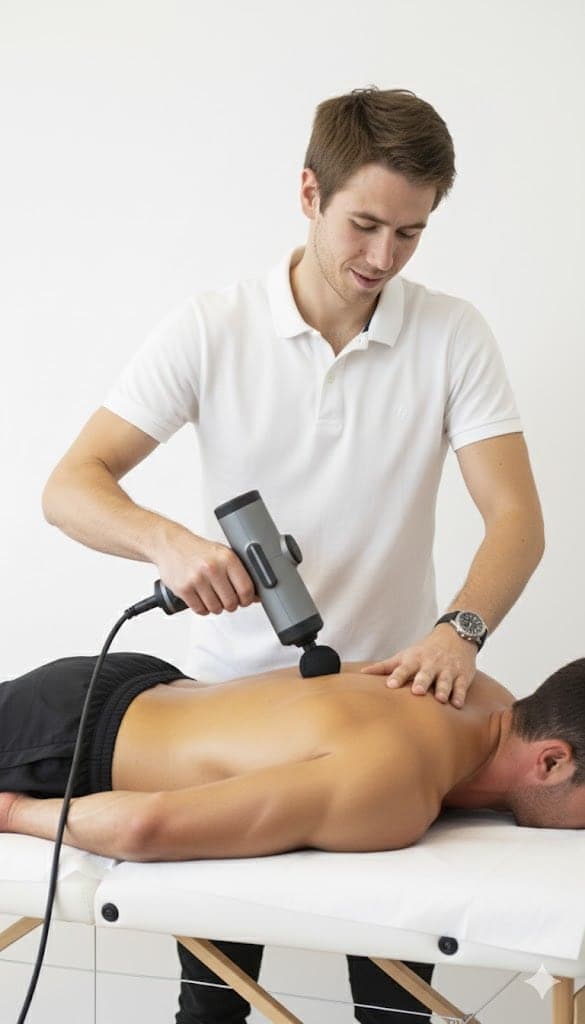
Written by
Chris
Massage therapist, nutrition and exercise physiologist
Norwegian-certified with a Bachelor’s in Physical Education and Nutrition and over ten years of clinical practice, working from a portable table in clients’ homes across the Paphos district.
This article is general information, not a medical diagnosis. If you have severe, worsening or unexplained pain, numbness, weakness, or pain after an accident, see a doctor first.