Ergonomic Assessments Paphos: The Scientific Foundation for Lasting Posture Correction
In short
Discover how professional ergonomic assessments in Paphos identify the root causes of poor posture and chronic pain. Expert-led evaluations combined with advanced mechanical treatment deliver lasting results.
After a decade of working with clients across Paphos—from office workers hunched over keyboards to athletes pushing their bodies to competitive limits—I’ve observed a troubling pattern: most people treat posture problems as inevitable consequences of modern life. They accept neck tension, lower back discomfort, and restricted mobility as “normal” parts of their daily existence. This acceptance represents a fundamental misunderstanding of human biomechanics.
Proper ergonomic assessments in Paphos aren’t about making minor workplace adjustments or buying an expensive chair. They’re about systematically identifying the mechanical dysfunctions that have accumulated in your musculoskeletal system—often over years—and implementing a strategic intervention protocol that addresses causation, not merely symptom management. With my background in Physical Education and Nutrition from Norway and ten years of specialized practice in advanced mechanical deep-tissue treatment, I’ve developed an assessment methodology that reveals precisely where your body has compensated, adapted poorly, and created the postural deviations that now limit your performance and quality of life.
Why Traditional Ergonomic Advice Fails Most People
The standard ergonomic consultation follows a predictable script: someone observes your workstation, measures screen height, adjusts your chair, and provides a printed handout about “proper sitting posture.” Three weeks later, you’re back in the same position—shoulders rolled forward, head jutting ahead of your spine, lower back curved into that familiar ache.
Why does this approach consistently fail? Because it addresses the environment while ignoring the accumulated mechanical restrictions already present in your tissues. Your body has adapted to years of suboptimal positioning. The fascial layers have shortened, muscle groups have developed compensatory activation patterns, and your proprioceptive system has recalibrated to accept dysfunction as “neutral.” Simply adjusting external factors cannot reverse these internal adaptations.
I witnessed this limitation repeatedly during my early practice years. A client would implement every recommended ergonomic modification—standing desk, monitor arms, supportive seating—yet still experience the same cervical tension and thoracic rigidity. The missing component was always tissue-level intervention. The body had physically changed structure in response to poor mechanics, and those structural changes required direct, mechanical reversal.
The Biomechanical Reality of Postural Adaptation
Your musculoskeletal system operates through a principle called “tissue creep”—the gradual deformation of connective tissue under sustained load. When you maintain a forward head posture for eight hours daily, five days weekly, for several years, your posterior cervical muscles lengthen and weaken while anterior structures shorten and stiffen. This isn’t a temporary state that resolves with better habits; it’s a structural adaptation requiring targeted mechanical intervention.
The fascial network—that continuous web of connective tissue enveloping every muscle, organ, and structure in your body—responds to mechanical stress by reorganizing its collagen fiber alignment. Sustained poor posture creates fascial restrictions that physically prevent optimal positioning, even when you consciously attempt correction. You’re fighting against tissue that has literally reshaped itself around dysfunction.
What Constitutes a Genuine Ergonomic Assessment in Paphos
My assessment protocol begins before I ever examine your workstation. The first phase involves comprehensive postural analysis through multiple planes of movement. I evaluate:
- Standing alignment from anterior, posterior, and lateral perspectives
- Cervical range of motion with specific attention to restriction patterns
- Thoracic mobility and rib cage mechanics during respiration
- Pelvic positioning and its influence on lumbar curve
- Weight distribution patterns through lower extremities
- Shoulder girdle position relative to thoracic vertebrae
- Functional movement patterns during basic activities
This physical assessment reveals the current state of your biomechanical system—the compensations, restrictions, and imbalances that have accumulated. Only after understanding your body’s actual mechanical status do I evaluate your work environment, because the environmental factors only matter in context of your body’s existing limitations.
Palpation Assessment: Reading the Story Written in Your Tissues
The second assessment phase involves detailed palpation examination. Through systematic pressure application across specific muscle groups and fascial planes, I identify areas of restriction, adhesion, and compensatory hypertonicity. This isn’t gentle exploration; it’s diagnostic pressure that distinguishes between healthy tissue resilience and pathological restriction.
During these assessments, I typically discover patterns that clients themselves hadn’t consciously recognized. A software developer will often present with significant restriction through the levator scapulae and upper trapezius—predictable given prolonged keyboard use—but the deeper assessment reveals compensatory tightness through the scalenes and sternocleidomastoid that’s creating their “unexplained” headaches. An architect might focus on lower back discomfort, yet palpation reveals the primary restriction originates from shortened hip flexors and iliacus muscles that have tilted the pelvis anteriorly, creating excessive lumbar lordosis.
These discoveries matter because they redirect treatment focus toward actual causation rather than symptomatic presentation.
The Machine-Assisted Advantage in Ergonomic Correction
Understanding the mechanical nature of postural dysfunction led me to adopt an unconventional treatment methodology: advanced mechanical deep-tissue work using specialized equipment rather than traditional manual techniques. This decision wasn’t arbitrary; it emerged from direct observation of treatment outcomes.
Human hands, regardless of practitioner strength or skill, have inherent limitations when addressing deep fascial restrictions and chronic muscle hypertonicity. The force application is inconsistent due to fatigue, the depth of penetration is restricted by hand anatomy, and the precision diminishes as treatment intensity increases. For clients requiring significant structural correction—which includes most people seeking ergonomic assessments in Paphos—these limitations substantially compromise results.
Precision, Power, and Consistency: The Three Pillars
The specialized machine I use delivers treatment characteristics impossible through manual therapy:
Precision: The mechanical interface allows exact pressure application to specific tissue layers. When treating restrictions in the multifidus muscles along the thoracic spine—crucial for maintaining optimal posture—I can target those small, deep stabilizers without dissipating force through surrounding structures. This specificity accelerates structural change.
Power: Deep fascial restrictions, particularly those developed over years of poor ergonomics, require substantial mechanical force to reorganize. The machine delivers consistent, powerful pressure that penetrates beyond superficial layers to address restrictions at their origin. This isn’t about causing pain; it’s about generating sufficient mechanical stimulus to trigger tissue remodeling.
Consistency: Every treatment session delivers identical quality regardless of time of day, previous client intensity, or any other variable that affects manual therapy. This consistency ensures progressive improvement rather than the unpredictable outcomes common with traditional approaches.
| Treatment Characteristic | Manual Therapy | Mechanical Deep-Tissue |
|---|---|---|
| Depth of Tissue Penetration | Limited by hand anatomy and fatigue | Consistently reaches deep fascial layers |
| Force Consistency | Decreases throughout session | Maintained throughout treatment |
| Precision Targeting | Affected by surrounding tissue | Direct, specific application |
| Treatment Intensity Range | Practitioner-dependent | Adjustable from therapeutic to athletic |
| Session-to-Session Reliability | Variable | Identical quality guaranteed |
From Assessment to Structural Correction: The Treatment Protocol
Following comprehensive ergonomic assessment, I develop a customized treatment protocol targeting the specific mechanical dysfunctions identified. This isn’t a standard package applied uniformly; it’s a strategic intervention plan based on your unique postural deviations and tissue restrictions.
For a typical client presenting with forward head posture and rounded shoulders—the dominant pattern among office workers in Paphos—the protocol addresses multiple tissue layers systematically:
Phase One focuses on releasing anterior restrictions. The pectoralis minor, subclavius, and anterior deltoid typically maintain shortened positions that physically pull the shoulder girdle forward. Deep mechanical work through these structures begins the process of restoring length and reducing constant anterior tension.
Phase Two addresses the posterior chain weakness that has developed compensatorily. The rhomboids, middle trapezius, and posterior rotator cuff muscles have become inhibited and weak from chronic lengthening. While mechanical treatment releases restriction, these structures require activation work to restore proper scapular positioning and control.
Phase Three targets cervical and thoracic restrictions that prevent optimal spinal alignment. The suboccipital muscles, cervical erectors, and thoracic paraspinals often harbor significant restrictions that limit extension mobility. Deep mechanical intervention through these areas is frequently uncomfortable—these tissues have accumulated years of tension—but the mobility improvements are immediately noticeable.
The Investment Perspective: Why This Approach Costs More and Delivers More
Clients occasionally express surprise at the investment required for comprehensive ergonomic assessment and mechanical correction in Paphos. This reaction stems from comparing my services to standard massage therapy—an inappropriate comparison that reflects a fundamental misunderstanding of what I provide.
A relaxation massage offers temporary stress relief. You feel pleasant during the session and relaxed afterward, but your structural imbalances remain unchanged. That’s not a criticism; it’s simply acknowledging the service’s purpose and limitations. What I offer is structural intervention aimed at lasting correction of mechanical dysfunction.
The financial investment reflects several factors: a decade of specialized education and practice, advanced equipment that delivers results impossible through conventional methods, comprehensive assessment protocols that identify causation rather than treating symptoms, and a partnership approach focused on long-term resolution rather than repeat-customer dependency.
I frame this as investment rather than expense because the outcome—lasting improvement in posture, relief from chronic pain, enhanced physical performance, and improved quality of life—continues providing value indefinitely. Compare this to the alternative: ongoing pain management through medication, repeated short-term treatments that provide temporary relief, progressive postural deterioration leading to more serious complications, and the cumulative cost of those approaches over years or decades.
Real Outcomes From Paphos Clients: What Structural Correction Achieves
I maintain detailed records of client outcomes because objective measurement validates methodology. The following represents typical results from comprehensive ergonomic assessment and mechanical correction protocols:
A 42-year-old financial analyst contacted me with cervicogenic headaches occurring 4-5 times weekly. Her workstation evaluation revealed adequate ergonomic setup, but physical assessment showed severe restriction through bilateral scalenes and upper trapezius, with forward head posture measuring 3.5 inches anterior to optimal alignment. After eight treatment sessions over six weeks, combined with specific corrective exercises, her headache frequency decreased to 1-2 monthly, and postural measurement showed improvement to 1.2 inches forward—still not perfect, but representing a 66% correction and corresponding symptom reduction.
A 29-year-old software engineer presented with chronic thoracic pain between the shoulder blades, rated 6/10 on average intensity. His assessment revealed significant restriction through the rhomboid complex and serratus anterior, coupled with excessive thoracic kyphosis from prolonged sitting. Mechanical treatment focused on releasing anterior chest restrictions while reactivating weakened posterior stabilizers. After ten sessions, his pain averaged 1/10, occurring only during particularly long coding sessions, and his thoracic curve had reduced measurably on postural assessment.
These outcomes aren’t exceptional; they’re representative of what occurs when you address mechanical dysfunction at the structural level rather than providing symptomatic relief.
Athletic Performance Enhancement Through Ergonomic Optimization
While most people associate ergonomic assessments in Paphos with office workers and desk-based professions, the principles apply equally to athletic performance. Athletes who have developed movement compensations or postural imbalances experience reduced power output, increased injury risk, and suboptimal technique.
I’ve worked with several competitive cyclists whose performance plateaued despite consistent training. Biomechanical assessment revealed restricted hip flexion from shortened iliopsoas muscles and limited thoracic rotation from fascial adhesions. These restrictions reduced pedaling efficiency and prevented optimal position on the bicycle. Deep mechanical treatment to restore tissue mobility allowed proper positioning and immediately improved power metrics measured through their training equipment.
A tennis player experiencing recurrent shoulder pain discovered through assessment that the issue originated from thoracic rigidity limiting rotation. Her body compensated by increasing glenohumeral joint mobility beyond optimal range, creating instability and inflammation. Treatment focused on thoracic mobility restoration rather than the shoulder itself, resolving the pain by eliminating the causative compensation.
The Mobile Service Advantage: Professional Treatment at Your Location
I provide all ergonomic assessments and treatments at the client’s location throughout Paphos. This isn’t merely a convenience feature; it’s a strategic component of comprehensive service delivery.
Conducting assessments in your actual work environment allows evaluation of the real conditions where postural dysfunction develops. I observe your natural sitting posture, keyboard interaction, screen viewing angles, and movement patterns in the space where you spend most of your day. This environmental context reveals contributing factors that would be invisible in a clinic setting.
For treatment sessions, I transport a professional treatment bench and all necessary equipment. The setup provides identical treatment quality to a fixed clinic location while eliminating your travel time and allowing immediate return to your activities following the session. For busy professionals and athletes, this efficiency significantly reduces the practical barriers to consistent treatment adherence.
Beyond Single Sessions: The Partnership Approach to Lasting Results
I don’t offer individual treatment sessions to new clients. This policy isn’t arbitrary; it reflects the reality of how structural correction occurs. Meaningful postural improvement and mechanical dysfunction resolution require systematic intervention over multiple sessions. A single treatment might provide temporary relief, but it cannot reorganize tissue that has adapted to poor mechanics over years.
My approach involves establishing a dedicated partnership focused on achieving specific, measurable outcomes. During our initial comprehensive assessment, we identify the structural issues requiring correction and establish realistic timeframes for improvement. Treatment protocols typically span 8-12 sessions over 6-10 weeks, with session frequency and intensity customized to individual needs and response.
This partnership includes progressive assessment to track improvement, protocol adjustments based on tissue response, education about biomechanics and postural maintenance, and specific corrective exercises to support structural changes. The goal is lasting resolution, not ongoing dependency.
The Corrective Exercise Component
Mechanical treatment releases restrictions and restores tissue mobility, but lasting postural correction requires neuromuscular reeducation. Your nervous system has learned and automated the dysfunctional movement patterns that created your postural problems. These patterns must be consciously overridden and replaced with mechanically optimal alternatives until the new patterns become automated.
I provide specific corrective exercises targeting the weaknesses and compensations identified during assessment. These aren’t generic stretching routines or standard strengthening exercises; they’re precisely selected interventions addressing your individual mechanical deficits.
For clients with forward head posture, exercises focus on deep cervical flexor strengthening and suboccipital release techniques. Those presenting with excessive anterior pelvic tilt receive hip flexor lengthening protocols and core stabilization work emphasizing proper neutral spine positioning. Athletes requiring enhanced rotational mobility practice specific thoracic rotation exercises with careful attention to maintaining stable lumbar positioning.
Compliance with these corrective exercises significantly accelerates improvement and enhances long-term results retention.
Common Ergonomic Misconceptions That Prevent Improvement
Throughout my decade of practice in Paphos, I’ve encountered numerous misconceptions about posture and ergonomics that actively prevent people from achieving improvement. Addressing these misunderstandings is essential for realistic outcome expectations.
Misconception One: “I just need to remember to sit up straight.” Conscious postural correction requires constant attention and becomes exhausting within minutes. More importantly, if your tissues lack the mobility to achieve proper alignment, consciously attempting “good posture” simply redistributes strain to other structures, often creating new problems. Lasting improvement requires addressing the mechanical restrictions preventing optimal positioning, not forced positioning against those restrictions.
Misconception Two: “An expensive ergonomic chair will fix my back pain.” Supportive seating can reduce mechanical stress, but no chair corrects existing structural imbalances. Your body will adapt to any chair by falling into habitual compensatory patterns unless the underlying tissue restrictions are resolved. I’ve assessed numerous clients with premium ergonomic furniture who still experienced chronic pain because the furniture couldn’t address their mechanical dysfunction.
Misconception Three: “Stretching will improve my posture.” Stretching lengthens muscles temporarily, but chronic postural dysfunction involves fascial restriction, not merely tight muscles. Fascial adhesions require mechanical intervention beyond what stretching provides. Additionally, stretching already-lengthened muscles (like the posterior cervical muscles in forward head posture) while ignoring shortened anterior structures worsens imbalances rather than correcting them.
Misconception Four: “My posture is genetic; I can’t change it.” While skeletal structure has genetic components, postural alignment is predominantly determined by soft tissue positioning and neuromuscular patterns—both highly modifiable through appropriate intervention. Unless you have significant structural abnormalities like scoliosis or congenital deformities, your posture can improve substantially through systematic treatment.
When to Seek Professional Ergonomic Assessment in Paphos
Certain indicators suggest you would benefit significantly from comprehensive ergonomic assessment and mechanical correction:
- Chronic pain or discomfort that persists despite previous treatments
- Postural deviations you notice in photographs or reflections
- Tension headaches occurring more than twice weekly
- Restricted range of motion in neck, shoulders, or back
- Athletic performance plateaus without clear training explanation
- Fatigue or discomfort developing predictably during work hours
- Sleep disruption from positional discomfort
- Previous injury that hasn’t fully resolved
The optimal time for intervention is when dysfunction first becomes noticeable, before compensatory patterns become deeply established. However, even long-standing postural problems respond to systematic mechanical correction, though they require more extensive treatment protocols.
The Diagnostic Value of Pain Patterns
Pain location and timing provide diagnostic information about underlying mechanical dysfunction. Understanding these patterns helps distinguish between different postural issues requiring different treatment approaches:
Upper trapezius pain and neck tension developing throughout the workday typically indicates forward head posture with compensatory hypertonicity in posterior cervical stabilizers. This pattern responds well to releasing anterior restrictions while strengthening deep cervical flexors.
Pain between the shoulder blades that intensifies with prolonged sitting usually reflects excessive thoracic kyphosis with weakened rhomboid and middle trapezius muscles. Treatment focuses on releasing anterior chest restrictions and reactivating posterior scapular stabilizers.
Lower back pain that improves with standing and worsens with sitting often originates from shortened hip flexors creating excessive anterior pelvic tilt and lumbar lordosis. Mechanical release of iliopsoas and rectus femoris combined with core stabilization training typically resolves this pattern.
Headaches originating from the base of the skull frequently indicate suboccipital muscle restriction from sustained forward head position. These respond dramatically to deep mechanical work through the suboccipital triangle combined with corrective exercises for cervical positioning.
Frequently Asked Questions About Ergonomic Assessments in Paphos
How long does a comprehensive ergonomic assessment take?
Initial assessment typically requires 90-120 minutes. This includes detailed postural analysis, palpation examination of relevant muscle groups and fascial planes, functional movement evaluation, workstation or activity-specific assessment, and discussion of findings with treatment protocol development. This isn’t a brief consultation; it’s a thorough diagnostic process identifying specific mechanical dysfunctions requiring correction.
Is the mechanical deep-tissue treatment painful?
Treatment involves working through chronically restricted tissues at depths that manual therapy cannot reach. This creates significant pressure sensation and sometimes discomfort, particularly during initial sessions when tissue restriction is most severe. However, it’s not pain in the sense of injury or damage—it’s the sensation of mechanical force reorganizing tissue that has been restricted for extended periods. Most clients describe it as “intense but productive” and report that discomfort decreases progressively as restrictions resolve. I adjust intensity based on individual tolerance while maintaining treatment effectiveness.
How many sessions are required to see improvement?
Most clients notice measurable changes within 3-4 sessions, with substantial improvement typically requiring 8-12 sessions over 6-10 weeks. The specific timeline depends on several factors: severity and duration of dysfunction, individual tissue response to mechanical intervention, compliance with corrective exercises, and continuation or modification of causative activities. Long-standing postural problems developed over decades won’t resolve in three weeks, but systematic treatment produces progressive, measurable improvement throughout the protocol.
Can ergonomic improvements help with athletic performance?
Absolutely. Optimal biomechanics directly impact force production, movement efficiency, and injury resistance. Athletes with postural imbalances or movement compensations experience reduced performance due to suboptimal joint positioning, restricted range of motion, and inefficient muscle activation patterns. Correcting these mechanical dysfunctions through comprehensive assessment and treatment frequently produces measurable performance improvements while reducing injury risk. I’ve worked with cyclists, runners, tennis players, and swimmers who all experienced enhanced performance metrics following biomechanical correction.
What makes your approach different from traditional physical therapy?
Traditional physical therapy typically focuses on exercise-based rehabilitation with manual therapy as supplementary treatment. My approach inverts this: advanced mechanical deep-tissue work serves as the primary intervention, releasing structural restrictions that prevent optimal movement, while corrective exercises support and maintain those mechanical changes. The specialized equipment I use delivers treatment depth and consistency impossible through conventional manual techniques. Additionally, I work exclusively with mechanical dysfunction and postural correction rather than diverse rehabilitation needs, allowing specialized expertise in this specific domain.
Do results last after treatment concludes?
When treatment successfully reorganizes tissue and corrective exercises establish new neuromuscular patterns, improvements persist long-term. However, returning to the same mechanical stresses that created initial dysfunction will eventually recreate problems. Lasting results require either modifying causative factors (improving workstation ergonomics, adjusting training methods) or maintaining tissue quality through periodic assessment. Most clients return quarterly or semi-annually for maintenance sessions preventing restriction reaccumulation, rather than requiring ongoing weekly treatment.
Can you treat severe postural deviations or only minor problems?
The mechanical approach proves particularly effective for significant postural deviations precisely because it addresses deep structural restrictions rather than working superficially. Severe forward head posture measuring 3-4 inches anterior, pronounced thoracic kyphosis, and substantial pelvic misalignment all respond to systematic mechanical correction. However, severe cases require more extensive treatment protocols and realistic timeframe expectations. Complete correction may not be possible in cases with long-standing dysfunction, but substantial functional improvement and pain reduction are consistently achievable.
What should I expect during the first treatment session?
Following comprehensive assessment, the first treatment session focuses on releasing primary restrictions identified during evaluation. I begin with moderate intensity to gauge tissue response and individual tolerance, then adjust pressure accordingly. Initial sessions often produce significant post-treatment soreness similar to intensive training—this reflects tissue responding to mechanical intervention and typically subsides within 24-48 hours. I provide specific guidance about post-treatment care, hydration requirements, and any temporary activity modifications. Subsequent sessions build progressively on initial work, with most clients experiencing reduced soreness as treatment advances.
Do you work with people who have existing injuries or medical conditions?
I work with numerous clients managing chronic conditions or recovering from injuries. However, my role is mechanical correction of soft tissue dysfunction, not medical treatment. For clients with diagnosed medical conditions, recent injuries, or acute inflammation, I coordinate with their healthcare providers to ensure treatment compatibility with their medical care. Certain conditions contraindicate intensive mechanical work, requiring alternative approaches or medical clearance before proceeding. The initial assessment includes health history review to identify any factors requiring modified treatment protocols.
The Long-Term Value of Biomechanical Optimization
When I discuss ergonomic assessments in Paphos with potential clients, the conversation often focuses on immediate pain relief or current dysfunction. While these immediate concerns matter, they represent only partial value of comprehensive biomechanical optimization.
The human body accumulates mechanical stress progressively throughout life. Poor postural habits established in your twenties create fascial restrictions that worsen in your thirties, produce chronic pain in your forties, and limit mobility significantly by your fifties and beyond. This trajectory isn’t inevitable; it’s the consequence of accumulated mechanical dysfunction that was never properly addressed.
Systematic structural correction interrupts this degenerative progression. By resolving restrictions, optimizing alignment, and establishing proper movement patterns, you’re not merely eliminating current symptoms—you’re preventing future deterioration. The 45-year-old who addresses forward head posture and thoracic rigidity now avoids the severe cervical degeneration and chronic pain commonly experienced by 60-year-olds with uncorrected postural dysfunction.
This preventive aspect represents perhaps the most significant return on investment, though it’s the least tangible because it involves preventing problems that would have occurred but now won’t. You can’t feel the arthritis you didn’t develop or measure the mobility you didn’t lose. Yet these avoided outcomes constitute real value that compounds over decades.
Athletic longevity follows similar principles. Athletes who maintain optimal biomechanics through systematic assessment and correction extend their competitive careers and continue recreational activities decades longer than those who accumulate movement compensations and structural imbalances. The 50-year-old runner still competing effectively often isn’t genetically superior—they’ve simply maintained better mechanical function through proactive intervention.
Taking Action: Beginning Your Structural Correction Journey
If you recognize yourself in the dysfunctional patterns described throughout this article—chronic tension, restricted mobility, persistent discomfort, or declining performance—the question becomes whether you’ll address these mechanical issues systematically or allow continued deterioration.
Comprehensive ergonomic assessment in Paphos provides the diagnostic foundation for targeted intervention. You’ll understand precisely what mechanical dysfunctions limit your function, why those dysfunctions developed, and what systematic protocol will resolve them. This clarity alone has value; many clients have lived with unexplained pain or mysterious restrictions for years without understanding the underlying mechanical causation.
The treatment process requires commitment. Lasting structural correction doesn’t occur through passive receipt of services; it demands active participation in corrective exercises, temporary acceptance of treatment intensity, and willingness to modify habits contributing to dysfunction. This investment of time, discomfort, and effort yields proportional returns: lasting improvement in posture, relief from chronic pain, enhanced physical performance, and optimized quality of life.
I maintain a focused practice in Paphos specifically to deliver this specialized service effectively. Working exclusively with mechanical dysfunction and postural correction, rather than offering general massage therapy, allows the expertise depth and treatment precision that produces superior outcomes. The mobile service model ensures professional treatment quality at your location, eliminating logistical barriers to consistent adherence.
Your body’s mechanical function determines how you experience daily life—your energy levels, pain status, physical capabilities, and long-term health trajectory. These aren’t fixed characteristics beyond your control; they’re largely determined by accumulated postural habits and tissue restrictions that respond to systematic intervention.
The decision point is whether you’ll continue accepting progressive dysfunction as inevitable or invest in comprehensive assessment and mechanical correction that addresses causation directly. One path leads to continued deterioration requiring increasingly intensive management; the other leads to optimized biomechanics supporting enhanced function indefinitely. The choice, ultimately, is yours to make.
Evidence and limits
Massage may help with some symptoms, but benefits and evidence vary by condition. It does not replace medical assessment or treatment. A page update is not evidence of an independent clinical review.
Further reading: Massage therapy: evidence, safety and limitations by US National Center for Complementary and Integrative Health. This is general background reading, not verification of every claim in this article.
How we describe evidence and updates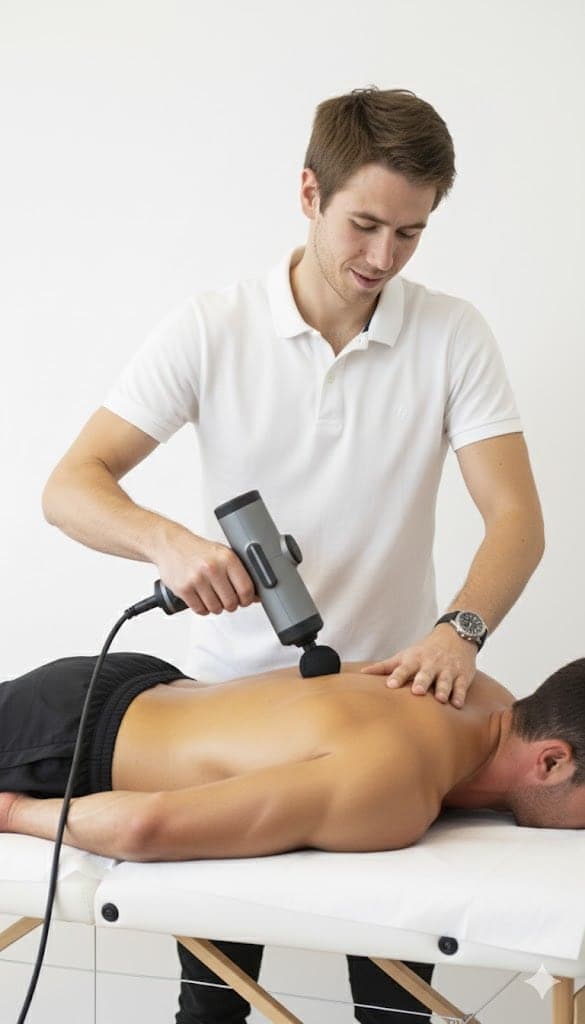
Written by
Chris
Massage therapist, nutrition and exercise physiologist
Norwegian-certified with a Bachelor’s in Physical Education and Nutrition and over ten years of clinical practice, working from a portable table in clients’ homes across the Paphos district.
This article is general information, not a medical diagnosis. If you have severe, worsening or unexplained pain, numbness, weakness, or pain after an accident, see a doctor first.