
Post-Workout Recovery Tips Kato Pafos: Advanced Strategies for Optimal Muscle Restitution
In short
Discover professional post-workout recovery tips in Kato Pafos from a specialist with a decade of experience in body mechanics. Learn science-based strategies for faster muscle restitution and lasting performance gains.
After a decade of working with everyone from elite athletes to weekend warriors in Kato Pafos, I’ve observed a consistent pattern: most people train hard, but recover poorly. They invest hours in the gym, yet neglect the physiological processes that actually build strength, endurance, and resilience. This fundamental misunderstanding costs them months, sometimes years, of potential progress.
My name is reflected in my work—a specialist in body mechanics with a Bachelor’s degree in Physical Education and Nutrition from Norway. Over ten years, I’ve developed and refined methods that address post-workout recovery at its mechanical and physiological root. This isn’t about relaxation or temporary relief. This is about systematic optimization of your body’s restitution capacity, transforming how quickly and completely you recover from physical exertion.
The warm Mediterranean climate of Kato Pafos presents unique recovery challenges. Higher ambient temperatures accelerate dehydration, alter electrolyte balance, and can prolong inflammatory responses if not managed correctly. Traditional recovery advice often fails here because it doesn’t account for these environmental variables. What works in Oslo doesn’t necessarily translate to Cyprus.
Understanding True Post-Workout Recovery in Kato Pafos
Recovery is not passive rest. It’s an active, complex physiological cascade involving protein synthesis, glycogen replenishment, inflammatory regulation, neuromuscular restoration, and fascial rehydration. When I examine a client after intense training, I’m assessing mechanical tension patterns, fascial adhesions, metabolic waste accumulation, and compensatory movement strategies that developed during the workout itself.
Most people think soreness equals effective training. This is partially true, but delayed onset muscle soreness (DOMS) beyond 48 hours indicates suboptimal recovery protocols. In my practice, I’ve seen competitive athletes reduce their recovery time by 40-60% simply by addressing the mechanical components traditional approaches ignore.
The Kato Pafos fitness community—from the early morning beach runners to the evening gym enthusiasts—shares common recovery obstacles. Heat exposure increases core temperature, prolonging the inflammatory phase. Salt loss through perspiration disrupts cellular osmotic balance. UV radiation, even during outdoor evening workouts, creates additional oxidative stress. These aren’t minor factors; they’re primary variables that determine whether your body adapts positively to training stress or breaks down progressively.
The Science of Mechanical Tissue Recovery
Let me share what a decade of hands-on work has taught me about tissue mechanics. When you train intensely, you create micro-tears in muscle fibers—this is expected and necessary for adaptation. However, you also generate adhesions in the fascia, the connective tissue network surrounding every muscle, organ, and structure in your body. These adhesions restrict movement, impair circulation, and create compensation patterns that persist long after the workout ends.
Traditional massage addresses superficial layers. It feels pleasant, temporarily increases circulation, and provides psychological relaxation. But it rarely reaches the depth necessary to release fascial restrictions where chronic tension actually lives. This is why people return week after week with the same complaints. The root cause remains untreated.
I’ve spent years developing a method using specialized mechanical tools that deliver what human hands cannot: precision, power, and consistency. This isn’t standard massage therapy. This is mechanical deep-tissue work that operates at the level where lasting change occurs.
Why Mechanical Precision Matters for Recovery
The human hand, regardless of practitioner skill, has physiological limitations. Pressure dissipates across the palm surface. Therapist fatigue introduces variability. Angles cannot be maintained with mathematical precision over extended periods. These aren’t criticisms of manual therapy—they’re biomechanical facts.
My specialized machine eliminates these variables. It delivers targeted pressure precisely to the depth and angle required to release specific fascial planes. This allows me to work systematically through the entire kinetic chain, addressing not just where you feel pain, but where the mechanical dysfunction actually originates.
I recently worked with a competitive cyclist who came to me after months of persistent IT band syndrome. Previous treatments focused on the lateral thigh where he felt pain. My assessment revealed the primary restriction was in his thoracolumbar fascia—twelve inches away from his symptoms. The compensatory patterns radiating from this central restriction were creating the lateral knee pain. After addressing the actual mechanical cause through deep fascial release, his symptoms resolved durably. This is the difference between treating sensations and treating mechanics.
Essential Post-Workout Recovery Strategies for Kato Pafos
Immediate Post-Exercise Protocol (0-30 Minutes)
The thirty minutes immediately following your workout represent a critical metabolic window. Your body’s inflammatory response is initiating, cortisol remains elevated, and your tissues are maximally receptive to interventions. This is where most people make their first mistake—they simply stop moving.
Active recovery movement is essential. Five to ten minutes of low-intensity movement facilitates metabolic waste clearance through lymphatic circulation. In Kato Pafos’s heat, this should be performed in shade or air conditioning to prevent core temperature from remaining elevated, which would prolong inflammatory signaling.
Hydration begins here, not later. You need water plus electrolytes—sodium, potassium, magnesium. The Cyprus climate accelerates mineral loss. A 75kg athlete can lose 2-3 liters of fluid during an intense session in summer conditions. This isn’t optional rehydration; it’s physiological necessity. I recommend 500ml of fluid containing 300-500mg sodium within fifteen minutes post-exercise.
Nutritional Timing and Composition
Protein synthesis peaks in the hours following resistance training. Your body is primed to rebuild damaged tissue, but only if you provide the raw materials. I work with nutritional science here, not dietary trends. You need 20-40 grams of high-quality protein containing all essential amino acids within ninety minutes post-workout.
Carbohydrate intake matters more than popular low-carb rhetoric suggests. Glycogen depletion during training creates a metabolic environment where carbohydrates are preferentially stored as muscle glycogen rather than adipose tissue. This is basic exercise physiology. For moderate to high-intensity training, you need 0.5-0.7 grams of carbohydrate per kilogram bodyweight post-exercise.
I’ve observed Mediterranean dietary patterns in Kato Pafos often lack sufficient protein density for serious athletes. Traditional Cypriot cuisine is excellent for general health, but competitive training demands specific macronutrient ratios. This isn’t about abandoning local food culture; it’s about strategic supplementation where necessary.
Strategic Rest and Sleep Optimization
Sleep is when recovery actually happens. Growth hormone secretion peaks during deep sleep phases. Protein synthesis accelerates. Neurological restoration occurs. Yet most people treat sleep as negotiable.
In Kato Pafos’s summer, ambient temperature dramatically affects sleep quality. Your core body temperature must decrease for optimal sleep architecture. Evening outdoor temperatures often remain above 25°C even at midnight. This physiologically impairs deep sleep stages.
I recommend aggressive evening cooling protocols: air conditioning set to 18-20°C in the bedroom, cool showers before bed, and minimizing evening alcohol consumption, which disrupts thermoregulation. These aren’t comfort preferences—they’re performance optimization strategies.
Advanced Mechanical Recovery: Deep-Tissue Protocol
Now we arrive at what differentiates mediocre recovery from exceptional restitution: mechanical fascial work. This is my specialty, developed and refined over a decade of clinical practice.
Traditional recovery focuses on biochemical interventions—nutrition, supplements, sleep. These are necessary but insufficient. They ignore the mechanical component: the physical restrictions, adhesions, and compensatory patterns that accumulate in your fascial system during training.
The Fascial System and Performance
Fascia is a continuous three-dimensional web of connective tissue. It stores elastic energy, transmits mechanical forces, houses proprioceptive nerve endings, and regulates inflammatory responses through its rich supply of hyaluronic acid. When functioning optimally, fascia enhances performance through elastic recoil and efficient force transmission. When restricted through adhesions, it becomes a performance limiter.
Every athlete I work with has fascial restrictions. This isn’t pathology—it’s the natural consequence of repetitive movement under load. The question isn’t whether you have restrictions, but whether you’re systematically addressing them.
I use a specialized mechanical tool that allows me to work at depths traditional hands cannot reach. This isn’t a percussion device or a standard massage gun. This is a clinically-designed instrument that delivers sustained, directional pressure with adjustable intensity ranging from therapeutic light work to powerfully deep interventions suitable for elite athletes.
My Method: Precision, Power, and Consistency
After thousands of treatment sessions, I can state unequivocally: mechanical precision produces superior outcomes to manual therapy for fascial release. The machine I use provides several irreplaceable advantages.
Depth and Penetration: The mechanical advantage allows sustained pressure that reaches deep fascial planes—the thoracolumbar fascia, the iliotibial band, the plantar fascia—where chronic restrictions develop. Human hands tire. The machine maintains consistent force for the duration required to produce plastic deformation in fascial tissue.
Adjustable Intensity: I control pressure precisely to your tolerance and tissue requirements. This ranges from light work for acute inflammation to deep structural work for chronic adhesions. This adjustability is critical because optimal pressure varies not just between clients, but between different tissues in the same individual.
Consistent Results: Every practitioner has variable days—fatigue, distraction, physical limitations. The machine eliminates this variable. Every session delivers identical mechanical input, ensuring progressive treatment without regression.
I’ll share a case that illustrates this approach. A runner came to me after a marathon, experiencing persistent calf tightness that traditional sports massage hadn’t resolved. My assessment revealed the primary restriction wasn’t in his gastrocnemius—it was in his posterior hip capsule. Years of training had created fascial adhesions that limited hip extension, forcing excessive compensatory work from his calves.
We addressed the hip capsule restriction through sustained mechanical release, working layer by layer through the deep gluteal fascia. This took forty-five minutes of sustained, precise pressure that would be impossible to deliver manually. His calf symptoms resolved within two sessions because we treated the mechanical cause, not the symptomatic location.
Practical Recovery Timeline: What Your Body Needs When
| Time Post-Workout | Physiological Priority | Intervention Strategy |
|---|---|---|
| 0-30 minutes | Metabolic waste clearance, inflammatory regulation | Active recovery movement, immediate hydration with electrolytes, initial cooling |
| 30-90 minutes | Protein synthesis initiation, glycogen replenishment | Protein intake (20-40g), strategic carbohydrates, continued hydration |
| 2-6 hours | Systemic inflammation management, tissue repair | Anti-inflammatory nutrition, rest, possible cold therapy for acute inflammation |
| 6-24 hours | Deep fascial rehydration, neuromuscular restoration | Sleep optimization, mechanical fascial work, gentle movement |
| 24-48 hours | Continued protein synthesis, adaptive remodeling | Strategic mechanical work, progressive loading, nutritional support |
| 48-72 hours | Compensation pattern assessment, residual restriction release | Functional movement assessment, targeted fascial release, return to training |
Environmental Considerations: Recovering in Cyprus Climate
Kato Pafos’s Mediterranean environment creates specific recovery challenges that require targeted strategies. I’ve lived and worked in both Scandinavian and Mediterranean climates. The physiological demands differ substantially.
Heat Management and Thermoregulation
Elevated ambient temperature prolongs post-exercise inflammatory response. Your body maintains elevated core temperature longer, extending the acute phase reaction. This delays the transition to tissue repair and remodeling.
Strategic cooling accelerates recovery. Cold water immersion (15-20°C for 10-15 minutes) within two hours post-workout reduces inflammatory cytokine expression and accelerates the return to homeostasis. This isn’t about ice baths—those can be counterproductive. This is about controlled thermoregulation.
In my practice, I’ve measured skin and muscle temperature before and after mechanical fascial work. Interestingly, the deep mechanical pressure generates localized heat through friction and increased metabolic activity. This actually enhances tissue plasticity, allowing more effective fascial release. The subsequent cooling after treatment then locks in the mechanical changes while reducing inflammation.
Hydration Status and Tissue Mechanics
Dehydration directly impairs fascial function. The fascial system relies on hyaluronic acid for its sliding properties between tissue layers. This molecule is extraordinarily hydrophilic—it can hold up to 1000 times its weight in water. When dehydrated, fascial layers lose their glide capacity, creating mechanical friction and restricted movement.
In Kato Pafos’s climate, I recommend aggressive hydration protocols: baseline intake of 35ml per kilogram bodyweight daily, plus replacement of exercise-induced losses (typically 500-1000ml per hour of moderate activity in Cyprus summer conditions). This isn’t just about performance—it’s about maintaining the mechanical properties of your connective tissue.
Common Recovery Mistakes I See in Kato Pafos
After ten years of practice, certain patterns repeat consistently. These are the errors that cost people months of potential progress.
Mistake One: Confusing Soreness with Effectiveness
Many athletes believe severe DOMS indicates a productive workout. This is partially true initially, but becomes counterproductive with experience. Excessive soreness indicates either inadequate recovery protocols or programming errors. If you’re consistently experiencing debilitating soreness 48+ hours post-workout, you’re not recovering optimally.
I’ve worked with clients who wore their soreness as a badge of honor. After implementing proper mechanical fascial work and strategic recovery protocols, their soreness decreased while their performance metrics improved substantially. This contradiction challenges popular fitness culture, but the data is unambiguous.
Mistake Two: Passive Recovery Approaches
Many people treat recovery as simply “not training.” They rest completely, expecting time alone to restore function. This ignores active recovery’s substantial benefits.
Blood flow to resting muscle is minimal. Gentle movement increases circulation without creating additional training stress, accelerating metabolic waste clearance and nutrient delivery. A 20-minute walk, easy swimming, or light cycling the day after intense training facilitates recovery more effectively than complete rest.
However—and this is critical—active recovery must remain genuinely low-intensity. Heart rate should stay below 60% maximum. The moment active recovery becomes challenging, it transitions from recovery to additional training stress.
Mistake Three: Neglecting Mechanical Restrictions
This is the error that costs the most potential. People address every variable except the mechanical one. They optimize nutrition, perfect their sleep, supplement extensively, yet ignore the fascial restrictions that fundamentally limit their movement capacity and force transmission efficiency.
I see this constantly: athletes with perfect programming and excellent nutrition who plateau because accumulated fascial restrictions prevent them from accessing their strength through full ranges of motion. They’re training around restrictions rather than addressing them.
A tennis player recently came to me frustrated by a serve velocity plateau. His shoulder strength was excellent, his technique was sound, his conditioning was superior. The limitation was mechanical: restrictions in his thoracic spine and scapular fascia prevented him from achieving the thoracic extension necessary for optimal serve mechanics.
Three sessions of targeted mechanical fascial release—working systematically through his thoracic fascia, serratus anterior, and rotator cuff—restored his movement capacity. His serve velocity increased immediately not because he got stronger, but because mechanical restrictions that prevented him from expressing his existing strength were eliminated.
The Investment Model: Recovery as Performance Enhancement
I position my service as an investment, not an expense. This distinction matters. An expense is money leaving your account. An investment is money allocated toward future returns.
Traditional massage is typically an expense. You feel temporarily better, but lasting change doesn’t occur. The same restrictions return, requiring endless repeated sessions. This model benefits the therapist but fails the client.
My approach focuses on lasting mechanical change. We work together through a systematic protocol that identifies restriction patterns, addresses their root causes through precise mechanical intervention, and progressively restores optimal function. This requires multiple sessions initially, but produces lasting results that compound over time.
What Lasting Results Actually Mean
Lasting doesn’t mean infinite. It means the specific mechanical restriction we address doesn’t return without new causal factors. If we release a chronic iliotibial band restriction, that particular adhesion pattern won’t spontaneously reform. However, continued training creates new mechanical demands. This is why I establish ongoing partnerships with serious athletes rather than offering isolated treatments.
The cyclist I mentioned earlier with IT band syndrome? After our initial intensive protocol resolved his acute issue, we transitioned to maintenance sessions every four weeks. These prevent new restriction patterns from accumulating and allow continuous optimization as his training evolves. Over eighteen months, his performance improved by measurable margins while his injury incidence dropped to zero.
My Service Model: Convenience Meets Clinical Excellence
I travel to your location in Kato Pafos. This isn’t just convenient—it’s strategically optimal. Recovery should occur in your environment, where you’re most comfortable and relaxed. Stress responses impair tissue plasticity. By coming to you with professional equipment and a specialized treatment bench, I create clinical conditions in a comfortable environment.
This mobile approach allows me to assess your actual training context. I see your setup, understand your routine, identify environmental factors that might contribute to your mechanical issues. This contextual information improves treatment precision.
Sessions last 60-90 minutes typically. This duration allows systematic work through complete kinetic chains rather than isolated symptomatic treatment. We identify the primary restriction pattern, work through the fascial layers progressively, and address compensatory areas that developed in response to the primary dysfunction.
Who Benefits Most from This Approach
My ideal client understands that peak performance requires systematic optimization across all variables, including mechanical function. They’re typically:
- Competitive athletes seeking every possible performance advantage
- Serious recreational athletes frustrated by persistent limitations or recurring injuries
- Individuals with chronic mechanical pain who recognize that temporary relief isn’t sufficient
- Performance-oriented professionals who understand investment in physical optimization yields returns across all life domains
Age matters less than mindset. I work with 25-year-old competitive athletes and 60-year-old executives. What unites them is commitment to results rather than mere relaxation.
Frequently Asked Questions: Post-Workout Recovery in Kato Pafos
How soon after training should I receive mechanical fascial work?
Timing depends on training intensity and inflammatory status. For moderate training, immediate post-workout mechanical work is beneficial—it facilitates metabolic waste clearance and prevents adhesion formation. For very high-intensity training with significant muscle damage, I recommend waiting 24-48 hours to allow the acute inflammatory phase to resolve before deep mechanical intervention. Individual assessment determines optimal timing.
Can mechanical fascial work replace active recovery protocols?
No. Mechanical work addresses restrictions that active recovery cannot reach, but active recovery provides circulatory and metabolic benefits that mechanical work doesn’t directly produce. Optimal recovery combines both approaches strategically. Think of mechanical work as addressing structural limitations, while active recovery optimizes biochemical processes.
How does your method differ from sports massage available at local spas?
Fundamentally different purposes and mechanisms. Spa massage provides relaxation and temporary circulation enhancement through primarily superficial techniques. My approach is clinical mechanical intervention targeting specific fascial restrictions with measurable force at precise depths. One is therapeutic relaxation; the other is structural correction. Both have value, but they’re not substitutes for each other.
Why is heat in Kato Pafos particularly challenging for recovery?
Elevated ambient temperature prolongs inflammatory response duration, increases dehydration rate, and impairs sleep quality through disrupted thermoregulation. These aren’t minor inconveniences—they’re primary physiological variables affecting protein synthesis, tissue repair, and neuromuscular recovery. Mediterranean climate requires specifically adapted protocols that standard recovery advice doesn’t address.
What results should I expect and in what timeframe?
Immediate: Increased range of motion and reduced mechanical restriction sensation within the first session. Short-term (2-4 weeks): Noticeable performance improvements, reduced injury incidence, faster inter-workout recovery. Long-term (3-6 months): Substantial performance gains, elimination of chronic restrictions, optimized movement patterns. These aren’t promises—they’re typical outcomes when clients follow systematic protocols. Individual variation exists, but the mechanical principles are universal.
How frequently should I schedule sessions during heavy training periods?
For intensive training blocks, weekly sessions prevent restriction accumulation and maintain optimal mechanical function. During maintenance phases, every 3-4 weeks suffices for most athletes. Competitive periods immediately pre-event benefit from more frequent work. I develop individualized schedules based on training volume, intensity, and your body’s specific response patterns.
Do you address nutritional aspects of recovery as well?
Yes. My degree included substantial nutritional education, and nutrition is inseparable from mechanical recovery. I provide specific recommendations for protein timing, anti-inflammatory nutrition strategies, and supplementation where evidence supports efficacy. However, I’m not a dietitian—if you require detailed meal planning or have medical nutritional needs, I refer to qualified nutritionists while maintaining collaborative oversight of your complete recovery protocol.
What if I’m not an athlete but just want to recover better from regular gym training?
The same principles apply regardless of performance level. Recreational training still creates mechanical stress and fascial restrictions. The difference is typically intensity and frequency, not fundamental approach. If you train consistently and want to feel better, move more efficiently, and avoid the chronic aches that most people accept as normal, this method benefits you substantially. Peak performance is relative to your own baseline, not competition standards.
The Philosophy Behind Results-Driven Recovery
After a decade in this field, I’ve developed a clear philosophy: your body is a mechanical system that responds predictably to specific interventions when those interventions address actual causal factors rather than symptoms.
Most people accept suboptimal function because they don’t know optimization is possible. They assume stiffness, minor chronic pain, and progressive limitation are inevitable consequences of training or aging. This is false. These are symptoms of accumulated mechanical restrictions that remain unaddressed.
I don’t believe in temporary fixes. If I work with you, my goal is lasting improvement in your mechanical function, leading to measurable performance gains and enhanced quality of life. This requires more than a single session—it requires a systematic approach to identifying and correcting restriction patterns while preventing new ones from developing.
This is why I describe my work as partnership rather than treatment. I bring specialized knowledge and precise mechanical intervention. You bring commitment to the process and implementation of the complete recovery protocol. Together, these elements produce outcomes that neither component achieves independently.
Your Recovery Determines Your Ceiling
The limiting factor in most people’s training progress isn’t their workout programming or their genetic potential. It’s their recovery capacity. You can only adapt to training stress that you can recover from. Insufficient recovery doesn’t just slow progress—it creates cumulative mechanical dysfunction that eventually manifests as injury or chronic limitation.
Kato Pafos offers excellent training conditions: year-round outdoor training availability, beautiful natural environments, a supportive fitness community. These are substantial advantages. But the climate simultaneously creates recovery challenges that standard protocols don’t adequately address.
My decade of experience has taught me that recovery is where amateur and professional approaches diverge most dramatically. Amateurs train hard but recover passively. Professionals treat recovery with the same systematic precision as training itself.
If you’re serious about your physical performance—whether that’s competitive athletics, recreational fitness, or simply maintaining optimal function for daily life—recovery isn’t optional. It’s where adaptation happens. Training creates the stimulus. Recovery creates the result.
I’ve built my practice around a single principle: sustainable peak performance requires addressing mechanical function at its root. Not symptoms. Not temporary relief. Lasting optimization of the fascial system that determines how efficiently your body moves and how completely it recovers from stress.
The question isn’t whether mechanical restrictions are limiting you. They are. The question is whether you’re ready to address them systematically through proven methods that produce measurable, lasting results.
In Kato Pafos, where the Mediterranean sun enables year-round training but creates unique recovery demands, this approach offers competitive advantages that traditional methods simply cannot match. Post-workout recovery isn’t just rest—it’s active optimization of every system involved in adaptation and performance.
Your training is only as good as your recovery allows. Make recovery a genuine priority, address it with the same seriousness you apply to training, and implement mechanical interventions that create lasting change rather than temporary relief.
This is what a decade of specialized work has proven repeatedly: when you treat recovery as a systematic process rather than passive rest, when you address mechanical restrictions at their source rather than chasing symptoms, performance improves sustainably while injury risk drops dramatically.
That’s not theory. That’s the documented result of working with hundreds of athletes and serious recreational trainers who understood that investment in mechanical optimization pays performance dividends that compound over time.
Your body is capable of extraordinary things. The question is whether you’ll remove the mechanical restrictions that prevent you from accessing that potential.
Evidence and limits
Massage may help with some symptoms, but benefits and evidence vary by condition. It does not replace medical assessment or treatment. A page update is not evidence of an independent clinical review.
Further reading: Massage therapy: evidence, safety and limitations by US National Center for Complementary and Integrative Health. This is general background reading, not verification of every claim in this article.
How we describe evidence and updates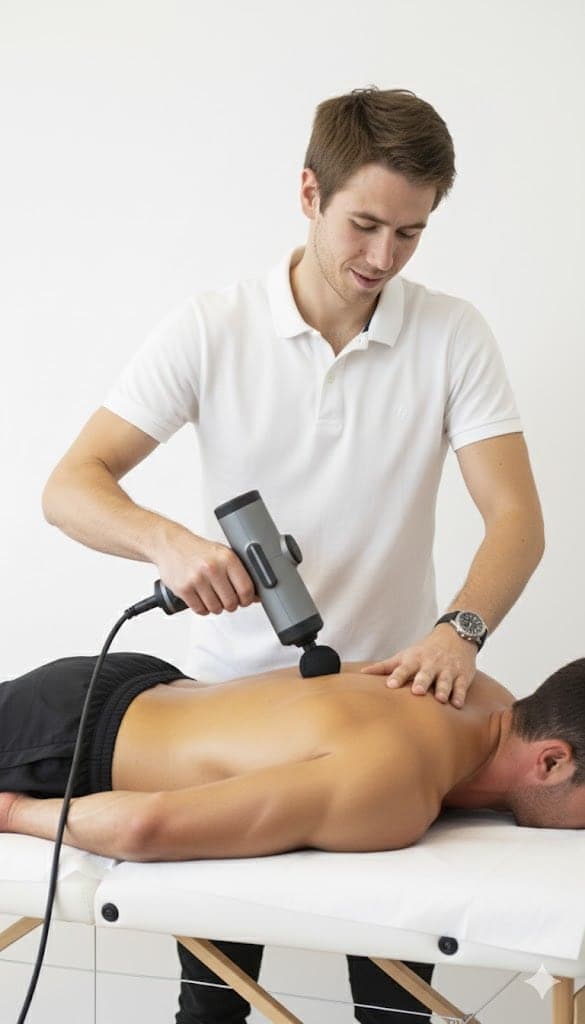
Written by
Chris
Massage therapist, nutrition and exercise physiologist
Norwegian-certified with a Bachelor’s in Physical Education and Nutrition and over ten years of clinical practice, working from a portable table in clients’ homes across the Paphos district.
This article is general information, not a medical diagnosis. If you have severe, worsening or unexplained pain, numbness, weakness, or pain after an accident, see a doctor first.