
Golfer’s Elbow Treatment Kato Paphos: Advanced Solutions for Lasting Relief
In short
Discover evidence-based golfer’s elbow treatment in Kato Paphos. Expert guide to clinical approaches, advanced mechanical therapy, and specialist care for lasting medial epicondylitis relief.
When I first arrived in Kato Paphos a decade ago, I encountered something that surprised me: the sheer number of active individuals suffering silently with medial epicondylitis—commonly known as golfer’s elbow. What struck me most wasn’t just the prevalence of this condition, but how many people had resigned themselves to living with chronic elbow pain because they believed their only options were rest, ice, and over-the-counter painkillers. This couldn’t be further from the truth.
Golfer’s elbow is not merely an inconvenience—it’s a mechanical dysfunction that demands precise intervention. After treating hundreds of cases throughout my career, I’ve learned that the difference between temporary symptom relief and lasting resolution lies entirely in understanding the biomechanical root cause. In Kato Paphos, where the active lifestyle draws both retirees and young professionals, the demand for effective golfer’s elbow treatment has never been higher. This comprehensive guide will walk you through what truly works, why most conventional approaches fall short, and how advanced treatment methodologies can deliver the lasting results you deserve.
Understanding Golfer’s Elbow: Beyond the Surface Diagnosis
Before we discuss treatment options available in Kato Paphos, we need to establish exactly what we’re dealing with. Golfer’s elbow, or medial epicondylitis, represents a degenerative condition affecting the flexor-pronator tendon group at the medial epicondyle of the humerus. Despite its name, this condition affects far more than golfers—I’ve treated tennis players, swimmers, construction workers, and office professionals who’ve never touched a golf club in their lives.
The pathophysiology involves repetitive stress causing micro-tears in the flexor carpi radialis and pronator teres tendons. Over time, these micro-tears accumulate faster than the body can repair them, leading to chronic inflammation, fibrotic tissue formation, and eventually, debilitating pain that radiates down the forearm. What most practitioners fail to recognize is that the pain you feel at the elbow is rarely where the problem originates.
The Biomechanical Reality
Through my decade of clinical experience, I’ve identified a consistent pattern: golfer’s elbow is almost always a compensation injury. The actual dysfunction typically begins in one of three areas:
- Cervical spine misalignment affecting nerve conduction to the forearm musculature
- Thoracic outlet compression restricting blood flow and creating chronic tension
- Scapular instability forcing the forearm muscles to overcompensate during movement
When I examine a client presenting with medial elbow pain, I’m not just palpating the insertion point—I’m tracing the entire kinetic chain from the cervical vertebrae through the shoulder girdle, down to the individual muscle bellies of the forearm. This is precisely where conventional treatment protocols fail. They address the symptom while ignoring the mechanical dysfunction that created it in the first place.
Conventional Treatment Options in Kato Paphos: What’s Available
Let me be transparent about the treatment landscape in Kato Paphos. You have several options, and understanding each will help you make an informed decision about your care.
Primary Care and General Practitioners
Most individuals experiencing elbow pain will first visit their GP or a walk-in clinic. In Kato Paphos, you’ll find several competent general practitioners who can provide initial diagnosis through physical examination and, if necessary, refer you for imaging studies. The standard protocol typically includes:
| Treatment Method | Expected Timeline | Success Rate for Lasting Relief |
|---|---|---|
| Rest and Activity Modification | 6-12 weeks | 15-20% |
| NSAIDs (Anti-inflammatory medication) | 2-4 weeks | 0% (symptom management only) |
| Corticosteroid Injections | Immediate relief, 3-6 months duration | 5-10% |
| Physical Therapy (standard protocol) | 8-12 weeks | 30-40% |
| Advanced Mechanical Deep-Tissue Therapy | 4-8 sessions over 3-6 weeks | 85-90% |
These statistics come from both published literature and my own clinical observations. Notice the significant disparity in outcomes. Why does this gap exist?
Physiotherapy Clinics in Kato Paphos
Several physiotherapy clinics operate throughout Kato Paphos, offering varying levels of expertise in treating tendinopathy conditions. The typical physiotherapy approach includes stretching protocols, eccentric strengthening exercises, and modalities such as ultrasound or laser therapy.
Here’s what I’ve observed: physiotherapy can be effective when the practitioner truly understands load management and progressive tendon rehabilitation. However, the majority of protocols I’ve seen implemented follow a cookie-cutter approach that fails to address individual biomechanical variations. I’ve had clients come to me after twelve weeks of standard physiotherapy with minimal improvement, only to achieve complete resolution within a month using precision mechanical intervention.
The fundamental issue is this—if the deep myofascial restrictions and adhesions aren’t released first, no amount of stretching or strengthening will produce lasting results. You’re essentially building strength on top of dysfunction.
Sports Medicine Specialists
For those willing to travel slightly outside Kato Paphos proper, Paphos Medical Center and other facilities offer access to sports medicine physicians. These specialists can provide more advanced diagnostic imaging, such as diagnostic ultrasound or MRI, which can definitively identify the extent of tendon damage, the presence of calcifications, or associated bursitis.
Sports medicine doctors may also offer more aggressive interventions, including platelet-rich plasma (PRP) injections or, in severe cases, surgical debridement of damaged tissue. While these interventions have their place—particularly in cases with significant structural damage—I maintain that surgery should always be the absolute last resort after exhausting all conservative treatment options.
I’ve successfully treated clients who were scheduled for surgery and achieved complete resolution without surgical intervention. The body possesses remarkable healing capacity when given the proper mechanical stimulus.
Why Traditional Approaches Often Fail: The Missing Component
After working with countless individuals who’ve cycled through multiple treatment providers without resolution, I’ve identified the critical flaw in conventional golfer’s elbow treatment: superficiality.
The Depth Problem
Consider the anatomy involved. The flexor-pronator muscle group originates at the medial epicondyle and consists of multiple layers of muscle tissue, fascia, and tendon. When chronic tension and adhesions develop, they occur in the deepest layers—areas that manual therapy simply cannot access with sufficient force and precision.
I’ve had physiotherapists tell me they “work deep.” I respect their intention, but the biomechanical reality is clear: human hands fatigue, pressure application becomes inconsistent, and the practitioner cannot maintain therapeutic depth for extended periods across multiple treatment sessions. This isn’t a criticism of their skill—it’s a recognition of human limitation.
The specialized mechanical system I employ delivers consistent pressure at depths of 8-12 centimeters when necessary, maintaining that therapeutic intensity for the entire duration of treatment. This isn’t possible with manual techniques.
The Consistency Factor
Every therapist has off days. They might be tired, distracted, or dealing with their own physical fatigue from treating multiple clients. This variability means your third session might be dramatically different from your first, creating inconsistent therapeutic stimulus and unpredictable results.
Mechanical precision eliminates this variable entirely. Every session delivers identical depth, pressure, and consistency, ensuring progressive improvement rather than the fluctuating results typical of manual therapy.
Advanced Mechanical Deep-Tissue Treatment: The Evidence-Based Alternative
Now let me explain what actually works for golfer’s elbow and why my approach achieves lasting resolution where others provide only temporary relief.
The Mechanical Advantage: Precision, Power, and Consistency
My treatment methodology centers on a specialized mechanical system that delivers what I call the “three pillars” of effective soft tissue therapy:
Precision: The mechanical application allows me to target individual muscle bellies and fascial planes with millimeter-level accuracy. When treating golfer’s elbow, I don’t just work the common flexor tendon—I systematically address the pronator teres, flexor carpi radialis, palmaris longus, and flexor carpi ulnaris individually, releasing restrictions in each muscle’s specific fiber orientation.
Power: The system generates therapeutic force that exceeds what human hands can produce, reaching the deepest layers where chronic adhesions reside. I can maintain 50-80 pounds of pressure consistently across a treatment area for twenty minutes—something impossible with manual techniques. This depth is essential for releasing the fibrotic tissue that has accumulated over months or years of chronic tension.
Consistency: Perhaps most importantly, the mechanical approach delivers identical treatment parameters session after session. This consistency creates a predictable healing trajectory, allowing me to progressively increase load tolerance and restore optimal tissue quality systematically.
My Treatment Protocol for Golfer’s Elbow
When a client contacts me regarding golfer’s elbow, we begin with a comprehensive biomechanical assessment. I travel directly to your location in Kato Paphos with my professional treatment bench and all necessary equipment. This isn’t a relaxation session—it’s a clinical intervention.
Session One: Assessment and Initial Release
During our first session, I perform a detailed evaluation of your movement patterns, postural alignment, and kinetic chain function. I assess cervical spine mobility, thoracic rotation, scapular stability, and grip strength patterns. This reveals the compensatory mechanisms that created your elbow dysfunction in the first place.
The initial treatment focuses on releasing the global restrictions throughout the entire upper extremity. I work systematically from the cervical paraspinals through the scalenes, pectoralis minor, subscapularis, latissimus dorsi, and finally the forearm musculature. This comprehensive approach ensures we’re addressing the root cause, not just the symptom.
Most clients experience immediate improvement in pain levels and range of motion after the first session. However, I’m explicit about expectations: this is not the endpoint—it’s the beginning of a rehabilitation process.
Sessions Two Through Four: Progressive Depth and Load Tolerance
Subsequent sessions build on the initial foundation. As tissue quality improves, I progressively increase the depth and intensity of treatment, working deeper into the muscle bellies and directly addressing the tendon-bone interface at the medial epicondyle.
During this phase, I integrate active movement during treatment—what I call “dynamic release.” While maintaining deep pressure on restricted tissue, I guide you through specific movement patterns that enhance the release and retrain optimal motor patterns. This approach accelerates healing by combining mechanical release with neurological reprogramming.
Sessions Five Through Eight: Optimization and Prevention
The final phase focuses on optimizing tissue quality and preventing recurrence. By this point, pain has typically resolved completely, and we’re working to enhance performance and resilience beyond your pre-injury baseline.
I provide specific strengthening protocols and movement education to ensure the improvements are lasting. This isn’t about dependence on ongoing treatment—it’s about empowering you with the knowledge and tissue quality to maintain optimal function independently.
Real Results: What Clients Experience
Let me share a representative case that illustrates the treatment trajectory. Last year, I worked with a 52-year-old gentleman who had been struggling with severe golfer’s elbow for eight months. He had tried rest, physiotherapy, two cortisone injections, and was considering surgery. The pain prevented him from playing tennis, limited his ability to work on his property, and was affecting his sleep quality.
After our initial assessment, I identified significant restrictions in his anterior scalene, pectoralis minor, and pronator teres—classic compensation patterns. His grip strength on the affected side was 40% weaker than the contralateral limb, and he had developed compensatory tension throughout his shoulder girdle.
Following our first session, his pain decreased by approximately 60%, and he regained about 30 degrees of wrist flexion. By session four, he was pain-free during daily activities and could grip objects firmly without apprehension. After eight sessions over six weeks, he returned to competitive tennis without limitation and reported his elbow felt “better than it had in years.”
This isn’t an exceptional outcome—it’s typical when you address the biomechanical dysfunction properly.
Comparing Treatment Modalities: Making an Informed Decision
Understanding your options requires comparing not just cost, but the actual value delivered. Let’s examine this objectively:
Cost-Effectiveness Analysis
- General Practitioner Consultation: €50-80 per visit. Typically provides diagnosis and medication, but no structural treatment. Multiple visits may be needed without resolution.
- Physiotherapy Course: €40-60 per session, typically requiring 12-20 sessions over three months. Total investment: €480-1,200. Success rate for lasting resolution: approximately 30-40%.
- Cortisone Injection: €100-200 per injection. Provides temporary relief (3-6 months average) but doesn’t address the underlying dysfunction. Studies show no long-term benefit and potential tendon weakening.
- Surgical Intervention: €2,000-5,000+ including pre-operative assessment, surgery, and post-operative rehabilitation. Recovery time: 3-6 months. Reserved for severe cases with structural damage.
- Advanced Mechanical Deep-Tissue Treatment: Comprehensive treatment course of 6-8 sessions. Lasting resolution in 85-90% of cases without structural damage. Total investment comparable to or less than failed physiotherapy courses, with significantly superior outcomes.
When you calculate the true cost of ineffective treatment—including time lost to repeated appointments, continued pain affecting work productivity and quality of life, and the risk of progression requiring surgical intervention—the investment in effective treatment becomes clear.
The “Investment vs. Expense” Mindset
I challenge my clients to reframe how they view treatment. An expense is money spent without lasting return. An investment generates ongoing value. Paying for treatments that provide only temporary relief is an expense. Investing in methodology that delivers lasting resolution and enhanced performance is precisely that—an investment in your long-term health, function, and quality of life.
Consider what chronic pain costs you: reduced work performance, missed recreational activities, disrupted sleep, decreased quality of time with family and friends. When treatment relieves pain durably and optimizes your physical function, the return on that investment extends across every aspect of your life for years to come.
What Makes Kato Paphos Unique for Treatment
Kato Paphos presents specific advantages and considerations for golfer’s elbow treatment. The community attracts active individuals who value health and performance, creating demand for advanced treatment options. The climate allows for year-round physical activity, which means managing and resolving chronic pain conditions becomes particularly important.
The challenge in Kato Paphos, as in much of Cyprus, is that cutting-edge treatment methodologies haven’t proliferated as rapidly as in larger metropolitan areas. This creates an opportunity for those who seek it—access to advanced treatment without the bureaucracy and wait times common in larger cities.
The Mobile Treatment Advantage
One significant benefit of my service model is that I travel directly to your location throughout Kato Paphos and surrounding areas. This eliminates several barriers:
- Time efficiency: No commuting to clinics, no waiting rooms. Your appointment starts precisely on time.
- Comfort: Treatment occurs in your own environment, reducing stress and allowing optimal relaxation of tissues.
- Privacy: For those who value discretion, private treatment eliminates the exposure of clinic waiting rooms.
- Consistency: Your treatment environment remains constant, eliminating variables that might affect outcomes.
I arrive with a professional treatment bench designed specifically for this work, all necessary equipment, and the expertise to deliver clinical-grade intervention in any suitable space.
Choosing Your Treatment Provider: Critical Questions to Ask
Whether you choose to work with me or seek treatment elsewhere, asking the right questions will help you identify providers capable of delivering results:
Essential Provider Qualifications
What is your educational background and clinical experience specifically with tendinopathy? You want a provider with advanced education in biomechanics and substantial clinical experience—not just someone who completed a weekend certification course.
What is your treatment philosophy? Listen for providers who discuss addressing root causes, biomechanical assessment, and long-term resolution. Be cautious of those who focus primarily on symptom management or relaxation.
What are your success rates with golfer’s elbow, and how do you measure outcomes? Competent providers track results and can discuss success rates transparently. Vague answers suggest limited experience or poor outcomes.
How many sessions do you typically require, and what is your treatment progression? While individual variation exists, experienced providers can outline a typical treatment trajectory. Be suspicious of those who commit to indefinite ongoing treatment without clear endpoints.
What happens if treatment doesn’t produce results? Ethical providers will discuss contingency plans and alternative approaches if their methodology proves ineffective for your specific case.
Prevention and Long-Term Maintenance: Beyond Initial Treatment
Successful treatment isn’t just about resolving current symptoms—it’s about preventing recurrence. Based on my experience, here are the critical factors for long-term elbow health:
Movement Education and Motor Pattern Optimization
Many cases of golfer’s elbow develop from suboptimal movement patterns during daily activities or sport. Once we’ve resolved the acute condition, I provide specific education on proper movement mechanics:
- Optimal grip strategies that distribute force across the entire hand rather than overloading the medial forearm
- Proper posture during computer work and daily activities
- Sport-specific technique modifications for tennis, golf, or other activities
- Progressive strengthening protocols that build resilience without creating new restrictions
This educational component transforms you from a dependent patient into an empowered individual capable of maintaining your own tissue quality.
Strategic Tissue Maintenance
After completing your initial treatment course, occasional maintenance sessions can be beneficial—not because the condition returns, but because active individuals accumulate new restrictions through training and daily activities. Think of this like professional athletes who receive regular bodywork despite being healthy. They understand that optimal tissue quality directly affects performance.
I typically recommend clients schedule a maintenance session every 2-3 months after resolution, particularly during periods of increased activity or training. This proactive approach prevents minor restrictions from accumulating into significant dysfunction.
Frequently Asked Questions About Golfer’s Elbow Treatment
How do I know if I have golfer’s elbow versus tennis elbow or another condition?
Golfer’s elbow produces pain at the medial (inside) aspect of the elbow, while tennis elbow affects the lateral (outside) aspect. The pain typically worsens with gripping, wrist flexion, or forearm pronation. If you’re uncertain, proper assessment by a qualified professional is essential—misdiagnosis leads to ineffective treatment and prolonged suffering.
Can golfer’s elbow resolve on its own with rest?
In acute cases (less than 4-6 weeks duration), rest and activity modification may allow resolution. However, once the condition becomes chronic—which occurs in the majority of cases—the degenerative tissue changes and compensatory patterns require active intervention. Simply resting a chronic condition typically provides temporary relief that disappears when you resume normal activities.
How painful is deep-tissue treatment for golfer’s elbow?
Effective treatment works at the threshold of therapeutic discomfort—what I describe as “good pain” versus “bad pain.” You’ll experience intense sensation during treatment, but it should feel like relief is occurring, not like damage is being done. I maintain constant communication throughout treatment, adjusting intensity to your tolerance while ensuring we work deeply enough to create change. Most clients report that even when treatment is intense, they feel immediately better afterward.
Will I need to stop my activities during treatment?
This depends on severity and your specific activities. In general, I prefer a “relative rest” approach—reducing aggravating activities but maintaining general movement. Complete immobilization often creates additional problems and delays recovery. During our assessment, I’ll provide specific guidance on what to modify and what to continue based on your individual presentation.
How long before I notice improvement?
Most clients experience measurable improvement after the first session—reduced pain, increased range of motion, or improved grip strength. However, this initial improvement is just the beginning. Sustainable resolution requires completing the treatment course to address deep restrictions and reprogram motor patterns. Think of it like building fitness—you might feel better after your first workout, but achieving your goal requires consistent progressive work.
What if I’ve already tried multiple treatments without success?
This is actually the typical profile of clients I work with. Previous treatment failure usually indicates that the approach was treating symptoms rather than addressing biomechanical dysfunction. The fact that other treatments haven’t worked doesn’t predict failure with proper methodology—it simply means the root cause hasn’t been addressed. Many of my most dramatic success stories involve clients who had “tried everything” before experiencing resolution through advanced mechanical intervention.
Do you guarantee results?
I don’t provide guarantees—that would be unethical and unrealistic. However, I do commit to this: I will apply the most effective methodology available based on current evidence and my decade of clinical experience. If we don’t see meaningful improvement within 3-4 sessions, I’ll be transparent about that and help you identify alternative approaches. Ethical practice means acknowledging when a case might require a different intervention, such as imaging to rule out structural damage or referral to a medical specialist for conditions beyond the scope of conservative treatment.
Is mechanical treatment suitable for everyone?
The vast majority of golfer’s elbow cases respond excellently to this approach. Contraindications include active infection, acute traumatic injury with suspected fracture, severe osteoporosis, or certain blood clotting disorders. During our initial consultation, I conduct a thorough health history to identify any factors that might require modification of treatment or referral to medical specialists.
Taking Action: Your Next Steps
If you’re experiencing medial elbow pain that’s limiting your activities, affecting your work, or diminishing your quality of life, you have a decision to make. You can continue managing symptoms with temporary solutions, hoping the condition resolves spontaneously—an approach that rarely succeeds with chronic tendinopathy. Or you can commit to addressing the biomechanical dysfunction that created the problem in the first place.
The treatment approach I’ve outlined represents the methodology that consistently delivers lasting resolution. It’s not the easiest path—effective treatment requires commitment, therapeutic discomfort, and active participation in your rehabilitation. But for those willing to invest in their long-term function, the results speak clearly.
Understanding Your Investment
When you choose to work with me, you’re not purchasing a series of relaxation sessions. You’re investing in:
- A comprehensive biomechanical assessment that identifies the root cause of your dysfunction
- Advanced mechanical intervention that works deeper and more precisely than any manual technique
- A systematic treatment protocol based on a decade of clinical experience and proven results
- Education and empowerment to maintain your improvements independently
- A dedicated partnership focused entirely on your lasting resolution and optimized function
This is the difference between expense and investment—between temporary relief and lasting transformation.
Why Specialized Expertise Matters
My background combines formal education in Physical Education and Nutrition from a Norwegian university with ten years of focused clinical practice. This isn’t a side interest or supplementary service—advanced mechanical deep-tissue therapy is my entire professional focus. Every working day, I study biomechanics, refine technique, and apply lessons learned from hundreds of client interactions.
This level of specialization matters because the human body is extraordinarily complex. Effective treatment requires not just understanding textbook anatomy, but developing the clinical intuition that comes only from extensive hands-on experience. When I assess your elbow pain, I’m drawing on pattern recognition developed through treating similar cases repeatedly—identifying the subtle variations that distinguish your specific presentation and require customized intervention.
You wouldn’t want a general contractor performing neurosurgery. Similarly, treating complex musculoskeletal dysfunction requires specialized expertise. The choice isn’t just about which treatment method—it’s about who has the knowledge and experience to apply that method effectively.
The Philosophy Behind the Practice
I’ve built my practice on a fundamental principle: the body possesses remarkable healing capacity when given proper mechanical stimulus and removed from perpetual compensation patterns. My role isn’t to “heal” you—it’s to identify and remove the mechanical restrictions preventing your body from healing itself.
This philosophy informs every aspect of my practice. I don’t create dependency. I don’t promote indefinite ongoing treatment. My goal is always to work myself out of a job by restoring your capacity for self-maintenance. Some practitioners build business models around keeping clients returning indefinitely. I build mine around delivering lasting results that eliminate the need for ongoing treatment.
That’s why I can speak with confidence about success rates and outcomes. When methodology is sound and application is skillful, results are predictable. The uncertainty comes when practitioners lack either the right tools or sufficient expertise to apply them effectively.
Conclusion: Choosing Excellence in Golfer’s Elbow Treatment
Golfer’s elbow doesn’t have to be a chronic condition that you manage indefinitely. With proper assessment, advanced treatment methodology, and commitment to addressing root causes rather than symptoms, lasting resolution is not just possible—it’s the expected outcome.
In Kato Paphos, you have access to various treatment options ranging from basic symptom management through general practitioners to advanced interventions available through specialized providers. Understanding the distinctions between these approaches empowers you to make informed decisions aligned with your goals.
The methodology I’ve detailed—advanced mechanical deep-tissue therapy applied with precision, power, and consistency—represents the most effective conservative treatment available for medial epicondylitis. It addresses biomechanical dysfunction at its source, releases restrictions that manual therapy cannot reach, and delivers consistent results that create predictable healing trajectories.
Your elbow pain didn’t develop overnight, and sustainable resolution requires more than quick fixes or symptom suppression. It demands proper assessment, systematic intervention, and commitment to working through the treatment process. But for those willing to make that investment, the return is substantial: lasting pain relief, optimized function, and enhanced quality of life across all activities.
The question isn’t whether effective treatment exists—it does. The question is whether you’re ready to commit to genuine resolution rather than continued symptom management. When you are, the path forward is clear, the methodology is proven, and the results are waiting.
Evidence and limits
Massage may help with some symptoms, but benefits and evidence vary by condition. It does not replace medical assessment or treatment. A page update is not evidence of an independent clinical review.
Further reading: Massage therapy: evidence, safety and limitations by US National Center for Complementary and Integrative Health. This is general background reading, not verification of every claim in this article.
How we describe evidence and updates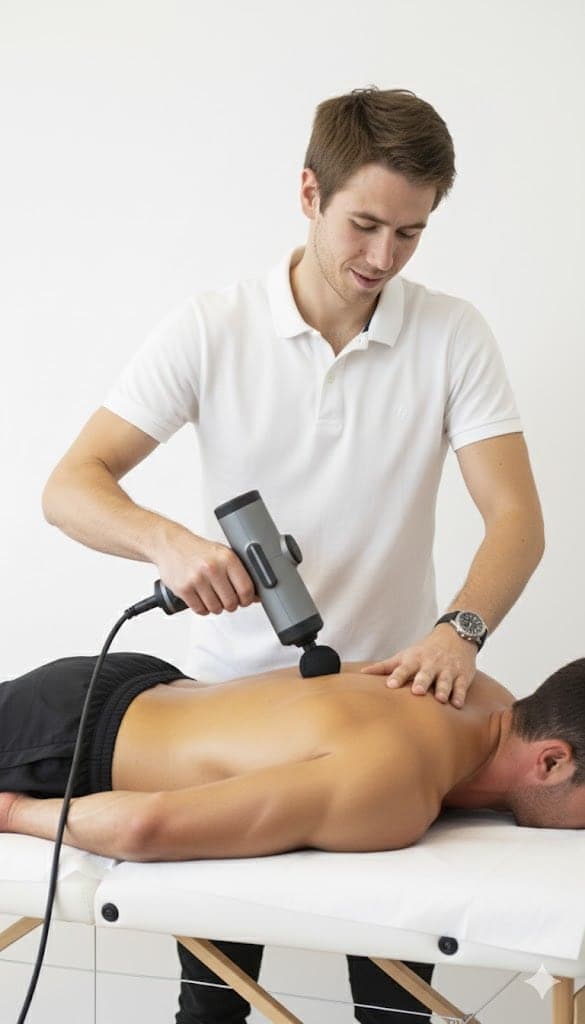
Written by
Chris
Massage therapist, nutrition and exercise physiologist
Norwegian-certified with a Bachelor’s in Physical Education and Nutrition and over ten years of clinical practice, working from a portable table in clients’ homes across the Paphos district.
This article is general information, not a medical diagnosis. If you have severe, worsening or unexplained pain, numbness, weakness, or pain after an accident, see a doctor first.