
Podiatrist Services Geroskipu: Advanced Deep-Tissue Solutions for Lasting Foot Pain Relief
In short
Discover specialized podiatrist services in Geroskipu offering mechanical deep-tissue treatment for chronic foot pain. Evidence-based approach with 10 years of expertise delivering lasting results.
I’ve spent the past decade working with clients whose foot pain has stolen their quality of life. Athletes who can’t train. Office workers who dread their morning commute. Parents who can’t keep up with their children. The common thread? They’ve all tried conventional treatments that addressed symptoms rather than causes. When you’re searching for podiatrist services in Geroskipu, you’re likely exhausted from temporary fixes that fail to deliver lasting change.
My approach is fundamentally different. With a Bachelor’s degree in Physical Education and Nutrition from Norway and ten years of specialized practice, I’ve developed a mechanical deep-tissue methodology that targets the biomechanical root causes of foot dysfunction. This isn’t about relaxation or surface-level comfort. This is about lasting structural correction that restores your feet to optimal function.
The feet are the foundation of human movement. When that foundation fails, everything above it compensates, creating a cascade of dysfunction throughout the kinetic chain. I’ve seen this pattern hundreds of times, and I’ve refined a treatment protocol that systematically dismantles these compensatory patterns.
Understanding the Biomechanical Reality of Foot Pain
Most people fundamentally misunderstand what’s happening when their feet hurt. They think they have “plantar fasciitis” or “flat feet” or “heel spurs,” and they accept these labels as lasting conditions. This is incorrect. These are descriptive terms for symptoms, not explanations of causation.
The human foot contains 26 bones, 33 joints, and more than 100 muscles, tendons, and ligaments. This complex architecture is designed for both stability and mobility. When chronic tension develops in the deep fascial layers—often from years of compensatory movement patterns, inadequate footwear, or previous injuries—the entire mechanical system becomes compromised.
I remember a client last year, a construction worker who’d been told his foot pain was “just part of getting older.” He was 42. After our initial assessment, I identified severe fascial adhesions in his plantar surface and significant myofascial dysfunction in his posterior compartment. These weren’t age-related degenerative changes. They were the accumulated result of mechanical stress that had never been properly addressed.
Within four sessions using my specialized mechanical protocol, his pain decreased by 70%. After eight sessions, he was pain-free and had returned to full work capacity. That’s not managing symptoms. That’s resolving the structural problem.
Why Traditional Podiatry Treatments Often Fail
The conventional podiatry model operates on a fundamentally flawed premise: that passive interventions can correct active biomechanical problems. Orthotics provide external support but don’t address the tissue dysfunction causing the need for support. Cortisone injections mask pain signals without resolving the inflammatory cycle. Physical therapy exercises are valuable but often insufficiently aggressive to break through years of accumulated fascial restriction.
I’ve worked with dozens of clients who’ve exhausted these conventional pathways. They arrive skeptical, having spent thousands on treatments that provided temporary relief at best. The difference in my methodology is simple: I work at the depth and intensity required to create lasting tissue change.
Human hands, no matter how skilled, cannot consistently deliver the sustained pressure necessary to release deep fascial adhesions in the plantar surface or the posterior compartment of the lower leg. The practitioner fatigues. Pressure becomes inconsistent. Treatment depth varies session to session. These aren’t criticisms of manual therapy—they’re simply biomechanical realities.
The Mechanical Deep-Tissue Advantage: Precision, Power, and Consistency
My specialized equipment allows me to deliver therapeutic intervention at depths and intensities that are physiologically impossible with manual techniques. This isn’t about convenience or efficiency—though those are secondary benefits. This is about accessing tissue layers that conventional methods simply cannot reach with sufficient force to create lasting change.
Deeper Penetration for Root Cause Resolution
The plantar fascia and intrinsic foot musculature respond to mechanical load. When chronic tension develops in these structures, superficial treatment provides temporary sensation of relief but fails to address the underlying tissue restriction. My methodology works systematically through superficial layers to access deep fascial planes where true dysfunction resides.
I adjust treatment parameters—depth, speed, angle of approach—based on real-time tissue response. When I encounter a fascial adhesion or myofascial trigger point, I can sustain therapeutic pressure for the 90-120 seconds required to achieve tissue release. Manual practitioners typically fatigue within 30-45 seconds, well before the therapeutic threshold is reached.
Complete Control for Individualized Treatment
Every client’s tissue quality is different. Athletes with dense, hypertonic musculature require significantly different treatment parameters than sedentary clients with hypermobile, poorly conditioned tissue. My equipment allows me to calibrate intensity from gentle superficial work to powerfully deep structural intervention within the same session.
This granular control is critical for effective treatment. I can work aggressively through areas of severe restriction while respecting zones of acute inflammation or recent injury. This precision minimizes treatment discomfort while maximizing therapeutic effect.
Consistent Results Without Practitioner Variability
One of the most frustrating aspects of manual therapy is inconsistency. The practitioner has good days and off days. Energy levels fluctuate. Technique varies with fatigue. These variables create unpredictable outcomes and make it difficult to establish clear treatment progressions.
My mechanical methodology eliminates this variability. Every session delivers the same precise, controlled intervention. This consistency allows me to establish clear baseline measurements and track objective progress. When a client returns for their third session, I know exactly what we accomplished in sessions one and two, and I can build systematically on that foundation.
Comprehensive Podiatrist Services Available in Geroskipu
I provide a focused suite of specialized services, all centered on mechanical deep-tissue intervention for foot and lower extremity dysfunction. This isn’t a menu of unrelated treatments. This is a systematic approach to biomechanical correction.
| Service Category | Treatment Focus | Typical Session Duration | Expected Outcome Timeline |
|---|---|---|---|
| Plantar Fasciitis Resolution | Deep fascial release of plantar surface, posterior chain integration | 60-75 minutes | 4-8 sessions for lasting resolution |
| Achilles Tendinopathy Treatment | Systematic release of gastrocnemius-soleus complex, eccentric loading preparation | 60-75 minutes | 6-10 sessions for full tissue remodeling |
| Chronic Heel Pain Correction | Calcaneal periosteum treatment, deep compartment release | 60-75 minutes | 4-8 sessions for pain elimination |
| Metatarsalgia and Forefoot Pain | Interosseous release, transverse arch restoration | 45-60 minutes | 3-6 sessions for functional improvement |
| Post-Surgical Rehabilitation | Scar tissue mobilization, proprioceptive re-education | 45-60 minutes | 8-12 sessions for optimal recovery |
| Athletic Performance Optimization | Fascial system optimization, movement pattern refinement | 60-90 minutes | Ongoing maintenance protocol |
Plantar Fasciitis: From Chronic Disability to Complete Resolution
Plantar fasciitis is perhaps the most misunderstood and mistreated condition I encounter. The conventional narrative suggests this is an inflammatory condition requiring rest, ice, and anti-inflammatories. This is partially correct but fundamentally incomplete.
True plantar fasciitis—meaning active inflammation of the plantar fascia—typically resolves within 6-8 weeks with appropriate load management. What most people experience is chronic plantar fasciosis: degenerative tissue changes resulting from inadequate blood supply, repetitive microtrauma, and failed healing responses. This is not an inflammatory condition. This is a structural problem.
My protocol systematically addresses the entire posterior chain. I work from the lumbar-pelvic complex through the hamstrings, into the gastrocnemius-soleus complex, and finally into the plantar surface itself. This comprehensive approach recognizes that isolated foot treatment is insufficient when dysfunction exists in proximal structures that directly influence plantar mechanics.
I use sustained compression to break down fascial adhesions, followed by specific mobilization techniques to restore tissue glide. The mechanical advantage of my equipment allows me to maintain therapeutic pressure through the entire plantar surface for extended periods, something that’s physiologically impossible with manual techniques.
Achilles Tendinopathy: Restoring Load Tolerance Through Tissue Remodeling
The Achilles tendon is the largest and strongest tendon in the human body, capable of withstanding forces exceeding 10 times body weight during running. When this structure becomes symptomatic, it’s usually because cumulative microtrauma has exceeded the tissue’s capacity for adaptive remodeling.
Conventional treatment focuses on eccentric strengthening, which is valuable but often implemented prematurely. When significant fascial restriction exists in the gastrocnemius-soleus complex, eccentric loading simply reinforces dysfunctional movement patterns. The tendon continues to be loaded through compromised tissue architecture, perpetuating the degenerative cycle.
I address this systematically. First, I release chronic tension in the triceps surae, working from the popliteal fossa through the musculotendinous junction. This releases the pathological tension that’s overloading the Achilles insertion. Then I work directly on the tendon itself, using controlled mechanical stimulus to trigger healing responses and tissue remodeling.
This approach requires patience. Tendon tissue remodels slowly—typically 8-12 weeks for significant structural change. But when done correctly, the results are lasting. I’ve worked with runners who’d been symptomatic for years, unable to train consistently, who returned to full mileage with zero recurrence after completing my protocol.
Athletic Performance: Optimizing the Foundation of Movement
Most athletes only seek treatment when they’re in pain. This is reactive, not strategic. Elite performers understand that optimal tissue quality is a prerequisite for maximum performance. Accumulated fascial restriction, even when sub-symptomatic, directly compromises force transmission, proprioceptive accuracy, and movement efficiency.
I work with several competitive athletes who integrate my services into their training cycles. We’re not treating injuries—we’re systematically optimizing the fascial system to support peak performance. This includes:
- Regular deep-tissue work to prevent accumulation of training-related restriction
- Pre-competition preparation to ensure optimal tissue quality before key events
- Post-competition recovery to accelerate tissue healing and prevent chronic dysfunction
- Ongoing assessment to identify emerging problems before they become symptomatic
This proactive approach requires investment, but the return is measurable. Reduced injury rates, improved training consistency, enhanced performance metrics—these are objective outcomes that justify the commitment.
The Assessment Process: Understanding Your Individual Biomechanics
Effective treatment begins with accurate assessment. I don’t work from generic protocols or standardized treatment plans. Every intervention is individualized based on detailed biomechanical analysis of your specific dysfunction patterns.
My initial consultation includes:
- Comprehensive Movement Assessment: I analyze your gait pattern, single-leg balance, squat mechanics, and functional movement capacity. This reveals compensatory patterns that provide critical context for understanding your symptoms.
- Detailed Tissue Palpation: I systematically assess tissue quality throughout the lower kinetic chain, identifying areas of restriction, adhesion, trigger point activity, and fascial dysfunction.
- Range of Motion Testing: I measure ankle dorsiflexion, first ray mobility, subtalar joint movement, and other key metrics that influence foot function.
- Load Tolerance Evaluation: I assess how your tissues respond to graduated mechanical load, which informs treatment intensity and progression.
- Historical Context Integration: I gather detailed information about injury history, activity levels, footwear habits, and previous treatments to understand how your current dysfunction developed.
This assessment typically requires 30-45 minutes. It’s time-intensive, but it’s essential. Without accurate understanding of your individual biomechanics, treatment becomes guesswork. With precise assessment, every intervention is purposeful and targeted.
Treatment Philosophy: Addressing Causes, Not Symptoms
The fundamental distinction between my approach and conventional podiatry is philosophical. Traditional models ask: “How can we make this symptom go away?” I ask: “What biomechanical dysfunction is creating this symptom, and how do we durably correct it?”
This distinction shapes everything. Symptom management seeks quick relief through passive interventions—injections, orthotics, medications. These can be valuable tools in specific contexts, but they’re not solutions. They’re accommodations to dysfunction, not corrections of it.
True resolution requires addressing mechanical causes. If plantar pain results from chronic gastrocnemius tension creating excessive pronation moments at the subtalar joint, treating the plantar fascia in isolation is insufficient. The proximal dysfunction will continue driving pathological mechanics, and symptoms will recur.
This is why my treatment protocols are comprehensive. I don’t just work on the area that hurts. I systematically address the entire kinetic chain, identifying and correcting the mechanical dysfunctions that create symptomatic presentation.
The Investment Mindset: Long-Term Health vs. Short-Term Relief
I’m direct with clients about costs and commitments. My services aren’t inexpensive, and they require multiple sessions for optimal results. Some people view this as an expense. They compare my fees to a 30-minute spa massage and question the value proposition.
This comparison reveals a fundamental misunderstanding. We’re not providing comparable services. A relaxation massage offers temporary stress relief—valuable, but not corrective. My work creates lasting structural change that improves your quality of life for years or decades.
Consider the real costs of chronic foot pain: reduced activity levels, diminished performance at work and sport, decreased quality of life, progressive compensation injuries in knees and hips and back, ongoing expenditure on temporary treatments that never resolve the problem. When you calculate those costs over years, investing in lasting correction becomes obviously rational.
I’ve had clients tell me that resolving their foot pain was “life-changing.” Not improved—changed. They could exercise again. They could work without constant discomfort. They could keep up with their children. They could sleep through the night without cramping and pain. That’s not a massage. That’s restoration of function.
Mobile Service: Professional Treatment at Your Location
I travel to your location in Geroskipu, bringing everything necessary for a complete professional treatment session. This includes my specialized mechanical equipment, a professional-grade treatment table, and all necessary supplies.
This mobile approach offers several advantages beyond simple convenience. First, it eliminates the physical stress of traveling to and from appointments—particularly valuable when you’re dealing with foot pain that makes walking or driving uncomfortable. Second, it allows treatment in your own environment, which many clients find more comfortable and conducive to relaxation. Third, it provides scheduling flexibility that accommodates demanding work schedules or family commitments.
The treatment experience is identical to what you’d receive in a clinical setting. I maintain the same professional standards, the same equipment quality, and the same systematic approach regardless of location. The only difference is that you don’t have to travel.
What to Expect During Your First Session
Your initial appointment combines comprehensive assessment with targeted treatment. This dual focus allows me to gather the information necessary for developing your individualized treatment plan while also beginning the therapeutic process.
The session proceeds systematically:
Consultation and History (15 minutes): We discuss your symptoms in detail. When did they start? What makes them better or worse? What treatments have you tried? What are your activity goals? This conversation provides context that shapes everything that follows.
Movement and Tissue Assessment (20-25 minutes): I conduct the comprehensive evaluation described earlier, gathering objective data about your biomechanical function and tissue quality.
Initial Treatment (30-40 minutes): Based on my assessment findings, I begin mechanical deep-tissue work targeting the primary areas of dysfunction. This first session is typically performed at moderate intensity—aggressive enough to create therapeutic effect but conservative enough to assess your tissue response.
Treatment Plan Discussion (10 minutes): I explain my findings in detail, describe the specific mechanical problems I’ve identified, outline my recommended treatment protocol, and answer any questions you have.
Most clients experience immediate improvement after the first session—reduced pain, increased range of motion, better movement quality. However, it’s important to understand that sustainable change requires multiple sessions. Initial improvements are encouraging, but they don’t represent complete tissue remodeling.
Frequently Asked Questions About Podiatrist Services in Geroskipu
How is this different from regular massage therapy?
The difference is fundamental. Massage therapy primarily addresses superficial soft tissue for relaxation and general wellness. My mechanical deep-tissue methodology targets specific biomechanical dysfunctions at depths that conventional massage cannot reach. This is corrective intervention, not relaxation therapy. The goals, techniques, intensity, and outcomes are completely different.
How many sessions will I need?
This depends entirely on your specific condition, tissue quality, and activity demands. Acute problems with limited compensatory patterns typically resolve within 4-6 sessions. Chronic conditions with multiple areas of dysfunction may require 8-12 sessions for complete resolution. Athletic performance optimization is an ongoing process integrated into training cycles. I provide specific recommendations after your initial assessment.
Is the treatment painful?
Deep-tissue work performed at therapeutic intensity creates sensation that’s distinct from relaxation massage. It’s not pain in the sense of tissue damage, but it’s definitely not comfortable in the moment. Most clients describe it as “intense but tolerable” or “uncomfortable but productive.” The key is that you’re in complete control—I adjust intensity based on your real-time feedback. Importantly, post-treatment soreness is minimal and typically resolves within 24-48 hours.
Can you help with conditions beyond foot pain?
Yes. While I specialize in foot and lower extremity dysfunction, the reality is that the kinetic chain is integrated. Foot problems create compensations in the knee, hip, and lower back. Conversely, dysfunction in proximal structures often manifests as foot symptoms. My treatment approach addresses the entire lower kinetic chain systematically, which means I frequently work on areas beyond the foot itself to achieve optimal outcomes.
Do you accept insurance?
I operate as a private practitioner providing specialized services. Payment is due at time of service. I provide detailed receipts that you can submit to your insurance provider for potential reimbursement, though coverage varies significantly by policy. I recommend contacting your insurance company directly to understand your specific benefits for manual therapy services.
How do I prepare for my appointment?
Wear comfortable, loose-fitting clothing that allows access to your lower legs and feet. Avoid applying lotions or oils to your legs before the session. If you have previous imaging studies (X-rays, MRI, ultrasound) or medical reports related to your foot condition, bring those with you. Otherwise, no special preparation is necessary—just come as you are.
What results can I realistically expect?
When biomechanical dysfunction is correctly identified and systematically addressed through appropriate mechanical intervention, the results are typically lasting. That doesn’t mean your tissues will never be challenged again—if you return to the same activities and movement patterns that created the original dysfunction, symptoms may recur. But the structural corrections we achieve are lasting. Most clients experience progressive improvement over 4-8 sessions, with continued optimization for several weeks after treatment concludes as tissues continue remodeling.
Why should I choose your services instead of traditional podiatry?
I’m not suggesting you avoid medical podiatry—there are conditions that require medical intervention, diagnostic imaging, or surgical correction. What I offer is complementary but distinct: specialized mechanical intervention for functional problems that stem from soft tissue dysfunction rather than structural pathology. If you’ve exhausted conventional treatments without achieving lasting results, or if you want to address the mechanical causes of your symptoms rather than just managing them, my approach offers something fundamentally different.
How to Book Your Consultation in Geroskipu
Booking a consultation is straightforward. I maintain a flexible scheduling system that accommodates most availability preferences, including evenings and weekends when necessary. Given that I travel to your location, we’ll coordinate timing that works for both your schedule and allows adequate session time without rushing.
When you contact me, be prepared to provide basic information about your symptoms and goals. This allows me to determine if my services are appropriate for your situation and to allocate appropriate time for your initial session. Some conditions require longer assessment periods; others are more straightforward.
I typically maintain scheduling availability within 3-5 days for new clients, though urgent situations can sometimes be accommodated more quickly. For clients engaged in ongoing treatment programs, I reserve consistent appointment times to maintain treatment continuity and progression.
The Partnership Approach: Your Long-Term Biomechanical Health
I don’t view our relationship as transactional—you have pain, I provide temporary relief, we part ways. That’s the conventional model, and it perpetuates dependency on ongoing treatment without ever achieving true resolution.
My approach is partnership-oriented. We work together toward lasting correction of your biomechanical dysfunction. This requires your active participation: adherence to any movement modifications I recommend, consistent attendance at scheduled sessions, honest communication about your symptoms and progress, and commitment to the complete treatment protocol rather than stopping at “good enough.”
In return, I commit to providing the highest level of technical expertise, comprehensive assessment and treatment, clear communication about your condition and prognosis, and genuine investment in your long-term outcomes. I don’t take on clients I don’t believe I can help, and I don’t continue treating when progress has plateaued or when your condition requires different intervention.
This partnership approach means some clients work with me intensively for 2-3 months and then graduate to independence. Others, particularly athletes and highly active individuals, maintain ongoing relationships with periodic maintenance sessions integrated into their training. The structure depends on your individual needs and goals.
Conclusion: Investing in Lasting Solutions
If you’re searching for podiatrist services in Geroskipu, you’re likely facing a choice: continue down the path of temporary symptom management, or commit to addressing the mechanical causes of your dysfunction. The first path is familiar, relatively inexpensive in the short term, and consistently disappointing in long-term outcomes. The second path requires investment and commitment, but it offers something fundamentally different—lasting resolution.
After a decade of specialized practice, I’ve seen hundreds of clients make this transition from chronic dysfunction to optimal function. The common factor isn’t the specific diagnosis or the severity of symptoms. It’s the willingness to address causes rather than accommodate symptoms. It’s the recognition that true health requires investment, not just expense management.
Your feet are the foundation of everything you do. When that foundation is compromised, everything above it suffers. The question isn’t whether you can afford to invest in proper correction. The question is whether you can afford not to.
Contact me to schedule your comprehensive assessment. Let’s determine exactly what’s causing your symptoms, develop a systematic plan for lasting correction, and get you back to the activity levels and quality of life you deserve. This is what I do. This is what I’ve dedicated the past decade to perfecting. And I’m confident we can create lasting change.
Evidence and limits
Massage may help with some symptoms, but benefits and evidence vary by condition. It does not replace medical assessment or treatment. A page update is not evidence of an independent clinical review.
Further reading: Massage therapy: evidence, safety and limitations by US National Center for Complementary and Integrative Health. This is general background reading, not verification of every claim in this article.
How we describe evidence and updates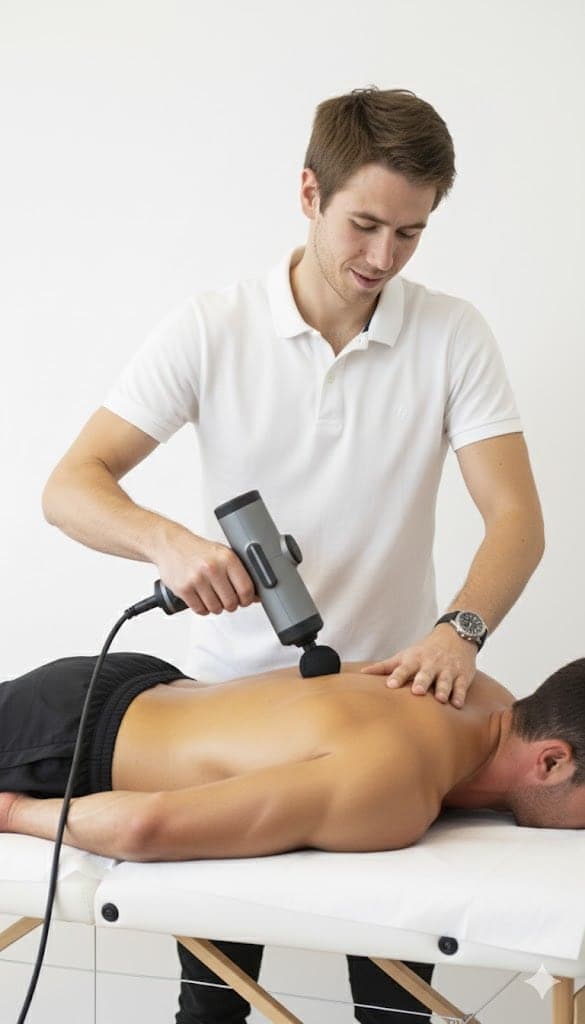
Written by
Chris
Massage therapist, nutrition and exercise physiologist
Norwegian-certified with a Bachelor’s in Physical Education and Nutrition and over ten years of clinical practice, working from a portable table in clients’ homes across the Paphos district.
This article is general information, not a medical diagnosis. If you have severe, worsening or unexplained pain, numbness, weakness, or pain after an accident, see a doctor first.