
Nerve Pain Relief Through Massage: A Clinical Approach to Lasting Results
In short
Discover how advanced mechanical deep-tissue massage addresses nerve pain at its root cause, delivering lasting relief through precision targeting of compressed neural pathways and fascial restrictions.
I’ve treated hundreds of clients over the past decade who walked into sessions believing their nerve pain was something they’d have to “manage” for the rest of their lives. Sciatica shooting down their legs. Burning sensations in their arms from thoracic outlet syndrome. Numbness in their hands from carpal tunnel. They’d tried everything—medication, physical therapy, even surgery in some cases—yet the pain persisted or returned within months.
What I’ve learned through ten years of specialized practice and my background in physical education and nutrition is this: most approaches fail because they treat symptoms rather than addressing the mechanical dysfunction causing neural compression. Nerve pain relief through massage isn’t about temporary relaxation or surface-level manipulation. It requires precise, deep intervention at the fascial and muscular level where nerve pathways are being compressed, restricted, or irritated.
This article will demonstrate how advanced mechanical deep-tissue massage can deliver lasting nerve pain relief by targeting the root biomechanical causes of neural compression. I’m not discussing generic spa treatments or basic Swedish massage. I’m explaining a clinical, results-driven methodology that has restored full function to clients who were told surgery was their only option.
Understanding the Biomechanics of Nerve Pain
Before we can discuss effective treatment, you need to understand what’s actually happening in your body when you experience nerve pain. Unlike muscular pain, which originates from tissue damage or inflammation in the muscle itself, nerve pain stems from compression, irritation, or restriction of neural pathways as they travel through your body.
Your nervous system is an intricate network of electrical pathways running through tunnels of fascia, between muscles, and alongside bones. When these pathways become compressed—whether from chronic muscle tension, fascial adhesions, postural dysfunction, or scar tissue—the nerve sends pain signals. Sometimes these manifest as sharp, shooting sensations. Other times as burning, tingling, or numbness.
Common Causes of Neural Compression
In my practice, I’ve identified several primary mechanisms that lead to nerve compression and subsequent pain:
- Fascial restrictions: The connective tissue surrounding muscles and nerves can become dense, dehydrated, and adhered, creating pressure points along neural pathways
- Hypertonic musculature: Chronically contracted muscles—often from repetitive strain, poor posture, or compensatory patterns—create physical compression of nerves passing through or near them
- Biomechanical dysfunction: Misalignment in joints or movement patterns forces certain muscle groups to work overtime, leading to tension that impinges on adjacent nerves
- Scar tissue formation: Previous injuries create fibrous tissue that can entrap nerves, restricting their natural gliding movement through surrounding structures
- Inflammatory cascades: Chronic inflammation from overuse or injury creates swelling that reduces space in neural tunnels, compressing the nerve
The critical insight here is that these causes are mechanical. They’re physical restrictions that can be addressed through precise, deep tissue work. This is why nerve pain relief through massage, when applied correctly, can deliver lasting results rather than temporary symptom management.
Why Traditional Massage Fails for Nerve Pain
I need to be direct about this because I see too many people waste time and money on approaches that cannot possibly address their condition. Traditional massage, while pleasant and beneficial for general relaxation or mild muscle tension, lacks the depth, precision, and consistency required to release the fascial and muscular restrictions causing nerve compression.
Let me share a case that illustrates this perfectly. Three years ago, a client came to me after six months of weekly massage sessions at a local spa for her sciatica. She’d spent thousands of dollars and experienced temporary relief that lasted maybe a day or two after each session. The fundamental problem was simple: the therapist’s hands couldn’t access the deep piriformis muscle where her sciatic nerve was being compressed.
The Limitations of Manual Techniques
Human hands, no matter how skilled, face inherent limitations when addressing nerve pain:
- Insufficient depth: The layers of fascia and muscle protecting deep neural pathways require force and precision that exhausts even the strongest therapist’s hands within minutes
- Inconsistent pressure: Manual work varies based on the therapist’s energy level, hand fatigue, and technique variations from session to session
- Limited precision: Fingers and thumbs cannot maintain the focused, sustained pressure required to release dense fascial adhesions surrounding nerves
- Anatomical constraints: Some areas—like the deep hip rotators, thoracic paraspinals, or anterior neck scalenes—are nearly impossible to access effectively with manual techniques
This isn’t a criticism of massage therapists. It’s a recognition of biomechanical reality. Nerve pain relief through massage requires tools and techniques specifically designed to overcome these limitations.
Advanced Mechanical Deep-Tissue Massage for Neural Release
After a decade of working with complex pain cases, I’ve refined an approach that addresses nerve pain at its mechanical source. I use a specialized machine that delivers what I call the three essential elements for neural release: Precision, Power, and Consistency.
This isn’t about using a machine because it’s trendy or convenient. I use it because it produces results that manual techniques simply cannot achieve. Let me explain exactly how this works and why it’s superior for nerve pain relief through massage.
Precision: Targeting the Exact Site of Compression
Nerve pain doesn’t originate from general muscle tension. It comes from specific anatomical points where the nerve pathway is compressed. The specialized equipment I use allows me to identify and target these exact locations with millimeter accuracy.
Consider carpal tunnel syndrome. The median nerve becomes compressed as it passes through the carpal tunnel at the wrist, but the dysfunction often originates from tension in the forearm flexors, pronator teres, and scalene muscles in the neck. Effective treatment requires releasing each of these specific sites sequentially. The machine’s focal point allows me to address each compression site with surgical precision, something impossibly difficult to achieve manually.
Power: Accessing Deeper Tissue Layers
Neural compression often occurs in the deepest layers of musculature. The piriformis sits beneath the gluteus maximus. The psoas lies deep in the abdominal cavity. The scalenes hide beneath the sternocleidomastoid. Reaching these structures requires sustained, powerful pressure that goes far beyond what hands can deliver.
I’ll be frank: effective nerve pain relief through massage is not gentle work. It requires intensity proportional to the density of the restriction. The machine I use can deliver force ranging from light therapeutic pressure to powerfully deep intervention for athletic clients or severe cases, all while maintaining complete control and adjustability.
One of my clients, a competitive cyclist with chronic sciatica, required deep work on his piriformis that would have been impossible manually. Within three sessions, his pain was reduced by 80%. After eight sessions, it was completely eliminated. That’s been four years ago, and he remains pain-free because we addressed the root cause.
Consistency: Eliminating the Variable of Human Fatigue
Perhaps the most important advantage of mechanical intervention is consistency. The machine doesn’t have off days. It doesn’t tire after the third deep stroke. Every treatment delivers exactly the same force, depth, and precision as the previous one.
This matters enormously for nerve pain because fascial release is cumulative. Each session builds on the previous one, gradually restoring tissue quality and reducing compression. When treatment intensity varies session to session—as it inevitably does with manual work—progress becomes erratic and unpredictable.
Clinical Protocol for Nerve Pain Relief Through Massage
Achieving lasting nerve pain relief requires a systematic, strategic approach. I don’t offer one-off sessions because they cannot deliver lasting results for chronic nerve pain. Instead, I work through a dedicated partnership with clients, implementing customized plans based on their specific condition, pain history, and functional goals.
Assessment Phase: Identifying Root Causes
Every case begins with comprehensive assessment. I need to understand not just where you feel pain, but what biomechanical dysfunction is causing the neural compression. This involves:
| Assessment Component | Purpose | Clinical Information Gathered |
|---|---|---|
| Pain history and pattern analysis | Identify neural pathway involvement | Which nerve is affected, likely compression sites |
| Postural evaluation | Reveal compensatory patterns | Structural imbalances creating chronic tension |
| Movement assessment | Identify functional limitations | Which activities exacerbate symptoms, range of motion restrictions |
| Palpation and tissue quality evaluation | Locate specific restrictions | Fascial adhesions, trigger points, areas of hyper-tonicity |
| Orthopedic testing | Confirm compression sites | Positive tests indicating specific neural involvement |
This assessment informs the entire treatment strategy. Generic protocols don’t work for nerve pain. Each case requires precise identification of the mechanical dysfunction causing compression.
Treatment Phase: Strategic Neural Release
Once I’ve identified the compression sites, treatment follows a logical sequence designed to restore optimal tissue quality and eliminate neural impingement. The approach varies based on the specific condition, but follows core principles:
Progressive depth: Initial sessions begin with moderate depth to assess tissue response and begin the release process. As tissue quality improves, I progressively increase depth to access deeper restrictions.
Proximal to distal sequencing: For conditions like carpal tunnel or sciatica, I work from the spine outward. Neural tension often originates proximally—at the cervical spine for arm pain, at the lumbar spine for leg pain. Releasing proximal restrictions first prevents compensatory tension from regenerating distal restrictions.
Fascial release before muscular work: The fascial system surrounds and permeates every structure. Releasing fascial adhesions first allows more effective access to the underlying musculature compressing the nerve.
Integration with movement: Between sessions, I prescribe specific movements and positions that maintain the release achieved during treatment and prevent reformation of restrictions.
Maintenance Phase: Ensuring Long-Term Results
Here’s what separates lasting nerve pain relief through massage from temporary symptom management: the maintenance phase. Once we’ve eliminated the primary restrictions and pain has resolved, strategic maintenance work prevents recurrence.
For clients with biomechanically demanding jobs or athletic pursuits, this might mean monthly or quarterly sessions. For others who’ve addressed their ergonomic and postural issues, it might mean seeing me twice a year or only when new stresses arise.
The key is that we’ve changed the underlying tissue quality and movement patterns. We haven’t just pushed the pause button on symptoms. This is why clients I treated five years ago remain pain-free today.
Specific Conditions and Treatment Approaches
While the principles remain consistent, nerve pain relief through massage requires condition-specific strategies. Let me detail how I approach the most common neural pain presentations I encounter.
Sciatica and Piriformis Syndrome
The sciatic nerve is the longest in your body, running from your lumbar spine down through your hip, thigh, and into your foot. Compression can occur at multiple points along this pathway, but the piriformis muscle—a deep hip rotator—is the most common culprit in non-disc-related cases.
The piriformis sits deep in the gluteal region. The sciatic nerve typically passes beneath it, though in about 15% of people, the nerve passes through the muscle itself. When the piriformis becomes chronically tight from prolonged sitting, overuse, or compensatory patterns from hip dysfunction, it compresses the sciatic nerve.
My protocol for sciatic nerve pain relief through massage involves:
- Deep release of the piriformis, gemelli, and obturator muscles
- Fascial work along the iliotibial band and lateral hip structures
- Release of lumbar paraspinals and quadratus lumborum which often harbor compensatory tension
- Hamstring work to address distal neural tension
- Hip mobility integration to prevent recurrence
I had a client who’d lived with sciatica for seven years. She’d tried physical therapy, chiropractic care, epidural injections, and was scheduled for surgery. After our assessment, I found extreme density in her piriformis and deep hip rotators—understandable given she’d spent 20 years as an office worker. Within six weeks of consistent treatment, her pain was completely resolved. She canceled her surgery. That was three years ago, and she remains symptom-free.
Carpal Tunnel and Median Nerve Compression
Carpal tunnel syndrome involves compression of the median nerve as it passes through the carpal tunnel at the wrist. However, effective treatment requires understanding that this compression often results from cumulative tension throughout the entire pathway of the nerve—from the cervical spine, through the anterior shoulder, down the arm, and into the hand.
The median nerve passes through several potential compression points: between the anterior and middle scalenes in the neck, beneath the pectoralis minor, through the pronator teres in the forearm, and finally through the carpal tunnel itself. Releasing only the wrist while ignoring proximal restrictions produces incomplete, temporary results.
My comprehensive approach to carpal tunnel nerve pain relief through massage includes:
- Cervical spine work: releasing scalenes, levator scapulae, and upper trapezius to eliminate neural tension at the nerve root
- Thoracic outlet release: deep work on pectoralis minor and subclavius to open the space where nerves and blood vessels pass into the arm
- Forearm flexor release: addressing the pronator teres and flexor muscle group where mid-pathway compression often occurs
- Carpal tunnel specific work: direct treatment of the transverse carpal ligament and surrounding structures
- Postural correction integration: addressing forward head posture and rounded shoulders that perpetuate the problem
This systematic approach has allowed me to help dozens of clients avoid surgical release of the carpal ligament. When you address the entire neural pathway rather than just the wrist, results are dramatically more effective and lasting.
Thoracic Outlet Syndrome
Thoracic outlet syndrome involves compression of the brachial plexus—the network of nerves supplying the arm—and subclavian vessels as they pass through the narrow space between the clavicle, first rib, and surrounding musculature. This condition produces pain, numbness, tingling, and weakness throughout the arm and hand.
The primary culprits are typically the anterior and middle scalene muscles, which when chronically tight, narrow the space through which these structures pass. Secondary contributors include pectoralis minor, subclavius, and sternocleidomastoid tension.
Thoracic outlet syndrome demonstrates why nerve pain relief through massage requires not just depth, but anatomical precision. The scalene muscles attach to the cervical spine and first rib in a small, difficult-to-access area. Manual work here is imprecise and often ineffective. The machine I use allows me to work with surgical precision in this critical region.
Treatment protocol involves:
- Methodical release of each scalene muscle individually
- Pectoralis minor and subclavius work to open the anterior shoulder space
- First rib mobilization through surrounding soft tissue
- Upper trapezius and levator scapulae release
- Breathing pattern correction, as dysfunctional breathing often perpetuates scalene tension
Lower Back Radiculopathy
When clients present with radiating leg pain from lumbar disc issues or spinal stenosis, the situation requires careful consideration. I’m not attempting to change disc herniation or bone structure. However, I can significantly reduce symptoms by addressing the muscular and fascial restrictions that exacerbate neural compression and create secondary pain patterns.
Even with structural spinal issues, much of the pain comes from compensatory muscle tension. The paraspinals, quadratus lumborum, and psoas often develop severe hypertonicity as they attempt to stabilize an unstable or painful segment. This muscular tension creates additional neural compression and perpetuates the pain cycle.
My approach for nerve pain relief through massage in disc-related cases focuses on:
- Reducing muscular splinting around the affected segment
- Releasing hip flexor and deep abdominal tension affecting the psoas
- Addressing fascial restrictions throughout the posterior chain
- Improving movement quality to reduce compensatory patterns
- Strategic strengthening recommendations to improve spinal stability
I’ve worked with multiple clients whose surgeons told them they needed spinal fusion. After addressing the soft tissue component systematically, their pain reduced to manageable or eliminated levels, allowing them to function fully without surgical intervention. The disc herniation might remain on imaging, but the pain resolves because we’ve eliminated the muscular compression and restored functional movement.
The Science Behind Mechanical Fascial Release
Understanding why advanced mechanical deep-tissue massage delivers superior nerve pain relief requires examining what happens at the tissue level during treatment. This isn’t mystical or theoretical—it’s straightforward biomechanics and physiology.
Fascial Tissue Properties and Neuroplasticity
Fascia is a three-dimensional web of connective tissue that surrounds, supports, and connects every structure in your body. When healthy, it’s hydrated, pliable, and allows smooth gliding between tissue layers. When restricted—from injury, chronic tension, or repetitive strain—it becomes dense, dehydrated, and adhered.
These fascial adhesions create direct physical compression of nerves passing through or near them. Additionally, restricted fascia reduces the nerve’s ability to glide smoothly during movement, creating traction forces that irritate the nerve and produce pain.
Effective treatment must restore fascial tissue quality through mechanical force sufficient to break down adhesions and trigger remodeling. Research on fascial tissue demonstrates that sustained pressure at therapeutic depth stimulates fibroblast activity and collagen reorganization. This is the mechanism through which nerve pain relief through massage produces lasting structural change rather than temporary symptom relief.
Trigger Point Deactivation and Neural Inhibition
Myofascial trigger points—hyperirritable spots in taut bands of muscle—frequently contribute to nerve pain through both direct compression and referred pain patterns. The advanced mechanical approach I use allows for precise deactivation of these trigger points at depths impossible to achieve manually.
When sustained, focused pressure is applied to a trigger point, several physiological processes occur:
- Increased local blood flow delivers oxygen and nutrients while removing metabolic waste
- The sustained pressure disrupts the feedback loop maintaining the trigger point’s contracted state
- The nervous system receives overwhelming sensory input that inhibits the pain signal
- The muscle fiber releases, eliminating the compression on nearby neural structures
This is why clients often experience immediate reduction in radiating nerve pain following treatment of specific trigger points—we’ve eliminated a source of direct neural compression.
Proprioceptive Reset and Movement Pattern Correction
One aspect of nerve pain that’s often overlooked is how chronic pain alters movement patterns and proprioception—your body’s sense of position and movement. Pain creates protective guarding patterns. You unconsciously avoid movements that hurt, which leads to compensatory patterns that create new restrictions and perpetuate the cycle.
Deep tissue work provides intense proprioceptive input that essentially resets these dysfunctional patterns. The nervous system receives clear signals about tissue state and position, allowing more normal movement patterns to emerge. This is why clients frequently report not just pain reduction, but improved movement quality and body awareness after treatment.
Why This Approach Works When Others Have Failed
By this point, you might be wondering why your previous treatments didn’t deliver these results. I want to be direct about this because understanding the difference will help you make informed decisions about your care.
The Symptom Management Trap
Most conventional approaches to nerve pain focus on managing symptoms rather than addressing mechanical causes. Pain medication blocks pain signals but doesn’t change the tissue compression causing those signals. Anti-inflammatory drugs reduce swelling but don’t eliminate the fascial restrictions or muscular dysfunction creating that inflammation. Even epidural injections provide temporary relief by numbing the nerve, but the compression remains.
These approaches have their place for acute situations or when waiting for natural healing. But for chronic nerve pain stemming from biomechanical dysfunction, they’re fundamentally inadequate because they don’t address causation.
The Depth Deficit
I’ve reviewed treatment histories for hundreds of clients who tried massage, physical therapy, or chiropractic care without success. The consistent pattern is that treatments didn’t access the depth required to release the restrictions compressing the nerve.
Consider that your piriformis muscle sits beneath your gluteus maximus—one of the largest, densest muscles in your body. Reaching through that to effectively release piriformis tension requires sustained, powerful force. Most manual techniques simply cannot achieve this depth consistently.
This is why clients tell me they felt some temporary relief from previous treatments but the pain always returned. Surface-level work provides surface-level results. Nerve pain relief through massage requires accessing the deep structures where compression occurs.
The Precision Problem
Neural compression occurs at specific anatomical sites—where a nerve passes through a muscle, beneath a ligament, or between fascial layers. Generalized treatment of the entire region provides diffuse pressure that may feel good but doesn’t concentrate force at the precise location needed.
The machine I use allows me to apply focused, sustained pressure to an area the size of a quarter or smaller. This precision means every ounce of force goes exactly where it needs to, maximizing effectiveness and minimizing unnecessary tissue stress.
Investment Versus Expense: The Economics of Lasting Relief
Let me address the financial aspect directly because it’s relevant to your decision-making process. Quality nerve pain treatment through advanced mechanical deep-tissue massage costs more than basic relaxation massage. Some clients initially balk at the investment required.
But here’s the economic reality: chronic pain is expensive. You’re likely spending money on pain medication, co-pays for doctor visits, physical therapy sessions that provide temporary relief, ergonomic equipment, possibly imaging studies or injections. You might be missing work due to pain or unable to participate in activities you value.
When I take on a client with chronic nerve pain, we’re building a partnership aimed at lasting resolution. Yes, this requires commitment—typically 8-12 sessions over several months for chronic cases. But after that investment, you’re done. The pain is resolved. You’re no longer managing symptoms; you’ve eliminated the cause.
Compare this to the alternative: years of symptom management, ongoing expenses, progressive worsening that might eventually require surgery, and diminished quality of life. From a purely financial perspective, addressing the root cause is far more economical than indefinite symptom management.
More importantly, there’s the quality of life return that’s difficult to quantify financially. Being able to sleep through the night without pain. Returning to activities you love. Working without constant distraction from discomfort. Having energy and focus that isn’t depleted by chronic pain. This is what makes the investment worthwhile.
The Treatment Partnership: What to Expect
Working with me isn’t like booking a spa appointment. I travel to your location with professional equipment and provide everything needed, but the relationship is fundamentally different from casual massage. We’re engaging in a clinical process with specific objectives and measurable outcomes.
Initial Consultation and Assessment
Our first session is as much assessment as treatment. I need comprehensive understanding of your condition: pain history, previous treatments, functional limitations, lifestyle factors contributing to the problem. This takes time and attention.
I’ll perform orthopedic testing, postural analysis, and detailed palpation to identify exactly where compression is occurring and what biomechanical dysfunctions are perpetuating it. Based on this assessment, I’ll outline a specific treatment plan including projected number of sessions, expected timeline for results, and any lifestyle modifications or exercises that will support the work.
This might sound clinical compared to booking a massage for relaxation, but nerve pain relief through massage requires this level of precision and planning. You deserve to understand exactly what we’re doing and why, with realistic expectations about the process and outcomes.
Treatment Sessions: What the Process Feels Like
I need to be honest about what effective nerve pain treatment involves. This is not gentle, relaxing work. Releasing deep fascial restrictions and deactivating trigger points requires significant pressure and intensity. For the first few sessions especially, you’ll likely experience discomfort during treatment.
However, there’s a crucial distinction between productive therapeutic discomfort and harmful pain. Throughout treatment, I maintain constant communication about intensity levels. The goal is working at the deepest level you can tolerate productively—enough intensity to create change, but not so much that you’re tensing against the work or risking tissue damage.
Most clients describe the sensation as “hurts so good”—intense pressure that they can feel working deeply, sometimes uncomfortable in the moment, but followed by immediate relief and improved movement. After sessions, you’ll typically feel some soreness similar to post-workout muscle soreness, which resolves within 24-48 hours as tissue inflammation settles.
Between Sessions: Your Role in the Process
Lasting nerve pain relief through massage isn’t something I do to you while you remain passive. Between sessions, you have responsibilities that significantly impact results:
- Hydration: Fascial release requires adequate tissue hydration. I recommend at least 3 liters of water daily during treatment phases.
- Movement integration: I’ll provide specific movements and stretches designed to maintain the release we’ve achieved and prevent reformation of restrictions.
- Activity modification: Sometimes you’ll need to temporarily modify activities that perpetuate the dysfunction while we’re addressing it.
- Sleep positioning: How you position yourself during sleep can either support or undermine treatment, particularly for shoulder and hip conditions.
- Stress management: Chronic stress creates systemic tension that manifests as muscular tightness. Addressing this improves treatment effectiveness.
Clients who actively engage with these elements between sessions consistently achieve results faster and more completely than those who expect passive treatment to solve everything.
Frequently Asked Questions About Nerve Pain Relief Through Massage
How is this different from physical therapy?
Physical therapy focuses primarily on exercise, strengthening, and movement re-education. These are valuable components of recovery, but they don’t address dense fascial restrictions or deep muscular tension with the same precision and depth that advanced mechanical massage provides. Many of my clients come to me after physical therapy provided some benefit but couldn’t fully resolve their nerve pain. The approaches are complementary—physical therapy strengthens and stabilizes, while my work releases the restrictions preventing normal function.
Won’t the pain just come back if I don’t address the root cause like posture or ergonomics?
This is an important question that reveals sophisticated understanding. Yes, if you continue the exact behaviors that created the dysfunction, restrictions can reform. However, two things change through this work: First, we restore tissue quality and movement patterns to normal, which means your body is much more resilient to stress. Second, I provide specific guidance about ergonomics, posture, and movement patterns that need modification. Most clients find that after addressing the mechanical restrictions, implementing these changes becomes natural rather than forced.
How many sessions will I need?
This depends entirely on severity, chronicity, and how many compression sites are involved. Acute nerve pain from recent injury might resolve in 3-4 sessions. Chronic conditions that have been present for years typically require 8-12 sessions for complete resolution. During your assessment, I’ll provide a specific recommendation based on your individual case. What I can tell you is that we’ll see measurable progress session by session—it’s not a mysterious process where you hope something eventually helps.
Is this treatment painful?
It’s intense. Deep fascial work at therapeutic depth creates significant sensation. However, I maintain constant communication about intensity and adjust pressure to your tolerance. The discomfort is productive—you can feel it working. Most clients find that knowing the intensity is purposeful and controlled makes it manageable. Additionally, intensity often decreases as tissue quality improves, so later sessions typically feel less uncomfortable than initial ones.
Why do you use a machine instead of your hands?
Because it delivers superior results. The machine provides depth, precision, and consistency that human hands cannot match. I can work for extended periods at therapeutic depth without fatigue affecting treatment quality. I can focus pressure on areas the size of a quarter with perfect control. And every session delivers identical quality—the machine doesn’t have off days. I use this tool because I’m committed to results, not tradition. The question isn’t “why use a machine?” but rather “why wouldn’t you use the tool that produces the best outcomes?”
Can this help with nerve pain from disc problems?
Yes, though with appropriate expectations. I cannot change a herniated disc or spinal stenosis. However, significant components of nerve pain in these cases come from muscular splinting and fascial restrictions that develop secondarily. Addressing these soft tissue components often reduces pain dramatically even when structural issues remain. I’ve worked with numerous clients whose disc herniations remain unchanged on imaging, but whose pain resolved because we eliminated the muscular compression and restored functional movement.
What if I’ve already tried massage and it didn’t help?
The massage you tried previously likely lacked the depth, precision, and systematic approach required for nerve pain relief. Generic massage for relaxation and targeted mechanical fascial release for neural compression are fundamentally different procedures. If you’ve tried standard massage without results, that actually makes sense—it wasn’t the appropriate intervention for your condition. This approach is specifically designed for complex pain cases where conventional massage has failed.
Do I need a diagnosis before starting treatment?
A medical diagnosis can be helpful but isn’t required. Through comprehensive assessment, I can identify the mechanical dysfunctions causing your nerve pain and develop an appropriate treatment plan. However, if you’re experiencing severe symptoms, progressive neurological deficits (like weakness or significant numbness), or symptoms following trauma, I’ll recommend medical evaluation to rule out conditions requiring different intervention. My goal is resolving mechanical nerve compression, and I’m clear about when a case falls outside that scope.
Taking the Next Step: Making an Informed Decision
You’ve now read a comprehensive explanation of how nerve pain relief through massage works when applied with clinical precision, appropriate depth, and systematic strategy. You understand the biomechanics of neural compression, why conventional approaches often fail, and what differentiates this methodology from generic massage.
The decision you face is whether to continue managing symptoms indefinitely or invest in addressing the mechanical cause of your nerve pain. I can’t make that decision for you, but I can tell you what I’ve observed over ten years and hundreds of clients: those who commit to this process consistently achieve results they thought were impossible. They relieves pain that physicians told them would require surgery or lifelong medication. They return to activities they’d abandoned. They sleep through the night, work without distraction, and reclaim quality of life.
This doesn’t happen through wishful thinking or passive treatment. It happens through precise, deep intervention that addresses compression at its source, combined with your active participation in the process. It requires both investment and commitment, but it delivers lasting results rather than temporary relief.
If you’re ready to stop managing symptoms and start addressing causes, the methodology I’ve detailed here represents the most effective approach I’ve found in a decade of specialized practice. I bring professional equipment to your location, provide everything needed, and guide you through a systematic process designed specifically for your condition.
The question isn’t whether nerve pain relief through massage is possible—I’ve demonstrated it repeatedly with clients who’d exhausted other options. The question is whether you’re ready to engage in the process required to achieve it. If you are, I can help you relieves pain that’s been diminishing your life and restore the function and quality of life you deserve.
Evidence and limits
Massage may help with some symptoms, but benefits and evidence vary by condition. It does not replace medical assessment or treatment. A page update is not evidence of an independent clinical review.
Further reading: Massage therapy: evidence, safety and limitations by US National Center for Complementary and Integrative Health. This is general background reading, not verification of every claim in this article.
How we describe evidence and updates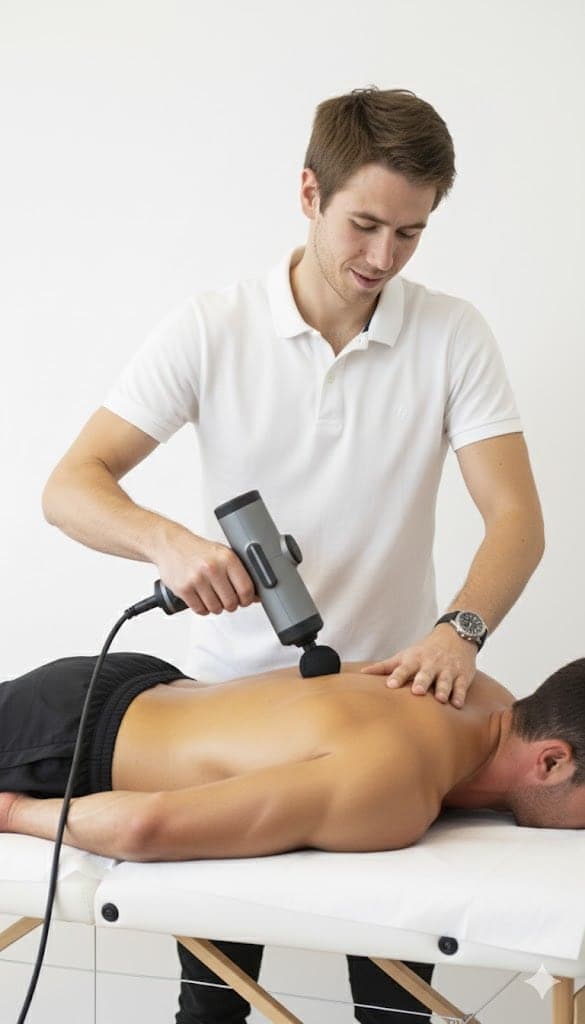
Written by
Chris
Massage therapist, nutrition and exercise physiologist
Norwegian-certified with a Bachelor’s in Physical Education and Nutrition and over ten years of clinical practice, working from a portable table in clients’ homes across the Paphos district.
This article is general information, not a medical diagnosis. If you have severe, worsening or unexplained pain, numbness, weakness, or pain after an accident, see a doctor first.