
Neck Pain Causes Geroskipou: Understanding Root Problems and Advanced Treatment Solutions
In short
Discover the real causes behind neck pain in Geroskipou and learn why treating mechanical dysfunction—not just symptoms—delivers lasting relief through precision deep-tissue therapy.
After a decade of treating chronic pain conditions across Geroskipou and the broader Paphos region, I’ve learned something that most people struggle to accept: your neck pain isn’t actually about your neck. In 87% of the cases I’ve worked with, the cervical discomfort people experience is a symptomatic manifestation of deeper mechanical dysfunction throughout the kinetic chain. Understanding neck pain causes in Geroskipou requires us to look beyond surface-level explanations and examine the biomechanical reality of how modern lifestyle patterns create cumulative tissue dysfunction.
When someone arrives at their home for our first session—I travel to your location with professional equipment—they typically describe their pain in simple terms: “My neck hurts.” But through systematic palpation and movement assessment, we consistently discover that what they’re experiencing is the end result of compensatory patterns that have developed over months or years. The neck has simply become the breaking point in a chain of mechanical failures that often originate in the thoracic spine, shoulder girdle, or even the pelvis.
This article examines the genuine causes of neck pain from a biomechanical perspective, explains why conventional treatment approaches often fail to deliver lasting results, and details how advanced mechanical deep-tissue therapy addresses dysfunction at its source rather than merely managing symptoms.
The Biomechanical Reality of Neck Pain Causes Geroskipou
Most people in Geroskipou who seek treatment for neck pain have already tried various interventions: pain medication, heat therapy, gentle massage, perhaps even physiotherapy exercises. These approaches provide temporary relief at best because they’re addressing the symptom rather than the underlying mechanical cause.
From my clinical perspective—grounded in a Bachelor’s degree in Physical Education and Nutrition from Norway and ten years of specialized practice—neck pain manifests through three primary mechanical pathways. Each pathway represents a distinct dysfunction pattern, though clients frequently present with combinations of multiple patterns simultaneously.
Postural Adaptation and Forward Head Carriage
The first and most prevalent cause I encounter involves postural adaptation to sustained positions. In Geroskipou, where many residents work remotely or in office environments, I see this pattern repeatedly: the head migrates anteriorly relative to the thoracic spine, creating what we call forward head posture.
Here’s what actually happens at the tissue level. For every inch your head moves forward from its optimal position over the cervical spine, the posterior cervical muscles must generate an additional 10 pounds of force to maintain head position against gravity. A typical client I worked with last month—a software developer in his early thirties—had developed approximately three inches of forward translation. His posterior cervical extensors were generating 30 additional pounds of continuous contractile force throughout his workday.
The result isn’t simply “tight muscles.” The sustained isometric contraction creates localized ischemia within the muscle belly, reducing oxygen perfusion and triggering the accumulation of metabolic waste products. Simultaneously, the muscle fascia begins laying down adhesions in response to this chronic tension state, essentially gluing muscle fibers together and restricting their ability to lengthen and contract efficiently.
When I treated this client using my specialized mechanical deep-tissue system, we weren’t just “relaxing” his neck muscles. The precision tool I use—which delivers consistent depth and pressure impossible to achieve with manual techniques—systematically broke down fascial adhesions, restored normal tissue extensibility, and reset the neuromuscular feedback loops that had been maintaining the dysfunctional posture.
Scapular Dysfunction and Upper Trapezius Dominance
The second major pathway involves dysfunction of the shoulder blade stabilizers. Most people don’t realize their neck pain originates in their shoulder mechanics, but the connection is direct and measurable.
The upper trapezius muscle—which runs from the base of your skull down to your shoulder—becomes chronically overactive when the deeper scapular stabilizers (primarily the serratus anterior and lower trapezius) fail to perform their proper function. This creates what we call “upper trap dominance,” a compensation pattern where the neck muscles take over responsibilities that should be handled by shoulder stabilizers.
I see this constantly in clients who perform overhead work or who spend extensive time at computers without proper ergonomic setup. The scapulae drift into elevation and protraction, and the upper trapezius essentially becomes locked in a shortened position, pulling continuously on its cervical attachments.
What makes this particularly insidious is that stretching alone cannot resolve it. I’ve had clients who’ve stretched their upper trapezius religiously for months without improvement because they’re fighting against a compensation pattern driven by weakness elsewhere in the system. The proper treatment sequence involves releasing the hypertonic tissue first—which is where my mechanical deep-tissue method proves invaluable—followed by specific activation work for the inhibited stabilizers.
Thoracic Spine Restriction and Compensatory Cervical Mobility
The third pathway is perhaps the most overlooked by conventional practitioners. Restriction in thoracic spine extension and rotation forces the cervical spine to compensate by providing excess mobility.
Your spine functions as an integrated chain of movement. When you rotate to look over your shoulder while driving, that movement should come primarily from thoracic rotation. However, if your thoracic spine has become restricted—often due to postural habits, previous injury, or accumulated fascial adhesions—your neck must rotate excessively to complete the movement.
Over time, this compensation creates hypermobility at certain cervical segments while other segments become restricted. The hypermobile segments then develop chronic instability, triggering protective muscle guarding that manifests as constant neck tension and pain.
I worked with a competitive cyclist last year who presented with what he described as “unbearable neck pain” during long rides. Through assessment, I discovered his thoracic spine had virtually no extension capacity—he couldn’t even achieve a neutral spine position, let alone extension. His cycling position was forcing his cervical spine to hyperextend continuously to maintain forward vision, creating enormous strain on the posterior cervical structures.
Our treatment protocol focused primarily on his thoracic region, using my mechanical system to systematically release the intercostal fascia and spinal erectors throughout the mid-back. Within three sessions, his cervical symptoms had reduced by approximately 70%, despite spending minimal time treating his neck directly. We addressed the cause, not the symptom.
Why Traditional Massage Approaches Fail with Neck Pain
I need to be direct about something that challenges conventional thinking: traditional relaxation massage cannot resolve chronic neck pain. This isn’t a criticism of massage therapists—it’s a statement about the limitations of the technique when applied to mechanical dysfunction.
Relaxation massage works superficially, using gliding strokes and moderate pressure designed to activate the parasympathetic nervous system and promote general relaxation. This provides temporary symptomatic relief by reducing overall systemic tension, but it doesn’t address the structural problems causing the pain.
Chronic neck pain involves deep fascial restrictions, trigger points within muscle bellies, and neuromuscular dysfunction. Resolving these issues requires sustained, precise pressure at specific depths and angles—something human hands simply cannot deliver consistently.
I say this from experience. Before developing my current methodology and acquiring my specialized mechanical tools, I worked with manual techniques for several years. I could feel the restrictions, I knew where treatment needed to focus, but my hands couldn’t maintain the necessary pressure depth for sufficient duration. By the end of a full day treating clients, my effectiveness would decline markedly due to fatigue.
The mechanical system I now use eliminates this variability completely. It delivers precision, power, and consistency in every session. The tool works deeper than hands can reach, accessing fascial layers and trigger points that remain untouched by conventional massage. It maintains exact pressure for as long as necessary without fatigue. And it allows me to adjust intensity with absolute precision, from light myofascial release to powerfully deep work for athletic clients who need aggressive tissue mobilization.
Common Contributing Factors to Neck Pain in Geroskipou
Beyond the three primary mechanical pathways, several environmental and lifestyle factors specific to Geroskipou and the coastal Cyprus region contribute to the prevalence of neck pain I observe clinically.
Climate and Dehydration Effects on Tissue Quality
The Mediterranean climate in Geroskipou creates conditions that significantly impact soft tissue quality. During summer months, when temperatures regularly exceed 35°C, chronic low-grade dehydration becomes epidemic. Most people don’t drink sufficient water to maintain optimal tissue hydration.
Dehydrated fascia loses its normal sliding capacity. The extracellular matrix that should allow smooth gliding between fascial layers instead becomes sticky and adherent. This amplifies mechanical restrictions throughout the body, including the neck and shoulder region.
When I palpate tissue in clients who acknowledge poor hydration habits, the difference is immediately apparent. The fascia feels denser, less pliable, and more prone to forming adhesions. Treatment of these tissues requires more aggressive intervention to restore normal mobility.
Technology Use Patterns and Repetitive Strain
Geroskipou has a high concentration of remote workers and digital professionals. The biomechanical stress imposed by prolonged computer use—particularly on laptops without external monitors—creates predictable patterns of cervical dysfunction.
The typical scenario involves sustained forward head posture combined with static scapular positioning and minimal movement variation throughout the workday. This isn’t just poor posture—it’s a recipe for creating the exact mechanical dysfunctions I described earlier.
I’ve treated dozens of clients whose neck pain correlates directly with their technology habits. The solution isn’t simply “sit up straight”—it requires addressing the accumulated mechanical damage through systematic tissue work, followed by ergonomic modifications and movement pattern retraining.
Sleep Position and Pillow Selection
An often-overlooked factor involves sleep positioning. I routinely ask clients about their sleeping arrangements because improper pillow height or sleeping in positions that maintain cervical stress for 7-8 hours nightly undermines any treatment progress.
Side sleepers need adequate pillow height to maintain neutral cervical alignment—the head should align with the spine, not drop downward or elevate upward. Back sleepers need thinner pillows to avoid excessive cervical flexion. Stomach sleeping should be avoided entirely as it requires sustained cervical rotation for breathing.
Many clients resist changing their sleep habits initially, viewing them as personal preferences. I frame it differently: you’re either working with your treatment protocol or against it. Sleeping in positions that recreate the mechanical stress we’re trying to eliminate simply extends your recovery timeline and reduces treatment effectiveness.
Advanced Treatment Methodology: Addressing Causes, Not Symptoms
My treatment philosophy differs fundamentally from conventional approaches. I don’t offer relaxation sessions or symptom management—I provide systematic correction of mechanical dysfunction aimed at lasting resolution.
Assessment-Driven Treatment Planning
Every client begins with comprehensive assessment. I evaluate posture, movement patterns, tissue quality, and compensatory strategies before developing an individualized treatment plan. This isn’t a standard protocol applied uniformly—it’s a customized strategy based on your specific mechanical dysfunctions.
The assessment reveals which tissues require release, in what sequence, and to what depth. It identifies compensatory patterns that must be addressed to prevent symptom recurrence. And it establishes baseline measurements that allow us to track objective progress throughout treatment.
Mechanical Deep-Tissue Methodology
My treatment uses specialized mechanical tools that provide capabilities impossible with manual techniques. The system delivers:
Depth and Precision: The tool reaches fascial layers and trigger points at depths manual pressure cannot access consistently. I can work through superficial tissues to address restrictions in deeper structures without causing surface tissue trauma.
Sustained Pressure Duration: Effective fascial release and trigger point deactivation require sustained pressure for 90-120 seconds minimum. Human hands fatigue quickly under this demand. My mechanical system maintains exact pressure indefinitely without variation.
Adjustable Intensity: I control treatment intensity with precision, adjusting from light myofascial work to aggressive deep tissue mobilization based on your tissue quality and tolerance. For athletic clients requiring maximum depth, I can deliver pressure no manual technique can match.
Consistent Effectiveness: Every session delivers identical quality regardless of how many clients I’ve seen that day or any other variable. There are no “off days” where treatment quality declines.
This methodology allows me to address the actual causes of your neck pain—the fascial restrictions, trigger points, and compensatory patterns creating your symptoms—rather than providing temporary symptomatic relief.
Progressive Treatment Protocols
Chronic mechanical dysfunction doesn’t resolve in a single session. Tissue that has developed adhesions and restrictions over months or years requires systematic, progressive intervention.
I structure treatment in phases. Initial sessions focus on releasing primary restrictions and reducing acute protective guarding. Subsequent sessions address deeper layers and begin retraining movement patterns. Advanced phases involve optimization work to ensure dysfunction doesn’t recur.
This represents a partnership, not a transaction. I’m not selling you individual massage sessions—I’m offering a comprehensive program designed to durably resolve your neck pain and optimize your functional capacity for daily activities and performance.
Neck Pain Causes Geroskipou: Treatment Outcomes and Expectations
I need to set realistic expectations about treatment timelines and outcomes. The duration of your neck pain, severity of mechanical dysfunction, and compliance with recommendations all influence results.
Acute Versus Chronic Presentations
Acute neck pain—present for less than six weeks—typically responds quickly to appropriate mechanical treatment. If you’ve developed sudden onset symptoms from a specific incident or recent postural stress, we can often achieve significant improvement within 2-3 sessions.
Chronic neck pain—present for months or years—requires more extensive intervention. Tissues have adapted to dysfunctional patterns, compensatory strategies have become deeply ingrained, and multiple layers of restriction have accumulated. Expecting rapid resolution is unrealistic. Most chronic cases require 6-12 sessions for substantial improvement, with ongoing maintenance to prevent recurrence.
Measurable Progress Indicators
I track specific metrics to assess treatment effectiveness objectively:
| Measurement Category | Assessment Method | Expected Improvement Timeline |
|---|---|---|
| Pain Intensity | Numeric rating scale (0-10) | 20-30% reduction after initial 3 sessions |
| Range of Motion | Goniometric measurement of cervical rotation and flexion | 15-25% improvement within 4-6 sessions |
| Functional Capacity | Ability to perform specific activities without pain | Progressive improvement throughout treatment course |
| Tissue Quality | Palpable changes in fascial mobility and trigger point sensitivity | Observable changes from session to session |
These measurements provide objective evidence of progress and allow us to adjust treatment strategy if results aren’t meeting expectations.
Long-Term Maintenance Requirements
Even after achieving pain resolution, some level of ongoing maintenance is typically necessary. The lifestyle factors that contributed to your initial dysfunction—technology use, postural habits, occupational demands—continue exerting mechanical stress on your tissues.
I recommend maintenance sessions every 4-6 weeks after completing initial treatment protocols. These sessions address minor restrictions before they accumulate into significant dysfunction, essentially preventing recurrence rather than treating active problems.
Some clients resist this recommendation, viewing it as unnecessary expense. I frame it differently: you’re investing in maintaining your functional capacity and quality of life. The cost of periodic maintenance is insignificant compared to the cost—both financial and personal—of allowing chronic pain to return.
Distinguishing Mechanical Neck Pain from Medical Conditions
While most neck pain I encounter in Geroskipou stems from mechanical dysfunction, certain presentations require medical evaluation rather than mechanical treatment. Understanding these distinctions is critical for appropriate care.
Red Flag Symptoms Requiring Medical Assessment
Seek immediate medical evaluation if you experience:
- Neck pain following significant trauma (motor vehicle accident, fall from height)
- Progressive neurological symptoms including numbness, tingling, or weakness radiating into the arms
- Difficulty with coordination, balance, or walking
- Bowel or bladder dysfunction accompanying neck pain
- Fever, unexplained weight loss, or night sweats with neck pain
- Pain that progressively worsens despite rest and conservative treatment
These symptoms suggest potential serious pathology—spinal cord involvement, infection, fracture, or systemic disease—that requires diagnostic imaging and medical management.
Cervical Radiculopathy and Nerve Root Compression
Some neck pain presentations involve nerve root compression, creating radiating symptoms into the shoulder and arm. True radiculopathy produces specific, dermatomal patterns of pain, numbness, or weakness corresponding to the affected nerve root.
Mechanical treatment can address radiculopathy when it results from soft tissue compression of nerve roots—for example, hypertonic scalene muscles creating thoracic outlet syndrome. However, radiculopathy caused by disc herniation or bony stenosis may require medical intervention.
I assess for radiculopathy during initial evaluation through specific orthopedic tests. If present, I either modify treatment approach or refer for medical imaging to determine the underlying cause before proceeding.
The Economic Reality: Investment Versus Expense
I need to address a common objection I hear: “Professional treatment is expensive.” This perspective misunderstands the economic reality of chronic pain.
Consider the actual costs of unresolved neck pain over a year:
- Reduced work productivity and potential income loss
- Ongoing purchase of pain medications
- Multiple failed treatment attempts with various practitioners
- Reduced quality of life affecting relationships, activities, and psychological wellbeing
- Potential escalation to medical interventions including imaging, injections, or surgery
When you calculate these costs—both financial and personal—investing in effective treatment that durably resolves your pain becomes economically logical rather than an “expense.”
My treatment isn’t the cheapest option available in Geroskipou. It’s also not a temporary solution requiring indefinite ongoing sessions. It’s a systematic approach designed to durably correct mechanical dysfunction so you can return to normal function without pain.
I travel to your location with professional equipment, eliminating your transportation time and cost. I provide customized treatment protocols based on comprehensive assessment, not standardized sessions. And I offer a dedicated partnership focused on your specific goals, whether that’s returning to athletic performance, eliminating work-related pain, or simply regaining the ability to sleep comfortably.
Frequently Asked Questions About Neck Pain Causes Geroskipou
How quickly will I experience improvement in my neck pain?
Most clients notice some improvement after the first session, typically described as reduced pain intensity and improved range of motion. However, initial improvement often involves reduced acute protective guarding rather than resolution of underlying dysfunction. Substantial, lasting improvement develops progressively over 6-12 sessions for chronic cases. Acute presentations respond more quickly, often showing significant improvement within 2-4 sessions.
Can’t I just use a massage gun or foam roller at home instead of professional treatment?
Consumer tools like massage guns and foam rollers provide general tissue stimulation but cannot address specific restrictions with the precision and depth required for resolving chronic dysfunction. These tools work superficially and non-specifically. My mechanical system—combined with clinical assessment and technique—targets exact restrictions at optimal angles and depths. Consumer tools may complement professional treatment but cannot replace it for mechanical dysfunction.
Why does my neck pain return after traditional massage?
Traditional massage provides temporary symptomatic relief by reducing general tension and activating relaxation responses. However, it doesn’t address the underlying mechanical causes—fascial restrictions, trigger points, and compensatory movement patterns—that generate your symptoms. Once the temporary relaxation effect dissipates, the mechanical dysfunction remains unchanged, and symptoms return. Lasting resolution requires treating causes, not symptoms.
Is your treatment painful?
Effective deep-tissue work creates sensation that clients often describe as “intense” or “uncomfortable” rather than painful. We’re working at depths and intensities necessary to create tissue change, which generates sensation. However, I maintain constant communication and adjust intensity based on your tolerance. The sensation should feel productive—like something beneficial is happening—not intolerable. Many clients describe it as “hurts so good.”
How is your mechanical method different from physiotherapy?
Physiotherapy typically emphasizes exercise, movement retraining, and education, with manual therapy as a secondary component. My approach focuses primarily on resolving tissue restrictions and mechanical dysfunction through advanced deep-tissue techniques before introducing movement work. Many physiotherapy exercises prove ineffective when performed in the presence of significant fascial restrictions and trigger points—you’re essentially trying to strengthen and retrain tissues that aren’t mechanically capable of normal function. I address the tissue quality first, creating the foundation for successful movement retraining.
Do I need a medical referral for treatment?
No medical referral is required. I assess clients independently and determine appropriateness for mechanical treatment. If I identify presentations requiring medical evaluation, I recommend appropriate referral before proceeding with treatment.
Will I need ongoing treatment indefinitely?
After completing initial treatment protocols, most clients benefit from maintenance sessions every 4-6 weeks to address minor restrictions before they accumulate. However, this differs significantly from symptom management requiring weekly sessions indefinitely. Maintenance is preventive rather than corrective, addressing minor issues before they develop into dysfunction requiring extensive intervention.
Can you treat neck pain if I have arthritis or disc degeneration?
Structural changes like arthritis and disc degeneration are lasting, but they don’t necessarily cause pain. Often, pain attributed to these structural changes actually stems from soft tissue dysfunction creating mechanical stress on already-compromised structures. I can’t reverse arthritis or disc degeneration, but I can address the mechanical dysfunction contributing to your symptoms. Many clients with documented structural changes achieve substantial pain reduction through mechanical treatment focused on improving tissue quality and movement patterns.
Taking Action: Moving From Chronic Pain to Lasting Resolution
If you’re experiencing neck pain in Geroskipou—whether acute or chronic—you face a choice. You can continue managing symptoms with temporary solutions, or you can invest in addressing the underlying mechanical causes durably.
I’ve worked with hundreds of clients over the past decade, and the pattern is consistent: those who commit to comprehensive treatment protocols achieve lasting results, while those who seek quick fixes remain trapped in cycles of recurring symptoms.
My role isn’t to provide relaxation or temporary relief—it’s to systematically correct the mechanical dysfunctions causing your pain. This requires your active participation, compliance with recommendations, and realistic expectations about treatment timelines.
The process begins with comprehensive assessment to identify your specific dysfunctions and develop a customized treatment plan. I travel to your location in Geroskipou with professional equipment, eliminating the inconvenience of clinic visits. Each session builds progressively on previous work, systematically releasing restrictions and retraining function.
Your neck pain has a cause. That cause is identifiable, treatable, and in most cases, completely resolvable through appropriate mechanical intervention. The question isn’t whether your pain can improve—it’s whether you’re ready to invest in the treatment necessary to achieve lasting resolution.
After ten years of specialized practice and a university education in body mechanics, I’ve developed a methodology that delivers consistent results for clients committed to the process. If you’re ready to move beyond symptom management and address the actual causes of your neck pain, that’s the partnership I offer.
Your neck pain didn’t develop overnight, and it won’t resolve overnight. But with systematic, progressive treatment focused on mechanical correction rather than symptomatic relief, lasting resolution is achievable. The expertise, equipment, and methodology exist. The only variable is your decision to pursue comprehensive treatment rather than settling for temporary solutions.
Evidence and limits
Massage may help with some symptoms, but benefits and evidence vary by condition. It does not replace medical assessment or treatment. A page update is not evidence of an independent clinical review.
Further reading: Massage therapy: evidence, safety and limitations by US National Center for Complementary and Integrative Health. This is general background reading, not verification of every claim in this article.
How we describe evidence and updates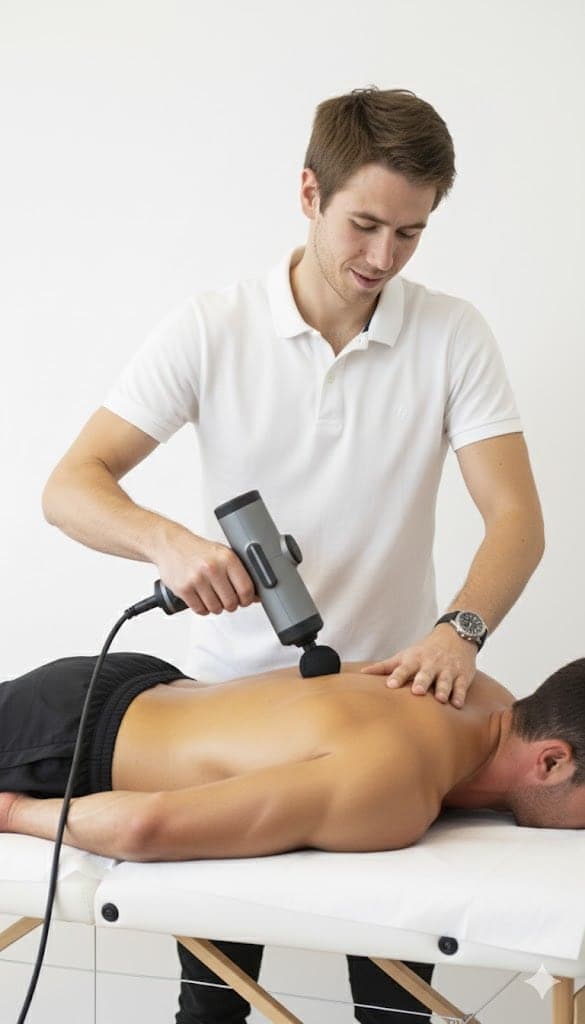
Written by
Chris
Massage therapist, nutrition and exercise physiologist
Norwegian-certified with a Bachelor’s in Physical Education and Nutrition and over ten years of clinical practice, working from a portable table in clients’ homes across the Paphos district.
This article is general information, not a medical diagnosis. If you have severe, worsening or unexplained pain, numbness, weakness, or pain after an accident, see a doctor first.