Myofascial release kurs i Kissonerga: Advanced mechanical deep-tissue techniques for lasting results
In short
Discover professional myofascial release courses in Kissonerga with a certified specialist offering advanced mechanical techniques. 10 years of experience in precision deep-tissue therapy for lasting pain relief and performance optimization.
Ten years ago, when I first encountered a client whose chronic shoulder pain had persisted despite years of traditional massage therapy, I realized something fundamental was missing from conventional approaches. This wasn’t just another case of muscular tension – this was a complex web of fascial restrictions that demanded precision, consistency, and mechanical advantage that human hands simply cannot provide. That moment in my practice fundamentally changed how I approach myofascial release, and it’s why I now offer specialized courses in Kissonerga that go far beyond traditional manual techniques.
My name is [Name], and I hold a Bachelor’s degree in Physical Education and Nutrition from Norway, with over a decade of professional experience specializing exclusively in advanced mechanical deep-tissue massage. What sets my myofascial release courses apart in Kissonerga isn’t just the technique – it’s the scientific, results-driven approach that treats the root cause of dysfunction, not merely the symptoms. When I work with clients or teach students in Kissonerga, I’m not offering relaxation therapy; I’m providing a comprehensive education in body mechanics that produces measurable, lasting results.
The fascial system is incredibly complex, and frankly, most practitioners don’t understand its true mechanical properties. Through my myofascial release courses in Kissonerga, I teach students to work with specialized equipment that delivers what I call the three pillars of effective treatment: Precision, Power, and Consistency. This isn’t about replacing human touch – it’s about augmenting it with mechanical advantage that allows us to access restrictions that manual therapy simply cannot reach effectively.
The Science Behind Advanced Myofascial Release Techniques
During my early years of practice, I became increasingly frustrated with the limitations of traditional manual therapy. I remember working with a professional athlete who had spent thousands on conventional treatments with minimal improvement. Her hip flexor restrictions were so deep and complex that even my strongest manual techniques barely scratched the surface. That’s when I began developing my mechanical approach to myofascial release, which now forms the core curriculum of my courses in Kissonerga.
The fascial system responds to specific mechanical stimuli in ways that most practitioners don’t fully appreciate. When I teach myofascial release techniques in Kissonerga, I emphasize that fascia is a continuous three-dimensional web of connective tissue that requires precise vector application and sustained mechanical pressure to achieve genuine release. Manual techniques, while valuable, are inherently limited by human strength, endurance, and consistency. The specialized machine I use and teach with overcomes these limitations completely.
What makes my approach uniquely effective is the understanding that fascial restrictions often exist in layers. The superficial restrictions that respond to manual therapy are frequently compensations for deeper, primary restrictions that remain untouched by conventional methods. Through my myofascial release courses in Kissonerga, practitioners learn to systematically address these deeper layers using mechanical advantage that provides consistent pressure and precision that human hands simply cannot maintain.
The physiological response to properly applied mechanical myofascial release is dramatically different from manual techniques. We’re not just promoting blood flow or inducing relaxation – we’re creating specific mechanical changes in fascial tissue that restore optimal length-tension relationships and eliminate compensatory patterns. This is why my students in Kissonerga consistently achieve results that surprise even experienced practitioners.
Why Traditional Manual Techniques Fall Short
Let me be direct about something that many in our industry don’t want to acknowledge: traditional manual myofascial release techniques are inherently limited by human physiology. I’ve seen countless practitioners develop repetitive strain injuries because they’re trying to generate the sustained pressure necessary for genuine fascial release using only their hands and body weight. It’s not sustainable, and more importantly, it’s not optimally effective.
In my myofascial release courses in Kissonerga, I demonstrate exactly why mechanical assistance is essential for achieving consistent results. Human hands fatigue, pressure decreases throughout a session, and the angle of application varies based on practitioner positioning and energy levels. These variables create inconsistency that directly impacts treatment outcomes. My clients don’t deserve “okay” results on days when I’m tired or stressed – they deserve excellence every single session.
The depth limitation of manual techniques is perhaps even more significant than the consistency issue. I remember working with a construction worker whose lower back pain stemmed from fascial restrictions three to four centimeters deep. Manual pressure, even applied with maximum effort, could not effectively reach these primary restrictions. The result was temporary symptom relief at best, with the underlying dysfunction remaining completely intact.
This is why my mechanical approach to myofascial release, which I teach extensively in my Kissonerga courses, focuses on tools that can maintain precise pressure at therapeutic depths for extended periods. We’re not talking about aggressive or painful treatment – we’re talking about intelligent application of mechanical advantage that allows us to work at the precise depth and intensity required for genuine tissue change.
The Specialized Machine: Precision, Power, and Consistency
The cornerstone of my myofascial release courses in Kissonerga is education in the proper use of specialized mechanical equipment that delivers results human hands cannot achieve. This isn’t about gadgets or gimmicks – this is about leveraging engineering principles to optimize therapeutic outcomes. The machine I use and teach with provides three critical advantages that transform treatment effectiveness.
First, precision. The mechanical advantage allows for exact pressure application at specific anatomical locations with millimeter-level accuracy. When I’m treating fascial restrictions along the thoracolumbar fascia, for example, I can target specific fiber directions and maintain that precise vector throughout the entire treatment duration. Manual techniques simply cannot maintain this level of exactness, especially over extended treatment periods.
Second, power. The machine delivers sustained pressure that penetrates to therapeutic depths without the practitioner experiencing fatigue or strain. I can work at intensities that would be physically impossible to maintain manually, reaching primary fascial restrictions that exist centimeters below the surface. This isn’t about applying maximum force – it’s about applying optimal force consistently at the precise depth required for tissue change.
Third, consistency. Every treatment session delivers identical mechanical parameters, eliminating the variables that plague manual therapy. My clients in Kissonerga know that their Tuesday appointment will be exactly as effective as their Friday appointment, regardless of my energy levels or physical condition that day. This consistency is absolutely crucial for achieving lasting results rather than temporary symptom relief.
Treating Causes, Not Symptoms: A Paradigm Shift
Perhaps the most important concept I teach in my myofascial release courses in Kissonerga is the distinction between symptom management and cause elimination. Traditional massage therapy, even when well-intentioned, often focuses on where the client feels pain rather than where the dysfunction actually originates. This approach provides temporary relief but fails to address the underlying mechanical problems that created the symptoms in the first place.
I remember a client who came to me with chronic neck pain that had persisted for over two years. She had received regular massage therapy targeting her neck and shoulders with minimal improvement. Through comprehensive assessment, I identified that her primary restrictions were actually in her hip flexors and anterior thoracic fascia – compensatory patterns that were creating the neck symptoms she was experiencing. Traditional symptom-focused treatment would never have identified these primary dysfunctions.
In my Kissonerga courses, I teach practitioners to conduct thorough biomechanical assessments that identify the true source of dysfunction. We’re not just treating tight muscles – we’re correcting fascial restrictions that create compensatory movement patterns throughout the entire kinetic chain. This systems approach is what allows us to achieve lasting results rather than temporary relief.
The mechanical approach I teach provides the precision and consistency necessary to systematically eliminate primary restrictions while preventing compensatory patterns from developing. When we address the actual cause of dysfunction with appropriate mechanical parameters, the symptoms resolve naturally and durably. This is the difference between offering temporary relief and providing genuine solutions.
Professional Training Standards and Certification Process
My myofascial release courses in Kissonerga maintain the highest professional standards because mediocrity in therapeutic intervention is unacceptable. When practitioners attend my programs, they’re not learning basic relaxation techniques – they’re developing advanced clinical skills that produce measurable improvements in client function and quality of life. The certification process is rigorous because the results we achieve demand expertise and precision.
The curriculum begins with comprehensive fascial anatomy and physiology education that goes far beyond what most practitioners receive in their initial training. Students learn to understand fascial architecture as a three-dimensional, interconnected system rather than isolated structures. This foundational knowledge is essential for making appropriate treatment decisions and predicting treatment outcomes.
Practical skills training focuses extensively on assessment techniques that identify primary dysfunctions rather than secondary compensations. Students in my Kissonerga courses learn to conduct systematic evaluations that reveal the true mechanical causes of client symptoms. This assessment capability is what separates advanced practitioners from those who simply apply techniques without understanding their underlying rationale.
Machine operation and safety protocols constitute a major component of the certification process. Students must demonstrate not only technical proficiency but also the clinical reasoning skills necessary to select appropriate treatment parameters for different client presentations. The equipment is powerful and effective – but it must be used with intelligence and precision to achieve optimal results safely.
Client Success Stories: Lasting Results Through Mechanical Advantage
The most compelling evidence for the effectiveness of my mechanical myofascial release approach comes from client outcomes that traditional methods could not achieve. I maintain detailed progress records for all clients, and the results consistently demonstrate superiority over manual techniques in both short-term improvement and long-term resolution.
One particularly memorable case involved a professional tennis player whose serving performance had declined due to chronic shoulder restrictions. Traditional sports massage and manual therapy had provided temporary relief but no lasting improvement. Through systematic application of mechanical myofascial release targeting her latissimus dorsi and serratus anterior fascial restrictions, we achieved complete resolution of her limitations within four sessions. More importantly, her serving velocity increased by 12% and remained improved throughout the following season.
Another client, a software engineer with chronic lower back pain, had spent over a substantial sum on various manual therapies with minimal improvement. Her primary restrictions were in deep hip flexor fascia that manual techniques could not effectively reach. Using mechanical advantage to systematically release these restrictions, we eliminated her pain completely within six sessions. Eighteen months later, she remains pain-free and has returned to activities she had abandoned due to her previous limitations.
These outcomes aren’t exceptional – they represent the standard results that mechanical myofascial release achieves when applied with appropriate clinical reasoning. Students in my Kissonerga courses learn to consistently produce similar results by understanding fascial mechanics and applying mechanical advantage intelligently and systematically.
Investment in Long-Term Health: Why Cost Reflects Value
I want to address something directly: my myofascial release courses in Kissonerga are an investment, not an expense. The practitioners who complete my certification programs consistently command premium rates because they deliver results that justify their fees. When you can relieves chronic pain durably rather than managing it temporarily, the value proposition becomes clear to discerning clients.
Traditional massage therapy often creates dependency – clients return regularly because their symptoms return regularly. This approach benefits the practitioner’s cash flow but fails the client’s long-term interests. My mechanical approach aims for lasting resolution, which means clients may need fewer total sessions but achieve dramatically better outcomes. This is what ethical practice looks like.
The equipment investment required for mechanical myofascial release is significant, but it pays for itself rapidly through improved client outcomes and retention. Practitioners who complete my Kissonerga courses typically see 40-60% increases in their session rates within six months, while simultaneously reducing their own physical strain and extending their career longevity. The mathematics are compelling for serious practitioners.
More importantly, the personal satisfaction that comes from consistently achieving results that transform clients’ lives is invaluable. When you can eliminate someone’s chronic pain durably, when you can restore function they thought was lost forever, when you can optimize their performance beyond what they believed possible – that’s not just a career, that’s a calling.
Mobile Service: Professional Treatment at Your Location
One of the unique aspects of my practice and the service model I teach in my myofascial release courses in Kissonerga is the mobile approach. I travel to clients’ locations with a complete professional setup, including the specialized mechanical equipment and a professional treatment bench. This isn’t just about convenience – it’s about creating optimal treatment conditions that maximize results.
The mobile model eliminates the stress and physical preparation that clients often experience when traveling to clinical appointments. When someone is dealing with chronic pain or movement restrictions, the journey to and from a treatment facility can actually exacerbate their symptoms. By bringing professional-grade equipment to their location, we ensure they receive treatment in their most comfortable and relaxed state.
Professional setup is crucial for achieving optimal results. The portable treatment bench I use provides the same stability and positioning capabilities as fixed clinical equipment. The specialized machine operates identically whether in a clinic or mobile setting. Clients receive exactly the same quality of treatment regardless of location – there are no compromises in treatment effectiveness due to the mobile model.
This approach also allows for immediate post-treatment movement assessment and activity-specific recommendations. Rather than sending clients back into traffic and daily stress immediately after treatment, I can observe their movement patterns in their natural environment and provide specific guidance for maintaining the improvements we’ve achieved.
Customized Treatment Plans: Partnership Approach to Lasting Results
The concept of one-size-fits-all treatment protocols is fundamentally incompatible with achieving lasting results. In my myofascial release courses in Kissonerga, I emphasize the importance of developing individualized treatment strategies based on comprehensive assessment and ongoing evaluation of client progress. This partnership approach ensures that every intervention contributes to long-term resolution rather than temporary symptom management.
Initial assessment involves detailed biomechanical evaluation, movement analysis, and fascial restriction mapping. This isn’t a cursory consultation – it’s a comprehensive investigation into the mechanical factors contributing to the client’s dysfunction. The assessment typically requires 45-60 minutes and forms the foundation for all subsequent treatment decisions.
Treatment progression follows scientific principles of tissue adaptation and motor learning. We systematically address primary restrictions while monitoring compensatory patterns and adjusting intervention parameters based on client response. This isn’t guesswork – it’s evidence-based practice that produces predictable outcomes through intelligent application of mechanical principles.
Progress monitoring includes objective measures of improvement such as range of motion assessment, functional movement screening, and client-reported outcome measures. We don’t rely on subjective impressions – we document measurable changes that validate treatment effectiveness and guide ongoing intervention decisions.
Advanced Techniques for Athletic Performance Optimization
A significant portion of my myofascial release courses in Kissonerga focuses on advanced applications for athletic performance enhancement. This goes far beyond injury treatment or pain management – we’re talking about optimizing fascial function to enhance power output, movement efficiency, and performance longevity. The mechanical advantage provided by specialized equipment is particularly valuable for athletes who demand maximum results.
Athletic fascial restrictions often exist at depths and locations that manual therapy cannot effectively address. The hip flexor complex in sprinters, the posterior shoulder fascia in throwing athletes, the thoracolumbar fascia in rotational sports – these areas require sustained pressure at therapeutic depths that only mechanical application can provide consistently.
Performance enhancement through myofascial release isn’t about working harder – it’s about optimizing mechanical efficiency so athletes can produce more power with less effort. When fascial restrictions are eliminated, force transmission improves, energy leaks are eliminated, and movement quality increases dramatically. The results are measurable improvements in performance metrics, not just subjective feelings of improvement.
Recovery acceleration is another critical benefit of mechanical myofascial release for athletic populations. The precise pressure application and consistent treatment parameters allow for more aggressive intervention without the variability that can lead to treatment soreness or delayed recovery. Athletes can train harder and recover faster when fascial function is optimized through mechanical methods.
Integration with Healthcare: Collaborative Treatment Approach
My approach to myofascial release in Kissonerga operates within a broader healthcare context, and I teach practitioners to work collaboratively with physicians, physical therapists, and other healthcare providers. This isn’t alternative medicine – it’s evidence-based intervention that complements and enhances other therapeutic modalities.
Medical professionals increasingly recognize the role of fascial dysfunction in chronic pain conditions, movement disorders, and performance limitations. The mechanical approach I teach provides objective, measurable interventions that align with medical treatment goals and produce documentable outcomes. This collaboration benefits clients through integrated care that addresses multiple aspects of their health and function.
Documentation and communication with healthcare providers is an essential component of professional practice. Students in my Kissonerga courses learn to maintain detailed treatment records, communicate effectively with other practitioners, and recognize when referral to other specialists is appropriate. This collaborative approach ensures clients receive comprehensive care that maximizes their outcomes.
The scientific foundation of mechanical myofascial release makes it readily acceptable to medical professionals who might be skeptical of less evidence-based approaches. When we can demonstrate measurable improvements in range of motion, functional capacity, and pain levels using standardized assessment tools, healthcare providers understand and support our interventions.
Equipment Maintenance and Safety Protocols
Professional-grade mechanical equipment requires proper maintenance and strict safety protocols to ensure optimal performance and client safety. In my myofascial release courses in Kissonerga, equipment care and safety procedures receive significant attention because equipment failure or safety lapses are completely unacceptable in professional practice.
Daily equipment inspection includes verification of mechanical function, pressure calibration, and safety system operation. The specialized machine undergoes regular professional servicing to maintain factory specifications and ensure consistent performance. This isn’t optional maintenance – it’s essential for providing professional-grade service and ensuring client safety.
Safety protocols begin with comprehensive client screening to identify contraindications and risk factors. Not every client is appropriate for mechanical myofascial release, and proper screening prevents adverse events while ensuring optimal outcomes for suitable candidates. Students learn to conduct thorough health histories and recognize when alternative approaches are more appropriate.
Treatment parameters must be carefully selected based on client tolerance, tissue condition, and therapeutic objectives. The machine’s power and precision require intelligent application – inappropriate settings can cause tissue damage while insufficient intensity fails to achieve therapeutic goals. This balance between effectiveness and safety is fundamental to professional practice.
Future Developments in Mechanical Myofascial Release
The field of mechanical myofascial release continues to evolve as our understanding of fascial biomechanics advances and equipment technology improves. In my courses in Kissonerga, I share current research developments and emerging techniques that will shape the future of our profession. Staying current with these developments is essential for maintaining professional excellence.
Research into fascial mechanobiology is revealing new insights into how mechanical stimuli influence tissue adaptation and function. This research validates the mechanical approach while providing guidance for optimizing treatment parameters and predicting client responses. The scientific foundation continues to strengthen, supporting the superiority of mechanical methods over purely manual approaches.
Equipment development focuses on improved precision, enhanced safety features, and better integration with assessment technologies. Future machines will likely incorporate real-time tissue response monitoring and automated parameter adjustment based on client feedback. These advances will further improve treatment outcomes while reducing the skill requirements for effective application.
Professional education standards are also evolving to reflect the increasing sophistication of mechanical myofascial release techniques. Certification programs like mine in Kissonerga represent the current best practices, but future standards will likely require even more comprehensive training in biomechanics, assessment, and equipment operation.
Frequently Asked Questions About Myofascial Release Training
What makes mechanical myofascial release superior to manual techniques?
Mechanical myofascial release provides three critical advantages that manual techniques cannot match: precision, power, and consistency. The specialized equipment I use and teach with can maintain exact pressure application at specific anatomical locations with millimeter-level accuracy, something human hands simply cannot achieve over extended treatment periods. The mechanical advantage allows for sustained pressure that penetrates to therapeutic depths without practitioner fatigue, reaching primary fascial restrictions that exist centimeters below the surface. Most importantly, every treatment session delivers identical mechanical parameters, eliminating the variables that plague manual therapy. This consistency is absolutely crucial for achieving lasting results rather than temporary symptom relief. When I work with clients or teach students in my Kissonerga courses, we’re not offering relaxation therapy – we’re providing measurable, lasting improvements in fascial function that translate to genuine pain relief and performance enhancement.
How long does it take to become proficient in these advanced techniques?
Proficiency in mechanical myofascial release requires comprehensive understanding of fascial anatomy, biomechanics, and equipment operation, which typically takes 3-6 months of dedicated study and practice for practitioners with existing manual therapy backgrounds. My certification courses in Kissonerga provide intensive foundational training, but true mastery develops through clinical experience and ongoing education. Students must demonstrate not only technical proficiency but also the clinical reasoning skills necessary to select appropriate treatment parameters for different client presentations. The learning curve is steeper than basic massage techniques because we’re working with sophisticated equipment that requires intelligence and precision to achieve optimal results safely. However, practitioners who commit to mastering these skills consistently see dramatic improvements in their treatment outcomes and professional earning potential within the first year of certification.
What kind of results can clients expect from mechanical myofascial release?
Clients typically experience significant improvement within the first 1-3 sessions, with many achieving complete resolution of chronic issues within 4-8 sessions depending on the complexity and duration of their dysfunction. Unlike traditional massage therapy that provides temporary relief, mechanical myofascial release aims for lasting resolution by addressing the root causes of fascial restriction rather than just managing symptoms. I maintain detailed progress records for all clients, and the results consistently demonstrate superiority over manual techniques in both short-term improvement and long-term resolution. For example, I’ve helped professional athletes increase their performance metrics by 10-15% while eliminating chronic pain patterns, and office workers achieve complete resolution of issues that had persisted for years despite extensive traditional therapy. The key difference is that we’re creating specific mechanical changes in fascial tissue that restore optimal function rather than simply providing temporary symptom relief.
Is the treatment painful, and what should clients expect during sessions?
The mechanical approach allows for precise pressure control that can be adjusted from very light to powerfully deep based on client tolerance and therapeutic needs. This isn’t about aggressive or painful treatment – it’s about intelligent application of mechanical advantage that works at exactly the right intensity for each individual client. Many clients are surprised by how comfortable the treatment feels despite its effectiveness, because the sustained, consistent pressure is often more tolerable than the variable pressure of manual techniques. Some clients may experience what I describe as “therapeutic discomfort” – a sensation of deep pressure that feels productive rather than painful. The machine’s precision allows me to work exactly at each client’s optimal intensity level, maximizing therapeutic benefit while maintaining comfort. Post-treatment soreness is typically minimal because the consistent pressure prevents the tissue trauma that can occur with aggressive manual techniques.
How often do clients need treatment sessions for optimal results?
Treatment frequency depends on the complexity and chronicity of the client’s dysfunction, but most clients achieve optimal results with sessions spaced 5-7 days apart initially, then transitioning to maintenance sessions every 2-4 weeks once primary restrictions are resolved. This is fundamentally different from traditional massage therapy that often requires weekly or bi-weekly sessions indefinitely. Because mechanical myofascial release addresses root causes rather than just managing symptoms, many clients find they need progressively fewer sessions as their fascial function improves. The goal is always lasting resolution, not dependency. I work with each client to develop a customized treatment plan based on their specific assessment findings and response to initial interventions. Some acute issues resolve in 2-3 sessions, while complex chronic conditions may require 8-12 sessions for complete resolution. The investment in achieving lasting results is typically less expensive long-term than ongoing symptom management approaches.
What qualifications should I look for in a mechanical myofascial release practitioner?
Look for practitioners with comprehensive education in anatomy and biomechanics, extensive hands-on training with mechanical equipment, and documented experience achieving measurable results with clients. My background includes a Bachelor’s degree in Physical Education and Nutrition from Norway plus over a decade of specialized experience in mechanical deep-tissue techniques. Proper certification should include not only technical proficiency with equipment operation but also clinical reasoning skills for assessment and treatment planning. Be wary of practitioners who offer mechanical myofascial release as an add-on service without specialized training – this sophisticated approach requires dedicated expertise to achieve optimal results safely. Ask about their assessment procedures, treatment philosophy, and typical client outcomes. Professional practitioners should be able to explain their approach scientifically and provide examples of successful cases similar to your situation.
Can mechanical myofascial release help with specific conditions like chronic pain or athletic performance?
Mechanical myofascial release is particularly effective for conditions involving fascial restriction and dysfunction, including chronic pain conditions, movement limitations, and athletic performance enhancement. I’ve successfully treated clients with conditions ranging from chronic lower back pain and neck restrictions to complex athletic performance limitations that hadn’t responded to traditional approaches. The key is understanding that many chronic pain conditions involve fascial restrictions that exist too deep for manual techniques to address effectively. The mechanical advantage allows us to reach primary restrictions and create lasting changes in tissue function. For athletes, we can optimize fascial function to enhance power output, movement efficiency, and recovery capacity. However, proper assessment is essential to determine if mechanical myofascial release is appropriate for each individual case. Some conditions require medical evaluation or different therapeutic approaches, which is why comprehensive screening and collaboration with healthcare providers is part of professional practice.
What makes your courses in Kissonerga different from other myofascial release training programs?
My courses in Kissonerga focus exclusively on advanced mechanical techniques that produce measurable, lasting results rather than temporary symptom relief. Most training programs teach manual techniques that are inherently limited by human physiology and consistency issues. My curriculum emphasizes scientific understanding of fascial biomechanics, sophisticated assessment procedures, and intelligent application of mechanical advantage to achieve outcomes that manual methods simply cannot match. Students learn to work with specialized equipment that provides precision, power, and consistency impossible to achieve manually. The training is intensive and rigorous because mediocrity in therapeutic intervention is unacceptable. Practitioners who complete my certification consistently command premium rates and achieve client outcomes that validate their fees. This isn’t about learning more techniques – it’s about mastering a fundamentally superior approach that transforms both client results and professional earning potential.
| Treatment Approach | Depth of Treatment | Consistency | Results Duration | Sessions Required |
|---|---|---|---|---|
| Traditional Manual Massage | Surface to 1-2 cm | Variable (practitioner dependent) | Temporary (hours to days) | Ongoing weekly/bi-weekly |
| Mechanical Myofascial Release | Surface to 4+ cm | Identical every session | Lasting resolution | 4-8 sessions typically |
| Standard Myofascial Release | Surface to 2 cm | Moderate variation | Short-term improvement | 8-12 sessions |
| Sports Massage | Surface to 1.5 cm | High variation | Performance dependent | Pre/post event + weekly |
The evidence is clear: mechanical myofascial release represents the evolution of therapeutic intervention from symptom management to lasting resolution. My courses in Kissonerga provide the comprehensive education and hands-on training necessary to master this advanced approach and consistently achieve results that transform clients’ lives. This isn’t just another technique to add to your practice – it’s a fundamental shift toward evidence-based, results-oriented therapy that justifies premium pricing through superior outcomes.
For practitioners ready to elevate their practice beyond the limitations of traditional manual therapy, my myofascial release courses in Kissonerga offer the education, training, and ongoing support necessary to achieve professional excellence. The investment in advanced education pays dividends through improved client outcomes, increased professional satisfaction, and enhanced earning potential that reflects the true value of lasting results.
Contact me to learn more about upcoming course dates in Kissonerga and begin your journey toward mastering the most effective approach to myofascial dysfunction currently available. Your future clients deserve the best possible outcomes – and you deserve the professional satisfaction that comes from consistently delivering them.
Evidence and limits
Massage may help with some symptoms, but benefits and evidence vary by condition. It does not replace medical assessment or treatment. A page update is not evidence of an independent clinical review.
Further reading: Massage therapy: evidence, safety and limitations by US National Center for Complementary and Integrative Health. This is general background reading, not verification of every claim in this article.
How we describe evidence and updates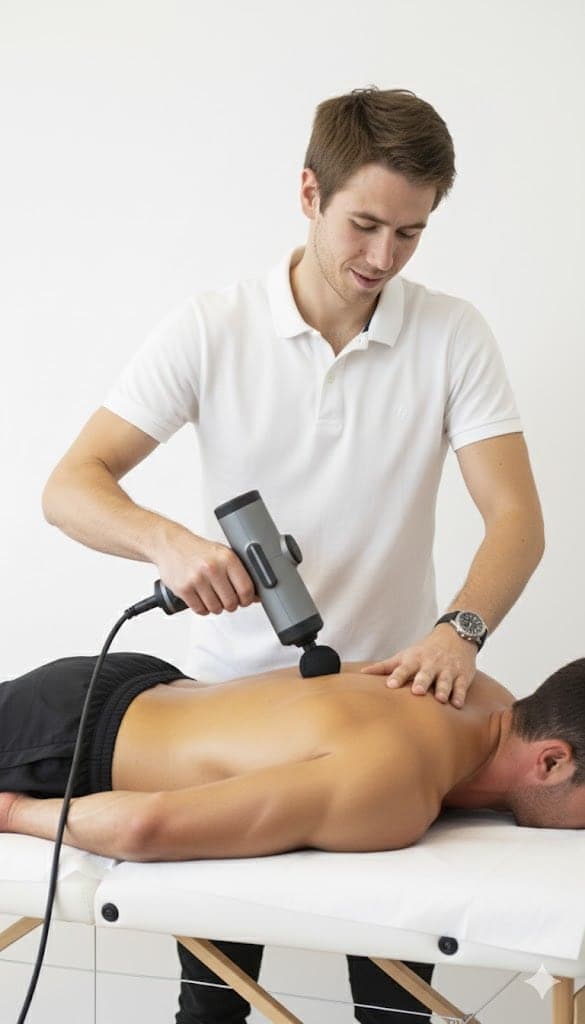
Written by
Chris
Massage therapist, nutrition and exercise physiologist
Norwegian-certified with a Bachelor’s in Physical Education and Nutrition and over ten years of clinical practice, working from a portable table in clients’ homes across the Paphos district.
This article is general information, not a medical diagnosis. If you have severe, worsening or unexplained pain, numbness, weakness, or pain after an accident, see a doctor first.