
Massage Therapy for Cycling Injuries Geroskipu: Advanced Mechanical Treatment for Complete Recovery
In short
Discover how specialized mechanical deep-tissue massage therapy transforms cycling injury rehabilitation in Geroskipu. Expert treatment targeting root causes, not symptoms, for lasting recovery.
I’ve spent a decade treating cyclists in Cyprus, and I can tell you with absolute certainty: most riders who come to me have been treating their injuries incorrectly. They’ve invested months in traditional approaches that address symptoms while the underlying mechanical dysfunction remains untouched. In Geroskipu, where cycling has exploded in popularity over recent years, I’m seeing the same patterns of chronic injury that I encountered throughout my career—and the same opportunities for genuine, lasting resolution.
The fundamental issue isn’t that cyclists lack treatment options. The problem is that conventional massage therapy, physiotherapy, and even medical interventions often fail to address the specific biomechanical complexities that cycling creates in the human body. When you’re generating power through repetitive motion thousands of times per ride, you’re creating fascial adhesions, muscular compensation patterns, and structural imbalances that demand precision intervention at the deepest tissue levels.
This is where my approach to massage therapy for cycling injuries Geroskipu differs fundamentally from what you’ll encounter elsewhere. I don’t offer relaxation sessions or general sports massage. I provide advanced mechanical deep-tissue treatment using specialized equipment that delivers results human hands simply cannot achieve. After treating hundreds of cyclists—from recreational riders to competitive athletes—I’ve developed protocols specifically designed to address the root causes of cycling-related dysfunction, not merely mask the pain.
Understanding the Biomechanical Reality of Cycling Injuries
Let me share something most therapists won’t tell you: cycling is one of the most repetitive activities the human body can perform. During a single two-hour ride, your quadriceps contract approximately 10,800 times. Your hip flexors engage continuously. Your lower back stabilizes against unnatural forward flexion for the entire duration. This isn’t inherently problematic—the human body adapts remarkably well to consistent mechanical stress. The injury occurs when compensation patterns develop.
I remember treating a competitive cyclist from Geroskipu last year who had been dealing with persistent IT band syndrome for eighteen months. He’d tried everything: traditional massage, foam rolling, stretching protocols, even cortisone injections. The pain would diminish temporarily, then return within days. When I examined his movement patterns and palpated the tissue, the actual problem became immediately apparent—his gluteus medius had developed severe adhesions that prevented proper firing during the pedal stroke. His IT band wasn’t the problem; it was the victim of compensation.
The Primary Cycling Injury Categories I Treat
Through my work in Geroskipu, I’ve identified distinct injury patterns that cycling creates:
- Overuse injuries from repetitive motion: These develop gradually as fascial layers begin adhering to one another, restricting the gliding motion necessary for efficient muscle contraction. The quadriceps, hip flexors, and calf muscles are particularly vulnerable.
- Compensation-driven dysfunction: When one muscle group fails to perform optimally, surrounding tissues assume additional load. This creates cascading mechanical failures that manifest as pain far from the original dysfunction.
- Postural adaptation injuries: The forward-flexed cycling position creates specific stress patterns in the lumbar spine, thoracic region, and cervical vertebrae. Over time, the body adapts to this position even off the bike.
- Acute trauma sequelae: Crashes and falls create immediate tissue damage, but the long-term complications arise from scar tissue formation and improper healing that restricts normal biomechanics.
Each category requires fundamentally different treatment approaches. This is why generic massage therapy fails cyclists so consistently—the therapist lacks the specialized knowledge to differentiate between these mechanisms and target treatment accordingly.
Why Traditional Massage Therapy Fails Cycling Injuries
I need to be direct about this because too many cyclists waste months pursuing ineffective treatment. Traditional massage therapy—even when performed by well-intentioned therapists—operates within fundamental limitations that prevent it from addressing the deep fascial and muscular adhesions that cycling injuries create.
Human hands, regardless of the therapist’s strength or technique, cannot consistently penetrate beyond the superficial and intermediate tissue layers. The deepest adhesions, the ones actually restricting movement and causing compensation patterns, remain untouched. I’ve had countless clients tell me they felt better temporarily after traditional massage, only to have symptoms return within 48 to 72 hours. This isn’t coincidence—it’s the predictable result of treating surface tension while leaving the structural problem intact.
The Depth Problem
During my university education in Physical Education and Nutrition in Norway, I studied tissue mechanics extensively. The research is unambiguous: meaningful fascial release requires sustained, precise pressure at depths traditional massage cannot reach. The psoas muscle, which plays a critical role in cycling biomechanics, lies beneath multiple tissue layers. The deep hip rotators that control pedaling efficiency are similarly inaccessible to manual therapy.
I witnessed this limitation firsthand during my early career. I would work myself to exhaustion trying to release deep adhesions manually, knowing that I was barely scratching the surface of what the client needed. The frustration of seeing temporary improvement but no lasting resolution drove me to develop a completely different approach.
The Consistency Problem
Even the most skilled manual therapist experiences variation in performance. Fatigue affects pressure application. Different days bring different energy levels. The third client of the day receives different treatment intensity than the eighth. For cycling injuries that require systematic, progressive treatment protocols, this inconsistency undermines the entire rehabilitation process.
When you’re treating a cyclist who needs to release years of accumulated fascial restriction, you cannot afford variation. Each session must build upon the previous one, progressively accessing deeper tissue layers as superficial restrictions release. This demands absolute consistency in pressure, angle, and duration—something human hands cannot guarantee.
The Mechanical Deep-Tissue Advantage for Cycling Rehabilitation
My specialized mechanical approach to massage therapy for cycling injuries Geroskipu eliminates these fundamental limitations entirely. The equipment I use delivers precision, power, and consistency that transforms what’s possible in rehabilitation.
Precision: Targeting the Exact Source of Dysfunction
The machine I work with allows me to focus treatment with millimeter-level accuracy. When I identify an adhesion in the vastus medialis that’s preventing proper knee tracking during the pedal stroke, I can maintain sustained pressure at exactly that location while systematically working through the restriction. The tip remains perfectly positioned regardless of treatment duration, allowing me to work with a level of specificity that hands—which must constantly adjust and reposition—simply cannot match.
This precision extends to treatment depth. I can progressively penetrate tissue layers, working systematically from superficial to deep, with complete control over the rate of progression. This allows me to address the root cause of cycling injuries—those deep fascial adhesions and trigger points that conventional therapy never reaches.
Power: Accessing Tissue Depths That Matter
I’ve released adhesions in competitive cyclists that had been present for years—restrictions so deep and calcified that no amount of manual work could have touched them. The mechanical advantage allows me to deliver sustained deep pressure that would be physically impossible to maintain with hands or elbows.
Consider the piriformis muscle, frequently involved in cycling-related sciatic nerve irritation. This muscle lies deep beneath the gluteus maximus. Accessing it manually requires tremendous force applied through the therapist’s body weight, sustained for extended periods. Even then, you’re working indirectly. My mechanical approach allows me to work directly on the piriformis with precisely calibrated pressure, systematically releasing the muscle fiber by fiber.
Consistency: Eliminating Treatment Variability
Every session I deliver provides identical treatment intensity at equivalent pressure settings. The machine doesn’t experience fatigue. It doesn’t have off days. When we establish that a particular protocol works for your specific injury pattern, I can replicate it exactly in every subsequent session.
This consistency is absolutely critical for cycling rehabilitation because we’re systematically reversing years of accumulated dysfunction. Each treatment must build upon the previous one. The tissue remodeling we’re stimulating requires predictable, progressive intervention. Variable treatment quality undermines this process entirely.
Common Cycling Injuries I Treat in Geroskipu
Let me walk you through the specific conditions I address regularly, and more importantly, how my mechanical deep-tissue approach resolves them durably.
IT Band Syndrome and Lateral Knee Pain
Iliotibial band syndrome represents perhaps the most misunderstood cycling injury I encounter. The conventional approach treats the IT band itself—foam rolling, stretching, massage along the lateral thigh. This provides temporary relief while completely missing the actual problem.
The IT band is fascia—it doesn’t contract or relax. It cannot be “tight” in the traditional sense. When cyclists experience IT band pain, the actual dysfunction lies in the muscles that attach to or tension the IT band: the tensor fasciae latae, gluteus maximus, and gluteus medius. These muscles develop adhesions and trigger points that alter the mechanical pull on the IT band, creating friction at the knee.
My treatment protocol addresses the source muscles directly. Using the mechanical advantage of my equipment, I can access the deep hip abductors and rotators, systematically releasing restrictions that have been present for months or years. I work the TFL where it originates at the iliac crest, penetrating through layers that manual therapy cannot reach. I address the lateral gluteus medius, releasing fascial adhesions that prevent proper muscle firing during the pedal stroke.
The results are dramatic because we’re treating cause, not symptom. One Geroskipu cyclist I worked with last season had suffered IT band pain for two years. After our third session, the pain was 70% reduced. After eight sessions, it was completely resolved and hasn’t returned in the seven months since. This isn’t luck—it’s the predictable outcome of addressing mechanical dysfunction at its root.
Lower Back Pain and Lumbar Dysfunction
Cycling creates specific stress patterns in the lumbar spine that most therapists completely miss. The forward-flexed position loads the posterior elements of the vertebrae while placing the hip flexors—particularly the psoas and iliacus—in shortened positions for hours at a time.
Over months and years, the psoas develops severe shortening and adhesions. This pulls the lumbar spine into anterior tilt, creating chronic compression and pain. Simultaneously, the quadratus lumborum becomes overactive, attempting to stabilize against the unnatural loading pattern. The multifidus muscles, which should provide primary lumbar stability, begin failing due to inhibition from the compensating QL.
Traditional massage addresses the superficial paraspinal muscles—the erector spinae group. The therapist works along either side of the spine, creating temporary relief in the superficial layer. But the psoas remains untouched, deep within the abdominal cavity. The deep QL fibers remain locked in spasm. The multifidus continues its dysfunction.
My mechanical approach allows me to access these deep structures directly. I work the psoas by approaching through the abdominal wall, using sustained pressure that gradually penetrates to the muscle itself. This isn’t comfortable treatment—I’m honest with my clients about this—but the results are transformative. I systematically release the QL, layer by layer, addressing both the superficial and deep fibers. I stimulate the multifidus directly, reestablishing its proper function.
I treated a competitive cyclist from Paphos who commutes through Geroskipu regularly—a rider who’d been dealing with chronic lumbar pain for four years. She’d tried everything: chiropractic, physiotherapy, traditional massage, even considered surgery. Within six weeks of mechanical deep-tissue treatment, her pain had resolved completely. More importantly, her cycling power output increased measurably because her lumbar spine could now transfer force efficiently rather than hemorrhaging energy through compensatory movement.
Achilles Tendinopathy and Calf Dysfunction
Achilles issues in cyclists typically result from chronic calf muscle dysfunction combined with improper pedaling mechanics. The gastrocnemius and soleus develop trigger points and fascial restrictions that alter the mechanical loading of the Achilles tendon. Over time, this creates microtrauma within the tendon structure itself.
The conventional treatment approach focuses on the tendon—rest, ice, eccentric loading exercises. These interventions address the symptom while ignoring the muscular dysfunction creating the abnormal loading pattern. This is why Achilles problems in cyclists tend to recur or become chronic.
My protocol targets the calf muscles systematically. Using mechanical deep-tissue work, I release the gastrocnemius at multiple points along its length, paying particular attention to the medial and lateral heads where adhesions commonly develop. I work deep into the soleus—a muscle that manual therapy struggles to access because it lies beneath the gastrocnemius. I address the often-overlooked flexor hallucis longus and tibialis posterior, both of which contribute to pedaling mechanics and Achilles loading.
The treatment is progressive. In early sessions, we work the superficial layers, releasing surface tension. As tissue quality improves, we systematically access deeper structures. By session five or six, I’m working at depths that create significant discomfort—but this is where the actual dysfunction lives. We’re reversing years of accumulated restriction.
I’ve resolved chronic Achilles issues in dozens of cyclists using this approach. Cases that had persisted for years, that had failed conventional treatment, that had forced riders to significantly reduce their training volume. The resolution isn’t mysterious—it’s the logical result of addressing mechanical cause rather than inflammatory symptoms.
Neck and Shoulder Pain from Cycling Position
The cycling position creates specific loading patterns in the cervical spine and shoulder girdle that differ fundamentally from normal postural stress. The head positions forward to maintain visibility while the body flexes at the hips. The arms support partial body weight through the handlebars. This creates chronic tension in the upper trapezius, levator scapulae, and suboccipital muscles.
Over time, these muscles develop trigger points that refer pain throughout the head, neck, and shoulder region. The sternocleidomastoid shortens adaptively. The scalenes become hypertonic. The deep cervical flexors weaken from disuse. The entire cervical stabilization system becomes dysfunctional.
Manual therapy addresses these issues superficially. The therapist works the upper traps, provides some temporary relief, but cannot access the deeper dysfunction. The suboccipital muscles—critical for cervical stability and frequently the source of referral headaches—remain untreated because they lie too deep for effective manual work.
My mechanical approach systematically addresses each component. I work the upper trapezius with sustained deep pressure, releasing trigger points that have been active for months. I access the levator scapulae where it attaches to the cervical transverse processes—a location manual therapy struggles to reach effectively. I treat the scalenes with precision, working between the anterior and middle bellies to release restrictions without irritating the brachial plexus. Most importantly, I can work the suboccipital muscles directly, applying sustained pressure that gradually releases these small but critically important stabilizers.
The Treatment Protocol: What to Expect
When cyclists come to me in Geroskipu for massage therapy addressing their injuries, they’re often surprised by how different my approach is from anything they’ve experienced previously. This isn’t a relaxation session. It’s not a pleasant 60-minute massage that leaves you feeling temporarily loose. This is systematic intervention targeting the structural cause of your dysfunction.
Initial Assessment and Movement Analysis
Our first session begins with comprehensive assessment. I need to understand not just where you’re experiencing pain, but the complete picture of your biomechanical function. I watch you move. I assess your cycling position if you’ve brought your bike. I palpate tissue quality throughout the kinetic chain relevant to cycling—hips, thighs, calves, lower back, shoulders.
This assessment reveals the compensation patterns you’ve developed. It identifies the primary dysfunction versus secondary compensatory issues. This distinction is critical because if we only treat the compensation, the primary problem continues driving the dysfunction and symptoms inevitably return.
I’m looking for specific indicators: tissue quality, trigger point locations, range of motion restrictions, muscle firing patterns. After ten years and hundreds of cyclists treated, I can identify the characteristic patterns almost immediately. The body tells a story—I just need to read it properly.
Progressive Treatment Intensity
The actual treatment progresses systematically across sessions. We don’t attempt to resolve years of dysfunction in a single hour. That’s neither possible nor advisable—tissue needs time to remodel and adapt.
In early sessions, I work through superficial and intermediate layers, releasing the restrictions that have developed closer to the surface. This prepares the tissue for deeper work. It also allows your nervous system to adapt to the treatment intensity. Even with the mechanical advantage of my equipment, I’m working at depths and intensities most people haven’t experienced.
As we progress, treatment penetrates progressively deeper. By session three or four, I’m accessing the structures where the actual dysfunction lives—those deep adhesions and trigger points that have been driving your compensation patterns. This is when treatment becomes intensely uncomfortable. I’m direct with my clients about this: resolving chronic injury isn’t painless. But the discomfort is purposeful, targeted, and temporary.
I adjust intensity precisely to your tolerance and tissue response. The mechanical equipment allows me complete control—from light pressure for sensitive areas to intensely deep work for calcified adhesions. This adjustability is crucial because different tissues and different individuals require different approaches.
The Timeline for Results
Clients always ask: how long until I’m better? The honest answer depends on multiple factors: how long the injury has been present, severity of tissue dysfunction, your body’s healing capacity, and whether you continue the activities that created the problem.
For acute injuries—something that’s been problematic for a few weeks or months—I typically see significant improvement within three to four sessions. For chronic conditions that have been present for years, expect eight to twelve sessions for complete resolution.
But here’s what I can tell you with absolute certainty: you’ll feel measurable change within the first few treatments. Not temporary relief that fades in two days. Actual structural change that improves movement quality and reduces pain. This happens because we’re addressing the source of dysfunction, not just manipulating symptoms.
I track progress objectively. We reassess range of motion. We retest movement patterns. We document pain levels in specific activities. This isn’t subjective “feeling better”—though that certainly occurs. This is measurable functional improvement.
Why Location-Based Treatment in Geroskipu Matters
I travel to your location in Geroskipu, bringing professional-grade equipment and creating a clinical treatment environment wherever you are. This isn’t a convenience feature—it’s a strategic advantage for your rehabilitation.
Treatment in Your Environment
Recovery from cycling injuries requires more than the treatment session itself. It requires proper rest, optimal positioning, and stress-free recovery. When I come to your location, you avoid the post-treatment drive home. You can rest immediately in familiar surroundings. You can apply ice if needed. You can elevate, compress, or position yourself optimally without traveling.
This matters more than most people realize. Deep tissue work creates a temporary inflammatory response as adhesions release and tissue remodels. Your body needs to rest during this process, not navigate traffic or engage in additional physical stress.
Consistent Treatment Environment
By traveling to you, we eliminate variables that can affect treatment quality. You’re not dealing with unfamiliar clinic environments, parking stress, or scheduling complications. We establish a consistent location and time, creating a therapeutic routine that supports the systematic nature of the rehabilitation process.
I bring everything required: a professional treatment bench, specialized equipment, proper positioning supports. The quality of treatment you receive is identical to what you’d experience in the world’s finest sports medicine clinics—except it happens in your home in Geroskipu.
The Investment in Lasting Resolution
I need to address the cost consideration directly because I position my service as an investment in your long-term function, not an expense. Traditional massage might cost less per session, but if it doesn’t resolve your injury, you’re spending money indefinitely on temporary symptom management.
Calculate what you’ve already spent on your cycling injury. Physiotherapy sessions. Massage treatments. Medications. Lost training time. Reduced performance. Race registration fees for events you couldn’t attend or couldn’t perform in optimally. For most cyclists I treat, these costs accumulate to thousands of euros over months or years.
My mechanical deep-tissue approach costs more per session than conventional massage—I’m transparent about this. But it resolves the problem durably in a defined number of treatments. The total investment is lower, and more importantly, you regain full function rather than managing chronic limitation.
The Real Cost of Untreated Dysfunction
Beyond direct costs, consider what chronic injury costs you in quality of life. The rides you don’t take. The events you don’t enter. The gradual decline in performance as compensation patterns become more entrenched. The frustration of your body limiting what your fitness would otherwise allow.
I’ve worked with cyclists who had resigned themselves to “managing” their injuries, accepting limitation as lasting. Within weeks of proper treatment, they’re riding pain-free at intensities they hadn’t achieved in years. The performance improvement alone—measured in watts, climbing ability, or endurance—justifies the investment for serious cyclists.
But even for recreational riders, the value proposition is clear: would you rather spend years working around an injury, or invest in resolving it durably and reclaim full function?
Comparing Treatment Approaches: Clinical Reality
Let me provide an honest comparison of different treatment modalities for cycling injuries, based on a decade of professional experience and hundreds of cases treated.
| Treatment Approach | Depth of Access | Consistency | Long-term Results | Timeline to Resolution |
|---|---|---|---|---|
| Traditional Massage | Superficial to intermediate layers only | Variable based on therapist energy/skill | Temporary relief, recurring symptoms | Ongoing indefinitely |
| Conventional Physiotherapy | Limited manual therapy, focus on exercise | Moderate, protocol-based | Variable, depends on diagnosis accuracy | 8-16 weeks typical |
| Foam Rolling / Self-Treatment | Superficial only, imprecise | Highly variable | Minimal for established dysfunction | Not effective as primary treatment |
| Medical Intervention | Systemic (medications) or structural (surgery) | High for procedures | Addresses symptoms or structural damage, not mechanical cause | Variable, often incomplete |
| Mechanical Deep-Tissue | Complete access to all tissue layers | Perfect consistency session to session | Lasting resolution of mechanical dysfunction | 3-12 sessions depending on chronicity |
This comparison isn’t meant to dismiss other modalities—each has appropriate applications. But for mechanical dysfunction from cycling injuries, the clinical superiority of deep mechanical treatment is undeniable.
Case Studies: Real Results from Geroskipu Cyclists
Let me share specific examples from my practice that illustrate what’s possible with proper treatment.
The Competitive Road Cyclist: Resolving Two Years of Knee Pain
A 38-year-old competitive cyclist came to me after struggling with anterior knee pain for two years. He’d been diagnosed with patellofemoral pain syndrome, tried physiotherapy, received custom orthotics, adjusted his bike fit twice, and reduced training volume significantly. Nothing provided lasting relief.
My assessment revealed the actual problem: severe adhesions in his vastus medialis oblique and rectus femoris, combined with hip flexor tightness that was altering his pedal stroke mechanics. The patella was tracking laterally because the VMO couldn’t generate proper medial pull.
We began systematic treatment. Sessions focused on releasing the quad muscles layer by layer, working progressively deeper as superficial restrictions resolved. I addressed the hip flexors, particularly the rectus femoris where it crosses both hip and knee joints. By session six, we could access the deepest adhesions—restrictions that had been present for years.
After eight sessions over ten weeks, his knee pain was completely resolved. More significantly, his power output increased by 12% because his leg could finally fire efficiently. He’s completed two competitive seasons since without recurrence.
The Mountain Biker: Eliminating Chronic Lower Back Pain
A 45-year-old mountain biker had dealt with chronic lumbar pain for four years. The pain intensified during rides, particularly on technical descents requiring active body positioning. He’d tried chiropractic care, traditional massage, and core strengthening programs with minimal lasting improvement.
Assessment revealed what I expected: severely shortened psoas muscles pulling his lumbar spine into excessive anterior tilt, combined with compensatory QL hypertonicity and multifidus dysfunction. His core strengthening had failed because you cannot strengthen into dysfunction—the movement patterns themselves were compromised.
Treatment required twelve sessions because of the chronicity and depth of dysfunction. Working the psoas mechanically allowed me to access tissue that manual therapy cannot reach. We systematically released the QL, addressing both superficial and deep fibers. We restored multifidus function by releasing the structures inhibiting it.
The result: complete resolution of a four-year chronic condition. He now rides technical terrain pain-free and reports better overall back health than he’s experienced in a decade. This is the difference between treating symptoms and addressing mechanical cause.
The Century Rider: Resolving Neck and Shoulder Dysfunction
A recreational cyclist training for century rides developed progressive neck pain and headaches. The pain began after long rides but gradually started occurring earlier in rides and eventually persisted off the bike. He was concerned he might need to stop cycling entirely.
My assessment identified the characteristic pattern of cycling-related cervical dysfunction: hypertonic upper trapezius, trigger points in the levator scapulae, shortened sternocleidomastoid, and severely restricted suboccipital muscles referring pain into his head.
Treatment progressed over eight sessions. We released the superficial shoulder muscles first, then accessed the deeper cervical structures. The suboccipital work was particularly important—these small muscles had developed trigger points that were the actual source of his headaches.
Results were dramatic. After four sessions, his headaches had resolved. After eight sessions, he completed a 200-kilometer ride completely pain-free—something he hadn’t done in over a year. He continues cycling without limitation.
Frequently Asked Questions: Massage Therapy for Cycling Injuries Geroskipu
How is mechanical deep-tissue massage different from regular sports massage?
The fundamental difference is depth and consistency. Regular sports massage, even when performed skillfully, works primarily in superficial and intermediate tissue layers. The therapist uses their hands, which have inherent limitations in pressure generation and sustained application. My mechanical approach uses specialized equipment that delivers precise, consistent pressure at depths manual therapy cannot reach. We’re accessing the fascial restrictions and muscular adhesions that actually drive chronic cycling injuries—not just addressing surface muscle tension. This is why mechanical treatment produces lasting results while traditional massage provides temporary relief.
Will the treatment be painful?
I’m direct with my clients about this: yes, treatment can be intensely uncomfortable, particularly as we access deeper tissue layers where chronic dysfunction lives. But there’s a critical distinction between therapeutic discomfort and harmful pain. The sensation you experience during deep work is your nervous system responding to pressure in tissues that have been restricted for months or years. This discomfort is purposeful, controlled, and temporary. I adjust intensity precisely to your tolerance while ensuring we reach the depth necessary for actual resolution. Most clients describe the sensation as “intense but productive”—they understand they’re experiencing real change, not just temporary manipulation.
How many sessions will I need to resolve my cycling injury?
The timeline depends on injury chronicity, severity of tissue dysfunction, and individual healing capacity. For acute issues present for weeks or a few months, expect significant improvement within three to four sessions. Chronic conditions that have persisted for years typically require eight to twelve sessions for complete resolution. But you’ll experience measurable change within the first few treatments—improved range of motion, reduced pain, better movement quality. This isn’t the temporary relief of symptom management; this is progressive structural change. I assess progress objectively at each session, tracking specific functional improvements so we both know exactly how you’re responding.
Can I continue cycling during treatment?
This depends on your specific injury and treatment stage. For most conditions, I recommend modified activity rather than complete rest. Cycling at reduced intensity and volume maintains conditioning while allowing tissue to remodel from our treatment sessions. However, we need to eliminate the specific movement patterns that are aggravating your injury. I provide precise guidance based on your individual situation. Some clients need several weeks of reduced intensity. Others can maintain most of their training volume with specific modifications. The key is strategic rest from provocative activities while maintaining general fitness. Complete inactivity is rarely necessary or beneficial.
Why should I choose mechanical treatment over physiotherapy?
I’m not suggesting mechanical deep-tissue treatment replaces physiotherapy in all situations—each modality has appropriate applications. However, for chronic mechanical dysfunction from cycling injuries, my approach addresses the root cause more effectively. Physiotherapy typically focuses on exercise-based rehabilitation, which is valuable for strengthening and motor pattern correction. But if deep fascial adhesions and muscular restrictions remain untreated, exercise builds strength into dysfunction. You become stronger in compromised movement patterns. My mechanical treatment eliminates the restrictions first, creating a foundation for proper movement. For many cycling injuries, this is the critical intervention that conventional approaches miss.
What makes your approach more effective than what I’ve tried before?
Most cyclists who come to me have already pursued multiple treatment approaches without lasting success. The reason my mechanical method produces different results is simple: we address dysfunction at the tissue depth where it actually exists. Traditional massage works superficially. Stretching addresses muscle length but not fascial adhesions. Foam rolling cannot generate adequate pressure or precision. Medical interventions target symptoms with medication or address structural damage with surgery, but don’t resolve mechanical cause. My specialized equipment allows me to access the deep adhesions, trigger points, and restrictions that have been driving your compensation patterns and pain. We’re treating the source, not the symptoms. That’s why results are lasting rather than temporary.
Do you work with competitive cyclists or just recreational riders?
I work with cyclists across the performance spectrum, from weekend recreational riders to competitive athletes. The biomechanical principles are identical—cycling creates specific dysfunction patterns regardless of riding intensity. However, competitive cyclists often require more aggressive treatment protocols and faster resolution timelines due to training and competition schedules. I’ve developed protocols specifically for high-level athletes that balance intensive treatment with recovery demands. Whether you’re riding for fitness or racing at elite levels, my approach addresses the mechanical dysfunction that’s limiting your performance and causing pain.
Can mechanical massage help with bike fit issues?
Bike fit and tissue dysfunction have a bidirectional relationship. Poor bike fit creates mechanical stress that leads to tissue dysfunction. But equally important: tissue dysfunction—particularly restrictions in hip flexors, hamstrings, and lower back—prevents you from achieving optimal position on the bike. I’ve worked with cyclists who had multiple professional bike fits without resolving their discomfort. The reason: their tissue restrictions prevented them from assuming the biomechanically efficient position the fit intended. By releasing these restrictions through mechanical deep-tissue work, we create the mobility necessary for optimal positioning. In many cases, cyclists need to revisit their bike fit after treatment because their newfound range of motion allows positions that weren’t previously possible.
The Long-Term Partnership Approach
I don’t view my work as providing isolated treatment sessions. I’m establishing a partnership focused on your long-term biomechanical health. This perspective fundamentally changes how we approach your cycling injury and overall function.
After we resolve your immediate injury, we transition to maintenance protocols that prevent future dysfunction. Cycling creates predictable stress patterns. Even with optimal bike fit and proper training progression, tissue restrictions will develop over time. Regular maintenance work—monthly or quarterly depending on your training volume—prevents these restrictions from accumulating into injury.
This proactive approach keeps you functioning optimally rather than waiting for problems to develop. It’s the difference between maintenance and repair. Professional cyclists understand this instinctively—they invest in regular bodywork as fundamental training infrastructure. Recreational cyclists often view treatment reactively, seeking help only after injury forces them off the bike. The partnership model I offer brings professional-level maintenance to all cyclists.
Education as Part of Treatment
Throughout our work together, I educate you about your body’s mechanics, the specific dysfunctions we’re addressing, and strategies to prevent recurrence. This isn’t generic advice—it’s precise information about your biomechanical situation.
I explain what I’m finding as I assess and treat. I describe why specific restrictions developed and how they’re affecting your cycling mechanics. I demonstrate the movement patterns that are contributing to dysfunction. This knowledge empowers you to make informed decisions about training, bike fit, and movement quality.
Understanding the mechanical basis of your injury changes how you approach cycling. You become aware of compensation patterns as they develop. You recognize early warning signs before they progress to injury. You understand which stretches or exercises are actually relevant to your specific dysfunction, rather than following generic protocols that may not address your needs.
This educational component is why my clients develop long-term resilience. They’re not dependent on me to maintain their health—they become active participants in their own biomechanical optimization.
Conclusion: Investment in Lasting Resolution
Massage therapy for cycling injuries Geroskipu, when properly applied using advanced mechanical techniques, resolves chronic dysfunction that conventional approaches cannot touch. After ten years of professional practice and hundreds of cyclists treated, I can state this with absolute certainty: most cycling injuries result from mechanical tissue dysfunction that responds predictably to precise, deep intervention.
The cyclists who come to me have typically exhausted conventional options. They’ve tried traditional massage, physiotherapy, medication, rest, modified training. Nothing has provided lasting resolution. They’re frustrated, often convinced they’ll need to accept lasting limitation or stop cycling entirely.
What they discover is that their injury isn’t mysterious or untreatable—it simply requires intervention at the tissue depth where the actual dysfunction exists. My mechanical approach provides this intervention with precision and consistency that produces lasting results.
The choice you face isn’t between different massage therapists or treatment modalities. The choice is between continuing to manage symptoms indefinitely, or investing in systematic resolution of the mechanical cause. Between temporary relief and lasting function. Between limitation and optimization.
I travel to your location in Geroskipu, bringing professional equipment and a decade of specialized expertise. We systematically address the root cause of your cycling injury, not just the symptoms. We create measurable, lasting change in your tissue quality and movement patterns. We restore your ability to ride without pain or limitation.
This is not relaxation therapy. This is mechanical intervention producing structural change. If you’re ready for genuine resolution of your cycling injury, rather than ongoing symptom management, we should begin work immediately. Your body has adaptation capacity that conventional treatment has failed to access. Let me show you what’s possible when we address dysfunction at its source.
Evidence and limits
Massage may help with some symptoms, but benefits and evidence vary by condition. It does not replace medical assessment or treatment. A page update is not evidence of an independent clinical review.
Further reading: Massage therapy: evidence, safety and limitations by US National Center for Complementary and Integrative Health. This is general background reading, not verification of every claim in this article.
How we describe evidence and updates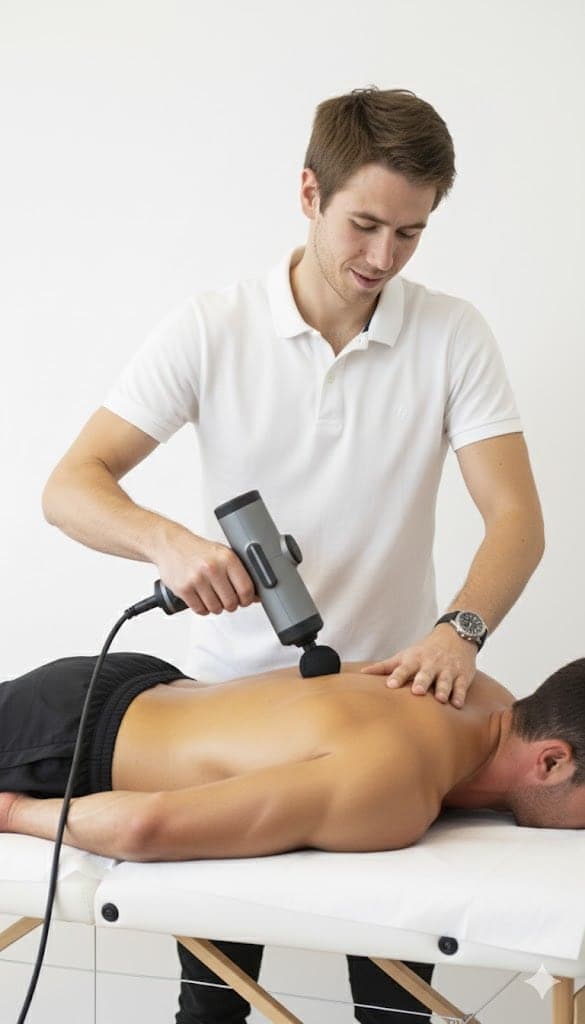
Written by
Chris
Massage therapist, nutrition and exercise physiologist
Norwegian-certified with a Bachelor’s in Physical Education and Nutrition and over ten years of clinical practice, working from a portable table in clients’ homes across the Paphos district.
This article is general information, not a medical diagnosis. If you have severe, worsening or unexplained pain, numbness, weakness, or pain after an accident, see a doctor first.