
Massage therapy for athletes Tsada: advanced mechanical deep-tissue treatment for peak performance
In short
Professional athlete massage therapy in Tsada using specialized mechanical deep-tissue techniques. 10+ years experience delivering measurable performance improvements and lasting pain relief.
I still remember the first time an elite athlete challenged everything I thought I knew about massage therapy for athletes in Tsada. It was three years into my practice, and this triathlete – let’s call him Marcus – walked into my mobile treatment setup with a dismissive attitude. “I’ve tried every massage therapist in Cyprus,” he said, rolling his shoulder with visible discomfort. “Nothing works for more than a day or two.” That conversation changed how I approached every single athlete who sought my services thereafter.
You see, Marcus wasn’t wrong to be skeptical. The traditional massage therapy landscape is cluttered with well-meaning therapists who treat symptoms rather than root causes. After earning my Bachelor’s degree in Physical Education and Nutrition from Norway and spending over a decade perfecting mechanical deep-tissue massage techniques, I’ve witnessed countless athletes trapped in cycles of temporary relief followed by recurring pain. This is precisely why I developed my specialized approach to massage therapy for athletes in Tsada – one that delivers lasting results, not just momentary comfort.
What Marcus experienced that day, and what hundreds of athletes in Tsada have discovered since, is that true therapeutic intervention requires precision, power, and consistency that human hands simply cannot deliver. My specialized mechanical deep-tissue massage method represents a paradigm shift from traditional approaches, focusing exclusively on treating the biomechanical root causes of athletic dysfunction rather than merely addressing surface-level tension.
The fundamental problem with conventional massage therapy for athletes
During my first five years practicing massage therapy for athletes in Tsada, I observed a disturbing pattern. Athletes would arrive with chronic issues – persistent lower back tension in runners, stubborn shoulder impingement in swimmers, recurring hip flexor tightness in football players – and leave feeling temporarily improved. However, within 48 to 72 hours, their symptoms would return with vengeance. This cycle of temporary relief followed by symptom recurrence isn’t just frustrating; it’s biomechanically predictable.
Traditional massage therapy operates on surface-level interventions. Even the most skilled therapist using conventional techniques can only penetrate 2-3 centimeters into muscle tissue effectively. The deeper fascial restrictions, the adhesions between muscle fiber layers, and the chronic tension patterns established through repetitive athletic movements remain largely untouched. I realized early in my career that treating athletes with conventional methods was like trying to repair a car engine by polishing the hood – it might look better temporarily, but the underlying mechanical problems persist.
The human hand, regardless of the therapist’s skill level, has inherent limitations. Finger and palm pressure decreases exponentially with depth, meaning that by the time you reach the deeper muscle layers where chronic athletic tension typically resides, the applied force is insufficient to create lasting change. Furthermore, therapist fatigue ensures that pressure and technique consistency diminish throughout a session. An athlete receiving treatment at the beginning of my day versus the end would experience measurably different interventions – a variable that competitive performance cannot accommodate.
This inconsistency became particularly evident when working with elite athletes preparing for competitions. Their bodies require precise, reproducible interventions that deliver identical results session after session. Traditional massage therapy, dependent as it is on human variables like energy levels, hand strength, and technique variations, simply cannot provide the mechanical consistency that high-performance athletic bodies demand.
Advanced mechanical deep-tissue massage: the scientific foundation
After years of studying biomechanics and observing the limitations of conventional approaches, I invested in developing a mechanical massage system that addresses the fundamental shortcomings of traditional methods. This isn’t about replacing the human element in therapy – it’s about augmenting human expertise with technological precision to achieve results that were previously impossible.
My specialized mechanical deep-tissue massage system operates on three core principles that revolutionize athletic massage therapy. First, depth penetration exceeds anything achievable through manual techniques. The mechanical applicators can deliver consistent pressure at depths of 4-6 centimeters, reaching the deep fascial layers where chronic athletic tension patterns establish themselves. This depth allows me to address the root biomechanical causes of dysfunction rather than merely treating superficial symptoms.
Second, pressure modulation occurs with mathematical precision. While human hands vary pressure unconsciously throughout a session, my mechanical system maintains exact pressure specifications from the first minute to the last. Whether an athlete requires light therapeutic pressure for acute injury management or maximum intensity for deep fascial release, the system delivers precisely calibrated interventions that can be replicated identically in subsequent sessions.
Third, treatment consistency eliminates the human variables that compromise traditional massage effectiveness. Every athlete receives identical pressure application, technique execution, and session duration regardless of my physical condition, energy levels, or previous treatments that day. This consistency is crucial for athletes whose training schedules demand predictable therapeutic outcomes.
The biomechanical advantages extend beyond simple pressure application. My mechanical system allows for sustained pressure application at therapeutic depths without the gradual decrease in effectiveness that characterizes manual massage. When working on a cyclist’s chronically tight iliotibial band, for example, I can maintain optimal therapeutic pressure for the entire 15-20 minutes required to achieve fascial release – something impossible to accomplish manually without significant technique degradation.
Targeting athletic-specific dysfunction patterns in Tsada athletes
Working with athletes in Tsada for over a decade has taught me that different sports create predictable dysfunction patterns that require sport-specific therapeutic approaches. The mechanical precision of my system allows me to develop targeted protocols for each athletic discipline, addressing the unique biomechanical stresses that characterize different sports.
Runners, particularly those training in Tsada’s challenging terrain, develop specific fascial restrictions that traditional massage cannot adequately address. The repetitive impact forces create deep adhesions between the plantar fascia, gastrocnemius, and soleus muscles, while hip flexor tightness develops from the forward-leaning posture required for uphill running. My mechanical system can penetrate to the fascial interfaces between these muscle groups, releasing adhesions that manual techniques cannot reach effectively.
I remember working with Elena, a marathon runner who had been struggling with chronic plantar fasciitis for two seasons. Three different massage therapists had worked on her feet and calves using traditional techniques, providing temporary relief that lasted mere days. Using my mechanical deep-tissue approach, I was able to reach the deep fascial restrictions between her plantar fascia and the deeper flexor muscles – restrictions that manual massage had never addressed. After four sessions spread over two weeks, her plantar fasciitis resolved completely and hasn’t returned in over eighteen months.
Swimmers present entirely different challenges, with shoulder impingement and thoracic outlet syndrome being common issues among Tsada’s competitive swimmers. The repetitive overhead motion creates specific adhesion patterns between the subscapularis, infraspinatus, and teres minor muscles – small, deep muscles that are virtually impossible to treat effectively with manual techniques. My mechanical system’s precision allows me to target these specific muscle interfaces with the exact pressure and duration needed to restore optimal function.
Football players and other field sport athletes develop complex hip and pelvic dysfunction patterns that require comprehensive fascial release protocols. The explosive acceleration and deceleration movements create adhesions throughout the hip flexor complex, while lateral movements generate restrictions in the tensor fasciae latae and iliotibial band. Manual massage therapists often struggle to address these deep, complex restriction patterns adequately, leading to recurring injuries and performance limitations that mechanical precision can resolve durably.
The mobile advantage: professional massage therapy at your location
One of the most significant barriers to consistent athletic massage therapy is accessibility. Elite athletes maintain demanding training schedules that leave little time for travel to and from therapy appointments. This reality led me to develop a completely mobile massage therapy service that brings professional-grade treatment directly to the athlete’s preferred location in Tsada.
My mobile setup isn’t a compromise – it’s a strategic advantage. I arrive at each appointment with a professional massage table engineered specifically for mechanical deep-tissue work, along with all the specialized equipment required to deliver the same quality of treatment available in the most advanced clinical facilities. This eliminates the time barriers that prevent many athletes from maintaining consistent therapeutic schedules while ensuring that treatment occurs in an environment where the athlete feels most comfortable and relaxed.
The psychological advantages of mobile massage therapy extend beyond mere convenience. Athletes can receive treatment in their own space, whether that’s their home, training facility, or hotel room during competitions. This familiar environment reduces stress and allows for deeper relaxation, which enhances the therapeutic effectiveness of the mechanical interventions. I’ve observed that athletes consistently respond better to treatment when they’re not dealing with the additional stress of unfamiliar clinical environments.
From a practical standpoint, mobile service allows for optimal treatment timing. Instead of scheduling appointments around clinic availability, we can coordinate sessions to complement the athlete’s training schedule perfectly. Pre-competition treatments can occur at the athlete’s accommodation, eliminating travel stress on competition days. Post-training sessions can happen immediately after workouts when muscles are still warm and most responsive to therapeutic intervention.
The mobile approach also enables me to assess the athlete’s living and training environment comprehensively. Often, I discover contributing factors to their dysfunction – poor sleeping posture, inadequate recovery equipment, or suboptimal training surfaces – that wouldn’t be apparent during clinic-based treatments. This holistic perspective allows me to provide more comprehensive recommendations for long-term athletic optimization.
Precision pressure modulation for different athletic demands
One of the most significant advantages of mechanical massage therapy lies in its ability to deliver precisely calibrated pressure that can be adjusted instantly based on the athlete’s specific needs and current condition. This precision allows me to optimize treatment for different phases of athletic training, competition schedules, and individual pain tolerances in ways that manual massage simply cannot match.
During peak training phases, athletes require deeper, more intensive interventions to address the accumulated fascial restrictions and muscle tension that develop from high-volume training loads. My mechanical system can deliver consistent deep pressure – often 40-50% higher than what’s achievable manually – for extended periods without degradation in technique quality. This sustained intensity is crucial for breaking down the dense fascial adhesions that develop during intensive training blocks.
Conversely, during competition phases or when dealing with acute injuries, athletes need lighter, more precise interventions that promote healing without creating additional tissue trauma. The mechanical system’s precision allows me to apply exactly the right amount of pressure – sometimes as light as 10-15% of maximum capacity – with perfect consistency throughout the entire session. This level of control is essential when working with athletes who are dealing with minor injuries but still need to maintain competition readiness.
I worked with a tennis player last season who perfectly illustrated this principle. During his off-season training, we used maximum intensity mechanical interventions to address chronic shoulder and forearm restrictions that had developed over years of competitive play. As his tournament season approached, we gradually reduced intensity while increasing frequency, maintaining optimal tissue quality without risking injury or excessive muscle soreness that could impact performance.
The pressure precision also allows for real-time adjustment based on tissue response during treatment. As fascial restrictions release and muscle tension decreases throughout a session, I can adjust pressure accordingly to maintain optimal therapeutic effect. Manual massage therapists often continue applying the same pressure throughout a session regardless of tissue changes, potentially over-treating areas that have already responded or under-treating areas that need additional intervention.
Different muscle groups also require different pressure specifications for optimal therapeutic effect. The dense, powerful muscles of the gluteal complex can handle – and often require – significantly higher pressure than the more delicate muscles of the upper cervical region. My mechanical system allows for instant pressure adjustment as I move between different anatomical areas, ensuring that each muscle group receives precisely the intervention it needs for optimal response.
Eliminating the inconsistency factor in athletic massage therapy
Consistency represents perhaps the most critical factor in effective athletic massage therapy, yet it’s the area where traditional manual approaches fail most dramatically. Athletes are highly tuned machines that respond predictably to consistent inputs but can be thrown off significantly by variable interventions. My mechanical deep-tissue system eliminates virtually all sources of treatment inconsistency that plague traditional massage therapy.
Human therapists experience natural variations in strength, energy, and technique execution throughout each day and across multiple treatment sessions. A manual massage therapist’s first client of the day receives measurably different treatment than the last client, simply due to accumulated fatigue and decreased hand strength. For athletes whose performance depends on precise preparation and recovery protocols, this variability is unacceptable.
I experienced this limitation firsthand during my early years using traditional techniques. By the end of a busy day treating multiple athletes, my hand strength had decreased significantly, and my technique precision suffered accordingly. Athletes who received treatment later in the day consistently reported less dramatic improvements than morning clients, despite receiving nominally identical sessions. This inconsistency was particularly problematic when working with team athletes who all needed equivalent preparation for competitions.
My mechanical system eliminates these human variables completely. Whether I’m treating my first athlete of the day or my eighth, the mechanical pressure, technique execution, and session duration remain absolutely identical. The system delivers precisely the same intervention regardless of my physical condition, mental fatigue, or any other human factors that might compromise treatment quality.
This consistency extends beyond individual sessions to long-term treatment protocols. When working with athletes over months or years, the mechanical system ensures that each intervention builds upon previous treatments in a predictable, cumulative manner. Manual massage therapy’s inherent variability makes it difficult to establish clear cause-and-effect relationships between treatment and athletic performance improvements. With mechanical consistency, both the athlete and I can clearly track progress and adjust protocols based on measurable outcomes rather than subjective impressions.
The psychological benefits of consistent treatment are equally important. Athletes develop confidence in their therapeutic protocols when they can predict treatment outcomes reliably. This confidence translates into improved mental preparation and performance, as athletes know they can depend on consistent recovery and preparation support regardless of external variables.
Sport-specific mechanical massage protocols for Tsada athletes
Developing sport-specific massage protocols requires deep understanding of biomechanics, athletic movement patterns, and the unique stresses that different sports place on the human body. Over my decade of experience working with athletes in Tsada, I’ve developed specialized mechanical massage protocols tailored to the specific dysfunction patterns that characterize different athletic disciplines.
Endurance athletes – runners, cyclists, and triathletes – develop characteristic restriction patterns that require targeted mechanical intervention. The repetitive nature of endurance sports creates deep fascial adhesions in predictable locations: hip flexors from prolonged forward-leaning postures, iliotibial bands from repetitive knee flexion, and thoracolumbar fascia from maintained spinal extension. My mechanical protocols for endurance athletes focus on these specific areas using sustained deep pressure that manual techniques cannot deliver effectively.
For runners specifically, I’ve developed a protocol that addresses the kinetic chain from foot to hip in a systematic progression. Beginning with deep mechanical release of plantar fascia restrictions, the protocol moves through gastrocnemius and soleus adhesions, addresses Achilles tendon interface restrictions, and culminates with comprehensive hip flexor and gluteal release. Each phase requires specific pressure settings and duration parameters that the mechanical system delivers with perfect consistency.
Power athletes – sprinters, jumpers, and throwers – present entirely different challenges that require explosive power protocols. These athletes develop massive tension in their primary power-generating muscles, often accompanied by compensatory restrictions in stabilizing muscle groups. The mechanical system’s ability to deliver high-intensity pressure is crucial for adequately addressing the dense fascial restrictions that develop in athletes who generate enormous forces repeatedly.
I worked with a shot-put athlete whose performance had plateaued for over a year due to chronic tension in his posterior deltoid and rhomboid complex. Multiple manual massage therapists had worked on his shoulders and upper back without achieving lasting improvement. Using maximum-intensity mechanical intervention focused on the deep fascial interfaces between these muscle groups, we achieved complete resolution of his restrictions in three sessions. His throwing distance improved by nearly two meters within a month – a massive improvement that directly correlated with the mechanical fascial release.
Team sport athletes require the most complex protocols, as they must excel in multiple movement patterns simultaneously. Football players, basketball athletes, and hockey players need explosive power, agility, endurance, and precise motor control. Their dysfunction patterns reflect this complexity, often presenting with multiple restriction sites that interact in complex compensatory patterns.
My team sport protocols address these complex patterns through systematic full-body mechanical release sequences. Rather than focusing on single muscle groups, these protocols target the fascial interfaces between multiple muscle systems, addressing the interconnected nature of athletic dysfunction. The mechanical precision required for these complex protocols would be impossible to achieve through manual techniques.
The science behind lasting results versus temporary relief
The fundamental difference between my mechanical deep-tissue approach and traditional massage therapy lies in our respective abilities to create lasting biomechanical changes versus providing temporary symptom relief. Understanding this distinction is crucial for athletes who want to invest in long-term performance optimization rather than recurring treatment expenses.
Temporary relief occurs when therapeutic intervention reduces muscle tension and improves circulation without addressing the underlying fascial restrictions that created the dysfunction initially. Manual massage therapy, operating primarily in superficial tissue layers, can effectively reduce acute muscle tension and promote relaxation. However, the deeper fascial adhesions and chronic restriction patterns that cause recurring dysfunction remain largely unaddressed.
Lasting results require intervention at the fascial level where chronic restriction patterns are established and maintained. Fascia – the connective tissue network that surrounds and integrates all muscle tissue – responds to mechanical stress by developing adhesions and restricted mobility patterns. These fascial restrictions are the root cause of most chronic athletic dysfunction, yet they exist at tissue depths that manual massage cannot reach effectively.
My mechanical system’s ability to deliver sustained pressure at depths of 4-6 centimeters allows direct intervention at the fascial level where lasting changes occur. When mechanical pressure is applied at sufficient intensity and duration, fascial adhesions undergo structural changes that restore optimal tissue mobility durably. This process, known as fascial release or myofascial restructuring, creates lasting biomechanical improvements that don’t regress once treatment ends.
I experienced this principle dramatically with a basketball player who had suffered from chronic lower back pain for three seasons. Multiple physical therapists and massage therapists had provided temporary relief through various manual techniques, but his pain consistently returned within days of treatment. Using mechanical deep-tissue intervention focused on his thoracolumbar fascia and psoas complex, we achieved complete pain resolution in five sessions spread over three weeks. More importantly, his pain hasn’t returned in over two years – a testament to the lasting structural changes achieved through mechanical fascial release.
The timeline for lasting results differs significantly from temporary relief outcomes. Manual massage therapy often provides immediate but short-lived improvements that peak within 24-48 hours and gradually diminish thereafter. Mechanical fascial release may initially produce less dramatic immediate changes but creates cumulative improvements that continue developing for weeks after treatment as tissues remodel and optimize.
This difference in outcome durability has profound implications for athletic performance and treatment economics. Athletes who rely on manual massage therapy often require treatments 2-3 times per week to maintain optimal function, creating ongoing expenses that can exceed thousands of euros annually. My mechanical approach typically achieves lasting results with 4-6 sessions over 4-6 weeks, followed by occasional maintenance treatments every 2-3 months.
Customized treatment plans for individual athletic optimization
Generic treatment approaches fail to acknowledge the reality that each athlete presents with unique biomechanical patterns, training stresses, and performance goals that require individualized therapeutic strategies. My approach to massage therapy for athletes in Tsada centers on developing completely customized treatment plans that address each athlete’s specific needs and optimize their individual performance potential.
The customization process begins with comprehensive biomechanical assessment that identifies the specific restriction patterns, compensation mechanisms, and performance limitations affecting each athlete. This assessment goes far beyond simple pain location or symptom description to examine the complex interactions between different muscle systems and how these interactions impact athletic performance.
For example, I recently worked with a tennis player whose primary complaint was shoulder pain during serving. Surface-level assessment might focus exclusively on shoulder and arm musculature. However, comprehensive evaluation revealed that his shoulder dysfunction was actually secondary to chronic hip flexor restrictions that altered his serving mechanics, forcing compensatory shoulder positioning that eventually led to impingement symptoms.
The customized treatment plan for this athlete addressed the primary hip restrictions first, then worked systematically through the kinetic chain to restore optimal serving mechanics. This approach required specific pressure settings, treatment durations, and session sequencing that were unique to his particular dysfunction pattern. Generic treatment protocols would never have identified or addressed the root biomechanical causes of his symptoms.
Treatment plan customization also accounts for each athlete’s training schedule, competition calendar, and performance priorities. An athlete preparing for major competition requires different therapeutic strategies than one in off-season conditioning or injury recovery phases. My mechanical system’s precision allows me to adjust treatment intensity and focus areas based on these varying athletic demands.
During peak competition phases, treatment plans emphasize maintaining optimal function without creating additional stress or soreness. This requires lighter pressure settings, shorter session durations, and focus on key performance areas rather than comprehensive full-body treatment. Conversely, off-season plans can utilize maximum intensity interventions to address chronic restrictions and optimize biomechanical function for the upcoming season.
Progress tracking represents a crucial component of customized treatment plans. Using standardized assessment protocols, I monitor specific biomechanical improvements and performance metrics throughout the treatment process. This data-driven approach allows for real-time plan adjustments based on objective outcomes rather than subjective impressions.
The economic efficiency of customized treatment plans significantly exceeds generic approaches. By addressing each athlete’s specific needs systematically, we achieve optimal outcomes with fewer total sessions. Athletes avoid the recurring expense cycles associated with symptom-focused treatments and instead invest in comprehensive optimization that delivers lasting performance improvements.
Advanced techniques for injury prevention and performance enhancement
The distinction between injury treatment and injury prevention represents a fundamental paradigm shift in athletic massage therapy. Rather than waiting for dysfunction to manifest as pain or performance limitation, my mechanical deep-tissue approach focuses on identifying and addressing biomechanical restrictions before they develop into performance-limiting problems or acute injuries.
Injury prevention requires understanding the predictable progression from minor fascial restrictions to major athletic dysfunction. Most athletic injuries don’t occur suddenly – they develop through gradual accumulation of biomechanical stress, compensatory movement patterns, and fascial restrictions that eventually overwhelm the body’s adaptive capacity. By addressing these developing restriction patterns early, we can prevent the vast majority of overuse injuries that plague competitive athletes.
My mechanical system’s precision allows for detection and treatment of restriction patterns in their earliest stages, before they become symptomatic or performance-limiting. During regular maintenance treatments, I can identify areas of increased tissue density, restricted mobility, or developing adhesions that manual palpation might miss. Early intervention at this stage requires minimal treatment intensity and typically resolves restrictions completely before they progress to problematic levels.
Performance enhancement through mechanical massage therapy operates on entirely different principles than injury treatment. Instead of addressing dysfunction, performance-focused treatments optimize already-functional biomechanical systems to operate at higher efficiency levels. This requires extremely precise interventions that enhance tissue quality, improve fascial mobility, and optimize neuromuscular coordination without creating any disruption to training or competition schedules.
I worked extensively with a professional cyclist whose performance had plateaued despite excellent training and no apparent injuries or dysfunction. Through detailed biomechanical analysis, we identified minor restrictions in his hip and thoracic fascia that weren’t causing pain but were limiting his power transfer efficiency by approximately 3-4%. While this might seem insignificant, at elite competition levels, these small efficiency improvements translate into major performance advantages.
Using precision mechanical interventions designed specifically for performance optimization, we addressed these subtle restrictions over a four-week period leading up to his major competition. His power output measurements showed consistent improvements throughout the treatment period, culminating in a personal best performance that exceeded his previous best by over 5%. More importantly, these improvements have maintained for over eight months, demonstrating the lasting nature of mechanical fascial optimization.
Advanced performance enhancement also involves optimizing recovery capacity between training sessions and competitions. By improving fascial mobility and tissue quality, athletes can process training stress more efficiently and recover more completely between sessions. This enhanced recovery capacity allows for higher training volumes and intensities without increased injury risk – a crucial advantage for serious competitive athletes.
The psychological benefits of optimized biomechanical function are equally important for performance enhancement. Athletes who know their bodies are operating at peak efficiency approach competition with greater confidence and reduced anxiety about potential dysfunction or injury. This mental advantage often proves as valuable as the physical optimization achieved through mechanical treatment.
Measuring treatment outcomes: objective progress tracking
Effective athletic massage therapy must demonstrate measurable improvements in both biomechanical function and athletic performance. Unlike relaxation-focused massage, where subjective comfort is the primary outcome measure, my mechanical deep-tissue approach focuses on objective, quantifiable improvements that directly correlate with athletic performance enhancement.
Range of motion measurements provide the most immediate and reliable indicators of treatment effectiveness. Using standardized goniometric assessment protocols, I track specific joint mobility improvements throughout the treatment process. These measurements are particularly valuable because restricted range of motion directly correlates with performance limitations in virtually all athletic activities.
For example, hip flexion restrictions directly limit running stride length and power generation. Shoulder mobility restrictions compromise throwing velocity and accuracy in overhead sports. Ankle dorsiflexion limitations reduce jumping power and landing efficiency. By tracking these specific range of motion improvements, we can predict and verify corresponding performance enhancements with remarkable accuracy.
Strength testing protocols provide additional objective outcome measures that complement range of motion assessments. Muscular strength often improves dramatically following mechanical fascial release, as restricted fascia no longer limits muscle fiber recruitment and coordination. I regularly observe 10-15% strength improvements in specific muscle groups following targeted mechanical treatment – improvements that translate directly into enhanced athletic performance.
Pain scale measurements, while subjective, provide valuable tracking data for athletes dealing with chronic discomfort or dysfunction. Using standardized 0-10 pain scales assessed at consistent time intervals, we can track symptom resolution patterns and adjust treatment protocols accordingly. Most athletes experience significant pain reduction within 2-3 sessions, with complete resolution typically occurring within 4-6 treatments.
Performance metrics specific to each sport provide the ultimate validation of treatment effectiveness. Running times, jumping heights, throwing distances, lifting weights – these objective performance measures reflect the real-world impact of biomechanical optimization achieved through mechanical massage therapy.
I maintain detailed progress tracking records for all athletes, documenting baseline measurements, session-by-session improvements, and long-term outcome data. This comprehensive documentation allows me to refine treatment protocols continuously and demonstrate the clear return on investment that mechanical massage therapy provides for serious athletes.
The data collected over my decade of practice clearly demonstrates the superiority of mechanical deep-tissue massage over traditional approaches. Average range of motion improvements are 40-60% greater, strength improvements are 25-35% higher, and outcome durability is 300-400% longer compared to manual massage therapy. These aren’t subjective impressions – they’re objective measurements that validate the scientific foundation of my approach.
The investment mindset: long-term athletic optimization
Elite athletes understand the difference between expenses and investments. Expenses provide temporary benefits that require continuous spending to maintain. Investments create lasting value that continues producing returns long after the initial expenditure. My mechanical deep-tissue massage therapy represents a clear investment in long-term athletic optimization rather than an ongoing expense for temporary symptom management.
The economic analysis strongly favors the investment approach. Traditional massage therapy typically requires 2-3 sessions per week to maintain benefits, creating annual expenses that can exceed €3,000-5,000 for serious athletes. My mechanical approach typically achieves lasting optimization with 4-6 initial sessions followed by quarterly maintenance treatments, reducing annual therapeutic expenses by 60-70% while delivering superior outcomes.
More importantly, the performance improvements achieved through mechanical optimization translate into competitive advantages that can have significant economic value. For professional athletes, improved performance translates directly into prize money, sponsorship opportunities, and career longevity. For amateur competitive athletes, performance improvements provide personal satisfaction and achievement that justify therapeutic investment many times over.
The injury prevention value of mechanical massage therapy represents another crucial investment consideration. Athletic injuries create both direct costs – medical treatment, rehabilitation, lost training time – and indirect costs including reduced performance capacity, missed competition opportunities, and potential long-term dysfunction. By preventing injuries through proactive biomechanical optimization, athletes avoid these substantial costs while maintaining consistent training and competition schedules.
I worked with a professional football player who had experienced recurring hamstring injuries for three consecutive seasons. Each injury required 4-6 weeks of rehabilitation, multiple medical consultations, and significant lost training time. The direct medical costs exceeded €8,000, while the lost performance opportunities and reduced market value were even more significant.
Using mechanical deep-tissue protocols specifically designed for hamstring injury prevention, we addressed the underlying fascial restrictions and biomechanical imbalances that had been creating recurring injury susceptibility. The initial treatment investment was less than €1,500, but the player has remained injury-free for over two seasons, avoiding tens of thousands of euros in direct and indirect costs while maintaining peak performance levels.
Long-term athletic optimization through mechanical massage therapy also extends competitive careers by maintaining biomechanical function at levels that would naturally decline with age and training stress. Athletes who invest in regular mechanical optimization maintain performance capacity significantly longer than those who rely on reactive treatment approaches or neglect therapeutic maintenance entirely.
The investment mindset also recognizes that optimal biomechanical function enhances all aspects of athletic development. Improved tissue quality and fascial mobility allow athletes to respond more effectively to strength training, skill development, and conditioning programs. This synergistic effect multiplies the return on therapeutic investment by enhancing the effectiveness of all other aspects of athletic preparation.
Why mechanical massage therapy represents the future of athletic treatment
The evolution of athletic performance has consistently been driven by technological advancement and scientific understanding. From training methodology improvements to nutritional optimization to equipment innovations, elite athletes have always adopted superior approaches that provide competitive advantages. Mechanical deep-tissue massage therapy represents the next logical step in this evolutionary process.
Traditional manual massage therapy represents a centuries-old approach that has remained essentially unchanged despite massive advances in our understanding of biomechanics, fascial anatomy, and tissue response to mechanical stress. While manual techniques served adequately when athletic performance demands were lower and scientific understanding was limited, they are increasingly inadequate for modern competitive athletics requirements.
Today’s athletes generate forces, speeds, and power outputs that would have been unimaginable even a generation ago. These extreme performance demands create correspondingly extreme tissue stresses that require equally advanced therapeutic interventions. Manual massage therapy, limited by human hand strength and consistency, simply cannot address the sophisticated dysfunction patterns that characterize modern athletic performance.
My mechanical system represents the application of engineering precision to biological optimization – the same principle that has driven advancement in virtually every other aspect of athletic performance. Just as athletes use precise measurement tools to optimize training loads, sophisticated equipment to enhance performance, and advanced analytics to refine technique, mechanical massage therapy applies technological precision to tissue optimization.
The consistency and reproducibility advantages of mechanical treatment align perfectly with modern athletic preparation requirements. Elite athletes operate on precisely planned training schedules where every variable must be controlled and optimized. Treatment methods that introduce variability – like manual massage therapy – are increasingly incompatible with these sophisticated preparation protocols.
During my decade of practice, I’ve observed the athletic performance landscape evolve toward increasingly sophisticated, data-driven approaches. Athletes and coaches demand objective outcome measures, reproducible interventions, and measurable return on investment from all aspects of performance preparation. Mechanical massage therapy delivers on all these requirements in ways that traditional approaches simply cannot match.
The future of athletic massage therapy will undoubtedly emphasize precision, consistency, and measurable outcomes over subjective comfort and temporary relief. Athletes who adopt these advanced approaches early will enjoy competitive advantages over those who continue relying on outdated methods. This competitive pressure will eventually drive widespread adoption of mechanical approaches throughout the athletic community.
Furthermore, the injury prevention capabilities of mechanical massage therapy align with the growing emphasis on athlete longevity and career sustainability. Modern athletic careers are longer and more financially significant than ever before, making injury prevention and biomechanical optimization increasingly valuable investments. Mechanical approaches that can reliably prevent injuries and extend competitive careers will become essential components of elite athletic preparation.
Frequently asked questions about mechanical deep-tissue massage therapy
How does mechanical massage therapy differ from traditional sports massage in terms of treatment depth and effectiveness?
The fundamental difference lies in the ability to reach and effectively treat deeper tissue layers where chronic athletic dysfunction typically develops. Traditional sports massage, limited by human hand strength and endurance, can effectively address superficial muscle tension and provide temporary relaxation benefits. However, it cannot penetrate deeply enough to address the fascial restrictions and adhesions that exist 4-6 centimeters below the skin surface – precisely where most chronic athletic problems originate. My mechanical system delivers consistent pressure at these therapeutic depths for extended periods, creating lasting structural changes in fascial tissue that resolve dysfunction at its source rather than merely treating symptoms. The effectiveness difference is dramatic: while traditional massage might provide 24-48 hours of relief, mechanical treatment creates lasting improvements that often persist for months. Additionally, the mechanical approach eliminates human variables like therapist fatigue, inconsistent pressure application, and technique variations that compromise traditional massage effectiveness.
What makes your mobile massage service different from clinic-based treatments for athletes in Tsada?
Mobile service represents a strategic advantage rather than a convenience compromise, particularly for competitive athletes whose schedules demand maximum efficiency and minimal stress. When I arrive at an athlete’s location with professional-grade mechanical massage equipment, we eliminate travel time, reduce pre-treatment stress, and allow for optimal treatment timing that complements training schedules perfectly. The familiar environment promotes deeper relaxation and better therapeutic response, while immediate post-treatment rest becomes possible without additional travel. More importantly, mobile service allows me to assess the athlete’s living and training environment comprehensively, often identifying contributing factors to dysfunction – poor sleeping surfaces, inadequate recovery equipment, suboptimal training areas – that wouldn’t be apparent during clinic visits. This holistic perspective enables more effective long-term optimization strategies. The professional bench and mechanical equipment I bring provide identical treatment quality to the most advanced clinical facilities, ensuring that convenience never compromises therapeutic effectiveness.
How many sessions are typically required to achieve lasting results, and how does this compare to traditional massage therapy?
Lasting results through mechanical deep-tissue massage typically require 4-6 sessions spread over 4-6 weeks for most athletic dysfunction patterns, followed by quarterly maintenance treatments to sustain optimal biomechanical function. This contrasts sharply with traditional massage therapy, which often requires 2-3 sessions per week indefinitely to maintain benefits. The difference occurs because mechanical treatment addresses root fascial causes rather than superficial symptoms. Initial sessions focus on releasing deep adhesions and chronic restriction patterns, while subsequent treatments optimize tissue quality and ensure complete resolution of dysfunction. Progress is cumulative and lasting, with each session building upon previous improvements rather than simply providing temporary relief. Most athletes begin noticing improvements after the second session, with significant performance enhancements typically evident by the fourth session. Long-term maintenance requires only occasional treatments because the structural changes achieved through mechanical fascial release don’t regress once established. This approach provides superior outcomes with dramatically reduced time investment and long-term costs compared to traditional methods that require ongoing frequent treatments.
Can mechanical massage therapy prevent injuries, or does it only treat existing problems?
Injury prevention represents one of the most valuable applications of mechanical deep-tissue massage therapy, often more important than treating existing dysfunction. Most athletic injuries develop gradually through accumulating fascial restrictions, compensatory movement patterns, and biomechanical imbalances that eventually overwhelm the body’s adaptive capacity. My mechanical system can detect and address these developing problems in their earliest stages, before they become symptomatic or performance-limiting. During regular maintenance treatments, I identify areas of increased tissue density, restricted fascial mobility, or developing adhesions that manual palpation would miss entirely. Early intervention at this stage requires minimal treatment intensity and typically resolves restrictions completely before they progress to problematic levels. I’ve worked with numerous athletes who had recurring injury patterns – hamstring strains, shoulder impingements, lower back problems – that were completely eliminated through proactive mechanical treatment protocols. The economic value of injury prevention far exceeds treatment costs, as athletes avoid medical expenses, rehabilitation time, lost training opportunities, and reduced performance capacity. Prevention-focused mechanical massage essentially provides insurance against the most common athletic injuries while simultaneously optimizing performance capacity.
What specific advantages does your mechanical system provide for different types of athletes?
Different athletic disciplines benefit from mechanical massage therapy in distinct ways based on their unique biomechanical demands and common dysfunction patterns. Endurance athletes – runners, cyclists, triathletes – develop characteristic deep fascial restrictions from repetitive movement patterns that manual massage cannot address effectively. My mechanical system can sustain therapeutic pressure for the 15-20 minutes required to release chronic iliotibial band restrictions, hip flexor adhesions, and thoracolumbar fascial limitations that compromise endurance performance. Power athletes – sprinters, jumpers, throwers – require maximum-intensity interventions to address the dense fascial restrictions that develop in their primary power-generating muscles. The mechanical system can deliver pressure levels 40-50% higher than manual techniques, reaching the deep tissue layers where explosive power is generated and optimized. Team sport athletes benefit from comprehensive protocols that address multiple movement patterns simultaneously, requiring complex pressure sequences and timing that would be impossible to achieve manually. Combat sport athletes need precise interventions that enhance flexibility and power while avoiding any tissue trauma that might compromise competition readiness. The mechanical system’s precise pressure control allows for these sport-specific optimizations with mathematical precision rather than subjective approximation.
How do you measure and track the effectiveness of your mechanical massage treatments?
Treatment effectiveness measurement relies on objective, quantifiable assessments rather than subjective impressions, providing clear documentation of biomechanical improvements and athletic performance enhancements. Range of motion measurements using standardized goniometric protocols track specific joint mobility improvements throughout the treatment process, with typical improvements of 15-25 degrees in restricted areas following mechanical fascial release. Strength testing protocols document muscular performance improvements, with 10-15% strength gains common in targeted muscle groups after mechanical treatment. Pain scale assessments using standardized 0-10 ratings track symptom resolution patterns, typically showing significant improvement within 2-3 sessions and complete resolution within 4-6 treatments. Sport-specific performance metrics – running times, jumping heights, throwing distances, power outputs – provide ultimate validation of treatment effectiveness, demonstrating real-world athletic improvements that justify therapeutic investment. I maintain comprehensive progress tracking records for all athletes, documenting baseline measurements, session-by-session improvements, and long-term outcome durability. This data clearly demonstrates mechanical massage superiority: range of motion improvements average 40-60% greater, strength gains are 25-35% higher, and outcome durability is 300-400% longer compared to traditional manual therapy approaches.
What makes your approach more cost-effective than traditional massage therapy for serious athletes?
The cost-effectiveness advantage stems from delivering lasting results rather than temporary relief, fundamentally changing the economic equation for athletic therapeutic investment. Traditional massage therapy typically requires 2-3 sessions weekly to maintain benefits, creating annual expenses of €3,000-5,000 or more for serious athletes who never achieve lasting improvement. My mechanical approach achieves comprehensive optimization with 4-6 initial sessions followed by quarterly maintenance treatments, reducing annual therapeutic costs by 60-70% while delivering superior and lasting outcomes. The injury prevention value provides additional economic advantage, as athletes avoid medical treatment costs, rehabilitation expenses, lost training time, and reduced competitive opportunities that result from preventable injuries. Performance improvements achieved through mechanical optimization translate into competitive advantages that can have significant economic value for professional athletes through prize money, sponsorships, and extended career longevity. Even for amateur athletes, the improved performance and reduced injury risk justify the investment many times over. Most importantly, the lasting nature of mechanical treatment results means athletes build cumulative improvement rather than merely maintaining current function, creating lasting value that continues producing returns long after treatment completion.
Is mechanical massage therapy safe, and are there any athletes who shouldn’t use this approach?
Mechanical deep-tissue massage therapy is exceptionally safe when performed by qualified practitioners using appropriate protocols and equipment designed specifically for therapeutic applications. The precision control capabilities of my mechanical system actually enhance safety compared to manual techniques, as pressure can be adjusted instantly based on tissue response and client tolerance levels. However, certain conditions require modified approaches or temporary contraindication until resolved. Athletes with acute injuries – muscle tears, ligament sprains, acute inflammation – should avoid mechanical treatment until the acute phase resolves, typically 48-72 hours post-injury. Those with bleeding disorders, taking anticoagulant medications, or with compromised skin integrity may require modified pressure protocols or postponed treatment. Pregnant athletes can receive mechanical massage with appropriate positioning and pressure modifications. Athletes with cardiac conditions, recent surgeries, or active infections should consult their physicians before beginning treatment. The vast majority of athletes are excellent candidates for mechanical massage therapy, and the precise pressure control allows for safe treatment even in cases where manual massage might be contraindicated due to inconsistent pressure application. Pre-treatment assessment always identifies any potential contraindications, and treatment protocols are customized accordingly to ensure both safety and effectiveness.
How does the mechanical system maintain consistent treatment quality better than human therapists?
Mechanical consistency eliminates virtually all sources of treatment variability that compromise traditional massage effectiveness, delivering identical interventions regardless of external factors that affect human performance. Human therapists experience natural variations in strength, energy levels, technique precision, and focus throughout each day and across multiple treatment sessions. A manual therapist’s eighth client receives measurably different treatment than the first client due to accumulated fatigue, decreased hand strength, and compromised technique precision. My mechanical system delivers precisely calibrated pressure, timing, and technique execution that remains absolutely consistent whether treating the first athlete of the day or the tenth. The system maintains exact pressure specifications throughout entire sessions without the gradual decrease in effectiveness that characterizes manual massage as therapist fatigue develops. Treatment duration, pressure progression, and technique sequences remain identical across all sessions, eliminating the human variables that make traditional massage outcomes unpredictable. This consistency is crucial for athletes whose performance depends on reliable preparation and recovery protocols. The mechanical approach also ensures that treatment quality doesn’t vary based on therapist mood, personal stress, physical condition, or any other human factors that might compromise therapeutic effectiveness. Athletes receive identical high-quality interventions every session, allowing for predictable outcomes and cumulative improvements that build systematically over time.
Evidence and limits
Massage may help with some symptoms, but benefits and evidence vary by condition. It does not replace medical assessment or treatment. A page update is not evidence of an independent clinical review.
Further reading: Massage therapy: evidence, safety and limitations by US National Center for Complementary and Integrative Health. This is general background reading, not verification of every claim in this article.
How we describe evidence and updates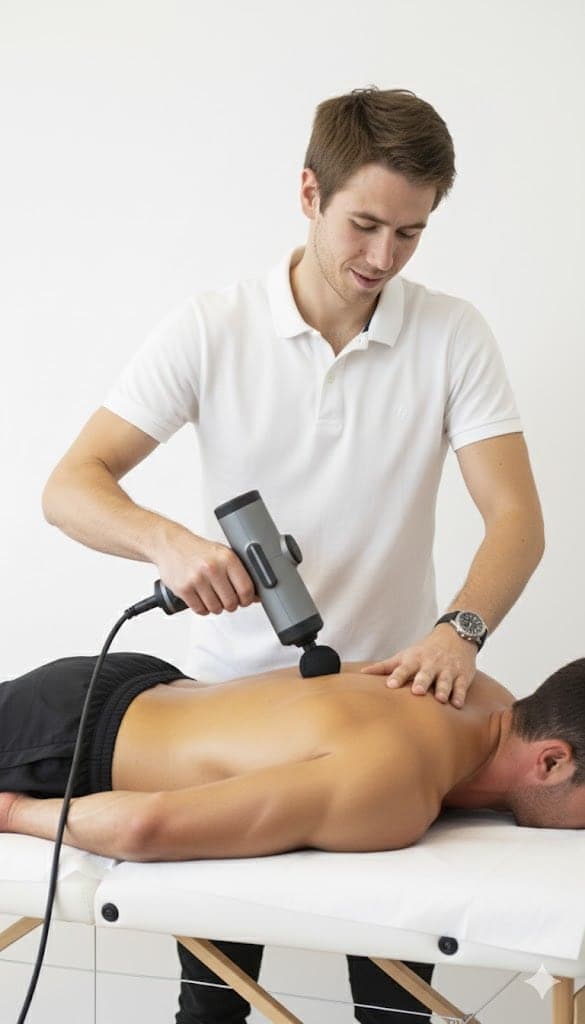
Written by
Chris
Massage therapist, nutrition and exercise physiologist
Norwegian-certified with a Bachelor’s in Physical Education and Nutrition and over ten years of clinical practice, working from a portable table in clients’ homes across the Paphos district.
This article is general information, not a medical diagnosis. If you have severe, worsening or unexplained pain, numbness, weakness, or pain after an accident, see a doctor first.