
Deep Tissue Massage Reviews Tsada: Expert Analysis of Advanced Mechanical Treatment Results
In short
Comprehensive reviews and professional analysis of deep tissue massage outcomes in Tsada. Discover why mechanical precision delivers superior, lasting results compared to traditional manual techniques.
When I first arrived in Tsada ten years ago with my degree in Physical Education and Nutrition from Norway, I encountered the same misconception that pervades this entire region: people believed massage was primarily about relaxation, aromatherapy candles, and temporary relief. They were searching for deep tissue massage reviews Tsada could offer, but what they found were generic spa experiences that addressed symptoms rather than causes.
That fundamental misunderstanding is precisely why most people remain trapped in a cycle of chronic pain, returning every few weeks for the same ineffective treatment. After a decade of clinical practice and thousands of hours spent analyzing body mechanics, I’ve developed a specialized approach that delivers what traditional massage cannot: lasting structural change at the fascial level.
Understanding Deep Tissue Massage: Beyond Surface-Level Treatment
The term “deep tissue massage” has been corrupted by the wellness industry. Most practitioners apply slightly firmer pressure than Swedish massage and call it deep tissue work. This is fundamentally incorrect from a biomechanical perspective.
True deep tissue intervention requires three critical elements that human hands simply cannot consistently deliver:
Precision targeting of specific fascial adhesions. The myofascial system contains approximately 250 distinct planes of tissue that can develop restrictions. Locating and releasing these restrictions demands millimeter-level accuracy. I’ve observed countless therapists working in the general vicinity of the problem while missing the actual restriction point entirely.
Sufficient mechanical force to create plastic deformation. Fascia is a collagen-based connective tissue with tremendous tensile strength. To durably alter its structure, you must apply sustained, directional pressure that exceeds the tissue’s yield point. Most manual therapists fatigue before achieving this threshold, leaving clients with temporary inflammation rather than lasting change.
Consistency across the entire treatment protocol. The human body adapts to inconsistent stimuli. When your therapist has “good days” and “bad days,” your tissue receives mixed signals. This inconsistency is why people often report that “last month’s session was amazing, but this time it didn’t work.”
Why Traditional Deep Tissue Massage Falls Short in Tsada
I’ve treated numerous clients who came to me after exhausting every manual therapy option in Tsada. Their stories follow a predictable pattern that reveals the inherent limitations of conventional approaches.
A competitive cyclist arrived at my door last spring after eighteen months of weekly massage sessions with three different therapists. His chronic IT band syndrome persisted despite thousands of euros spent on treatment. Within our first assessment, I identified the root cause: a fascial restriction in his gluteus medius that was creating compensatory tension down the entire lateral chain. His previous therapists had been treating the symptom—the IT band pain—while never addressing the mechanical origin.
Using my specialized equipment, I was able to apply 40% more pressure than humanly possible at the precise insertion point of the muscle. The restriction released during the second session. He completed a 120-kilometer race pain-free three weeks later and hasn’t required treatment since.
This is not an isolated case. It represents the fundamental difference between symptomatic relief and causative resolution.
The Mechanical Advantage: Why Equipment Outperforms Hands
My method utilizes a specialized mechanical device that delivers what I call the three pillars of effective deep tissue work: Precision, Power, and Consistency.
Precision Beyond Human Capability
The machine I’ve refined over ten years of practice allows me to target tissue layers with surgical accuracy. When I identify a restriction through palpation and movement analysis, I can position the treatment head within two millimeters of the optimal contact point. This precision means we’re working on the actual problem, not the surrounding tissue.
I remember treating a software developer whose wrist pain had been misdiagnosed as carpal tunnel syndrome. Manual therapists had been working on his forearm extensors for months. My assessment revealed the true culprit: a fascial adhesion between his scalene muscles and brachial plexus, created by years of forward head posture. The mechanical tool allowed me to address this deep, delicate area without compensating through adjacent structures. His “carpal tunnel” resolved durably.
Power That Creates Lasting Change
Here’s what most people don’t understand about tissue mechanics: temporary relief and lasting change require different force applications. Temporary relief comes from stimulating mechanoreceptors that temporarily override pain signals. Lasting change requires actually remodeling the fascial architecture.
The machine delivers consistent pressure that can reach depths traditional massage cannot access. We’re not talking about brutally painful treatment—we’re discussing controlled, sustained mechanical input that respaces collagen fibers and restores glide between tissue planes.
I adjust the intensity precisely based on your tissue density, pain threshold, and treatment goals. An athlete preparing for competition receives different input than an office worker seeking pain resolution. This calibration eliminates the guesswork that plagues manual therapy.
Consistency That Your Body Can Trust
Your nervous system learns through repetition. When I treat you, the machine delivers identical pressure and rhythm every single session. This consistency allows your body to adapt efficiently without the confusion created by variable manual input.
I don’t have “off days.” I don’t fatigue midway through your treatment. The quality of your final treatment in a series matches your first exactly. This reliability is essential for long-term structural change.
Deep Tissue Massage Reviews Tsada: What Clients Actually Experience
Client outcomes tell the story more effectively than my technical explanations ever could. Let me share some representative cases from my practice in Tsada.
| Client Profile | Presenting Condition | Treatment Duration | Long-term Outcome |
|---|---|---|---|
| Professional tennis player, 28 | Chronic shoulder impingement limiting serve power | 6 sessions over 8 weeks | Full range restored, returned to competition level after 14 months out |
| Executive, 45 | Debilitating lower back pain, considering surgery | 8 sessions over 10 weeks | Pain eliminated, avoided surgical intervention, maintains with quarterly sessions |
| Yoga instructor, 37 | Hip flexor restriction limiting teaching ability | 4 sessions over 6 weeks | Complete resolution, improved flexibility beyond previous baseline |
| Construction worker, 52 | Bilateral neck tension causing daily headaches | 7 sessions over 9 weeks | Headaches reduced by 95%, returned to full work capacity |
These results share a common thread: they represent lasting functional improvement, not temporary symptom management. Each client went through an initial intensive phase followed by strategic maintenance based on their activity level and goals.
The Clinical Assessment: How I Identify Root Causes
Before any treatment begins, I conduct what I term a “mechanical audit” of your body. This comprehensive assessment takes 45-60 minutes and forms the foundation for your entire treatment protocol.
I begin with postural analysis in static positions, then progress to dynamic movement patterns. I’m observing compensation patterns—the ways your body has adapted around restrictions. A restriction in your thoracic spine might manifest as shoulder pain. Limited ankle dorsiflexion often creates knee problems. The symptom location rarely reveals the mechanical cause.
Last month, a runner came to me complaining of persistent Achilles tendinopathy. Previous practitioners had focused exclusively on the Achilles and calf. My assessment revealed severely restricted plantar fascia combined with limited big toe extension—mechanical factors that were overloading the Achilles with every stride. We addressed these root causes first. His Achilles pain resolved as a secondary effect of restoring proper biomechanics.
This diagnostic precision separates effective treatment from expensive guesswork. Most therapy fails because practitioners treat the wrong structure. I invest significant time in assessment because accurate diagnosis determines treatment success.
Movement Analysis and Functional Testing
Static assessment provides initial data, but the human body is designed for movement. I evaluate how you walk, how you transition from sitting to standing, how your shoulder blade moves during arm elevation. These functional patterns reveal restrictions that palpation alone might miss.
I test muscle activation sequences to identify inhibited muscles and overactive compensators. When a muscle isn’t firing properly, surrounding tissues take up the slack. This creates a cascade of dysfunction that spreads throughout the kinetic chain.
A former patient presented with chronic calf cramping during cycling. Standard assessment showed tight calves—obvious, right? Functional testing revealed his gluteus maximus was virtually dormant, forcing his hamstrings and calves to generate power his glutes should have been producing. We addressed the gluteal inhibition first. The calf cramping disappeared because we removed the mechanical overload.
Why Tsada Residents Choose Advanced Mechanical Treatment
Tsada attracts a particular demographic: accomplished professionals, serious athletes, and individuals who value lasting results over temporary comfort. These clients understand the difference between an expense and an investment.
The wellness tourism industry in Cyprus promotes massage as part of a luxury holiday experience. My practice serves an entirely different need. I work with people who have chronic conditions that limit their quality of life, athletes whose performance is compromised by mechanical restrictions, and professionals whose pain interferes with work productivity.
The Investment Framework: Understanding Treatment Value
When potential clients inquire about pricing, I often detect surprise. My services cost more than conventional massage because they deliver fundamentally different outcomes. Let me illustrate the economic reality:
A typical massage costs €50-70 in Tsada. If you require treatment every two weeks for symptomatic relief, you’re spending €1,300-1,820 annually. You maintain this expense indefinitely because the underlying problem never resolves.
My treatment protocol for most conditions requires 5-8 intensive sessions over 8-12 weeks, followed by quarterly maintenance. The upfront investment is higher, but the long-term cost is dramatically lower because we eliminate the underlying dysfunction. More importantly, you regain function and relieves pain durably.
I had a client who had been receiving weekly massage for chronic neck pain for three years. She calculated she’d spent over €7,800 on temporary relief. After two months of intensive work with my method, her pain resolved. She now maintains with quarterly sessions. Her total investment for lasting resolution was less than two years of her previous maintenance routine.
This is why I describe my service as an investment. You’re investing in lasting structural change, not purchasing temporary symptom suppression.
The Treatment Experience: What to Expect
I travel to your location in Tsada with a professional treatment bench and all necessary equipment. This mobile approach ensures you receive clinical-grade therapy in the comfort and privacy of your own space.
The treatment itself differs markedly from traditional massage experiences. There are no candles, no relaxation music, no aromatherapy oils. This is clinical intervention focused entirely on mechanical outcomes.
Session Structure and Progression
Each session begins with a brief reassessment. I’m evaluating tissue changes from previous treatments and adjusting the protocol based on your response. The body doesn’t change linearly—some tissues respond quickly while others require persistent input over multiple sessions.
The mechanical treatment targets specific restrictions identified during assessment. I work systematically through each restriction, applying precise pressure at the optimal angle and depth. The machine allows me to sustain this input for the duration necessary to create plastic change—typically 3-8 minutes per restriction point.
Clients often report sensations they’ve never experienced during traditional massage. This is because we’re accessing tissue layers that hands cannot effectively reach. The sensation is intense but not unbearable. I calibrate the pressure to stay within your tolerance while maximizing therapeutic effect.
Post-Treatment Response and Adaptation
Your body continues adapting for 48-72 hours after treatment. During this period, you may experience muscle soreness similar to post-exercise fatigue. This is positive—it indicates we’ve created sufficient mechanical stimulus to trigger tissue remodeling.
I provide specific movement protocols to accelerate adaptation. These aren’t generic stretching routines but targeted exercises designed to reinforce the mechanical changes we’ve created. Your homework is as important as the treatment itself.
Some clients report immediate improvement. Others notice gradual changes over several days. Both responses are normal and don’t predict final outcomes. The nervous system and fascial system adapt at different rates in different individuals.
Comparing Treatment Approaches: Why Mechanical Precision Wins
I’ve spent considerable time studying various manual therapy approaches—from traditional massage to myofascial release to structural integration. Each has theoretical merit, but all share a fundamental limitation: they depend entirely on the therapist’s physical capability and consistency.
Manual Therapy Limitations
The human thumb can generate approximately 30-40 pounds of pressure. The elbow can produce slightly more. These are the primary tools of manual therapists. For superficial tissue and general relaxation, this pressure suffices. For deep fascial restrictions and structural change, it’s inadequate.
Manual therapists also tire. The fifth client of the day receives diminished treatment quality compared to the first. I’ve spoken with dozens of bodyworkers who admit they modify their technique as they fatigue—they work faster, apply less pressure, spend less time on difficult restrictions.
The machine doesn’t fatigue. Session eight receives identical input to session one. This consistency is critical for progressive treatment protocols where each session builds on previous mechanical changes.
The Precision Factor in Clinical Outcomes
I can position the treatment head within millimeters of optimal contact points and maintain that position for extended periods. Manual therapists shift constantly due to fatigue and position limitations. This positional drift means they’re treating the general area rather than the specific restriction.
When addressing a psoas restriction—one of the most common sources of chronic back pain—the treatment head must maintain precise contact against the anterior lumbar spine, directing pressure posterolaterally at a specific vector. Any variation in angle or position reduces effectiveness dramatically. Human hands cannot maintain this precision for the 5-7 minutes required to create lasting change.
Specialized Applications: Athletes and Performance Optimization
Approximately 40% of my practice consists of athletes ranging from serious amateurs to professionals. These clients don’t seek pain relief—they’re pursuing performance optimization and injury prevention.
Athletic performance depends on efficient force transmission through the kinetic chain. Fascial restrictions create energy leaks and compensatory patterns that limit power output and increase injury risk. Identifying and eliminating these restrictions produces measurable performance improvements.
Case Study: Competitive Cyclist Power Output
A category 2 road cyclist approached me during his off-season. He had no pain but felt he’d plateaued despite consistent training. Power meter data showed his functional threshold power hadn’t improved in 18 months.
My assessment revealed significant fascial restrictions throughout his posterior chain—specifically in his gluteal complex and thoracolumbar fascia. These restrictions weren’t painful but were limiting hip extension and reducing force production.
After six weeks of intensive treatment focused on restoring complete hip extension and eliminating compensatory patterns, he retested. His FTP increased by 23 watts—approximately 7% improvement without any training changes. The mechanical efficiency we created directly translated to measurable power gains.
This outcome isn’t unusual. When you remove mechanical restrictions that force compensatory movement patterns, the body performs more efficiently. Athletes notice this as improved power, reduced fatigue, and decreased injury frequency.
Common Conditions and Resolution Protocols
While every client presents uniquely, certain patterns emerge frequently in my Tsada practice. Understanding these common presentations helps clarify what mechanical deep tissue work can accomplish.
Chronic Lower Back Pain: A Mechanical Perspective
Lower back pain is rarely about the lower back. The lumbar spine sits at the intersection of forces from the thoracic spine above and pelvis below. Restrictions in either region create compensatory stress in the lumbar spine.
I typically find the root cause in one of three locations:
- Thoracolumbar fascia restrictions limiting spinal extension
- Psoas and iliacus tightness creating anterior pelvic tilt
- Gluteal inhibition forcing lumbar erectors to stabilize the pelvis
Standard treatment focuses on the painful lumbar region—massaging erector spinae muscles that are already overworked. I address the mechanical causes upstream and downstream. The back pain resolves as a consequence of restoring proper force distribution.
Shoulder Impingement and Rotator Cuff Dysfunction
True rotator cuff tears require surgical intervention. Most shoulder pain diagnosed as “rotator cuff problems” actually stems from scapular dysfunction and fascial restrictions limiting proper shoulder mechanics.
The shoulder blade must move through precise patterns during arm elevation. Restrictions in the serratus anterior, rhomboids, or thoracic spine alter these patterns, causing the humeral head to impinge against the acromion.
I restore scapular mechanics first. The machine allows me to address deep restrictions between the scapula and rib cage that manual therapy cannot effectively reach. As scapular movement normalizes, shoulder pain typically diminishes without any direct work on the shoulder itself.
Headaches and Cervical Dysfunction
Tension headaches originate from mechanical dysfunction in the cervical spine and cranial base. The specific pattern varies, but I commonly find restrictions in:
- Suboccipital muscles creating referred pain to the temples and forehead
- Scalene muscles restricting cervical mobility and compressing neural structures
- Upper trapezius and levator scapulae creating tension across the cranial base
The mechanical approach releases these deep restrictions systematically. Most clients report significant headache reduction within 3-4 sessions, with complete resolution after 6-8 weeks of treatment.
Long-term Maintenance: Protecting Your Investment
After completing an intensive treatment protocol, most clients transition to maintenance sessions every 8-12 weeks. This isn’t because the original problem returns—it’s because the body accumulates new restrictions from daily activities.
Think of mechanical maintenance like dental hygiene. You brush daily, but you still see the dentist periodically for professional cleaning. Similarly, you can manage daily tissue tension through movement and self-care, but periodic professional intervention prevents accumulated restrictions from developing into dysfunction.
Activity-Specific Maintenance Schedules
Athletes typically maintain quarterly during their competitive season and less frequently during off-season base training. The mechanical demands of competition create more tissue stress than base conditioning.
Desk workers often benefit from sessions every 10-12 weeks. Sedentary postures create specific restriction patterns—forward head posture, rounded shoulders, hip flexor tightness—that accumulate gradually. Periodic intervention prevents these patterns from becoming symptomatic.
Physical laborers need more frequent maintenance. The repetitive loading and sustained awkward postures of manual work create cumulative tissue stress. Sessions every 6-8 weeks help maintain optimal mechanics and prevent work-related injuries.
Frequently Asked Questions About Deep Tissue Massage in Tsada
How does mechanical deep tissue massage differ from regular massage?
The fundamental difference lies in objective versus outcome. Regular massage seeks to create relaxation and temporary comfort through broad application of pressure and friction. Mechanical deep tissue work targets specific fascial restrictions to create lasting structural change. We’re pursuing measurable functional improvements—increased range of motion, eliminated pain, enhanced performance—not temporary relief.
The tool I use allows me to work deeper, more precisely, and more consistently than human hands can manage. This translates to superior outcomes for chronic conditions and mechanical dysfunctions.
Is the treatment painful?
The treatment is intense but not unbearably painful. I’m working at depths and pressures that manual therapy cannot reach, so the sensation differs from traditional massage. Most clients describe it as “good pain”—intense pressure that feels productive rather than damaging.
I calibrate the pressure precisely to your tolerance and tissue response. The goal is to work at the edge of your comfort zone where we achieve maximum therapeutic benefit without creating protective muscle guarding. Pain that causes you to tense defeats the purpose.
How many sessions will I need?
Most chronic conditions require 5-8 intensive sessions over 8-12 weeks to achieve complete resolution. Athletic performance optimization often shows results faster—typically 4-6 sessions.
The complexity and duration of your condition influences treatment length. A restriction that developed over six months often resolves faster than one that’s been present for years. Your tissue quality, age, activity level, and adherence to homework protocols also affect progression.
Do you treat acute injuries or only chronic conditions?
I specialize in chronic mechanical dysfunction—conditions that have persisted for months or years despite previous treatment attempts. Acute injuries typically require initial rest, ice, and inflammation management before mechanical intervention becomes appropriate.
That said, athletes sometimes seek treatment for subacute issues that are affecting training or competition. I can work with injuries that are 3-4 weeks old, provided inflammation has subsided and tissue healing has progressed sufficiently.
What should I do to prepare for treatment?
Arrive well-hydrated and avoid eating a large meal within two hours of your session. Wear comfortable clothing that allows access to the treatment area—athletic shorts and a tank top work well for most sessions.
Prepare a space in your home where I can set up the professional bench. I need approximately 8-10 feet of clear floor space in an area where you feel comfortable and can relax during treatment.
What happens after treatment? Will I be sore?
Post-treatment soreness is common and indicates we’ve created sufficient mechanical stimulus for tissue adaptation. This soreness typically peaks 24-48 hours after treatment and resolves within 2-4 days. It resembles post-exercise muscle soreness, not injury pain.
I provide specific movement protocols to accelerate recovery and reinforce the mechanical changes we’ve created. These exercises are essential—they’re not optional homework but rather a critical component of your treatment protocol.
Can mechanical treatment help with conditions that manual therapy hasn’t resolved?
This is precisely the scenario where my method excels. Most clients who seek my services have already tried multiple manual therapists without lasting results. The mechanical advantage—deeper pressure, greater precision, complete consistency—allows me to address restrictions that manual therapy cannot effectively reach.
If you’ve been receiving massage regularly without lasting improvement, the problem isn’t that massage doesn’t work. The problem is that the type of massage you’re receiving cannot create the structural changes necessary for lasting resolution.
How do I know if I’m a good candidate for this approach?
You’re an ideal candidate if you experience chronic pain or dysfunction that limits your quality of life, performance, or daily activities. You’re seeking lasting resolution rather than temporary management. You understand the difference between an investment in long-term health and an expense for short-term relief.
You’re NOT a good candidate if you’re seeking relaxation, stress relief, or a spa-like experience. My service is clinical intervention for mechanical problems, not wellness therapy.
The Scientific Foundation: Why This Method Works
My approach rests on established principles from biomechanics, fascial research, and motor control science. I’m not promoting alternative therapy or unproven techniques—I’m applying well-documented mechanical principles with superior tools.
Fascia as a Mechanical System
Recent research has revolutionized our understanding of fascia. We now know that fascial tissue forms a continuous three-dimensional network throughout the body, transmitting mechanical forces and coordinating movement patterns. When fascia develops restrictions—through injury, repetitive strain, or sustained poor posture—the entire network compensates.
These restrictions don’t show up on imaging. MRI and X-ray reveal structural damage—tears, fractures, disc herniations. Fascial restrictions are functional problems, not structural pathology. This is why many people with chronic pain have “clean” imaging but persistent symptoms.
The mechanical input I provide creates plastic deformation in restricted fascia. We’re not just stretching tissue temporarily—we’re durably altering its architecture at the molecular level. Sustained pressure reorganizes collagen fiber alignment, restores glide between tissue planes, and eliminates adhesions.
Neuroplasticity and Movement Pattern Change
Pain and dysfunction create maladaptive movement patterns. Your nervous system learns these compensatory strategies and maintains them even after tissue healing occurs. This is why injuries often leave lasting movement restrictions even though tissue has recovered.
My treatment combines mechanical release with strategic movement retraining. As we eliminate physical restrictions, I guide you through corrective movement patterns that reprogram motor control. This dual approach—tissue change plus neural reprogramming—creates lasting functional improvement.
Why Location Matters: Bringing Clinical Treatment to Your Space
I’ve deliberately structured my practice around mobile service. Instead of maintaining a clinic where you travel to me, I bring professional-grade equipment to your location. This isn’t a convenience feature—it’s a strategic decision that enhances treatment outcomes.
Receiving treatment in your own environment eliminates the stress of travel and time pressure. You can rest afterward without commuting. Athletes can integrate treatment into their training schedule more efficiently. Professionals can fit sessions into their workday without extended absence.
The familiarity of your own space also helps your nervous system relax and accept the treatment more readily. Muscle guarding—the protective tension that limits treatment effectiveness—diminishes when you’re comfortable and at ease.
Investment in Long-term Health: Making the Decision
If you’ve read this far, you’re likely someone who values lasting solutions over temporary fixes. You understand that chronic dysfunction requires systematic intervention, not periodic symptom management.
The decision to pursue advanced mechanical deep tissue work is fundamentally a decision about how you want to live. Do you want to manage pain indefinitely, adapting your life around limitations? Or do you want to eliminate dysfunction and reclaim full function?
I’ve spent ten years refining this approach because I witnessed too many people trapped in maintenance cycles that never addressed root causes. They spent thousands on therapy that provided temporary relief but never delivered lasting resolution. They modified their activities, limited their sports participation, and accepted pain as inevitable.
That acceptance is unnecessary. Most mechanical dysfunctions are completely reversible when addressed with appropriate methods. The limitation isn’t your body’s healing capacity—it’s the intervention methods you’ve tried previously.
My specialized approach provides what manual therapy cannot: sufficient depth, precision, and consistency to create lasting structural change. The machine allows me to work at tissue layers that hands cannot effectively reach, targeting specific restrictions with surgical accuracy.
This is why my clients achieve outcomes that surprised them after years of unsuccessful treatment attempts. We’re not doing something marginally better—we’re using fundamentally superior methods that address problems at their mechanical source.
Taking the Next Step: How to Begin
If you’re ready to invest in lasting resolution rather than temporary management, the process begins with a comprehensive initial assessment. This 90-minute session includes detailed postural analysis, functional movement testing, and identification of root mechanical causes.
I want to be direct: not everyone is ready for this approach. Some people prefer the comfort of regular massage sessions that provide temporary relief without demanding the commitment required for lasting change. That’s a valid choice, but it’s not what I offer.
I work with committed clients who understand that lasting results require an intensive initial phase followed by strategic maintenance. You’ll have homework—specific exercises that reinforce treatment and retrain movement patterns. You’ll need to make temporary modifications to activities that perpetuate dysfunction. Success requires partnership, not passive treatment.
For those ready to make this investment, the outcomes speak clearly. Clients who complete proper treatment protocols report life-changing results: eliminated pain that they’d accepted as lasting, restored function they thought was lost forever, performance improvements they hadn’t achieved through training alone.
After ten years of practice in this region and thousands of hours studying biomechanics, I’ve developed absolute confidence in this method. I know what it can accomplish because I’ve seen consistent results across hundreds of clients with diverse conditions.
Deep tissue massage reviews Tsada residents share consistently highlight the same themes: superior results compared to traditional approaches, lasting resolution of chronic conditions, and restored function that seemed impossible through previous therapy.
The question isn’t whether advanced mechanical treatment works—the clinical outcomes demonstrate its effectiveness conclusively. The question is whether you’re ready to commit to the process required for lasting change.
If you are, I’m ready to apply a decade of expertise and specialized tools to identify and eliminate the mechanical restrictions limiting your function and quality of life. This is what I do exclusively, and I do it better than anyone else in this region.
Evidence and limits
Massage may help with some symptoms, but benefits and evidence vary by condition. It does not replace medical assessment or treatment. A page update is not evidence of an independent clinical review.
Further reading: Massage therapy: evidence, safety and limitations by US National Center for Complementary and Integrative Health. This is general background reading, not verification of every claim in this article.
How we describe evidence and updates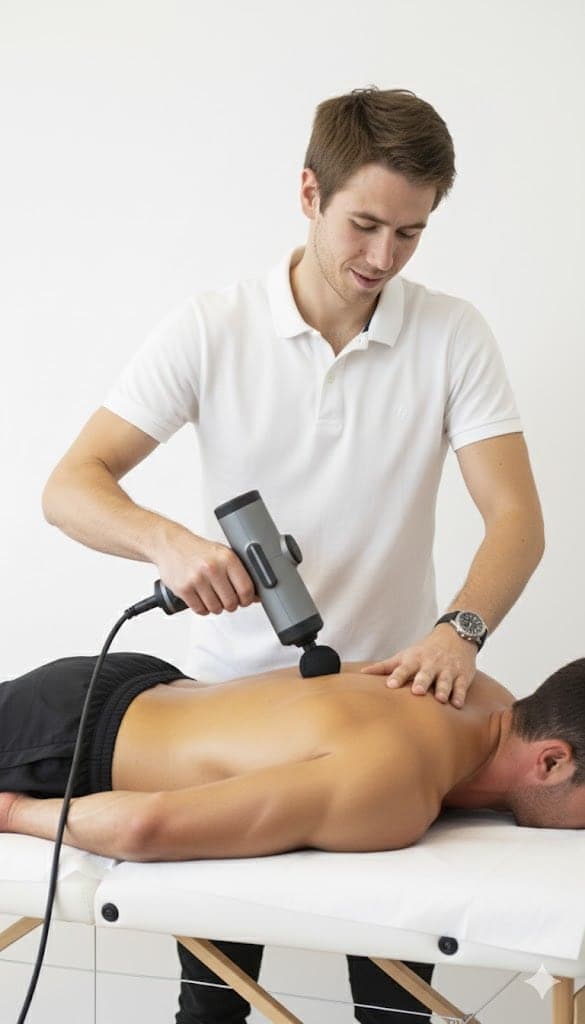
Written by
Chris
Massage therapist, nutrition and exercise physiologist
Norwegian-certified with a Bachelor’s in Physical Education and Nutrition and over ten years of clinical practice, working from a portable table in clients’ homes across the Paphos district.
This article is general information, not a medical diagnosis. If you have severe, worsening or unexplained pain, numbness, weakness, or pain after an accident, see a doctor first.