
Pain Management Techniques in Tsada: A Science-Based Guide to Lasting Relief
In short
Discover advanced pain management techniques in Tsada that address root causes, not symptoms. Expert insights on mechanical therapy, biomechanics, and evidence-based methods for lasting pain relief.
Pain is not something you should learn to live with. After a decade of working directly with the human body—unraveling chronic tension patterns, restoring mechanical function, and witnessing profound transformations in my clients—I’ve learned one critical truth: most people are managing their pain incorrectly. They’re addressing symptoms while ignoring the mechanical dysfunction that created those symptoms in the first place.
In Tsada, as in many communities worldwide, people cycle through temporary solutions: painkillers that mask discomfort, relaxation massages that feel good for a day, stretches that provide momentary relief. Yet the underlying problem—the adhesions, compensatory patterns, and mechanical restrictions embedded deep within muscle tissue—remains completely untouched. This is why pain returns, often worse than before.
My approach to pain management techniques in Tsada represents a fundamental departure from this cycle. With my background in Physical Education and Nutrition from Norway and ten years of specialized experience in advanced biomechanics, I focus exclusively on mechanical deep-tissue intervention that produces measurable, lasting results. This isn’t wellness therapy. This is clinical bodywork designed to durably resolve the structural causes of your pain.
Understanding the Mechanical Origins of Chronic Pain
Before we can discuss effective pain management techniques in Tsada, we need to establish a crucial distinction: the difference between pain as a symptom and pain as a mechanical consequence. Most therapeutic approaches treat pain as if it exists in isolation—a problem to be suppressed or temporarily soothed. This represents a fundamental misunderstanding of how the human body actually functions.
Your body is a mechanical system. When you experience chronic pain in your lower back, shoulder, or neck, that discomfort is almost never the primary problem. It’s a signal—your nervous system’s way of alerting you to underlying mechanical dysfunction. Perhaps you’ve developed fascial adhesions from repetitive movement patterns. Maybe compensatory mechanics from an old injury have created imbalances that overload certain muscle groups. Possibly, accumulated scar tissue has restricted your range of motion, forcing surrounding tissues to work beyond their optimal capacity.
I once worked with a client in Tsada who had spent thousands of euros on various pain management approaches over three years. Chiropractors provided temporary spinal adjustments. Physiotherapists prescribed exercises that addressed surface-level mobility. Pain medication dulled the sensation without changing the underlying condition. When I assessed his movement patterns and palpated the tissue quality in his posterior chain, the actual problem became immediately apparent: severe fascial restriction in his thoracolumbar fascia was creating a mechanical cascade that pulled his pelvis into anterior tilt, overloaded his erector spinae, and generated the “mysterious” lower back pain that nobody had successfully resolved.
Within four sessions using precision mechanical intervention, we released those deep fascial restrictions, restored proper tissue mobility, and eliminated pain that had persisted for three years. This is the difference between treating symptoms and addressing mechanical causes.
Why Traditional Pain Management Approaches Fall Short
Let me be direct about why conventional pain management techniques in Tsada often produce disappointing long-term results. This isn’t meant to disparage other practitioners—many work with genuine skill within their respective frameworks. However, the limitations of their methods are structural, not personal.
The Limitations of Manual Therapy
Traditional massage therapy, even when performed by skilled practitioners, faces inherent biomechanical constraints. Human hands, regardless of training, can only generate limited force and maintain that force for limited duration. When you’re attempting to release deeply embedded fascial adhesions or break down chronic scar tissue, hand-based techniques simply cannot penetrate to the necessary depth with adequate consistency.
I’ve witnessed this repeatedly: a therapist applies maximum pressure for 30 seconds, becomes fatigued, and unconsciously reduces intensity—precisely when the tissue is beginning to respond. The client experiences temporary surface relief, but the deep mechanical restrictions remain unchanged. This is why people report feeling better for a day or two before their symptoms return. The root cause was never adequately addressed.
The Pharmaceutical Trap
Pain medication serves a legitimate purpose in acute injury management and post-surgical recovery. However, as a long-term pain management strategy, pharmaceutical intervention creates a dangerous illusion. You’re chemically blocking pain signals while the mechanical dysfunction that generates those signals continues to worsen.
I’ve worked with clients who took NSAIDs daily for years, masking the progressive deterioration of their tissue quality until they could barely move without medication. When we finally addressed the mechanical problems through deep-tissue intervention, they discovered they had been living with far more dysfunction than they realized—the medication had simply hidden the warning signals.
The Exercise Prescription Paradox
“Strengthen your core.” “Improve your flexibility.” “Do these stretches three times daily.” These recommendations form the foundation of many pain management protocols, and they’re not wrong—they’re just incomplete. If you attempt to strengthen muscles that are mechanically restricted by fascial adhesions, or stretch tissue that’s bound by scar tissue, you’re building fitness on top of dysfunction.
I remember a competitive cyclist in Tsada who followed every exercise protocol his physiotherapist prescribed. He diligently performed his core stability work, his hip mobility drills, his glute activation exercises. Yet his chronic hip pain persisted because nobody had released the deep adhesions in his iliopsoas and the fascial restrictions limiting his hip capsule mobility. Once we eliminated those mechanical restrictions, his exercise program finally produced the intended results.
Advanced Mechanical Intervention: The Foundation of Effective Pain Management
After ten years of specialized work in body mechanics, I’ve refined my approach to pain management techniques in Tsada around a single principle: lasting resolution requires mechanical intervention at the level where dysfunction actually exists. This demands precision, depth, and consistency that exceed human physiological capacity.
This is why I utilize advanced mechanical deep-tissue technology. The specialized equipment I employ delivers force that penetrates 6-8 centimeters into tissue—reaching the deep fascial planes, periosteum, and dense connective tissue where chronic pain originates. This isn’t about working harder; it’s about working at the appropriate depth with surgical precision.
Precision: Targeting the Exact Source of Dysfunction
When I assess a client’s pain pattern, I’m not looking at symptoms—I’m tracing the mechanical chain that produces those symptoms. Using palpation techniques refined over thousands of clinical hours, I identify the specific fascial restrictions, trigger points, and adhesions that create biomechanical imbalance. The mechanical intervention I employ then addresses those precise locations with targeted, controlled force.
Consider a client with chronic shoulder pain. Surface assessment might reveal tender points in the upper trapezius and levator scapulae. However, through systematic evaluation of movement patterns and tissue quality, I often discover the primary restriction lies in the subscapularis or the fascial plane between the serratus anterior and the ribcage. Traditional manual therapy cannot effectively access these deep structures. Mechanical intervention can.
Power: Reaching the Depth Where Change Occurs
Superficial tissue responds readily to light pressure. Deep fascial restrictions, dense scar tissue, and chronic adhesions require substantially greater force to induce plastic deformation—the lasting structural change necessary for lasting pain relief. The mechanical system I use generates consistent, controlled force that human hands simply cannot match, allowing me to work at depths where actual mechanical change occurs.
This isn’t about causing pain during treatment. With precise control over intensity, depth, and angle of application, I work within your tolerance while still achieving the mechanical effects necessary for lasting tissue remodeling. Many clients report that while the sensation is intense, they simultaneously feel the release happening—a profound difference from the ineffective superficial work they’ve experienced elsewhere.
Consistency: Eliminating Variables That Compromise Results
One of the most overlooked factors in pain management outcomes is consistency of intervention. When a therapist uses manual techniques, their effectiveness varies based on fatigue, hand position, body mechanics, and dozens of other variables. Some sessions produce better results than others, making it difficult to establish a predictable treatment trajectory.
Mechanical intervention eliminates this variability. Every stroke delivers identical force, depth, and precision. This consistency allows me to map your progress accurately, adjust protocols based on measurable response, and ensure that each session builds systematically toward lasting resolution. You never experience an “off day” because my tools don’t have off days.
Evidence-Based Pain Management Techniques Available in Tsada
Let me walk you through the specific approaches I integrate when developing customized pain management protocols for clients in Tsada. Each technique addresses distinct mechanical dysfunctions, and the combination is tailored to your specific presentation.
Deep Fascial Release
Fascia—the connective tissue matrix that surrounds, separates, and connects every structure in your body—becomes restricted through injury, repetitive stress, inflammation, and chronic postural dysfunction. These restrictions create mechanical limitations that alter movement patterns, overload certain muscle groups, and generate chronic pain.
Deep fascial release involves applying sustained, directional pressure to fascial planes, inducing viscoelastic deformation that durably restores tissue mobility. I work systematically through the major fascial chains—the superficial back line, the deep front line, the lateral line, the spiral line—identifying and releasing restrictions that create compensatory patterns.
In practical terms, when I release bound fascia in your thoracolumbar region, your pelvis suddenly has freedom to achieve proper positioning. This eliminates the mechanical stress that was generating your lower back pain. When I release fascial restrictions in your anterior shoulder capsule, your humerus can track correctly in the glenoid fossa, eliminating the impingement that created your shoulder pain.
Trigger Point Deactivation
Trigger points—hyperirritable nodules within taut bands of skeletal muscle—generate both local and referred pain patterns. A trigger point in your upper trapezius might produce headaches. A trigger point in your gluteus medius might generate lateral hip and thigh pain. Conventional approaches to trigger point therapy often fail because they lack the mechanical force necessary to fully deactivate these dense nodules.
Using controlled mechanical pressure, I systematically locate and deactivate trigger points throughout the involved muscle groups. The pressure induces local ischemia followed by reactive hyperemia, breaking the metabolic crisis that maintains the trigger point and allowing the muscle to return to normal resting length. The referred pain patterns resolve because we’ve eliminated their mechanical source.
Scar Tissue Remodeling
Whether from surgery, significant injury, or repetitive microtrauma, scar tissue creates mechanical problems that extend far beyond the immediate area. Scar tissue lacks the organized structure of healthy connective tissue, creating areas of restricted mobility that alter movement patterns and generate compensatory stress.
Through systematic mechanical intervention, I induce controlled microtrauma in scar tissue, stimulating fibroblast activity and collagen remodeling. Over multiple sessions, disorganized scar tissue gradually transforms into functional tissue with improved elasticity, strength, and mobility. This process requires patience—tissue remodeling occurs over weeks, not days—but the results are lasting.
Myofascial Stretching
This technique differs fundamentally from conventional stretching. Rather than asking you to hold positions that create tension across entire muscle groups, myofascial stretching involves applying mechanical force to specific tissue while moving the associated joint through its range of motion. This combination of force and movement induces plastic deformation in the tissue being stretched, durably increasing range of motion.
I might apply deep pressure to your hamstring origin while you perform active hip flexion, or work through your pectoral fascia while you move through horizontal abduction. This approach produces immediate, lasting changes in mobility because we’re mechanically restructuring the tissue, not just temporarily elongating it.
Biomechanical Correction Protocols
Pain management isn’t complete until we’ve addressed the movement patterns and postural habits that created your mechanical dysfunction in the first place. Based on my education in Physical Education and years of studying functional biomechanics, I identify the specific movement dysfunctions contributing to your pain pattern.
This might involve correcting your hip hinge mechanics to eliminate lower back stress during daily activities. It could mean retraining your scapular positioning to prevent shoulder impingement during overhead movements. Perhaps we need to modify your sitting posture to reduce cervical spine compression during computer work.
I provide clear, actionable protocols that you can implement immediately, ensuring that as we resolve existing mechanical dysfunctions, you’re not simultaneously creating new ones through poor movement habits.
The Treatment Process: What to Expect
When you engage my services for pain management in Tsada, you’re not purchasing a single massage session. You’re initiating a dedicated partnership focused on durably resolving your pain and optimizing your body’s mechanical function. This requires a systematic approach built on clinical assessment, customized protocols, and progressive intervention.
Initial Comprehensive Assessment
Our first session begins with detailed evaluation. I assess your movement patterns, identifying compensations and restrictions. I palpate tissue quality throughout the involved regions, locating adhesions, trigger points, and areas of fascial restriction. I review your pain history, activities, and any previous interventions you’ve attempted.
This assessment typically reveals that your pain pattern is more complex than you realized—and more treatable than you’ve been told. I explain the mechanical chain creating your symptoms, show you exactly where the primary dysfunctions exist, and outline a realistic timeline for resolution.
Customized Treatment Protocol
Based on the assessment, I develop a specific protocol targeting your particular mechanical dysfunctions. This isn’t a generic approach—it’s a strategic sequence of interventions designed to systematically dismantle the structural problems causing your pain.
Some clients require aggressive fascial release before we can effectively address underlying trigger points. Others need initial trigger point work to reduce protective muscle guarding before we can access deeper fascial restrictions. The sequence matters enormously, and my decade of experience allows me to structure protocols that produce optimal results in minimum time.
Progressive Sessions and Adaptation
Mechanical tissue change occurs progressively. Each session builds on the previous one, releasing deeper layers of restriction as superficial layers regain mobility. I continuously reassess your response, adjusting intensity, focus, and technique based on measurable progress.
Most clients experience significant pain reduction within 2-4 sessions. Complete resolution of chronic pain patterns typically requires 6-10 sessions, depending on the severity and duration of your condition. This timeline is dramatically shorter than the months or years many people spend cycling through ineffective conventional approaches.
Maintenance and Performance Optimization
Once we’ve resolved your pain pattern, we transition to maintenance protocols designed to preserve tissue quality and prevent recurrence. For athletes and physically active individuals, we can advance to performance optimization work—fine-tuning biomechanics to enhance efficiency, power output, and movement quality.
Specialized Pain Management for Common Conditions
Let me address specific pain conditions I frequently treat in Tsada, explaining the mechanical dysfunctions typically involved and how my approach resolves them durably.
| Condition | Primary Mechanical Dysfunction | Intervention Focus | Typical Resolution Timeline |
|---|---|---|---|
| Chronic Lower Back Pain | Thoracolumbar fascial restriction, psoas dysfunction, sacroiliac immobility | Deep fascial release, trigger point work in lumbar erectors and quadratus lumborum | 4-6 sessions |
| Shoulder Impingement | Subscapularis adhesions, anterior capsule restriction, scapular dyskinesis | Deep rotator cuff work, capsular release, periscapular trigger point deactivation | 5-8 sessions |
| Chronic Neck Pain | Suboccipital trigger points, cervical fascial restriction, forward head posture | Suboccipital release, deep cervical work, postural correction protocols | 4-7 sessions |
| Hip Pain/Mobility Issues | Iliopsoas adhesions, hip capsule restriction, glute medius weakness | Deep hip flexor release, capsular mobilization, functional retraining | 5-8 sessions |
| Plantar Fasciitis | Plantar fascial adhesions, calf trigger points, ankle mobility restriction | Deep plantar work, calf release, biomechanical gait correction | 3-6 sessions |
Lower Back Pain: Breaking the Chronic Cycle
Lower back pain represents perhaps the most common reason people seek pain management in Tsada. The standard approach—rest, medication, core strengthening exercises—produces frustratingly inconsistent results because it doesn’t address the mechanical restrictions actually generating the pain.
I worked with a 42-year-old contractor who had suffered debilitating lower back pain for seven years. Multiple practitioners had treated him without lasting success. When I assessed his tissue quality, I discovered severe fascial binding through his thoracolumbar fascia, chronic trigger points in his quadratus lumborum bilaterally, and complete immobility in his sacroiliac joints. His pain wasn’t a back problem—it was a mechanical restriction problem that manifested in his back.
We systematically released the fascial restrictions using deep mechanical intervention, deactivated the trigger points maintaining his muscle guarding, and restored mobility to his sacroiliac joints. By session six, he was pain-free for the first time in seven years. By session eight, he had returned to full work capacity without limitations. Two years later, he remains pain-free because we addressed the mechanical causes, not just the symptoms.
Shoulder Dysfunction: Restoring Mechanical Integrity
The shoulder complex—comprising the glenohumeral joint, scapulothoracic articulation, acromioclavicular joint, and sternoclavicular joint—requires precise mechanical coordination for pain-free function. When adhesions, restrictions, or imbalances disrupt this coordination, pain and dysfunction inevitably follow.
I frequently encounter clients with shoulder pain who’ve been diagnosed with impingement syndrome, rotator cuff tendinitis, or bursitis—diagnostic labels that describe the symptomatic presentation without addressing the underlying mechanical causes. When I palpate their tissue, I consistently find profound restrictions in the subscapularis, adhesions limiting anterior capsule mobility, and trigger points throughout the periscapular musculature.
Through systematic deep-tissue intervention targeting these specific restrictions, I restore the mechanical freedom necessary for normal shoulder function. The impingement resolves because the humeral head can now track correctly in the glenoid fossa. The tendinitis resolves because the rotator cuff muscles can function without mechanical overload. The bursitis resolves because the mechanical irritation that inflamed the bursa has been eliminated.
Why Location and Accessibility Matter
One significant advantage of my service for pain management in Tsada is that I travel directly to your location. This isn’t merely a convenience—it’s a strategic element of effective treatment.
When you’re dealing with significant pain, the prospect of traveling to a clinic, sitting in a waiting room, and then driving home after intensive bodywork creates unnecessary stress and discomfort. By bringing professional equipment and a specialized treatment bench directly to your home, I eliminate these barriers.
More importantly, conducting sessions in your environment allows me to assess the ergonomic and postural factors that may be contributing to your pain patterns. I can evaluate your workspace, your furniture, your sleeping setup—and provide specific recommendations for modifications that support your recovery rather than undermining it.
This approach also facilitates the consistent, frequent sessions that chronic pain resolution often requires. When treatment is convenient and accessible, clients maintain the treatment frequency necessary for optimal results. When treatment requires significant logistical effort, sessions get postponed, progress stalls, and resolution takes far longer than necessary.
The Investment Perspective: Long-Term Value vs. Short-Term Cost
I’m direct with potential clients about pricing: professional, results-driven pain management represents a significant investment. However, when you analyze the economics honestly, this investment delivers extraordinary value compared to the alternatives.
Consider the typical chronic pain journey: years of sporadic massage sessions providing temporary relief, multiple physiotherapy courses producing minimal lasting improvement, ongoing medication costs, lost work productivity due to pain-limited function, diminished quality of life affecting relationships and activities. When you calculate the cumulative cost—both financial and personal—most people have spent thousands of euros while their pain persists or worsens.
My approach typically resolves chronic pain conditions in 6-10 sessions. After this relatively brief intervention period, you’re not managing pain—you’re pain-free. You’re not adjusting your life around limitations—you’re fully functional. You’re not wondering if today will be a bad pain day—you’ve eliminated the mechanical dysfunctions that created those days.
From a pure economic standpoint, spending a concentrated amount over 2-3 months to durably resolve a problem is dramatically more cost-effective than spending smaller amounts indefinitely on approaches that never actually solve the problem. From a quality-of-life standpoint, the return on investment is immeasurable.
Athletic Performance Enhancement Through Pain Resolution
While much of my work focuses on resolving chronic pain, I also work extensively with athletes seeking performance optimization. The principles are identical—mechanical excellence produces both pain-free function and enhanced performance capacity.
I’ve worked with competitive cyclists, runners, triathletes, and strength athletes in Tsada, systematically identifying and eliminating the mechanical restrictions that limit their performance. A cyclist with chronic posterior chain restriction isn’t just experiencing discomfort—they’re losing power output because their muscles cannot generate force through complete range of motion. A runner with fascial restrictions in their lower legs isn’t just dealing with shin pain—they’re losing efficiency with every stride.
By releasing these restrictions through deep mechanical intervention, we simultaneously relieves pain and unlock performance potential. Athletes consistently report immediate improvements in power output, endurance, and movement efficiency following sessions. Over a complete protocol, the performance gains can be dramatic because we’ve removed the mechanical limitations that were capping their potential.
Frequently Asked Questions About Pain Management in Tsada
How is mechanical deep-tissue work different from regular massage?
Regular massage primarily addresses surface muscle tension through manual manipulation. It produces temporary relaxation but rarely creates lasting mechanical change. Mechanical deep-tissue intervention using specialized equipment reaches the deep fascial planes, dense connective tissue, and chronic adhesions where structural dysfunction actually exists. This produces lasting tissue remodeling, not temporary symptom relief. The depth, precision, and consistency of mechanical work exceed what human hands can achieve, which is why it resolves conditions that manual therapy cannot.
Is the treatment painful?
The treatment produces intense sensation, particularly when working through severely restricted tissue. However, I maintain precise control over intensity, continuously adjusting based on your tolerance and tissue response. Most clients describe the sensation as “intensely productive”—they can feel the release happening and understand that we’re addressing the root of their problem. The discomfort during treatment is qualitatively different from their chronic pain: it’s purposeful, controlled, and immediately productive.
How quickly will I experience results?
Most clients notice significant pain reduction within the first 2-3 sessions. However, complete resolution of chronic pain patterns typically requires 6-10 sessions because we’re systematically dismantling structural dysfunctions that developed over years. The timeline depends on the severity of your condition, how long it’s been present, and your body’s individual healing capacity. Unlike approaches that provide temporary relief, my focus is on lasting resolution, which requires adequate time for complete tissue remodeling.
Why do you travel to clients rather than maintain a clinic?
Traveling to your location eliminates the logistical barriers that often prevent people from maintaining consistent treatment frequency. More importantly, working in your environment allows me to assess ergonomic and postural factors contributing to your pain—your workspace, furniture, sleeping setup—and provide specific recommendations that support your recovery. I bring professional equipment including a specialized treatment bench, ensuring you receive clinical-quality treatment in the comfort of your home.
Do you provide exercises or self-care protocols?
Absolutely. While the mechanical intervention I provide creates the structural changes necessary for pain resolution, maintaining those results requires addressing the movement patterns and postural habits that created the dysfunction initially. I provide customized protocols based on your specific presentation—targeted corrective exercises, movement pattern modifications, and self-maintenance techniques. These protocols are essential for preventing recurrence and optimizing long-term outcomes.
Can your approach help if I’ve already tried multiple treatments without success?
This describes the majority of my clients. People seek my services precisely because conventional approaches haven’t resolved their pain. When you’ve tried physiotherapy, chiropractic care, traditional massage, and various other interventions without lasting success, it’s typically because those approaches didn’t address the deep mechanical restrictions actually generating your pain. The depth, precision, and consistency of mechanical intervention allows me to access and resolve dysfunctions that other methods simply cannot reach.
What makes your method superior to conventional physiotherapy?
Conventional physiotherapy emphasizes exercise-based rehabilitation and manual therapy techniques. These approaches have value, particularly for acute injuries and post-surgical recovery. However, when chronic pain stems from deep fascial restrictions, dense adhesions, and structural dysfunctions, exercise alone cannot resolve the problem—you’re attempting to strengthen and mobilize tissue that’s mechanically bound. My approach first eliminates these mechanical restrictions through deep-tissue intervention, creating the structural foundation that allows exercise and movement retraining to produce their intended effects.
How long do results last?
When we’ve completely resolved the mechanical dysfunctions causing your pain and you implement the biomechanical corrections I recommend, results are lasting. We’re not managing symptoms—we’re eliminating structural causes. However, if you return to the movement patterns, postural habits, or activities that created the original dysfunction without implementing corrections, new restrictions can develop over time. This is why I emphasize the partnership aspect: lasting results require both my intervention to resolve existing problems and your commitment to implementing the changes that prevent new problems from developing.
Taking the Next Step Toward Lasting Pain Resolution
If you’re reading this article because you’re dealing with chronic pain that hasn’t responded to conventional treatments, you now understand why those treatments have failed: they’ve been addressing symptoms while ignoring the mechanical dysfunctions that generate those symptoms.
My approach to pain management in Tsada is fundamentally different. With my education in Physical Education and Nutrition, ten years of specialized experience in body mechanics, and exclusive focus on advanced mechanical deep-tissue intervention, I resolve the structural causes of pain—producing lasting results that allow you to reclaim full, pain-free function.
This isn’t relaxation therapy. This isn’t temporary symptom management. This is clinical bodywork designed to durably resolve mechanical dysfunction and optimize your body’s performance capacity. The process requires your commitment to a systematic protocol and your investment in addressing the root causes of your pain, not just suppressing symptoms.
The choice is straightforward: continue cycling through approaches that provide temporary relief while your underlying condition persists or worsens, or commit to a proven system that produces lasting resolution by addressing the mechanical reality of your dysfunction.
I travel to your location in Tsada with professional equipment and everything necessary for clinical-quality treatment. I develop customized protocols targeting your specific mechanical dysfunctions. I partner with you through a systematic process that produces measurable, lasting results.
Your pain exists because of identifiable, treatable mechanical dysfunction. Those dysfunctions will not resolve spontaneously, and they will not respond to superficial interventions. They require the precision, depth, and consistency that only specialized mechanical intervention can deliver.
After ten years and thousands of successful cases, I know exactly what’s required to resolve chronic pain patterns durably. The question isn’t whether your pain can be resolved—it’s whether you’re ready to commit to the process that will resolve it.
Evidence and limits
Massage may help with some symptoms, but benefits and evidence vary by condition. It does not replace medical assessment or treatment. A page update is not evidence of an independent clinical review.
Further reading: Massage therapy: evidence, safety and limitations by US National Center for Complementary and Integrative Health. This is general background reading, not verification of every claim in this article.
How we describe evidence and updates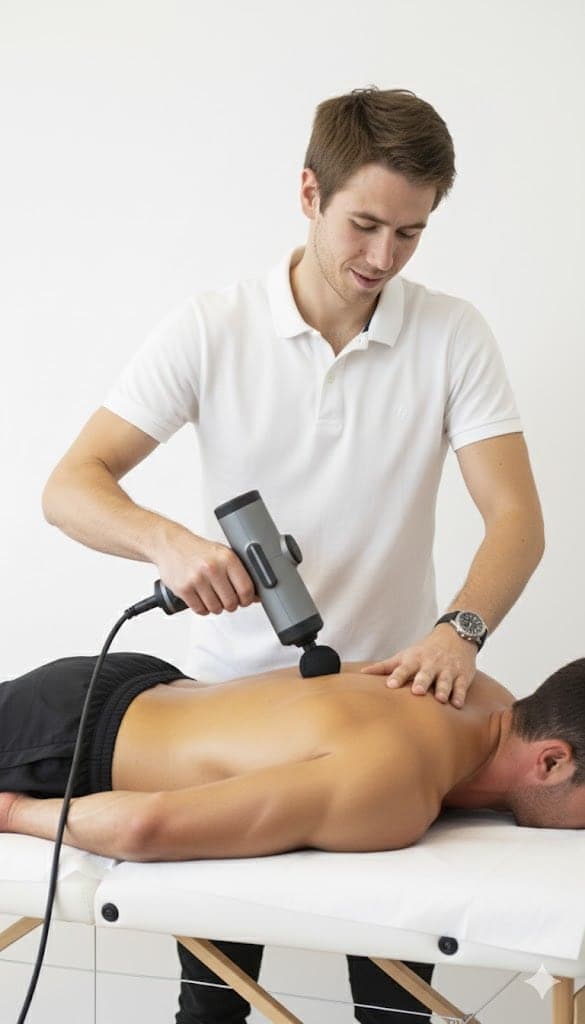
Written by
Chris
Massage therapist, nutrition and exercise physiologist
Norwegian-certified with a Bachelor’s in Physical Education and Nutrition and over ten years of clinical practice, working from a portable table in clients’ homes across the Paphos district.
This article is general information, not a medical diagnosis. If you have severe, worsening or unexplained pain, numbness, weakness, or pain after an accident, see a doctor first.