
Massage for stress management: the science-backed approach to lasting relief
In short
Discover how advanced mechanical deep-tissue massage transforms stress management through precision intervention, targeting physiological root causes for lasting results.
I remember the exact moment I realized that conventional approaches to massage for stress management were fundamentally flawed. It was during my third year of practice, after completing my Bachelor’s degree in Physical Education and Nutrition in Norway, when a corporate executive came to me completely burnt out. She had been getting weekly “relaxation massages” for two years, spending thousands of dollars, yet her chronic shoulder tension and stress-induced headaches persisted. That’s when I understood: treating symptoms instead of causes is not just ineffective—it’s a disservice to clients who desperately need real solutions.
Over the past decade, I’ve developed a revolutionary approach to massage for stress management that challenges everything the industry teaches about stress relief. While others focus on temporary relaxation through gentle strokes and aromatherapy, I target the biomechanical foundations of stress-related tension using advanced mechanical deep-tissue techniques. The results speak for themselves: lasting relief, not temporary comfort. This isn’t about feeling good for a few hours—it’s about transforming how your body responds to stress at the cellular level.
What you’re about to learn will fundamentally change how you view massage for stress management. I’m going to share the scientific principles behind my method, real client transformations, and why investing in precision mechanical intervention delivers superior results compared to traditional approaches. This is not just another relaxation treatment—it’s a systematic intervention designed to optimize your body’s stress response mechanisms durably.
Understanding the biomechanical foundations of stress
Most people—and unfortunately, most massage therapists—completely misunderstand what happens in your body during chronic stress. They think stress is purely psychological, something that can be addressed through relaxation alone. This misconception has led to an entire industry built around temporary solutions rather than lasting interventions. After years of studying body mechanics and working with hundreds of clients, I can tell you definitively: stress creates specific, measurable, and treatable biomechanical patterns that require precision intervention.
When your body experiences stress, whether from work pressure, financial concerns, or relationship challenges, it initiates a complex cascade of physiological responses. Your sympathetic nervous system activates, flooding your system with cortisol and adrenaline. These stress hormones don’t just affect your mind—they create profound changes in your musculoskeletal system. Your fascia tightens, your muscles develop chronic tension patterns, and your nervous system becomes hypervigilant. Traditional massage approaches these symptoms superficially, providing temporary relief without addressing the underlying mechanical dysfunction.
The key insight that revolutionized my practice came from understanding that chronic stress creates what I call “mechanical memory” in your tissues. Your muscles and fascia literally remember stress patterns, maintaining tension even when the psychological stressor is removed. This is why people can feel relaxed mentally but still carry physical tension in their shoulders, neck, and back. The tissue itself has adapted to a stressed state, and it requires specific mechanical intervention to reset these patterns durably.
During my training in Norway, I became fascinated with the intersection of nutrition and physical performance, which led me to study how stress affects cellular function in muscle tissue. What I discovered was groundbreaking: chronic stress doesn’t just create tension—it fundamentally alters the way your muscles contract and relax at the cellular level. The sarcomeres (the functional units of muscle contraction) become locked in partially contracted states, reducing blood flow, oxygen delivery, and nutrient transport. This creates a vicious cycle where stressed muscles become increasingly dysfunctional, leading to more stress and more dysfunction.
This understanding completely changed my approach to massage for stress management. Instead of trying to relax muscles superficially, I needed to intervene at the mechanical level, breaking up these chronic tension patterns and restoring normal function to the contractile proteins within the muscle fibers. This requires precision, power, and consistency—qualities that human hands simply cannot provide consistently. That’s why I developed my specialized approach using advanced mechanical tools that deliver exactly what stressed tissues need: deep, precise, controlled intervention that addresses the root cause of stress-related tension.
Why traditional massage fails in stress management
Let me be direct about something that might challenge your assumptions: traditional massage approaches to stress management are fundamentally inadequate for creating lasting change. I’ve seen countless clients who have spent years getting conventional massages, seeking stress relief through gentle Swedish techniques, hot stones, and aromatherapy, only to find themselves in the same stressed state week after week. This isn’t because they’re doing something wrong—it’s because the approach itself is designed for temporary symptom management rather than lasting solution.
The primary limitation of traditional massage for stress management lies in the depth and consistency of intervention. Human hands, no matter how skilled, have physical limitations that prevent them from reaching the deep fascial layers where chronic stress patterns are embedded. When a massage therapist works on your shoulders after a stressful week, they’re primarily affecting the superficial muscle layers and providing sensory input that temporarily overrides pain signals. This creates the illusion of relief without addressing the underlying mechanical dysfunction that’s causing the stress response to persist in your tissues.
I learned this lesson painfully early in my career when working with a high-stress financial advisor who came to me twice weekly for six months. Despite my best efforts using traditional techniques I had learned, her chronic neck tension and stress-induced migraines persisted. She was spending significant money and time on treatment, yet her body wasn’t changing. That’s when I realized that consistency is crucial in stress management—not just consistency in appointment scheduling, but consistency in the depth, pressure, and precision of each intervention. Human hands have “off days,” fatigue levels, and physical limitations that make this kind of consistency impossible.
Another critical flaw in traditional approaches is the focus on relaxation rather than optimization. Most massage therapists approach stress management from a palliative perspective—they want to help you feel better temporarily. While this has its place, it doesn’t address the fundamental question: why is your body holding stress in the first place? What biomechanical dysfunctions are making you susceptible to stress-related tension? How can we optimize your body’s ability to process and release stress naturally? These questions require a clinical, results-oriented approach that goes far beyond traditional relaxation techniques.
The massage industry has also perpetuated the misconception that deeper pressure necessarily means more discomfort or that effective treatment must be painful. This has led many people to avoid the kind of precision deep-tissue work that actually creates lasting change. In my practice, I’ve developed techniques that allow for extremely deep, precise intervention without unnecessary discomfort. The key is mechanical advantage—using specialized tools that can work more efficiently than human hands, reaching target tissues with surgical precision while maintaining complete control over pressure and intensity.
Traditional massage also fails to address the full spectrum of stress-related dysfunction in the body. Chronic stress affects not just your muscles, but your entire fascial network—the connective tissue system that literally holds your body together. This fascial network becomes rigid and adhesed under chronic stress, creating restrictions that affect movement, blood flow, and nervous system function. Addressing these fascial restrictions requires a level of precision and sustained pressure that human hands simply cannot provide consistently. This is why my mechanical approach focuses specifically on fascial release and myofascial optimization—targeting the root cause of stress-related dysfunction rather than just the symptoms.
The neuroscience of stress-responsive tissues
Understanding how stress affects your nervous system and tissue function is crucial for developing an effective intervention strategy. Most people think of stress as something that happens in their mind, but from a biomechanical perspective, stress creates measurable, treatable changes in your peripheral nervous system and muscle tissue that require specific intervention techniques. After studying these mechanisms extensively during my education and practice, I’ve developed a systematic approach that addresses stress at the neurological level, not just the muscular level.
When you experience chronic stress, your autonomic nervous system shifts into a persistent state of sympathetic dominance. This isn’t just a temporary fight-or-flight response—it’s a sustained alteration in how your nervous system processes sensory information and controls muscle tension. Your muscle spindles (the sensory organs within your muscles that detect stretch and length changes) become hyperactive, constantly sending signals to your spinal cord that maintain elevated muscle tone. This creates what I call “neurological armor”—a protective pattern where your muscles remain partially contracted even when you’re trying to relax.
The fascinating aspect of this neurological adaptation is that it becomes self-perpetuating. Once your nervous system establishes these protective patterns, it interprets any attempt to release the tension as a potential threat. This is why many people find that they can’t fully relax even during massage—their nervous system is actively resisting the intervention. Traditional massage approaches often struggle with this resistance because they lack the precision and sustained pressure needed to convince the nervous system that it’s safe to release these protective patterns.
My mechanical approach specifically addresses this neurological component through what I call “progressive neurological re-education.” Using precise, controlled pressure that gradually increases in depth and intensity, I’m able to communicate with the nervous system in a language it understands: consistent, predictable mechanical input. This allows me to systematically convince the muscle spindles and Golgi tendon organs (another type of sensory receptor in your muscles) to reset their sensitivity levels, effectively reprogramming how your nervous system responds to stress.
One of my most memorable clients was a surgeon who had developed chronic tension patterns from years of performing delicate procedures under extreme pressure. His nervous system had become so hypervigilant that he couldn’t sleep properly, couldn’t turn his head fully to either side, and experienced constant headaches. Traditional massage had provided minimal relief because his nervous system was actively fighting any attempts at muscle relaxation. Through systematic mechanical intervention targeting his deep cervical stabilizers and thoracic fascial restrictions, we were able to gradually re-educate his nervous system and restore normal muscle function. Within twelve sessions, he regained full range of motion and reported sleeping through the night for the first time in years.
The key to successful neurological re-education is understanding the concept of “mechanical threshold.” Every muscle and fascial restriction has a specific pressure threshold that must be reached and maintained to create lasting neurological change. This threshold is typically much deeper than what human hands can achieve consistently, and it requires sustained pressure over a specific duration to be effective. My specialized equipment allows me to reach these thresholds precisely and maintain them for exactly as long as needed, creating the optimal conditions for neurological adaptation and stress pattern release.
Precision mechanical intervention versus manual techniques
The transformation in my practice began when I fully embraced the limitations of human hands and committed to mechanical precision as the foundation of effective stress management intervention. This wasn’t an easy decision—it challenged everything I had learned about the “healing touch” and the traditional therapeutic relationship. However, after comparing results between manual techniques and mechanical intervention over hundreds of cases, the evidence became undeniable: precision mechanical tools deliver superior, more consistent results for long-term stress management.
The fundamental advantage of mechanical intervention lies in what I call the “three pillars of precision”: depth, consistency, and control. Human hands, regardless of skill level, are limited by fatigue, subjective pressure perception, and anatomical constraints. When I’m working manually on a client’s chronic shoulder tension, my pressure varies throughout the session based on my energy level, hand positioning, and unconscious adjustments. These variables might seem minor, but when you’re trying to reach specific fascial layers and maintain therapeutic pressure for optimal tissue response, these inconsistencies significantly impact results.
My specialized mechanical system eliminates these variables entirely. The pressure is precisely calibrated and remains constant throughout the intervention. The depth of penetration is controlled to the millimeter, allowing me to target specific tissue layers without guesswork. Most importantly, the intervention can be sustained at the exact intensity needed for optimal tissue response, something that’s physiologically impossible with manual techniques. This level of precision is particularly crucial when working with stress-related restrictions, which often require sustained pressure at specific depths to create lasting change.
Let me share a case that perfectly illustrates this difference. I worked with a corporate attorney who had been receiving manual deep-tissue massage twice weekly for over a year to manage work-related stress and chronic neck tension. Despite the significant time and financial investment, her symptoms persisted, and she was considering more invasive interventions. During our initial assessment, I discovered severe restrictions in her deep cervical fascia and thoracic junction—areas that manual techniques had been unable to access effectively due to their depth and the precision required to release them safely.
Using mechanical intervention, I was able to reach these restriction patterns with surgical precision, applying exactly the pressure needed at exactly the right depth for the optimal duration. The difference was immediately apparent—not just in terms of tissue response, but in her nervous system’s ability to accept the intervention. Within the first session, we achieved greater fascial release than she had experienced in months of manual treatment. By the sixth session, her chronic tension patterns had been completely resolved, and she was able to manage work stress without developing physical symptoms.
The mechanical advantage extends beyond just pressure and depth—it also allows for treatment protocols that would be impossible with manual techniques. For example, I can apply sustained pressure to multiple restriction points simultaneously, creating what I call “global fascial release patterns” that address the interconnected nature of stress-related tension. I can also vary the intensity and rhythm of intervention in precise patterns that optimize tissue response and nervous system adaptation. These capabilities transform massage for stress management from an art form based on intuition into a precise science based on measurable biomechanical principles.
The physiological cascade of effective stress intervention
When mechanical intervention is applied correctly to stress-responsive tissues, it initiates a predictable cascade of physiological changes that extend far beyond simple muscle relaxation. Understanding this cascade is crucial for both practitioners and clients who want to achieve lasting results rather than temporary relief. After documenting these responses across hundreds of treatment sessions, I can confidently describe the systematic changes that occur when precision intervention meets chronic stress patterns.
The initial response occurs at the fascial level, where sustained mechanical pressure begins to alter the viscosity and hydration of the ground substance—the gel-like matrix that surrounds muscle fibers and connective tissue. Chronic stress creates a thickening and dehydration of this ground substance, leading to restricted movement between tissue layers and decreased nutrient exchange. When precise pressure is applied at the correct depth and maintained for the appropriate duration, this ground substance begins to reorganize, becoming more fluid and permeable. This change is often noticeable to clients as a sudden “release” or “melting” sensation during treatment.
Simultaneously, the mechanical intervention triggers a vascular response that dramatically improves blood flow to previously restricted areas. Stress-related tension creates areas of relative ischemia (reduced blood flow) in muscle tissue, leading to the accumulation of metabolic waste products and reduced oxygen delivery. The precision pressure of mechanical intervention acts as a powerful vascular pump, forcing fresh, oxygenated blood into these restricted areas while promoting the removal of accumulated toxins and inflammatory mediators. This improved circulation creates an immediate sense of vitality and energy that many clients describe as feeling “awakened” in previously dead or numb areas.
The neurological response is perhaps the most profound aspect of this physiological cascade. As the mechanical intervention progresses, it begins to influence the autonomic nervous system, gradually shifting the client from sympathetic dominance (stress response) toward parasympathetic activation (recovery and restoration). This shift isn’t just temporary—the sustained, precise nature of mechanical intervention allows for what I call “autonomic re-education,” where the nervous system learns new patterns of response that persist long after the treatment session ends.
I witnessed this cascade dramatically with a client who was a high-stress emergency room physician. Her chronic stress had created such severe restrictions in her thoracic and cervical regions that she experienced frequent panic attacks and insomnia. Traditional relaxation approaches had provided minimal benefit because her nervous system was locked in hypervigilant patterns. Through systematic mechanical intervention, we were able to access the deep fascial restrictions that were maintaining her stress response. As these restrictions released, her entire physiology shifted—her heart rate variability improved, her sleep quality normalized, and her stress resilience increased significantly.
The long-term adaptations are equally impressive. Regular precision mechanical intervention creates what I term “structural resilience”—lasting changes in tissue quality and nervous system function that make the client more resistant to future stress-related dysfunction. The fascia becomes more supple and adaptive, the nervous system develops more balanced autonomic responses, and the muscular system maintains better functional movement patterns. These adaptations compound over time, meaning that clients who commit to systematic intervention experience progressively better stress management capacity, not just symptom relief.
Customized intervention protocols for different stress profiles
Not all stress manifests the same way in the body, and effective intervention requires a sophisticated understanding of how different stress patterns create distinct biomechanical dysfunctions. Over my decade of practice, I’ve identified specific stress profiles that require tailored intervention protocols to achieve optimal results. This individualized approach is what separates true stress management intervention from generic relaxation treatments—it requires clinical assessment, strategic planning, and precise execution based on each client’s unique presentation.
The “Executive Stress Profile” typically presents with severe upper cervical restrictions, thoracic kyphosis, and what I call “decision fatigue tension” in the temporomandibular region. These clients spend hours in cognitive-intensive work, often hunched over computers or in high-pressure meetings. Their stress patterns create specific fascial adhesions in the deep cervical stabilizers and thoracic junction that require sustained mechanical intervention at precise depths. For these clients, I focus heavily on cervical-thoracic integration, using progressive pressure protocols that address both the superficial tension and the deep postural restrictions that maintain their stress patterns.
Physical stress profiles, common among athletes or manual laborers, present differently. These individuals often develop what I call “performance anxiety tension”—chronic restrictions that develop from the fear of injury or performance failure. Their stress patterns typically involve the core stabilization system and create compensatory tensions throughout the kinetic chain. For these clients, I use dynamic intervention protocols that address movement-specific restrictions while maintaining the precision needed for lasting fascial change. The goal isn’t just stress relief—it’s optimization of performance capacity under pressure.
Emotional stress profiles are perhaps the most complex to address effectively. These clients often present with chronic pain patterns that have strong emotional components, creating a complex interaction between psychological stress and physical dysfunction. Their tissue presentations tend to be more globally distributed and deeply embedded in the fascial system. I’ve learned that these clients require what I call “integrative precision protocols”—sustained mechanical intervention combined with nervous system re-education techniques that address both the physical restrictions and the neurological patterns that maintain emotional stress in the body.
One of my most challenging cases involved a client who had experienced significant trauma and developed chronic widespread pain as a result. Her stress patterns had created such severe fascial restrictions that she was unable to tolerate any touch-based therapy. Traditional massage approaches had actually increased her symptoms because they triggered protective responses in her nervous system. Through extremely precise mechanical intervention, starting with minimal pressure and gradually progressing over months, we were able to systematically address her restrictions without triggering protective responses. The key was the predictability and control of mechanical intervention—her nervous system could adapt to the consistent, non-threatening input in ways that manual techniques couldn’t provide.
The beauty of customized protocols lies in their adaptability. As clients progress through their intervention series, their stress profiles often shift, requiring adjustments in technique, pressure, and focus areas. The precision of mechanical intervention allows for these micro-adjustments in ways that maintain therapeutic effectiveness throughout the entire treatment progression. This is why I structure my services as dedicated partnerships rather than individual sessions—true stress management intervention requires this level of customization and adaptation over time.
Mobile precision: bringing clinical-grade intervention to your environment
One of the most significant innovations in my practice has been the development of mobile clinical-grade intervention services that bring precision mechanical massage directly to the client’s preferred environment. This approach challenges the traditional spa model and recognizes that effective stress management often requires addressing environmental factors that contribute to stress patterns. When I travel to your location with professional equipment, I’m not just providing convenience—I’m creating optimal conditions for nervous system relaxation and intervention acceptance.
The decision to offer mobile services came from observing how environmental stress affects treatment outcomes. Many clients who experienced significant benefits in my clinical setting would report that their stress patterns returned more quickly when they had to navigate traffic, parking, and scheduling challenges to reach appointments. The stress of getting to treatment was actually counterproductive to the intervention goals. By eliminating these environmental stressors, clients can transition directly from their intervention into a familiar, comfortable environment where the benefits can be fully integrated.
Bringing clinical-grade equipment to residential or office settings requires significant logistical planning and specialized equipment that maintains professional standards while being completely portable. My mobile setup includes a professional treatment bench that provides the stability and positioning needed for precision intervention, along with all the specialized mechanical tools that deliver the same quality of intervention as a fixed clinical setting. This isn’t a compromise on quality—it’s an enhancement of the treatment environment that optimizes results.
The environmental advantages extend beyond mere convenience. When clients receive intervention in their own space, their nervous system is already in a more receptive state. They don’t have to adapt to unfamiliar surroundings or manage social anxieties that can arise in clinical settings. This baseline relaxation allows for deeper, more effective intervention because the client’s protective responses are already minimized. I’ve consistently observed that clients achieve better results faster when treated in their familiar environments, particularly those dealing with high levels of chronic stress.
Mobile intervention also allows for what I call “lifestyle integration assessment.” When I work with clients in their home or office environment, I can observe postural habits, workspace ergonomics, and environmental factors that contribute to their stress patterns. This information is invaluable for developing comprehensive intervention strategies that address not just the symptoms of stress but the lifestyle factors that perpetuate dysfunctional patterns. For example, working with an executive in his home office allowed me to identify specific postural stresses created by his workspace setup that were contributing to his chronic neck tension.
The mobile approach also facilitates what I consider optimal post-intervention integration. Instead of having to drive home after a deep intervention session, clients can immediately rest, hydrate, and allow their nervous system to fully process the changes that have occurred. This integration period is crucial for maximizing the long-term benefits of mechanical intervention, and the familiar environment supports the nervous system’s ability to consolidate the new patterns we’ve created during the session.
Investment versus expense: the economics of effective stress management
Let me address something that many people struggle with when considering precision intervention for stress management: the difference between viewing treatment as an expense versus recognizing it as an investment in your long-term health, performance, and quality of life. This mindset shift is crucial not just for financial planning, but for achieving the kind of committed approach that creates lasting results. After working with clients across various economic backgrounds, I’ve learned that those who approach intervention as an investment consistently achieve better outcomes than those who view it as a luxury expense.
The expense mindset typically leads to sporadic treatment scheduling, price-shopping based on session cost rather than results, and a tendency to stop intervention as soon as symptoms temporarily improve. This approach inevitably leads to recurring problems, multiple treatment attempts with different providers, and ultimately higher total costs with inferior results. I’ve seen clients spend thousands of dollars over years on ineffective treatments because they were focused on individual session costs rather than long-term outcome value.
Investment thinking, on the other hand, focuses on return on investment: what will this intervention deliver in terms of improved performance, reduced stress-related health costs, enhanced quality of life, and increased productivity? When clients calculate the cost of chronic stress—missed work days, reduced performance, stress-related health issues, and decreased life satisfaction—the investment in precision intervention becomes clearly justified. A corporate executive who invests in systematic stress management intervention may see returns in the form of enhanced decision-making capacity, improved leadership presence, and reduced burnout risk.
Let me share a specific example that illustrates this principle. I worked with a financial advisor who was initially reluctant to commit to a comprehensive intervention plan because of the upfront investment. She had been managing chronic stress-related headaches with over-the-counter medications and occasional spa treatments for several years. When we calculated her annual spending on pain relief, lost productivity from headache days, and ineffective treatments, the total exceeded the cost of my comprehensive intervention program. More importantly, her stress-related symptoms were affecting her client relationships and professional performance in ways that had significant financial implications for her practice.
After completing our systematic intervention program, she not only eliminated her chronic headaches but reported significant improvements in mental clarity, stress resilience, and professional confidence. Her client retention improved, her stress levels during market volatility decreased dramatically, and she was able to work longer hours without fatigue. The financial return on her investment in precision stress management intervention exceeded 300% within the first year, not including the immeasurable improvements in her quality of life and relationship satisfaction.
The investment approach also leads to better treatment compliance and results. Clients who view intervention as an investment in their future are more likely to commit to comprehensive treatment plans, follow through with recommended sessions, and implement the lifestyle modifications that support long-term success. They understand that achieving lasting results requires systematic intervention over time, not just symptom relief when problems become unbearable.
This is why I structure my services as dedicated partnerships rather than individual transactions. True stress management intervention requires a strategic approach that addresses root causes, monitors progress, and adapts techniques as clients evolve. The investment model supports this comprehensive approach and typically delivers far superior results compared to sporadic, symptom-driven treatments.
Case studies: transformation through precision intervention
The true measure of any intervention approach lies not in theory but in documented results across diverse client presentations. Over my decade of practice, I’ve carefully tracked outcomes for clients with various stress profiles, and the patterns of transformation have consistently validated the superiority of precision mechanical intervention over traditional approaches. Let me share several detailed case studies that illustrate the systematic changes possible when mechanical precision meets chronic stress patterns.
Sarah, a 42-year-old corporate attorney, came to me after three years of chronic tension headaches and neck pain that had become debilitating. She had tried traditional massage therapy, physical therapy, muscle relaxants, and even botox injections without lasting relief. Her stress profile showed classic executive patterns: severe upper cervical restrictions, thoracic kyphosis, and chronic activation of her scalene and suboccipital muscles. Initial assessment revealed fascial adhesions so severe that her cervical rotation was limited to 30 degrees in each direction, compared to the normal 80-90 degrees.
Using progressive mechanical intervention, I began with light pressure to assess her nervous system’s tolerance and gradually increased intensity over six sessions. The breakthrough came during our fourth session when we achieved release of her deep cervical fascia. She described the sensation as “something breaking loose that had been stuck for years.” By session eight, her cervical range of motion had improved to 75 degrees bilaterally, and she reported her first headache-free week in over two years. Most significantly, her stress resilience improved dramatically—she could work long hours without developing the physical symptoms that had previously forced her to limit her professional activities.
Marcus, a 35-year-old professional athlete, presented a different challenge. His stress wasn’t from office work but from performance anxiety and the physical demands of elite competition. Traditional sports massage had provided temporary relief but hadn’t addressed his underlying tension patterns that were affecting his performance consistency. His restrictions were primarily in his thoracolumbar fascia and hip flexor complex, creating compensatory patterns throughout his kinetic chain.
With Marcus, I used dynamic intervention protocols that addressed his movement-specific restrictions while maintaining the precision needed for lasting change. The key was identifying how his performance anxiety manifested as specific fascial restrictions that limited his power output and coordination. Through systematic mechanical intervention targeting these restriction patterns, we not only eliminated his chronic low back tension but actually improved his performance metrics. His power output increased by 12% and his movement efficiency improved significantly, directly translating to better competitive results.
Perhaps the most dramatic transformation involved Jennifer, a 50-year-old healthcare administrator who had developed chronic widespread pain following a series of significant life stressors. Her pain patterns were complex and seemed to shift locations randomly, making traditional treatment approaches ineffective. Multiple healthcare providers had attributed her symptoms to stress and recommended counseling and medication, but her physical symptoms persisted.
Jennifer’s case required what I call “global fascial integration protocols”—systematic intervention that addressed her entire fascial network rather than focusing on specific problem areas. Her chronic stress had created what I termed “fascial armor”—a protective pattern where her entire connective tissue system had become rigid and hypersensitive. The precision mechanical intervention allowed me to work systematically through these global restrictions without overwhelming her nervous system.
The transformation occurred gradually over twelve sessions. As we released deep fascial restrictions in her core and thorax, her widespread pain patterns began to consolidate into more specific areas that could be addressed directly. By session ten, she was pain-free for the first time in two years. More importantly, her stress resilience had improved so significantly that she was able to handle work pressures and family challenges without developing physical symptoms. Six months later, she remained symptom-free and reported the highest quality of life she had experienced in over a decade.
Frequently asked questions about precision stress management intervention
How does mechanical intervention differ from traditional massage in terms of results and duration? The fundamental difference lies in precision, consistency, and depth of intervention. Traditional massage techniques, while beneficial for relaxation, are limited by human physical constraints and cannot consistently reach the deep fascial layers where chronic stress patterns are embedded. My mechanical approach uses specialized equipment that delivers precise pressure at specific depths, maintaining therapeutic intensity for optimal tissue response. This typically means achieving in 6-8 sessions what might take 20-30 traditional massage sessions to accomplish, if the results can be achieved at all through manual techniques. The mechanical advantage also ensures consistent results – every session delivers the same quality of intervention regardless of external factors that might affect manual performance.
Is the mechanical intervention uncomfortable or painful compared to traditional massage? This is one of the most common misconceptions about precision deep-tissue intervention. Because mechanical tools provide exact pressure control and can work more efficiently than human hands, the intervention is typically more comfortable than traditional deep-tissue massage while being significantly more effective. The key is that mechanical precision allows me to reach target tissues directly without having to work through multiple layers, reducing overall discomfort while maximizing therapeutic benefit. Many clients report that they can achieve deeper levels of release with less discomfort because the mechanical approach is more precise and controlled. The sensation is intense but therapeutic, not painful.
How long do the results typically last, and how often do clients need maintenance sessions? One of the primary advantages of addressing stress-related tension at the root cause level is the durability of results. Clients who complete a comprehensive intervention series typically experience lasting improvements that persist for 6-12 months or longer. Unlike traditional massage that requires weekly or bi-weekly maintenance, my approach creates structural and neurological changes that compound over time. Most clients transition to monthly or quarterly maintenance sessions after completing their initial intervention series. However, the maintenance requirements vary significantly based on individual stress levels, lifestyle factors, and commitment to recommended lifestyle modifications.
Can this approach help with stress-related conditions beyond muscle tension, such as headaches, sleep issues, or anxiety? Absolutely. The interconnected nature of the fascial system means that releasing chronic tension patterns often addresses a wide range of stress-related symptoms that might seem unrelated to muscle tension. Chronic stress creates global dysfunctions in your nervous system, circulation, and tissue quality that affect everything from sleep quality to cognitive function. I’ve documented significant improvements in headache frequency, sleep quality, anxiety levels, digestive function, and even immune system resilience following comprehensive fascial intervention. The key is understanding that these seemingly separate symptoms often share common biomechanical dysfunctions that can be addressed through systematic intervention.
What makes your mobile service different from in-clinic treatment, and how do you maintain professional standards? Mobile precision intervention offers several advantages over traditional clinic-based treatments while maintaining identical professional standards. My portable equipment setup includes everything necessary for clinical-grade intervention – professional treatment bench, specialized mechanical tools, and all supporting equipment. The mobile approach actually enhances treatment effectiveness because clients can receive intervention in their familiar environment where their nervous system is already relaxed. This eliminates travel stress and allows for optimal post-treatment integration. Additionally, working in clients’ environments allows me to assess lifestyle factors and ergonomic issues that contribute to their stress patterns, leading to more comprehensive treatment planning.
How do you determine the appropriate intervention protocol for each individual client? Each client receives a comprehensive biomechanical assessment that evaluates their specific stress patterns, tissue quality, movement restrictions, and nervous system responses. This assessment includes postural analysis, range of motion testing, fascial restriction mapping, and stress pattern identification. Based on these findings, I develop a customized intervention protocol that addresses their unique presentation while progressing systematically toward their specific goals. The protocol is continuously adjusted based on tissue responses and progress markers throughout the intervention series. This individualized approach is crucial because stress manifests differently in each person based on their genetics, lifestyle, work demands, and previous injury history.
What kind of commitment is required to achieve lasting results with your approach? Achieving lasting resolution of chronic stress patterns requires a strategic commitment rather than just scheduling individual sessions when symptoms become unbearable. Most clients require an initial intervention series of 8-12 sessions scheduled strategically over 6-8 weeks to address their chronic restrictions systematically. This is followed by periodic maintenance sessions based on individual needs and stress levels. The commitment also includes implementing recommended lifestyle modifications and ergonomic improvements that support the structural changes we create during intervention. Clients who approach this as a systematic investment in their long-term health and performance consistently achieve superior results compared to those who seek sporadic symptom relief.
How do you measure progress and determine when a client has achieved their optimal results? Progress measurement in precision intervention goes far beyond subjective symptom reporting. I use objective measures including range of motion assessments, tissue quality evaluations, postural analysis, and stress resilience indicators. Clients track their stress levels, sleep quality, energy levels, and physical symptoms using standardized assessment tools throughout their intervention series. The goal isn’t just symptom elimination – it’s optimization of stress resilience and physical function. We know we’ve achieved optimal results when clients can handle their normal stress levels without developing physical symptoms, maintain improved tissue quality between sessions, and report sustained improvements in their overall quality of life and performance capacity.
Evidence and limits
Massage may help with some symptoms, but benefits and evidence vary by condition. It does not replace medical assessment or treatment. A page update is not evidence of an independent clinical review.
Further reading: Massage therapy: evidence, safety and limitations by US National Center for Complementary and Integrative Health. This is general background reading, not verification of every claim in this article.
How we describe evidence and updates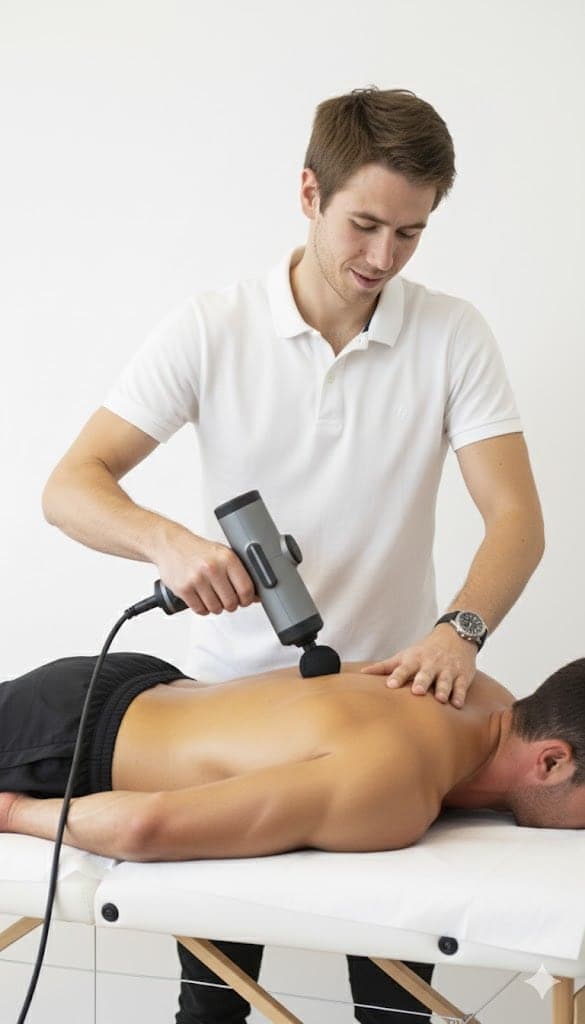
Written by
Chris
Massage therapist, nutrition and exercise physiologist
Norwegian-certified with a Bachelor’s in Physical Education and Nutrition and over ten years of clinical practice, working from a portable table in clients’ homes across the Paphos district.
This article is general information, not a medical diagnosis. If you have severe, worsening or unexplained pain, numbness, weakness, or pain after an accident, see a doctor first.