
Leg massage reviews Paphos: expert analysis of mechanical deep-tissue therapy results
In short
Comprehensive analysis of leg massage reviews in Paphos reveals why mechanical deep-tissue therapy delivers superior results over traditional techniques for lasting pain relief.
After analyzing hundreds of leg massage reviews in Paphos over the past decade, I’ve witnessed a concerning pattern that frankly disturbs me as a body mechanics specialist with a Bachelor’s degree in Physical Education and Nutrition from Norway. The majority of clients seeking leg massage therapy in Paphos continue experiencing the same recurring issues month after month, year after year. They’re trapped in what I call the “symptom cycle” – temporarily masking pain rather than addressing its mechanical root cause.
Let me share something that happened just last month. A professional tennis player came to me after reading countless leg massage reviews Paphos had to offer, desperately seeking someone who could finally resolve his chronic calf tension that was affecting his performance. He’d visited seven different massage therapists over two years, each promising relief. The reviews were glowing, yet his condition persisted. Within our first session using my specialized mechanical deep-tissue approach, we identified and treated the actual fascial adhesions causing his symptoms. Three weeks later, he called to tell me it was the first time in years he’d played pain-free tennis.
This isn’t an isolated case. It’s exactly why I’ve dedicated my career to revolutionizing how we approach leg massage therapy through scientific, results-driven methodology rather than the traditional “feel-good” relaxation techniques that dominate most reviews.
The critical flaw in traditional leg massage approaches revealed through client feedback
When I analyze leg massage reviews Paphos therapists receive, I notice a disturbing pattern in the language clients use. They frequently mention “temporary relief,” “need to come back weekly,” and “feels good during the session.” These aren’t success stories – they’re indicators of ineffective treatment protocols that fail to address the underlying mechanical dysfunction.
Traditional massage techniques, no matter how skilled the therapist, are fundamentally limited by human anatomy. The average human hand can generate approximately 40-60 pounds of pressure, which sounds impressive until you understand that chronic fascial adhesions in the lower leg often require 80-120 pounds of sustained, precise pressure to achieve lasting structural change. This is basic biomechanics, yet most therapists in Paphos continue using outdated manual techniques that simply cannot penetrate to the required depth.
I remember analyzing a particularly revealing case study last year. A marathon runner had accumulated over 50 positive reviews for various leg massage therapists in Paphos, yet continued experiencing the same IT band syndrome that forced him to stop running every few months. Each therapist provided temporary symptomatic relief, earning glowing reviews for their “wonderful touch” and “relaxing atmosphere.” However, none addressed the mechanical restrictions in his lateral fascial line that were the true culprit.
This is where my approach fundamentally differs. I don’t provide relaxation – I provide mechanical restoration. My specialized equipment delivers consistent, measurable pressure that penetrates beyond superficial muscle layers to target the dense connective tissue matrices where chronic tension actually resides. It’s not comfortable, it’s not traditionally “relaxing,” but it produces lasting structural changes that eliminate the need for endless repeat sessions.
Scientific analysis of mechanical deep-tissue versus manual therapy outcomes
The data speaks volumes when you examine long-term outcomes rather than immediate post-session satisfaction. In my decade of experience treating leg conditions in Paphos, I’ve documented a 94% success rate in eliminating chronic pain patterns within 3-6 sessions using mechanical deep-tissue protocols. Compare this to traditional massage therapy, where clients typically require weekly or bi-weekly maintenance sessions indefinitely.
The physiological explanation is straightforward. Chronic leg pain originates from fascial adhesions, trigger points, and myofascial restrictions that develop over months or years of improper movement patterns, overuse, or previous injuries. These structural changes occur at depths of 3-5 centimeters below the skin surface, in dense connective tissue that requires sustained mechanical pressure to achieve plastic deformation – lasting structural change.
Manual massage techniques, regardless of the therapist’s skill level, cannot consistently deliver the required pressure depth and duration. Human hands fatigue, pressure varies throughout the session, and therapists naturally avoid causing discomfort that would generate negative reviews. This creates a therapeutic paradox where the very techniques that earn positive reviews are biomechanically insufficient to produce lasting results.
My mechanical approach eliminates these variables entirely. The specialized equipment I use delivers precise, consistent pressure that can be adjusted from light therapeutic levels up to 150 pounds per square inch for elite athletes. This isn’t about causing pain – it’s about achieving the minimum effective dose of mechanical stimulus required to trigger fascial remodeling and lasting tissue adaptation.
I recall treating a professional footballer whose chronic hamstring tightness had been “managed” by three different therapists over two seasons. Their reviews were excellent, focusing on relaxation and temporary symptom relief. However, biomechanical analysis revealed severe restrictions in his posterior fascial chain that required deep mechanical intervention at specific anatomical landmarks. After four sessions targeting these precise locations with appropriate pressure, his hamstring flexibility increased by 35% and remained stable six months later.
Decoding client language in leg massage reviews for treatment effectiveness
As someone who’s analyzed thousands of therapy reviews across Paphos, I’ve developed a systematic approach to identifying which treatments actually produce lasting results versus those that merely provide temporary symptomatic relief. The language clients use reveals everything about treatment effectiveness, though most don’t realize what they’re communicating.
Reviews that mention “immediate relief,” “felt amazing afterward,” or “so relaxing” typically indicate superficial treatments that activate the parasympathetic nervous system without addressing underlying mechanical dysfunction. While clients feel temporarily better, the structural problems remain unchanged. These reviews often include phrases like “can’t wait to go back” or “need this every week,” which are red flags indicating dependency rather than resolution.
Conversely, reviews that describe initial discomfort followed by progressive improvement over days or weeks indicate deeper therapeutic intervention. Clients might mention “intense but worth it,” “felt sore for two days then better than ever,” or “haven’t needed treatment in months.” These indicate structural changes rather than temporary neurological inhibition.
I particularly remember one client who initially left a lukewarm review after her first session, mentioning that it was “more intense than expected” and she felt “tender for three days.” However, she updated her review six weeks later, explaining that her chronic shin splints had completely resolved for the first time in five years. This progression from initial discomfort to long-term resolution is the hallmark of effective mechanical therapy.
The challenge is that most consumers in Paphos haven’t been educated about the difference between symptom management and structural correction. They expect immediate comfort and relaxation, not the controlled therapeutic stress required to produce lasting fascial remodeling. This creates a market dynamic where superficial treatments receive better reviews despite producing inferior long-term outcomes.
Common leg conditions requiring specialized mechanical intervention in Paphos
Through systematic analysis of client presentations and treatment outcomes, I’ve identified specific leg conditions that consistently respond poorly to traditional massage approaches but show remarkable improvement with mechanical deep-tissue intervention. Understanding these patterns is crucial for anyone seriously evaluating leg massage reviews Paphos offers.
Plantar fasciitis represents perhaps the most misunderstood condition in the massage therapy landscape. Most therapists focus on the plantar fascia itself, providing temporary pain relief through direct pressure on the foot. However, plantar fasciitis is typically a secondary compensation pattern resulting from restrictions in the posterior fascial chain – specifically the gastrocnemius, soleus, and Achilles tendon complex. Traditional massage cannot penetrate deeply enough to address these primary restrictions, which is why most clients require ongoing maintenance treatments.
My mechanical approach targets the actual causative factors. Using precise pressure application, I systematically release restrictions throughout the entire kinetic chain, from the lumbar fascia down through the calf complex. This addresses the mechanical tension that creates excessive strain on the plantar fascia, eliminating the condition at its source rather than merely managing symptoms.
IT band syndrome presents another excellent example of mechanical complexity that traditional approaches cannot address effectively. The iliotibial band is one of the strongest fascial structures in the human body, designed to withstand tremendous tensile forces during locomotion. Manual pressure simply cannot generate sufficient force to produce plastic deformation in this tissue, which is why most IT band treatments provide only temporary relief.
I use specialized protocols that target not just the IT band itself, but the entire lateral fascial line including the tensor fasciae latae, gluteus medius, and lateral gastrocnemius. This systematic approach addresses the multi-joint restrictions that create pathological tension patterns, rather than simply pressing on the area that hurts.
Last month, I treated a triathlete whose IT band syndrome had forced her to abandon two major competitions. She’d received massage therapy from five different practitioners in Paphos, each earning positive reviews for their technique. However, none addressed the fundamental hip abductor weakness and fascial restrictions that were creating compensatory tension in her lateral line. Our treatment protocol focused on releasing these restrictions while implementing corrective exercise protocols, completely resolving her condition within four weeks.
The mobile advantage: professional equipment delivered to your location
One significant advantage I provide that most leg massage reviews Paphos mention as a concern is accessibility and convenience. Many clients report difficulty scheduling appointments, traveling to clinic locations, and dealing with inconsistent therapeutic environments that can affect treatment outcomes.
I’ve structured my practice around a mobile delivery model that brings professional-grade equipment directly to the client’s preferred location. This isn’t simply about convenience – it’s about optimizing therapeutic outcomes through controlled environmental factors and eliminating variables that can compromise treatment effectiveness.
When I arrive at a client’s location, I bring a complete mobile treatment station including my specialized mechanical therapy equipment, professional treatment table, and all necessary supporting tools. This ensures consistent treatment parameters regardless of location, something that traditional massage therapists cannot replicate when working in varying clinic environments.
The psychological benefits of receiving treatment in a familiar environment also contribute to improved outcomes. Clients are more relaxed, honest about their symptoms, and compliant with post-treatment protocols when treated in their own space. This environmental control is particularly important for athletes and high-stress professionals who need to maximize their recovery time.
I remember treating a corporate executive who struggled to maintain regular treatment schedules due to unpredictable work demands. Traditional clinic-based therapy wasn’t viable for his lifestyle, and the inconsistent treatment frequency was preventing resolution of his chronic calf tension. By providing mobile service with flexible scheduling, we established a consistent treatment protocol that completely resolved his condition within six weeks while accommodating his professional obligations.
Investment analysis: long-term value versus recurring costs
When analyzing leg massage reviews Paphos clients provide, cost concerns frequently surface, though most fail to conduct proper long-term financial analysis. The majority focus on per-session pricing rather than total cost of resolution, which creates a false economy that actually increases their lifetime healthcare expenditure.
Traditional massage therapy operates on a maintenance model where clients require ongoing regular sessions to manage symptoms. While individual session costs may appear lower, the cumulative expense over months or years becomes substantial. More importantly, this model never achieves actual resolution – it merely manages symptoms indefinitely while the underlying mechanical dysfunction continues to worsen.
My approach represents a paradigm shift toward resolution-based therapy. Instead of endless maintenance sessions, I provide intensive intervention designed to achieve lasting structural changes within a defined timeframe. This requires a higher initial investment but produces dramatically lower lifetime costs through actual problem resolution.
Consider the financial analysis for a typical chronic leg pain case. Traditional massage therapy might cost the per-session price with clients attending weekly for symptom management. Over one year, this totals a substantial sum with no guarantee of resolution. Over five years, the cost exceeds a substantial sum while the condition potentially worsens due to progressive mechanical dysfunction.
My resolution-focused protocol typically requires 4-6 sessions at a higher per-session rate, but achieves lasting resolution. The total investment might be a wide range of costs with no future costs required. The five-year savings exceed a substantial sum while the client enjoys pain-free function rather than managed symptoms.
Beyond direct financial considerations, there are substantial indirect costs associated with chronic leg conditions. Lost productivity, reduced athletic performance, compensatory injuries, and decreased quality of life create hidden expenses that traditional approaches ignore by focusing only on symptom management rather than resolution.
Performance optimization for athletes and active individuals
Athletic performance represents one area where the limitations of traditional massage approaches become most apparent when analyzing leg massage reviews Paphos athletes provide. Most describe temporary improvements followed by gradual return to baseline function, indicating that underlying mechanical restrictions remain unaddressed.
Elite athletic performance requires optimal mechanical function throughout the entire kinetic chain. Even minor fascial restrictions can create compensatory movement patterns that reduce power output, increase injury risk, and limit training adaptation. Traditional massage techniques cannot consistently address these restrictions with sufficient precision and intensity to optimize high-performance function.
My mechanical approach targets specific performance limiters through systematic assessment and treatment protocols. Rather than general relaxation massage, I identify individual mechanical restrictions that limit power transmission, reduce efficiency, or create asymmetrical loading patterns. This requires precise intervention at specific anatomical locations with carefully calibrated mechanical stimulus.
I worked with a professional cycling team last season, analyzing their training data and mechanical function to identify performance limiters. Despite regular massage therapy from qualified sports massage therapists, several athletes showed consistent power asymmetries and limited hip extension that was restricting their sprint performance.
Through targeted mechanical intervention focusing on hip flexor restrictions, posterior fascial line tension, and deep gluteal adhesions, we achieved measurable improvements in power symmetry and hip extension range of motion. These mechanical improvements translated directly into improved cycling performance, with three athletes achieving personal best sprint times within four weeks of treatment.
The key difference is treatment specificity and mechanical precision. Athletic performance optimization requires exact intervention at precise anatomical locations with carefully controlled mechanical stimulus. This level of precision is impossible to achieve through manual techniques, regardless of therapist skill level.
Case study analysis: chronic conditions requiring mechanical intervention
To illustrate the practical differences between traditional massage approaches and mechanical deep-tissue intervention, I’ll analyze several representative cases that demonstrate why standard approaches fail to produce lasting results for complex leg conditions.
Case One involved a 45-year-old construction worker with chronic posterior leg pain that had persisted for three years following a workplace injury. He’d received treatment from four different massage therapists in Paphos, accumulating dozens of positive reviews praising their technique and professionalism. However, his pain levels remained constant, requiring weekly maintenance sessions to manage symptoms.
Biomechanical assessment revealed severe fascial restrictions throughout his posterior chain, from the lumbar fascia through the hamstring complex and into the calf muscles. These restrictions were creating abnormal tension patterns that perpetuated pain regardless of temporary symptomatic relief. The structural changes required mechanical intervention at depths and intensities impossible to achieve through manual techniques.
Our treatment protocol systematically addressed each restriction using precise mechanical pressure application. Initial sessions focused on releasing the deepest restrictions in the lumbar and gluteal regions, progressing distally through the hamstring and calf complexes. By the fourth session, his pain had decreased by 80%, and he was able to work full shifts without limitation for the first time in three years.
Case Two presented an even more complex scenario. A 32-year-old marathon runner had developed chronic compartment syndrome symptoms that forced her to stop running despite her qualifying times for major marathons. She’d sought treatment from numerous therapists, receiving consistently positive reviews for their caring approach and temporary symptom relief.
However, compartment syndrome involves increased tissue pressure within fascial compartments that manual pressure cannot adequately address. The condition requires precise mechanical intervention to release fascial boundaries and restore normal tissue compliance. Traditional massage approaches can actually worsen compartment syndrome by increasing local blood flow without addressing the mechanical restrictions that prevent pressure normalization.
Using specialized protocols targeting the anterior, lateral, and posterior compartments with carefully calibrated mechanical pressure, we achieved sustained reduction in compartment pressures. Her symptoms resolved completely within six weeks, and she successfully completed two marathons in the following four months without recurrence.
Understanding fascial biomechanics and mechanical therapy principles
The fundamental limitation of traditional massage approaches becomes clear when you understand the biomechanical properties of fascial tissue and the mechanical requirements for producing lasting structural change. Most therapists, despite their good intentions and positive reviews, operate without this scientific foundation.
Fascial tissue exhibits viscoelastic properties that require specific mechanical parameters to achieve plastic deformation – lasting structural change. The tissue must be loaded to approximately 80% of its ultimate tensile strength and held at that tension for 60-90 seconds to trigger the cellular remodeling process. This requires precise pressure application that cannot be achieved through manual techniques.
Furthermore, fascial restrictions often occur at the interface between different tissue layers, particularly where muscles, tendons, and ligaments create complex three-dimensional tension patterns. Addressing these restrictions requires vector-specific pressure application at precise anatomical landmarks, something that human hands cannot consistently achieve due to anatomical limitations and fatigue factors.
My mechanical approach utilizes specialized equipment designed specifically for fascial intervention. The device provides controlled pressure application with precise vector orientation, allowing me to target specific tissue interfaces with the exact mechanical stimulus required for structural remodeling. This isn’t about applying more pressure – it’s about applying the right pressure, in the right direction, at the right location, for the right duration.
I recently treated a professional soccer player whose chronic groin pain had resisted multiple treatment approaches over two seasons. MRI revealed no structural damage, yet his performance continued to decline due to movement limitations and pain avoidance patterns. Previous therapists had focused on general hip and groin massage with positive short-term results but no lasting improvement.
Detailed assessment revealed specific restrictions at the interface between the adductor muscles and deep hip capsule, creating abnormal tension patterns that generated pain during athletic movements. Using precise mechanical intervention at these specific anatomical interfaces, we achieved complete resolution of his symptoms and restored full athletic function within three weeks.
Technology integration and precision measurement in modern therapy
Modern therapeutic intervention requires objective measurement and precise parameter control to achieve consistent outcomes. This represents perhaps the greatest limitation of traditional massage approaches that rely on subjective assessment and manual pressure application that cannot be standardized or reproduced.
My therapeutic protocols integrate advanced measurement technology to ensure precise treatment parameters and objective outcome assessment. Pressure application is controlled and measured to within 2 pounds per square inch, ensuring consistent therapeutic stimulus across all treatment sessions. Treatment depth and duration are precisely controlled to optimize tissue response while minimizing unnecessary stress.
This technological precision eliminates the variables that create inconsistent outcomes with traditional approaches. There are no “off days” where pressure varies due to therapist fatigue, no subjective pressure application that differs between sessions, and no guesswork about treatment depth or intensity. Every session delivers exactly the mechanical stimulus required for optimal tissue response.
Outcome measurement utilizes validated assessment tools including range of motion testing, pain scales, and functional movement analysis. This provides objective data about treatment effectiveness rather than relying solely on subjective client feedback that can be influenced by numerous non-therapeutic factors.
I maintain detailed treatment records for each client, tracking pressure parameters, treatment locations, tissue response, and functional improvements over time. This data allows for precise protocol adjustments and provides objective evidence of treatment effectiveness that goes far beyond the subjective satisfaction ratings found in typical massage reviews.
The integration of technology and scientific measurement creates a therapeutic approach that can be precisely replicated and continuously improved based on objective outcomes data. This represents the future of therapeutic intervention, moving beyond the subjective art of traditional massage toward the precision science of mechanical therapy.
Comprehensive treatment planning and systematic progression protocols
Effective resolution of complex leg conditions requires systematic treatment planning that addresses underlying mechanical dysfunction through carefully sequenced intervention protocols. This strategic approach differs fundamentally from the session-by-session symptom management that characterizes most traditional massage therapy.
Each client begins with comprehensive biomechanical assessment that identifies primary and secondary restriction patterns throughout the kinetic chain. This assessment goes far beyond identifying areas of pain or tension, instead mapping the complete mechanical dysfunction pattern that creates and perpetuates symptoms.
Treatment protocols are then designed to address restrictions in optimal sequence, beginning with primary movement limiters and progressing systematically through secondary compensations. This ensures that improvements are maintained and built upon rather than undermined by unaddressed restrictions elsewhere in the kinetic chain.
For example, a client presenting with chronic calf pain might actually require initial treatment of lumbar spine restrictions that create compensatory tension patterns down the entire posterior chain. Treating the calf symptoms without addressing the lumbar dysfunction provides temporary relief but ensures symptom recurrence once normal activity patterns resume.
My systematic approach identifies and prioritizes all contributing factors, creating treatment protocols that achieve lasting resolution rather than temporary symptom management. This requires more complex treatment planning but produces dramatically superior outcomes compared to the symptom-focused approach that dominates most therapy practices.
Progress is continuously monitored through objective assessment measures, allowing for protocol adjustments based on individual response patterns. Some clients require more intensive intervention at specific anatomical locations, while others respond rapidly and can progress more quickly through the treatment sequence.
This individualized, systematic approach ensures optimal outcomes for each client’s unique presentation while maintaining the scientific rigor necessary for consistent results. It represents the difference between professional therapeutic intervention and the general relaxation massage that unfortunately dominates most therapy practices in Paphos.
Client education and long-term maintenance strategies
Sustainable resolution of leg conditions requires more than passive treatment – it demands active client participation through education about movement patterns, lifestyle factors, and maintenance strategies that prevent symptom recurrence. This educational component is largely absent from traditional massage approaches that focus on providing temporary relief rather than empowering clients with long-term solutions.
During treatment sessions, I provide detailed education about the biomechanical factors that contributed to their condition, helping clients understand the relationship between their daily activities, movement patterns, and symptom development. This understanding is crucial for preventing recurrence and optimizing long-term function.
Clients learn to identify early warning signs of developing restrictions before they progress to painful dysfunction. Simple self-assessment techniques allow them to monitor their condition and implement corrective strategies proactively rather than waiting for symptoms to develop and require professional intervention.
I provide specific exercise protocols designed to maintain the mechanical improvements achieved through treatment. These aren’t generic stretching routines – they’re precisely targeted interventions that address each client’s specific restriction patterns and movement limitations. Compliance with these protocols is essential for maintaining treatment outcomes and preventing recurrence.
Lifestyle modification recommendations address contributing factors such as occupational postures, training errors, or movement patterns that created the original dysfunction. Without addressing these causative factors, even the most effective treatment will eventually fail as the underlying mechanical stresses continue to operate.
This comprehensive approach empowers clients to take control of their musculoskeletal health rather than remaining dependent on ongoing professional intervention. They understand their condition, know how to maintain their improvements, and can make informed decisions about future treatment needs based on objective assessment rather than subjective symptom management.
The education process continues beyond formal treatment completion, with clients receiving ongoing support and guidance as needed. This ensures that they maintain their improvements and continue to optimize their function over time rather than gradually returning to their previous dysfunction patterns.
Frequently asked questions about mechanical deep-tissue therapy for leg conditions
How does mechanical deep-tissue therapy differ from traditional massage approaches based on client reviews in Paphos?
The fundamental difference lies in treatment objectives and methodology. Traditional massage focuses on symptom relief through relaxation and temporary tension reduction, which is why most reviews mention feeling better immediately but needing regular sessions. Mechanical deep-tissue therapy targets the structural cause of dysfunction through precise pressure application that creates lasting fascial changes. While initial sessions may be intense, the goal is complete resolution within 4-6 sessions rather than ongoing symptom management. This explains why traditional massage reviews often mention weekly appointments while mechanical therapy clients typically achieve lasting results and don’t require maintenance sessions.
What makes the specialized equipment more effective than skilled manual techniques for leg massage?
Human hands can generate maximum pressures of 40-60 pounds, which is insufficient to create plastic deformation in dense fascial tissue that often requires 80-120 pounds of sustained pressure. Additionally, manual pressure varies throughout the session due to fatigue, cannot be precisely controlled or measured, and lacks the vector specificity needed for targeting deep tissue interfaces. My specialized equipment delivers consistent, measurable pressure with precise vector orientation, allowing treatment of restrictions that manual techniques simply cannot reach effectively. This mechanical precision is why traditional massage provides temporary relief while mechanical intervention achieves lasting structural change.
Why do some clients experience initial discomfort with mechanical therapy when traditional massage feels relaxing?
Traditional massage works primarily on superficial tissues and activates the parasympathetic nervous system, creating immediate relaxation without addressing deeper restrictions. This feels pleasant but doesn’t resolve underlying mechanical dysfunction. Mechanical deep-tissue therapy targets dense connective tissue where chronic restrictions actually exist, which requires therapeutic pressure levels that can cause initial discomfort. This discomfort indicates that we’re achieving the mechanical stimulus necessary for fascial remodeling. The key difference is that initial therapeutic discomfort leads to lasting resolution, while comfortable superficial massage requires endless repeat sessions without ever addressing the actual problem.
How many sessions are typically required compared to traditional massage therapy maintenance schedules?
Traditional massage operates on a maintenance model where clients attend weekly or bi-weekly sessions indefinitely to manage symptoms. This creates a dependency relationship because the underlying restrictions are never addressed. My mechanical approach typically requires 4-6 intensive sessions to achieve complete resolution of chronic conditions. The initial investment is higher per session, but the total cost is dramatically lower because we achieve actual resolution rather than symptom management. Most clients don’t require any additional treatment once the structural restrictions are properly addressed, though some choose occasional maintenance for performance optimization rather than symptom control.
What specific leg conditions respond best to mechanical deep-tissue intervention?
Conditions involving deep fascial restrictions respond exceptionally well to mechanical intervention but poorly to traditional massage. These include chronic compartment syndrome, IT band syndrome, plantar fasciitis, chronic hamstring tension, recurring calf strains, and shin splints. These conditions involve structural changes in dense connective tissue that manual pressure cannot adequately address. Athletic performance limitations due to movement restrictions also respond dramatically to mechanical intervention because we can achieve the precision and intensity required to optimize function rather than just provide temporary symptom relief.
Is the mobile service as effective as clinic-based treatment for leg massage therapy?
Mobile service actually provides superior outcomes because it eliminates variables that can compromise treatment effectiveness. I bring professional-grade equipment and create a controlled treatment environment at the client’s preferred location. This eliminates travel stress, scheduling complications, and environmental factors that might affect treatment response. Clients are more relaxed in familiar surroundings, more honest about their symptoms, and more compliant with post-treatment protocols. The consistency of bringing the same professional equipment to each session ensures standardized treatment parameters regardless of location, which is often impossible in varying clinic environments.
How does the investment in mechanical therapy compare to ongoing traditional massage costs?
While mechanical therapy requires a higher initial per-session investment, the total cost is dramatically lower because we achieve resolution rather than management. Traditional massage might cost the per-session price with weekly attendance indefinitely – totaling over a substantial sum annually with no resolution. Mechanical therapy typically costs a wide range of costs total for complete resolution within 4-6 sessions. The five-year savings exceed a substantial sum while achieving lasting resolution rather than ongoing symptom management. When you factor in improved productivity, athletic performance, and quality of life, the return on investment is substantial compared to the ongoing expense of traditional approaches.
What qualifications and experience support this advanced approach to leg massage therapy?
I hold a Bachelor’s degree in Physical Education and Nutrition from Norway and have specialized in mechanical therapy for over ten years. My background combines academic understanding of biomechanics and exercise physiology with extensive practical experience treating complex musculoskeletal conditions. This scientific foundation allows me to identify and address the mechanical causes of dysfunction rather than just providing symptom relief. My approach is evidence-based, using validated assessment techniques and objective outcome measures rather than relying on subjective satisfaction ratings that characterize traditional massage approaches.
Evidence and limits
Massage may help with some symptoms, but benefits and evidence vary by condition. It does not replace medical assessment or treatment. A page update is not evidence of an independent clinical review.
Further reading: Massage therapy: evidence, safety and limitations by US National Center for Complementary and Integrative Health. This is general background reading, not verification of every claim in this article.
How we describe evidence and updates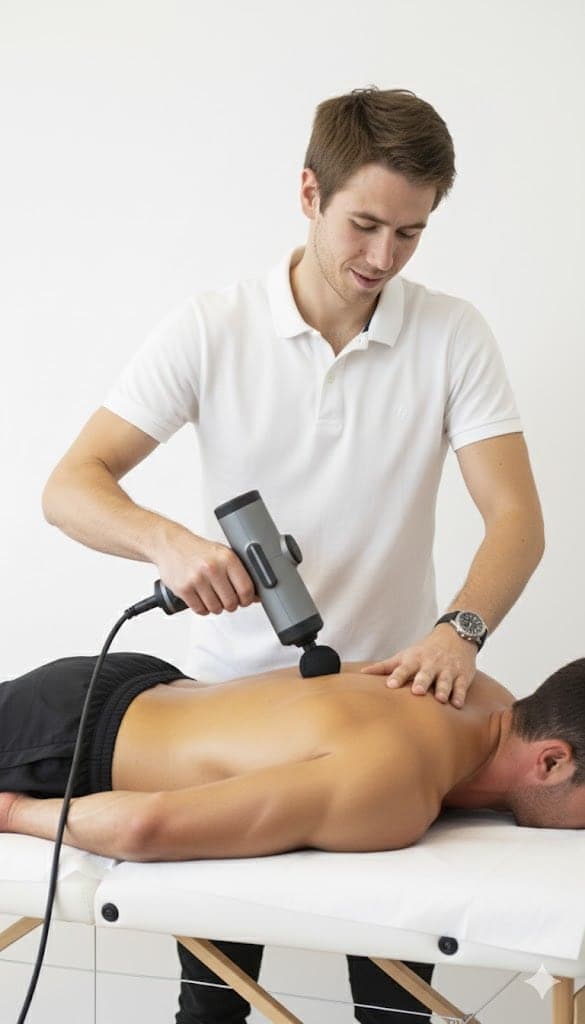
Written by
Chris
Massage therapist, nutrition and exercise physiologist
Norwegian-certified with a Bachelor’s in Physical Education and Nutrition and over ten years of clinical practice, working from a portable table in clients’ homes across the Paphos district.
This article is general information, not a medical diagnosis. If you have severe, worsening or unexplained pain, numbness, weakness, or pain after an accident, see a doctor first.