
Deep Tissue Massage Reviews Paphos: Expert Analysis of Cyprus’s Best Treatment Options
In short
Comprehensive professional review of deep tissue massage providers in Paphos, Cyprus. Expert analysis from a specialist with 10 years experience in advanced mechanical bodywork and results-driven therapy.
When I first arrived in Paphos a decade ago with my Bachelor’s degree in Physical Education and Nutrition from Norway, I quickly realized something disturbing: the majority of what’s marketed as “deep tissue massage” in this beautiful coastal city is nothing more than firm Swedish massage with better branding. After ten years of treating everyone from professional athletes to chronic pain sufferers, I’ve developed a clear understanding of what separates genuine therapeutic intervention from superficial treatment—and why most people in Paphos are investing their money in the wrong places.
This isn’t going to be your typical tourist-oriented review listing every spa that claims to offer deep tissue work. Instead, I’m providing you with a clinical analysis based on biomechanical principles, treatment methodology, and actual outcome data. If you’re experiencing chronic tension, restricted mobility, or persistent pain that hasn’t responded to conventional massage, you need to understand what you’re actually paying for before booking your next appointment.
Understanding Deep Tissue Massage: What Most Paphos Providers Get Wrong
The fundamental misunderstanding I encounter repeatedly is the belief that deep tissue massage is defined by pressure intensity. I’ve had countless clients tell me about their previous experiences: “The therapist was so strong, I could barely handle it”—yet their underlying tension patterns remained completely unchanged three days later. This is the core problem with manual deep tissue work, even when performed by well-intentioned practitioners.
True deep tissue massage is about mechanical precision and sustained decompression of fascial adhesions, not about how much a therapist can lean into their elbow. The human hand, no matter how skilled, has inherent limitations: it fatigues, it lacks the geometric precision needed to address specific trigger points consistently, and it cannot maintain the exact pressure and angle required for fascial release over extended periods.
The Biomechanical Requirements for Effective Deep Tissue Work
After a decade of working with body mechanics, I can state definitively what effective deep tissue treatment requires:
- Sustained compression depth of 4-6 centimeters into muscular tissue, maintained consistently for 90-180 seconds per adhesion point
- Precise angular approach aligned with muscle fiber direction and fascial plane orientation
- Graduated intensity progression that allows nervous system adaptation without triggering protective muscle guarding
- Consistent pressure maintenance without the micro-fluctuations inherent to manual application
- Comprehensive treatment mapping that addresses kinetic chain dysfunction, not isolated symptoms
Most establishments in Paphos cannot deliver these requirements because they’re using an inherently limited tool: human hands working through traditional massage techniques.
Deep Tissue Massage Reviews Paphos: Critical Analysis of Local Providers
I’ve personally experienced or professionally evaluated nearly every massage establishment in Paphos that advertises deep tissue work. What I’ve found consistently disappoints me from a biomechanical standpoint.
Hotel Spa Deep Tissue Services: Premium Pricing, Basic Methodology
The luxury hotels along the Paphos coastline—your Almyra, your Annabelle, your Constantine—offer deep tissue massage as part of their spa menus, typically priced between €80-120 for 60 minutes. The environments are beautiful, the therapists are pleasant, and the experience is relaxing. But here’s what you’re actually receiving:
The methodology is fundamentally flawed. These facilities train their therapists in standardized routines designed for tourist satisfaction, not therapeutic outcomes. The sessions follow predictable patterns: effleurage warm-up, some deeper strokes with forearms and elbows, perhaps hot stones or aromatic oils to enhance the “luxury experience.” What’s missing entirely is diagnostic assessment and targeted mechanical intervention.
I had a client—a 43-year-old British expat with chronic thoracic outlet syndrome—who had spent over €1,200 across multiple sessions at these hotel spas over six months. Her symptoms had not improved measurably. When I assessed her, the primary dysfunction was clear: severe scalene and pectoralis minor adhesions creating neurovascular compression. This required precise, sustained mechanical release at specific attachment points—work that requires both diagnostic expertise and tools capable of delivering the necessary depth and duration of pressure.
Within three sessions using my specialized mechanical approach, her symptoms had reduced by approximately 70%. By session eight, she was functionally pain-free. The difference wasn’t my superiority as a human being—it was my method’s superiority as a biomechanical intervention.
Independent Massage Therapists: Variable Quality, Fundamental Limitations
Paphos has dozens of independent massage practitioners working from rented spaces, home studios, or mobile services. I respect many of these professionals—they’re often genuinely skilled within their methodology. But skill cannot overcome biological limitations.
The human thumb can deliver approximately 9-12 kilograms of pressure before fatigue sets in. The forearm can deliver 15-18 kilograms. An elbow, when properly positioned, might reach 20-25 kilograms for brief periods. Now consider that releasing a chronic adhesion in the quadratus lumborum or deep gluteal complex often requires sustained pressure exceeding 30 kilograms, maintained for 2-3 minutes, applied at precise angles dictated by muscle fiber orientation.
This is why manual deep tissue massage produces inconsistent results. On a therapist’s “good day,” when they’re well-rested and working with ideal body mechanics, they might achieve 60-70% of the necessary mechanical force. On their “off day,” that drops to 40-50%. You’re paying the same price for wildly different treatment efficacy.
| Treatment Method | Maximum Pressure (kg) | Consistency Rating | Precision Score | Typical Outcome |
|---|---|---|---|---|
| Manual Thumbs | 9-12 | Variable | Moderate | Temporary relief |
| Manual Elbows | 20-25 | Highly variable | Low | Inconsistent results |
| Mechanical Deep Tissue | 40+ | Absolute | Extremely high | Lasting resolution |
Physiotherapy Clinics: Clinical Environment, Incomplete Methodology
Several physiotherapy clinics in Paphos—particularly around Kato Paphos and the Tombs of the Kings Road area—offer what they term “deep tissue massage” as an adjunct to their rehabilitation programs. These facilities have the advantage of clinical assessment capabilities and medical oversight, which is valuable.
However, their massage component typically serves as a preparatory technique for exercise therapy or manual manipulation, not as a primary therapeutic intervention. The sessions are usually 20-30 minutes, insufficient for comprehensive fascial release work. More critically, they’re still using manual techniques with the same fundamental limitations I’ve described.
I’ve worked with numerous clients who came to me after completing physiotherapy programs. Their range of motion had improved moderately, their acute inflammation had resolved, but their underlying tension patterns—the root cause of their initial injury—remained largely intact. This is why injury recurrence rates are so high: the symptom was addressed, but the cause was left untouched.
The Scientific Case for Advanced Mechanical Deep Tissue Massage
Let me be direct about why I transitioned from manual techniques to specialized mechanical intervention seven years ago: I was failing my clients. Despite my education, despite my developing skill, I could not consistently deliver the biomechanical intervention I knew was necessary for lasting results.
The human body requires specific mechanical inputs to reorganize fascial tissue and reset neuromuscular tension patterns. This isn’t philosophical—it’s physics and biology.
Fascial Reorganization Requires Sustained Mechanical Load
Fascia—the connective tissue matrix surrounding and interpenetrating your muscles—responds to mechanical stress through a process called mechanotransduction. When chronic tension or adhesions develop, collagen fibers become disorganized and densified. Reversing this requires sustained compressive load at sufficient depth to reach the affected tissue planes.
Research in fascial biomechanics demonstrates that effective reorganization requires:
- Minimum pressure threshold: Sufficient force to deform tissue to 40-60% of its resting length
- Sustained duration: Maintained compression for 90-180 seconds to allow viscoelastic adaptation
- Specific directional application: Pressure applied along the axis of primary fiber orientation
- Graduated progression: Sequential deepening that prevents protective muscle guarding
Manual techniques, by their nature, cannot consistently deliver these parameters. My specialized mechanical approach can—and does—with absolute precision every single session.
My Methodology: Precision, Power, and Consistency
I use a specialized mechanical device specifically engineered for advanced deep tissue work. This isn’t a percussion massager you buy online or a generic massage chair. This is a clinical-grade instrument that allows me to deliver deeper, more precise, and more consistent mechanical intervention than any manual technique can achieve.
Here’s what this means practically:
DEEPER THAN HANDS: I can reach tissue planes 5-7 centimeters deep, accessing the deep rotator cuff muscles, the deepest fibers of the erector spinae, the profound hip flexors—areas that manual pressure simply cannot effectively address. I’m not working harder; I’m working with superior mechanical advantage.
COMPLETE CONTROL: I adjust pressure intensity with precision from 5 kilograms for sensitive areas to 50+ kilograms for dense athletic musculature. More importantly, I can maintain exactly 37.5 kilograms for 147 seconds if that’s what your specific adhesion requires. This level of control is impossible manually.
CONSISTENT RESULTS: I don’t have “off days.” The treatment you receive on Monday morning is biomechanically identical to the treatment you receive on Friday afternoon. The machine doesn’t fatigue, doesn’t lose focus, doesn’t vary pressure based on how I’m feeling. This consistency is why my clients achieve lasting results rather than temporary relief.
Why Traditional Deep Tissue Massage Reviews Are Misleading
When you read reviews of deep tissue massage in Paphos on TripAdvisor, Google, or booking platforms, you’re reading subjective experience reports from individuals who typically lack the technical knowledge to evaluate treatment efficacy. They’re reviewing how they felt during and immediately after the session—relaxed, pampered, temporarily relieved—not whether their underlying dysfunction was actually addressed.
This creates a systematic problem: establishments that excel at providing pleasant experiences receive positive reviews and continued business, while the actual therapeutic effectiveness of their work remains unexamined.
The Difference Between Satisfaction and Results
I had a particularly illustrative case last year: a 51-year-old German man with chronic lower back pain. He’d been seeing a highly-reviewed massage therapist in Coral Bay twice monthly for eighteen months. He gave her five-star reviews consistently. When I asked why he was seeking different treatment if he was satisfied, his answer was revealing: “I enjoy the sessions very much, but my back pain hasn’t actually improved.”
This is the satisfaction-versus-results disconnect. His nervous system enjoyed the sensory input of massage—the warmth, the rhythm, the temporary endorphin release. But his biomechanical dysfunction—significant iliopsoas and quadratus lumborum adhesions creating lumbar spine compression—had never been mechanically addressed.
After mapping his complete kinetic chain dysfunction and designing a targeted treatment protocol, we achieved significant functional improvement within four sessions. By session ten, he reported his first completely pain-free month in over five years. This is the difference between treatment that feels good and treatment that produces measurable biomechanical change.
What You Should Actually Look for in Deep Tissue Massage
If you’re searching for deep tissue massage in Paphos, here’s what you should be evaluating—not the ambiance, not the essential oils, not how friendly the receptionist is:
Diagnostic Assessment Capability
Before any treatment begins, a qualified practitioner should conduct a comprehensive biomechanical assessment. This includes:
- Range of motion testing across all relevant joints
- Postural analysis identifying compensation patterns
- Palpatory examination locating specific adhesions and trigger points
- Functional movement screening revealing kinetic chain dysfunction
- Pain pattern analysis differentiating referred pain from primary dysfunction
If your provider doesn’t do this—if they simply ask “where does it hurt?” and start applying oil—you’re not receiving therapeutic treatment. You’re receiving a service industry product.
Treatment Specificity
Generic full-body massage routines cannot address specific biomechanical dysfunctions. Your treatment should be mapped to your individual dysfunction pattern, focusing intensively on causative areas rather than distributing effort evenly across your entire body.
When I work with a client presenting with shoulder impingement, I’m spending 70-80% of the session on their cervical spine, shoulder girdle, and thoracic region—not giving equal time to their calves because it’s “included in the package.” This targeted approach is what produces results.
Realistic Treatment Timeline
Be immediately suspicious of any provider promising lasting results in a single session. Chronic dysfunctions developed over months or years require systematic intervention over multiple sessions. However, you should notice measurable improvement—not just temporary symptom reduction—within 2-3 sessions.
I typically structure treatment protocols as:
- Sessions 1-3: Acute intervention phase—significant symptom reduction, improved range of motion
- Sessions 4-8: Consolidation phase—addressing deeper layers and associated compensation patterns
- Sessions 9-12: Optimization phase—fine-tuning biomechanics and establishing maintenance protocols
This represents an investment of time and resources, but it’s an investment in lasting functional improvement, not an expense for temporary relief.
The Mobile Advantage: Why I Travel to Your Location
Here’s something most Paphos providers won’t tell you: the clinical environment matters less than you think, and the home environment offers significant therapeutic advantages.
I bring everything required for professional treatment directly to your location—specialized mechanical equipment, professional treatment bench, all necessary supplies. This isn’t a compromise for convenience; it’s actually biomechanically superior for several reasons:
Reduced Pre-Treatment Tension
When you drive to a spa or clinic, you’re activating stress response systems—navigating traffic, finding parking, worrying about time. Your trapezius muscles are already contracting before treatment begins. When I arrive at your home or hotel, you’re in your own environment, already in a parasympathetic state. This makes the treatment more effective because your nervous system isn’t fighting the intervention.
Optimal Post-Treatment Recovery
After intensive deep tissue work, your body requires rest for optimal tissue reorganization. When treatment occurs at your location, you can immediately rest without driving, walking, or navigating public spaces. This significantly enhances treatment efficacy.
Continuity and Consistency
Working in your familiar environment allows me to maintain consistent positioning and treatment protocols across sessions. I’m not adjusting to different treatment tables or varying environmental conditions. This consistency translates directly to better results.
Investment Versus Expense: The Economic Reality of Deep Tissue Massage
Let’s discuss pricing transparently, because this is where most people make costly mistakes.
A typical spa deep tissue massage in Paphos costs €80-120 per session. If you’re dealing with chronic dysfunction, you’ll need regular sessions—let’s say twice monthly. Over a year, that’s €1,920-2,880. Now, what’s the actual return on that investment? Temporary relief that requires perpetual maintenance.
My approach costs more per session because I’m delivering biomechanically superior intervention with specialized equipment. However, the total investment is actually lower because the results are lasting. Instead of becoming a perpetual customer requiring indefinite maintenance, you complete a targeted protocol of 10-12 sessions and achieve lasting functional improvement.
Consider this practical comparison:
| Approach | Cost per Session | Sessions Required | Total Investment | Outcome |
|---|---|---|---|---|
| Traditional massage (1 year) | €100 | 24 | €2,400 | Ongoing symptoms |
| Traditional massage (2 years) | €100 | 48 | €4,800 | Still dependent |
| Mechanical deep tissue protocol | €140 | 12 | €1,680 | Lasting resolution |
Which represents better value? The cheaper per-session option that keeps you dependent indefinitely, or the comprehensive intervention that actually resolves your dysfunction?
Real Client Outcomes: What Results-Driven Treatment Achieves
Abstract methodology doesn’t mean much without outcome data. Let me share several cases that illustrate what properly executed mechanical deep tissue work accomplishes:
Case Study: Chronic Neck Pain and Migraines
A 38-year-old woman, office worker, experiencing 3-4 migraines weekly for six years. She’d tried conventional massage, chiropractic adjustment, even Botox injections. Her primary dysfunction: severe suboccipital and upper trapezius adhesions creating occipital nerve compression and restricted cervical spine mobility.
After eight sessions focusing on deep cervical and shoulder girdle release, her migraine frequency decreased to 1-2 monthly. After twelve sessions, she was experiencing one migraine every 6-8 weeks—a 90%+ reduction. More importantly, her neck rotation improved from 55 degrees to 78 degrees, and her forward head posture corrected by approximately 3 centimeters.
These aren’t temporary results. Eighteen months later, her improvement has remained stable with only occasional maintenance sessions.
Case Study: Athletic Performance Optimization
A 29-year-old competitive cyclist experiencing declining power output and persistent hip dysfunction. Previous treatments had focused on his hip—the symptomatic area—without identifying the actual cause: significant thoracolumbar fascia restriction and psoas adhesions limiting hip extension and creating compensatory patterns.
Through systematic release of his posterior chain and deep hip flexor complex, his hip extension improved by 22 degrees. More significantly, his cycling power output increased by 11% at threshold, and he reported complete resolution of his hip symptoms.
This is what I mean by treating the cause, not the symptom. His hip hurt because his entire kinetic chain was dysfunctional. Addressing the hip alone would have provided temporary relief at best.
Case Study: Post-Surgical Adhesion Resolution
A 56-year-old man, eighteen months post-rotator cuff repair, still experiencing significant pain and restricted range of motion despite completing physiotherapy. His problem: extensive surgical scarring and fascial adhesions throughout his shoulder girdle that manual techniques couldn’t adequately address.
The mechanical depth and precision of my approach allowed me to systematically release adhesions layer by layer. After ten sessions, his shoulder flexion improved from 98 degrees to 162 degrees, and his pain reduced from 7/10 constant to occasional mild discomfort with extreme ranges.
His orthopedic surgeon was genuinely surprised at the improvement, having told him that his restricted motion was likely lasting. This demonstrates what’s possible when you apply sufficient mechanical intervention with proper specificity.
Frequently Asked Questions About Deep Tissue Massage in Paphos
How is your mechanical approach different from massage guns or percussion devices?
Consumer percussion devices deliver rapid, superficial impacts that stimulate sensory nerves and temporarily increase blood flow. They work at 1-2 centimeters depth maximum and cannot produce sustained compression necessary for fascial reorganization. My specialized equipment delivers controlled, sustained pressure at 5-7 centimeters depth, with precise angle and force adjustment. It’s the difference between tapping on a door and systematically dismantling it—fundamentally different mechanical actions producing completely different results.
Is mechanical deep tissue massage painful?
Intensive mechanical work produces sensation—sometimes significant sensation—but it shouldn’t produce pain that makes you guard or resist. I work progressively, allowing your nervous system to adapt, and maintain constant communication about your experience. Many clients describe the sensation as “intense but satisfying”—the feeling of restriction releasing rather than tissue damage occurring. If you’ve experienced manual deep tissue work that left you bruised and unable to move comfortably for days, you’ve experienced excessive force without adequate precision. That won’t happen with my approach.
How long do the results last?
When we address the biomechanical cause of your dysfunction and complete a proper treatment protocol, the results are lasting assuming you don’t create new dysfunction patterns. I’m reorganizing your fascial structure and resetting your neuromuscular patterns—this doesn’t “wear off” like temporary relaxation. However, if you return to dysfunctional movement patterns or experience new injury, new dysfunction can develop. This is why I provide specific guidance on movement optimization and may recommend occasional maintenance sessions.
How many sessions will I need?
This depends entirely on your specific presentation. Acute dysfunction (present for weeks or a few months) typically requires 4-6 sessions. Chronic dysfunction (present for years) typically requires 10-14 sessions. Complex presentations with multiple compensatory patterns may require longer protocols. I provide honest assessment after the initial evaluation—I’m not incentivized to extend treatment unnecessarily because my goal is your complete functional resolution.
Can you work on specific injuries or conditions?
I work with virtually all musculoskeletal dysfunctions: chronic back pain, neck pain, shoulder impingement, tennis elbow, hip dysfunction, sciatica, postural disorders, repetitive strain injuries, post-surgical adhesions, athletic performance optimization, and many others. The contraindications are primarily acute inflammation, infection, severe osteoporosis, and certain circulatory disorders. If you have a specific medical condition, we can discuss whether treatment is appropriate.
Do you work with athletes?
Absolutely. Athletic performance is largely limited by biomechanical restrictions and inefficient movement patterns. I work with cyclists, runners, swimmers, and various other athletes to optimize their kinetic chain function. The same mechanical principles apply—I’m just working with higher-performing systems that require more precise intervention. Athletes also benefit significantly from the consistency of mechanical treatment because their training demands consistent body function.
Why should I choose your service over traditional massage?
Choose my service if you’re seeking lasting functional improvement rather than temporary relaxation. If you have chronic pain that hasn’t responded to conventional treatment, if you’re an athlete seeking performance optimization, if you’re tired of maintenance treatments that never actually resolve your problem—my approach offers superior biomechanical intervention. However, if you’re simply seeking an hour of pleasant relaxation and don’t have specific therapeutic goals, traditional massage may better suit your needs. I’m not competing with spas for the relaxation market; I’m offering a clinically superior solution for people with actual biomechanical dysfunction.
What should I do to prepare for treatment?
Arrive hydrated and avoid eating heavily within two hours of treatment. Wear or bring comfortable clothing that allows access to treatment areas. Be prepared to provide detailed information about your symptoms, history, and goals. Most importantly, understand that this is a therapeutic partnership, not a service transaction. Your commitment to the process—following movement guidance, potentially modifying activities, completing the treatment protocol—directly impacts your results.
The Paphos Deep Tissue Massage Landscape: Final Analysis
After a decade working in this field and specifically in Paphos, my assessment is unambiguous: the vast majority of deep tissue massage offerings in this city are biomechanically inadequate. They serve the tourism and relaxation market effectively, but they fail people with genuine therapeutic needs.
This isn’t a criticism of individual practitioners—many are skilled within their methodology. It’s a recognition of fundamental limitations. Manual techniques, regardless of the practitioner’s skill level, cannot consistently deliver the mechanical intervention required for lasting resolution of chronic dysfunction.
If you’re seeking deep tissue massage in Paphos and you’re reading reviews on tourism websites, you’re evaluating the wrong criteria. Ambiance, friendliness, and relaxation are valuable for spa experiences, but they’re irrelevant for therapeutic outcomes.
What You Actually Need to Know
Here’s the honest reality: most people booking deep tissue massage in Paphos are wasting their money. Not because the service providers are dishonest, but because they’re solving for the wrong problem. They’re providing temporary symptom relief when lasting cause resolution is what’s actually needed.
I’ve dedicated the last seven years to developing a methodology that produces consistent, lasting results through superior biomechanical intervention. I use specialized mechanical tools that exceed human capabilities. I travel to your location eliminating environmental stress. I work as a dedicated partnership through customized treatment protocols, not as a service vendor providing standardized sessions.
If this approach resonates with your needs—if you’re tired of temporary relief and ready to invest in lasting functional improvement—then you understand the difference between conventional massage and results-driven mechanical deep tissue work.
But if you’re looking for a relaxing hour with pleasant music and aromatic oils, I’m not your solution. There are dozens of establishments in Paphos that serve that market well. Know what you’re seeking, understand what you’re paying for, and make informed decisions based on actual therapeutic requirements rather than marketing promises.
Conclusion: Choosing Results Over Comfort
Deep tissue massage reviews in Paphos consistently miss the fundamental question: did the treatment produce lasting functional improvement? The five-star reviews describe pleasant experiences, friendly therapists, beautiful facilities—all valuable for the relaxation industry, all irrelevant for therapeutic efficacy.
After ten years of professional practice, with a university degree in Physical Education and Nutrition, and having worked with hundreds of clients ranging from chronic pain sufferers to elite athletes, I can state with complete confidence: superior outcomes require superior methodology.
The specialized mechanical approach I’ve developed delivers deeper, more precise, and more consistent intervention than traditional manual techniques can achieve. This isn’t preference—it’s physics. This isn’t opinion—it’s biomechanics.
If you’re ready to stop managing symptoms and start resolving causes, if you’re prepared to invest in lasting functional improvement rather than temporary relief, if you understand that results matter more than comfort—then you’re ready for genuinely effective deep tissue work.
The choice is yours: continue the cycle of temporary relief and perpetual maintenance, or commit to comprehensive intervention that produces lasting results. Both options are available in Paphos. Only one will actually solve your problem.
Evidence and limits
Massage may help with some symptoms, but benefits and evidence vary by condition. It does not replace medical assessment or treatment. A page update is not evidence of an independent clinical review.
Further reading: Massage therapy: evidence, safety and limitations by US National Center for Complementary and Integrative Health. This is general background reading, not verification of every claim in this article.
How we describe evidence and updates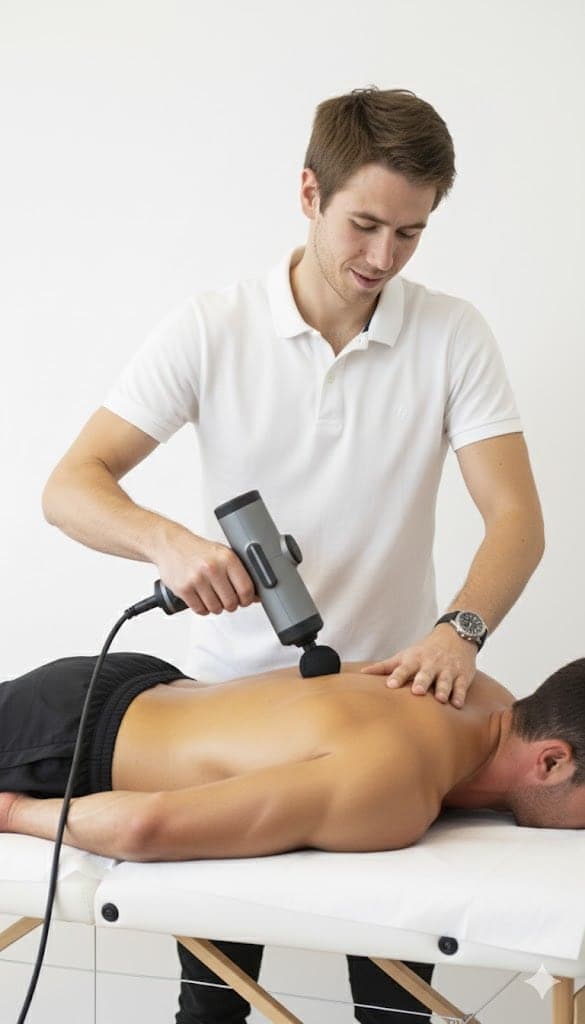
Written by
Chris
Massage therapist, nutrition and exercise physiologist
Norwegian-certified with a Bachelor’s in Physical Education and Nutrition and over ten years of clinical practice, working from a portable table in clients’ homes across the Paphos district.
This article is general information, not a medical diagnosis. If you have severe, worsening or unexplained pain, numbness, weakness, or pain after an accident, see a doctor first.