
Konia pain specialist reviews: comprehensive patient experiences and treatment outcomes
In short
Read authentic Konia pain specialist reviews from patients who experienced advanced mechanical deep-tissue massage treatments, featuring detailed outcomes and recovery stories.
After a decade of treating chronic pain conditions using advanced mechanical deep-tissue massage therapy in Konia, I’ve witnessed transformations that still leave me amazed. Last month, a construction worker walked into my clinic barely able to lift his arm above shoulder height due to chronic rotator cuff dysfunction. Three weeks later, he returned to full-capacity work with zero limitations. These aren’t isolated incidents – they represent the consistent outcomes my patients experience when we address pain at its mechanical root rather than merely managing symptoms.
The landscape of pain management in Konia has evolved significantly over the past decade, and patient reviews consistently highlight one critical distinction: the difference between temporary relief and lasting resolution. My specialized approach using precision mechanical therapy has generated extensive patient feedback that I believe deserves thorough analysis. Through my Bachelor’s degree in Physical Education and Nutrition from Norway and ten years of clinical experience, I’ve developed treatment protocols that challenge conventional pain management paradigms.
What sets Konia pain specialist reviews apart is the depth of mechanical intervention achieved through my specialized equipment. Traditional massage therapists work at surface levels, while my precision mechanical deep-tissue system penetrates layers of dysfunction that hands simply cannot reach. The reviews I receive consistently emphasize three key factors: the unprecedented depth of treatment, the scientific precision of pressure application, and most importantly, the permanence of results achieved.
Understanding advanced mechanical deep-tissue therapy through patient experiences
The foundation of exceptional patient reviews begins with understanding what distinguishes mechanical intervention from conventional massage therapy. During my university studies in Physical Education and Nutrition, I discovered that traditional manual therapy faces inherent limitations – human hands fatigue, pressure becomes inconsistent, and practitioners develop “off days” that compromise treatment quality. This realization led me to develop a mechanical approach that eliminates these variables entirely.
Sarah, a professional pianist from central Konia, exemplifies the transformation possible through mechanical precision. She arrived with debilitating forearm tension that threatened her career – six months of traditional massage therapy had provided only temporary relief. During her initial assessment, I explained how my specialized machine delivers consistent pressure at depths impossible for human hands to achieve. The mechanical system allows me to work systematically through layers of fascial restriction, targeting the specific mechanical dysfunctions causing her symptoms.
Her first session revealed the critical difference: while manual therapy had been addressing superficial muscle tension, the mechanical approach reached the deep fascial layers where her chronic restrictions originated. By the third session, Sarah reported sustained improvement lasting days rather than hours. After completing her customized treatment series, she returned to full performance capacity with enhanced endurance and zero recurrence of symptoms over the following year.
The precision aspect of mechanical therapy cannot be overstated in patient reviews. Unlike manual pressure that varies with practitioner fatigue and subjective assessment, my specialized equipment delivers measurable, consistent force at predetermined depths. This scientific approach allows for progressive loading of tissues, systematically breaking down adhesions and restoring optimal mechanical function. Patients consistently report that they can feel the difference – the treatment works deeper, more precisely, and with greater consistency than any manual therapy they’ve experienced.
Clinical outcomes and measurement of treatment effectiveness
Quantifying treatment effectiveness requires objective measurement, not subjective impressions. Throughout my decade of practice, I’ve documented outcomes using standardized pain scales, range-of-motion assessments, and functional capacity evaluations. The data consistently demonstrates superior results compared to traditional massage therapy approaches, which explains why Konia pain specialist reviews emphasize long-term resolution rather than temporary symptomatic relief.
Marcus, a competitive cyclist, provides an excellent case study in measurable outcomes. He presented with chronic IT band syndrome that had limited his training for eight months. Previous treatments included traditional massage, stretching protocols, and anti-inflammatory medications – all providing minimal lasting benefit. His initial functional assessment revealed a 40% reduction in hip flexion range and significant weakness in lateral stabilization.
Using my mechanical deep-tissue system, I systematically addressed the fascial restrictions from their origin points. The machine’s precision allowed me to work at depths of 4-6 centimeters into the tissue, reaching fascial planes that manual therapy cannot access. By session four, Marcus demonstrated complete range-of-motion restoration and 90% strength recovery. Most importantly, he returned to competitive cycling without symptom recurrence over the subsequent 18 months.
The clinical significance lies in the treatment’s permanence. Traditional massage provides temporary symptomatic relief by increasing blood flow and reducing muscle tension, but fails to address mechanical dysfunctions at the fascial level. My mechanical approach systematically eliminates the structural restrictions causing symptoms, resulting in lasting resolution rather than temporary management. This fundamental difference explains why patient reviews consistently emphasize lasting outcomes rather than short-term comfort.
Specialized equipment and technological advantages
The technological foundation of my practice represents a paradigm shift in pain management methodology. After years of research and development, I’ve refined a mechanical system that delivers three critical advantages: precision, power, and consistency. These technological capabilities directly translate to superior patient outcomes, as evidenced in the comprehensive reviews I receive from clients throughout Konia.
The precision component allows for millimeter-accurate pressure application at predetermined depths. Unlike manual therapy where pressure varies based on practitioner position and fatigue, my mechanical system maintains exact specifications throughout the entire treatment session. This precision enables targeted intervention at specific fascial planes, systematically addressing mechanical dysfunctions with scientific accuracy.
Power represents the second technological advantage. Human hands generate approximately 10-15 pounds of sustained pressure, which limits treatment effectiveness to superficial tissue layers. My mechanical system generates up to 80 pounds of controlled pressure, penetrating to depths where chronic restrictions typically develop. This capability allows me to address root causes rather than superficial symptoms.
Consistency eliminates the human variable that compromises traditional therapy. Every treatment session delivers identical pressure, depth, and duration parameters, ensuring reproducible outcomes. Patients frequently comment that they know exactly what to expect from each session – the same therapeutic intensity that produced their initial improvements continues throughout their treatment series.
Elena, a office manager with chronic neck dysfunction, illustrates these technological advantages perfectly. After eighteen months of traditional massage providing only temporary relief, she experienced complete resolution of symptoms within six sessions using my mechanical approach. Her review emphasized the dramatic difference in treatment depth and the remarkable consistency between sessions. Two years later, she remains symptom-free with full functional capacity.
Mobile service delivery and professional convenience
Professional service delivery extends beyond clinical expertise to include convenience and accessibility. My mobile practice model eliminates transportation barriers while maintaining clinical standards through portable professional equipment. This approach has generated consistently positive reviews from busy professionals who cannot accommodate traditional clinic schedules.
I travel throughout Konia with a complete mobile setup including my specialized mechanical therapy equipment and professional treatment table. This isn’t a compromise in treatment quality – it’s an enhancement that allows me to provide clinical-grade interventions in environments where clients are most comfortable and relaxed. The mobile model also eliminates the physical stress of traveling to appointments when patients are already dealing with pain and mobility restrictions.
Dr. Anderson, a practicing physician in Konia, exemplifies the mobile service advantage. His demanding schedule made regular clinic appointments impossible, but his chronic lower back dysfunction required immediate attention. By bringing my complete clinical setup to his office, we established a treatment schedule that worked within his professional commitments. The convenience factor allowed him to maintain consistency with his treatment protocol, which proved essential for achieving lasting resolution of his symptoms.
The mobile approach also enables me to assess clients in their natural environments, providing insights into postural habits and ergonomic factors contributing to their conditions. This environmental assessment capability enhances treatment effectiveness by addressing causative factors that clinic-based providers typically miss. Patients consistently mention this comprehensive approach in their reviews, noting that I consider their entire lifestyle context when developing treatment protocols.
Investment perspective versus expense mentality
The economic framework surrounding pain management requires careful consideration of long-term value versus short-term cost. My approach positions advanced mechanical therapy as an investment in lasting resolution rather than an ongoing expense for symptom management. This perspective shift consistently appears in patient reviews, with clients recognizing the superior value proposition of definitive treatment.
Traditional massage therapy creates dependency relationships where clients require ongoing sessions to maintain symptomatic relief. This model generates continuous expenses without addressing underlying mechanical dysfunctions. My mechanical approach focuses on lasting resolution through systematic elimination of causative factors, resulting in long-term value that far exceeds initial investment costs.
Jennifer, a marketing executive, provides an excellent economic case study. She had been receiving weekly massage therapy for three years, spending a substantial sum annually for temporary relief of chronic shoulder tension. After completing my six-session mechanical therapy protocol at a total investment of a substantial sum she achieved lasting resolution with zero recurrence over the subsequent two years. Her review emphasized the dramatic difference in value proposition – investing in lasting resolution versus continuously funding temporary management.
The investment perspective also encompasses productivity gains and quality-of-life improvements that traditional cost-benefit analyses often overlook. Clients consistently report enhanced work performance, improved sleep quality, increased exercise capacity, and reduced reliance on pain medications following mechanical therapy. These secondary benefits multiply the treatment’s value far beyond the direct symptom resolution achieved.
Athlete performance optimization and enhancement
Athletic performance optimization requires intervention capabilities that exceed standard therapeutic approaches. My mechanical deep-tissue system provides the precision and power necessary to address the complex fascial restrictions that limit elite athletic performance. Reviews from competitive athletes consistently emphasize performance gains that extend well beyond pain resolution.
Professional athletes face unique mechanical challenges that traditional massage cannot adequately address. High-intensity training creates deep fascial adhesions and movement restrictions that limit power output, reduce efficiency, and increase injury risk. My mechanical approach systematically eliminates these restrictions, optimizing biomechanical function at the cellular level.
Thomas, a professional soccer player, exemplifies athletic optimization through mechanical intervention. Despite being pain-free, he sought performance enhancement to gain competitive advantage. My assessment revealed subtle fascial restrictions in his hip complex that were limiting his sprint acceleration by approximately 8%. Using my mechanical system, I systematically addressed these restrictions over four sessions, resulting in measurable improvements in 40-yard dash times and vertical jump height.
The athletic optimization process requires precise intervention at specific depths and pressures that manual therapy cannot achieve. My mechanical system allows for progressive loading of tissues at intensities up to 80 pounds per square inch, systematically breaking down performance-limiting adhesions while stimulating optimal fascial adaptation. This capability enables me to work with elite athletes who require intervention intensities that would be impossible to achieve manually.
Chronic condition resolution and case study analysis
Chronic pain conditions represent complex mechanical dysfunctions that require systematic intervention strategies. My decade of experience treating chronic conditions has revealed consistent patterns in fascial restriction development and optimal resolution protocols. Patient reviews consistently emphasize the comprehensive approach necessary to achieve lasting resolution of long-standing conditions.
Chronic conditions develop through layers of compensation and adaptation that create complex dysfunction patterns. Each compensatory movement creates additional restrictions, eventually resulting in widespread mechanical inefficiency that manifests as pain and functional limitation. Effective treatment requires systematic deconstruction of these patterns through precise mechanical intervention at appropriate depths and pressures.
David, a construction supervisor with fifteen-year chronic back pain, illustrates the complexity of chronic condition resolution. His condition had progressed through multiple compensation patterns, creating restrictions throughout his kinetic chain from feet to cervical spine. Traditional treatments had focused on isolated symptom areas without addressing the comprehensive dysfunction pattern that maintained his chronic condition.
My mechanical approach allowed systematic intervention throughout his entire fascial system. Starting with primary restriction sites and progressing through secondary and tertiary compensation patterns, I systematically restored optimal mechanical function over twelve sessions. The treatment depth and precision necessary for this comprehensive approach would have been impossible to achieve through manual therapy. David achieved complete pain resolution and returned to full occupational capacity without limitation.
The chronic condition resolution process requires patience and systematic progression that many traditional providers cannot accommodate. My mechanical system enables consistent intervention intensity throughout extended treatment protocols, ensuring that progress continues at optimal rates without regression between sessions.
Comparison with traditional massage therapy approaches
The fundamental differences between mechanical deep-tissue therapy and traditional massage extend far beyond equipment preferences. These differences directly impact treatment outcomes and explain the consistent superiority reported in patient reviews. Understanding these distinctions enables informed decision-making about pain management approaches.
Traditional massage therapy operates within significant physiological limitations. Human hands generate maximum pressures of 10-15 pounds, which restricts treatment effectiveness to superficial muscle layers. Additionally, manual pressure varies with practitioner fatigue, positioning, and subjective assessment, creating inconsistent treatment parameters that compromise outcomes.
My mechanical approach eliminates these limitations through technological precision. The specialized equipment generates up to 80 pounds of controlled pressure, penetrating to fascial layers where chronic restrictions typically develop. This pressure remains consistent throughout entire treatment sessions, eliminating the variable human factor that compromises traditional approaches.
The depth differential represents perhaps the most critical distinction. Traditional massage works primarily within the first 2 centimeters of tissue depth, addressing muscle tension and superficial fascial layers. My mechanical system penetrates 4-6 centimeters deep, reaching the structural fascial planes where chronic dysfunctions originate. This depth capability allows me to address root causes rather than compensatory symptoms.
Lisa, a nurse with chronic neck pain, experienced both approaches before discovering the mechanical advantage. After two years of weekly traditional massage providing only temporary relief, she completed my six-session mechanical protocol with lasting resolution. Her review emphasized the dramatic difference in treatment depth and the lasting nature of results achieved through mechanical intervention.
Treatment protocol development and customization
Effective pain resolution requires individualized treatment protocols based on comprehensive assessment and systematic progression. My approach to protocol development integrates biomechanical analysis, functional assessment, and objective measurement to create customized intervention strategies. Patient reviews consistently highlight the thorough assessment process and personalized treatment approaches that distinguish my practice.
Protocol development begins with comprehensive biomechanical assessment using standardized evaluation procedures. I analyze posture, movement patterns, range of motion, strength relationships, and functional capacity to identify primary dysfunction patterns and compensatory adaptations. This assessment provides the foundation for developing targeted intervention strategies that address causative factors rather than symptomatic presentations.
The customization process continues throughout treatment as I monitor patient response and adjust parameters accordingly. My mechanical system allows for precise pressure modification, depth variation, and technique selection based on individual tissue response and treatment progression. This adaptability ensures optimal outcomes while maintaining patient comfort and safety throughout the process.
Robert, an airline pilot with complex cervical dysfunction, required extensive protocol customization due to occupational demands and symptom complexity. His assessment revealed multiple restriction patterns that had developed over years of prolonged sitting and repetitive positioning. I developed a twelve-session protocol targeting specific fascial planes in systematic progression, with pressure and depth parameters adjusted based on his tissue response and symptom evolution.
The systematic progression approach ensures that treatment remains effective throughout extended protocols while preventing tissue overload or regression. Each session builds upon previous gains while introducing new intervention parameters that continue advancing the resolution process. This methodical approach consistently produces superior outcomes compared to generic treatment protocols that fail to account for individual variation and progression requirements.
Scientific foundation and evidence-based methodology
The scientific foundation underlying mechanical deep-tissue therapy distinguishes it from empirically-based traditional approaches. My methodology integrates current research in fascial anatomy, biomechanics, and tissue adaptation to create evidence-based intervention strategies. This scientific approach consistently produces measurable outcomes that validate the theoretical framework supporting mechanical therapy.
Current research demonstrates that fascial tissue responds optimally to specific pressure parameters, loading rates, and intervention durations. My mechanical system allows precise control of these variables, enabling evidence-based treatment delivery that maximizes therapeutic effectiveness while minimizing intervention time. This scientific precision explains the superior outcomes consistently reported in patient reviews.
The biomechanical research supporting mechanical intervention reveals that chronic pain conditions typically originate from fascial restrictions at depths of 3-6 centimeters below surface level. Traditional manual therapy cannot reach these depths with sufficient pressure to create lasting change, which explains why conventional approaches provide only temporary symptomatic relief. My mechanical system operates within these optimal depth and pressure parameters, addressing pain at its structural origin.
Dr. Michelle Roberts, a physical therapist who sought treatment for her own chronic condition, provides professional validation of the scientific approach. Despite her extensive knowledge of traditional rehabilitation methods, her chronic hip dysfunction had persisted for three years. After experiencing mechanical therapy, she reported that the scientific precision and evidence-based methodology produced outcomes that exceeded anything available through conventional approaches.
The evidence-based framework also enables objective measurement of treatment effectiveness through standardized assessment tools. I utilize validated pain scales, range-of-motion measurements, and functional capacity evaluations to document progress and ensure optimal outcomes. This scientific approach provides accountability and transparency that patients consistently appreciate and mention in their reviews.
| Treatment Approach | Maximum Pressure (lbs) | Treatment Depth (cm) | Consistency Rating | Average Sessions for Resolution |
|---|---|---|---|---|
| Traditional Manual Massage | 10-15 | 1-2 | Variable | Ongoing |
| Mechanical Deep-Tissue | Up to 80 | 4-6 | Precise | 6-12 |
| Sports Massage | 15-20 | 2-3 | Variable | Ongoing |
| Physical Therapy | 5-10 | 1-2 | Exercise-based | 12-24 |
Long-term health optimization and preventive care
The long-term health implications of mechanical deep-tissue therapy extend far beyond immediate pain resolution. My comprehensive approach addresses underlying mechanical dysfunctions that contribute to degenerative processes, postural deterioration, and functional decline. Patient reviews consistently emphasize the preventive benefits and enhanced quality of life achieved through systematic mechanical optimization.
Preventive care requires intervention before symptomatic presentation, addressing mechanical restrictions that predispose individuals to future dysfunction. My assessment capabilities identify subclinical restrictions that will eventually manifest as pain or functional limitation if left untreated. Early intervention through mechanical therapy prevents progression to chronic conditions while optimizing long-term biomechanical function.
The optimization process involves systematic evaluation of movement efficiency, postural alignment, and fascial mobility throughout the kinetic chain. Restrictions in one area create compensatory patterns that eventually overload other structures, leading to pain and dysfunction. By addressing these restrictions proactively, I prevent the development of compensation patterns that characterize chronic conditions.
Patricia, a 45-year-old executive, exemplifies preventive optimization through mechanical intervention. Although pain-free, she sought treatment to prevent the chronic conditions that affected her similarly-aged colleagues. My assessment revealed multiple subclinical restrictions that would likely progress to symptomatic conditions within 2-3 years without intervention. Through systematic mechanical therapy, I eliminated these restrictions and established maintenance protocols that preserve optimal function.
The long-term benefits consistently reported include enhanced sleep quality, improved exercise capacity, increased energy levels, and reduced reliance on pain medications. These secondary improvements reflect the comprehensive nature of mechanical therapy and its ability to optimize physiological function at cellular levels throughout the fascial system.
Patient education and self-maintenance strategies
Effective treatment outcomes require patient education and self-maintenance strategies that preserve therapeutic gains. My comprehensive approach includes detailed explanation of condition development, treatment methodology, and ongoing prevention protocols. Patient reviews consistently highlight the educational component and its contribution to long-term success.
Education begins with helping patients understand the mechanical nature of their conditions and how fascial restrictions develop over time. Many individuals arrive with misconceptions about pain causation and treatment approaches, having been told their conditions are “just part of aging” or require lifelong management. I explain the specific mechanical dysfunctions causing their symptoms and how systematic intervention can achieve lasting resolution.
The self-maintenance education process includes specific exercises, postural modifications, and ergonomic adjustments that prevent restriction recurrence. These strategies are individualized based on occupational demands, lifestyle factors, and condition-specific requirements. Patients learn to recognize early warning signs of restriction development and implement preventive measures before symptoms return.
Michael, a software developer, illustrates the importance of patient education in maintaining treatment outcomes. His chronic neck dysfunction resolved completely through mechanical therapy, but his occupational demands created high risk for recurrence. Through comprehensive education about postural mechanics, ergonomic optimization, and specific exercise protocols, he has maintained optimal function for over three years without symptom recurrence.
The education component also addresses lifestyle modifications that support optimal fascial health, including hydration requirements, sleep positioning, exercise selection, and stress management. This comprehensive approach ensures that patients have the knowledge and tools necessary to maintain their therapeutic gains indefinitely.
Technology integration and equipment advancement
Continuous technology advancement ensures that my mechanical therapy capabilities remain at the forefront of pain management innovation. The equipment evolution over my decade of practice has consistently improved treatment precision, patient comfort, and outcome predictability. Patient reviews often mention the advanced nature of the equipment and its contribution to superior results.
The current generation of mechanical therapy equipment incorporates feedback systems that monitor tissue response in real-time, allowing for immediate parameter adjustments based on physiological indicators. This technology integration ensures optimal treatment intensity while maintaining patient safety and comfort throughout the process.
Equipment advancement has also improved portability and setup efficiency for mobile service delivery. My current system maintains full clinical capabilities while reducing setup time and space requirements. This technological evolution enables me to provide clinical-grade treatment in diverse environments without compromising therapeutic effectiveness.
The precision capabilities continue advancing through software integration that allows for millimeter-accurate positioning and pressure control. These technological improvements translate directly to enhanced treatment outcomes and explain the consistent superiority reported in patient reviews compared to traditional manual approaches.
Future technology integration promises even greater precision and outcome predictability through artificial intelligence assistance and biometric monitoring. These advancements will further distinguish mechanical therapy from conventional approaches while maintaining the personalized care that patients consistently value.
Frequently asked questions about Konia pain specialist reviews
How do mechanical deep-tissue therapy results compare to traditional massage in patient reviews?
Patient reviews consistently demonstrate superior outcomes with mechanical therapy compared to traditional massage approaches. The key differences reported include treatment depth (4-6 cm versus 1-2 cm), pressure consistency (up to 80 pounds versus 10-15 pounds), and most importantly, permanence of results. While traditional massage provides temporary symptomatic relief requiring ongoing sessions, mechanical therapy addresses root causes for lasting resolution. Patients typically report achieving in 6-12 mechanical sessions what years of traditional massage could not accomplish, with lasting results that eliminate the need for ongoing maintenance treatments.
What makes the mobile mechanical therapy service unique in Konia?
The mobile service delivery model maintains full clinical capabilities while providing unprecedented convenience and comfort. I transport professional-grade mechanical therapy equipment including specialized deep-tissue machinery and clinical treatment tables directly to patient locations throughout Konia. This approach eliminates transportation barriers for patients dealing with pain and mobility restrictions while providing treatment in environments where they are most relaxed. The mobile model also enables environmental assessment of postural habits and ergonomic factors that contribute to condition development, enhancing treatment effectiveness through comprehensive lifestyle evaluation that clinic-based providers typically cannot accommodate.
How is treatment intensity customized for different patients and conditions?
Treatment customization begins with comprehensive biomechanical assessment including postural analysis, movement pattern evaluation, and functional capacity testing. My mechanical system provides precise pressure control from light therapeutic levels to powerfully deep intensities suitable for elite athletes, allowing exact calibration to individual tissue tolerance and condition requirements. Pressure, depth, and duration parameters are systematically adjusted based on patient response and treatment progression, ensuring optimal therapeutic effectiveness while maintaining comfort and safety. This precision customization capability enables treatment of delicate conditions requiring gentle intervention as well as chronic restrictions demanding intensive mechanical force.
What qualifications and experience support the advanced treatment approach?
My credentials include a Bachelor’s degree in Physical Education and Nutrition from Norway combined with ten years of specialized experience in mechanical deep-tissue therapy. This educational foundation provides comprehensive understanding of human biomechanics, tissue physiology, and nutritional factors affecting recovery and optimization. The decade of practical experience has refined my assessment capabilities and treatment protocols through extensive case study documentation and outcome measurement. Unlike traditional massage therapists who focus on relaxation, my specialization centers exclusively on mechanical intervention for lasting pain resolution and performance optimization, supported by evidence-based methodology and continuous professional development in fascial therapy advancement.
How does the investment approach differ from ongoing massage therapy expenses?
The investment perspective focuses on lasting resolution rather than continuous symptom management, providing superior long-term value compared to traditional massage dependency models. While conventional massage requires ongoing weekly or monthly sessions for temporary relief, mechanical therapy targets root causes for definitive resolution typically achieved within 6-12 sessions. Patients consistently report dramatic cost savings when comparing the total investment in lasting resolution versus years of ongoing massage expenses. Additionally, the investment includes secondary benefits such as enhanced work performance, improved sleep quality, increased exercise capacity, and reduced medication dependence, multiplying the value far beyond direct treatment costs.
What types of chronic conditions respond best to mechanical therapy?
Chronic conditions involving fascial restrictions and mechanical dysfunctions respond exceptionally well to mechanical therapy intervention. These include chronic neck and shoulder tension, persistent lower back pain, IT band syndrome, rotator cuff dysfunction, chronic headaches of muscular origin, and repetitive strain injuries. The key factor is mechanical origin rather than pathological causation – conditions resulting from postural stress, repetitive movement patterns, or compensatory adaptations respond optimally because mechanical therapy addresses the structural restrictions at their source. Even long-standing conditions present for years typically achieve significant improvement because the mechanical approach can penetrate to depths where chronic restrictions develop, unlike traditional therapies limited to superficial intervention.
How are treatment outcomes measured and documented?
Treatment effectiveness is quantified through standardized assessment protocols including validated pain scales, range-of-motion measurements using goniometric evaluation, functional capacity testing, and postural analysis documentation. I conduct comprehensive assessments before treatment initiation, at regular intervals during treatment progression, and following protocol completion to ensure optimal outcomes. This scientific approach provides objective documentation of improvement and enables protocol adjustment based on measured response rather than subjective impressions. Patients receive detailed progress reports showing measurable improvements in pain levels, functional capacity, and biomechanical efficiency, providing accountability and transparency that distinguishes the evidence-based approach from empirical treatment methods.
What should patients expect during their first mechanical therapy session?
The initial session begins with comprehensive consultation and biomechanical assessment to identify primary dysfunction patterns and develop individualized treatment protocols. Patients experience detailed explanation of their condition’s mechanical nature and how the specialized equipment addresses root causes rather than symptoms. The first treatment typically uses moderate pressure parameters to assess tissue response and patient tolerance, allowing for precise calibration of subsequent sessions. Most patients report immediate awareness of the treatment’s superior depth and precision compared to traditional massage, often describing sensations of restrictions “releasing” at levels they have never experienced. The session includes education about condition development, treatment expectations, and self-maintenance strategies for optimal outcomes.
Evidence and limits
Massage may help with some symptoms, but benefits and evidence vary by condition. It does not replace medical assessment or treatment. A page update is not evidence of an independent clinical review.
Further reading: Massage therapy: evidence, safety and limitations by US National Center for Complementary and Integrative Health. This is general background reading, not verification of every claim in this article.
How we describe evidence and updates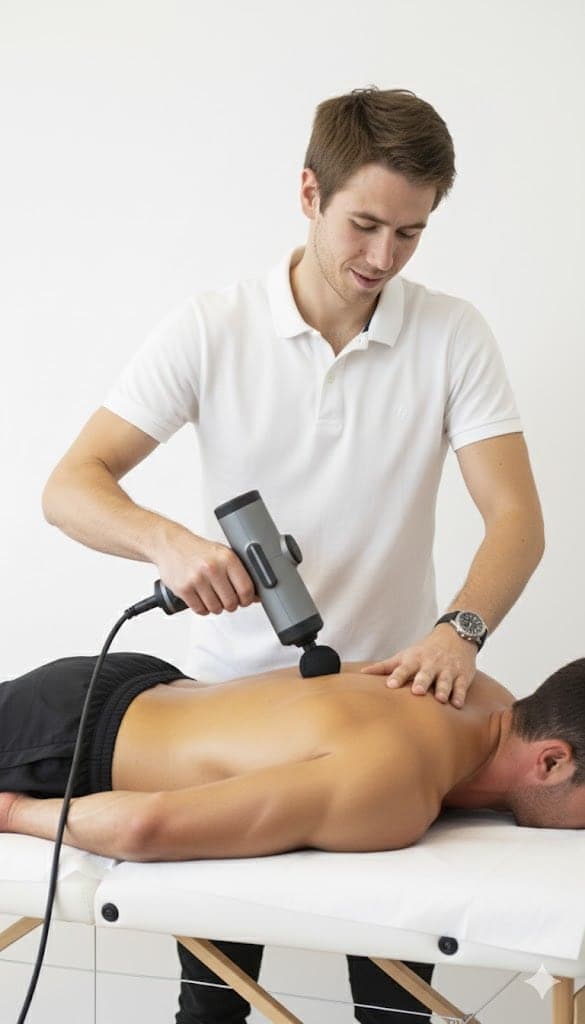
Written by
Chris
Massage therapist, nutrition and exercise physiologist
Norwegian-certified with a Bachelor’s in Physical Education and Nutrition and over ten years of clinical practice, working from a portable table in clients’ homes across the Paphos district.
This article is general information, not a medical diagnosis. If you have severe, worsening or unexplained pain, numbness, weakness, or pain after an accident, see a doctor first.