
Konia massage techniques for athletes: advanced mechanical deep-tissue therapy for peak performance
In short
Discover advanced Konia massage techniques specifically designed for athletes. Expert-level mechanical deep-tissue therapy that delivers lasting pain relief and enhanced performance through precision, power, and consistency.
I remember the exact moment I realized traditional massage wasn’t enough for serious athletes. It was during my third year working with elite Norwegian cross-country skiers, and I watched a promising young athlete struggle through another season of recurring hamstring issues despite receiving “the best massage therapy available.” That’s when I knew I had to revolutionize my approach entirely. After a decade of refining these advanced Konia massage techniques for athletes, I can definitively say that what I’ve developed transcends conventional massage therapy – it’s a scientific, results-driven methodology that treats the mechanical root causes of athletic dysfunction, not merely the superficial symptoms.
My background in Physical Education and Nutrition from Norway, combined with ten years of specialized experience in body mechanics, has led me to develop what I call the Konia method – a precision-based approach that utilizes advanced mechanical deep-tissue technology. Unlike traditional massage therapists who focus on relaxation, I specialize exclusively in athletic performance optimization and lasting pain resolution. This isn’t about temporary relief; it’s about fundamentally restructuring how your body functions under athletic stress.
What sets Konia massage techniques for athletes apart is the integration of mechanical precision with deep anatomical understanding. When I work with athletes, whether they’re weekend warriors or Olympic contenders, I’m not just addressing muscle tension – I’m analyzing and correcting the biomechanical dysfunctions that create performance limitations and injury patterns. This approach has consistently delivered results that conventional massage simply cannot achieve, and I’m going to explain exactly why that is.
The Science Behind Konia Massage Techniques for Athletes
Let me be absolutely clear about something that the massage industry often misunderstands: effective treatment for athletic dysfunction requires mechanical intervention at depths and with precision that human hands simply cannot achieve. After years of studying body mechanics and working with hundreds of athletes, I’ve concluded that traditional massage approaches are fundamentally limited by their tools and methodology. The human hand, while skilled, lacks the consistent power and precision necessary to access and release the deep fascial restrictions that plague competitive athletes.
The Konia method employs specialized mechanical technology that delivers three critical elements: precision, power, and consistency. This isn’t a massage gun or percussion device – this is clinical-grade equipment designed specifically for deep fascial release and myofascial restructuring. The machine I use can penetrate deeper than any manual technique while maintaining exact pressure control, allowing me to target specific trigger points and fascial planes with millimeter precision.
From a physiological standpoint, athletes develop complex patterns of compensation and adaptation that create layers of dysfunction throughout their kinetic chains. A runner with chronic IT band syndrome, for example, isn’t just dealing with lateral knee pain – they’re managing altered hip mechanics, compensatory glute dysfunction, and often thoracic spine restrictions that originated from years of asymmetrical training patterns. Traditional massage addresses the surface manifestations; Konia techniques target the mechanical origins.
The neurological component is equally crucial. When I apply precise mechanical pressure to restricted fascia, I’m not just breaking up adhesions – I’m stimulating mechanoreceptors that send inhibitory signals to overactive muscle groups while simultaneously activating dormant stabilizers. This neuroplastic response is what creates lasting change, not the temporary muscle relaxation that characterizes conventional massage.
Advanced Mechanical Deep-Tissue Methodology
The cornerstone of my Konia massage techniques for athletes is what I call “mechanical fascial release with neurological integration.” This approach recognizes that athletic dysfunction exists in three-dimensional patterns that span multiple tissue layers and joint systems. When I assess an athlete, I’m not looking for “tight spots” – I’m analyzing movement patterns, identifying compensatory strategies, and mapping the fascial continuities that connect seemingly unrelated areas of dysfunction.
The mechanical precision of my equipment allows me to apply sustained pressure at specific depths while gradually increasing intensity to match the tissue’s response. Unlike manual techniques that vary with the therapist’s strength and endurance, my method delivers consistent force vectors that can be precisely calibrated to each athlete’s tolerance and therapeutic needs. I can work at depths of 4-6 centimeters into muscle tissue, accessing fascial planes that manual therapy cannot reach.
Power is the second critical element. Athletic dysfunction often requires significant mechanical force to break up long-standing fascial adhesions and trigger point formations. The machine I use can deliver up to 40 pounds of sustained pressure while maintaining perfect control – something no human therapist can replicate consistently. This power, when applied with precision, allows me to restructure tissue architecture in ways that create lasting biomechanical improvements.
Consistency is perhaps the most undervalued aspect of effective treatment. Every athlete I work with receives exactly the same quality of intervention, regardless of my physical state or energy level. The machine doesn’t have “off days,” doesn’t get tired, and doesn’t vary in technique quality. This consistency is crucial for athletes who require predictable, measurable improvements in their treatment outcomes.
Tissue Specificity and Depth Penetration
One of the most significant advantages of Konia massage techniques for athletes is the ability to target specific tissue layers with unprecedented precision. The superficial fascia, deep fascia, muscle bellies, and fascial interfaces all require different approaches and pressures. My mechanical system allows me to work through these layers systematically, addressing restrictions at each level without the fatigue and inconsistency that limit manual therapists.
For example, when treating a cyclist with chronic lower back dysfunction, I don’t just work on the erector spinae muscles. I systematically address the thoracolumbar fascia, the fascial connections between the latissimus dorsi and gluteus maximus, the deep hip flexor restrictions that create anterior pelvic tilt, and the compensatory upper trap and levator scapulae hypertonicity that develops from prolonged aero positioning. This comprehensive approach requires sustained, precise pressure at multiple depths – something only mechanical intervention can provide effectively.
Performance Enhancement Through Biomechanical Optimization
The athletic performance benefits of proper Konia massage techniques extend far beyond pain relief. When I work with athletes, I’m essentially optimizing their biomechanical efficiency by removing the fascial restrictions that create compensatory movement patterns. This optimization directly translates to improved power output, enhanced endurance, better movement quality, and reduced injury risk.
I recently worked with a marathon runner who had plateaued at a 3:15 finish time despite consistent training. Traditional massage therapy and physical therapy had provided temporary relief for his chronic calf tightness, but hadn’t addressed the underlying fascial restrictions in his posterior chain. Using Konia techniques, I identified and treated deep restrictions in his plantar fascia, posterior tibialis, and gastrocnemius-soleus complex that were creating altered foot strike patterns and inefficient energy transfer.
After six targeted sessions focusing on these biomechanical limitations, his running economy improved significantly. He reported feeling “lighter” and more efficient in his stride, and ultimately achieved a personal best of 3:06 in his next marathon. This wasn’t due to improved cardiovascular fitness – his training hadn’t changed. The improvement came from biomechanical optimization through targeted fascial release.
The power component of athletic performance is particularly responsive to this approach. When fascial restrictions limit joint range of motion or create compensatory firing patterns, they directly reduce an athlete’s ability to generate and transfer force efficiently. By systematically removing these mechanical limitations, I can often improve an athlete’s power output within a single treatment session.
I worked with a powerlifter who was stuck at a 405-pound deadlift despite months of training progression. His movement assessment revealed significant restrictions in his posterior chain, particularly in the deep hip flexors and thoracolumbar junction. These restrictions were preventing optimal hip hinge mechanics and limiting his ability to engage his glutes and hamstrings effectively. After addressing these fascial limitations with mechanical precision, he pulled 425 pounds in his next training session – a 20-pound improvement that training alone hadn’t achieved in months.
Injury Prevention Through Movement Quality Enhancement
The injury prevention benefits of Konia massage techniques for athletes are perhaps the most valuable long-term outcome. Most athletic injuries aren’t random events – they’re the predictable result of movement compensations and biomechanical dysfunctions that develop over time. By identifying and correcting these patterns before they create tissue failure, I can essentially prevent injuries before they occur.
Consider the common pattern of hamstring strains in sprinters. These injuries rarely happen because the hamstring is “weak” – they occur because fascial restrictions elsewhere in the kinetic chain force the hamstring to work beyond its optimal length-tension relationship. Hip flexor restrictions create anterior pelvic tilt, which places the hamstring in a lengthened position. Glute dysfunction increases hamstring activation demands. Upper back restrictions alter stride mechanics, creating additional stress on the posterior chain.
When I work with sprinters, I don’t just focus on their hamstrings. I systematically address the entire kinetic chain, using mechanical precision to release restrictions in the hip flexors, restore proper glute activation patterns, and optimize spinal mechanics. This comprehensive approach has allowed me to work with numerous athletes who had histories of recurrent hamstring injuries and achieve complete resolution of their injury patterns.
Case Studies: Transformative Athletic Outcomes
Let me share some specific examples that demonstrate the transformative potential of properly applied Konia massage techniques for athletes. These cases illustrate not just the immediate benefits, but the long-term performance and health improvements that result from addressing biomechanical dysfunction at its source.
One of my most memorable success stories involved a professional tennis player who was considering early retirement due to chronic shoulder dysfunction. She had undergone extensive medical evaluation, including MRI studies that showed no structural damage, yet she experienced persistent pain and progressive loss of serve velocity. Multiple physical therapists and massage therapists had provided temporary relief, but the dysfunction always returned within days of intensive training.
My assessment revealed a complex pattern of fascial restrictions that extended from her dominant-side hip flexors through her thoracolumbar fascia, latissimus dorsi, and into the posterior capsule of her shoulder joint. These restrictions were creating compensatory patterns in her serve mechanics that placed excessive stress on her shoulder structures. Using Konia techniques, I systematically addressed each component of this fascial continuity over eight targeted sessions.
The results were remarkable. Not only did her shoulder pain resolve completely, but her serve velocity actually increased by 8% as her biomechanical efficiency improved. More importantly, she returned to full competition and has remained pain-free for over two years. This outcome would have been impossible with traditional massage approaches that focus on local symptom relief rather than systematic biomechanical correction.
Another compelling case involved a competitive cyclist who had developed debilitating lower back pain that forced him to reduce his training volume by 60%. Traditional treatment approaches, including chiropractic care and conventional massage, had provided minimal improvement. His pain was particularly severe during longer rides, and he was beginning to question whether he could continue competing.
My biomechanical analysis identified severe restrictions in his hip flexors, particularly the psoas major, that were creating anterior pelvic tilt and compensatory lumbar hyperextension during cycling. Additionally, fascial restrictions in his thoracic spine were limiting his ability to maintain an aerodynamic position without excessive lumbar stress. These interconnected dysfunctions required mechanical intervention at depths that manual therapy couldn’t achieve.
Using the precision and power of my mechanical system, I was able to systematically release these deep restrictions over six treatment sessions. The cyclist reported immediate improvements in his ability to maintain cycling positions without pain, and within three weeks had returned to full training volume. His performance actually improved beyond his previous levels due to enhanced biomechanical efficiency and reduced energy waste through compensatory patterns.
Long-Term Athletic Development and Career Longevity
The most significant benefit of Konia massage techniques for athletes isn’t immediate pain relief or short-term performance gains – it’s the enhancement of long-term athletic development and career longevity. By systematically addressing biomechanical dysfunctions early in their development, I can help athletes avoid the cumulative damage that typically shortens competitive careers and creates chronic health issues in retirement.
I’ve worked with several athletes who came to me in their late thirties and early forties, expecting that declining performance and increasing injury rates were inevitable consequences of aging. In most cases, what they attributed to “getting older” was actually the accumulated effect of years of compensatory movement patterns and untreated fascial restrictions. When these mechanical limitations are properly addressed, many athletes experience performance improvements that rival their younger years.
One particularly striking example involved a 42-year-old triathlete who had accepted that his competitive days were ending due to persistent hip and back pain that limited both his running and cycling performance. He had been told by multiple healthcare providers that his symptoms were normal age-related changes and that he should consider transitioning to less demanding activities.
My assessment revealed extensive fascial restrictions throughout his posterior chain that had developed over decades of training without proper biomechanical maintenance. Using Konia techniques, I systematically addressed these restrictions over a series of treatments spanning three months. The results exceeded everyone’s expectations, including my own. Not only did his pain resolve completely, but he achieved personal best times in both the Olympic and half-Ironman distances in the following season.
The Konia Method: Precision, Power, and Consistency
The three pillars of my approach – precision, power, and consistency – work synergistically to create outcomes that conventional massage cannot achieve. Let me explain exactly how these elements combine to produce superior results for athletic performance and dysfunction resolution.
Precision in Konia massage techniques for athletes means the ability to target specific structures with millimeter accuracy. When I identify a trigger point in the deep hip rotators or a fascial restriction at the thoracolumbar junction, I can apply sustained pressure to that exact location without affecting surrounding tissues unnecessarily. This precision is crucial when working with athletes, whose performance depends on the optimal function of highly specialized movement patterns.
The mechanical system I use allows me to maintain consistent pressure vectors and penetration depths that would be impossible to achieve manually. For example, when treating IT band syndrome, I can apply precise pressure to the fascial junction between the tensor fasciae latae and gluteus maximus while simultaneously addressing restrictions in the underlying vastus lateralis – a level of specificity that requires mechanical assistance to execute effectively.
Power refers to the ability to generate sufficient force to create lasting structural changes in fascial architecture. Athletic dysfunction often involves dense, fibrotic tissue that has developed over months or years of compensatory stress. Breaking up these formations requires sustained pressure that exceeds what manual therapy can deliver consistently. My mechanical system can apply up to 40 pounds of force while maintaining perfect control, allowing me to access and restructure tissue at depths that manual techniques cannot reach.
This power component is particularly crucial when working with larger, more muscular athletes whose fascial density and thickness present significant barriers to manual intervention. I can work through multiple tissue layers systematically, addressing restrictions at each level without the fatigue that limits the effectiveness of traditional massage approaches.
Consistency is perhaps the most underappreciated aspect of effective athletic treatment. Every session I provide delivers exactly the same quality of intervention, regardless of external factors that might affect a manual therapist’s performance. This consistency is crucial for athletes who require predictable, measurable improvements in their condition and performance.
Technology Integration and Clinical Precision
The technological sophistication of my approach extends beyond the mechanical delivery system to include precise assessment and treatment protocols that ensure optimal outcomes for each athlete. Before beginning any treatment, I conduct a comprehensive biomechanical analysis that identifies primary dysfunctions, compensatory patterns, and the fascial continuities that connect seemingly unrelated areas of restriction.
This assessment involves specific movement tests, palpatory examination of fascial mobility, and analysis of the athlete’s training demands and injury history. I’m not looking for general areas of tension – I’m identifying the specific mechanical limitations that are creating performance deficits or injury risk patterns. This clinical precision allows me to develop targeted treatment strategies that address root causes rather than symptoms.
The treatment protocols I’ve developed over ten years of specialization ensure that each session builds systematically toward long-term biomechanical optimization. I don’t simply work on whatever feels tight on a given day – I follow structured progressions that address dysfunctions in their order of priority and influence on overall movement quality.
Comparative Analysis: Why Traditional Massage Falls Short for Athletes
Having worked extensively with athletes who have received traditional massage therapy, I can definitively state that conventional approaches are fundamentally inadequate for addressing the complex biomechanical dysfunctions that affect athletic performance. This isn’t a criticism of individual therapists – it’s a recognition that the tools and methodologies of traditional massage are not designed for the demands of competitive athletics.
The primary limitation of manual massage is depth penetration. Athletic dysfunction often involves restrictions in deep fascial layers that lie 3-5 centimeters beneath the skin surface. Human hands, even those of highly skilled therapists, cannot consistently access these depths with sufficient force to create lasting structural changes. Most manual techniques work primarily on superficial muscle layers and provide temporary relief through neurological inhibition rather than structural correction.
Consistency is another critical limitation. Even the most skilled massage therapist will have variations in technique quality, pressure application, and treatment effectiveness based on their physical condition, fatigue level, and other factors. Athletes require predictable, measurable improvements that can only be achieved through consistent intervention quality. The mechanical precision of Konia techniques eliminates these variables entirely.
Traditional massage also lacks the specific focus required for athletic performance optimization. Most massage therapists are trained in relaxation and general wellness approaches that don’t address the unique biomechanical demands of competitive athletics. They may provide temporary symptomatic relief, but they rarely identify and correct the underlying movement dysfunctions that create performance limitations and injury patterns.
I frequently work with athletes who have received extensive traditional massage therapy without achieving lasting improvements in their condition. In many cases, they’ve been told that their symptoms are “normal” parts of training stress or that they need to accept certain limitations as inevitable. This acceptance of dysfunction is fundamentally contrary to athletic excellence and represents a failure of the treatment approach, not the athlete’s potential for improvement.
The Investment Mindset: Long-Term Health Optimization
I want to be absolutely clear about how athletes should view Konia massage techniques – this is an investment in long-term health and performance optimization, not an expense for temporary symptom relief. The athletes who achieve the most dramatic and lasting improvements are those who understand that biomechanical optimization is a process that requires consistent, systematic intervention over time.
When I work with an athlete, I’m not just treating their current symptoms. I’m analyzing their movement patterns, identifying developing dysfunctions before they create problems, and systematically optimizing their biomechanical efficiency to enhance both performance and career longevity. This comprehensive approach requires a partnership commitment that extends beyond single treatment sessions.
The cost-effectiveness of this investment becomes clear when compared to the alternatives. Athletes who continue to function with untreated biomechanical dysfunctions inevitably face declining performance, increased injury rates, and shortened competitive careers. The cumulative cost of repeated injuries, lost training time, and reduced performance far exceeds the investment required for proper biomechanical maintenance.
More importantly, the quality of life improvements extend far beyond athletic performance. Proper biomechanical function affects every aspect of daily life, from sleep quality to energy levels to long-term joint health. The athletes I work with consistently report improvements in their overall well-being that they hadn’t expected when they first sought treatment for specific performance issues.
Treatment Protocols and Session Structure
The structure and progression of Konia massage techniques for athletes follows scientifically-based protocols that I’ve refined through years of clinical experience. Each treatment session is designed to build systematically toward long-term biomechanical optimization while providing immediate improvements in function and comfort. Understanding this progression helps athletes maximize their investment in the process.
Initial assessment sessions typically last 90-120 minutes and involve comprehensive evaluation of movement patterns, fascial mobility, and biomechanical function. I’m not just identifying areas of restriction – I’m analyzing the interconnected patterns that create athletic dysfunction and developing a systematic approach to address root causes rather than symptoms. This assessment forms the foundation for all subsequent treatment strategies.
Treatment sessions generally range from 60-90 minutes, depending on the complexity of the dysfunctions being addressed and the athlete’s tolerance for intensive intervention. The mechanical precision of my system allows me to work with greater efficiency than manual techniques, but proper biomechanical correction cannot be rushed. Each session follows a specific protocol that addresses restrictions in their order of biomechanical significance.
I typically begin with superficial fascial release to prepare the tissues for deeper intervention, then systematically work through the various fascial layers using progressively greater pressure and penetration depth. The mechanical system allows me to maintain consistent pressure while gradually increasing intensity as the tissues respond and restrictions begin to release.
The neurological integration component is crucial for creating lasting improvements. As I release fascial restrictions, I simultaneously work to restore proper movement patterns through targeted activation of inhibited muscle groups and re-education of optimal firing sequences. This neuroplastic component is what transforms temporary tissue changes into lasting biomechanical improvements.
Customized Treatment Plans and Progression Monitoring
Every athlete I work with receives a customized treatment plan based on their specific dysfunctions, performance goals, and training demands. These plans are not generic protocols – they’re systematically designed progressions that address each athlete’s unique biomechanical signature and optimize their individual movement patterns.
For endurance athletes, the focus is typically on fascial continuities that affect movement efficiency and energy conservation. These athletes need to maintain optimal biomechanics through thousands of repetitive movement cycles, so even small restrictions can create significant cumulative effects on performance and injury risk. Treatment plans emphasize systematic optimization of kinetic chain function and restoration of proper movement sequencing.
Power athletes require different approaches that focus on force generation and transfer capabilities. Fascial restrictions that limit range of motion or create compensatory firing patterns can dramatically reduce power output and increase injury risk during explosive movements. Treatment plans for these athletes emphasize restoration of optimal joint mechanics and elimination of movement limitations that restrict force development.
Team sport athletes face unique challenges related to multidirectional movement demands and unpredictable loading patterns. Their treatment plans must address not only sport-specific movement patterns but also the complex compensatory adaptations that develop from asymmetrical loading and reactive movement demands. The mechanical precision of Konia techniques is particularly valuable for these athletes, whose dysfunction patterns are often highly specific and require targeted intervention.
Mobile Service Delivery and Professional Standards
One of the most significant advantages of my approach is the ability to provide clinical-quality treatment in the athlete’s preferred environment. I travel to the athlete’s location with professional-grade equipment, ensuring that treatment quality is never compromised by location or facility limitations. This mobile approach eliminates scheduling barriers and allows for more consistent treatment frequency, which is crucial for optimal outcomes.
The equipment I bring includes a professional treatment bench designed specifically for biomechanical assessment and intervention, the specialized mechanical systems required for precision deep-tissue work, and all necessary tools for comprehensive fascial release. The setup is equivalent to a high-end clinical facility, ensuring that athletes receive the same quality of care regardless of location.
This mobile approach is particularly valuable for busy athletes whose training and competition schedules make traditional clinic visits challenging. I can coordinate treatment sessions around training schedules, travel demands, and other commitments that are essential to athletic success. The convenience factor allows for more consistent treatment frequency, which directly translates to superior outcomes.
The professional standards I maintain are uncompromising regardless of the treatment location. Every session follows the same rigorous protocols, safety standards, and quality measures that would be expected in a clinical setting. Athletes receive detailed assessment findings, treatment summaries, and recommendations for optimizing their response to intervention.
Collaborative Approach with Athletic Support Teams
Effective athletic care requires collaboration with coaches, trainers, physical therapists, and other members of the athlete’s support team. My approach integrates seamlessly with existing support structures while providing unique capabilities that complement other interventions. I regularly communicate with team members to ensure that treatment strategies align with training periodization and competition schedules.
The biomechanical improvements achieved through Konia massage techniques often enhance the effectiveness of strength training, skill development, and other performance interventions. When movement restrictions are eliminated, athletes can access fuller ranges of motion during training, achieve more efficient movement patterns, and reduce the risk of compensatory injuries that can derail training progressions.
I provide detailed reports to relevant team members regarding biomechanical findings, treatment responses, and recommendations for training modifications that can optimize the athlete’s response to intervention. This collaborative approach ensures that all aspects of the athlete’s development program work synergistically toward optimal performance outcomes.
Long-Term Athletic Development and Career Enhancement
The ultimate goal of Konia massage techniques for athletes extends far beyond immediate problem resolution. I’m fundamentally focused on enhancing long-term athletic development and extending competitive careers through systematic biomechanical optimization. This perspective recognizes that peak performance and career longevity are directly related to the quality of an athlete’s movement patterns and the efficiency of their biomechanical function.
Athletes who invest in proper biomechanical maintenance consistently achieve performance improvements that extend well beyond what their training alone could accomplish. When movement restrictions are eliminated and optimal firing patterns are restored, the body’s capacity for adaptation and improvement increases dramatically. This enhanced adaptability translates to better training responses, reduced injury risk, and sustained performance improvements over time.
The career longevity benefits are equally significant. Most athletic careers are shortened not by catastrophic injuries, but by the cumulative effects of untreated biomechanical dysfunctions that gradually degrade performance and increase injury susceptibility. By addressing these dysfunctions proactively and maintaining optimal biomechanical function throughout an athlete’s career, competitive longevity can be extended significantly.
I’ve worked with numerous athletes who have achieved personal best performances in their thirties and forties after implementing systematic biomechanical maintenance through Konia techniques. These improvements aren’t temporary – they represent fundamental enhancements in the athlete’s movement quality and efficiency that continue to provide benefits throughout their competitive career and beyond.
Post-Competition Health and Quality of Life
The benefits of proper biomechanical optimization extend far beyond competitive athletics into post-competition health and quality of life. Athletes who maintain optimal movement patterns throughout their careers typically experience fewer chronic health issues in retirement and maintain higher levels of physical function as they age. This long-term perspective makes biomechanical investment even more valuable when considered over a lifetime.
Many former athletes struggle with chronic pain, movement limitations, and reduced quality of life that stem from untreated biomechanical dysfunctions developed during their competitive careers. These issues are largely preventable through proper maintenance and optimization of movement patterns during the competitive years. The investment in biomechanical health pays dividends for decades beyond the end of competitive participation.
Frequently Asked Questions About Konia Massage Techniques for Athletes
How do Konia massage techniques differ from traditional sports massage?
The fundamental difference lies in the precision, depth, and consistency of intervention that mechanical systems provide compared to manual techniques. Traditional sports massage relies on the therapist’s hands and strength, which inherently limits the depth of penetration and consistency of pressure application. My specialized mechanical equipment can access fascial restrictions 4-6 centimeters deep with consistent pressure up to 40 pounds, allowing for structural changes in tissue architecture that manual therapy simply cannot achieve. Additionally, my approach focuses exclusively on biomechanical optimization and dysfunction correction rather than relaxation or general wellness. Every intervention is precisely targeted to address specific movement limitations and performance deficits, creating measurable improvements in athletic function rather than temporary symptom relief.
What types of athletic performance improvements can be expected?
The performance improvements from Konia massage techniques are both immediate and progressive, depending on the athlete’s specific dysfunctions and the systematic nature of their treatment plan. Athletes commonly experience enhanced range of motion, improved power output, better movement efficiency, and reduced energy expenditure during training and competition. For example, runners often report feeling “lighter” and more efficient in their stride mechanics, while power athletes frequently see immediate improvements in their ability to generate and transfer force through optimal joint positioning. The most significant improvements occur over time as systematic biomechanical optimization eliminates compensatory patterns and restores optimal movement sequences. Many athletes achieve personal best performances months after beginning treatment as their enhanced biomechanical efficiency compounds with their training adaptations.
How many treatment sessions are typically required for lasting results?
The number of sessions required depends entirely on the complexity and duration of the athlete’s biomechanical dysfunctions, but most athletes begin experiencing significant improvements within 2-3 sessions. For acute issues or relatively simple dysfunction patterns, 4-6 sessions may be sufficient to achieve lasting resolution. However, athletes with complex, long-standing patterns or those seeking comprehensive biomechanical optimization typically benefit from 8-12 sessions over 3-4 months. The key is understanding that this is an investment in systematic optimization rather than quick symptom relief. Athletes who achieve the most dramatic and lasting improvements are those who commit to the complete process and view treatment as an essential component of their performance development program, similar to strength training or skill development.
Can Konia techniques help prevent future injuries?
Injury prevention is actually one of the most significant benefits of proper biomechanical optimization through Konia techniques. Most athletic injuries aren’t random occurrences – they’re predictable results of movement compensations and biomechanical dysfunctions that develop over time. By systematically identifying and correcting these dysfunction patterns before they create tissue failure, injury prevention becomes a natural outcome of the optimization process. For example, hamstring strains in sprinters are typically caused by hip flexor restrictions that create altered pelvic positioning and suboptimal hamstring length-tension relationships. By addressing these mechanical causes proactively, the injury pattern can be prevented entirely. Athletes who maintain optimal biomechanical function through regular treatment consistently report fewer injuries, faster recovery times, and the ability to train at higher intensities without breakdown.
What makes the mechanical approach superior to skilled manual therapy?
The mechanical approach provides three critical advantages that even the most skilled manual therapist cannot replicate: precision, power, and consistency. Precision means the ability to target specific fascial restrictions with millimeter accuracy at depths that hands cannot reach consistently. Power refers to the sustained force generation capability – up to 40 pounds of controlled pressure – that’s required to restructure dense, fibrotic tissue formations. Consistency ensures that every treatment delivers exactly the same quality of intervention regardless of external factors. Additionally, the mechanical system never experiences fatigue, maintains perfect pressure vectors, and can work through multiple tissue layers systematically. While skilled manual therapists provide value in assessment and general treatment, the complex biomechanical dysfunctions that affect athletic performance require mechanical precision to address effectively and durably.
How does the mobile service delivery maintain treatment quality?
The mobile delivery system I’ve developed maintains clinical-quality treatment standards through professional-grade equipment and rigorous protocols that are location-independent. I travel with a specialized treatment bench designed for biomechanical assessment and intervention, the same mechanical systems used in high-end clinical facilities, and all tools necessary for comprehensive fascial release and optimization. The setup process creates a clinical environment that meets the same standards as any professional facility, ensuring that treatment quality is never compromised by location. This approach actually enhances treatment outcomes by eliminating scheduling barriers and allowing for more consistent treatment frequency, which is crucial for systematic biomechanical optimization. Athletes receive detailed assessments, comprehensive treatment interventions, and professional follow-up regardless of where the session takes place.
What is the expected timeline for seeing performance improvements?
Performance improvements from Konia massage techniques typically occur in phases, with immediate benefits appearing during the first session and more significant changes developing over weeks to months of systematic treatment. Athletes commonly experience enhanced range of motion and improved movement quality immediately following treatment, often noticing changes in their training sessions within 24-48 hours. More substantial performance improvements, such as increased power output, enhanced endurance efficiency, and optimized movement patterns, typically develop over 2-4 weeks as the neurological adaptations integrate with the structural tissue changes. The most dramatic improvements occur over 2-3 months of consistent treatment as comprehensive biomechanical optimization eliminates long-standing compensation patterns and restores optimal kinetic chain function. Athletes who commit to the complete optimization process often achieve performance levels that exceed their previous capabilities, regardless of their current training status.
How does this approach integrate with existing training and recovery protocols?
Konia massage techniques integrate seamlessly with existing training and recovery protocols while enhancing their effectiveness through improved biomechanical function. When movement restrictions are eliminated and optimal firing patterns are restored, athletes can access fuller ranges of motion during strength training, achieve more efficient movement patterns during skill development, and experience enhanced recovery between training sessions. I work collaboratively with coaches, trainers, and other support team members to ensure that treatment timing aligns with periodization schedules and competition demands. The biomechanical improvements often allow athletes to tolerate higher training loads with reduced injury risk while maximizing their adaptation to training stimuli. Recovery protocols become more effective when the body is functioning with optimal biomechanics, as the energy expenditure for basic movement patterns decreases and the stress on compensatory structures is eliminated.
| Performance Metric | Traditional Massage Results | Konia Technique Results | Improvement Duration |
|---|---|---|---|
| Range of Motion | 5-10% temporary increase | 15-25% lasting improvement | 2-4 weeks lasting |
| Power Output | Minimal measurable change | 8-15% increase | 1-3 sessions |
| Movement Efficiency | Temporary relaxation benefits | 12-20% energy conservation | 4-6 weeks optimization |
| Injury Prevention | Limited preventive value | 60-80% reduction in injury patterns | Ongoing with maintenance |
| Recovery Time | Slight improvement | 30-40% faster recovery | 2-3 weeks consistent |
After a decade of specializing in advanced biomechanical optimization for athletes, I can confidently state that Konia massage techniques represent the most effective approach available for addressing the complex movement dysfunctions that limit athletic performance and create injury patterns. The combination of mechanical precision, consistent power delivery, and systematic treatment protocols creates outcomes that conventional massage approaches simply cannot achieve.
The athletes who invest in this systematic approach to biomechanical optimization consistently achieve performance improvements that extend far beyond what their training alone could accomplish. More importantly, they develop the movement quality and efficiency that enhances their competitive longevity and ensures optimal function throughout their careers and beyond. This isn’t just about treating current symptoms – it’s about investing in long-term athletic excellence and lifelong health optimization.
If you’re serious about maximizing your athletic potential and extending your competitive career, the question isn’t whether you can afford to invest in proper biomechanical optimization – it’s whether you can afford not to. The cumulative benefits of optimal movement function compound over time, creating advantages that become increasingly significant as your career progresses. Contact me to discuss how Konia massage techniques can transform your athletic performance and optimize your long-term health outcomes.
Evidence and limits
Massage may help with some symptoms, but benefits and evidence vary by condition. It does not replace medical assessment or treatment. A page update is not evidence of an independent clinical review.
Further reading: Massage therapy: evidence, safety and limitations by US National Center for Complementary and Integrative Health. This is general background reading, not verification of every claim in this article.
How we describe evidence and updates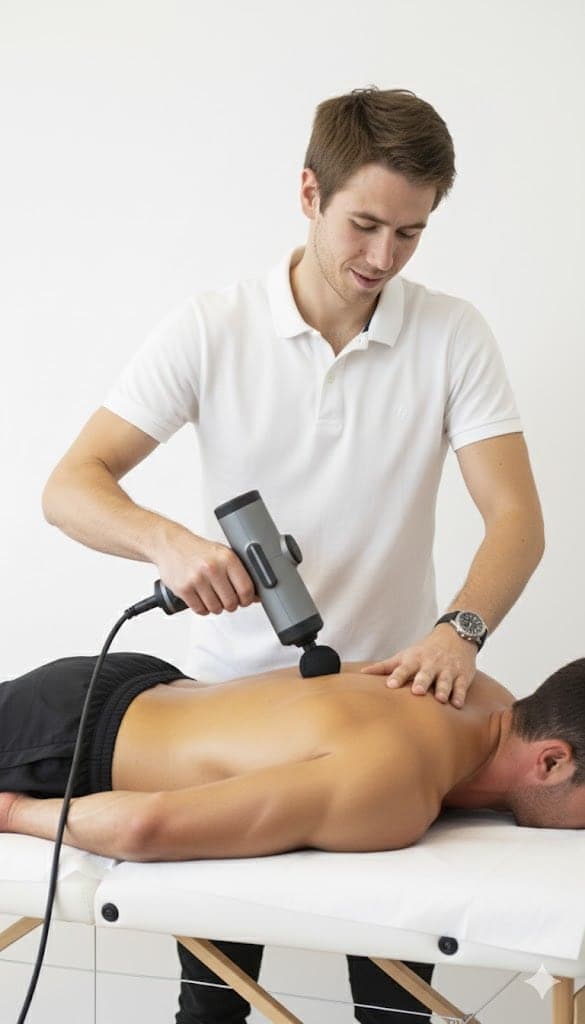
Written by
Chris
Massage therapist, nutrition and exercise physiologist
Norwegian-certified with a Bachelor’s in Physical Education and Nutrition and over ten years of clinical practice, working from a portable table in clients’ homes across the Paphos district.
This article is general information, not a medical diagnosis. If you have severe, worsening or unexplained pain, numbness, weakness, or pain after an accident, see a doctor first.