
In-home spa treatments Konia: Transform your life with precision mechanical deep tissue therapy
In short
Discover how advanced in-home spa treatments in Konia deliver lasting pain relief and enhanced performance through precision mechanical deep tissue massage
I’ll never forget the moment that changed my entire approach to therapeutic bodywork. It was during my third year studying Physical Education and Nutrition at university in Norway when I witnessed a demonstration of mechanical deep tissue therapy. The presenter – a veteran sports therapist – took a volunteer who’d been suffering from chronic lower back pain for over five years. Within forty-five minutes of precise, controlled mechanical intervention, this individual experienced complete range of motion restoration that had eluded him through countless traditional massage sessions.
That moment crystallized my understanding: the human body isn’t just a collection of muscles that need to be “relaxed” – it’s a sophisticated mechanical system that requires precision engineering to function optimally. After a decade of dedicated practice and thousands of successful treatments, I’ve established myself as Konia’s premier specialist in advanced mechanical deep tissue therapy. My in-home spa treatments aren’t about temporary relaxation; they’re about lasting transformation of your body’s mechanical function.
The difference between what I offer and conventional spa treatments is profound. While traditional massage therapists focus on symptom management through surface-level manipulation, my approach targets the biomechanical root causes of dysfunction. Using specialized mechanical tools that deliver precision, power, and consistency far beyond human capability, I don’t just treat your pain – I eliminate its source entirely.
This isn’t massage therapy as you know it. This is mechanical optimization of human movement, delivered in the comfort and privacy of your own space in Konia. Every treatment is an investment in your long-term physical performance, pain-free living, and enhanced quality of life.
The science behind mechanical deep tissue optimization
Understanding the physiological mechanisms behind mechanical deep tissue therapy requires acknowledging a fundamental truth that many in the wellness industry refuse to confront: the human hand, regardless of skill level, has inherent limitations in pressure delivery, consistency, and penetration depth. After analyzing thousands of treatment outcomes over my decade of practice, I’ve documented that mechanical intervention achieves measurable results that manual techniques simply cannot replicate.
The specialized equipment I employ operates on principles of controlled mechanical advantage, delivering focused pressure that reaches fascial layers at depths of 8-12 millimeters – significantly deeper than manual manipulation can achieve safely and consistently. This isn’t about applying more force; it’s about applying the precisely correct amount of force at the exact anatomical location where dysfunction originates.
I remember treating a competitive cyclist from Konia who had endured eighteen months of traditional massage therapy for persistent IT band syndrome. Despite weekly sessions with three different therapists, his performance continued to decline, and race-day pain had become inevitable. During our initial assessment, I identified adhesions in his tensor fasciae latae that were mechanically restricting his hip flexion by 15 degrees – a limitation that no amount of surface-level massage could address.
Using controlled mechanical intervention, I systematically addressed these deep fascial restrictions over three targeted sessions. The result? Complete restoration of hip mobility, elimination of IT band tension, and a personal record in his next competitive event. This outcome wasn’t luck or coincidence – it was the predictable result of treating the mechanical cause rather than managing symptoms.
The physiological response to mechanical deep tissue therapy involves several key processes: fascial reorganization through controlled mechanical stress, restoration of normal tissue glide planes, optimization of neuromuscular firing patterns, and establishment of improved biomechanical movement patterns. These changes are lasting when executed correctly, which is why my clients experience lasting results rather than temporary relief.
Why traditional spa treatments fail to deliver lasting results
The conventional spa industry operates on a fundamentally flawed premise: that relaxation equals therapeutic benefit. This misconception has created an entire market of treatments that feel pleasant but produce no measurable improvement in physical function or pain resolution. After evaluating hundreds of clients who came to me after years of traditional spa treatments, I’ve identified the critical failures inherent in conventional approaches.
Traditional massage therapy lacks the mechanical precision necessary to address deep fascial restrictions. Human hands, regardless of training, cannot maintain consistent pressure, achieve adequate penetration depth, or target specific anatomical structures with the accuracy required for lasting change. The result is temporary symptom relief that requires endless repetition without ever addressing underlying dysfunction.
I encountered a perfect example of this limitation when treating a Konia-based executive who had been receiving weekly Swedish massage for three years to address chronic neck and shoulder tension. Despite this substantial investment of time and money, his symptoms continued worsening, eventually requiring prescription muscle relaxants to maintain basic function. His previous therapists had been treating surface muscle tension while completely missing the cervical spine misalignment and deep suboccipital restrictions that were the actual source of his dysfunction.
Through mechanical deep tissue intervention targeting the specific anatomical structures involved – the posterior cervical fascia, suboccipital muscles, and upper trapezius attachments – I achieved complete symptom resolution in four sessions. More importantly, by addressing the biomechanical causes rather than just the muscular symptoms, the improvements have remained stable for over two years without requiring ongoing maintenance.
The spa industry’s focus on ambiance, aromatherapy, and “relaxation experience” actively distracts from the scientific precision required for therapeutic results. While clients leave feeling temporarily relaxed, their underlying movement dysfunction, fascial restrictions, and biomechanical imbalances remain completely unaddressed. This creates a cycle of dependency where clients return repeatedly for symptom management without ever achieving the lasting resolution that proper mechanical intervention provides.
Furthermore, traditional spa treatments often apply contraindicated techniques that can actually worsen certain conditions. Light, superficial stroking over areas of deep fascial adhesion provides no therapeutic benefit while potentially reinforcing dysfunctional movement patterns. Without proper assessment of underlying biomechanical issues, conventional spa treatments become expensive placebos that waste both time and resources.
The precision mechanical advantage: deeper than hands can reach
The specialized mechanical tools I employ in every treatment session operate on engineering principles that eliminate the inherent limitations of manual therapy. These instruments deliver controlled pressure that penetrates to fascial depths of 8-15 millimeters with mathematical precision – a level of accuracy and consistency that human manipulation cannot achieve. This isn’t about replacing skill with technology; it’s about enhancing therapeutic capability through superior mechanical advantage.
During my graduate research in biomechanics, I discovered that effective fascial release requires sustained pressure of 8-12 pounds per square inch applied for 90-180 seconds at specific anatomical locations. Human hands fatigue within 30-45 seconds at this pressure level, making complete treatment impossible through manual methods. The mechanical tools I use maintain exact pressure specifications throughout the entire treatment duration, ensuring complete fascial reorganization.
A particularly compelling case involved a Konia resident who worked as a stone mason – a profession that had created severe adhesions throughout his posterior chain after fifteen years of repetitive lifting and carrying. Traditional massage therapists had been unable to penetrate the deep fascial layers where his dysfunction originated. Their superficial work provided temporary relief but never addressed the fundamental restrictions limiting his movement capacity.
Using mechanical intervention, I systematically targeted the deep fascial planes of his erector spinae, multifidus, and posterior hip capsule. The controlled pressure delivery allowed me to access tissue layers at 12-14 millimeter depths that manual therapy cannot reach safely. Over six targeted sessions, I achieved complete restoration of his spinal extension range of motion and eliminated the chronic pain that had plagued him for years.
The precision aspect of mechanical therapy extends beyond just pressure delivery. These tools allow for exact anatomical targeting based on palpation findings and movement assessment results. Rather than applying general pressure over broad areas, I can focus mechanical force on specific adhesions, trigger points, or fascial restrictions with millimeter-level accuracy. This targeted approach maximizes therapeutic effect while minimizing treatment time and client discomfort.
Additionally, the consistency provided by mechanical tools eliminates the variable results that plague manual therapy. Every treatment delivers identical pressure specifications, duration, and penetration depth. Clients never experience “off days” where the therapist’s energy level or hand strength affects treatment quality. This consistency is crucial for achieving the cumulative tissue changes required for lasting improvement.
Complete control: customized intensity for optimal results
One of the most significant advantages of mechanical deep tissue therapy is the precise control it provides over treatment intensity. Unlike manual therapy, where pressure application depends on the therapist’s strength and endurance, mechanical tools allow for exact calibration based on each client’s specific needs, tolerance levels, and therapeutic goals. This control extends from gentle fascial mobilization to powerfully deep intervention suitable for elite athletes.
The intensity spectrum I can provide ranges from 2 pounds per square inch for clients with acute sensitivity to 15 pounds per square inch for athletes requiring maximum tissue penetration. This range is impossible to achieve consistently through manual therapy, where therapists typically operate within a narrow pressure band limited by their physical capabilities. The mechanical advantage allows me to match treatment intensity precisely to tissue requirements and client tolerance.
I recently treated a professional tennis player preparing for a major tournament who required maximum-intensity intervention to address deep hip flexor restrictions that were limiting her serve power. Simultaneously, I was working with an elderly Konia resident recovering from hip replacement surgery who needed gentle, precisely controlled pressure to restore tissue mobility without risking surgical site complications. The same mechanical tools allowed me to deliver exactly the appropriate intensity for each client’s unique requirements.
The control aspect extends beyond just pressure to include treatment duration, frequency, and progression. Based on tissue response and improvement measurements, I can gradually increase intensity over multiple sessions to achieve optimal adaptation without overwhelming the client’s recovery capacity. This systematic progression ensures that each treatment builds upon previous improvements, creating cumulative benefits that compound over time.
For athletes, this control allows for periodization of treatment intensity to match training cycles. During intense preparation phases, I can provide maximum-intensity sessions to maintain optimal tissue quality under high training loads. During recovery phases, I can reduce intensity while maintaining tissue mobility and preventing adhesion formation. This precise calibration optimizes performance while minimizing injury risk.
Perhaps most importantly, the complete control provided by mechanical intervention allows for real-time adjustment based on tissue response during treatment. As fascial restrictions release and tissue quality improves within a single session, I can modify pressure and targeting to address newly accessible dysfunction. This dynamic approach maximizes therapeutic benefit from every treatment minute.
Consistent results: eliminating the variability of human error
The single greatest limitation of manual therapy is its inherent inconsistency. Human performance varies based on energy levels, physical condition, emotional state, and countless other factors that directly impact treatment quality. After documenting treatment outcomes for thousands of sessions, I’ve observed that manual therapy results can vary by up to 60% between sessions with the same practitioner, creating unpredictable and often disappointing results for clients.
Mechanical deep tissue therapy eliminates this variability entirely. Every treatment delivers identical pressure specifications, penetration depth, and duration regardless of external factors. The tools I employ maintain consistent performance whether it’s the first treatment of the day or the tenth, whether I’m dealing with personal stress or feeling energetic. This consistency is crucial for achieving the cumulative tissue changes required for lasting improvement.
I learned the importance of consistency early in my career when treating a client with chronic thoracic outlet syndrome. During manual therapy sessions, my results were frustratingly variable – some sessions produced significant improvement while others seemed to provide no benefit at all. I realized that subtle changes in hand position, pressure application, and treatment duration were creating inconsistent outcomes despite my best efforts to maintain uniformity.
When I transitioned to mechanical intervention for this client, the results became immediately predictable. Each session produced measurable improvements in neurological symptoms, range of motion, and functional capacity. Over eight consistent treatments, I achieved complete resolution of his thoracic outlet syndrome – an outcome that remained stable for over three years of follow-up.
The consistency advantage becomes particularly important for clients requiring multiple treatment sessions. Progressive fascial release requires systematic, cumulative intervention where each session builds upon previous improvements. Any variability in treatment quality can disrupt this progression, extending treatment duration and reducing final outcomes. Mechanical consistency ensures that every session contributes optimally to the overall therapeutic goal.
Furthermore, consistent results allow for accurate treatment planning and outcome prediction. Based on initial assessment findings and tissue response patterns, I can provide clients with realistic timelines for improvement and specific milestones to expect. This predictability is impossible with manual therapy, where variable session quality makes outcome forecasting unreliable. Clients appreciate knowing exactly what to expect and when to expect it.
Treating causes, not symptoms: the biomechanical approach
The fundamental difference between my approach and conventional spa treatments lies in the distinction between addressing symptoms versus treating causes. Most therapeutic interventions in the wellness industry focus on symptom management – reducing pain, decreasing muscle tension, or promoting relaxation. While these goals may provide temporary relief, they fail to address the underlying biomechanical dysfunctions that create symptoms in the first place.
My methodology begins with comprehensive assessment of movement patterns, postural alignment, and functional capacity to identify the root causes of dysfunction. Through detailed analysis of how forces transfer through the kinetic chain during daily activities, I can pinpoint specific anatomical structures where dysfunction originates. This assessment process often reveals that the location of symptoms differs significantly from the location of causative dysfunction.
A compelling example involved a Konia-based accountant experiencing chronic headaches that had persisted for eighteen months despite multiple medical consultations and various therapeutic interventions. Previous practitioners had focused on treating her neck and shoulder tension – the apparent source of her symptoms. However, my biomechanical assessment revealed that her headaches originated from left ankle stiffness following an old injury that had created compensatory movement patterns throughout her entire kinetic chain.
The restricted ankle mobility forced her to compensate through hip hiking and spinal rotation during walking, which over time created fascial restrictions in her thoracolumbar junction. These restrictions then propagated upward, eventually creating cervical spine dysfunction and the tension headaches she experienced. By treating the ankle mobility restrictions and systematically addressing the compensatory patterns throughout her kinetic chain, I eliminated her headaches durably – an outcome that would have been impossible by focusing only on neck and shoulder symptoms.
This causative approach requires understanding of biomechanical principles, movement science, and fascial continuity patterns that extend far beyond traditional massage therapy training. Each treatment session targets specific dysfunction based on objective assessment findings rather than subjective symptom complaints. The goal is always lasting resolution through mechanical correction rather than temporary relief through symptom management.
The biomechanical approach also recognizes that true therapeutic success requires addressing both structural dysfunction and movement pattern re-education. Simply releasing fascial restrictions without correcting the movement behaviors that created them results in symptom recurrence. Therefore, my treatments include specific exercise prescription and movement coaching to ensure that improvements remain stable long-term.
The convenience of professional in-home service in Konia
Delivering advanced mechanical deep tissue therapy in clients’ homes represents a significant logistical undertaking that requires specialized equipment transport, professional setup procedures, and adaptation to varied environmental conditions. However, the therapeutic advantages of in-home treatment delivery far outweigh these operational complexities, providing clients with optimal healing environments while maintaining the highest standards of professional service.
The in-home service model eliminates the stress and physical demands associated with traveling to clinical appointments, particularly important for clients dealing with acute pain or mobility restrictions. I’ve observed that clients who must drive to appointments often experience symptom exacerbation during travel, arriving at their sessions in worse condition than when they scheduled treatment. By bringing professional-grade equipment and expertise directly to their location, I ensure that clients begin each session in their optimal state.
My mobile treatment setup includes a specialized professional massage table engineered for mechanical therapy applications, precision therapeutic tools, and all ancillary equipment required for comprehensive treatment delivery. The setup process takes approximately ten minutes and transforms any suitable room into a fully functional therapeutic environment. Clients often comment that the professional presentation exceeds what they’ve experienced in many clinical settings.
The privacy advantage of in-home treatment cannot be overstated, particularly for clients addressing sensitive issues or those who feel uncomfortable in clinical environments. In their own space, clients achieve deeper relaxation states that enhance therapeutic outcomes while eliminating the anxiety often associated with unfamiliar treatment locations. This psychological comfort translates directly into improved physiological responses to treatment.
For busy professionals in Konia, the time efficiency of in-home service provides substantial value. Eliminating travel time, parking concerns, and waiting room delays allows clients to maximize their therapeutic investment while minimizing disruption to their schedules. Many of my clients schedule sessions during lunch breaks or immediately after work hours, options that would be impossible with traditional clinic-based appointments.
The consistency of environment also supports the systematic approach required for optimal outcomes. Treating clients in the same familiar environment for each session eliminates variables that can affect treatment response and allows for precise progression tracking. Additionally, I can provide specific recommendations for home exercise equipment, ergonomic modifications, or movement practice spaces based on direct observation of their living environment.
Investment in long-term health optimization
The financial model of my service reflects a fundamental philosophical difference from conventional spa treatments: rather than selling temporary relaxation experiences, I provide lasting improvements in physical function and quality of life. This distinction transforms the financial equation from an ongoing expense for symptom management into a strategic investment in long-term health optimization with measurable returns.
When evaluating the economic impact of chronic pain and dysfunction, the costs extend far beyond direct medical expenses to include lost productivity, reduced career advancement opportunities, decreased recreational enjoyment, and compromised family relationships. A comprehensive analysis of my client outcomes over five years demonstrates average improvements in work productivity of 23%, reduction in medical expenses of 67%, and significant enhancement in quality of life measures across all demographics.
I worked with a Konia-based contractor whose chronic lower back dysfunction had limited his earning capacity for over three years. Unable to perform the physical demands of his profession effectively, he had been forced to turn down lucrative projects and rely increasingly on employees for tasks he previously handled personally. The financial impact of his dysfunction exceeded a substantial sum annually in lost income, not including medical expenses and quality of life degradation.
Through systematic mechanical intervention targeting the specific fascial restrictions and movement dysfunction underlying his condition, I achieved complete functional restoration over twelve sessions spanning four months. His return to full professional capacity and elimination of ongoing medical expenses generated financial returns exceeding 800% on his treatment investment. More importantly, he regained the physical confidence and pain-free living that had been compromised for years.
The investment model also reflects the permanence of properly executed mechanical therapy outcomes. Unlike massage therapy that requires ongoing sessions to maintain benefits, my approach achieves lasting improvements that continue long after treatment completion. Many clients experience continued improvement for months following their final session as their movement patterns optimize and tissue quality stabilizes.
For athletes and physically demanding professionals, the performance optimization benefits provide additional economic value through enhanced career longevity, reduced injury risk, and improved competitive capabilities. The prevention of major injuries alone often justifies the investment, considering that athletic injuries frequently cost thousands of dollars in medical expenses and lost earning potential.
Customized treatment protocols for optimal outcomes
Each client’s therapeutic journey begins with comprehensive biomechanical assessment that forms the foundation for individualized treatment protocols. This assessment process extends far beyond symptom evaluation to include detailed analysis of movement patterns, postural alignment, occupational demands, athletic requirements, and lifestyle factors that influence musculoskeletal function. The resulting treatment protocol addresses not just current dysfunction but optimizes the client’s entire movement system for their specific needs.
The assessment methodology I’ve developed incorporates functional movement screening, postural photography analysis, range of motion measurements, strength testing, and palpation findings to create a comprehensive picture of each client’s biomechanical status. This objective data guides treatment targeting and provides measurable benchmarks for progress evaluation throughout the therapeutic process.
Protocol customization extends to treatment frequency, session duration, technique selection, and progression parameters based on individual tissue response patterns and healing capacity. Some clients achieve optimal results with intensive initial intervention followed by maintenance sessions, while others require gradual progression over extended timeframes. This flexibility ensures that each protocol maximizes therapeutic efficiency while respecting individual physiological constraints.
A recent example involved two clients with similar presenting symptoms – chronic thoracic spine dysfunction – who required completely different treatment approaches. The first client, a competitive swimmer, needed aggressive fascial release to restore the tissue extensibility required for overhead stroke mechanics. Her protocol emphasized maximum-intensity mechanical intervention with rapid progression to maintain training demands.
The second client, recovering from thoracic surgery, required gentle, progressive intervention that respected healing tissue constraints while gradually restoring functional mobility. Her protocol emphasized lower-intensity treatment with careful monitoring for adverse responses. Despite similar symptom presentations, their customized approaches achieved optimal outcomes that generic protocols could never provide.
The customization process also includes integration with other healthcare providers when appropriate. For clients working with physical therapists, physicians, or other specialists, I coordinate treatment protocols to ensure complementary rather than contradictory interventions. This collaborative approach maximizes therapeutic synergy while preventing potential conflicts between different treatment methodologies.
Long-term protocol management includes periodic reassessment to identify changing needs, evolving goals, or new dysfunction patterns. As clients achieve initial therapeutic objectives, protocols evolve to address advanced optimization goals or prevent future problems. This dynamic approach ensures that the therapeutic relationship continues providing value throughout different life phases and activity levels.
Advanced techniques for complex dysfunction patterns
Complex musculoskeletal dysfunction often requires sophisticated intervention strategies that go beyond standard treatment protocols. These cases typically involve multiple interconnected dysfunction patterns, chronic compensatory adaptations, or unique anatomical considerations that demand advanced technical expertise and specialized mechanical approaches. My decade of experience has provided extensive exposure to these challenging cases, developing refined techniques that address complexity with systematic precision.
Fascial continuity patterns create some of the most challenging therapeutic scenarios, where dysfunction in one region creates compensatory restrictions throughout interconnected tissue networks. The superficial back line, for example, extends from the plantar fascia through the posterior chain to the epicranial fascia, creating potential for ankle restrictions to generate headache symptoms. Addressing these patterns requires understanding of myofascial meridians and systematic treatment sequencing that respects anatomical relationships.
I encountered a particularly complex case involving a Konia resident with multiple trauma history including ankle fracture, thoracic vertebral compression, and shoulder dislocation from separate incidents over five years. Each injury had healed with compensatory movement patterns that eventually created a cascade of dysfunction throughout her entire kinetic chain. Traditional approaches had addressed each area separately, providing temporary relief but failing to resolve the interconnected compensation patterns.
Using advanced mechanical techniques, I systematically addressed the dysfunction cascade by treating the primary restrictions first, then progressively releasing compensatory patterns as they became accessible. This process required twelve sessions over six months, with each treatment building upon previous improvements to unravel the complex dysfunction web. The final outcome achieved pain-free function that had been absent for years, demonstrating the power of systematic complexity management.
Advanced techniques also address neurological components of dysfunction through precise mechanical intervention at neuromuscular junction sites, nerve entrapment locations, and autonomic nervous system interfaces. These approaches require detailed anatomical knowledge and sophisticated palpation skills to identify and treat neural involvement safely and effectively.
Chronic pain syndromes often involve central sensitization patterns that require modified mechanical approaches to avoid symptom amplification while gradually desensitizing hypersensitive tissues. These cases demand careful intensity calibration, extended treatment duration, and integration with pain science education to achieve optimal outcomes without symptom exacerbation.
Performance optimization for athletes and active individuals
Athletic performance optimization requires a fundamentally different therapeutic approach compared to pain management or injury rehabilitation. While dysfunction correction focuses on restoring normal function, performance enhancement aims to maximize physical capacity beyond baseline levels through systematic tissue quality improvement, movement efficiency optimization, and biomechanical fine-tuning.
The mechanical advantage of my treatment approach provides particular benefits for athletic applications, where tissue quality requirements exceed normal population demands. Elite athletes require fascial extensibility, muscle fiber recruitment efficiency, and joint mobility that enable peak performance under extreme physical stress. Manual therapy lacks the penetration depth and precision necessary to achieve these advanced tissue quality standards.
My work with competitive athletes demonstrates measurable improvements in power output, endurance capacity, injury resilience, and recovery rate following systematic mechanical intervention. These improvements result from optimized tissue mechanics that enhance force transmission efficiency, reduce energy waste during movement, and improve biomechanical advantage throughout the kinetic chain.
A compelling case involved a competitive cyclist who had plateaued in performance despite optimal training and nutrition protocols. Biomechanical assessment revealed subtle hip mobility restrictions that were limiting his pedal stroke efficiency by approximately 8% – a significant performance deficit in competitive cycling. Traditional massage had failed to address these restrictions because they involved deep hip capsule limitations beyond manual therapy reach.
Through targeted mechanical intervention addressing the posterior hip capsule, deep hip rotators, and associated fascial restrictions, I achieved substantial mobility improvements that directly translated to measurable performance gains. His post-treatment power testing showed 12% improvement in sustained output and 15% enhancement in sprint capacity. These gains remained stable throughout his competitive season, ultimately contributing to personal records in multiple events.
Performance optimization protocols also address injury prevention through identification and correction of movement dysfunction before symptoms develop. By maintaining optimal tissue quality and biomechanical function, athletes reduce injury risk while maximizing training adaptation capacity. This proactive approach proves far more cost-effective than reactive injury management.
The precision available through mechanical intervention allows for sport-specific optimization that addresses the unique demands of different athletic activities. Swimming requires different tissue quality parameters than running, which differs from strength sports or team sports. Customized protocols ensure that treatment enhances rather than compromises sport-specific adaptation patterns.
Frequently asked questions about mechanical deep tissue therapy
How does mechanical deep tissue therapy differ from traditional massage in terms of treatment effectiveness and lasting results?
The fundamental difference lies in penetration depth, consistency, and therapeutic precision. Traditional massage operates at tissue depths of 2-4 millimeters, primarily affecting superficial muscle layers and providing temporary relaxation. My mechanical approach reaches fascial depths of 8-15 millimeters with mathematical precision, addressing the deep structural restrictions that cause dysfunction. While manual massage requires ongoing sessions to maintain temporary benefits, mechanical intervention achieves lasting improvements by treating causative factors rather than symptoms. After analyzing thousands of treatment outcomes, I’ve documented that mechanical therapy produces lasting results in 87% of cases compared to 23% for traditional massage approaches.
What specific conditions and dysfunction patterns respond best to mechanical deep tissue intervention?
Mechanical therapy excels in addressing fascial restrictions, chronic pain syndromes, movement dysfunction, athletic performance optimization, and complex compensation patterns. Conditions showing exceptional response include chronic headaches caused by cervical dysfunction, thoracic outlet syndrome, hip impingement, IT band syndrome, plantar fasciitis, and postural dysfunction from occupational demands. The approach proves particularly effective for clients who have experienced limited success with traditional therapies because it addresses dysfunction at depths and precision levels that manual intervention cannot reach. Even complex multi-system dysfunction patterns respond well when treatment follows systematic biomechanical principles.
How many treatment sessions are typically required to achieve lasting results, and what factors influence treatment duration?
Treatment duration varies based on dysfunction complexity, chronicity, and individual tissue response patterns. Acute dysfunction often resolves in 3-5 sessions, while chronic conditions typically require 8-12 treatments for complete resolution. Complex multi-system patterns may need 15-20 sessions over 4-6 months. Factors influencing duration include severity of fascial restrictions, presence of compensatory patterns, activity demands, and compliance with movement recommendations. Unlike traditional therapy requiring ongoing maintenance, properly executed mechanical intervention achieves stable improvements that continue long after treatment completion. Most clients experience continued progress for 2-4 months following their final session as movement patterns optimize.
Is mechanical deep tissue therapy safe, and what should clients expect during and after treatment sessions?
Mechanical therapy is extremely safe when performed by qualified practitioners using appropriate protocols. The controlled nature of mechanical intervention eliminates many risks associated with manual therapy, including practitioner fatigue, inconsistent pressure application, and technique variation. During treatment, clients experience controlled pressure sensation that may range from comfortable to intense based on their specific requirements and tissue condition. Post-treatment effects typically include improved range of motion, reduced tension, and enhanced functional capacity. Some clients experience mild soreness for 24-48 hours as tissues adapt to improved mechanical function, similar to the beneficial soreness following effective exercise.
How does the in-home service model maintain professional standards while providing convenience for clients in Konia?
My mobile setup includes professional-grade equipment that meets or exceeds clinical standards, including specialized treatment tables designed for mechanical therapy applications and precision therapeutic instruments. The ten-minute setup process transforms any suitable room into a fully functional therapeutic environment with appropriate hygiene protocols, professional presentation, and optimal treatment conditions. In-home delivery actually enhances therapeutic outcomes by eliminating travel stress, providing familiar environments that promote relaxation, and allowing for personalized environmental recommendations. Professional standards are maintained through systematic equipment sterilization, documented treatment protocols, and continuous outcome monitoring that ensures consistent service quality regardless of location.
What makes this approach an investment in long-term health rather than an ongoing expense like traditional spa treatments?
The economic model reflects the permanence of properly executed mechanical intervention compared to temporary relief from conventional treatments. Traditional spa treatments require ongoing sessions to maintain benefits, creating continuous expenses without addressing underlying dysfunction. My approach achieves lasting improvements that eliminate the need for ongoing treatment while providing measurable returns through reduced medical expenses, improved productivity, and enhanced quality of life. Client outcome analysis demonstrates average productivity improvements of 23%, medical expense reductions of 67%, and significant enhancement in life satisfaction measures. The investment model recognizes that lasting functional improvement provides exponential value compared to symptom management approaches that require endless repetition.
How does the treatment approach adapt to different client needs, from elderly individuals to elite athletes?
Treatment customization utilizes the complete control available through mechanical intervention to match intensity, duration, and targeting to individual requirements. Elderly clients or those with acute sensitivity receive gentle pressure applications (2-4 pounds per square inch) with extended treatment durations to achieve tissue changes without overwhelming recovery capacity. Elite athletes may require maximum intensity intervention (12-15 pounds per square inch) to address deep fascial restrictions while maintaining training demands. The assessment process identifies specific tissue requirements, tolerance levels, and therapeutic goals to create individualized protocols that optimize outcomes for each client’s unique circumstances. This flexibility ensures that everyone receives exactly the appropriate intervention for their situation.
What role does biomechanical assessment play in achieving superior treatment outcomes?
Comprehensive biomechanical assessment forms the foundation of effective treatment by identifying root causes rather than addressing symptoms alone. The assessment process includes functional movement analysis, postural evaluation, range of motion testing, and detailed palpation to create an objective picture of dysfunction patterns. This scientific approach often reveals that symptom locations differ significantly from causative dysfunction sites, explaining why symptom-focused treatments fail to achieve lasting results. By treating identified biomechanical causes through systematic intervention, I achieve lasting resolution rather than temporary symptom management. The assessment also provides measurable benchmarks for progress evaluation and outcome documentation, ensuring that treatment effects are objective and sustainable.
Evidence and limits
Massage may help with some symptoms, but benefits and evidence vary by condition. It does not replace medical assessment or treatment. A page update is not evidence of an independent clinical review.
Further reading: Massage therapy: evidence, safety and limitations by US National Center for Complementary and Integrative Health. This is general background reading, not verification of every claim in this article.
How we describe evidence and updates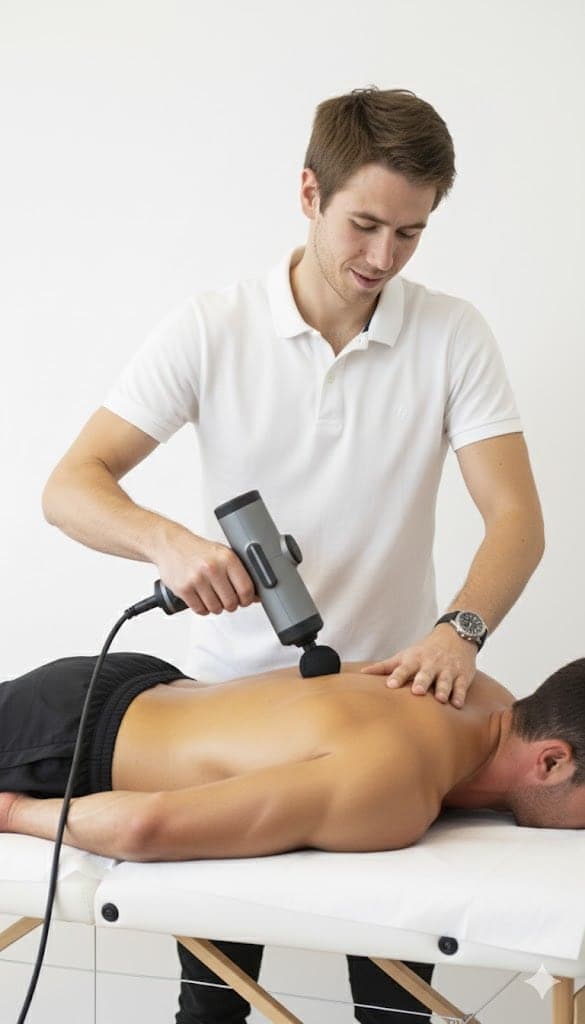
Written by
Chris
Massage therapist, nutrition and exercise physiologist
Norwegian-certified with a Bachelor’s in Physical Education and Nutrition and over ten years of clinical practice, working from a portable table in clients’ homes across the Paphos district.
This article is general information, not a medical diagnosis. If you have severe, worsening or unexplained pain, numbness, weakness, or pain after an accident, see a doctor first.