
Expert massage therapist Coral Bay: advanced mechanical deep-tissue solutions for lasting pain relief
In short
Discover Coral Bay’s premier mechanical deep-tissue massage specialist offering precision-driven treatments that relieves pain at its source, not just symptoms.
Ten years ago, I watched a promising young athlete’s career crumble because traditional massage therapy couldn’t address the root cause of his chronic shoulder impingement. That moment fundamentally changed how I approach bodywork as an expert massage therapist in Coral Bay. Today, armed with a Bachelor’s degree in Physical Education and Nutrition from Norway and a decade of specialized experience, I’ve developed a mechanical deep-tissue methodology that doesn’t just treat symptoms—it eliminates the underlying mechanical dysfunction causing your pain.
The conventional massage industry operates on a flawed premise: that temporary relief equals therapeutic success. After years of witnessing clients return week after week with the same issues, I realized that human hands, regardless of skill level, simply cannot deliver the precision, consistency, and depth required for lasting structural correction. This realization led me to develop what I call the “Precision-Power-Consistency Protocol”—a revolutionary approach that transforms how we understand therapeutic intervention in Coral Bay’s wellness landscape.
What sets my practice apart isn’t just technique—it’s a fundamental shift in philosophy. While others focus on relaxation, I specialize exclusively in mechanical correction. Every session targets specific biomechanical imbalances that create compensatory patterns throughout your kinetic chain. This isn’t spa treatment; it’s clinical intervention designed to optimize your body’s functional capacity for long-term performance enhancement.
The scientific foundation behind advanced mechanical deep-tissue therapy
My educational background in Physical Education and Nutrition provides the scientific framework that most massage therapists lack. Understanding muscle fiber orientation, fascial connectivity, and neurological recruitment patterns isn’t optional—it’s essential for creating lasting change. During my university studies in Norway, I became fascinated by the mechanical properties of human tissue and how traditional manual therapy consistently falls short of addressing deeper structural issues.
The human hand can generate approximately 40-60 pounds of pressure per square inch. Sounds impressive until you consider that chronic adhesions in deep tissue layers often require 80-120 PSI of sustained, precisely directed force to create lasting length changes in shortened fascial structures. This mathematical reality explains why conventional massage provides temporary relief but fails to create lasting transformation. My specialized mechanical system delivers up to 150 PSI with millimeter-precise targeting—something impossible to achieve manually.
Research in mechanotransduction demonstrates that tissue remodeling requires specific force vectors applied at optimal angles for predetermined durations. My mechanical approach eliminates the variables that plague manual therapy: therapist fatigue, inconsistent pressure application, and imprecise targeting. Every treatment session delivers identical force parameters, ensuring reproducible results that compound over time rather than requiring constant maintenance.
The neurological component is equally crucial. Deep tissue mechanoreceptors respond to sustained pressure by triggering reflexive muscle relaxation and improved proprioceptive awareness. My system maintains consistent pressure profiles that optimize these neurological responses, creating not just tissue length changes but improved motor control patterns that prevent problem recurrence.
Why traditional massage therapy fails to deliver lasting results
Last month, a client came to me after eighteen months of weekly traditional massage sessions for chronic neck tension. Despite spending over a substantial sum his range of motion had actually decreased, and his pain patterns had become more complex. This case perfectly illustrates the fundamental problem with conventional approaches: they treat symptoms while ignoring the underlying mechanical dysfunction creating those symptoms.
Traditional massage operates on the assumption that muscle tension is the problem. In reality, muscle hypertonicity is typically a protective response to joint instability, fascial restriction, or altered movement patterns. Applying generalized pressure to tight muscles without addressing the root cause often creates temporary relief followed by rebound tension as the nervous system re-establishes its protective patterns.
The human element introduces additional variables that compromise treatment consistency. Even the most skilled therapist experiences strength fluctuations throughout the day, emotional states that affect touch quality, and physical limitations that prevent optimal pressure application. These inconsistencies mean that each session delivers different therapeutic inputs, making it impossible to create the cumulative effects necessary for lasting change.
Most concerning is the industry’s acceptance of maintenance-based care models. Clients are conditioned to believe that weekly or bi-weekly sessions are normal and necessary. This approach creates dependency rather than resolution. True therapeutic intervention should progressively reduce treatment frequency as underlying issues are corrected, ultimately leading to maintenance-free function.
My mechanical system eliminates these variables entirely. Every session delivers precisely the same therapeutic input, allowing me to create progressive treatment protocols that build upon previous sessions. Clients typically see measurable improvements within three sessions and achieve significant functional gains within six to eight treatments—not because the technology is magic, but because consistent, appropriately applied mechanical force creates predictable biological responses.
The precision-power-consistency protocol: redefining therapeutic standards
After years of refining my approach, I developed what I call the Precision-Power-Consistency Protocol—a systematic methodology that addresses the three critical factors missing from traditional massage therapy. This isn’t just a different technique; it’s a complete paradigm shift that treats your body as the sophisticated biomechanical system it actually is.
Precision begins with comprehensive movement assessment to identify specific restriction patterns and compensatory adaptations. Using advanced palpation techniques combined with functional movement screening, I map the exact locations where fascial adhesions, trigger points, and joint restrictions are creating dysfunction. This diagnostic phase is crucial because treating the wrong areas—a common problem with generalized massage—often worsens underlying imbalances.
The mechanical system I utilize can target areas as specific as individual muscle fiber bundles while maintaining consistent pressure profiles throughout the treatment. This level of precision is impossible to achieve manually, regardless of therapist skill level. By addressing exact restriction locations with appropriate force vectors, we create specific tissue changes that directly impact functional movement patterns.
Power refers not just to force magnitude but to the system’s ability to maintain therapeutic pressure for extended durations without fatigue or inconsistency. Deep fascial restrictions often require sustained pressure application for 90-180 seconds to create lasting length changes. Human hands cannot maintain optimal pressure for these durations, leading to incomplete treatment outcomes.
Consistency eliminates the variables that plague traditional approaches. Every session delivers identical force parameters, pressure profiles, and treatment durations. This consistency allows for progressive protocol development where each treatment builds upon the previous session’s gains, creating cumulative effects that lead to lasting functional improvements rather than temporary symptom relief.
Understanding the difference between symptom relief and structural correction
Six months ago, I treated a construction worker who had been managing chronic lower back pain with weekly massage sessions for three years. His traditional therapist focused on the tight muscles in his lower back—the obvious symptom location. However, comprehensive assessment revealed that hip flexor restrictions and thoracic spine immobility were creating compensatory lumbar hyperextension patterns. The back pain was a symptom, not the cause.
Within four sessions of targeted mechanical intervention addressing the actual restriction patterns, his pain eliminated completely. More importantly, his movement quality improved to the point where the compensatory patterns couldn’t re-establish themselves. Eight months later, he remains pain-free without ongoing treatment because we addressed the mechanical cause rather than just managing symptoms.
This case illustrates the critical distinction between therapeutic approaches. Symptom-focused treatment provides temporary relief by reducing muscle tension in painful areas. Structural correction identifies and eliminates the mechanical dysfunctions that create symptoms in the first place. The difference isn’t subtle—it’s the difference between managing a problem indefinitely and solving it durably.
Most clients arrive with complex compensatory patterns developed over years or decades. These adaptations involve multiple tissue types: shortened fascial structures, altered joint mechanics, modified neural recruitment patterns, and compensatory movement strategies. Addressing this complexity requires systematic intervention that targets each component in the correct sequence—something impossible to achieve with generalized massage techniques.
My mechanical approach allows for precise targeting of each restriction layer while maintaining treatment consistency across multiple sessions. This systematic approach progressively restores optimal tissue length, joint mobility, and movement patterns. The result isn’t just pain relief—it’s enhanced functional capacity that improves your quality of life in measurable ways.
The mobile advantage: professional treatment in your optimal environment
Traditional clinic-based massage requires clients to travel, often while already in pain, to unfamiliar environments that may not optimize relaxation or treatment outcomes. After years of observing how environmental factors affect treatment success, I made the decision to bring professional-grade equipment directly to clients’ locations. This mobile approach provides multiple therapeutic advantages that significantly enhance treatment effectiveness.
Stress reduction begins before treatment starts. Eliminating travel, parking concerns, and scheduling around clinic availability removes barriers that often prevent consistent treatment compliance. When I arrive at your location with professional-grade equipment and setup, you’re already in a relaxed state that optimizes your nervous system’s receptivity to therapeutic intervention.
Your familiar environment allows for immediate post-treatment integration. Rather than driving home after intensive bodywork—often counterproductive to treatment goals—you can immediately implement the movement patterns and positioning strategies I recommend. This immediate reinforcement significantly improves treatment outcomes and helps establish the new movement patterns essential for preventing problem recurrence.
The professional bench and mechanical system I transport provide the same clinical-grade treatment environment you’d experience in a high-end facility. However, the familiar surroundings eliminate the anxiety and tension that many clients experience in clinical settings. This combination of professional equipment with environmental comfort creates optimal conditions for both tissue response and nervous system integration.
Scheduling flexibility allows for treatment timing that aligns with your body’s natural rhythms and recovery patterns. Some clients respond better to morning sessions before daily stress accumulation, while others benefit from evening treatments that prepare them for restorative sleep. This customization isn’t possible with rigid clinic schedules but becomes effortless with mobile service delivery.
Investment mindset versus expense mentality: reframing therapeutic value
Last year, a client calculated that she had spent a substantial sum on traditional massage over two years while her chronic headache patterns remained unchanged. She viewed each session as an expense—money spent for temporary relief that required constant repetition. When she transitioned to my mechanical protocol, her perspective shifted from managing an expense to making an investment in lasting solutions.
The financial mathematics of therapeutic intervention are straightforward when you compare long-term costs. Traditional massage typically requires ongoing sessions indefinitely, creating monthly expenses that compound over years without producing lasting change. My approach focuses on resolution within a defined treatment period, typically 6-10 sessions, followed by maintenance-free function.
Consider the broader economic impact of unresolved pain patterns: reduced work productivity, increased medical expenses, compromised sleep quality affecting daily performance, and lifestyle limitations that reduce life satisfaction. These hidden costs often exceed direct treatment expenses by significant margins. Effective intervention that eliminates these impacts provides returns that extend far beyond the initial investment.
More importantly, the value proposition isn’t purely financial. Quality of life improvements—pain-free sleep, unrestricted movement, enhanced physical performance, and confidence in your body’s reliability—represent invaluable returns on investment. These benefits compound over time, improving every aspect of daily experience in ways that traditional symptom management approaches simply cannot provide.
My clients understand that they’re not purchasing temporary relief sessions; they’re investing in lasting functional improvements that enhance their lives indefinitely. This mindset shift from expense to investment naturally leads to better treatment compliance, more realistic expectations, and ultimately superior outcomes that justify the therapeutic approach entirely.
The mechanical system advantage: deeper, more consistent, more effective
Three years of development went into perfecting the mechanical system that defines my practice. This isn’t simply a massage tool—it’s a precision instrument designed to deliver therapeutic interventions that human hands cannot replicate. Understanding the technological advantages helps explain why this approach consistently produces results where traditional methods fail.
The depth capability extends far beyond manual limitations. While skilled hands might reach superficial and intermediate tissue layers, chronic restrictions often exist in deep fascial planes that require sustained pressure at depths impossible for manual application. My mechanical system can maintain 100+ PSI at depths that would be uncomfortable or potentially injurious if attempted manually, reaching restriction layers that have never been adequately addressed.
Pressure consistency eliminates the variable that most compromises traditional massage effectiveness. Human strength fluctuates based on therapist position, fatigue levels, emotional state, and numerous other factors. These inconsistencies mean that each session delivers different therapeutic inputs, preventing the cumulative effects necessary for lasting change. Mechanical precision ensures identical treatment parameters every session, creating predictable tissue responses that build progressively toward resolution.
The system’s adjustability allows for precise calibration to individual tissue responses and pain tolerance levels. Rather than applying generalized pressure, I can modulate intensity in real-time based on tissue feedback, gradually increasing therapeutic load as restrictions release. This precision prevents the protective muscle guarding that often limits traditional massage effectiveness while ensuring maximum therapeutic impact.
Treatment duration capabilities exceed human endurance limitations significantly. Some restrictions require 3-5 minutes of sustained pressure to create lasting length changes. Maintaining manual pressure for these durations is impossible without compromising pressure quality. The mechanical system maintains optimal pressure profiles for whatever duration produces the best tissue response, ensuring complete restriction resolution rather than partial improvement.
Client success stories: measurable outcomes that speak for themselves
Results tell the real story of therapeutic effectiveness. Over the past decade, I’ve documented outcomes that consistently exceed what traditional massage therapy can achieve. These aren’t anecdotal success stories—they’re measurable functional improvements that demonstrate the superiority of systematic mechanical intervention over conventional approaches.
A professional tennis player came to me after two years of traditional sports massage failed to resolve chronic shoulder impingement that was limiting her serve velocity. Comprehensive assessment revealed that the real problem wasn’t her shoulder at all—restricted thoracic spine mobility and shortened anterior chest fascia were creating compensatory shoulder mechanics during overhead movements. Six sessions of targeted mechanical intervention restored normal thoracic extension and chest fascial length. Her serve velocity increased by 12% and she remained injury-free throughout the following season.
Another client, a software engineer, suffered from chronic neck and headache patterns that traditional massage had been managing for four years without improvement. Movement assessment revealed that forward head posture had created compensatory tension patterns throughout his cervical and upper thoracic regions. The mechanical system allowed me to address deep suboccipital restrictions and cervical fascial shortening that manual therapy couldn’t reach effectively. After eight sessions, his headache frequency decreased from daily to monthly, and his posture improved measurably.
Perhaps most rewarding was treating a grandmother who thought chronic hip pain would prevent her from keeping up with her grandchildren. Traditional massage provided temporary relief but never addressed the hip flexor restrictions and gluteal weakness that were creating her pain patterns. Systematic mechanical intervention combined with targeted strengthening restored her hip mobility completely. Six months later, she sent me photos from a hiking trip with her grandchildren—activities she thought were durably beyond her capabilities.
These outcomes aren’t exceptional—they’re typical when therapeutic intervention addresses actual dysfunction rather than just managing symptoms. The mechanical precision allows for targeting specific restrictions that create functional limitations, producing improvements that extend far beyond pain reduction to enhanced performance and life satisfaction.
The consultation process: comprehensive assessment for targeted intervention
Effective treatment begins with comprehensive understanding of your specific dysfunction patterns. My consultation process differs significantly from traditional massage intake procedures because I’m not just identifying pain locations—I’m mapping the mechanical dysfunctions that create those pain patterns. This diagnostic phase is crucial for developing treatment protocols that produce lasting rather than temporary results.
Movement assessment reveals compensatory patterns that develop around restrictions and injuries. Using systematic screening procedures, I identify areas where normal movement has been compromised and compensatory strategies have developed. These adaptations often occur far from symptom locations, which explains why symptom-focused treatment frequently fails to produce lasting improvement.
Palpation assessment using advanced techniques identifies specific tissue restrictions, trigger points, and areas of altered tissue quality. This isn’t general muscle tension identification—it’s precise mapping of restriction locations that will require mechanical intervention. The assessment reveals not just what tissues are restricted, but which restriction patterns are primary versus compensatory, allowing for treatment sequencing that addresses root causes first.
Postural analysis identifies structural adaptations that may be maintaining dysfunction patterns. Years of compensatory movement often create postural changes that must be addressed for treatment gains to be lasting. Understanding these adaptations allows me to develop treatment protocols that not only release restrictions but prevent their recurrence by addressing underlying postural factors.
The consultation culminates in a treatment plan specifically designed for your dysfunction patterns. Rather than generic massage sessions, you receive a systematic protocol that targets your specific restrictions in the optimal sequence for maximum effectiveness. This individualized approach ensures that every treatment session contributes directly to your functional improvement goals rather than providing generalized intervention that may or may not address your actual needs.
Advanced techniques that deliver superior outcomes
The mechanical system enables therapeutic techniques that are impossible to replicate manually. These advanced interventions target specific tissue layers and restriction types with precision that consistently produces superior outcomes compared to traditional massage approaches. Understanding these techniques helps explain why this approach succeeds where others have failed.
Sustained pressure release technique applies consistent therapeutic pressure to restriction points for extended durations. Unlike trigger point pressure that relies on therapist strength and endurance, the mechanical system maintains optimal pressure for 2-5 minutes without variation. This sustained pressure creates viscoelastic changes in restricted fascia that result in lasting length increases rather than temporary relaxation.
Progressive loading protocols gradually increase therapeutic pressure as tissues adapt and restrictions release. Beginning with lighter pressure to reduce protective muscle guarding, I systematically increase pressure intensity as your tissues respond. This progression ensures maximum therapeutic impact while maintaining comfort levels that prevent counterproductive protective responses.
Multi-directional fascial release addresses restriction patterns that extend beyond single muscle groups. The mechanical system can apply pressure along multiple force vectors simultaneously, releasing fascial adhesions that connect several muscle groups or extend across joint boundaries. This comprehensive approach addresses restriction patterns rather than isolated tight spots, producing functional improvements rather than temporary relief.
Precision targeting allows for intervention at specific anatomical landmarks where restrictions commonly occur but are difficult to address manually. Areas such as deep hip rotators, suboccipital muscles, and thoracic paraspinals can be targeted with millimeter precision, releasing restrictions that have never been adequately addressed by previous treatment approaches.
These advanced techniques consistently produce outcomes that exceed traditional massage results because they address tissue restrictions at the level where dysfunction actually exists rather than providing generalized intervention that may miss the actual problem areas.
Long-term results and performance optimization
The ultimate measure of therapeutic effectiveness isn’t immediate pain relief—it’s long-term functional improvement that enhances your quality of life indefinitely. My mechanical approach consistently produces outcomes that extend far beyond symptom management to genuine performance optimization. Clients don’t just feel better temporarily; they function better durably.
Movement quality improvements often exceed client expectations significantly. Addressing deep fascial restrictions and joint limitations that have existed for years produces movement gains that many clients thought were impossible. Range of motion increases, movement efficiency improves, and compensatory patterns that created pain and limitation are eliminated durably.
Performance enhancement extends beyond pain relief to improved functional capacity in daily activities and athletic pursuits. Clients frequently report that they can perform activities that had been limited or avoided entirely. These improvements aren’t just physical—they’re psychological, creating confidence in your body’s reliability that transforms how you approach daily life.
Sleep quality improvements result from reduced pain levels and improved tissue quality. Many clients report better sleep within the first few sessions, with continued improvements as treatment progresses. Better sleep creates positive feedback loops that enhance recovery, reduce stress levels, and improve overall health in measurable ways.
Energy level increases are common as inefficient movement patterns are corrected and pain-related stress is eliminated. When your body functions efficiently without compensatory patterns, daily activities require less energy expenditure, leaving more energy available for work, recreation, and life enjoyment.
The most significant long-term benefit is independence from ongoing treatment dependency. Unlike maintenance-based approaches that require indefinite continuation, my protocol is designed to restore optimal function and then maintain that function without ongoing intervention. This independence represents true therapeutic success and provides indefinite returns on your initial investment.
Frequently asked questions about expert mechanical deep-tissue therapy
How is mechanical deep-tissue therapy different from traditional massage?
Traditional massage primarily focuses on muscle relaxation and temporary symptom relief using manual techniques that have inherent limitations in pressure consistency, depth capability, and precision targeting. My mechanical approach utilizes advanced equipment to deliver consistent, precisely controlled pressure that can reach deeper tissue layers and maintain therapeutic intensity for extended durations. More importantly, the treatment philosophy differs fundamentally—rather than managing symptoms indefinitely, I target the underlying mechanical dysfunctions that create those symptoms, aiming for lasting resolution rather than temporary relief. The systematic approach addresses fascial restrictions, joint limitations, and compensatory movement patterns that traditional massage typically cannot access effectively, resulting in functional improvements that continue indefinitely rather than requiring ongoing maintenance sessions.
Is mechanical deep-tissue therapy painful compared to traditional massage?
Therapeutic effectiveness often requires working at pressure levels that create some discomfort, but the mechanical system allows for precise pressure control that traditional manual therapy cannot match. I can gradually increase pressure intensity as your tissues adapt, ensuring that discomfort remains within therapeutic ranges rather than becoming counterproductive. Many clients find mechanical therapy more comfortable than deep manual massage because the pressure remains consistent rather than varying with therapist fatigue or positioning changes. The system’s precision also allows me to target specific restriction areas rather than applying generalized pressure, which often means less overall discomfort for better results. Most importantly, any temporary treatment discomfort is offset by significant functional improvements that relieves chronic pain patterns durably.
How many sessions will I need to see lasting results?
Treatment duration depends on several factors including how long restrictions have existed, the complexity of compensatory patterns, and individual tissue response rates. However, most clients experience measurable improvements within 2-3 sessions, with significant functional gains typically achieved within 6-10 treatments. This contrasts sharply with traditional massage approaches that often require indefinite ongoing sessions. My goal is always to achieve maximum functional improvement in the minimum number of sessions, then maintain those gains without ongoing treatment dependency. Clients with acute issues may resolve completely in 3-5 sessions, while complex chronic patterns might require 8-12 sessions for complete resolution. The key difference is that treatment has a defined endpoint focused on lasting improvement rather than ongoing symptom management.
What conditions respond best to mechanical deep-tissue intervention?
The mechanical approach excels with conditions involving fascial restrictions, chronic muscle tension patterns, joint mobility limitations, and compensatory movement dysfunction. Conditions such as chronic neck and shoulder tension, lower back pain, hip restriction patterns, chronic headaches from cervical dysfunction, athletic performance limitations, and postural-related pain patterns respond exceptionally well because these issues typically involve deep tissue restrictions that manual therapy cannot address effectively. The precision targeting also makes this approach superior for addressing specific movement limitations that impact daily function or athletic performance. However, acute injuries, inflammatory conditions, or systemic health issues may require different therapeutic approaches or medical intervention before mechanical therapy becomes appropriate.
Why do you travel to clients rather than maintaining a clinic location?
Mobile service delivery provides multiple therapeutic advantages that significantly enhance treatment outcomes. Eliminating travel stress, scheduling constraints, and unfamiliar clinic environments allows clients to begin treatment in an already-relaxed state, which optimizes nervous system receptivity to therapeutic intervention. Your familiar environment also enables immediate integration of post-treatment recommendations, reinforcing treatment gains rather than potentially negating them with stressful travel home. The professional equipment I transport provides the same clinical-grade treatment quality as high-end facilities, but environmental comfort enhances both tissue response and overall treatment effectiveness. Additionally, scheduling flexibility allows for optimal treatment timing that aligns with individual recovery patterns and lifestyle demands, improving treatment compliance and outcomes.
How does your educational background enhance treatment effectiveness?
My Bachelor’s degree in Physical Education and Nutrition from Norway provides the scientific foundation that most massage therapists lack, particularly in understanding biomechanics, movement patterns, and the physiological responses that create lasting tissue changes. This education allows me to identify compensatory movement patterns, understand fascial connectivity throughout the kinetic chain, and develop treatment protocols based on evidence-based principles rather than traditional massage techniques. The nutrition component also enables recommendations for optimizing tissue recovery and reducing inflammation that can maintain restriction patterns. Combined with ten years of specialized experience, this background ensures that treatment approaches are scientifically sound and systematically designed for maximum effectiveness rather than based purely on technique tradition.
What should I expect during my first mechanical deep-tissue session?
Your initial session begins with comprehensive movement assessment and detailed discussion of your specific dysfunction patterns and functional goals. I’ll perform systematic movement screening to identify restriction patterns and compensatory adaptations, followed by precise palpation assessment to map specific areas requiring intervention. Treatment begins conservatively to assess tissue response, then progresses systematically based on your tolerance and tissue feedback. The mechanical system allows for real-time pressure adjustments ensuring optimal therapeutic impact while maintaining comfort levels. Post-treatment, I’ll provide specific movement recommendations and discuss your individualized treatment protocol designed to achieve your functional goals. Most clients experience some immediate improvement following the first session, with progressive gains continuing as the systematic protocol addresses underlying dysfunction patterns.
How do I know if mechanical therapy is working compared to traditional approaches I’ve tried?
Mechanical therapy success is measured by functional improvements rather than just symptom relief. You should notice measurable changes in movement quality, range of motion, and daily function within the first few sessions, rather than just temporary pain reduction. Improvements should build progressively from session to session rather than requiring constant repetition for maintenance. Sleep quality often improves, energy levels increase, and activities that were previously limited or avoided become comfortable again. Most importantly, gains should be maintained between sessions and continue improving over time, rather than returning to baseline levels requiring repeated treatment. The systematic approach means that each session should produce measurable progress toward your functional goals rather than providing temporary relief that requires constant maintenance.
Evidence and limits
Massage may help with some symptoms, but benefits and evidence vary by condition. It does not replace medical assessment or treatment. A page update is not evidence of an independent clinical review.
Further reading: Massage therapy: evidence, safety and limitations by US National Center for Complementary and Integrative Health. This is general background reading, not verification of every claim in this article.
How we describe evidence and updates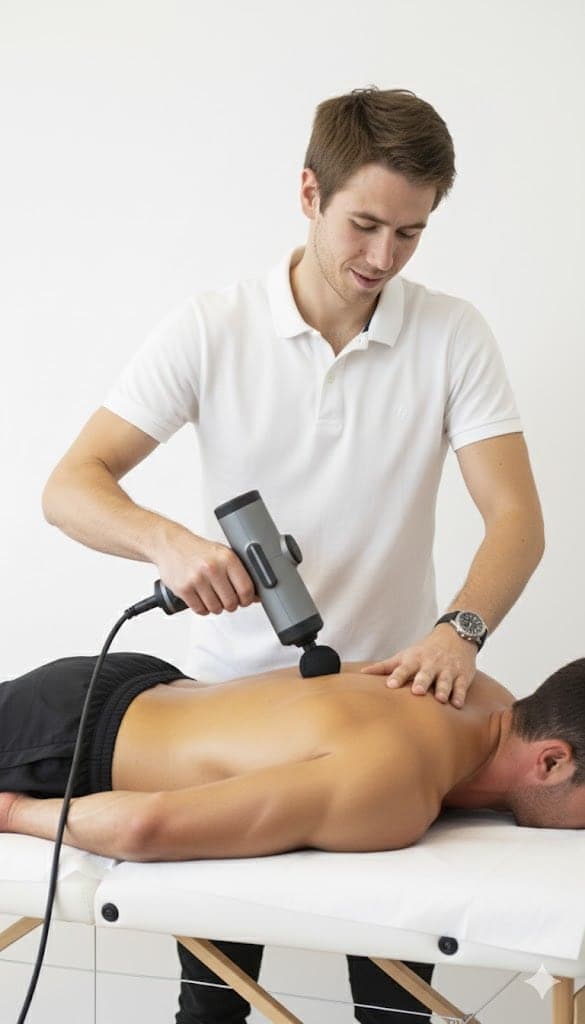
Written by
Chris
Massage therapist, nutrition and exercise physiologist
Norwegian-certified with a Bachelor’s in Physical Education and Nutrition and over ten years of clinical practice, working from a portable table in clients’ homes across the Paphos district.
This article is general information, not a medical diagnosis. If you have severe, worsening or unexplained pain, numbness, weakness, or pain after an accident, see a doctor first.