
Deep Tissue Massage Paphos: Advanced Mechanical Treatment for Lasting Pain Relief
In short
Discover how specialized deep tissue massage in Paphos addresses chronic muscle tension at its source through precision mechanical therapy, delivering lasting results beyond traditional massage.
After a decade of working with bodies—from elite athletes to office workers trapped in postural dysfunction—I’ve learned something most massage therapists won’t tell you: hands alone cannot consistently access the depth required to resolve chronic muscular dysfunction. This isn’t a comfortable truth for my industry, but it’s one I’ve built my entire practice around.
When people search for deep tissue massage in Paphos, they’re typically seeking relief from pain that won’t quit. Lower back tension that radiates through the glutes. Shoulder impingement that limits overhead movement. Neck stiffness that triggers headaches. These aren’t just symptoms—they’re mechanical failures in how your body distributes load and manages movement patterns.
My approach to deep tissue massage Paphos differs fundamentally from what you’ll find in hotel spas or wellness centers across the city. I don’t provide relaxation therapy. I treat mechanical dysfunction with the same precision an orthopedic specialist applies to joint mechanics. My background in Physical Education and Nutrition from Norway, combined with specialized training in biomechanics, has taught me that lasting change requires accessing tissue depths and tensions that manual techniques simply cannot reach consistently.
The Mechanical Reality of Muscle Tension in Paphos
Living and working in Paphos presents unique postural challenges. I see patterns repeatedly: tourists who’ve traveled long distances with poor airline seating posture, remote workers hunched over laptops in holiday apartments, golfers at the numerous courses who’ve developed thoracic rotation restrictions, and locals whose occupations—construction, hospitality, administration—create predictable muscular imbalances.
The Mediterranean lifestyle, while healthier in many respects, doesn’t automatically prevent musculoskeletal dysfunction. In fact, I’ve treated numerous individuals who assumed their active beach lifestyle would somehow “fix” their chronic tension. It doesn’t work that way.
Muscle tension operates through fascia—the connective tissue matrix that surrounds and interpenetrates every muscle fiber in your body. When fascia develops restrictions due to repetitive strain, compensation patterns, or acute injury, it creates what we call myofascial trigger points. These aren’t just “tight spots.” They’re areas where the tissue has lost its ability to glide properly, creating referral patterns that can manifest as pain far from the actual dysfunction site.
Traditional deep tissue massage attempts to address this manually. The therapist applies pressure with thumbs, elbows, or forearms, working through superficial layers to reach deeper structures. The fundamental limitation? Human endurance and consistency. Even the strongest therapist experiences fatigue. Pressure varies. Precision diminishes over a 60-minute session.
Why Most Deep Tissue Massage Fails to Deliver Lasting Results
I need to be direct about something the massage industry doesn’t want to acknowledge: most deep tissue treatments provide temporary symptom relief, not lasting resolution. Clients return weekly, monthly, indefinitely—because the underlying mechanical dysfunction hasn’t been addressed.
There are three primary reasons traditional approaches fall short:
Insufficient Depth: The deepest muscle layers—particularly in areas like the thoracolumbar fascia, the psoas complex, or the rotator cuff interval—require sustained, precise pressure that exceeds what even skilled hands can deliver without compromising surrounding tissue.
Inconsistent Pressure: Manual pressure fluctuates based on therapist positioning, fatigue, and leverage angles. This inconsistency means some treatment areas receive adequate pressure while others don’t, leaving residual tension that will eventually reassert dominance over the movement pattern.
Inadequate Treatment of Compensation Patterns: Pain rarely originates where you feel it. Your tight shoulders might be compensating for restricted thoracic extension. Your lower back tension could stem from hip flexor shortening. Without understanding the kinetic chain and treating the entire pattern, you’re addressing symptoms, not causes.
I learned these limitations during my early years as a practitioner. I was strong, educated, and committed—but my hands had the same limitations every manual therapist faces. Clients improved temporarily, then regressed. I knew there had to be a more effective approach.
The Mechanical Advantage: Specialized Deep Tissue Massage Technology
The solution came through specialized mechanical therapy equipment that I now use exclusively for deep tissue massage in Paphos. This isn’t a percussion device you can buy online. It’s a precision instrument designed specifically for advanced myofascial release and deep tissue manipulation.
The mechanical approach provides three critical advantages:
Unprecedented Depth and Precision
The specialized tool I use penetrates tissue layers with calibrated force that human hands cannot replicate. When treating someone’s chronic lumbar erector spinae tension, for example, I can work through the superficial fascia, past the thoracolumbar fascia, and into the deepest muscle fibers while maintaining complete control over pressure distribution.
This matters because superficial treatment creates superficial results. To resolve chronic tension, you must access the tissue layer where dysfunction originated. The machine allows me to work at depths of 8-12 centimeters in large muscle groups—impossible to achieve manually without causing surface tissue trauma.
Absolute Consistency Throughout Treatment
Every treatment session I provide delivers identical quality from start to finish. The pressure doesn’t fluctuate because I’m tired. The precision doesn’t diminish because my hand position shifted. Whether I’m treating your plantar fascia or your upper trapezius, you receive the same exacting standard.
This consistency translates to predictable outcomes. When I design a treatment protocol for chronic shoulder impingement, I know exactly how much force each session applies to the infraspinatus, teres minor, and posterior capsule. This allows for progressive treatment intensity that systematically breaks down scar tissue and fascial restrictions without overwhelming the tissue’s healing capacity.
Customized Intensity for Individual Needs
Athletes require different pressure than sedentary office workers. Acute injuries demand different approaches than chronic conditions. The mechanical system I’ve implemented allows infinite adjustment across the intensity spectrum.
For a competitive cyclist with massive quadriceps development and dense fascial layers, I can deliver powerfully deep treatment that would be impossible manually. For someone recovering from a shoulder separation, I can apply precisely controlled light pressure that promotes healing without reaggravating injured structures.
How Deep Tissue Massage Paphos Sessions Actually Work
When you book a session with me, understand that you’re not purchasing an hour of relaxation. You’re investing in a clinical intervention designed to durably alter your movement mechanics and relieves chronic pain.
Here’s what actually happens:
Comprehensive Movement Assessment
Before touching any muscle, I evaluate how you move. I observe your standing posture, assess joint range of motion, identify compensation patterns, and determine which muscles are overactive (tight, facilitated) versus underactive (weak, inhibited).
This assessment reveals the kinetic chain dysfunction driving your symptoms. Your chronic neck tension might stem from forward head posture caused by weak deep cervical flexors and overactive upper trapezius. Your lower back pain could originate from anterior pelvic tilt driven by tight hip flexors and weak gluteals.
I don’t treat based on where you report pain. I treat based on mechanical dysfunction identified through movement analysis.
Systematic Deep Tissue Release
Treatment follows a specific sequence addressing the entire compensation pattern, not just the symptomatic area. Using the specialized equipment, I apply sustained, precise pressure to release myofascial restrictions throughout the kinetic chain.
The sensation differs dramatically from traditional massage. Instead of broad, sweeping strokes, you experience focused, penetrating pressure that accesses the deepest tissue layers. It’s intense—sometimes uncomfortable—but never intolerable. Pain indicates excessive force; productive discomfort indicates effective tissue release.
I adjust intensity continuously based on tissue response. Dense, fibrotic areas require more aggressive treatment. Inflamed or recently injured tissue needs gentler approaches. The mechanical advantage allows these adjustments without compromising treatment quality.
Functional Integration and Movement Re-education
Releasing tight tissue is only half the equation. If you return to the same movement patterns that created dysfunction, tension will return. That’s why every session includes movement re-education.
I teach you how to maintain the changes we’ve achieved through specific mobility drills, postural corrections, and activation exercises for inhibited muscle groups. This isn’t generic “stretch your hamstrings” advice. It’s customized instruction based on your unique movement dysfunction.
Real Results: What Deep Tissue Massage Paphos Actually Accomplishes
Let me share what happens when you address muscular dysfunction at its mechanical source rather than chasing symptoms.
Case Study: Chronic Lower Back Pain
A 42-year-old remote worker came to me after three years of persistent lower back pain. She’d tried chiropractors, physiotherapy, traditional massage, and pain medication. Nothing provided lasting relief.
Movement assessment revealed the real problem: excessive anterior pelvic tilt driven by chronically shortened hip flexors (particularly the psoas and iliacus) combined with weak gluteus medius and inhibited transversus abdominis. Her “back pain” was actually her erector spinae muscles working overtime to stabilize a pelvis that lacked proper muscular support.
We didn’t treat her back initially. We spent four sessions systematically releasing her hip flexor complex—work that required the mechanical equipment’s precision and depth to access the psoas where it attaches to the lumbar vertebrae. Simultaneously, I taught her activation exercises for her glutes and deep core stabilizers.
Within six weeks, her pain had decreased by approximately 85%. After three months, it was functionally eliminated. More importantly, she understood the mechanical dysfunction that caused her pain and how to prevent recurrence through proper movement patterns.
Athletic Performance Enhancement
I’ve worked with numerous athletes in Paphos—cyclists, runners, golfers, CrossFit competitors—who sought performance improvement rather than pain relief. The principle remains identical: optimize movement mechanics by eliminating fascial restrictions that limit range of motion and force production.
A competitive age-group triathlete came to me with chronic hip flexor tightness that limited his running stride length. Traditional sports massage provided temporary relief but never resolved the restriction. Using deep mechanical release combined with specific mobility work, we increased his hip extension range by 18 degrees over eight sessions.
His race times improved noticeably. More importantly, he stopped experiencing the chronic hip discomfort that had plagued his training for years.
The Science Behind Effective Deep Tissue Treatment
Understanding why this approach works requires basic knowledge of fascial mechanics and tissue adaptation principles.
| Tissue Type | Depth (cm) | Response to Treatment | Treatment Duration |
|---|---|---|---|
| Superficial Fascia | 0-2 | Immediate blood flow increase | 5-10 minutes |
| Muscle Belly | 2-6 | Trigger point deactivation | 10-15 minutes |
| Deep Fascia | 6-10 | Structural tissue remodeling | 15-20 minutes |
| Periosteal Layer | 10+ | Chronic adhesion breakdown | 20-30 minutes |
Fascia responds to mechanical force through a process called mechanotransduction. When you apply sustained pressure to restricted fascial tissue, you stimulate fibroblasts—the cells responsible for collagen production and tissue remodeling. This triggers a cascade of biological responses that literally remodel the tissue structure over subsequent days and weeks.
The key word is “sustained.” Brief, superficial pressure doesn’t activate mechanotransduction effectively. You need adequate depth, sufficient force, and appropriate duration—precisely what mechanical therapy delivers consistently.
Additionally, deep tissue work affects the nervous system through several mechanisms:
- Deactivation of myofascial trigger points that create referral pain patterns
- Reduction of nociceptive (pain) signaling from mechanoreceptors in restricted tissue
- Increased parasympathetic nervous system activity, promoting tissue healing
- Improved proprioception (body position awareness) through normalized muscle tone
These aren’t just theoretical benefits. They’re measurable changes that translate to reduced pain, improved movement quality, and enhanced performance in daily activities.
Why Location Matters: Deep Tissue Massage Services in Paphos
Paphos presents unique advantages for specialized massage therapy. The climate supports recovery—warm temperatures promote tissue pliability and blood flow. The relaxed Mediterranean pace reduces stress hormones that contribute to muscle tension. The growing international community creates demand for advanced therapeutic services beyond basic spa treatments.
However, accessing quality deep tissue massage in Paphos has historically been challenging. Most providers focus on relaxation massage for tourists. Those offering “deep tissue” often lack the specialized training or equipment to deliver truly effective treatment.
That’s why I structured my service differently. I travel directly to your location—whether that’s your home, holiday villa, or hotel—bringing a professional treatment bench and all necessary equipment. This mobile approach eliminates the need to navigate Paphos traffic while experiencing post-treatment muscle soreness. You receive clinical-grade therapy in the comfort and privacy of your own space.
Investment Versus Expense: The Economics of Effective Treatment
Let’s address cost directly. Specialized deep tissue massage in Paphos costs more than generic spa massage. Significantly more. Some people see this as an expense. I see it as an investment—and so do my long-term clients.
Consider the alternative path: chronic pain or movement restriction that you manage through repeated treatments, pain medication, reduced activity levels, and diminished quality of life. What’s the cost of that approach over months and years?
- Weekly massage sessions for symptom management: €200-400 monthly, indefinitely
- Pain medications and anti-inflammatories: €50-100 monthly, with potential side effects
- Reduced work productivity due to pain and discomfort: immeasurable professional impact
- Decreased life quality—activities avoided, sleep disrupted, mood affected: priceless
Now consider the investment approach: intensive treatment that addresses dysfunction at its source, combined with education that prevents recurrence. The upfront cost is higher. The long-term value is incomparable.
Most clients require 4-8 sessions to resolve chronic conditions, depending on severity and duration. Athletes and high-performers often continue monthly sessions for optimization and injury prevention. Either way, you’re investing in lasting improvement, not temporary relief.
Common Questions About Deep Tissue Massage in Paphos
How painful is deep tissue massage?
Productive discomfort, not pain. There’s a crucial difference. When we’re accessing restricted deep tissue, you’ll feel intense pressure—sometimes described as “hurts so good.” This indicates effective treatment. Sharp, stabbing pain indicates excessive force, which I avoid through careful intensity management. Most clients describe the sensation as intense but tolerable, with immediate relief following treatment.
How quickly will I see results?
This depends on condition chronicity and severity. Acute tension from a recent injury often responds within 1-2 sessions. Chronic dysfunction developed over years typically requires 4-8 sessions for significant improvement. However, most clients report noticeable changes after the first treatment—reduced pain intensity, improved range of motion, better sleep quality.
Is deep tissue massage safe for everyone?
Deep tissue work has contraindications. I don’t treat acute injuries less than 72 hours old, active infections, uncontrolled hypertension, recent surgery sites, or certain inflammatory conditions without medical clearance. During our initial consultation, I screen for contraindications and modify treatment accordingly.
What’s the difference between deep tissue and sports massage?
Sports massage often focuses on preparation (pre-event) or recovery (post-event) for athletic performance. Deep tissue massage specifically targets chronic muscular dysfunction through sustained pressure on restricted fascial layers. There’s overlap, particularly for athletes, but the primary goal differs—performance optimization versus mechanical dysfunction resolution.
How often should I receive deep tissue massage?
For chronic condition resolution: initially, sessions every 7-10 days allow tissue remodeling between treatments. Once significant improvement occurs, we space sessions to 2-3 weeks, then monthly for maintenance. For athletic performance: many competitors schedule sessions every 2-3 weeks during training periods, with adjustments around competition schedules.
Can deep tissue massage replace physiotherapy?
No. They’re complementary but serve different functions. Physiotherapy emphasizes movement re-education, strengthening, and functional rehabilitation. Deep tissue massage addresses the tissue restrictions that limit movement quality and create pain. Optimal outcomes often involve both approaches—I release restricted tissue while you develop proper movement patterns through physiotherapy.
What should I do after a deep tissue session?
Hydration is critical—deep tissue work releases metabolic waste products that need elimination. Drink 2-3 liters of water over the following 24 hours. Avoid intense exercise for 24-48 hours; light movement like walking promotes recovery. Some muscle soreness is normal for 1-2 days post-treatment, similar to post-workout soreness. This indicates tissue adaptation, not damage.
Do you treat specific conditions like sciatica or frozen shoulder?
I treat the mechanical dysfunction underlying these conditions. “Sciatica” is typically piriformis syndrome—the piriformis muscle compressing the sciatic nerve due to shortened hip external rotators. “Frozen shoulder” often involves capsular restriction and rotator cuff imbalances. I address these through systematic release of involved structures and correction of compensation patterns. However, if symptoms suggest nerve root compression or structural damage, I refer for medical imaging and specialist consultation.
The Philosophy Behind Effective Manual Therapy
My approach to deep tissue massage in Paphos stems from a fundamental philosophy: the human body is a mechanical system that follows predictable patterns. Pain and dysfunction aren’t random—they’re logical consequences of how you’ve used your body over time.
This perspective differs from the wellness massage industry’s focus on relaxation and temporary symptom relief. I’m not here to make you feel good for an hour. I’m here to durably change how your body functions.
This requires partnership, not passive treatment. I provide the technical expertise and mechanical intervention to release restricted tissue. You provide commitment to the process—showing up consistently, implementing the movement corrections I prescribe, and taking ownership of your body’s function.
Some clients struggle with this paradigm. They want someone to “fix” them without their participation. That’s not how lasting change happens. If you’re seeking passive relaxation, Paphos has dozens of excellent spa therapists who provide that service wonderfully.
If you’re seeking lasting resolution of chronic pain or mechanical dysfunction that allows you to move, perform, and live without limitation—that’s the partnership I offer.
Taking the Next Step Toward Pain-Free Movement
After a decade of clinical practice and hundreds of clients treated, I’ve identified who benefits most from specialized deep tissue massage: individuals who’ve exhausted conventional approaches without lasting results, athletes seeking performance optimization beyond their current plateau, and people who recognize that their body deserves the same level of specialized expertise they’d demand for their car or their business.
If you’re experiencing chronic muscle tension, movement restrictions, or pain that persists despite previous treatment attempts, the solution likely requires deeper intervention than traditional approaches provide. The mechanical advantage of specialized deep tissue therapy, combined with comprehensive movement assessment and personalized treatment protocols, delivers results that manual techniques alone cannot achieve.
Living in or visiting Paphos, you have access to this advanced therapeutic approach without needing to travel or visit clinical facilities. I bring professional-grade treatment directly to your location, providing privacy, convenience, and clinical excellence in a single service.
The choice ultimately comes down to your goals. If you’re seeking temporary relief, basic massage suffices. If you’re committed to lasting resolution and optimal function, specialized deep tissue work represents the most effective path forward.
Your body is the vehicle through which you experience everything life offers. Chronic pain and movement dysfunction diminish that experience profoundly. The investment in restoring your body’s mechanical function delivers returns far exceeding the initial cost—returns measured in pain-free days, activities reclaimed, performance enhanced, and quality of life restored.
That’s what effective deep tissue massage in Paphos accomplishes when delivered with appropriate expertise, equipment, and commitment to lasting results rather than temporary symptom management. The question isn’t whether your body deserves this level of care. The question is whether you’re ready to prioritize it.
Evidence and limits
Massage may help with some symptoms, but benefits and evidence vary by condition. It does not replace medical assessment or treatment. A page update is not evidence of an independent clinical review.
Further reading: Massage therapy: evidence, safety and limitations by US National Center for Complementary and Integrative Health. This is general background reading, not verification of every claim in this article.
How we describe evidence and updates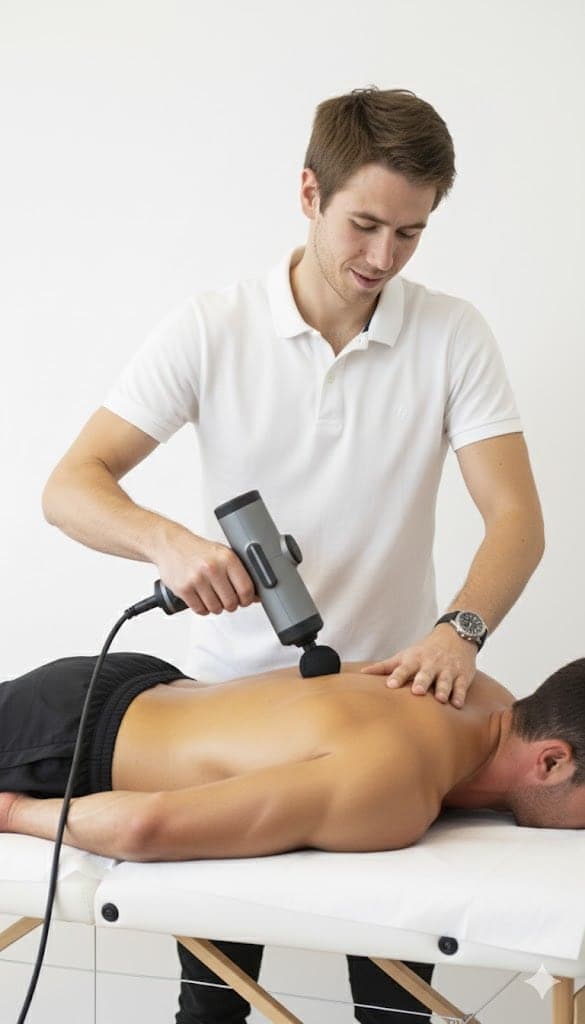
Written by
Chris
Massage therapist, nutrition and exercise physiologist
Norwegian-certified with a Bachelor’s in Physical Education and Nutrition and over ten years of clinical practice, working from a portable table in clients’ homes across the Paphos district.
This article is general information, not a medical diagnosis. If you have severe, worsening or unexplained pain, numbness, weakness, or pain after an accident, see a doctor first.