Couples Massage Near Kato Paphos Harbour: A Clinical Approach to Shared Recovery
In short
Discover advanced mechanical deep-tissue couples massage near Kato Paphos harbour. University-trained specialist with 10 years experience delivers precision treatment in your villa for lasting pain relief and performance optimization.
When couples search for massage services near Kato Paphos harbour, they typically expect a pleasant spa experience with soft music and aromatherapy oils. That’s not what I provide. After a decade specializing in advanced mechanical deep-tissue therapy, I’ve learned that couples who train together, travel together, or simply live active lifestyles together often share similar musculoskeletal issues. When you address these problems systematically in both partners, the results extend far beyond the treatment room.
I travel directly to your villa or hotel near Kato Paphos harbour with professional equipment, eliminating the logistical hassle of coordinating spa appointments. More importantly, I bring a methodology refined through my Bachelor’s degree in Physical Education and Nutrition from Norway and ten years of clinical practice. This isn’t relaxation therapy. This is mechanical intervention designed to produce lasting changes in tissue quality, range of motion, and pain patterns.
Why Couples Seek My Services in the Paphos Region
The Kato Paphos harbour area attracts a specific demographic. I work with active couples who cycle the coastal roads, hike the Akamas Peninsula, swim competitively, or maintain intensive fitness routines even while on holiday. These aren’t people looking to “unwind.” They’re seeking a practitioner who understands biomechanics, fascial restriction, and the cascading effects of compensatory movement patterns.
I’ve treated couples where one partner developed chronic shoulder pain from years of competitive swimming, while the other suffered lumbar dysfunction from compensating for a poorly healed ankle injury. Traditional massage addresses these as separate issues. I treat them as interconnected mechanical failures within each individual’s kinetic chain, and I often observe how partners unconsciously adopt each other’s postural adaptations over time.
The Machine-Assisted Methodology That Delivers Superior Results
Human hands, no matter how skilled, have inherent limitations in depth, consistency, and endurance. I use a specialized mechanical tool that delivers what I call the three pillars of effective deep-tissue intervention: Precision, Power, and Consistency.
DEEPER THAN HANDS: The mechanical advantage allows me to work at depths that would be physically impossible with manual pressure alone. When I’m releasing chronic adhesions in the thoracolumbar fascia or breaking down scar tissue in the rotator cuff complex, I need to reach the anatomical structures where dysfunction actually originates. Surface-level work produces surface-level results.
COMPLETE CONTROL: The intensity adjustment is infinitely variable. For one partner recovering from a recent injury, I might work at moderate depth with high frequency. For an athlete with years of accumulated fascial restriction, I can deliver significantly deeper, slower strokes that systematically restore tissue extensibility. This customization happens in real-time based on tissue response, not on arbitrary pressure preferences.
CONSISTENT RESULTS: I don’t have “off days.” The machine doesn’t tire. Every treatment session delivers the same controlled mechanical input, which means predictable, measurable progress. When you’re investing in a therapeutic program rather than purchasing individual sessions, consistency isn’t a luxury—it’s a requirement.
What Actually Happens During a Couples Treatment Session
Let me describe a typical scenario from last month. A Norwegian couple in their early forties contacted me after spending three days cycling from Coral Bay to Latchi. Both experienced significant lower back discomfort, and the husband had developed acute pain in his right hip flexor complex.
The Assessment Process
I began with what I call a mechanical assessment, not a “consultation.” I observed their standing posture, active range of motion in key joints, and performed specific orthopedic tests to identify restriction patterns. The wife displayed classic anterior pelvic tilt with bilateral psoas hypertonicity. The husband showed textbook hip flexor dominance with reciprocal inhibition of the gluteal complex—exactly what you’d expect from someone who spends significant time in hip flexion (cycling position) without adequate antagonist activation.
These weren’t mysterious ailments. They were predictable mechanical consequences of repetitive loading patterns combined with inadequate tissue maintenance.
The Treatment Execution
I worked with each partner sequentially while the other rested, maintaining a clinical environment rather than attempting to create simultaneous “romantic ambiance.” The objective is biomechanical correction, not entertainment.
For the wife, I spent forty minutes systematically releasing the entire posterior chain, focusing particularly on the erector spinae, quadratus lumborum, and deep hip rotators. The mechanical tool allowed me to maintain consistent pressure through dense fascial layers that would have fatigued my hands within minutes. I worked at depths that produced moderate discomfort—not because I enjoy causing pain, but because effective fascial release requires sufficient mechanical stress to trigger tissue remodeling.
For the husband, the acute hip flexor issue required a different approach. I addressed the psoas complex through careful anterior abdominal work, then systematically released the entire anterior hip capsule, rectus femoris, and TFL. Then I focused on activating the inhibited posterior chain—this is crucial and often overlooked. You can’t simply “release tight muscles.” You must restore balanced muscle activation patterns, or the dysfunction returns within days.
The Science Behind Mechanical Deep-Tissue Intervention
Let me explain why this methodology produces superior outcomes compared to traditional couples massage services near Kato Paphos harbour or anywhere else.
| Treatment Component | Traditional Massage Approach | My Mechanical Methodology |
|---|---|---|
| Tissue Depth | Superficial to moderate, limited by hand strength and endurance | Deep fascial layers, consistent pressure maintained for extended periods |
| Treatment Philosophy | Symptom relief and relaxation | Lasting correction of mechanical dysfunction |
| Session Consistency | Varies based on therapist fatigue and technique | Identical mechanical input across all sessions |
| Pain Assessment | Avoided or minimized for comfort | Used as diagnostic feedback to identify restriction severity |
| Follow-up Protocol | Optional repeat bookings | Structured treatment program with measurable outcomes |
Understanding Fascial Restriction and Compensatory Patterns
The fascia—the connective tissue network that envelops every muscle, bone, nerve, and organ in your body—responds to mechanical stress through a process called fibrosis. Repetitive movements, sustained postures, previous injuries, and inadequate recovery all contribute to fascial adhesions that restrict normal tissue glide.
When I work on a couple who both present with shoulder dysfunction, I’m not just “loosening tight muscles.” I’m systematically restoring proper tissue layer differentiation in the rotator cuff complex, releasing capsular restrictions in the glenohumeral joint, and addressing compensatory hypertonicity in the upper trapezius and levator scapulae. This requires sustained, deep mechanical pressure that human hands simply cannot maintain.
I’ve had clients tell me, “I’ve received dozens of massages, but I’ve never felt work this deep.” That’s not a compliment to my skill—it’s a reflection of tool capability. The machine allows me to deliver therapeutic mechanical stress that exceeds what any manual therapist can achieve, regardless of their strength or experience.
Why Location Matters: Treating Couples Near Kato Paphos Harbour
The Kato Paphos harbour area presents unique logistical advantages for couples seeking advanced bodywork. Most visitors stay in hotels or rental villas within a concentrated geographic area, making mobile service delivery highly efficient. I arrive with a professional treatment bench and all necessary equipment, transforming your accommodation into a temporary clinical space.
This mobile approach serves a therapeutic purpose beyond mere convenience. After intensive deep-tissue work, your muscles and fascia need time to adapt to their restored length and function. Immediately traveling to a distant spa and then navigating back to your accommodation introduces unnecessary mechanical stress. When I treat you on-site, you can transition directly into appropriate post-treatment activity—light walking, hydration, and rest—without disrupting the tissue adaptation process.
The Demographics of Paphos and Treatment Expectations
Cyprus attracts a sophisticated international demographic, particularly Northern Europeans with high expectations for professional services. When couples contact me near Kato Paphos harbour, they’ve typically already tried conventional spa massage and found it inadequate for their actual needs. They’re not looking for entertainment or pampering. They’re seeking measurable improvement in chronic pain patterns, movement restrictions, or performance limitations.
I worked with a British couple last year—both competitive triathletes in their fifties—who had spent years managing recurrent injuries through various therapies. After I explained my mechanical approach and demonstrated the tool’s capability during their first session, the husband said, “This is what we’ve been looking for. Why isn’t everyone doing this?” The answer is simple: it requires specialized equipment, advanced biomechanical knowledge, and the willingness to challenge the conventional spa paradigm.
Common Conditions I Address in Couples Treatments
Based on a decade of clinical practice, these are the dysfunctions I most frequently treat in couples near Kato Paphos harbour:
Chronic Lower Back Pain and Lumbar Restriction
Lower back issues affect approximately 80% of adults at some point. In active couples, I typically find bilateral erector spinae hypertonicity, quadratus lumborum adhesions, and restricted thoracolumbar fascia. Traditional massage provides temporary relief. I restore actual tissue extensibility and normal segmental motion in the lumbar spine.
The mechanical tool allows me to work directly on the thick paraspinal tissues with sufficient depth and duration to produce lasting change. I spend 15-20 minutes on each side of the spine, systematically releasing fascial restrictions from T12 down through the sacral attachments. This isn’t comfortable work, but it’s effective work.
Shoulder Dysfunction and Rotator Cuff Issues
Swimmers, cyclists, and desk workers all develop shoulder problems, though through different mechanisms. The rotator cuff complex—supraspinatus, infraspinatus, teres minor, and subscapularis—becomes dysfunctional when fascial restrictions alter the normal scapulohumeral rhythm. I address this through systematic work on each individual muscle, the joint capsule, and the associated stabilizers.
One common pattern I observe in couples: one partner develops primary shoulder dysfunction from direct overuse, while the other develops secondary dysfunction from compensatory movement patterns adopted unconsciously. Treating both simultaneously allows me to address the primary pathology and prevent the secondary adaptation from becoming lasting.
Hip Flexor Tightness and Posterior Chain Weakness
Modern life creates universal hip flexor dominance. We sit, we cycle, we drive—all positions of hip flexion. The psoas major and iliacus become chronically shortened, the gluteal complex becomes inhibited, and the entire kinetic chain suffers. This is particularly pronounced in couples who travel frequently or maintain sedentary occupations.
I address this through anterior hip work that most massage therapists avoid due to anatomical complexity and client discomfort. Working directly on the psoas through the abdominal wall requires specific anatomical knowledge and careful palpation skills. The mechanical tool provides the controlled depth needed to reach these structures without excessive force.
The Investment Model vs. the Expense Paradigm
Let me address economics directly. My services cost more per session than a typical spa couples massage near Kato Paphos harbour. This is intentional. I’m not competing in the relaxation market. I’m providing clinical intervention that produces lasting biomechanical changes.
Understanding True Cost Analysis
Consider a couple spending €100-150 for a pleasant spa experience that provides 2-3 days of reduced pain. Over a year, repeated sessions accumulate to €1,500-2,000 with minimal lasting improvement. That’s an expense—money spent on temporary symptom management.
My approach requires fewer total sessions because each treatment produces cumulative progress toward lasting correction. A typical treatment program might involve 4-6 sessions over 2-3 weeks, with the explicit goal of resolving the underlying mechanical dysfunction. After completion, clients may return every 3-6 months for maintenance work, not weekly sessions for ongoing symptom management.
From a pure cost-benefit analysis, lasting correction of chronic pain is infinitely more valuable than repeated temporary relief. This is why I describe my services as an investment in long-term musculoskeletal health rather than an expense for short-term comfort.
The Partnership Approach to Treatment
I don’t accept single-session bookings except for initial assessments. Biomechanical correction requires progressive intervention over multiple sessions. The first treatment begins the process of fascial release and tissue remodeling. Subsequent sessions build on that foundation, systematically addressing deeper restrictions and movement pattern dysfunction.
When I work with couples, we establish clear treatment objectives during the initial assessment: What specific dysfunctions are we correcting? What objective measures will indicate successful resolution? What post-treatment protocols will preserve the improvements we achieve? This isn’t a transactional relationship. It’s a dedicated partnership focused on measurable outcomes.
Post-Treatment Protocols and Expectations
Effective deep-tissue intervention doesn’t end when the session concludes. The tissue adaptation process continues for 48-72 hours after treatment. Understanding this timeline and following appropriate protocols significantly influences final results.
Immediate Post-Treatment Period (0-24 Hours)
Immediately after intensive mechanical work, clients typically experience what I describe as therapeutic soreness—distinct from injury pain but more intense than standard post-massage sensation. This reflects the tissue trauma necessary for fascial remodeling. I explain this clearly during the initial assessment because uninformed clients sometimes interpret therapeutic discomfort as treatment error.
I recommend light movement during this period: walking, gentle stretching, basic range-of-motion exercises. The goal is to promote circulation and lymphatic drainage without introducing significant mechanical load. Swimming in the Mediterranean near Kato Paphos harbour is ideal—the hydrostatic pressure and natural movement resistance provide perfect post-treatment stimulus.
Hydration is critical. Fascial tissue is composed partially of ground substance with high water content. Adequate hydration supports the remodeling process and reduces metabolic waste accumulation. I tell clients to drink 3-4 liters of water in the 24 hours following treatment, particularly in the Cyprus climate.
Adaptation Phase (24-72 Hours)
During this period, therapeutic soreness typically peaks around 36-48 hours, then rapidly diminishes. This timeline corresponds with the inflammatory resolution phase and the beginning of tissue remodeling. Clients notice improved range of motion and reduced pain patterns as the adaptation completes.
This is when couples often report synchronous improvements. Both partners experience enhanced movement quality, reduced morning stiffness, and improved sleep quality. These aren’t placebo effects—they’re the predictable results of correcting mechanical dysfunction in the body’s fascial system.
Frequently Asked Questions About Couples Massage Near Kato Paphos Harbour
Is this treatment suitable for people without existing pain or injury?
Yes, but understand my specialty. I optimize biomechanical function, which provides value to anyone with a body that moves. However, if you’re seeking pure relaxation or entertainment, conventional spa massage serves that purpose more appropriately. My methodology is clinical intervention for people who want measurable improvement in how their body functions.
How does machine-assisted massage compare to skilled manual therapy?
Human hands cannot maintain the depth, consistency, or duration that specialized mechanical tools provide. The most skilled manual therapist will fatigue within 20-30 minutes of intensive deep work. My tool maintains identical mechanical input for the entire session. This isn’t about replacing human skill—it’s about exceeding human physical limitations to achieve superior therapeutic outcomes.
Do you work simultaneously on both partners or sequentially?
Sequentially. Simultaneous treatment creates a spa atmosphere that contradicts the clinical nature of the work. Each partner receives my complete attention during their treatment time. The other partner rests, observes, or engages in light activity. This approach ensures optimal treatment quality and allows me to customize intervention for each individual’s specific biomechanical needs.
What should we expect in terms of discomfort during treatment?
Effective fascial release produces significant discomfort—I don’t use euphemisms like “good pain” or “therapeutic pressure.” Deep mechanical work on restricted tissues is uncomfortable. I maintain constant communication to ensure intensity remains within therapeutic range without crossing into excessive pain that triggers protective muscle guarding. Clients with previous massage experience consistently report this as the deepest, most intense work they’ve received. That intensity is precisely why it produces superior results.
How many sessions are typically required for lasting results?
This varies based on dysfunction severity, tissue quality, and individual response to treatment. For acute issues in otherwise healthy tissues, 3-4 sessions often achieve resolution. For chronic conditions with years of compensatory patterns and fascial adhesions, 6-8 sessions provide more realistic expectations. I assess this during the initial evaluation and provide clear projections based on clinical findings, not marketing incentives.
Can you treat couples with significantly different conditions or fitness levels?
Yes. I customize each partner’s treatment completely independently. A competitive athlete and a sedentary office worker require entirely different approaches. I adjust tool intensity, treatment duration, tissue depth, and session frequency based on individual assessment findings. The only commonality is the mechanical methodology and the commitment to lasting dysfunction correction rather than temporary symptom relief.
Do you provide treatment for couples staying at specific hotels near Kato Paphos harbour?
I travel to any location in the Paphos region where I can set up my professional treatment bench and work without interruption. Most hotels and rental villas near Kato Paphos harbour provide suitable space. The key requirement is a quiet, private environment where we can focus on clinical work without distractions or time pressure.
What distinguishes your approach from sports massage or other specialized modalities?
Sports massage, Swedish massage, trigger point therapy—these are all manual techniques with inherent limitations. My methodology uses advanced mechanical tools to exceed what hands can accomplish, combined with biomechanical knowledge from my Bachelor’s degree in Physical Education and Nutrition and a decade of specialized practice. I don’t simply apply techniques. I systematically correct mechanical dysfunction using tools that provide superior depth, control, and consistency.
The Reality of Long-Term Musculoskeletal Health for Couples
After ten years of clinical practice, I’ve observed that couples who address musculoskeletal dysfunction together achieve superior long-term outcomes compared to individuals working in isolation. This isn’t sentiment—it’s practical reality.
When both partners understand proper movement mechanics, recognize compensatory patterns, and commit to maintaining the improvements we achieve through treatment, the lifestyle modifications become sustainable. One partner maintaining optimal biomechanics while the other continues dysfunctional patterns creates domestic friction and inconsistent results.
I worked with a Swedish couple—both in their sixties—who had accepted chronic lower back pain as an inevitable consequence of aging. After systematic treatment and education about proper lifting mechanics, core stability, and daily movement practices, both achieved complete resolution of pain patterns they’d experienced for over fifteen years. Two years later, they maintain those results through appropriate exercise and occasional maintenance sessions when they visit Cyprus.
That’s the outcome I pursue with every couple: not temporary relief, but lasting correction that enhances quality of life for decades.
Making the Decision: Clinical Intervention vs. Conventional Massage
If you’re searching for couples massage near Kato Paphos harbour, you face a fundamental choice. You can select conventional spa services that provide pleasant relaxation and temporary symptom relief. Or you can engage with a specialist who delivers clinical intervention designed to durably correct biomechanical dysfunction.
I’m not suggesting one choice is objectively superior for everyone. I’m stating clearly that these are entirely different services serving different purposes. Understanding which you actually need requires honest self-assessment.
Are you satisfied with temporary relief that requires repeated sessions indefinitely? Or do you want to invest in systematic correction that resolves underlying mechanical problems durably? The answer determines which service model matches your actual needs.
My methodology—machine-assisted mechanical deep-tissue intervention delivered through a structured treatment program—serves clients who choose the second option. We work together as partners toward measurable objectives, not as service provider and consumer in a transactional exchange.
The Commitment Required for Lasting Results
Successful treatment requires commitment from both parties. I provide specialized knowledge, advanced tools, and systematic methodology. You provide adherence to treatment protocols, honest communication about response to intervention, and implementation of post-treatment recommendations.
This isn’t passive entertainment. Biomechanical correction requires active participation. When I explain movement pattern modifications or daily stretching protocols, these aren’t suggestions—they’re essential components of the treatment program. Clients who follow recommendations achieve lasting results. Those who expect mechanical intervention alone to compensate for continued dysfunctional patterns experience limited outcomes.
Conclusion: Redefining Couples Treatment in the Paphos Region
The couples massage market near Kato Paphos harbour offers numerous options for relaxation, pampering, and temporary comfort. I don’t participate in that market. I provide specialized clinical intervention for couples who recognize that chronic pain, movement restrictions, and biomechanical dysfunction require systematic correction, not ongoing symptom management.
My Bachelor’s degree in Physical Education and Nutrition, combined with ten years of focused practice in advanced mechanical deep-tissue therapy, allows me to deliver outcomes that conventional massage cannot achieve. The specialized tools I use provide depth, precision, and consistency that exceed human hand limitations. The treatment programs I structure produce lasting improvements rather than temporary relief.
If you’re visiting the Paphos region and seeking actual correction of musculoskeletal dysfunction, contact me. We’ll conduct a thorough assessment, establish clear treatment objectives, and begin the systematic process of resolving the mechanical problems causing your symptoms. This is professional clinical work delivered in your location, eliminating logistical complications while maintaining optimal therapeutic standards.
The choice between conventional couples massage and specialized biomechanical intervention reflects your priorities: temporary comfort or lasting improvement. I serve clients who choose the latter. That focus allows me to deliver the superior outcomes that define my practice and justify my clients’ investment.
Evidence and limits
Massage may help with some symptoms, but benefits and evidence vary by condition. It does not replace medical assessment or treatment. A page update is not evidence of an independent clinical review.
Further reading: Massage therapy: evidence, safety and limitations by US National Center for Complementary and Integrative Health. This is general background reading, not verification of every claim in this article.
How we describe evidence and updates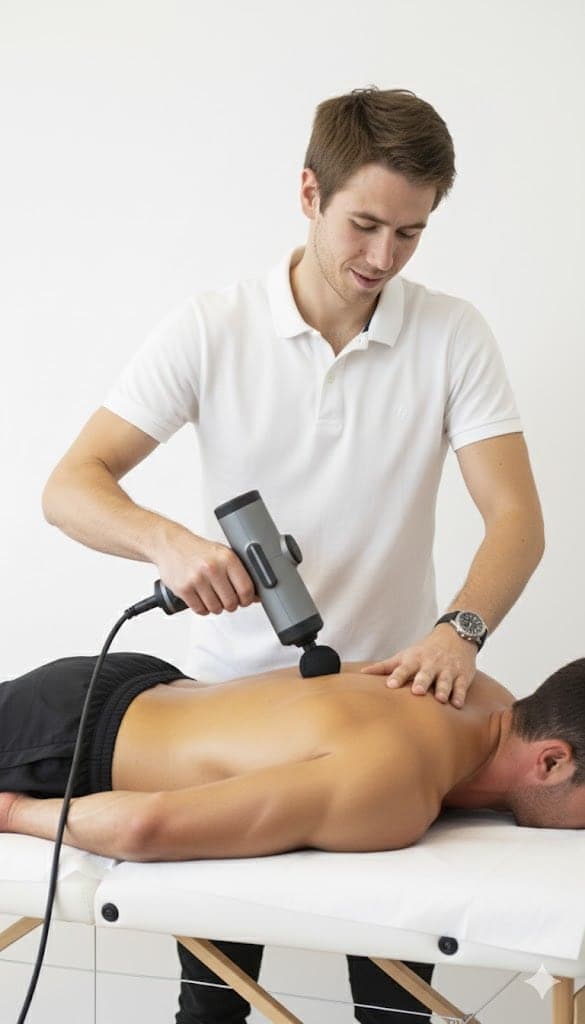
Written by
Chris
Massage therapist, nutrition and exercise physiologist
Norwegian-certified with a Bachelor’s in Physical Education and Nutrition and over ten years of clinical practice, working from a portable table in clients’ homes across the Paphos district.
This article is general information, not a medical diagnosis. If you have severe, worsening or unexplained pain, numbness, weakness, or pain after an accident, see a doctor first.