
Sciatica treatment Paphos: what it costs and what you are paying for
In short
Sciatica treatment Paphos: with me it costs €90 for 60 minutes or €130 for 90 minutes at your home, with one additional free session when you pre-book five sessions as a package. Most leg pain I see is muscular, and it usually responds within a short course.
If you have searched for sciatica treatment Paphos and landed here, the honest answer is that the cost depends far more on what is causing your leg pain than on whom you book. I treat the muscular kind with mechanical deep-tissue massage in Paphos, at your home, and I want you to know what you are paying for.
I have been working with backs, hips and legs for more than ten years, and the word "sciatica" covers a lot of ground. Some people have a genuine nerve-root problem that needs a doctor. Many more have tight, overloaded muscles in the buttock and lower back that mimic it very convincingly. The price of getting it wrong is months of the wrong treatment, so this article is as much about diagnosis as about euros.
Sciatica treatment Paphos: what it costs with me
Pre-book five sessions as a package and receive one additional session free. You pay per session, and the same rate applies whether I drive to Kato Paphos, Chlorakas, Tala or Peyia.
| Session | Length | Price | Best suited to |
|---|---|---|---|
| Standard | 60 minutes | €90 | One region: lower back, buttock and hip |
| Extended | 90 minutes | €130 | Back, hip and the full length of the leg |
| Package deal | Pre-book 5 sessions | 1 additional session free | Six sessions in total |
There is no call-out fee within the Paphos district and no assessment charge. The first session includes the assessment because I need it to know what I am treating. Full details are on the pricing page, and I confirm the price when you book by WhatsApp or phone, so there are no surprises when I arrive.
What that price does not include is any promise about numbers of sessions. I would rather tell you after the first visit how your tissue responded and let you decide from there.
What is actually happening when your leg hurts
The sciatic nerve runs from the lower spine, through the buttock, and down the back of the leg. Pain along that route can come from the nerve being irritated at the spine, or from the muscles it passes through being so tight that they compress or sensitise it. From the outside these two can feel almost the same, but they need different care.
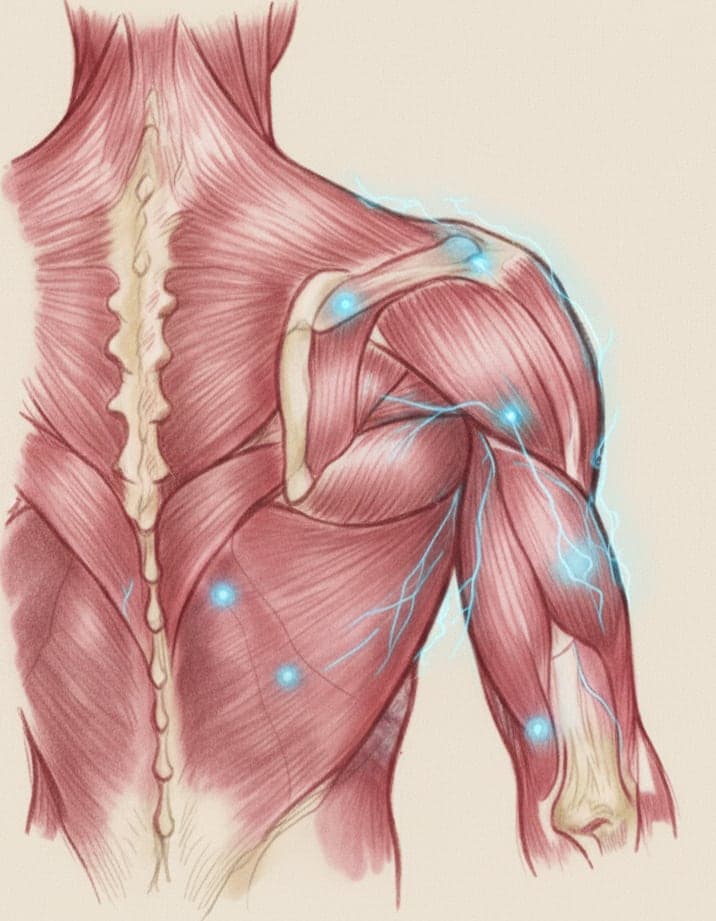
The presentation I see most often across Paphos is the second kind. It tends to look like this:
- A deep ache in one buttock that spreads into the back of the thigh, usually stopping above the knee
- Worse after sitting, driving or a long flight, easier once you have walked for ten minutes
- Tender, rope-like tissue in the gluteal muscles when I press on it
- No real weakness in the foot, no numbness in a clear stripe, no loss of reflexes
- Often paired with a stiff, guarded lower back that has been compensating for weeks
That pattern is muscular, and it is what mechanical deep-tissue work is good at. The spinal kind, a disc pressing on a nerve root, usually goes below the knee, into the calf or foot, and comes with pins and needles, numbness or weakness. If that is what you have, a doctor and an imaging decision come first, and I say so when I see it.
What a session involves and how I work
I arrive with a treatment table and the equipment I use for mechanical deep-tissue work. Set-up takes a few minutes and needs about two metres by three of floor space; a bedroom or living room is fine. You do not need to prepare anything except a warm room and somewhere to lie down afterwards.
The first twenty minutes or so of the first visit is assessment. I watch you stand, bend and sit, I test the hip and the hamstrings, and I press along the gluteal muscles and lower back to find the tissue that reproduces your leg pain. If pressing on a muscle brings on the familiar ache down the thigh, that tells me a great deal.
Treatment itself is slow and specific. The machine lets me hold deep, sustained pressure on the piriformis, the deep hip rotators and the gluteal layers for longer than my thumbs could manage, and with a consistency that lets me feel the tissue change under it. It is firm work. It should never be sharp or make you brace, and I adjust the depth to what your tissue accepts on the day.
If your job or sport is a factor, I will usually pair the buttock work with the lower back and the hamstrings, because the leg does not run in isolation. Runners and cyclists in particular often do better when I treat the whole chain, which is where the sports massage approach overlaps with this one.
How many sessions people usually need
I do not offer a fixed protocol because I cannot know how your tissue will respond until I have worked on it. What I can give you is the pattern I see most often, and it is a fair basis for budgeting.
- Recent, clearly muscular buttock and thigh pain: often noticeably easier after one visit, and a short course of two to four sessions a week or two apart is common
- Longer-standing pain with a guarded back: usually a slower curve, with progress building over four to six sessions
- Pain that has not changed at all after two sessions: a signal to stop, review and refer, not to keep booking
- After the course: some people book a session every couple of months as maintenance, especially if they sit or drive a lot; others do not need to
Sitting is worth a specific mention. Much of the sciatica-type pain I treat in Paphos belongs to people who work at a desk, drive daily, or have just spent a long day on a plane. Treatment loosens what has tightened, but the loosened tissue will tighten again if the sitting habit is untouched, so I always send you away with two or three simple things to do between visits.
What drives the total cost is mostly outside my control:
- How long the pain has been there
- Whether the cause is muscular, spinal or mixed
- How much of the day you spend sitting
- Whether you do the small daily work between sessions
Put plainly, a short course for a muscular presentation typically lands somewhere between €180 and €360 at the 60-minute rate. If you pre-book five sessions as a package, you receive one additional session free. That is the honest range, and it is why I would rather you spend the first session finding out which kind of leg pain you have than commit to anything longer.
What I can and cannot help with
I can help with sciatica-type pain that comes from tight or overloaded gluteal, hip and lower-back muscles, and with the general stiffness that builds up around it; I cannot treat a disc, a nerve root or anything structural, so see a doctor first if you have numbness or weakness in the foot, pain that wakes you at night and does not ease with position, unexplained weight loss, fever, or any change in bladder or bowel control.
Beyond the red flags, there are a few situations where I will suggest a different route:
- Pain that started after a fall or a heavy lift and has not eased at all in a fortnight
- Leg pain in someone with a known spinal condition who has not yet spoken to their doctor about it
- Any pain that is getting steadily worse rather than fluctuating
None of that is me being cautious for its own sake. It is because deep pressure on a nerve-root problem does not help, and I would rather send you to the right person than take your money for the wrong treatment. When the picture is muscular, which is most of the time, I am glad to get to work.
Frequently asked questions
Is sciatica treatment in Paphos covered by insurance?
Some private policies reimburse massage therapy and some do not, and I am not able to advise on individual policies. I can give you a receipt with the date, treatment and price for you to submit. It is worth checking with your insurer before the first session rather than after, so you know where you stand on cost.
How quickly will I feel a difference?
With a clearly muscular presentation, most people notice the buttock and thigh feel looser by the end of the first session, and easier again the next morning after any post-treatment soreness has passed. Longer-standing pain moves more slowly. If nothing has changed at all after two visits, I take that seriously and we look again at whether massage is the right tool.
Is deep-tissue work safe if the pain is from a disc?
Deep pressure does not fix a disc and can irritate a sensitised nerve, so I do not treat a suspected disc problem as if it were muscular. If your assessment points that way, I will say so and suggest a doctor first. Once a doctor has said manual therapy is fine, I can often help with the muscle guarding around the spine, which is real and painful in its own right.
Do I need to do anything between sessions?
Yes, and it matters more than people expect. I usually give two or three things: a way to break up long sitting, a gentle stretch for the hip rotators, and a walking habit. They take a few minutes a day. People who do them tend to need fewer sessions and hold the improvement longer, which is the cheapest way to lower the total cost of treatment.
Can you treat me at a hotel or holiday villa in Paphos?
Yes. I bring everything and treat in hotels, holiday villas and apartments across the Paphos district at the same rate. If you have arrived with leg pain after a long flight, that is a common reason people contact me. Let me know when you book if there are stairs or a lift, so I can plan for the table.
Evidence and limits
Massage may help with some symptoms, but benefits and evidence vary by condition. It does not replace medical assessment or treatment. A page update is not evidence of an independent clinical review.
Further reading: Massage therapy: evidence, safety and limitations by US National Center for Complementary and Integrative Health. This is general background reading, not verification of every claim in this article.
How we describe evidence and updates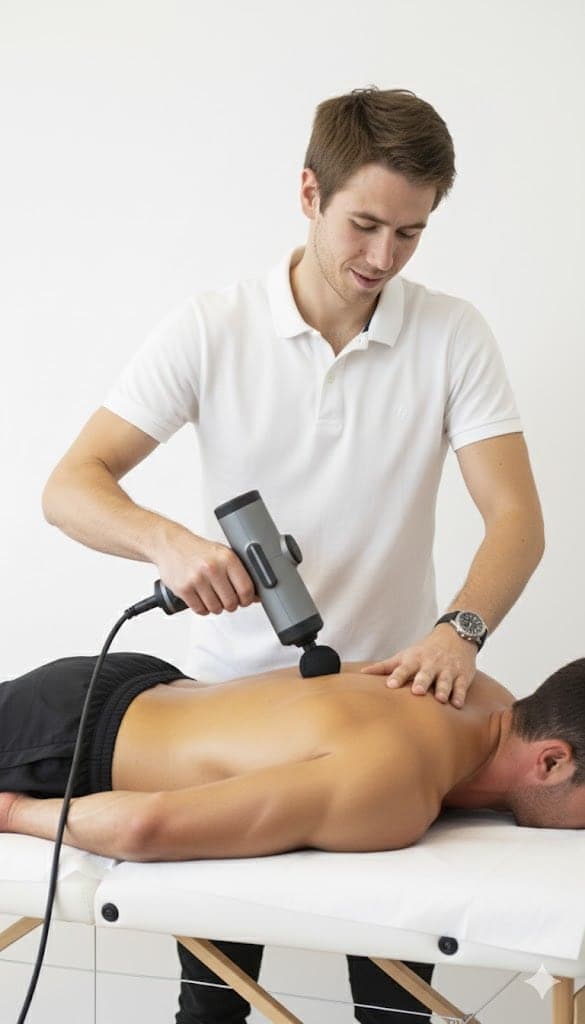
Written by
Chris
Massage therapist, nutrition and exercise physiologist
Norwegian-certified with a Bachelor’s in Physical Education and Nutrition and over ten years of clinical practice, working from a portable table in clients’ homes across the Paphos district.
- Norwegian-certified
- Nutrition & exercise physiologist
- 10+ years clinical practice
- Based in Chlorakas · all of Paphos district
- No call-out fee anywhere in Paphos district
Last updated
This article is general information, not a medical diagnosis. If you have severe, worsening or unexplained pain, numbness, weakness, or pain after an accident, see a doctor first.