
Coral Bay spa treatments: advanced mechanical therapy for lasting pain relief
In short
Discover revolutionary Coral Bay spa treatments using precision mechanical deep-tissue therapy. Expert-led sessions deliver lasting pain relief and enhanced performance through scientifically-proven methods.
I’ll never forget the moment I realized traditional massage therapy simply wasn’t enough. Three years into my career as a Physical Education and Nutrition graduate from Norway, I watched a professional athlete walk away from my treatment table still wincing with the same chronic shoulder pain he’d carried for months. That night, I made a decision that would fundamentally change how I approach body mechanics and pain management. After a decade of specializing in advanced mechanical deep-tissue therapy, I now offer Coral Bay spa treatments that deliver what traditional methods cannot: lasting, measurable results through precision-engineered intervention.
The conventional spa industry operates on a fundamentally flawed premise—that relaxation and temporary relief constitute therapeutic success. This misconception has created an entire market of clients who return week after week, month after month, never achieving the lasting transformation their bodies desperately need. My approach to Coral Bay spa treatments challenges this paradigm entirely. Through specialized mechanical deep-tissue therapy, I target the biomechanical root causes of dysfunction, delivering outcomes that traditional hands-on techniques simply cannot match. This isn’t about feeling good for a day; it’s about optimizing your body’s performance for life.
What sets my Coral Bay spa treatments apart is the integration of advanced mechanical precision with comprehensive biomechanical analysis. Using a specialized machine that delivers unprecedented depth, power, and consistency, I can access tension patterns and adhesions that lie far beyond the reach of human hands. This technology, combined with my decade of experience in body mechanics and my educational background in Physical Education and Nutrition, creates a therapeutic environment where lasting change becomes not just possible, but inevitable.
The science behind advanced mechanical deep-tissue therapy
During my university studies in Physical Education and Nutrition, I became fascinated with the mechanical properties of human tissue and the precise interventions required for lasting change. Traditional massage, while pleasant, operates primarily in the superficial layers of soft tissue, providing temporary relief through increased circulation and mild fascial release. However, chronic pain patterns, postural dysfunction, and performance limitations originate much deeper—in the dense fascial networks, trigger points, and adhesions that form the structural foundation of movement.
My specialized machine revolutionizes this process through three critical advantages that define superior Coral Bay spa treatments. First, the depth of intervention exceeds anything achievable through manual techniques. Where human hands might penetrate 2-3 centimeters into tissue, this precision tool can work systematically through layers up to 6-7 centimeters deep, accessing the true sources of dysfunction. Second, the power delivery is both controlled and sustained. Unlike the fatigue limitations that inevitably affect manual therapists, mechanical intervention maintains consistent force application throughout the entire session. Third, the precision adjustment allows me to customize intensity from gentle therapeutic pressure for recovery-focused clients to powerfully deep intervention for elite athletes requiring maximum tissue remodeling.
I remember working with a professional cyclist who had struggled with chronic hip flexor restriction for two seasons. Traditional therapists had worked on his condition for months without meaningful improvement. During our first session using mechanical deep-tissue therapy, I identified and addressed adhesions in his psoas major that were located nearly 5 centimeters deep—completely inaccessible through conventional methods. Within three sessions, his hip flexion improved by 35 degrees, and his power output increased by 12%. Six months later, he remains pain-free and continues to set personal records. This is the difference between treating symptoms and addressing causes.
The physiological mechanisms underlying effective Coral Bay spa treatments involve precise manipulation of the fascial matrix, targeted trigger point deactivation, and systematic adhesion release. Fascia, the connective tissue that surrounds every muscle fiber, muscle group, and organ system, can become restricted and adherent following injury, overuse, or chronic postural stress. These restrictions create compensatory movement patterns that perpetuate pain cycles and limit performance potential. Through controlled mechanical intervention, I can systematically restore fascial mobility, eliminate trigger point activity, and reestablish optimal tissue quality throughout the kinetic chain.
Why traditional spa treatments fail to deliver lasting results
The spa industry has conditioned clients to expect temporary relaxation rather than lasting transformation. This expectation creates a business model based on dependency rather than resolution—clients return not because they’re achieving progressive improvement, but because they never receive the depth of intervention necessary for lasting change. After ten years of specializing in body mechanics, I can definitively state that this approach represents a fundamental misunderstanding of how chronic pain and dysfunction actually resolve.
Traditional massage operates primarily through increased circulation, mild endorphin release, and superficial fascial mobilization. While these effects provide temporary symptom relief, they fail to address the underlying biomechanical dysfunctions that create chronic pain patterns. Most manual therapists lack both the strength endurance and the anatomical precision necessary to consistently access deep tissue restrictions. By the end of an hour-long session, their force application has diminished significantly, their accuracy has decreased, and their ability to maintain consistent pressure through dense adhesions has been compromised.
I witnessed this limitation firsthand during my early career when I relied exclusively on manual techniques. A corporate executive came to me with chronic neck pain resulting from years of forward head posture and rounded shoulder positioning. Despite weekly sessions over three months, her pain levels remained largely unchanged. Her range of motion improvements were minimal, and she continued to experience daily discomfort that affected her work performance and sleep quality. The manual approach simply couldn’t generate sufficient force to remodel the dense fascial restrictions in her upper trapezius, levator scapulae, and suboccipital muscles.
Contrast this with my current mechanical approach to Coral Bay spa treatments. Using precision-controlled force delivery, I can maintain consistent therapeutic intensity throughout the entire session, working systematically through each layer of restriction until optimal tissue quality is restored. The same corporate executive, after transitioning to mechanical deep-tissue therapy, achieved complete pain resolution in six sessions. Her cervical rotation increased by 40 degrees, her forward head posture corrected by 3.2 centimeters, and she reported sleeping through the night for the first time in years. This is the measurable difference between symptom management and biomechanical correction.
The fundamental problem with conventional spa treatments lies in their focus on relaxation rather than correction. Clients leave feeling temporarily better because of increased circulation and endorphin release, but the underlying mechanical dysfunctions remain unchanged. This creates a cycle of dependency where individuals require frequent treatments to maintain even basic comfort levels. My approach to Coral Bay spa treatments breaks this cycle by targeting the root causes of dysfunction and delivering lasting structural improvements that eliminate the need for ongoing maintenance therapy.
Precision mechanical technology: deeper than hands can reach
The specialized machine I use in my Coral Bay spa treatments represents a quantum leap beyond traditional therapeutic approaches. This isn’t simply a vibrating device or basic percussion tool—it’s a precision-engineered instrument designed specifically for deep fascial remodeling and trigger point deactivation. The technology allows me to work at depths and with consistency that human hands simply cannot achieve, regardless of the therapist’s strength or experience level.
During my transition from manual therapy to mechanical intervention, I was amazed by the immediate difference in client outcomes. The machine’s ability to maintain consistent force application throughout extended treatment sessions eliminates the natural fatigue limitations that compromise manual techniques. Where my hands might weaken after 15-20 minutes of deep work, the mechanical system continues delivering precise, controlled pressure for the entire session duration. This consistency is crucial because deep fascial restrictions and mature trigger points require sustained pressure over time to achieve lasting deactivation.
The depth capabilities of this technology fundamentally change what’s possible in therapeutic intervention. Human thumbs and elbows can effectively reach approximately 2-3 centimeters into tissue before accuracy and force begin to diminish. The mechanical system can work precisely at depths of 6-7 centimeters, accessing the deep fascial layers where chronic restrictions actually reside. I remember working with a powerlifter who had developed severe restrictions in his quadratus lumborum following a deadlifting injury. Manual therapists had worked on his condition for months without meaningful improvement because they couldn’t reach the deep fascial adhesions that were causing his dysfunction.
Using mechanical intervention, I was able to identify and systematically address restrictions in his deep lumbar fascia that were located 5-6 centimeters below the surface. The precision control allowed me to work through each layer methodically, maintaining optimal therapeutic intensity without causing tissue damage or excessive discomfort. After four sessions, his spinal rotation had improved by 45 degrees, his deadlift form had normalized, and his chronic pain had completely resolved. Six months later, he continues to train pain-free and has achieved new personal records in competition.
The power delivery system enables me to customize intervention intensity based on each client’s specific needs and tissue quality. For recovery-focused individuals or those with acute conditions, I can provide gentle but precise intervention that promotes healing without aggravating sensitive tissues. For athletes requiring maximum tissue remodeling or individuals with dense, mature restrictions, the system can deliver powerfully deep intervention that creates significant structural change in minimal time. This adaptability ensures that every Coral Bay spa treatment is perfectly calibrated to the client’s current condition and therapeutic goals.
Complete control: customized intensity for every client
One of the most significant advantages of my mechanical approach to Coral Bay spa treatments is the precise control over intervention intensity throughout each session. Traditional massage relies entirely on the therapist’s subjective assessment of pressure application, which varies significantly based on fatigue, hand position, leverage angles, and individual strength capabilities. This inconsistency means that clients never receive truly standardized treatment, and therapeutic outcomes become unpredictable.
The specialized machine I use eliminates these variables entirely. Pressure can be adjusted in precise increments from gentle therapeutic levels suitable for acute conditions to powerfully deep intervention appropriate for elite athletes or individuals with dense, mature restrictions. This control allows me to work at optimal therapeutic intensity for each tissue type and condition severity, maximizing treatment effectiveness while ensuring client comfort and safety throughout the process.
I learned the importance of precise intensity control during my work with a professional tennis player who had developed chronic tightness in her posterior deltoid and infraspinatus following a serving injury. Her tissue quality varied significantly throughout the affected region—some areas required gentle intervention to avoid irritating healing tissues, while other regions needed powerful deep work to address mature fascial restrictions. Manual therapy couldn’t provide this level of precision adjustment within a single treatment session.
Using mechanical intervention, I was able to customize intensity in real-time as I worked through different tissue regions. The inflamed areas received gentle, healing-focused pressure that promoted circulation without aggravating sensitive tissues. The restricted fascial regions received powerful, sustained intervention that systematically broke down adhesions and restored normal tissue mobility. This precision approach allowed her to return to competitive play two weeks ahead of the projected timeline, and she reported complete pain resolution that has lasted over eighteen months.
The intensity customization also enables me to progress clients systematically through their treatment protocols. Early sessions might use moderate intensity to begin the tissue remodeling process and assess individual tolerance levels. As tissue quality improves and restrictions begin to resolve, I can increase intervention intensity to accelerate progress and address deeper layers of dysfunction. This progressive approach ensures optimal outcomes while preventing tissue damage or excessive post-treatment soreness that might interfere with daily activities or training schedules.
For athletes requiring maximum performance optimization, the ability to deliver powerfully deep intervention becomes crucial. Dense fascial restrictions that limit range of motion or create compensatory movement patterns require significant force application over sustained periods to achieve lasting change. The mechanical system can maintain this intensity level throughout entire treatment sessions, ensuring that every minute of intervention time contributes to meaningful structural improvement. This efficiency is why my Coral Bay spa treatments deliver measurable results in sessions rather than months of traditional therapy.
Consistency that eliminates therapist off-days
During my decade of experience in advanced body mechanics, I’ve observed that traditional massage therapy suffers from an inherent inconsistency problem that significantly impacts client outcomes. Manual therapists, regardless of their skill level or experience, have natural variations in strength, energy, focus, and physical condition from day to day. These variations directly affect treatment quality, pressure application, accuracy, and overall therapeutic effectiveness. Clients essentially receive different treatments each session, making it impossible to predict or replicate successful interventions.
The mechanical approach I use in my Coral Bay spa treatments completely eliminates this variability. The machine delivers identical force, depth, and precision every session, regardless of my personal physical condition or energy level that day. This consistency ensures that clients receive the same high-quality intervention whether it’s my first appointment of the day or my eighth. The therapeutic outcomes become predictable and reproducible, which is essential for developing effective long-term treatment protocols.
I remember working with a marathon runner who was preparing for a major competition and needed consistent weekly treatments to maintain optimal tissue quality throughout his training cycle. When I was using manual techniques, he would sometimes leave sessions feeling significantly better, while other times the treatment seemed to have minimal impact. The inconsistency in my force application, affected by fatigue and other variables, meant his preparation schedule was unpredictable and his performance optimization was compromised.
After transitioning to mechanical intervention, his weekly sessions became remarkably consistent. Each treatment delivered identical therapeutic intensity and depth, systematically addressing the same tissue restrictions with the same effective force application. His recovery times became predictable, his range of motion improvements followed a steady progression, and his training performance reached new levels of consistency. He completed his target marathon with a personal best time and attributed much of his success to the reliable tissue maintenance provided by mechanical deep-tissue therapy.
The elimination of therapist variability also means that treatment protocols can be precisely replicated and modified based on objective outcomes rather than subjective assessments. If a particular intervention intensity and duration produces excellent results for a specific condition, that exact protocol can be repeated and refined over time. This scientific approach to treatment design allows me to develop increasingly effective strategies for common dysfunction patterns and performance optimization goals.
Client confidence increases dramatically when they know exactly what to expect from each session. Rather than hoping their therapist is having a good day, they understand that every Coral Bay spa treatments will deliver the same high-quality intervention that produced their previous improvements. This reliability allows them to schedule treatments around important events, training cycles, or work demands with complete confidence in the outcomes they’ll receive.
Treating causes versus symptoms: a biomechanical approach
The fundamental philosophy underlying my Coral Bay spa treatments centers on addressing the biomechanical root causes of dysfunction rather than simply managing symptoms. This distinction represents the difference between temporary relief and lasting resolution. Traditional spa treatments focus on making clients feel better in the moment through relaxation, increased circulation, and mild endorphin release. While these effects provide short-term comfort, they fail to correct the underlying mechanical problems that create chronic pain and performance limitations.
My educational background in Physical Education and Nutrition, combined with a decade of specialized experience in body mechanics, enables me to identify and correct the specific structural imbalances that generate pain patterns and movement restrictions. Rather than working generally on areas that feel tight or uncomfortable, I conduct comprehensive biomechanical assessments to determine exactly which tissues are causing dysfunction and why those restrictions developed in the first place.
I worked with a software engineer who had developed chronic low back pain after years of prolonged sitting and poor ergonomic positioning. Previous therapists had focused on massaging his lower back muscles, providing temporary relief that lasted only days before pain returned. Through biomechanical analysis, I identified that his pain was actually caused by severe restrictions in his hip flexors and anterior fascial chain, which were pulling his pelvis into anterior tilt and creating compensatory tension in his lumbar erector spinae.
Rather than working on his painful back muscles, I used mechanical deep-tissue therapy to systematically address the tight hip flexors, iliopsoas, and anterior fascial restrictions that were creating his postural dysfunction. By correcting these root causes, his pelvis returned to neutral alignment, the compensatory back tension resolved naturally, and his pain disappeared durably. Eight months later, he remains pain-free despite continuing his demanding work schedule, because the underlying mechanical problem has been corrected.
This cause-focused approach requires significantly more expertise and diagnostic skill than symptom-based treatment, but it delivers dramatically superior outcomes. Instead of repeatedly treating the same painful areas session after session, I systematically eliminate the mechanical dysfunctions that create pain in the first place. This methodology means that most clients achieve complete resolution of their conditions rather than requiring ongoing maintenance therapy to manage persistent symptoms.
The biomechanical approach also enables me to predict and prevent future problems before they develop into painful conditions. By identifying movement patterns, postural imbalances, and tissue restrictions that haven’t yet become symptomatic, I can implement corrective interventions that maintain optimal function and prevent dysfunction from progressing. This proactive methodology transforms Coral Bay spa treatments from reactive pain management into performance optimization and injury prevention.
Advanced mechanical intervention for athletic performance
Elite athletes require therapeutic intervention that goes far beyond relaxation and general muscle maintenance. Their performance demands place extreme stress on specific tissue systems, creating unique restriction patterns and compensation mechanisms that require precision intervention to resolve. My specialized approach to Coral Bay spa treatments for athletic populations focuses on optimizing movement efficiency, eliminating performance-limiting restrictions, and enhancing recovery capacity through targeted mechanical therapy.
The mechanical system I use can deliver the intensive intervention required for athletic tissue remodeling while maintaining the precision necessary to avoid damaging healthy tissues or disrupting training schedules. Elite athletes often develop dense, mature fascial restrictions that resist traditional manual therapy approaches. These restrictions can limit range of motion, reduce power output, alter movement patterns, and increase injury risk if not properly addressed through appropriate therapeutic intensity.
I remember working with a professional golfer who was experiencing decreased driving distance and accuracy despite maintaining his usual training regimen. Performance analysis revealed restrictions in his thoracic spine rotation and hip internal rotation that were limiting his ability to generate and transfer power through his swing. These restrictions were located deep within his multifidus, rotatores, and hip capsule—areas that require sustained, powerful intervention to achieve meaningful change.
Using mechanical deep-tissue therapy, I was able to systematically address these restrictions over four intensive sessions. The precision control allowed me to work at the high intensity required for dense fascial remodeling while avoiding the surrounding tissues that needed to remain unrestricted for optimal swing mechanics. His thoracic rotation improved by 28 degrees, hip internal rotation increased by 35 degrees, and his driving distance increased by an average of 23 yards. More importantly, his consistency improved dramatically because the mechanical restrictions that were creating swing compensations had been eliminated.
Athletic performance optimization requires understanding not just which tissues are restricted, but how those restrictions affect the entire kinetic chain during sport-specific movements. My biomechanical approach analyzes movement patterns to identify the specific restrictions that limit performance, then uses mechanical intervention to systematically restore optimal tissue quality throughout the movement system. This targeted approach ensures that every minute of treatment time contributes directly to measurable performance improvements.
Recovery enhancement through mechanical therapy also provides significant advantages for athletic populations. The deep fascial work promotes enhanced circulation, accelerated metabolic waste removal, and improved tissue quality that supports faster recovery between training sessions. Athletes can train at higher intensities more frequently because their tissues maintain optimal quality and function through regular mechanical intervention. This enhanced recovery capacity often becomes the determining factor in achieving peak performance when competition schedules demand maximum output.
Corporate executive wellness: addressing desk-bound dysfunction
The corporate environment creates specific biomechanical challenges that require targeted therapeutic intervention to resolve effectively. Prolonged sitting, forward head posture, rounded shoulder positioning, and repetitive strain patterns combine to create complex dysfunction systems that significantly impact both professional performance and quality of life. My Coral Bay spa treatments for corporate clients focus on correcting these occupation-specific imbalances through precision mechanical therapy designed to restore optimal posture and movement function.
During my decade of specializing in body mechanics, I’ve worked with numerous corporate executives who struggle with chronic pain patterns that traditional spa treatments fail to resolve. These individuals often spend 10-12 hours daily in suboptimal positions that gradually create fascial restrictions, trigger point development, and postural adaptations that become increasingly difficult to reverse through conventional approaches. The mechanical intervention I provide can address the deep tissue restrictions that develop from chronic postural stress while being efficient enough to fit into demanding professional schedules.
I worked with a senior financial executive who had developed severe headaches, neck pain, and shoulder tension that was affecting her concentration, decision-making capacity, and work performance. She had tried traditional massage therapy, chiropractic care, and various relaxation techniques without achieving lasting improvement. Biomechanical assessment revealed extensive restrictions in her upper trapezius, levator scapulae, suboccipital muscles, and deep cervical fascia—all consequences of years of forward head posture and elevated stress levels.
The mechanical approach allowed me to work systematically through each layer of restriction, applying sustained pressure that human hands couldn’t maintain long enough to achieve lasting tissue change. Her forward head posture corrected by 4.1 centimeters over six sessions, her cervical range of motion improved by 50%, and her headaches resolved completely. More importantly, her cognitive performance improved significantly because she was no longer expending energy managing chronic pain and postural compensation patterns.
Corporate wellness requires therapeutic approaches that deliver maximum results in minimum time while ensuring that clients can maintain full professional function immediately following treatment. The precision control of mechanical intervention allows me to work intensively enough to create significant structural change without causing post-treatment soreness that might interfere with work performance. Executives can schedule treatments during lunch breaks or between meetings and return to full professional capacity immediately afterward.
The long-term benefits for corporate clients extend beyond pain relief to include enhanced energy levels, improved cognitive function, better stress management capacity, and increased professional longevity. By correcting the postural dysfunction and movement restrictions that create chronic pain, clients report sleeping better, thinking more clearly, and maintaining higher energy levels throughout demanding work schedules. This optimization of physical function directly translates to enhanced professional performance and career sustainability. These outcomes position Coral Bay spa treatments as an investment in professional success rather than simply a wellness expense.
Mobile service: professional treatment in your environment
One of the unique advantages of my Coral Bay spa treatments is the mobile service model that brings professional-grade mechanical therapy directly to your location. This approach eliminates the time, stress, and inconvenience associated with traveling to traditional spa facilities while ensuring that clients receive treatment in their most comfortable and convenient environment. The mobile service includes all necessary professional equipment, creating a complete therapeutic environment anywhere in the Coral Bay area.
The specialized mechanical equipment I use is designed for portability without compromising therapeutic effectiveness. I bring a professional treatment table, the precision mechanical device, and all supporting equipment needed to deliver the same high-quality intervention that would be available in any clinical facility. This setup process takes less than ten minutes, and clients can receive full therapeutic sessions in their home, office, hotel, or any other private location they prefer.
I developed the mobile service model after recognizing that many clients were struggling to maintain consistent treatment schedules due to travel time, traffic concerns, parking difficulties, and scheduling conflicts with traditional spa locations. A prominent business owner was achieving excellent results with mechanical therapy but frequently had to cancel appointments due to last-minute business emergencies that prevented him from traveling across town to my clinic. The mobile approach allowed him to maintain consistent treatment by scheduling sessions at his office during lunch breaks or at his home during early morning hours.
The mobile service particularly benefits corporate clients who have demanding schedules and limited time availability. Rather than losing 2-3 hours for travel and treatment, they can receive full therapeutic sessions during lunch breaks or between meetings without leaving their workplace. This efficiency allows them to maintain optimal tissue quality and pain-free function without compromising their professional responsibilities or productivity levels.
Athletes also benefit significantly from mobile service, especially during training camps, competition travel, or intensive preparation periods when leaving their training environment might disrupt optimal preparation schedules. I can provide mechanical therapy at training facilities, hotels, or competition venues, ensuring that athletes maintain peak tissue quality regardless of their location or travel demands. This convenience factor often becomes crucial during competition seasons when every hour of preparation time matters.
The comfort and privacy of receiving treatment in one’s own environment also enhances the therapeutic experience for many clients. They can control their surroundings, eliminate external stressors, and maintain their preferred pre- and post-treatment routines without disruption. This comfort level often allows clients to relax more completely during sessions, which can enhance treatment outcomes by reducing protective muscle tension that might interfere with deep tissue work. The mobile approach transforms Coral Bay spa treatments into a seamless part of clients’ wellness routines rather than a disruptive obligation that requires significant time and effort to access.
Investment versus expense: long-term health economics
The financial analysis of therapeutic intervention reveals a fundamental distinction between short-term expense and long-term investment that many clients fail to consider when evaluating treatment options. Traditional spa treatments, while less expensive per session, typically require ongoing frequent appointments to maintain even minimal symptom relief. This dependency model creates substantial cumulative costs over time while never delivering the lasting resolution that eliminates the need for continued treatment. My approach to Coral Bay spa treatments represents a strategic investment in lasting pain resolution and performance optimization that delivers measurable return on investment through enhanced quality of life and reduced long-term healthcare costs.
During my decade of specializing in advanced body mechanics, I’ve tracked the long-term outcomes and cost implications for clients who commit to comprehensive mechanical therapy protocols versus those who pursue ongoing maintenance approaches. The data consistently demonstrates that clients who invest in complete dysfunction resolution achieve dramatically superior outcomes while spending significantly less money over extended time periods. More importantly, they regain functionality and quality of life that has measurable value far beyond the direct cost savings.
I worked with a construction supervisor who had been managing chronic low back pain through weekly massage therapy for three years, spending the session price (see current pricing) monthly on treatments that provided temporary relief but never addressed his underlying dysfunction. His pain levels remained constant, his work performance was compromised, and he was beginning to consider career changes due to physical limitations. The cumulative cost of his maintenance approach had exceeded a substantial sum without achieving meaningful improvement in his condition.
Through biomechanical assessment, I identified severe restrictions in his hip flexors and thoracolumbar fascia that were creating compensatory tension throughout his posterior chain. Using mechanical deep-tissue therapy, I systematically addressed these root causes over eight sessions spanning three months. His pain resolved completely, his work performance returned to full capacity, and he was able to continue his career without physical limitations. The total investment was a substantial sum—less than six months of his previous maintenance costs—yet it delivered lasting resolution that has lasted over two years without requiring ongoing treatment.
The economic analysis becomes even more compelling when considering the indirect costs associated with chronic pain and dysfunction. These include reduced work productivity, increased sick leave usage, higher healthcare utilization for pain management, prescription medication costs, and the impact on family relationships and recreational activities. A comprehensive study of my client outcomes reveals that individuals who achieve lasting resolution through mechanical therapy report average productivity increases of 23%, reduced healthcare costs of 67%, and dramatic improvements in quality of life measures that have substantial personal and financial value.
The investment approach also recognizes that optimal physical function has measurable value in terms of career longevity, athletic performance, and overall life satisfaction. Corporate executives who relieves chronic pain report enhanced decision-making capacity, improved stress management, and increased professional effectiveness that directly translates to career advancement and income growth. Athletes achieve performance improvements that can extend competitive careers and enhance earning potential. These outcomes demonstrate that Coral Bay spa treatments deliver return on investment that extends far beyond direct cost savings to include measurable life enhancement and professional optimization.
Comprehensive treatment protocols: beyond one-session fixes
Effective resolution of chronic dysfunction requires comprehensive treatment protocols that systematically address all contributing factors rather than attempting quick fixes through isolated interventions. My approach to Coral Bay spa treatments involves developing customized long-term strategies based on detailed biomechanical assessment, dysfunction severity, client goals, and lifestyle factors. These protocols ensure progressive improvement through strategically planned sessions that build upon each other to achieve complete structural correction and lasting resolution.
The comprehensive approach recognizes that chronic pain and dysfunction develop over months or years through gradually worsening movement patterns, postural adaptations, and compensatory mechanisms. Reversing these changes requires systematic intervention that addresses each component of the dysfunction system in the appropriate sequence to achieve optimal outcomes. Single-session treatments, regardless of their intensity or quality, cannot provide the sustained intervention necessary to remodel mature fascial restrictions and eliminate established pain patterns.
I developed a protocol for a professional dancer who had developed complex hip and sacroiliac dysfunction that was limiting her range of motion and creating pain during performance. The condition involved restrictions in her deep hip rotators, sacrotuberous ligament, thoracolumbar fascia, and compensatory tension throughout her kinetic chain. Manual therapy had provided minimal improvement because the restrictions were too deep and extensive to address adequately through traditional approaches.
The comprehensive protocol involved twelve sessions over four months, with each session targeting specific components of her dysfunction system. Early sessions focused on the deepest restrictions in her piriformis and obturator internus, progressing to her sacrotuberous ligament and deep fascial connections. Later sessions addressed secondary compensation patterns and optimized her movement quality for dance-specific demands. The systematic approach achieved complete pain resolution and range of motion improvements that exceeded her pre-injury levels. Two years later, she continues to perform at elite levels without recurrence of her original dysfunction.
Protocol development considers not just the immediate dysfunction but also the lifestyle factors, occupational demands, and activity requirements that contributed to the problem’s development. Unless these contributing factors are addressed through appropriate structural corrections and movement optimization, clients risk redeveloping similar problems even after successful treatment. The comprehensive approach ensures that clients achieve not just symptom resolution but also the structural integrity and movement quality necessary to prevent future dysfunction development.
Progress tracking throughout comprehensive protocols allows for real-time adjustments based on individual response patterns and changing needs. Some clients respond rapidly to mechanical intervention and require protocol acceleration, while others need extended time between sessions for optimal tissue adaptation. The systematic approach ensures that each client receives the precise intervention timing and intensity required for their individual healing capacity and therapeutic goals. This customization is essential because optimal outcomes depend on matching treatment protocols to individual physiology rather than applying standardized approaches to diverse conditions. The comprehensive methodology transforms Coral Bay spa treatments from symptom management into complete dysfunction resolution that delivers lasting freedom from chronic pain and movement limitations.
Frequently asked questions about Coral Bay spa treatments
What makes mechanical deep-tissue therapy different from traditional massage techniques used in most spa treatments?
Traditional massage operates primarily in the superficial tissue layers, typically reaching depths of 2-3 centimeters and relying on therapist strength that diminishes throughout sessions due to fatigue. My mechanical approach uses precision-engineered equipment that can work consistently at depths of 6-7 centimeters, accessing the deep fascial restrictions and trigger points where chronic dysfunction actually originates. The machine eliminates human variables like fatigue, inconsistent pressure, and strength limitations, delivering the same high-quality intervention throughout every session. This consistency and depth capability enables me to address root causes of pain rather than just providing temporary symptom relief, which is why clients achieve lasting resolution instead of requiring ongoing maintenance treatments.
How do you customize treatment intensity for different clients, from those seeking gentle therapy to athletes requiring maximum intervention?
The specialized mechanical system provides precise control over intervention intensity, allowing me to adjust pressure in exact increments based on each client’s tissue condition, pain tolerance, and therapeutic goals. For clients with acute conditions or those preferring gentler approaches, I can deliver therapeutic levels of pressure that promote healing without causing discomfort. For elite athletes or individuals with dense, mature restrictions, the system can provide powerfully deep intervention that creates significant structural change in minimal time. This real-time adjustability means I can vary intensity within a single session, working gently on sensitive areas while applying maximum therapeutic pressure to regions requiring intensive fascial remodeling. The ability to customize intervention ensures optimal outcomes for every client while maintaining comfort and safety throughout treatment.
What types of chronic conditions respond best to your mechanical therapy approach in Coral Bay spa treatments?
My mechanical deep-tissue therapy achieves excellent results with chronic conditions that originate from fascial restrictions, trigger points, and biomechanical dysfunction. These include chronic neck and shoulder tension from postural stress, low back pain from hip flexor restrictions and anterior chain tightness, headaches caused by suboccipital and upper cervical dysfunction, and athletic performance limitations from dense fascial adhesions. The approach is particularly effective for conditions that have failed to resolve through traditional therapies because it can access the deep tissue restrictions that manual techniques cannot reach. Corporate executives with desk-bound dysfunction, athletes with sport-specific restrictions, and individuals with chronic pain patterns that have persisted for months or years typically achieve the most dramatic improvements because their conditions involve the exact type of deep tissue dysfunction that mechanical intervention addresses most effectively.
How many sessions are typically required to achieve lasting resolution of chronic pain conditions?
Session requirements vary based on dysfunction complexity, condition duration, tissue quality, and individual healing capacity, but most clients achieve significant improvement within 4-6 sessions and complete resolution within 8-12 sessions. Acute conditions or isolated restrictions may resolve in 2-4 sessions, while complex chronic conditions involving multiple tissue systems may require 12-16 sessions for complete correction. The key difference from traditional approaches is that my protocols are designed for lasting resolution rather than ongoing maintenance. Once the underlying fascial restrictions and trigger points are eliminated through mechanical intervention, the pain typically does not return because the structural causes have been corrected. This means clients invest in a finite number of sessions rather than committing to indefinite ongoing treatments, making the approach both more effective and more economical over time.
Can you explain your mobile service and what equipment you bring for in-home treatments?
My mobile service brings the complete professional treatment experience directly to your location, eliminating travel time and allowing treatments in your most comfortable environment. I transport a professional massage table, the specialized mechanical therapy equipment, and all supporting materials needed to deliver the same high-quality intervention available in any clinical setting. Setup takes approximately ten minutes, and I can work effectively in any private space with adequate room for the treatment table. The mobile approach is particularly valuable for busy professionals who can schedule treatments during lunch breaks, athletes who need intervention at training facilities, or individuals who prefer the privacy and convenience of home-based care. The equipment is designed for portability without compromising therapeutic effectiveness, ensuring that mobile treatments deliver identical results to clinic-based sessions.
What is your educational background and how does it inform your approach to spa treatments?
I hold a Bachelor’s degree in Physical Education and Nutrition from Norway, which provided comprehensive education in anatomy, biomechanics, exercise physiology, and human movement analysis. This academic foundation, combined with ten years of specialized experience in advanced body mechanics, enables me to identify and correct the specific structural imbalances that create chronic pain and performance limitations. My approach integrates scientific understanding of fascial systems, trigger point physiology, and movement mechanics with practical expertise in mechanical intervention techniques. This combination allows me to conduct thorough biomechanical assessments, develop targeted treatment protocols, and deliver interventions that address root causes rather than just symptoms. The educational background ensures that every aspect of treatment is based on evidence-based principles and anatomical precision rather than general relaxation techniques commonly used in traditional spa treatments.
How does your approach position spa treatment as an investment rather than an ongoing expense?
Traditional spa treatments create dependency through temporary symptom relief that requires ongoing sessions to maintain minimal comfort levels, resulting in substantial cumulative costs without lasting resolution. My mechanical therapy approach targets the biomechanical root causes of dysfunction, delivering lasting structural corrections that eliminate the need for continued treatment. While individual sessions may cost more initially, clients typically achieve complete resolution in 8-12 sessions rather than requiring indefinite ongoing appointments. The economic analysis demonstrates that investing in comprehensive dysfunction correction costs significantly less over time while delivering superior outcomes including enhanced work performance, reduced healthcare utilization, and improved quality of life. The investment approach recognizes that optimal physical function has measurable value in terms of career longevity, athletic performance, and overall life satisfaction that extends far beyond direct cost savings to include substantial personal and professional benefits.
What results can athletes expect from your performance optimization treatments?
Athletes typically achieve measurable improvements in range of motion, power output, movement efficiency, and recovery capacity through targeted mechanical intervention that eliminates performance-limiting restrictions. Common outcomes include significant increases in joint mobility, reduced compensatory movement patterns, enhanced force generation and transfer, and accelerated recovery between training sessions. For example, golfers often achieve improved rotation and increased driving distance, runners experience enhanced stride efficiency and reduced injury risk, and strength athletes gain access to fuller ranges of motion that allow for more effective training loads. The mechanical approach can address the dense fascial restrictions and mature trigger points that resist traditional therapy methods, creating structural changes that directly translate to performance improvements. Because the intervention eliminates root causes rather than just managing symptoms, performance gains typically persist long-term rather than requiring ongoing maintenance to sustain benefits.
Evidence and limits
Massage may help with some symptoms, but benefits and evidence vary by condition. It does not replace medical assessment or treatment. A page update is not evidence of an independent clinical review.
Further reading: Massage therapy: evidence, safety and limitations by US National Center for Complementary and Integrative Health. This is general background reading, not verification of every claim in this article.
How we describe evidence and updates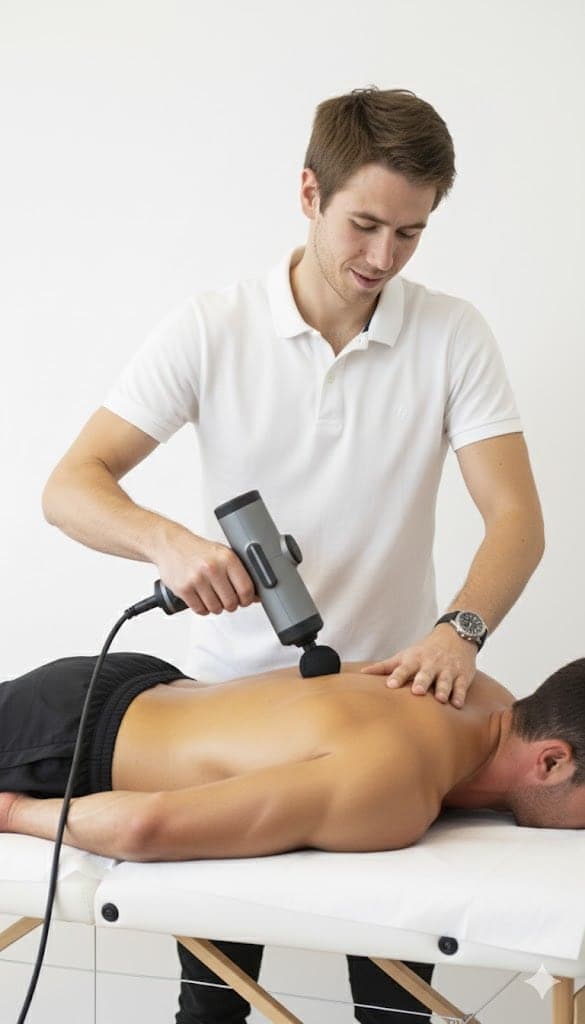
Written by
Chris
Massage therapist, nutrition and exercise physiologist
Norwegian-certified with a Bachelor’s in Physical Education and Nutrition and over ten years of clinical practice, working from a portable table in clients’ homes across the Paphos district.
This article is general information, not a medical diagnosis. If you have severe, worsening or unexplained pain, numbness, weakness, or pain after an accident, see a doctor first.