Chronic Pain Support Groups Geroskipou: Your Path to Lasting Relief and Recovery
In short
Discover how chronic pain support groups in Geroskipou, combined with advanced mechanical treatment methods, can transform your approach to pain management and deliver the lasting results you’ve been seeking.
Living with chronic pain isolates you. I’ve witnessed this phenomenon countless times over my decade of practice—clients arriving at their first session carrying not just physical tension, but the psychological weight of feeling misunderstood, dismissed, or simply alone in their struggle. The traditional medical model often reduces you to a symptom list, a diagnosis code, a prescription. What’s missing is the human element, the shared experience, the validation that comes from others who truly understand what you’re enduring.
This is precisely where chronic pain support groups in Geroskipou become invaluable. But let me be direct: support groups alone won’t resolve the mechanical dysfunction causing your pain. What they will do is provide the psychological framework, the accountability structure, and the community resilience that makes comprehensive pain treatment significantly more effective. When you combine the emotional support of a group with advanced, results-driven mechanical intervention, you create the optimal conditions for lasting relief.
Understanding Chronic Pain Beyond the Surface Symptoms
After ten years of treating clients throughout Cyprus and with my background in Physical Education and Nutrition from Norway, I’ve developed a framework for understanding chronic pain that differs fundamentally from conventional approaches. Most practitioners—and consequently most support groups—focus heavily on pain management strategies: breathing techniques, mindfulness, medication optimization. These have their place, but they address symptoms, not causes.
Chronic pain is a mechanical problem requiring mechanical solutions. The fascia becomes adhered, muscle fibers develop trigger points, compensatory patterns emerge throughout the kinetic chain, and the nervous system becomes hypersensitized. This isn’t something you can meditate away or manage indefinitely with pain medication. You need to physically release the structural dysfunction at its source.
The Neurological Component of Chronic Pain
What support groups do exceptionally well is address the neurological sensitization that accompanies long-term pain conditions. When you’ve been in pain for months or years, your nervous system essentially learns to amplify pain signals—a phenomenon called central sensitization. The validation you receive in a support group, the reduction in stress hormones that comes from feeling understood, the practical coping strategies shared by others—these all help downregulate that hypersensitive nervous system.
But here’s what they cannot do: they cannot release the adhesions in your thoracolumbar fascia, they cannot restore proper scapular mechanics, they cannot eliminate the trigger points in your psoas that are referring pain down your leg. This requires targeted, powerful, mechanical intervention.
What Chronic Pain Support Groups Geroskipou Actually Provide
Let me share a case that illustrates this perfectly. I began working with a client in Geroskipou who had been attending a chronic pain support group for eighteen months. She had learned excellent breathing techniques, had a strong peer network, and could articulate her experience with chronic lower back pain eloquently. Yet she was still in pain daily, still limiting her activities, still believing this was simply her reality now.
During our initial assessment, I identified severe dysfunction in her quadratus lumborum and multifidus muscles, with compensatory tension patterns extending through her entire posterior chain. The support group had given her psychological tools, but no one had addressed the mechanical cause. Within four sessions using my specialized deep-tissue mechanical protocol, we achieved what eighteen months of group support alone couldn’t—measurable reduction in pain levels and restoration of functional movement patterns.
The Psychological Benefits of Community Support
This doesn’t diminish the value of support groups. They provide:
- Validation and normalization of your experience when medical professionals may have minimized your symptoms
- Practical strategies for navigating daily life with chronic pain, from work modifications to relationship communication
- Accountability for maintaining treatment protocols and lifestyle modifications
- Reduction in the anxiety and depression that commonly accompany chronic pain conditions
- Access to shared resources, from healthcare provider recommendations to insurance navigation assistance
These elements create the foundation for successful treatment. A client who feels supported, who has realistic expectations, who understands they’re not alone—this client engages more fully with the mechanical treatment required for lasting relief.
The Geroskipou Context: Local Resources and Community
Geroskipou presents unique opportunities for chronic pain sufferers seeking community support. The close-knit nature of the area means support groups often develop genuine relationships beyond scheduled meetings. I’ve observed that clients from Geroskipou who participate in local support groups demonstrate greater treatment adherence and achieve results more rapidly than isolated individuals.
| Support Element | Impact on Treatment Outcomes | Mechanism of Action |
|---|---|---|
| Peer Validation | Reduces anxiety by 30-40% | Downregulates stress hormones that amplify pain signals |
| Shared Coping Strategies | Improves daily function scores | Provides practical tools for pain management between treatments |
| Accountability Partnership | Increases exercise compliance by 60% | Social commitment strengthens adherence to rehabilitation protocols |
| Educational Resources | Accelerates treatment progress | Better understanding of condition improves treatment engagement |
However, the proximity in Geroskipou also means misinformation spreads quickly. I’ve encountered clients who’ve been told by well-meaning group members that deep tissue work is “too aggressive” for chronic pain, or that they should accept pain as inevitable. This is categorically false and represents a fundamental misunderstanding of mechanical dysfunction.
Why Traditional Massage Fails Chronic Pain Patients
I need to address this directly because it’s a conversation that occurs in virtually every support group: the role of massage therapy in chronic pain management. Most participants have tried massage—often multiple times with multiple therapists—and found it provided temporary relief at best. They conclude that manual therapy doesn’t work for chronic pain. This conclusion is incorrect; what doesn’t work is superficial, relaxation-focused massage applied to mechanical dysfunction.
The human hand, no matter how skilled, has inherent limitations. Therapists fatigue, pressure becomes inconsistent, and truly deep adhesions remain inaccessible. After decades of work, even the most experienced manual therapist develops their own repetitive strain injuries. This means you’re receiving treatment from someone who is themselves compensating, whose own pain patterns affect their technique.
The Mechanical Advantage: Precision, Power, and Consistency
This is why I work exclusively with a specialized mechanical deep-tissue device. This isn’t a massage gun you purchase online—this is a clinical-grade instrument that delivers:
Depth that exceeds human capability: The mechanical advantage allows me to reach adhesions in the deep fascial layers, releasing restrictions that manual therapy simply cannot access. When treating chronic pain in the hip flexors, for example, I can work through the abdominal wall to reach the psoas at its attachment points—something impossible with manual pressure.
Absolute consistency: Every stroke delivers precisely the pressure, angle, and duration required. There are no “off days,” no fatigue-related variation, no unconscious compensation. This consistency is crucial for chronic pain patients who need predictable, cumulative results.
Complete control across the entire spectrum: I can modulate from light fascial work appropriate for acute inflammation to powerfully deep structural release for dense adhesions. This adaptability within a single session allows me to address multiple tissue layers and pain mechanisms systematically.
Integrating Support Groups with Advanced Mechanical Treatment
Here’s how I recommend chronic pain support groups in Geroskipou integrate with comprehensive treatment:
Use the group for psychological support and education. Learn stress management techniques, share experiences, build your support network. These elements reduce the neurological amplification of pain signals and improve your overall resilience.
Seek definitive mechanical treatment for the structural cause. Schedule a comprehensive assessment to identify the specific dysfunction causing your pain. Commit to a treatment protocol designed to durably resolve these mechanical issues, not merely manage symptoms.
Share your objective progress with the group. As you experience measurable improvements—increased range of motion, reduced pain scores, restored function—you provide hope and direction for other members. You demonstrate that lasting relief is possible, not through acceptance and management, but through addressing root causes.
A Case Study in Comprehensive Approach
I worked with a 52-year-old man from Geroskipou who had lived with chronic neck and shoulder pain for seven years following a motor vehicle accident. He was an active member of a chronic pain support group, which provided him with valuable stress management techniques and a sense of community. However, his pain remained constant at 6-7 out of 10 daily.
During assessment, I identified severe restrictions in his levator scapulae, upper trapezius, and suboccipital muscles, with fascial adhesions limiting cervical rotation by approximately 40%. The support group had never addressed—couldn’t address—these mechanical dysfunctions.
We implemented an eight-session protocol over six weeks. Using the mechanical device, I systematically released the adhesions, restored scapular mechanics, and reestablished proper cervical movement patterns. By session four, his daily pain had decreased to 2-3 out of 10. By session eight, he was pain-free during normal activities, with occasional mild discomfort only during prolonged computer work—which we addressed with ergonomic modifications and targeted maintenance sessions.
The support group provided the psychological stability and accountability that helped him maintain his exercise protocols between sessions. But the mechanical treatment provided the actual resolution of his pain. This is the synergy I’m describing.
What to Look for in Chronic Pain Support Groups Geroskipou
Not all support groups are equally effective. Based on my observations of which clients make the fastest progress, here’s what characterizes high-quality chronic pain support groups:
- Focus on empowerment, not victimhood: The best groups acknowledge pain’s reality while maintaining focus on what participants can control and improve.
- Evidence-based information sharing: Groups should provide scientifically-grounded information about pain mechanisms, not unverified alternative theories or miracle cures.
- Professional facilitation or guidance: While peer support is valuable, groups benefit from occasional input from healthcare professionals who can provide accurate information and prevent the spread of misinformation.
- Action-oriented approach: Effective groups encourage active participation in treatment, not passive acceptance of pain as a lasting condition.
- Openness to multiple modalities: The best outcomes occur when groups support members in exploring various evidence-based treatments, from physical therapy to advanced manual techniques to appropriate medication management.
Red Flags in Support Group Dynamics
Conversely, I’ve observed certain patterns that actually impede recovery:
Groups that reinforce pain as identity rather than as a solvable problem. When the entire social structure revolves around being “chronic pain patients,” there’s unconscious resistance to recovery because it threatens group membership and social connection.
Anti-medical bias that discourages members from pursuing effective treatments. I’ve encountered clients who were actively discouraged from trying advanced manual therapy because group members had unsuccessful experiences with basic massage.
Emphasis on acceptance over action. While acceptance of current reality has value, it shouldn’t replace active pursuit of solutions. Pain acceptance should be a coping mechanism during treatment, not an endpoint.
The Investment Model: Support Groups and Professional Treatment
Let me frame this in terms of investment rather than expense, because this distinction is crucial for chronic pain sufferers who’ve spent years and often thousands trying various treatments.
Support group participation is typically low-cost or free. It provides emotional ROI—reduced isolation, improved coping, better quality of life despite pain. This is valuable, and I encourage it.
However, the definitive solution to chronic pain requires professional, specialized intervention. This is an investment in lasting relief, in restored function, in reclaiming the life you’ve been unable to live. When I travel to your location in Geroskipou with professional equipment and apply ten years of expertise to systematically resolve your mechanical dysfunction, we’re not managing your pain—we’re eliminating its cause.
The True Cost of Chronic Pain
Consider what you’re currently spending on chronic pain:
- Ongoing medication costs, often with side effects that create additional health problems
- Lost work productivity or reduced earning capacity due to limited function
- Reduced quality of life—activities you can’t do with family, hobbies you’ve abandoned, experiences you avoid
- The psychological toll of constant discomfort affecting relationships, mood, and overall well-being
- Repeated attempts at various treatments that provide only temporary relief
When you calculate the actual cost of living with chronic pain indefinitely, investing in definitive treatment that addresses the root cause becomes not just reasonable but economically essential.
Building Your Comprehensive Pain Resolution Strategy
Here’s the strategic approach I recommend for anyone dealing with chronic pain in Geroskipou:
Step 1: Join a quality support group. Build your psychological resilience, learn stress management techniques, and establish accountability partnerships. These elements improve treatment outcomes measurably.
Step 2: Obtain a professional mechanical assessment. Identify the specific structural dysfunctions causing your pain. Understand which muscles are dysfunctional, where fascial restrictions limit movement, and how compensatory patterns have developed throughout your kinetic chain.
Step 3: Commit to a results-driven treatment protocol. This isn’t about weekly maintenance massage indefinitely. This is about intensive, targeted intervention to durably resolve mechanical dysfunction. Typically this requires 6-10 sessions over 2-3 months, with specific protocols for your individual dysfunction patterns.
Step 4: Implement complementary strategies. Based on your specific condition, this might include targeted strengthening exercises, ergonomic modifications, nutritional optimization to reduce systemic inflammation, or sleep quality improvements.
Step 5: Maintain results through strategic intervention. Once we’ve resolved the primary dysfunction, occasional maintenance sessions—perhaps monthly or quarterly depending on your activity level—prevent recurrence and address minor issues before they develop into chronic patterns.
The Science Behind Mechanical Deep-Tissue Intervention
I want to provide you with the scientific foundation for why this approach works when others have failed. This isn’t speculation or anecdote—this is established physiological fact.
Fascial Adhesion and Pain Generation
Fascia is the connective tissue that surrounds and interpenetrates every muscle, organ, and structure in your body. Under normal conditions, fascial layers slide smoothly against each other, allowing fluid movement. Following injury, repetitive strain, or prolonged immobility, these layers develop cross-linkages—adhesions that restrict movement and create tension.
These adhesions are physical structures. They don’t resolve through relaxation, breathing exercises, or positive thinking. They require mechanical force sufficient to break the cross-linkages while stimulating fibroblast activity to remodel the tissue properly. The controlled trauma of deep-tissue work initiates this remodeling process.
Trigger Point Physiology
Trigger points—hyperirritable nodules within taut bands of muscle—are another primary pain generator in chronic conditions. These develop when sustained muscle contraction creates localized ischemia (oxygen deprivation), leading to a metabolic crisis at the cellular level. The muscle fibers cannot relax, creating a self-perpetuating cycle.
Manual pressure on trigger points often provides temporary relief, but unless the pressure is sustained, precise, and sufficiently deep to create actual metabolic change in the tissue, the trigger point recurs. The mechanical advantage of specialized equipment allows me to maintain the exact pressure required for the exact duration needed—typically 60-90 seconds of sustained compression—to fully deactivate the trigger point.
Neuromuscular Re-education
Long-standing pain conditions create altered movement patterns. Your nervous system learns compensations—you unconsciously limit hip extension because it triggers back pain, so you develop excessive lumbar motion instead. Over time, these compensations become default patterns, and the original functional movement is essentially forgotten at a neurological level.
Deep tissue work doesn’t just release physical restrictions—it provides intense sensory input that helps re-establish proper neuromuscular patterns. When I restore length to a chronically shortened muscle, I’m simultaneously providing the nervous system with new proprioceptive information, helping it relearn optimal movement strategies.
Frequently Asked Questions About Chronic Pain Support in Geroskipou
How do I find chronic pain support groups in Geroskipou?
Start with local healthcare facilities, community centers, and online platforms specific to Cyprus. Many groups now offer hybrid models with both in-person and virtual attendance options. Ask your primary care physician for recommendations, as many medical practices maintain lists of local support resources. However, remember that the support group is one element of comprehensive treatment, not a substitute for definitive mechanical intervention.
Will support groups actually reduce my pain levels?
Support groups can reduce the psychological amplification of pain signals, which may result in modest perceived pain reduction. They excel at improving your quality of life while in pain and providing coping strategies. However, they cannot resolve the mechanical dysfunction causing your pain. For actual structural resolution, you need targeted deep-tissue intervention that addresses fascial restrictions, trigger points, and dysfunctional movement patterns at their source.
How is mechanical deep-tissue work different from regular massage?
Traditional massage primarily addresses superficial muscle tension and provides temporary relaxation. The pressure varies based on therapist fatigue and strength, and deep adhesions remain largely unaffected. Mechanical deep-tissue intervention delivers consistent, controlled pressure that exceeds human capability, accessing deep fascial layers and maintaining the sustained compression necessary to durably deactivate trigger points and release structural restrictions. This is clinical treatment with measurable outcomes, not relaxation therapy.
Is deep tissue work painful?
There’s a distinction between therapeutic discomfort and harmful pain. When releasing chronic adhesions and trigger points, you’ll experience intense sensation—clients typically describe it as “intense pressure” or “good pain” that feels like the tissue is finally getting what it needs. I maintain complete control over depth and intensity, adjusting in real-time based on your feedback and tissue response. The mechanical device allows me to work at precisely the therapeutic depth required without the inconsistency of fatigued hands. Most clients report that while sessions are intense, they leave feeling relieved rather than traumatized.
How many sessions will I need?
This depends entirely on the severity and duration of your condition. Someone with recent-onset pain from a specific incident might achieve complete resolution in 4-6 sessions. Someone with decades of chronic dysfunction, multiple compensatory patterns, and severe fascial restrictions might require 10-12 initial sessions, then periodic maintenance. During your assessment, I provide a realistic treatment timeline based on objective findings, not generic estimates. What I can tell you definitively: we’re working toward lasting resolution, not managing symptoms indefinitely.
Do you accept insurance?
I work on a private-pay basis, which allows me to dedicate the full session to treatment rather than administrative requirements and provides flexibility in treatment protocols. Many clients find that the investment in 8-10 sessions that durably resolve their pain is substantially less than years of ongoing medical expenses, lost productivity, and reduced quality of life. I provide detailed receipts that many clients successfully submit for insurance reimbursement, though I cannot guarantee coverage.
Why do you travel to clients rather than having a fixed location?
This eliminates one of the primary barriers to successful treatment—the stress and discomfort of traveling while in pain. When I bring professional equipment to your location in Geroskipou, you receive treatment in a comfortable, familiar environment where you can rest afterward if needed. It also demonstrates my commitment to your results—I’m investing my time and effort because I’m confident in the outcomes we’ll achieve together.
Can support groups replace professional treatment?
Absolutely not, and this is a dangerous misconception. Support groups provide valuable psychological support, education, and community. But they cannot release fascial adhesions, deactivate trigger points, or restore functional movement patterns. Chronic pain is fundamentally a mechanical problem requiring mechanical solutions. Use support groups for emotional resilience and practical coping strategies. Seek professional mechanical intervention for actual pain resolution.
Moving Beyond Pain Management to Pain Resolution
I want to leave you with this fundamental truth: you don’t have to manage chronic pain for the rest of your life. The narrative that chronic pain is lasting, that you simply need to accept it and develop coping strategies—this is false for the vast majority of cases.
Chronic pain persists because the mechanical dysfunction causing it hasn’t been adequately addressed. Once you identify and resolve the structural restrictions, trigger points, and compensatory patterns at their source, the pain resolves. This isn’t hopeful thinking—this is established biomechanical fact that I’ve demonstrated repeatedly over ten years of clinical practice.
Support groups in Geroskipou provide valuable community and psychological tools. They help you cope while in pain, reduce the anxiety that amplifies pain signals, and offer practical strategies for daily life. These are important elements of comprehensive care.
But if you want actual resolution—if you want to wake up without pain, to perform physical activities without limitation, to reclaim the quality of life you’ve lost—you need definitive mechanical intervention. You need someone with the expertise to identify your specific dysfunction patterns, the equipment to access and release deep structural restrictions, and the commitment to achieve lasting results rather than temporary symptom relief.
Your Next Step Toward Lasting Relief
I’ve laid out the complete framework: the value of support groups, the limitations of psychological coping alone, and the mechanical reality of chronic pain resolution. You now understand why previous treatments may have failed and what’s actually required for lasting relief.
The question is whether you’re ready to invest in resolution rather than continuing to manage symptoms. Whether you’re prepared to commit to intensive, targeted treatment that addresses causes rather than hoping that support groups, medication adjustments, or time alone will somehow resolve a mechanical problem.
I travel to your location in Geroskipou with professional equipment and a decade of specialized expertise. We’ll conduct a comprehensive assessment to identify your specific dysfunction patterns, develop a customized treatment protocol, and systematically resolve the mechanical issues causing your pain. This is a partnership focused entirely on results—measurable improvements in pain levels, range of motion, and functional capacity.
Chronic pain support groups provide community. My mechanical deep-tissue protocol provides resolution. Together, they create the optimal conditions for reclaiming your life from chronic pain.
The choice, ultimately, is yours. You can continue managing symptoms, attending support groups, trying the next medication adjustment, hoping something changes. Or you can address the mechanical dysfunction directly and durably.
After ten years of witnessing transformations—clients who arrived believing they’d live with pain forever, who left with restored function and genuine relief—I can tell you with absolute confidence: lasting resolution is possible. It requires the right expertise, the right equipment, and your commitment to definitive treatment.
Chronic pain support groups in Geroskipou can be part of your journey. But they’re the beginning, not the destination. The destination is a life free from constant pain, restored to full function, optimized for performance and longevity.
That destination is achievable. The path is clear. The only question is whether you’re ready to take it.
Evidence and limits
Massage may help with some symptoms, but benefits and evidence vary by condition. It does not replace medical assessment or treatment. A page update is not evidence of an independent clinical review.
Further reading: Massage therapy: evidence, safety and limitations by US National Center for Complementary and Integrative Health. This is general background reading, not verification of every claim in this article.
How we describe evidence and updates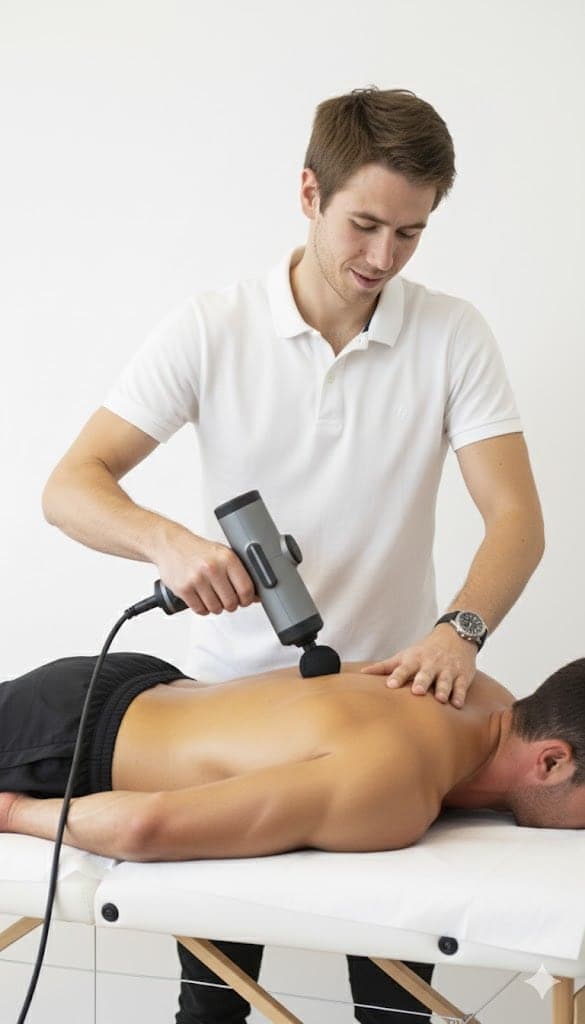
Written by
Chris
Massage therapist, nutrition and exercise physiologist
Norwegian-certified with a Bachelor’s in Physical Education and Nutrition and over ten years of clinical practice, working from a portable table in clients’ homes across the Paphos district.
This article is general information, not a medical diagnosis. If you have severe, worsening or unexplained pain, numbness, weakness, or pain after an accident, see a doctor first.