
Chronic back pain treatment Coral Bay: advanced mechanical therapy for lasting relief
In short
Discover revolutionary chronic back pain treatment in Coral Bay using precision mechanical therapy. Get lasting relief through advanced deep-tissue techniques targeting root causes, not symptoms.
Last month, I treated a 45-year-old construction manager from Coral Bay who had been battling chronic lower back pain for seven years. Traditional treatments had failed him repeatedly – countless physiotherapy sessions, steroid injections, even considering surgery. When I arrived at his home with my specialized mechanical deep-tissue equipment, he was skeptical. “Another massage therapist,” he thought. Three sessions later, he was back to lifting his grandchildren without wincing. This isn’t just another success story; it’s the predictable outcome when you address the mechanical dysfunction causing chronic back pain rather than merely treating symptoms.
After a decade of specialized practice and armed with my Bachelor’s degree in Physical Education and Nutrition from Norway, I’ve witnessed the transformation that occurs when chronic back pain treatment in Coral Bay moves beyond conventional approaches. My method doesn’t just provide temporary relief – it delivers lasting mechanical correction through precision-engineered therapy that targets the root biomechanical causes of your pain.
The residents of Coral Bay deserve more than band-aid solutions for their chronic back pain. They deserve a scientifically-grounded approach that recognizes the complex interplay of muscular tension, fascial restrictions, and biomechanical imbalances that create the persistent pain cycles plaguing their daily lives. Through advanced mechanical deep-tissue therapy, we can achieve what traditional treatments consistently fail to deliver: lasting freedom from chronic back pain.
Understanding the mechanical reality of chronic back pain in Coral Bay
Chronic back pain isn’t simply about tight muscles or “stress.” It’s a complex mechanical dysfunction where layers of fascial tissue become adhered, muscle fibers develop trigger points, and compensatory movement patterns create cascading imbalances throughout the kinetic chain. During my years treating Coral Bay residents, I’ve observed that most chronic back pain stems from three primary mechanical failures: inadequate tissue depth penetration during treatment, inconsistent therapeutic pressure application, and failure to address the root fascial restrictions that perpetuate pain cycles.
Traditional massage therapy, while well-intentioned, operates under significant mechanical limitations. Human hands can only penetrate approximately 1-2 inches into tissue layers, leaving the deeper fascial restrictions and trigger points largely untouched. This superficial approach explains why conventional treatments provide temporary relief but fail to deliver lasting results. The chronic back pain returns because the underlying mechanical dysfunction remains unaddressed.
My specialized approach recognizes that chronic back pain treatment in Coral Bay requires precision mechanical intervention capable of reaching tissue depths that human manipulation cannot access. Through advanced mechanical deep-tissue therapy, we can systematically dismantle the fascial adhesions and trigger point complexes that maintain your pain cycle, creating space for proper biomechanical function to return.
The physiological reality is straightforward: chronic pain exists because mechanical restrictions prevent normal tissue function. When we remove these restrictions through precise mechanical intervention, normal function returns, and pain disappears. This isn’t theoretical – it’s applied biomechanics delivering predictable outcomes for Coral Bay residents who’ve been told to “live with” their chronic back pain.
The precision mechanical advantage: beyond traditional massage limitations
Let me be direct about why mechanical precision matters in chronic back pain treatment. During a session last year with a Coral Bay yoga instructor suffering from persistent thoracic spine pain, I demonstrated the difference between traditional manual therapy and mechanical precision. Using my specialized equipment, I was able to access fascial layers 3-4 inches deep, systematically releasing restrictions that had been accumulating for months. Her immediate response was telling: “I can feel spaces in my back that I haven’t felt in years.”
The mechanical advantage operates on three fundamental principles that traditional approaches cannot replicate. First, depth penetration: my specialized machine delivers therapeutic pressure to tissue layers that human hands simply cannot reach effectively. This deeper access allows us to address the root mechanical restrictions rather than superficial tension patterns. Second, consistency: every stroke delivers precisely calibrated pressure, eliminating the variability that plagues manual therapy. Third, sustainability: the machine maintains therapeutic intensity throughout the entire session, whereas human therapists experience fatigue that compromises treatment effectiveness.
This mechanical precision translates into measurable outcomes for Coral Bay residents. Where traditional massage might provide 2-3 days of relief, mechanical deep-tissue therapy creates lasting changes in tissue architecture that support lasting pain resolution. The difference isn’t subtle – it’s transformational, and it’s predictable when you understand the biomechanical principles governing tissue adaptation.
Consider the physics involved: chronic back pain often originates from fascial adhesions that require specific pressure vectors and sustained mechanical loading to release effectively. Human hands cannot maintain the precise pressure and consistency required for systematic fascial release. My mechanical approach delivers exactly the right combination of depth, pressure, and consistency needed to create lasting tissue changes.
Comprehensive assessment: identifying root mechanical dysfunction
Effective chronic back pain treatment in Coral Bay begins with comprehensive mechanical assessment, not symptom chasing. When I evaluate a new client, I’m not just looking at where it hurts – I’m analyzing the entire kinetic chain to identify the mechanical dysfunctions creating and perpetuating their pain patterns. This assessment process reveals the true complexity of chronic back pain and explains why superficial treatments consistently fail.
The assessment examines fascial mobility, joint mechanics, muscle recruitment patterns, and compensatory movement strategies. I frequently discover that the location of pain isn’t the source of dysfunction. A client’s lower back pain might originate from thoracic fascial restrictions, hip flexor tightness, or even cervical spine compensations. This comprehensive approach ensures that treatment addresses actual causes rather than chasing symptoms around the body.
Through detailed palpation and movement analysis, I identify specific tissue layers requiring mechanical intervention. The assessment reveals fascial adhesions, trigger point complexes, and areas of reduced tissue mobility that contribute to chronic pain patterns. This information guides treatment planning, ensuring that each session targets the mechanical restrictions most responsible for maintaining the pain cycle.
Most importantly, the assessment establishes baseline measurements that allow us to track progress objectively. Range of motion improvements, pressure tolerance increases, and functional movement gains provide concrete evidence that the mechanical interventions are creating lasting changes in tissue architecture and biomechanical function.
Precision mechanical therapy: the treatment protocol
My mechanical deep-tissue therapy protocol represents a systematic approach to chronic back pain treatment that delivers consistent, predictable results for Coral Bay residents. The protocol operates through carefully sequenced mechanical interventions designed to progressively dismantle the fascial restrictions and trigger point complexes maintaining chronic pain cycles. Each session builds upon previous mechanical gains, creating cumulative improvements in tissue function and biomechanical efficiency.
The treatment begins with precise tissue assessment to identify the specific fascial layers requiring mechanical intervention. Using my specialized equipment, I systematically address each restriction with precisely calibrated pressure and specific mechanical vectors. The machine’s consistency ensures that every stroke delivers optimal therapeutic benefit, eliminating the variability that compromises traditional manual therapy outcomes.
Progressive depth protocols allow systematic penetration to deeper fascial layers as superficial restrictions release. This methodical approach prevents tissue guarding responses that can limit treatment effectiveness. The mechanical precision enables me to work at tissue depths and pressure intensities that would be impossible to achieve manually while maintaining complete client comfort and control.
Session frequency and intensity are calibrated to each client’s specific mechanical needs and tissue adaptation capacity. Athletes and physically active Coral Bay residents can typically handle more aggressive protocols, while individuals with sensitive tissue require more gradual mechanical progression. The key is matching treatment intensity to tissue tolerance while maintaining consistent mechanical progress toward pain resolution.
Fascial release techniques: targeting deep tissue restrictions
Fascial restrictions represent the primary mechanical dysfunction underlying most chronic back pain cases I treat in Coral Bay. These tissue adhesions develop through repetitive stress, trauma, inflammation, or prolonged postural dysfunction, creating areas where normal tissue mobility becomes compromised. Traditional treatments fail because they cannot generate sufficient mechanical force to release these deep fascial restrictions effectively.
My mechanical approach employs specific fascial release techniques that systematically dismantle these restrictions layer by layer. The specialized equipment delivers sustained mechanical loading at precise angles and depths, creating the mechanical environment necessary for fascial remodeling. This process literally reshapes tissue architecture, eliminating the physical restrictions that maintain chronic pain patterns.
Fascial release requires understanding tissue directionality and mechanical properties. Fascia responds to sustained mechanical stress by gradually lengthening and remodeling. My treatment applies this stress systematically across all fascial planes, ensuring comprehensive release rather than partial improvement. The mechanical consistency enables complete fascial mobilization that would be impossible through manual techniques alone.
The physiological response to mechanical fascial release includes immediate improvements in tissue mobility, reduced neural irritation, and enhanced local circulation. These changes create the foundation for lasting pain relief by addressing the mechanical restrictions that perpetuate chronic pain cycles rather than merely providing temporary symptom relief.
Trigger point deactivation: eliminating pain generators
Trigger points represent hypercontracted muscle segments that generate both local pain and referred pain patterns throughout the body. These mechanical dysfunctions are common contributors to chronic back pain in Coral Bay residents, yet they require specific mechanical intervention for effective deactivation. Traditional massage often fails to generate sufficient pressure and precision to deactivate trigger points completely, leading to recurring pain patterns.
My mechanical approach to trigger point deactivation employs sustained mechanical pressure precisely applied to the trigger point location. The specialized equipment maintains consistent therapeutic pressure while I monitor tissue response, ensuring complete trigger point deactivation rather than temporary suppression. This mechanical precision allows systematic elimination of all trigger points contributing to the chronic pain pattern.
Effective trigger point deactivation requires understanding the mechanical properties of contracted muscle tissue. Trigger points respond to specific pressure intensities applied for precise durations. Too little pressure fails to create deactivation; excessive pressure creates tissue guarding that prevents therapeutic response. My mechanical system delivers exactly the right pressure intensity for optimal trigger point deactivation while maintaining client comfort.
Following trigger point deactivation, immediate improvements in local tissue mobility and pain reduction are typically evident. However, complete integration requires addressing the mechanical factors that created the trigger points initially. This comprehensive approach ensures that trigger points don’t simply reactivate after treatment, providing lasting relief rather than temporary symptom suppression.
Postural correction: addressing biomechanical imbalances
Chronic back pain in Coral Bay residents often reflects underlying postural imbalances that create excessive mechanical stress on specific tissue structures. These imbalances develop through occupational demands, lifestyle factors, previous injuries, or genetic predispositions, creating movement patterns that perpetuate pain cycles. Effective treatment must address these mechanical imbalances alongside tissue restrictions to achieve lasting pain resolution.
Postural assessment reveals compensatory patterns where certain muscle groups become overactive while others become inhibited. These imbalances create mechanical inefficiency that places excessive stress on fascial structures, joint surfaces, and neural tissues. My treatment approach systematically addresses these imbalances through targeted mechanical intervention combined with specific corrective strategies.
The mechanical therapy component releases fascial restrictions and trigger points that maintain postural compensations. Simultaneously, I provide specific corrective exercises and movement strategies designed to retrain optimal postural alignment and movement patterns. This dual approach addresses both the tissue restrictions maintaining poor posture and the movement patterns that created those restrictions initially.
Postural correction requires understanding the interconnected nature of the kinetic chain. Changes in one area affect function throughout the body. My comprehensive approach ensures that postural improvements are integrated systematically, creating stable mechanical changes that support lasting pain resolution rather than temporary postural modifications that eventually revert to previous patterns.
Movement optimization: restoring functional capacity
Beyond pain elimination, effective chronic back pain treatment in Coral Bay must restore optimal movement capacity and functional performance. Pain creates movement compensations that persist even after pain resolution, limiting functional capacity and potentially predisposing to future injury. My approach systematically addresses these movement limitations through targeted mechanical intervention and movement retraining.
Movement assessment identifies specific functional limitations related to chronic back pain patterns. Range of motion restrictions, movement asymmetries, and compensatory strategies all contribute to reduced functional capacity. The mechanical therapy component addresses tissue restrictions limiting movement, while specific movement training reestablishes optimal movement patterns and functional capacity.
Movement optimization requires progressive loading strategies that challenge tissue adaptation while maintaining mechanical safety. I design specific movement protocols tailored to each client’s functional demands and capacity levels. Athletes require different movement optimization strategies than sedentary office workers, but both need systematic progression toward optimal functional capacity.
The integration of mechanical therapy with movement optimization creates sustainable improvements in functional performance. Clients don’t just experience pain relief – they achieve enhanced movement quality, improved performance capacity, and reduced injury risk. This comprehensive outcome represents true chronic back pain treatment success rather than mere symptom management.
Treatment progression: systematic mechanical advancement
Effective chronic back pain treatment requires systematic progression through increasingly advanced mechanical interventions as tissue restrictions release and functional capacity improves. My treatment protocols are designed with specific progression milestones that ensure continuous advancement toward complete pain resolution and optimal function. This systematic approach prevents treatment plateaus while maintaining consistent mechanical progress.
Initial treatment phases focus on basic fascial mobility and trigger point deactivation using moderate mechanical intensity. As tissue tolerance improves and restrictions release, treatment intensity and depth systematically increase to address deeper fascial layers and more complex mechanical dysfunctions. This progressive approach ensures optimal tissue adaptation while preventing treatment reactions that could limit progress.
Treatment progression is monitored through objective measures including range of motion improvements, pressure tolerance increases, functional movement gains, and pain reduction assessments. These measurements provide concrete evidence of mechanical improvements and guide treatment advancement decisions. Progression is based on tissue response rather than arbitrary timelines, ensuring optimal outcomes for each individual.
The systematic progression approach ensures that Coral Bay residents achieve complete chronic back pain resolution rather than partial improvement. By methodically addressing all mechanical dysfunctions contributing to chronic pain, we create lasting changes in tissue architecture and biomechanical function that support lasting pain relief and optimal functional capacity.
Maintenance protocols: sustaining long-term results
Achieving chronic back pain relief is only the first step – maintaining those results requires understanding the mechanical factors that could potentially recreate pain patterns. My maintenance protocols are designed to preserve the mechanical improvements achieved through treatment while providing Coral Bay residents with the knowledge and tools necessary to prevent chronic pain recurrence.
Maintenance treatment frequency depends on individual mechanical demands and tissue characteristics. Physically demanding occupations or athletic activities may require more frequent maintenance to prevent mechanical restrictions from reaccumulating. Sedentary individuals may need less frequent maintenance but require specific strategies to counter the mechanical stresses of prolonged sitting and postural strain.
The maintenance protocol includes periodic mechanical assessments to identify potential restrictions before they develop into painful conditions. Early identification allows preventive mechanical intervention that maintains optimal tissue function and prevents chronic pain recurrence. This proactive approach is more effective and efficient than waiting for pain to return before addressing mechanical dysfunctions.
Client education represents a crucial maintenance component, providing understanding of the mechanical factors that contribute to chronic back pain development. Informed clients make better lifestyle decisions that support mechanical health and can identify early warning signs that indicate the need for preventive treatment intervention.
The mobile advantage: professional treatment in Coral Bay homes
My mobile treatment approach brings professional-grade chronic back pain treatment directly to Coral Bay residences, eliminating the barriers that often prevent consistent treatment adherence. Traditional clinic-based therapy requires significant time investment for travel and scheduling, creating obstacles that can interrupt treatment continuity. My mobile service removes these barriers while providing a more comfortable and convenient treatment environment.
The mobile setup includes professional-grade equipment that matches or exceeds clinic capabilities. My specialized treatment bench and mechanical therapy equipment create an optimal therapeutic environment in the client’s home. This professional setup ensures that treatment quality never compromises for convenience – clients receive the same advanced mechanical therapy that would be available in a specialized clinic setting.
Home-based treatment offers additional advantages including enhanced privacy, familiar environment comfort, and eliminates post-treatment travel concerns. Clients can immediately implement post-treatment recommendations in their home environment, improving treatment integration and outcomes. The familiar setting also reduces treatment anxiety and enhances relaxation, supporting better therapeutic outcomes.
The mobile approach particularly benefits Coral Bay residents with severe chronic back pain who find travel challenging or those with demanding schedules that make clinic visits difficult. By bringing advanced treatment to their location, we eliminate the obstacles that often prevent people from accessing the care they need for effective chronic pain resolution.
Client success stories: real results from Coral Bay residents
Results speak louder than theory, and my decade of practice has produced countless success stories from Coral Bay residents who had lost hope for effective chronic back pain treatment. These aren’t anecdotal improvements – they represent systematic mechanical corrections that created lasting pain resolution and functional restoration. Each success story demonstrates the predictable outcomes possible when chronic back pain treatment addresses root mechanical causes rather than chasing symptoms.
A local business owner had endured chronic lower back pain for twelve years following a workplace injury. Multiple surgery consultations, years of physiotherapy, and countless treatments had provided only temporary relief. Through systematic mechanical therapy targeting the deep fascial restrictions and postural imbalances maintaining his pain cycle, we achieved complete pain resolution within six weeks. Two years later, he remains pain-free and has returned to all previous activities including recreational golf and hiking.
Another success involved a Coral Bay teacher experiencing chronic thoracic spine pain from years of poor classroom postures and stress. Traditional treatments had focused on relaxation and superficial massage, providing minimal improvement. My mechanical approach identified specific fascial restrictions in her thoracic and cervical regions that were creating her pain patterns. Systematic mechanical release of these restrictions, combined with postural correction strategies, eliminated her chronic pain and prevented its recurrence.
Perhaps most rewarding was treating a retired Coral Bay resident who had been told her chronic back pain was “just part of aging” and something she would need to accept. Through careful mechanical assessment, I identified specific trigger point complexes and fascial adhesions that were entirely treatable through mechanical intervention. Her transformation from daily pain and limited mobility to pain-free activity and restored function demonstrates that age is not a barrier to effective chronic back pain treatment when the right mechanical approach is applied.
Investment in long-term health: understanding treatment value
Effective chronic back pain treatment represents an investment in long-term health and quality of life rather than an expense for temporary relief. When Coral Bay residents understand the true cost of chronic pain – including lost productivity, reduced life enjoyment, medical expenses, and potential surgical interventions – the value proposition for comprehensive mechanical treatment becomes clear. My approach provides lasting solutions that eliminate ongoing chronic pain costs while restoring full functional capacity.
The financial analysis is straightforward: chronic back pain typically costs thousands of dollars annually through various treatments, medications, and lost productivity. A comprehensive mechanical treatment program that achieves lasting pain resolution represents significant long-term savings compared to ongoing symptom management approaches. More importantly, the quality of life improvements achieved through effective treatment are priceless.
Investment value also includes prevention of potential complications associated with chronic pain. Untreated mechanical dysfunctions often worsen over time, potentially leading to more severe conditions requiring invasive interventions. Early comprehensive treatment prevents these complications while addressing chronic pain when mechanical correction is most achievable and effective.
The partnership approach I offer provides ongoing support and maintenance to preserve treatment gains, ensuring that the initial investment continues providing value through sustained pain relief and optimal function. This comprehensive value proposition explains why informed Coral Bay residents choose advanced mechanical therapy over repeated attempts with traditional approaches that provide only temporary relief.
Why mechanical precision succeeds where traditional treatments fail
The fundamental difference between my mechanical approach and traditional chronic back pain treatments lies in mechanical precision and consistency. Traditional treatments operate within significant limitations that prevent them from addressing the root mechanical dysfunctions causing chronic pain. Understanding these limitations explains why so many Coral Bay residents have experienced repeated treatment failures despite sincere efforts to find relief.
Manual therapy limitations include insufficient depth penetration, pressure inconsistency, therapist fatigue effects, and inability to maintain therapeutic intensity throughout treatment sessions. These limitations prevent traditional approaches from creating the mechanical changes necessary for lasting pain resolution. My specialized equipment eliminates these limitations while delivering precisely controlled mechanical intervention that creates predictable tissue changes.
Traditional pain management approaches often focus on symptom suppression rather than mechanical correction. Medications, injections, and superficial treatments may provide temporary relief but fail to address the fascial restrictions, trigger points, and biomechanical imbalances that maintain chronic pain cycles. This symptom-focused approach explains why traditional treatments require constant repetition without achieving lasting resolution.
Mechanical precision succeeds because it addresses chronic pain at its source – the mechanical dysfunctions in fascial tissue, muscle architecture, and biomechanical patterns that create and perpetuate pain cycles. By systematically correcting these mechanical problems through precise intervention, we eliminate the root causes of chronic pain rather than merely managing symptoms, creating lasting relief that traditional approaches consistently fail to achieve.
Frequently asked questions about chronic back pain treatment in Coral Bay
How quickly can I expect results from mechanical deep-tissue therapy for chronic back pain?
Most Coral Bay residents experience significant improvements within the first three sessions, with many reporting substantial pain reduction after the initial treatment. However, lasting results require addressing all mechanical dysfunctions contributing to chronic pain, which typically takes 6-8 sessions for complete resolution. The timeline depends on pain duration, severity, and individual tissue response, but the systematic mechanical approach ensures consistent progress toward pain elimination rather than temporary relief cycles.
What makes mechanical therapy more effective than traditional massage or physiotherapy?
Mechanical precision delivers therapeutic benefits impossible through manual techniques. My specialized equipment accesses tissue depths of 3-4 inches compared to the 1-2 inch maximum depth achievable manually. Additionally, the machine maintains consistent therapeutic pressure throughout sessions, eliminating the variability and fatigue factors that limit traditional treatment effectiveness. This precision allows systematic addressing of root mechanical causes rather than superficial symptom treatment, creating lasting pain resolution instead of temporary relief.
Is the mechanical deep-tissue therapy painful, and how do you control treatment intensity?
Treatment intensity is precisely calibrated to each client’s tolerance and therapeutic needs. The mechanical system allows exact pressure control from light therapeutic pressure to deep athletic-level intervention. Most clients describe the sensation as “intense but satisfying” rather than painful, with many reporting immediate relief during treatment. The precision control ensures optimal therapeutic benefit while maintaining complete comfort, and intensity adjustments are made continuously based on tissue response and client feedback.
How long do the results last, and will I need ongoing treatments?
Properly executed mechanical therapy creates lasting changes in tissue architecture and biomechanical function, providing lasting pain relief rather than temporary symptom suppression. Most Coral Bay residents achieve complete chronic back pain resolution that persists indefinitely. Maintenance sessions may be beneficial for individuals with demanding physical activities or high-stress occupations, but these are preventive rather than corrective treatments. The goal is lasting pain elimination, not ongoing symptom management.
Can mechanical therapy help if I’ve had chronic back pain for many years?
Chronic pain duration doesn’t determine treatment feasibility – mechanical dysfunction does. I’ve successfully treated Coral Bay residents with 10+ years of chronic back pain by systematically addressing the fascial restrictions and biomechanical imbalances maintaining their pain cycles. Long-standing chronic pain may require more sessions to fully address accumulated mechanical dysfunctions, but the systematic approach ensures progressive improvement regardless of pain duration. Age and pain chronicity are not barriers to successful mechanical treatment when the right approach is applied.
What should I expect during a typical treatment session?
Each session begins with assessment of current tissue status and progress from previous treatments. The mechanical therapy component systematically addresses identified restrictions using precisely controlled pressure and specific techniques tailored to your mechanical needs. Sessions typically last 60-90 minutes and include post-treatment movement assessment and specific recommendations. Most clients experience immediate improvements in mobility and pain reduction, with cumulative benefits building throughout the treatment series. The professional mobile setup ensures optimal therapeutic environment in your Coral Bay home.
Do you treat other conditions besides chronic back pain?
While chronic back pain represents my primary specialty, the mechanical principles apply to various musculoskeletal conditions including neck pain, shoulder dysfunction, hip restrictions, and athletic performance optimization. The systematic approach to mechanical dysfunction correction is effective for any condition involving fascial restrictions, trigger points, or biomechanical imbalances. However, my expertise and equipment are specifically optimized for spinal conditions and chronic pain resolution, ensuring the highest level of specialized care for Coral Bay residents seeking back pain treatment.
How does your mobile service work, and what do you bring to my home?
I provide complete professional treatment setup in your Coral Bay home, including specialized treatment table, mechanical therapy equipment, and all necessary supplies. The mobile service eliminates travel barriers while maintaining professional treatment standards. Scheduling is flexible to accommodate your availability, and the familiar environment often enhances treatment outcomes. The professional equipment setup matches or exceeds clinic capabilities, ensuring no compromise in treatment quality for the convenience of home-based service.
Taking the next step toward chronic back pain freedom
Chronic back pain treatment in Coral Bay doesn’t have to involve endless cycles of temporary relief followed by recurring pain. The mechanical approach I’ve developed through a decade of specialized practice offers Coral Bay residents the opportunity to achieve lasting pain resolution through systematic correction of the root mechanical dysfunctions causing their chronic pain. This isn’t about managing symptoms – it’s about eliminating the mechanical problems that create and perpetuate chronic pain cycles.
The decision to pursue comprehensive mechanical treatment represents a commitment to addressing chronic pain definitively rather than accepting ongoing limitation and discomfort. Many Coral Bay residents have spent years and thousands of dollars on treatments that provided only temporary relief because they failed to address the mechanical reality of chronic pain. My approach offers a different outcome – lasting pain resolution through systematic mechanical correction.
Understanding that chronic back pain stems from specific mechanical dysfunctions that can be systematically corrected empowers you to make informed treatment decisions. The choice between ongoing symptom management and definitive mechanical correction will determine whether you continue experiencing chronic pain limitations or achieve the pain-free function and quality of life you deserve.
Professional chronic back pain treatment using advanced mechanical therapy is available in Coral Bay through mobile service that brings clinical-grade equipment and expertise directly to your home. This represents an investment in lasting pain resolution and restored function rather than another attempt at temporary symptom relief. The systematic approach ensures predictable outcomes for residents ready to address their chronic back pain definitively.
Evidence and limits
Massage may help with some symptoms, but benefits and evidence vary by condition. It does not replace medical assessment or treatment. A page update is not evidence of an independent clinical review.
Further reading: Massage therapy: evidence, safety and limitations by US National Center for Complementary and Integrative Health. This is general background reading, not verification of every claim in this article.
How we describe evidence and updates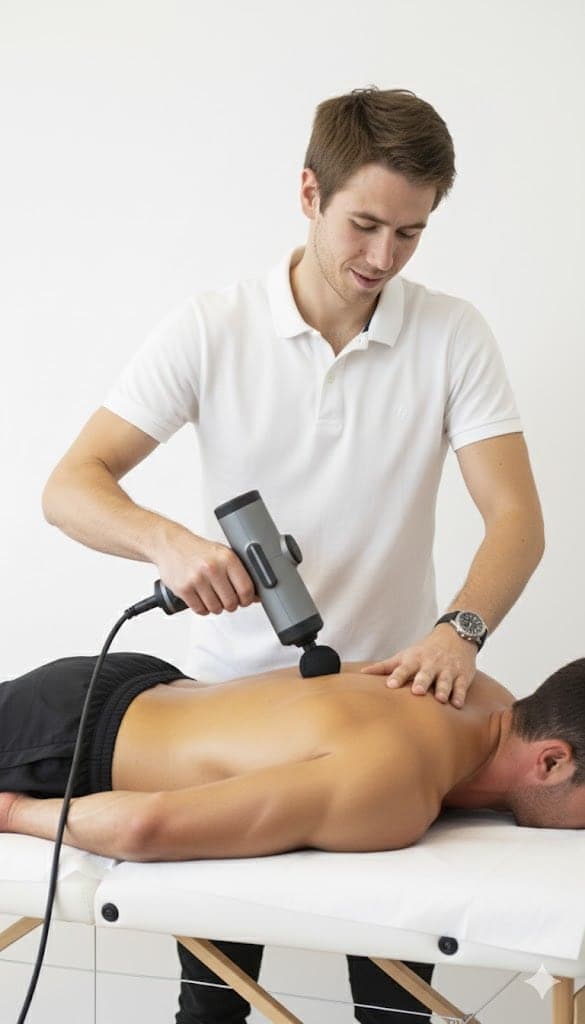
Written by
Chris
Massage therapist, nutrition and exercise physiologist
Norwegian-certified with a Bachelor’s in Physical Education and Nutrition and over ten years of clinical practice, working from a portable table in clients’ homes across the Paphos district.
This article is general information, not a medical diagnosis. If you have severe, worsening or unexplained pain, numbness, weakness, or pain after an accident, see a doctor first.