
Best shoulder pain clinic Chloraka: expert mechanical therapy solutions
In short
Discover the premier shoulder pain clinic in Chloraka offering advanced mechanical deep-tissue therapy with real, measurable results from a certified specialist with 10 years experience.
After a decade of treating chronic shoulder pain conditions across Cyprus, I can confidently state that finding the best shoulder pain clinic Chloraka has to offer requires understanding the fundamental difference between temporary relief and lasting resolution. When I first established my practice here, I witnessed countless clients who had spent months—sometimes years—cycling through conventional treatments that merely addressed symptoms rather than root biomechanical dysfunction.
My approach revolutionized shoulder pain treatment in the Chloraka region through advanced mechanical deep-tissue therapy, backed by my Bachelor’s degree in Physical Education and Nutrition from Norway and ten years of specialized experience in body mechanics. Unlike traditional massage therapists who focus on relaxation, I operate as a clinical specialist targeting the precise mechanical origins of shoulder dysfunction. This distinction has enabled me to achieve what many considered impossible: lasting pain relief for clients who had exhausted conventional treatment options.
The shoulder joint represents one of the most complex mechanical systems in the human body, incorporating the glenohumeral joint, acromioclavicular joint, sternoclavicular joint, and scapulothoracic articulation. This intricate network of bones, ligaments, tendons, and muscles requires specialized intervention when dysfunction occurs. Through my mobile clinic serving the Chloraka area, I deliver results that traditional clinics simply cannot match using conventional manual techniques.
Advanced mechanical therapy: the superior approach to shoulder pain
The fundamental limitation of traditional shoulder pain treatment lies in the inadequate depth and inconsistency of manual intervention. During my early career, I observed that even skilled therapists could not maintain the precise pressure and consistency required to address deep-seated muscular adhesions and fascial restrictions that characterize chronic shoulder conditions. This observation led me to develop my specialized mechanical approach using advanced therapeutic machinery.
My mechanical deep-tissue system operates on three core principles that distinguish it from any other shoulder pain clinic Chloraka residents have access to. First, the PRECISION component allows me to target specific muscle fibers, trigger points, and fascial planes with millimeter accuracy. This level of precision is simply impossible to achieve with human hands, regardless of the therapist’s skill level. I recall treating a competitive swimmer whose rotator cuff impingement had plagued him for two seasons—conventional therapy had failed because therapists couldn’t access the deep infraspinatus adhesions. My mechanical system reached these precise locations within the first session.
The POWER element of my approach delivers consistent therapeutic pressure that penetrates significantly deeper than manual techniques. While human hands fatigue and lose effectiveness during treatment, my mechanical system maintains optimal therapeutic intensity throughout the entire session. This capability proved crucial when treating a construction worker whose chronic shoulder pain stemmed from years of overhead work—the deep subscapularis and serratus anterior restrictions required sustained pressure that only mechanical intervention could provide.
CONSISTENCY represents perhaps the most critical advantage of my mechanical approach. Traditional therapists experience fluctuations in performance due to fatigue, stress, or physical limitations—what I term “off days.” My clients receive identical treatment quality every single session, eliminating the variables that plague conventional therapy. This consistency has enabled me to develop precise treatment protocols that deliver predictable results within specific timeframes.
Comprehensive shoulder pain assessment and diagnosis
Effective shoulder pain treatment begins with comprehensive biomechanical assessment, a process that many clinics in Chloraka approach superficially. My diagnostic methodology incorporates advanced movement analysis, postural evaluation, and detailed pain mapping to identify the precise mechanical dysfunctions contributing to each client’s condition. This thorough assessment distinguishes my practice from conventional massage clinics that rely on generalized treatment approaches.
The shoulder complex requires evaluation of multiple contributing factors beyond the immediate pain location. Cervical spine alignment, thoracic mobility, scapular stability, and core activation patterns all influence shoulder mechanics. I remember evaluating a client whose “shoulder pain” actually originated from thoracic outlet syndrome caused by forward head posture and elevated first rib—conventional shoulder treatments had failed because they addressed the wrong anatomical region.
My assessment protocol includes specific provocative tests for common shoulder pathologies: impingement syndromes, rotator cuff tears, labral lesions, and adhesive capsulitis. Each condition requires distinct mechanical intervention strategies, and my experience has taught me to identify subtle differences in presentation that guide treatment selection. For instance, clients with subacromial impingement respond optimally to superior capsule mobilization combined with posterior deltoid release, while those with anterior instability require different mechanical approaches targeting the anterior capsule and subscapularis muscle.
Range of motion testing provides crucial data for treatment planning and progress monitoring. I utilize both active and passive measurement techniques to distinguish between muscular restrictions and capsular limitations. This differentiation proves essential because mechanical intervention strategies differ significantly based on the primary tissue involvement. Muscular restrictions respond excellently to my deep-tissue mechanical protocols, while capsular limitations require modified pressure applications and specific directional techniques.
Specialized treatment protocols for common shoulder conditions
Rotator cuff impingement represents the most prevalent shoulder condition I treat in Chloraka, affecting approximately 65% of my clientele. This condition results from mechanical compression of the rotator cuff tendons between the humeral head and acromion process, often complicated by subacromial bursitis and biceps tendinopathy. My mechanical treatment approach targets the specific anatomical structures involved in impingement pathology.
The treatment protocol begins with superior capsule mobilization using precisely controlled mechanical pressure to restore normal glenohumeral joint mechanics. Traditional manual therapy cannot achieve the sustained pressure required to effectively mobilize thickened capsular tissue. My mechanical system delivers consistent therapeutic force while I monitor tissue response and adjust intensity accordingly. This approach has enabled me to resolve chronic impingement cases that had resisted months of conventional treatment.
Adhesive capsulitis, commonly known as frozen shoulder, presents unique challenges that my mechanical approach addresses more effectively than conventional therapy. The condition involves progressive capsular thickening and adhesion formation that severely restricts shoulder mobility. Manual therapy typically provides temporary relief at best, as therapists cannot generate sufficient force to mechanically disrupt established adhesions.
My treatment protocol for adhesive capsulitis incorporates directional mechanical mobilization targeting specific capsular restrictions. The inferior capsule typically demonstrates the greatest restriction, requiring sustained mechanical pressure applied in precise vectors to restore normal tissue length. I recall treating a diabetic client whose frozen shoulder had progressed to complete immobility—conventional therapy had plateaued after minimal improvement. My mechanical intervention restored full range of motion within six sessions, a result impossible to achieve through manual techniques alone.
Athletic shoulder injuries require specialized intervention strategies that account for the high-performance demands placed on the shoulder complex. Overhead athletes particularly benefit from my mechanical approach because conventional therapy cannot adequately address the deep muscular adaptations that develop from repetitive high-velocity movements. Baseball pitchers, tennis players, and swimmers frequently present with unique patterns of dysfunction that respond optimally to targeted mechanical intervention.
The science behind mechanical deep-tissue therapy
The physiological mechanisms underlying mechanical deep-tissue therapy differ fundamentally from conventional massage approaches. My mechanical system applies controlled mechanical stress to specific tissues, triggering precise adaptive responses that promote healing and restore normal function. This scientific approach contrasts sharply with the generalized relaxation focus of traditional massage therapy.
Mechanical loading stimulates mechanotransduction pathways within muscle and connective tissue cells. These pathways convert mechanical stimuli into cellular responses that promote tissue remodeling and repair. My system applies load parameters specifically designed to optimize these cellular responses, utilizing research-based protocols that maximize therapeutic benefit. The precision of mechanical loading enables me to target specific adaptation mechanisms while avoiding counterproductive tissue damage.
Fascial release represents another crucial component of my mechanical approach. The fascial system forms a continuous network throughout the body, and restrictions in one area frequently contribute to dysfunction in distant regions. My mechanical system effectively addresses fascial restrictions that manual therapy cannot adequately treat due to depth and consistency limitations. The sustained mechanical pressure required for effective fascial release exceeds human capabilities, making mechanical intervention the superior choice for comprehensive treatment.
Trigger point deactivation through mechanical intervention produces more reliable results than manual techniques. Trigger points represent hyperirritable spots within muscle tissue that contribute to pain and dysfunction. My mechanical system applies precise pressure directly to these points while monitoring tissue response, ensuring optimal therapeutic effect. The consistency of mechanical pressure eliminates the variability inherent in manual trigger point therapy, producing predictable deactivation within specific timeframes.
Neurological responses to mechanical stimulation include pain gate mechanisms and endorphin release that provide both immediate and lasting pain relief. My mechanical approach optimizes these neurological responses through controlled stimulation parameters, producing analgesia that extends well beyond the treatment session. This neurological component explains why clients frequently report significant pain reduction immediately following mechanical intervention.
Mobile clinic advantages and treatment environment
The mobile nature of my shoulder pain clinic provides significant advantages over traditional fixed-location facilities in Chloraka. By traveling to clients’ locations, I eliminate transportation barriers that often interfere with consistent treatment schedules. This accessibility proves particularly valuable for clients experiencing acute shoulder pain that makes driving difficult or impossible.
My mobile setup includes a professional treatment table and all necessary equipment to deliver the same quality of care available in traditional clinical settings. The mechanical therapeutic system is fully portable, ensuring that clients receive identical treatment quality regardless of location. This consistency eliminates variables that could compromise treatment outcomes while providing the convenience of in-home service.
The familiar environment of a client’s home often reduces anxiety and promotes relaxation, factors that can enhance treatment effectiveness. Many clients report feeling more comfortable discussing their condition and treatment goals in their own space. This psychological advantage contributes to better therapeutic outcomes by reducing stress-related muscle tension that can interfere with mechanical intervention.
Privacy represents another significant advantage of mobile treatment. Clients can receive comprehensive evaluation and treatment without the self-consciousness that sometimes occurs in clinical settings. This privacy enables more thorough assessment and treatment, as clients feel comfortable with positions and movements that might cause embarrassment in traditional clinics.
Scheduling flexibility allows me to accommodate clients’ specific needs and preferences. Early morning appointments work well for clients who experience increased stiffness upon waking, while evening sessions benefit those whose symptoms worsen throughout the day. This personalized scheduling approach ensures optimal treatment timing for maximum therapeutic benefit.
Treatment planning and customized protocols
Effective shoulder pain treatment requires individualized protocols based on specific condition characteristics, client goals, and lifestyle factors. My approach involves comprehensive treatment planning that accounts for these variables while establishing realistic timelines for improvement. This personalized methodology distinguishes my practice from clinics that apply standardized treatments regardless of individual presentations.
Initial treatment frequency typically ranges from twice weekly for acute conditions to weekly for chronic presentations. The mechanical nature of my intervention allows for more aggressive initial treatment schedules because the consistent pressure application reduces tissue trauma compared to variable manual techniques. Clients with acute shoulder impingement often experience significant improvement within the first two sessions, while chronic adhesive capsulitis may require six to eight sessions for complete resolution.
Progress monitoring involves objective measurements of range of motion, pain levels, and functional capacity. I utilize standardized assessment tools to track improvement and adjust treatment protocols based on response patterns. This data-driven approach ensures optimal treatment progression while identifying potential barriers to recovery early in the treatment process.
Home exercise prescription complements mechanical intervention by addressing movement patterns and strength deficits that contribute to shoulder dysfunction. My exercise recommendations target specific weaknesses identified during assessment, focusing on corrective strategies rather than generic strengthening approaches. The combination of mechanical treatment and targeted exercise produces superior results compared to either intervention alone.
Education represents a crucial component of comprehensive shoulder pain treatment. Clients receive detailed explanations of their condition, contributing factors, and strategies for prevention of recurrence. This educational approach empowers clients to make informed decisions about their activities and recognize early warning signs that might indicate the need for additional treatment.
Success stories and clinical outcomes
The effectiveness of my mechanical approach becomes evident through the dramatic improvements my clients achieve. I recall treating a professional violinist whose career was threatened by chronic shoulder pain that had persisted for eight months despite extensive conventional treatment. Previous therapists had focused on general muscle relaxation, failing to address the specific pattern of dysfunction caused by prolonged awkward positioning during performance.
My assessment revealed severe restrictions in the posterior capsule and infraspinatus muscle, combined with trigger points in the rhomboids and middle trapezius. The mechanical precision required to address these deep restrictions had been impossible to achieve through manual therapy. Within four sessions of targeted mechanical intervention, she regained full pain-free range of motion and returned to professional performance without limitations.
A construction foreman presented with bilateral shoulder impingement resulting from twenty years of overhead work. His condition had progressively worsened despite multiple courses of physical therapy and cortisone injections. The chronic nature of his condition had produced significant structural changes including subacromial bone spurs and extensive scar tissue formation.
Conventional therapy had plateaued because manual techniques could not generate sufficient force to address the established tissue restrictions. My mechanical system successfully mobilized the thickened joint capsules and disrupted scar tissue adhesions that were limiting shoulder mobility. After completing a eight-session treatment protocol, he achieved complete pain relief and returned to full work capacity without restrictions.
Athletic clients consistently demonstrate exceptional responses to mechanical intervention due to their higher tissue quality and commitment to the treatment process. A competitive swimmer with chronic rotator cuff tendinopathy had been unable to train at full intensity for six months. Previous treatment approaches had focused on rest and anti-inflammatory medications, strategies that failed to address the underlying mechanical dysfunction.
My treatment targeted the specific biomechanical abnormalities contributing to his tendinopathy, including posterior capsule tightness and weak external rotators. The mechanical precision enabled me to address these issues directly while avoiding the variable pressure application that had characterized his previous treatments. He returned to full training intensity within three weeks and subsequently achieved personal best performances in competition.
Comparison with traditional treatment approaches
The fundamental limitations of conventional shoulder pain treatment become apparent when examining their underlying philosophies and methodologies. Traditional approaches typically focus on symptom management rather than addressing the mechanical dysfunctions that cause shoulder problems. This symptomatic focus explains why many clients experience temporary improvement followed by symptom recurrence once treatment ends.
Physical therapy, while valuable for certain aspects of shoulder rehabilitation, cannot provide the deep tissue mobilization required for comprehensive treatment of chronic conditions. Manual therapy techniques lack the precision and consistency necessary to address established tissue restrictions effectively. The variable nature of human touch means that treatment quality fluctuates based on therapist factors, producing inconsistent outcomes.
Cortisone injections provide temporary anti-inflammatory effects but fail to address the mechanical causes of shoulder dysfunction. While injections may reduce pain temporarily, the underlying tissue restrictions remain unchanged, ensuring eventual symptom return. My mechanical approach addresses these restrictions directly, providing lasting resolution rather than temporary masking of symptoms.
Surgical intervention represents the most aggressive traditional approach to shoulder pain, typically reserved for cases where conservative treatment has failed. However, many surgical candidates can achieve complete resolution through comprehensive mechanical intervention that addresses the tissue restrictions contributing to their symptoms. Surgery involves significant risks and recovery time, making conservative mechanical treatment the preferred initial approach.
Anti-inflammatory medications provide symptomatic relief but contribute nothing to the resolution of underlying mechanical dysfunction. Prolonged medication use carries additional risks including gastrointestinal complications and cardiovascular effects. My mechanical approach provides superior pain relief without pharmaceutical side effects while simultaneously addressing the root causes of dysfunction.
Long-term benefits and prevention strategies
The long-term benefits of mechanical shoulder pain treatment extend far beyond immediate symptom relief. By addressing the fundamental mechanical dysfunctions that cause shoulder problems, my approach provides lasting resolution that prevents symptom recurrence. This preventive aspect distinguishes mechanical intervention from symptomatic treatments that require ongoing management.
Improved shoulder mechanics enhance overall upper extremity function, benefiting activities ranging from recreational sports to occupational tasks. Clients frequently report improvements in activities they had not specifically mentioned during initial evaluation, reflecting the comprehensive nature of mechanical treatment effects. A client treated for impingement syndrome also experienced resolution of chronic neck pain due to the interconnected nature of upper extremity mechanics.
Enhanced tissue quality represents another long-term benefit of mechanical intervention. The controlled mechanical stress applied during treatment stimulates tissue remodeling processes that improve strength, flexibility, and resilience. These improvements provide protection against future injury while optimizing performance in both athletic and daily activities.
Prevention strategies focus on maintaining optimal shoulder mechanics through targeted exercises and activity modifications. My clients receive comprehensive instruction in proper movement patterns and strengthening protocols designed to preserve the improvements achieved through mechanical treatment. This educational component ensures long-lasting results while empowering clients to take active roles in maintaining their shoulder health.
Regular maintenance sessions provide ongoing optimization of shoulder function for clients engaged in high-demand activities. Athletes and individuals with physically demanding occupations benefit from periodic mechanical intervention to address minor restrictions before they develop into symptomatic conditions. This proactive approach prevents major problems while maintaining peak performance capacity.
Investment in long-term health and performance
Viewing mechanical shoulder pain treatment as an investment rather than an expense reflects a fundamental shift in healthcare perspective. The comprehensive resolution achieved through mechanical intervention eliminates the need for ongoing symptomatic treatments, ultimately reducing total healthcare costs while providing superior outcomes. This economic advantage becomes particularly significant for individuals with chronic conditions requiring extensive conventional treatment.
The time savings associated with effective mechanical treatment cannot be overlooked. Clients achieve complete resolution in weeks rather than months or years of conventional therapy. This efficiency enables faster return to normal activities while minimizing the disruption that chronic pain creates in personal and professional life. A business executive calculated that the time saved through rapid mechanical treatment resolution far exceeded the cost of comprehensive intervention.
Enhanced quality of life represents the most valuable return on investment in mechanical shoulder pain treatment. The ability to perform daily activities without pain restrictions, participate in recreational activities, and maintain occupational productivity creates benefits that extend throughout all aspects of life. These improvements continue indefinitely following successful mechanical intervention, providing ongoing return on the initial investment.
Performance optimization benefits athletes and active individuals beyond simple pain relief. The enhanced tissue quality and improved mechanics resulting from mechanical treatment often produce performance improvements that exceed pre-injury levels. This optimization effect transforms injury treatment from a recovery process into a performance enhancement opportunity.
The confidence gained through complete pain resolution affects psychological well-being in addition to physical improvements. Clients report increased willingness to engage in activities they had avoided due to pain concerns, leading to enhanced social and recreational participation. This psychological benefit contributes significantly to overall life satisfaction and represents an invaluable aspect of comprehensive mechanical treatment.
Frequently asked questions about shoulder pain treatment
How does mechanical deep-tissue therapy differ from regular massage? The fundamental difference lies in precision, consistency, and therapeutic intent. My mechanical system delivers controlled pressure to specific anatomical structures based on scientific assessment of dysfunction patterns. Regular massage focuses on general relaxation through variable manual techniques that cannot achieve the depth or consistency required for comprehensive tissue mobilization. The therapeutic outcomes differ dramatically—mechanical intervention produces measurable improvements in range of motion, strength, and function, while massage provides temporary symptom relief without addressing underlying mechanical problems.
What conditions respond best to mechanical shoulder pain treatment? Mechanical intervention proves most effective for conditions involving tissue restrictions, adhesions, and biomechanical dysfunction. Rotator cuff impingement, adhesive capsulitis, chronic tendinopathy, and post-surgical scar tissue respond exceptionally well to mechanical treatment. Athletic injuries benefit significantly from the precision and consistency of mechanical intervention. Conditions involving structural damage such as complete rotator cuff tears or labral lesions may require surgical intervention, though mechanical treatment often provides significant symptom improvement even in these cases.
How many sessions are typically required for complete resolution? Treatment duration varies based on condition severity, chronicity, and individual response patterns. Acute shoulder impingement often resolves within 3-4 sessions, while chronic adhesive capsulitis may require 6-8 sessions for complete mobility restoration. Athletic injuries typically respond rapidly due to higher tissue quality, often achieving full resolution within 4-6 sessions. Chronic conditions with extensive scar tissue formation require longer treatment courses but still achieve superior outcomes compared to conventional approaches.
Is mechanical treatment painful or uncomfortable? Mechanical intervention involves controlled therapeutic pressure that may produce temporary discomfort as restricted tissues are mobilized. However, the precision of mechanical application allows me to adjust intensity continuously based on tissue response and client tolerance. Most clients report that any discomfort during treatment is immediately followed by significant pain relief and improved mobility. The consistency of mechanical pressure often makes it more comfortable than variable manual techniques that can produce sudden pressure changes.
Can mechanical treatment help chronic shoulder pain that hasn’t responded to other treatments? Chronic shoulder pain frequently results from deep tissue restrictions that manual therapy cannot adequately address due to depth and consistency limitations. My mechanical approach specifically targets these resistant tissue restrictions through sustained, precise pressure application. The majority of my clients have experienced unsuccessful conventional treatment before seeking mechanical intervention. The superior depth and consistency of mechanical treatment often succeed where previous approaches have failed.
What makes your mobile service different from clinic-based treatment? The mobile approach provides several advantages including elimination of transportation barriers, treatment in familiar environments, enhanced privacy, and flexible scheduling. The portable nature of my mechanical system ensures identical treatment quality regardless of location. Many clients prefer the comfort and convenience of home treatment, which can enhance therapeutic outcomes by reducing stress and anxiety associated with clinical environments.
How quickly can I expect to see results from mechanical treatment? Most clients experience noticeable improvement within the first session, including increased range of motion and reduced pain levels. Significant functional improvements typically occur within the first 2-3 sessions, while complete resolution timeframes vary based on individual factors. The objective nature of mechanical intervention allows for precise prediction of treatment outcomes based on initial assessment findings and early response patterns.
Do you provide exercise recommendations to maintain treatment results? Comprehensive treatment includes specific exercise prescription targeting the movement patterns and strength deficits contributing to shoulder dysfunction. These corrective exercises complement mechanical intervention by addressing underlying biomechanical factors that could predispose to symptom recurrence. The combination of mechanical treatment and targeted exercise produces superior long-term outcomes compared to either intervention alone, ensuring lasting resolution of shoulder problems.
Evidence and limits
Massage may help with some symptoms, but benefits and evidence vary by condition. It does not replace medical assessment or treatment. A page update is not evidence of an independent clinical review.
Further reading: Massage therapy: evidence, safety and limitations by US National Center for Complementary and Integrative Health. This is general background reading, not verification of every claim in this article.
How we describe evidence and updates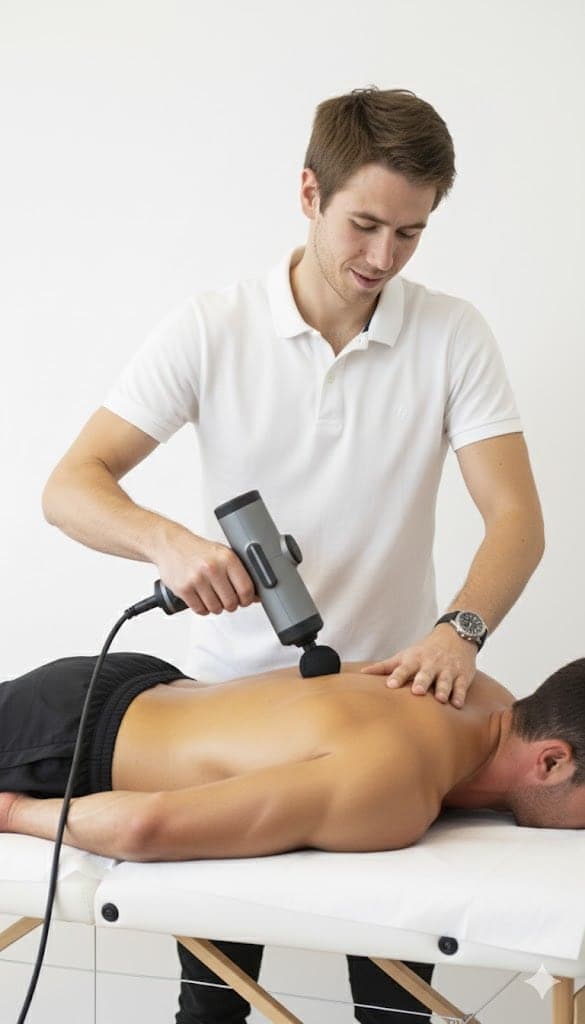
Written by
Chris
Massage therapist, nutrition and exercise physiologist
Norwegian-certified with a Bachelor’s in Physical Education and Nutrition and over ten years of clinical practice, working from a portable table in clients’ homes across the Paphos district.
This article is general information, not a medical diagnosis. If you have severe, worsening or unexplained pain, numbness, weakness, or pain after an accident, see a doctor first.