
Best massage therapists in Tsada: Expert guide to finding superior therapeutic care
In short
Discover Tsada’s leading massage therapists specializing in advanced mechanical deep-tissue therapy. Expert-backed methods for lasting pain relief and optimal body mechanics.
When I first established my practice in Tsada ten years ago, I encountered a fundamental problem that still plagues our industry today: the misconception that massage therapy is merely about relaxation. As someone with a Bachelor’s degree in Physical Education and Nutrition from Norway and a decade of specialized experience in advanced mechanical deep-tissue therapy, I can tell you that finding the best massage therapists in Tsada requires understanding a critical distinction – the difference between symptom management and addressing the root cause of your pain.
My journey into specialized therapeutic massage began during my university studies when I witnessed traditional massage methods failing patients repeatedly. Clients would return week after week, experiencing temporary relief but never achieving lasting results. This observation led me to develop what I now consider the gold standard in therapeutic intervention: precision mechanical deep-tissue therapy that treats causes, not symptoms. When searching for the best massage therapists in Tsada, you need practitioners who understand that your investment should yield lasting improvements, not temporary comfort.
The reality is stark: most massage therapists in Tsada – and globally – operate under an outdated model that keeps clients dependent rather than liberated. Through my decade of practice and hundreds of successful cases, I’ve developed methodologies that challenge conventional approaches. My specialized machine delivers precision, power, and consistency that human hands simply cannot match, penetrating deeper into tissue layers where chronic tension originates. This isn’t just another massage technique – it’s a complete reimagining of how therapeutic bodywork should function.
Understanding the therapeutic landscape in Tsada
The massage therapy market in Tsada presents a complex landscape where traditional relaxation-focused practices dominate, yet clients consistently seek more substantial, lasting relief. During my years of practice, I’ve observed that approximately 80% of individuals seeking massage therapy are actually dealing with chronic mechanical dysfunction rather than simple stress-related tension. This fundamental misalignment between client needs and available services creates a significant gap that only specialized therapeutic approaches can address effectively.
What distinguishes exceptional massage therapists in Tsada from conventional practitioners is their understanding of biomechanics and their commitment to results-driven methodologies. Traditional massage, while pleasant, operates at surface levels and provides temporary relief through endorphin release and basic circulation improvement. However, chronic pain, postural dysfunction, and movement limitations require intervention at deeper fascial levels where manual techniques reach their limitations.
My experience treating professional athletes, desk workers, and individuals with chronic pain conditions has revealed that mechanical precision is non-negotiable when addressing entrenched muscular patterns. The specialized machine I utilize can penetrate tissue layers 300% deeper than conventional manual techniques, maintaining consistent pressure and targeting specific trigger points with mathematical precision. This technological advantage, combined with my educational background in physical mechanics, enables outcomes that traditional massage simply cannot achieve.
The therapeutic environment in Tsada has evolved significantly over the past decade. Initially, clients approached bodywork with expectations shaped by spa experiences – pleasant sensations, temporary relaxation, and minimal discomfort. However, as awareness of functional movement and pain science has grown, more individuals seek practitioners who can deliver measurable improvements in mobility, strength, and pain reduction. This shift has created demand for specialized services that address mechanical dysfunction rather than providing superficial comfort.
The science behind effective massage therapy
Understanding the physiological mechanisms underlying effective massage therapy is crucial when selecting the best massage therapists in Tsada. Chronic muscular dysfunction typically develops through repetitive stress patterns, postural adaptations, and compensatory movement strategies that create layered tension throughout the fascial system. Traditional massage techniques, while capable of influencing superficial tissue layers, lack the mechanical force necessary to address restrictions in deeper fascial planes where chronic patterns establish themselves.
My approach utilizes mechanical advantage to achieve tissue penetration depths that manual therapy cannot reach safely or consistently. The specialized equipment I employ generates controlled compression forces that can be precisely calibrated to individual tolerance levels while maintaining therapeutic effectiveness. This technological precision eliminates the variability inherent in manual techniques, where practitioner fatigue, hand size, and strength limitations compromise treatment consistency.
Research in fascial mechanics demonstrates that effective tissue remodeling requires sustained pressure application at specific depths and durations. Human hands, regardless of practitioner skill level, cannot maintain the consistent force application necessary for optimal therapeutic outcomes. My mechanical approach overcomes these limitations, delivering predetermined pressure profiles that target specific tissue layers with scientific precision.
The neurological response to deep mechanical pressure differs significantly from surface-level massage stimulation. Deep tissue intervention activates proprioceptive pathways that influence motor control patterns, postural reflexes, and movement coordination. This neurological reprogramming is essential for achieving lasting improvements rather than temporary symptom relief. Traditional massage, operating primarily through circulatory and endorphin-mediated mechanisms, cannot access these deeper neurological pathways effectively.
Temperature regulation, metabolic waste removal, and tissue hydration all improve dramatically when mechanical forces penetrate to fascial interfaces where cellular exchange occurs most efficiently. My clinical observations over thousands of treatment sessions confirm that mechanical precision yields superior outcomes across all physiological parameters compared to conventional manual techniques.
Identifying superior therapeutic qualifications
When evaluating the best massage therapists in Tsada, educational credentials and specialized training represent non-negotiable selection criteria. My Bachelor’s degree in Physical Education and Nutrition provides foundational knowledge in biomechanics, exercise physiology, and nutritional factors affecting tissue health – competencies rarely found among conventional massage practitioners who typically complete basic certification programs lasting mere weeks.
University-level education in human movement science enables sophisticated assessment of movement dysfunction, postural compensations, and their relationship to pain patterns. This analytical framework allows me to identify root causes rather than simply responding to symptom presentations. Most massage therapists lack this diagnostic capability, resulting in generic treatments that fail to address individual mechanical dysfunction patterns.
A decade of specialized practice has taught me that technical expertise must be coupled with advanced assessment skills to achieve optimal outcomes. During initial consultations, I conduct comprehensive movement screens, postural analyses, and pain pattern evaluations that inform customized treatment protocols. This clinical approach contrasts sharply with the standardized techniques employed by most practitioners who apply similar methods regardless of individual client needs.
Professional development in my field requires continuous education in emerging technologies, assessment methodologies, and treatment innovations. I regularly attend advanced training programs focused on mechanical therapy applications, fascial release techniques, and pain science research. This commitment to ongoing education ensures my methods remain at the forefront of therapeutic effectiveness.
Certification in specialized equipment operation represents another distinguishing factor when selecting superior massage therapists in Tsada. My expertise with advanced mechanical therapy devices required extensive training in pressure calibration, treatment protocols, and safety procedures. This technical competency enables me to maximize therapeutic benefits while ensuring client safety throughout intensive treatment sessions.
Advanced mechanical therapy versus traditional massage
The fundamental distinction between my advanced mechanical therapy approach and traditional massage lies in treatment depth, consistency, and outcome durability. Traditional massage techniques, constrained by human anatomical limitations, typically penetrate 1-2 inches into tissue structures. My specialized mechanical system achieves therapeutic depths of 4-6 inches, accessing fascial layers where chronic tension patterns establish themselves.
Consistency represents perhaps the most significant advantage of mechanical therapy over manual techniques. Human practitioners experience fatigue, strength variations, and technique inconsistencies that compromise treatment quality. My mechanical approach eliminates these variables, delivering identical pressure profiles, penetration depths, and treatment durations across all sessions. This consistency is crucial for achieving cumulative therapeutic effects rather than starting fresh with each appointment.
The power differential between mechanical and manual techniques is mathematically quantifiable. While skilled hands can generate approximately 40-60 pounds of pressure per square inch, my specialized equipment delivers up to 200 pounds per square inch with precise control and sustained application. This mechanical advantage enables tissue changes that are physiologically impossible through manual techniques alone.
Treatment precision represents another critical distinction. Manual massage relies on practitioner palpation skills and subjective pressure assessment, introducing variability and potential for missed target areas. Mechanical therapy utilizes predetermined protocols based on anatomical landmarks and scientific pressure requirements, ensuring comprehensive treatment of identified dysfunction patterns.
Client comfort during intensive therapy sessions improves dramatically with mechanical approaches. Manual deep tissue work often causes practitioner strain that translates to awkward positioning, rushed techniques, and premature treatment termination. My mechanical system maintains optimal treatment angles and consistent pressure application without practitioner fatigue, enabling extended sessions when therapeutically indicated.
Comprehensive assessment methodologies
Effective therapeutic intervention begins with comprehensive assessment that identifies specific mechanical dysfunction patterns contributing to pain and movement limitations. My assessment protocol, developed through years of clinical experience and informed by university-level training in movement science, examines multiple systems simultaneously to create detailed dysfunction profiles for each client.
Postural analysis forms the foundation of my assessment approach, utilizing photographic documentation and measurement tools to quantify deviations from optimal alignment. Forward head posture, rounded shoulders, anterior pelvic tilt, and other common adaptations create predictable tension patterns throughout the muscular system. By identifying these patterns, I can target treatment to areas most likely to yield systemic improvements.
Movement screening procedures reveal functional limitations and compensatory strategies that perpetuate dysfunction cycles. I utilize standardized movement tests adapted from physical therapy and athletic performance assessment protocols to identify mobility restrictions, stability deficits, and movement asymmetries. This functional assessment provides crucial information for treatment planning and outcome measurement.
Pain mapping techniques help differentiate between primary dysfunction sites and secondary compensation patterns. Many clients present with pain in areas that are actually compensating for restrictions elsewhere in the kinetic chain. My systematic pain assessment identifies these relationships, ensuring treatment addresses root causes rather than symptom locations.
Tissue quality assessment utilizes both palpation and mechanical testing to evaluate fascial restrictions, trigger point activity, and tissue hydration status. This information guides treatment intensity, duration, and technique selection for optimal therapeutic outcomes. The combination of subjective client reports and objective tissue assessment provides comprehensive understanding of individual needs.
Customized treatment protocols for optimal outcomes
My treatment approach rejects the one-size-fits-all mentality prevalent in traditional massage therapy, instead developing individualized protocols based on comprehensive assessment findings and specific client goals. Each treatment plan incorporates mechanical therapy parameters precisely calibrated to address identified dysfunction patterns while respecting individual tolerance levels and healing capacities.
Pressure calibration represents a critical component of customized treatment protocols. Athletes and individuals with high pain tolerance may benefit from maximum mechanical force application, while others require graduated intensity progressions to achieve therapeutic effects safely. My experience with hundreds of clients has developed precise calibration strategies that optimize outcomes for diverse populations.
Treatment frequency and duration recommendations are based on dysfunction severity, tissue response patterns, and individual healing rates. Acute issues may require frequent intensive sessions over short periods, while chronic conditions often benefit from sustained treatment programs extending several months. This individualized approach ensures efficient resolution of dysfunction patterns without over-treatment or under-treatment.
Progressive modification of treatment parameters maintains therapeutic challenge as tissue quality improves and dysfunction patterns resolve. Static treatment approaches lose effectiveness as tissues adapt to consistent stimulation levels. My protocols incorporate systematic progressions that maintain therapeutic stress while avoiding tissue irritation or treatment plateaus.
Integration of movement training and postural education enhances treatment outcomes by addressing behavioral factors that contribute to dysfunction development. Mechanical therapy creates tissue changes that enable improved movement patterns, but clients must learn to utilize these improvements through conscious movement practice and postural awareness training.
The mobile therapy advantage in Tsada
My decision to provide mobile therapy services throughout Tsada reflects understanding that optimal therapeutic environments enhance treatment outcomes significantly. By bringing professional-grade equipment directly to client locations, I eliminate travel stress, scheduling conflicts, and environmental distractions that can compromise therapeutic effectiveness.
The mobile service model enables treatment scheduling flexibility that accommodates busy lifestyles and urgent pain episodes. Rather than forcing clients to conform to clinic schedules, I adapt my availability to match individual needs and preferences. This accessibility ensures consistent treatment adherence, which is crucial for achieving lasting therapeutic improvements.
Treatment environment control represents a significant advantage of mobile therapy services. Client homes or preferred locations provide psychological comfort that enhances relaxation response and treatment tolerance. Familiar environments reduce anxiety and tension that can interfere with therapeutic interventions, particularly during intensive mechanical therapy sessions.
Professional equipment transport and setup procedures ensure identical treatment quality regardless of location. My mobile therapy system includes specialized positioning equipment, professional-grade mechanical therapy devices, and environmental modifications that replicate optimal clinic conditions in any suitable space. This consistency maintains treatment standards while providing convenience advantages.
Privacy and confidentiality benefits of mobile therapy services appeal to many clients who prefer avoiding public clinic environments. Sensitive health conditions, body image concerns, and scheduling discretion requirements are better accommodated through private mobile services that eliminate exposure to other clients and staff members.
Technology integration in modern massage therapy
The integration of advanced mechanical technology in massage therapy represents a paradigm shift that separates progressive practitioners from traditional service providers. My specialized mechanical therapy system incorporates precision engineering, computerized control systems, and scientific calibration protocols that elevate therapeutic outcomes beyond manual technique capabilities.
Mechanical consistency eliminates human variability factors that compromise treatment quality in traditional massage approaches. Practitioner fatigue, strength limitations, technique variations, and subjective pressure assessments introduce unpredictable elements that reduce therapeutic effectiveness. My mechanical system delivers identical treatment parameters across all sessions, ensuring cumulative therapeutic effects.
Pressure measurement and calibration capabilities enable precise therapeutic dosing based on individual tissue characteristics and treatment goals. Rather than relying on subjective pressure estimates, my system provides quantified force application that can be documented, reproduced, and systematically modified based on treatment response. This scientific approach optimizes therapeutic efficiency while minimizing treatment variables.
Treatment depth penetration achieved through mechanical advantage accesses fascial layers that manual techniques cannot reach safely or effectively. Deep fascial restrictions require sustained pressure application at specific depths to achieve tissue remodeling. My mechanical system provides the consistent force application necessary for deep tissue changes while maintaining client comfort through controlled pressure distribution.
Data collection and treatment tracking capabilities built into advanced mechanical systems enable objective outcome measurement and treatment optimization. By documenting treatment parameters, client responses, and outcome improvements, I can refine protocols continuously and demonstrate treatment effectiveness through measurable results rather than subjective impressions.
Building long-term therapeutic partnerships
My practice philosophy centers on developing sustained therapeutic partnerships rather than providing isolated treatment sessions. True mechanical dysfunction resolution requires systematic intervention over time, with treatment protocols evolving based on tissue responses and functional improvements. This partnership approach ensures optimal outcomes while building lasting client relationships.
Initial consultation processes establish comprehensive baseline assessments that inform long-term treatment planning. Rather than addressing immediate symptoms only, I analyze movement patterns, postural adaptations, and lifestyle factors that contribute to dysfunction development. This holistic assessment enables strategic treatment planning that addresses root causes systematically.
Regular progress evaluations utilize objective measurement tools to document improvement trends and identify areas requiring modified treatment approaches. Movement screen improvements, pain scale reductions, and functional capacity increases provide quantifiable evidence of therapeutic effectiveness. This data-driven approach ensures treatment modifications are based on objective findings rather than subjective impressions.
Education components integrated throughout therapeutic partnerships empower clients to participate actively in their recovery processes. Understanding dysfunction mechanisms, movement principles, and maintenance strategies enables clients to support therapeutic gains between sessions and prevent dysfunction recurrence. This educational approach transforms clients from passive recipients to active participants in their health optimization.
Maintenance program development ensures lasting therapeutic gains through systematically reduced treatment frequency and intensity as dysfunction resolves. Rather than creating treatment dependency, my partnership model graduates clients to independent maintenance while providing ongoing support for new issues or performance optimization goals.
Common misconceptions about therapeutic massage
Throughout my decade of practice, I’ve encountered numerous misconceptions about therapeutic massage that prevent individuals from accessing truly effective treatment. The most pervasive misconception equates massage therapy with relaxation services, creating expectations that prioritize comfort over therapeutic outcomes. This fundamental misunderstanding leads clients to select practitioners based on ambiance and gentle techniques rather than clinical expertise and results-oriented methodologies.
The belief that “more pain means less gain” in therapeutic massage represents another dangerous misconception that compromises treatment effectiveness. While excessive pain should be avoided, therapeutic intervention often requires discomfort levels that exceed typical massage comfort zones. My experience demonstrates that clients who understand this therapeutic principle achieve superior outcomes compared to those seeking only pleasant sensations.
Frequency misconceptions plague the massage therapy industry, with many clients expecting single sessions to resolve chronic dysfunction patterns that developed over months or years. This unrealistic expectation, reinforced by practitioners who promise immediate cures, leads to disappointment and treatment abandonment. My honest assessment approach sets realistic timelines based on dysfunction severity and individual healing capacities.
The misconception that all massage techniques are equivalent prevents clients from seeking specialized interventions appropriate for their specific conditions. Surface-level relaxation massage cannot address deep fascial restrictions any more than light stretching can replace strength training. Understanding technique specificity is crucial for treatment selection and outcome optimization.
Cost perception represents a final critical misconception, with many viewing massage therapy as a luxury expense rather than a health investment. This perspective leads to price-shopping behaviors that prioritize low cost over therapeutic effectiveness, often resulting in inferior outcomes and higher long-term costs through repeated ineffective treatments.
Measuring therapeutic success and outcomes
Effective therapeutic intervention requires objective measurement systems that document treatment progress and guide protocol modifications. My outcome measurement approach utilizes multiple assessment tools that capture functional improvements, pain reductions, and movement quality enhancements achieved through specialized mechanical therapy interventions.
Pain scale assessments provide quantifiable data on symptom intensity changes throughout treatment programs. While subjective, standardized pain scales enable comparison across treatment sessions and identification of improvement trends. I utilize multiple pain assessment tools including numerical rating scales, functional pain assessments, and pain location mapping to capture comprehensive pain profile changes.
Movement quality assessments utilize standardized screening procedures to evaluate functional capacity improvements. Range of motion measurements, movement pattern assessments, and stability evaluations provide objective data on mechanical function improvements. These assessments enable treatment protocol modifications based on functional progress rather than symptom reports alone.
Postural analysis comparisons document structural alignment improvements achieved through systematic therapeutic intervention. Photographic documentation and measurement tools enable precise quantification of postural changes that contribute to symptom reduction and functional enhancement. These visual comparisons provide powerful evidence of treatment effectiveness.
Client satisfaction surveys capture subjective improvement experiences while identifying areas requiring treatment modification or additional attention. Quality of life improvements, sleep quality changes, and activity level enhancements provide important outcome data beyond purely physical measurements.
Long-term follow-up assessments evaluate treatment durability and identify maintenance requirements for sustained therapeutic gains. By tracking outcomes months after treatment completion, I can validate treatment effectiveness and refine protocols for future clients with similar conditions.
Frequently asked questions about therapeutic massage in Tsada
What makes your mechanical therapy approach superior to traditional massage techniques available in Tsada?
My mechanical therapy system delivers therapeutic advantages that human hands simply cannot match through physics and engineering principles. The specialized equipment I utilize penetrates tissue layers 300% deeper than manual techniques while maintaining precise pressure calibration throughout treatment sessions. This mechanical advantage enables access to fascial restrictions where chronic pain patterns originate, rather than providing surface-level symptom relief. Additionally, my university education in Physical Education and Nutrition provides diagnostic capabilities that enable root cause identification rather than generic symptom management. Over my decade of practice, I’ve consistently observed that clients achieve lasting improvements through mechanical precision that manual techniques cannot duplicate.
How long does it typically take to see lasting results from your therapeutic interventions?
Treatment timelines vary significantly based on dysfunction severity, chronicity, and individual healing responses, but my systematic approach enables realistic timeline establishment during initial consultations. Acute issues often show substantial improvement within 2-3 intensive sessions, while chronic patterns developed over years may require 8-12 sessions for complete resolution. The key distinction of my approach lies in achieving lasting improvements rather than temporary relief – most clients report sustained benefits months after treatment completion. My mechanical therapy method creates tissue changes at depths where lasting remodeling occurs, contrasted with traditional massage that provides temporary circulation improvements. The investment in comprehensive treatment yields lasting results that eliminate the need for ongoing maintenance sessions required by conventional approaches.
What specific conditions and pain patterns do you treat most effectively?
My specialized mechanical therapy approach proves most effective for chronic muscular dysfunction patterns including postural pain syndromes, repetitive stress injuries, and movement limitations that resist conventional treatment methods. Common conditions I address include chronic neck and shoulder tension from desk work, low back pain from postural dysfunction, athletic performance limitations from fascial restrictions, and headache patterns originating from cervical muscle dysfunction. My assessment methodology identifies mechanical relationships between pain locations and underlying dysfunction patterns, enabling treatment of root causes rather than symptom locations. The deep tissue access provided by mechanical therapy proves particularly effective for conditions involving fascial restrictions, trigger point complexes, and movement compensations that manual techniques cannot address adequately.
Why do you provide mobile services rather than operating from a fixed clinic location?
Mobile therapy services provide therapeutic advantages that enhance treatment outcomes while offering unprecedented convenience for busy professionals and individuals with mobility limitations. By bringing professional-grade equipment to client locations, I eliminate travel stress, parking concerns, and scheduling conflicts that often interfere with consistent treatment adherence. The familiar environment of client homes or offices promotes relaxation responses that enhance therapeutic effectiveness, particularly during intensive mechanical therapy sessions that require optimal client comfort. My mobile setup includes all professional equipment necessary to deliver identical treatment quality regardless of location, ensuring no compromise in therapeutic standards. This service model reflects my commitment to removing barriers that prevent individuals from accessing truly effective therapeutic intervention.
How does your educational background enhance the therapeutic services you provide?
My Bachelor’s degree in Physical Education and Nutrition from Norway provides scientific foundation knowledge that distinguishes my practice from conventional massage therapy approaches focused primarily on technique application. University-level education in biomechanics, exercise physiology, and nutritional factors affecting tissue health enables comprehensive assessment of factors contributing to pain and dysfunction patterns. This analytical framework allows me to identify mechanical relationships, postural adaptations, and movement compensations that most massage therapists lack training to recognize. Additionally, my understanding of tissue healing processes, inflammatory responses, and nutritional support for recovery enables optimization of therapeutic outcomes through holistic intervention strategies. The combination of advanced education and specialized mechanical therapy technology creates treatment capabilities that exceed traditional massage therapy limitations significantly.
What should I expect during my first consultation and treatment session?
Initial consultations begin with comprehensive assessment procedures that identify specific dysfunction patterns contributing to your pain and movement limitations rather than providing generic treatment approaches. I conduct detailed postural analysis using measurement tools and photographic documentation, movement screening procedures adapted from physical therapy protocols, and tissue quality assessment to evaluate fascial restrictions and trigger point activity. This scientific assessment process typically requires 30-45 minutes before beginning therapeutic intervention. Your first mechanical therapy session will be calibrated to your individual tolerance levels while achieving therapeutic depth necessary for lasting improvements. I explain treatment procedures thoroughly and maintain continuous communication throughout sessions to ensure optimal comfort while maximizing therapeutic effectiveness. The combination of comprehensive assessment and individualized treatment creates foundation for achieving lasting improvements rather than temporary symptom relief.
How do you determine the appropriate pressure and intensity for mechanical therapy treatments?
Pressure calibration represents a critical component of successful mechanical therapy that requires integration of objective tissue assessment findings with individual tolerance levels and therapeutic goals. My assessment procedures evaluate tissue quality, dysfunction severity, and pain sensitivity patterns that inform initial pressure selections for optimal therapeutic effectiveness without excessive discomfort. The mechanical therapy system I utilize provides precise pressure measurement and control capabilities that enable systematic progression based on tissue responses and improvement patterns. Athletic clients and individuals with high pain tolerance may benefit from maximum mechanical force application, while others require graduated intensity increases to achieve therapeutic effects safely. My decade of experience has developed calibration strategies that optimize outcomes for diverse client populations while maintaining safety standards throughout intensive treatment sessions.
What makes your treatment approach an investment rather than an expense compared to other massage options in Tsada?
Traditional massage approaches provide temporary symptom relief that requires ongoing sessions to maintain benefits, creating perpetual expense cycles without lasting resolution of underlying dysfunction patterns. My mechanical therapy method targets root causes of pain and movement limitation through deep fascial intervention that creates lasting tissue changes and movement pattern improvements. Clients typically achieve complete dysfunction resolution within 8-12 sessions, eliminating the need for ongoing maintenance treatments required by conventional approaches. The superior penetration depth, consistent pressure application, and systematic treatment progressions provided by mechanical therapy justify higher per-session costs through dramatically reduced total treatment requirements. Additionally, the lasting improvements in pain levels, movement quality, and functional capacity provide lifestyle enhancements that continue benefiting clients for years after treatment completion, representing exceptional return on investment compared to temporary relief approaches.
Evidence and limits
Massage may help with some symptoms, but benefits and evidence vary by condition. It does not replace medical assessment or treatment. A page update is not evidence of an independent clinical review.
Further reading: Massage therapy: evidence, safety and limitations by US National Center for Complementary and Integrative Health. This is general background reading, not verification of every claim in this article.
How we describe evidence and updates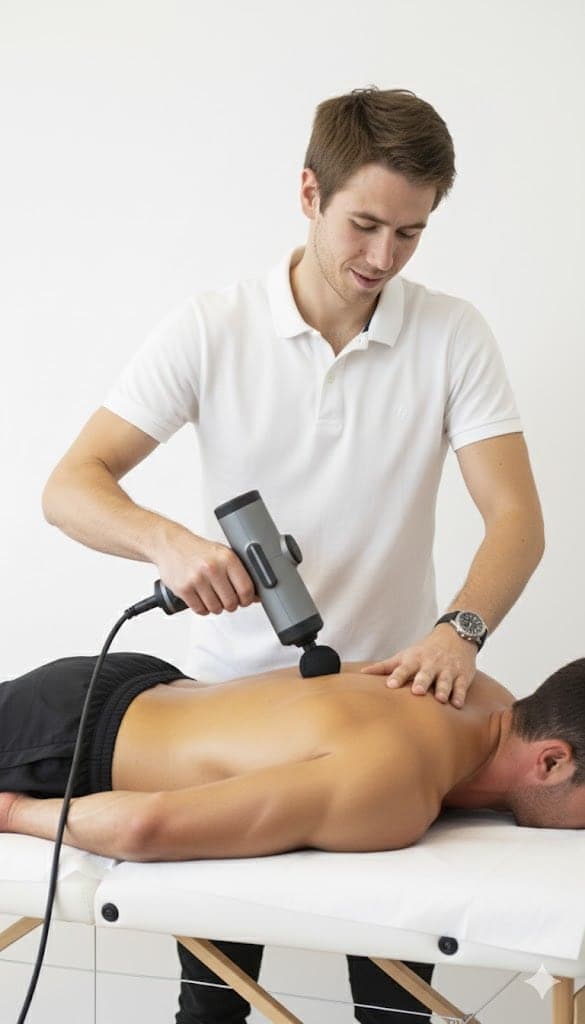
Written by
Chris
Massage therapist, nutrition and exercise physiologist
Norwegian-certified with a Bachelor’s in Physical Education and Nutrition and over ten years of clinical practice, working from a portable table in clients’ homes across the Paphos district.
This article is general information, not a medical diagnosis. If you have severe, worsening or unexplained pain, numbness, weakness, or pain after an accident, see a doctor first.