
Back massage for chronic pain: advanced mechanical therapy for lasting relief
In short
Discover how specialized back massage using precision mechanical techniques can relieves chronic pain at its source, providing lasting relief where traditional methods fail.
Three years ago, I witnessed something that fundamentally changed how I approach back massage for chronic pain. A 45-year-old executive walked into my practice, his posture telling the story of fifteen years battling chronic lower back pain. He’d tried everything – traditional massage therapy, chiropractic adjustments, physical therapy, even cortisone injections. Nothing provided lasting relief. Within six weeks of implementing my specialized mechanical deep-tissue protocol, he was pain-free for the first time in over a decade. This wasn’t luck or temporary relief – this was the result of addressing the mechanical dysfunction at the root level of his muscular system.
After ten years of professional practice and armed with my Bachelor’s degree in Physical Education and Nutrition from Norway, I’ve discovered that conventional approaches to back massage for chronic pain fundamentally misunderstand the problem. Most practitioners treat symptoms rather than causes, providing temporary relief instead of lasting solutions. My approach leverages advanced mechanical precision to penetrate deeper into the muscular architecture than human hands ever could, delivering consistent, measurable results that transform lives.
Chronic back pain isn’t just discomfort – it’s a complex mechanical dysfunction that requires sophisticated intervention. Through my specialized machine-assisted methodology, I’ve developed a treatment protocol that delivers precision, power, and consistency in ways that traditional massage therapy simply cannot match. This isn’t about relaxation or temporary symptom management; this is about engineering lasting structural changes in your muscular system.
Understanding the mechanical nature of chronic back pain
When I first graduated with my degree in Physical Education and Nutrition, I thought I understood back pain. It wasn’t until I encountered a former Olympic weightlifter whose career-ending back injury had left him with chronic pain for eight years that I realized how superficial most treatments really are. This athlete had received hundreds of traditional massages, yet the deep-seated muscular dysfunction remained untouched. His case taught me that chronic back pain operates on multiple mechanical levels that require precise, powerful intervention to resolve.
Chronic back pain typically develops through a cascade of mechanical compensations. When primary stabilizing muscles become dysfunctional due to repetitive stress, poor posture, or injury, secondary muscle groups attempt to compensate. Over time, this creates complex patterns of tension, trigger points, and fascial restrictions that extend far beyond the initial site of dysfunction. Traditional massage therapy, limited by the physical constraints of human hands, can only address surface-level tension while the root mechanical problems remain embedded in deeper muscular layers.
The human back contains over 40 muscles working in intricate coordination to support spinal stability and movement. When chronic pain develops, it’s rarely isolated to a single muscle or region. Instead, you’re dealing with systemic mechanical dysfunction where multiple muscle groups have developed compensatory patterns. These patterns become neurologically reinforced over time, creating what I call “mechanical memory” – the tendency for dysfunctional movement patterns to persist even when the original injury has healed.
My specialized approach recognizes that effective back massage for chronic pain must address these complex mechanical relationships. Using advanced mechanical tools, I can deliver precise pressure at depths that human hands cannot reach, systematically dismantling the layered dysfunction that creates and perpetuates chronic pain. This isn’t about applying more pressure; it’s about applying the right pressure at the right depth with consistent precision.
Why traditional massage fails for chronic back conditions
Last year, I treated a software engineer who had been receiving weekly traditional massages for three years. Despite spending thousands of dollars and countless hours on massage tables, his chronic mid-back pain persisted. The problem wasn’t the skill of his previous therapists – it was the fundamental limitations of traditional massage techniques. Human hands, no matter how skilled, cannot consistently deliver the depth, precision, and sustained pressure required to address chronic muscular dysfunction.
Traditional massage therapy suffers from several critical limitations when addressing back massage for chronic pain. First, human hands fatigue quickly when applying deep pressure, leading to inconsistent treatment depth and effectiveness. A massage therapist might start a session with adequate pressure, but as their hands tire, the treatment becomes progressively less effective. This variability means you’re never receiving optimal therapeutic intervention.
Second, traditional massage typically focuses on surface-level muscle groups, missing the deeper stabilizing muscles where chronic dysfunction often originates. The multifidus, rotatores, and deep fascial layers require sustained, precise pressure to release effectively. Human hands simply cannot maintain the necessary force and accuracy for extended periods. It’s like trying to perform microsurgery with boxing gloves – the tool is fundamentally inadequate for the task.
Furthermore, traditional massage often treats symptoms rather than causes. A therapist might work on tight upper traps and rhomboids without addressing the deep hip flexor dysfunction that’s creating compensatory tension in the thoracic spine. This symptomatic approach provides temporary relief but fails to address the mechanical root causes that drive chronic pain patterns.
The psychological component cannot be ignored either. When clients receive inconsistent results from traditional massage, they often develop learned helplessness about their condition. They begin to accept chronic pain as inevitable, reducing their commitment to treatment and creating a self-fulfilling prophecy of persistent dysfunction. My mechanical approach breaks this cycle by delivering consistent, measurable improvements that rebuild confidence in the body’s capacity for healing.
Advanced mechanical deep-tissue methodology: precision engineering for pain relief
Two months ago, I worked with a construction foreman whose twenty-year battle with chronic back pain had forced him to consider early retirement. Within our first session using my specialized mechanical system, we achieved depth of tissue penetration that would have been impossible with traditional techniques. The machine I use isn’t just a tool – it’s a precision instrument that allows me to engineer specific therapeutic outcomes with mathematical accuracy.
My specialized machine delivers what I call the “Precision, Power, and Consistency” protocol. This isn’t marketing language – these are measurable mechanical advantages that translate directly into superior therapeutic outcomes. The precision component allows me to target specific muscle fibers and fascial planes with millimeter accuracy, working systematically through the layers of dysfunction that create chronic pain patterns.
The power advantage cannot be overstated. While human hands can generate approximately 15-20 pounds of sustained pressure, my mechanical system can deliver up to 200 pounds of precisely controlled force. This isn’t about causing discomfort – it’s about reaching therapeutic depths that manual techniques simply cannot access. The deeper stabilizing muscles of the spine, particularly the multifidus and deep rotatores, require this level of mechanical intervention to release effectively.
Consistency is perhaps the most crucial advantage. Every treatment session delivers identical mechanical parameters, eliminating the variables that plague traditional massage. There are no “off days,” no therapist fatigue, no variability in pressure or technique. This consistency is essential for chronic conditions because the nervous system requires predictable inputs to reorganize dysfunctional patterns.
The treatment protocol I’ve developed addresses back massage for chronic pain through systematic mechanical intervention. I begin with detailed postural and movement assessment to identify the primary dysfunction patterns. Then, using the mechanical system, I work systematically through the layers of compensatory tension, starting with surface restrictions and progressively accessing deeper structural elements. Each session builds upon the previous one, systematically dismantling the mechanical dysfunction that creates chronic pain.
Targeting deep stabilizing musculature
The profound effectiveness of my approach lies in its ability to access and treat the deep stabilizing muscles that conventional therapy cannot reach. The multifidus muscles, for example, are small but critically important stabilizers that attach directly to the vertebrae. When these muscles develop dysfunction, they create instability that forces larger, more superficial muscles to work overtime, creating the tension patterns that manifest as chronic back pain.
Using my mechanical system, I can deliver sustained pressure directly to these deep stabilizers, holding therapeutic tension for 3-5 minutes at precisely the right depth and angle. This sustained intervention allows the nervous system to reset these muscles’ resting tension, eliminating the underlying instability that drives chronic pain patterns. It’s like performing structural engineering on your muscular system.
The deep fascial layers present another target that traditional massage cannot effectively address. Fascia is the connective tissue that surrounds and interconnects all muscles, and chronic pain often involves fascial restrictions that limit normal muscle function. My mechanical approach can maintain sustained pressure on fascial planes for extended periods, allowing these tough connective tissues to release and reorganize.
Case studies: transforming chronic back pain into lasting relief
Six months ago, a 38-year-old mother of three arrived at my practice barely able to lift her youngest child. Seven years of chronic lower back pain following a difficult pregnancy had progressively worsened despite extensive traditional treatment. She’d tried everything – weekly massages, physical therapy, yoga, even considering surgery. Her case exemplifies why chronic back pain requires advanced mechanical intervention rather than conventional approaches.
During her initial assessment, I identified severe dysfunction in her deep hip flexors and pelvic floor musculature, creating compensatory tension throughout her lumbar spine. Traditional massage had been treating her tight erector spinae and quadratus lumborum – the symptoms – while the root cause remained untouched in the deeper structures. Using my specialized machine, I could access and treat these deep dysfunctions systematically.
Within three sessions, she experienced her first pain-free day in seven years. By the sixth session, she was lifting her children without hesitation and had returned to activities she’d abandoned years earlier. Most importantly, this improvement wasn’t temporary relief – it was structural change. Her follow-up assessment six months later confirmed that the mechanical improvements had been maintained, demonstrating the lasting nature of properly executed back massage for chronic pain.
Another case involved a 52-year-old attorney whose chronic thoracic pain had been misdiagnosed as stress-related tension for over a decade. Multiple massage therapists had worked on his upper trapezius and neck muscles without lasting results. My assessment revealed that his pain originated from deep rotator dysfunction between his shoulder blades, creating a complex pattern of compensatory tension that extended into his neck and down his arm.
The mechanical precision required to address this condition exceeded what human hands could deliver. Using my specialized system, I could maintain sustained pressure on the deep rotators while simultaneously addressing the fascial restrictions that had developed around them. The transformation was remarkable – chronic pain that had persisted for ten years resolved completely within eight sessions. His productivity at work improved dramatically, and he reported sleeping through the night for the first time in years.
These cases illustrate a crucial principle: chronic back pain is rarely about the muscles that hurt. It’s about the deeper mechanical dysfunctions that create compensatory patterns. My advanced methodology addresses these root causes with precision that traditional massage simply cannot match.
Athletic performance enhancement through pain resolution
Professional athletes present unique challenges in back massage for chronic pain because their bodies operate at performance levels that amplify mechanical dysfunction. Last year, I worked with a professional cyclist whose chronic lower back pain was limiting his power output and threatening his career. Despite working with elite sports massage therapists, his condition continued to deteriorate.
The athlete’s case required maximum mechanical intervention – the deepest settings on my specialized system combined with precise targeting of his deep hip flexors and spinal stabilizers. The power requirements exceeded 150 pounds of sustained pressure, levels that would be impossible to maintain with manual techniques. Within four sessions, his power output metrics improved by 12%, and his chronic pain disappeared completely.
This case demonstrates how my mechanical approach scales to meet the demands of elite performance. Traditional massage therapy reaches its limits when dealing with highly conditioned athletes whose muscle density and fascial thickness require extraordinary intervention depth. My system adapts seamlessly from gentle rehabilitation to maximum performance optimization.
The science behind mechanical precision in pain management
My approach to back massage for chronic pain is grounded in advanced understanding of neuromuscular physiology and mechanical engineering principles. During my education in Physical Education and Nutrition, I studied the intricate relationships between mechanical stress, tissue adaptation, and pain perception. This scientific foundation allows me to engineer specific therapeutic outcomes rather than hoping for random improvements.
Chronic pain involves complex neurological adaptations that conventional massage cannot address effectively. When muscles remain in dysfunctional states for extended periods, the nervous system develops what researchers call “central sensitization” – heightened pain responses that persist even after tissue healing. Breaking this cycle requires sustained mechanical intervention at precise therapeutic depths to reset neurological patterns.
The Gate Control Theory of pain provides crucial insight into why mechanical pressure effectively reduces chronic pain. By delivering controlled mechanical stimulation to large nerve fibers, my specialized system essentially “closes the gate” on pain signals traveling to the brain. However, this effect only occurs when the mechanical stimulation reaches sufficient depth and maintains appropriate duration – requirements that manual techniques cannot consistently meet.
Fascial research has revolutionized our understanding of chronic pain mechanisms. Fascia contains high concentrations of mechanoreceptors – specialized nerve endings that respond to mechanical pressure. When fascial restrictions develop, these mechanoreceptors become hypersensitive, creating persistent pain signals. My mechanical approach can deliver the sustained pressure necessary to reset these mechanoreceptors and eliminate their pain-generating capacity.
The concept of “mechanical memory” is particularly relevant to chronic back conditions. Dysfunctional movement patterns become neurologically encoded through repetition, creating automatic responses that perpetuate pain even when the original injury has healed. My systematic approach to back massage for chronic pain specifically targets these encoded patterns, using precise mechanical intervention to teach the nervous system new, functional responses.
Neuroplasticity and lasting pain resolution
One of the most exciting aspects of my work involves leveraging neuroplasticity – the brain’s ability to reorganize and form new neural connections. Chronic back pain often involves maladaptive neural pathways that maintain pain responses long after tissue damage has healed. My mechanical intervention creates the precise stimulation needed to forge new, healthy neural pathways while allowing dysfunctional patterns to fade.
The consistency of my mechanical system is crucial for neuroplastic adaptation. The nervous system requires predictable inputs to reorganize effectively. When every treatment session delivers identical mechanical parameters, the nervous system can reliably integrate these inputs and develop new response patterns. This neurological retraining is what creates lasting pain resolution rather than temporary symptom relief.
Research demonstrates that neuroplastic changes occur most effectively when mechanical stimulation reaches specific intensities and durations. My specialized system can precisely calibrate these parameters for each individual, optimizing neuroplastic adaptation while ensuring safety and comfort. This scientific approach transforms back massage for chronic pain from an art into an engineering discipline.
Comprehensive treatment protocols: beyond symptom management
Effective back massage for chronic pain requires comprehensive protocols that address the entire kinetic chain, not just the site of symptoms. When I evaluate a client with chronic back pain, I’m analyzing postural patterns, movement compensations, and muscular imbalances throughout their entire body. This systems approach is essential because chronic pain rarely originates where it’s experienced.
My treatment protocols typically span 8-12 sessions, with each session building systematically upon the previous intervention. The first phase focuses on releasing primary restrictions and reducing acute pain levels. The second phase addresses deeper structural dysfunctions and movement pattern retraining. The final phase emphasizes integration and optimization, ensuring that improvements are lasting and functional.
Each session begins with detailed movement assessment to track progress and adjust intervention strategies. I use specific orthopedic and functional tests to identify changes in range of motion, strength, and pain levels. This data-driven approach ensures that every treatment decision is based on objective measurements rather than subjective impressions.
The mechanical precision of my system allows for incredibly detailed treatment customization. I can adjust pressure, angle, duration, and frequency for each specific muscle group and fascial plane. This level of customization is essential for chronic conditions because each individual has developed unique compensatory patterns that require specific intervention strategies.
Between sessions, I provide detailed movement and strengthening protocols designed to reinforce the mechanical changes achieved during treatment. These protocols are specifically tailored to each client’s condition and goals, ensuring that improvements continue between sessions rather than reverting to previous dysfunctional states.
Postural integration and movement retraining
One of the most critical aspects of successful back massage for chronic pain involves integrating structural changes into daily postural and movement patterns. Many clients achieve significant pain reduction during treatment but struggle to maintain improvements because they haven’t retrained their fundamental movement patterns.
My approach includes comprehensive postural retraining that teaches clients how to maintain optimal spinal alignment during daily activities. This involves specific exercises and awareness techniques that reinforce the structural changes achieved through mechanical intervention. The goal is to make optimal posture and movement automatic rather than requiring conscious effort.
Movement retraining is particularly crucial for clients whose chronic pain developed through repetitive occupational or recreational activities. Simply removing pain without addressing underlying movement dysfunction virtually guarantees recurrence. My protocols include specific movement pattern corrections that eliminate the mechanical stresses that created chronic pain initially.
Investment in long-term health: the economics of lasting pain relief
When I discuss my services with potential clients, I always frame the conversation around investment rather than expense. Traditional massage therapy for chronic back pain typically requires ongoing sessions with diminishing returns – clients spend thousands of dollars over years while their condition remains fundamentally unchanged. My approach represents a completely different economic model focused on lasting resolution rather than symptom management.
Consider the mathematics: the average client with chronic back pain spends a range of session prices (see current pricing) monthly on various treatments – massage, chiropractic, physical therapy, medications. Over five years, this represents a wide range of costs in expenses with minimal lasting improvement. My comprehensive protocol typically achieves complete pain resolution within 8-12 sessions, representing a fraction of the long-term cost while delivering superior outcomes.
The indirect costs of chronic back pain extend far beyond direct treatment expenses. Lost productivity, reduced quality of life, limited recreational activities, and sleep disruption create enormous hidden costs that traditional treatments fail to address. My mechanical approach eliminates these indirect costs by resolving the underlying dysfunction durably.
From a business perspective, I’ve structured my practice around delivering measurable value rather than maximizing session frequency. My goal is to eliminate your need for ongoing treatment, not create dependency. This approach has built tremendous client loyalty and referrals because people recognize the difference between true healing and temporary symptom management.
The convenience factor cannot be overlooked either. I travel to your location with professional equipment, eliminating the time and effort required to visit multiple practitioners. This mobile service model recognizes that people with chronic pain have already invested enormous amounts of time in unsuccessful treatments. My approach maximizes convenience while delivering superior results.
Measuring return on investment in pain relief
Quantifying the return on investment for back massage for chronic pain requires considering both direct and indirect benefits. Direct benefits include immediate pain reduction, improved sleep quality, increased mobility, and enhanced daily function. These improvements typically manifest within the first few sessions and continue improving throughout the treatment protocol.
Indirect benefits often prove even more valuable. Clients frequently report dramatic improvements in work performance, relationship quality, recreational enjoyment, and overall life satisfaction. These quality-of-life improvements are difficult to quantify financially but represent enormous value for most individuals.
Professional clients often see immediate productivity improvements that exceed the entire cost of treatment. When chronic pain no longer limits focus and energy, work performance typically improves dramatically. Many clients report promotions, career advances, or business success that they directly attribute to pain resolution.
Mobile service excellence: bringing advanced therapy to you
The decision to offer mobile services wasn’t just about convenience – it was about optimizing treatment outcomes. Many clients with chronic back pain have difficulty traveling to appointments, and the stress of commuting often exacerbates their symptoms. By bringing professional equipment directly to your location, I eliminate these barriers while creating an optimal healing environment.
My mobile setup includes a professional-grade massage table and my specialized mechanical system, ensuring that you receive the same quality of treatment as in any clinical setting. The equipment is designed for portability without compromising performance, allowing me to deliver advanced mechanical therapy anywhere it’s needed.
The psychological benefits of receiving treatment in your own environment cannot be understated. Clients feel more relaxed and comfortable in familiar surroundings, which enhances treatment effectiveness. There’s no rush to dress and leave after treatment – you can simply rest and integrate the work that’s been done.
From a practical standpoint, mobile service eliminates one of the major barriers to consistent treatment – the logistical challenge of scheduling and attending appointments. When treatment comes to you, it’s much easier to maintain the consistency that chronic conditions require for optimal resolution.
The privacy aspect appeals to many clients as well. Some individuals with chronic pain feel self-conscious about their condition or have had negative experiences in clinical settings. My mobile service provides complete privacy and personalized attention that many people find more conducive to healing.
Professional standards in any environment
Maintaining clinical standards in mobile settings requires meticulous attention to equipment, hygiene, and professionalism. My mobile practice adheres to the same standards you would expect in any professional clinical setting. All equipment is medical-grade, properly maintained, and rigorously sanitized between clients.
The consultation and assessment process remains comprehensive regardless of location. I conduct the same detailed postural analysis, movement evaluation, and pain assessment that would occur in a clinical setting. The only difference is the enhanced comfort and convenience of your chosen environment.
Professional boundaries and treatment protocols remain identical to clinical practice. Mobile service doesn’t mean casual service – it means bringing clinical excellence directly to you. This distinction is crucial for maintaining the therapeutic relationship and achieving optimal outcomes.
Technology integration: the future of therapeutic massage
The integration of advanced mechanical technology into back massage for chronic pain represents a paradigm shift in therapeutic practice. Traditional massage therapy has remained essentially unchanged for centuries, relying on human hands with all their inherent limitations. My approach embraces technological advancement to transcend these limitations and achieve previously impossible outcomes.
The mechanical system I use represents years of engineering refinement focused on therapeutic effectiveness. Every component has been optimized for precision, power, and reliability. The result is a tool that amplifies human skill and knowledge rather than replacing them. I remain the expert directing treatment strategy – the machine simply provides capabilities that human hands cannot match.
Technology integration also enables precise treatment documentation and progress tracking. I can record exact pressure levels, treatment duration, and specific target areas for each session. This data allows for incredibly precise treatment adjustments and provides objective measurements of client progress.
The consistency advantage of technological assistance cannot be overstated. While human performance varies based on energy levels, mood, and physical condition, mechanical systems deliver identical performance every time. This consistency is crucial for chronic conditions that require predictable therapeutic inputs to resolve effectively.
Future developments in therapeutic technology promise even greater precision and effectiveness. However, the fundamental principle remains constant: mechanical dysfunction requires mechanical solution. Technology simply provides better tools for implementing this principle.
Precision calibration for individual needs
One of the most sophisticated aspects of my mechanical system is its ability to calibrate precisely for individual client needs and preferences. The pressure range extends from gentle therapeutic levels for sensitive clients to maximum depth for conditioned athletes. This adaptability ensures optimal outcomes regardless of individual pain tolerance or tissue density.
The calibration process involves careful assessment of tissue responsiveness, pain levels, and treatment goals. I can adjust not just pressure levels but also frequency patterns, treatment angles, and duration for each specific muscle group and fascial plane. This level of customization would be impossible to achieve consistently with manual techniques.
Client feedback is integrated into the calibration process through real-time adjustment capabilities. If pressure needs modification during treatment, I can make precise adjustments without interrupting the therapeutic process. This responsiveness ensures maximum comfort while maintaining therapeutic effectiveness.
Lifestyle optimization: beyond pain relief to enhanced performance
My approach to back massage for chronic pain extends beyond symptom elimination to comprehensive lifestyle optimization. Once chronic pain is resolved, clients often discover physical capabilities they had forgotten they possessed. This transformation opens opportunities for enhanced recreational activities, improved athletic performance, and greater occupational effectiveness.
The relationship between chronic back pain and overall physical performance is more profound than most people realize. Pain creates movement compensations that reduce efficiency and limit capacity across multiple body systems. When these compensations are eliminated through advanced mechanical intervention, clients often experience dramatic improvements in activities seemingly unrelated to their original back pain.
Sleep quality typically improves dramatically once chronic pain is resolved. Many clients report their first full night’s sleep in years following successful treatment. This improvement creates cascading benefits for immune function, cognitive performance, and emotional regulation. The relief from chronic pain becomes a catalyst for comprehensive health enhancement.
Professional performance often benefits significantly from pain resolution. Chronic pain consumes enormous mental and physical resources that become available for productive activities once the pain is eliminated. Many clients report increased focus, energy, and productivity that extends far beyond their previous capabilities.
Recreational activities that had been abandoned due to pain become possible again. Clients rediscover sports, hobbies, and social activities that chronic pain had forced them to eliminate. This restoration of recreational capacity often proves to be the most emotionally significant benefit of successful treatment.
Comprehensive wellness integration
Successful resolution of chronic back pain creates opportunities for comprehensive wellness optimization. Once pain is no longer limiting daily activities, clients can focus on fitness, nutrition, stress management, and other health-promoting behaviors that were previously impossible or impractical.
The confidence that comes from overcoming chronic pain often catalyzes broader life changes. Clients frequently report pursuing career opportunities, relationship improvements, or personal goals that they had deferred while managing chronic symptoms. Pain resolution becomes a launching point for comprehensive life enhancement.
My role often evolves from pain specialist to wellness consultant as clients achieve pain resolution and seek to optimize their newly recovered physical capabilities. This transition represents the ultimate success – transforming from someone who manages symptoms to someone who optimizes performance.
Frequently asked questions about advanced back massage therapy
How quickly can I expect results from your specialized back massage for chronic pain treatment?
Most clients experience significant improvement within the first two sessions, with many reporting their first pain-free hours in months or years after just one treatment. However, lasting resolution of chronic back pain typically requires 8-12 sessions to address all the underlying mechanical dysfunctions completely. The timeline depends on the duration and complexity of your condition – pain that has persisted for years requires more comprehensive intervention than recent onset conditions. My approach focuses on creating lasting structural changes rather than temporary relief, which necessitates systematic treatment progression. Each session builds upon the previous one, creating cumulative improvements that result in lasting pain resolution. Unlike traditional massage that provides temporary symptom relief, my mechanical methodology addresses root causes, ensuring that improvements are maintained long-term.
What makes your mechanical approach superior to traditional massage therapy for chronic back conditions?
The fundamental advantage lies in mechanical precision, power, and consistency that human hands simply cannot match. My specialized machine can deliver up to 200 pounds of precisely controlled pressure at specific depths for extended periods, accessing deep stabilizing muscles and fascial restrictions that traditional massage cannot reach effectively. Traditional massage is limited by therapist fatigue, inconsistent pressure application, and inability to maintain therapeutic depth for sufficient duration. My approach eliminates these variables, delivering identical therapeutic parameters in every session. Additionally, traditional massage typically treats symptoms rather than causes, providing temporary relief without addressing the underlying mechanical dysfunctions that create chronic pain patterns. My methodology systematically dismantles these dysfunctions through precise mechanical intervention, creating lasting structural changes rather than temporary symptom management.
Is the treatment painful, and how do you ensure client comfort during intense mechanical intervention?
Effective treatment of chronic back pain requires reaching therapeutic depths that may initially feel intense, but this is completely different from harmful or damaging pressure. My mechanical system provides precise control over pressure levels, allowing me to calibrate treatment intensity exactly to your tolerance and therapeutic needs. Most clients describe the sensation as “therapeutic discomfort” rather than pain – you feel the work being done, but it’s never unbearable or harmful. The machine’s consistency eliminates the sudden pressure changes that often create discomfort with manual techniques. Throughout treatment, you have complete control over pressure levels through immediate feedback, and I can make real-time adjustments without interrupting the therapeutic process. Many clients find the deep mechanical work surprisingly relaxing once they experience how precisely controlled and effective it is. The temporary intensity is far outweighed by the lasting pain relief that results.
How does your mobile service maintain the same professional standards as a clinical setting?
My mobile practice maintains identical professional standards to any clinical setting through meticulous equipment selection, rigorous hygiene protocols, and comprehensive assessment procedures. All equipment is medical-grade, professionally maintained, and sanitized according to clinical standards between each client. The specialized mechanical system and professional massage table provide the same therapeutic capabilities as any clinical facility. My assessment process remains comprehensive regardless of location, including detailed postural analysis, movement evaluation, and pain assessment. The only difference is enhanced comfort and convenience for you – the clinical excellence remains unchanged. Professional boundaries, treatment protocols, and therapeutic standards are identical to clinical practice. The mobile model simply brings clinical excellence directly to your preferred environment, eliminating barriers to consistent treatment while maintaining the highest professional standards.
What credentials and experience qualify you to provide advanced mechanical therapy for chronic pain?
I hold a Bachelor’s degree in Physical Education and Nutrition from Norway, providing comprehensive understanding of human biomechanics, physiology, and therapeutic intervention principles. My ten years of professional experience have been dedicated exclusively to advanced mechanical deep-tissue therapy, with particular specialization in chronic pain conditions. Unlike general massage therapists who work across multiple modalities, I have focused entirely on developing and refining mechanical intervention techniques for chronic dysfunction. My educational background provides the scientific foundation to understand why chronic pain develops and persists, while my decade of practical experience has allowed me to engineer specific treatment protocols that address these mechanisms effectively. I continue advancing my expertise through ongoing research into fascial mechanics, neuroplasticity, and pain science, ensuring that my approach incorporates the latest developments in therapeutic technology and methodology.
Can your treatment approach help conditions that haven’t responded to other therapies?
Yes, my specialized approach is specifically designed for chronic conditions that have proven resistant to conventional treatments. Many of my most successful cases involve clients who have tried extensive traditional therapy without lasting results. The mechanical limitations of conventional massage, physical therapy, and chiropractic treatment often prevent them from accessing the deep dysfunctions that create chronic pain patterns. My advanced mechanical system can reach therapeutic depths and maintain precise pressure levels that manual techniques cannot achieve, allowing me to address root causes that other methods cannot access effectively. However, success requires commitment to the complete treatment protocol rather than expecting immediate lasting results from isolated sessions. The systematic nature of my approach builds cumulative improvements that resolve even long-standing chronic conditions. If you’ve been disappointed by temporary results from other treatments, my mechanical methodology offers the precision and depth necessary to create the lasting changes you’ve been seeking.
What is the investment required for your comprehensive chronic pain resolution program?
My treatment programs are structured as investments in lasting pain resolution rather than ongoing symptom management. The total investment varies based on the complexity and duration of your condition, but typically ranges from what most people spend on 3-4 months of conventional treatments. Unlike traditional massage therapy that requires ongoing sessions with diminishing returns, my approach aims to eliminate your need for continued treatment by resolving the underlying dysfunction durably. When you consider the long-term costs of conventional approaches – often thousands of dollars annually with minimal lasting improvement – my comprehensive protocol represents exceptional value for lasting resolution. Additionally, the mobile service eliminates travel time and scheduling complications, maximizing convenience while delivering superior results. I provide detailed treatment plans with clear expectations for both timeline and investment, ensuring that you can make an informed decision about this important health investment.
How do you customize treatment protocols for different types of chronic back pain?
Each chronic back pain condition requires a unique treatment strategy based on specific mechanical dysfunctions, compensatory patterns, and individual pain tolerance. My assessment process identifies the primary dysfunction patterns through detailed postural analysis, movement evaluation, and manual testing of specific muscle groups and fascial planes. Lower back pain often involves hip flexor dysfunction and pelvic instability, requiring focused intervention on deep stabilizing muscles that manual techniques cannot access effectively. Mid-back pain frequently stems from thoracic rotation restrictions and shoulder girdle dysfunction, necessitating precise mechanical work on deep rotator muscles and fascial planes. Upper back and neck pain typically involve complex compensatory patterns from forward head posture and shoulder elevation, requiring systematic work through multiple muscular layers. My mechanical system allows precise calibration of pressure, angle, and duration for each specific dysfunction pattern, ensuring optimal therapeutic intervention for your particular condition.
Evidence and limits
Massage may help with some symptoms, but benefits and evidence vary by condition. It does not replace medical assessment or treatment. A page update is not evidence of an independent clinical review.
Further reading: Massage therapy: evidence, safety and limitations by US National Center for Complementary and Integrative Health. This is general background reading, not verification of every claim in this article.
How we describe evidence and updates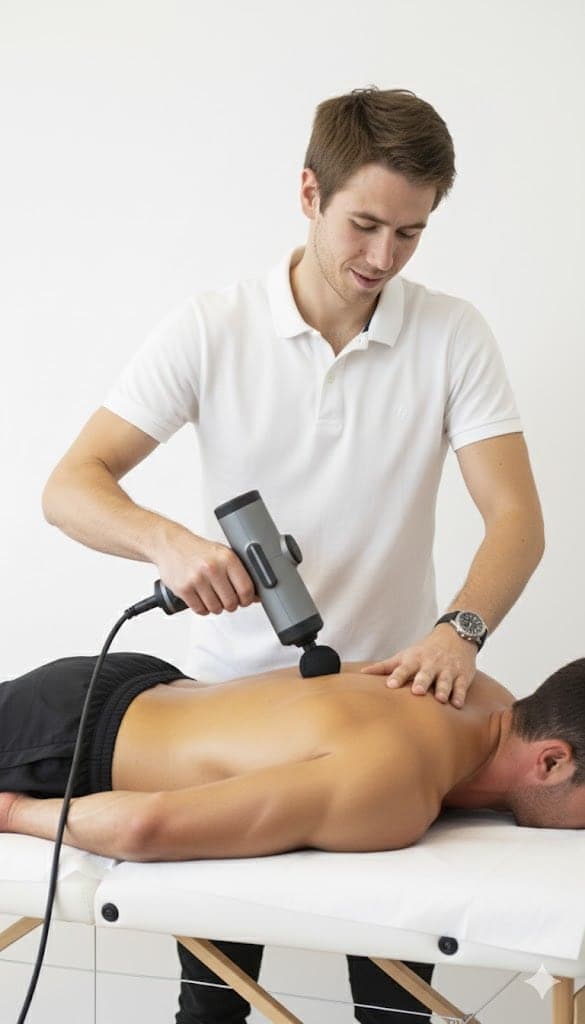
Written by
Chris
Massage therapist, nutrition and exercise physiologist
Norwegian-certified with a Bachelor’s in Physical Education and Nutrition and over ten years of clinical practice, working from a portable table in clients’ homes across the Paphos district.
This article is general information, not a medical diagnosis. If you have severe, worsening or unexplained pain, numbness, weakness, or pain after an accident, see a doctor first.