Traditional Cypriot Massage: Ancient Techniques Meet Modern Science in Paphos
In short
Discover what makes traditional Cypriot massage unique through the lens of biomechanics and clinical precision. Learn why ancient Mediterranean techniques, when properly applied, deliver measurable results.
After a decade of studying body mechanics and treating clients across Europe, I’ve encountered countless massage traditions. Each culture claims uniqueness, yet most deliver the same superficial relaxation—temporary relief that evaporates within days. Traditional Cypriot massage, however, represents something fundamentally different when you understand its biomechanical principles rather than its romantic narrative.
The island of Cyprus sits at the crossroads of three continents. For millennia, healing practices from Greece, Turkey, Egypt, and the Levant converged here, creating a distinct therapeutic approach. But here’s what most practitioners miss: the value isn’t in preserving ancient rituals for their own sake. The value lies in identifying which elements deliver measurable, repeatable results—and which are simply cultural theater.
I established my practice in Paphos precisely because this city embodies that intersection between tradition and evidence-based methodology. My background in Physical Education and Nutrition from Norway taught me to question everything. When someone claims their technique is “traditional” or “ancient,” I ask: does it address the actual mechanical dysfunction causing your pain? Or does it merely provide a pleasant sensory experience that changes nothing about your underlying condition?
What Actually Defines Traditional Cypriot Massage
Most articles will tell you that traditional Cypriot massage involves olive oil, circular movements, and perhaps some herbal preparations. That’s descriptive, but it’s not explanatory. After working with hundreds of clients in Cyprus, I’ve identified three biomechanical principles that distinguish authentic Cypriot therapeutic work from generic spa treatments:
Deep Fascial Manipulation: Traditional practitioners understood something that Western massage therapy only “discovered” in recent decades—that pain originates in fascial restrictions, not muscle tissue alone. The Cypriot approach targets these connective tissue layers with sustained, directional pressure that reorganizes collagen fibers. Modern sports medicine now confirms what Mediterranean healers practiced intuitively: you must address fascial adhesions to achieve lasting change.
Lymphatic Drainage Through Compression: The characteristic “pumping” motions in Cypriot massage aren’t decorative. They’re a systematic approach to moving interstitial fluid out of inflamed tissue. When I examine a client’s movement patterns, I’m identifying areas where lymphatic congestion contributes to pain and restricted range of motion. The traditional technique, when applied with anatomical precision, accelerates this drainage measurably.
Joint Mobilization Within Soft Tissue Work: Here’s where traditional Cypriot massage diverges from Swedish or Thai approaches. The practitioner doesn’t treat muscles in isolation. Instead, they manipulate soft tissue while simultaneously moving the joint through its range of motion. This combined approach addresses both the contractile elements and the joint mechanics simultaneously—which is exactly what modern manual therapy research tells us produces superior outcomes.
These aren’t mystical concepts. They’re biomechanical interventions that either work or don’t, depending on the practitioner’s anatomical knowledge and technical precision.
Why Most “Traditional” Massage in Paphos Fails to Deliver
I need to be direct about something uncomfortable: the majority of establishments offering “traditional Cypriot massage” in Paphos are performing choreographed relaxation routines, not therapeutic interventions. They’ve preserved the aesthetic of tradition—the oils, the setting, the sequence of movements—while abandoning the clinical precision that made the original techniques effective.
Here’s a story that illustrates this perfectly: Last month, a British expatriate came to me after spending two years trying various massage therapists in Paphos. She suffered from chronic thoracic outlet syndrome—a condition where neurovascular structures become compressed between the clavicle and first rib. She’d received countless “deep tissue” and “therapeutic” massages, including several claiming to be traditional Cypriot style. None provided more than 24-48 hours of relief.
Within the first ten minutes of assessment, I identified the mechanical problem: her scalene muscles had developed dense fascial adhesions that were literally pulling her first rib superior, compressing everything that passes through that anatomical space. The solution wasn’t gentle olive oil application or circular soothing strokes. It required sustained, precisely angled pressure delivered with consistent intensity for 45-60 seconds per adhesion point, followed by specific joint mobilization to restore proper rib mechanics.
The traditional Cypriot approach, when properly applied, would have addressed this. But proper application requires three things most practitioners lack:
- Anatomical Precision: You must know exactly which structures you’re targeting and why. Not approximately. Exactly.
- Adequate Depth and Consistency: Human hands fatigue. Pressure becomes inconsistent. The deeper you need to work, the more your technique deteriorates throughout the session.
- Objective Assessment: You need measurable markers of improvement—range of motion, pain scale ratings, functional movement patterns—not just asking “how do you feel?”
This is why I developed a different approach entirely.
The Fundamental Limitation of Manual Techniques
I’m going to challenge something most massage therapists won’t admit: human hands, no matter how skilled, have inherent limitations that compromise therapeutic outcomes. This isn’t a criticism of dedication or training. It’s simple physiology.
When I worked exclusively with manual techniques during my first three years of practice, I noticed a consistent pattern. My first client of the day received deeper, more consistent work than my sixth client. By afternoon, no matter how much I focused on proper body mechanics, my pressure became variable. My endurance for sustained compression decreased. The quality of treatment depended partly on my physical state that day—which is unacceptable when clients are investing in lasting results.
Traditional Cypriot massage faces the same constraint. The techniques work when applied with sufficient depth, duration, and precision. But the average therapist’s hands cannot maintain the 40-60 pounds of force required to affect deep fascial layers for the necessary duration without fatiguing. And once fatigue sets in, the technique becomes superficial—you’re moving tissue around without actually reorganizing it.
Why I Transitioned to Mechanical Deep-Tissue Methodology
My education in Norway emphasized evidence-based practice and measurable outcomes. When research clearly demonstrates that manual therapy effectiveness correlates directly with applied force and consistency, yet human physiology limits both factors, the logical solution is mechanical assistance.
I now work exclusively with a specialized percussion device that delivers what I call the three non-negotiables: Precision, Power, and Consistency.
Precision: I can target a fascial adhesion the size of a lentil with exact pressure angle and depth. No approximation. No “working the general area and hoping.” Direct mechanical intervention on the specific structure causing dysfunction.
Power: The device delivers sustained percussion at depths human hands simply cannot reach. When I’m treating an athlete with chronic hamstring tendinopathy, I need to access the musculotendinous junction—which lies beneath multiple tissue layers. Manual pressure disperses across these layers. Mechanical percussion penetrates directly to the target tissue.
Consistency: Every session delivers identical force characteristics. Whether you’re my first client or my eighth, whether I slept well or poorly, whether it’s Monday morning or Friday afternoon—the treatment quality remains constant. This eliminates the single largest variable in manual therapy: practitioner state.
Does this abandon traditional Cypriot principles? Absolutely not. It enhances them. I’m applying the same fascial manipulation, lymphatic drainage, and joint mobilization concepts that made the traditional approach effective. I’ve simply upgraded the delivery mechanism to match what modern biomechanics research tells us actually works.
What to Expect from Results-Driven Treatment in Paphos
Let me describe what happens during a proper therapeutic session—not what it feels like, but what actually occurs in your tissue and why it matters.
Assessment Phase (15-20 minutes): Before I touch you, I’m watching you move. I’m assessing gait mechanics, posture under load, range of motion in specific joints. I’m identifying compensation patterns—the ways your body has adapted around dysfunction. Most clients arrive thinking they know where their problem is. “My lower back hurts.” But when I assess movement, I discover that restricted ankle dorsiflexion is forcing excessive lumbar flexion during normal walking. The back pain is a symptom. The ankle restriction is the cause.
This is standard practice in physiotherapy but surprisingly rare in massage therapy. Traditional practitioners relied on palpation skills to identify restrictions. I combine palpation with functional movement assessment because soft tissue dysfunction always manifests as altered movement patterns.
Treatment Phase (45-60 minutes): I work systematically through the identified dysfunctions. When I address a fascial adhesion, I’m not massaging it. I’m applying sustained pressure at a specific angle for 45-90 seconds—enough time for the viscoelastic properties of fascia to reorganize. You’ll feel this as intense pressure, sometimes approaching your pain threshold. This isn’t for relaxation. This is mechanical tissue reorganization.
The percussion device allows me to maintain this pressure without fatigue, while simultaneously assessing tissue response through my other hand. I can feel when fascia releases—there’s a palpable change in tissue texture and mobility. That’s the objective marker I’m working toward, not some predetermined time or pressure standard.
Reassessment and Homework (10-15 minutes): After treatment, we repeat the movement assessments. I’m quantifying changes: Did hip internal rotation increase by 15 degrees? Can you now reach full overhead flexion without scapular elevation? These measurements tell us whether the intervention worked. If range of motion hasn’t improved measurably, the treatment failed—regardless of how you felt during it.
Then I assign specific movements you’ll perform daily. These aren’t generic stretches. They’re targeted exercises designed to maintain the tissue changes we just created and progressively restore optimal movement patterns. Without this homework, results disappear within days as your body returns to familiar dysfunction.
Why Traditional Settings Often Compromise Clinical Outcomes
Here’s something most wellness centers won’t tell you: the ambient music, dim lighting, and aromatherapy that define traditional massage settings actively interfere with effective treatment.
Those elements exist to promote parasympathetic nervous system activation—the “rest and digest” state. That’s appropriate for relaxation massage. But when I’m performing deep fascial release, I need your nervous system alert and responsive. I need you providing real-time feedback about pressure intensity and pain location. I need you able to move specific joints through range of motion while I’m working the surrounding tissue.
The traditional spa atmosphere creates passive recipients. I need active participants.
This is why I travel to clients’ locations with professional equipment and set up a clinical environment. Not romantic. Not particularly relaxing. But optimized for one thing: measurable improvement in movement quality and pain reduction.
The Investment Framework: What Serious Results Actually Cost
Most massage pricing is based on time: you pay for 60 or 90 minutes of someone’s hands on you. This creates the wrong incentive structure. The therapist maximizes revenue by booking as many hour-long sessions as possible, regardless of whether clients improve or simply return repeatedly for the same issue.
I structure pricing differently because my goal is lasting resolution, not recurring appointments. After initial assessment, I provide a frank evaluation: This will require 4-6 sessions over 6-8 weeks, then maintenance quarterly. Or: Your dysfunction is minor enough that 1-2 sessions plus consistent homework will resolve it.
Some clients never return because they don’t need to. That’s success, not failed business. Others become long-term clients because they’re serious athletes or performers who understand that optimal function requires ongoing maintenance, just like their equipment or their training program.
Here’s the economic reality: A single session with me costs more than a spa massage. But if that session plus homework durably resolves your chronic neck pain, while four months of weekly spa visits would have delivered only temporary relief, which was actually expensive?
I’ve had clients who spent €2,000 over a year on regular massage, achieving nothing lasting. They invest €600 with me over two months and eliminate the problem entirely. The latter feels expensive. The former actually was.
Case Study: From Chronic Pain to Performance Optimization
Three months ago, a professional cyclist came to me during the off-season. He’d developed chronic left-sided low back pain that worsened during high-intensity training. Multiple sports massage therapists had worked on his “tight” lumbar muscles. Chiropractors had adjusted his spine repeatedly. Nothing produced lasting change.
My assessment revealed the actual problem within five minutes: severely restricted left hip internal rotation due to dense fascial adhesions in his deep hip external rotators (primarily piriformis and gemelli). His body compensated for this restriction by increasing lumbar rotation during the pedal stroke—eventually overloading lumbar facet joints on the left side.
No amount of lumbar massage would fix a hip problem. No spinal adjustment would restore hip internal rotation.
I worked three sessions over four weeks, using the mechanical device to systematically release the deep hip rotators—structures that lie 4-6 centimeters below the skin surface, unreachable by even the strongest manual pressure. Between sessions, he performed specific hip mobility drills I assigned.
By week five, his left hip internal rotation had improved from 18 degrees to 42 degrees—nearly matching his right side. His low back pain disappeared completely. More importantly, his functional threshold power on the bike increased by 12 watts because he was no longer bleeding energy through lumbar compensation.
That’s not massage therapy. That’s biomechanical problem-solving that happens to use manual therapy techniques.
Finding Legitimate Traditional Cypriot Massage in Paphos
If you’re determined to experience traditional Cypriot massage specifically, here’s what to look for—and it has nothing to do with marketing language or decorative elements:
| Green Flags (Legitimate Practice) | Red Flags (Tourist Theater) |
|---|---|
| Practitioner asks detailed questions about your pain history, activities, and previous injuries | Session begins immediately without assessment |
| Some techniques produce significant discomfort that you actively participate in managing | Everything feels uniformly pleasant and relaxing |
| Treatment focuses on specific areas of dysfunction, not full-body sequences | Every session follows the identical routine regardless of your condition |
| You receive specific homework exercises and movement cues | No follow-up recommendations beyond “drink water” and “book your next session” |
| Practitioner can explain anatomically why they’re doing what they’re doing | Explanations involve energy, toxins, or vague traditional wisdom |
The reality is that fewer than five practitioners in Paphos meet these criteria for therapeutic traditional Cypriot massage. Most have either never learned the clinical applications or have deliberately abandoned them in favor of more commercially viable relaxation services.
Why Location and Convenience Matter for Serious Treatment
One logistical element that significantly impacts treatment outcomes: where sessions occur. Traditional massage requires you to travel to a clinic or spa, often navigating traffic, finding parking, and adding 60-90 minutes of total commitment time beyond the session itself.
This creates two problems. First, stressed travel immediately before treatment elevates cortisol and creates muscle tension—exactly what we’re trying to address. Second, the logistical hassle makes clients less likely to maintain the 4-6 session protocols necessary for lasting results.
I travel to clients’ locations throughout Paphos with professional equipment—the specialized bench, the mechanical device, and everything needed for proper treatment. This isn’t a luxury service feature. It’s a clinical decision designed to maximize protocol compliance and outcome quality.
When I arrive at your location, you’re already in a familiar, controlled environment. We can work in whatever space is comfortable—many clients prefer their own terrace overlooking the sea, which is obviously impossible in a clinic. After treatment, you don’t immediately return to a stressful commute. You can rest, implement your homework exercises, and allow your nervous system to integrate the changes we just created.
The Integration of Traditional Wisdom and Modern Science
Here’s what I’ve learned after a decade of clinical practice: traditional methods contain valuable biomechanical insights, but they’re not valuable because they’re traditional. They’re valuable when they align with what modern research demonstrates about fascia, motor control, and tissue adaptation.
Traditional Cypriot massage developed these insights empirically—through generations of practitioners observing what actually worked. They didn’t understand the neurophysiology of fascial mechanoreceptors or the biomechanics of myofascial force transmission. But they understood that sustained pressure in specific directions produced lasting changes in movement quality and pain levels.
My role isn’t to preserve tradition for its own sake or to completely abandon it for purely modern approaches. My role is to synthesize: take the biomechanical principles that made traditional techniques effective, enhance them with modern anatomical knowledge and mechanical delivery systems, and apply them within a framework of measurable outcomes and objective assessment.
This is why my practice exists in Paphos rather than Oslo or London. This city, this island, represents that intersection between ancient wisdom and contemporary science. The traditional approach taught practitioners to treat the whole kinetic chain, not isolated symptoms. Modern biomechanics research has confirmed that’s exactly correct—dysfunction in one area invariably affects multiple adjacent and distant structures.
The difference is that I can now measure these relationships precisely, target interventions accurately, and deliver them with consistent force that human hands cannot maintain.
Common Misconceptions About Deep Tissue Work
Before concluding, I need to address several dangerous misconceptions about deep tissue massage—traditional or otherwise—that compromise client outcomes and occasionally cause harm.
Misconception 1: “More pain equals better treatment.” False. Pain indicates nociceptor activation. While some discomfort during fascial release is inevitable, excessive pain causes protective muscle guarding that actually prevents tissue change. I work at the edge of your pain tolerance, not beyond it. That edge varies by individual, by tissue type, and even by session. There’s no virtue in heroically enduring torture.
Misconception 2: “Deep tissue means hard pressure everywhere.” Catastrophically wrong. Depth is relative to the structure you’re targeting. Releasing superficial fascia requires lighter pressure than accessing deep hip rotators. Applying maximum pressure to every area is neither traditional Cypriot technique nor effective modern practice—it’s simply assault.
Misconception 3: “Bruising proves the treatment was thorough.” No. Bruising indicates capillary damage, which is tissue trauma, not therapeutic benefit. Proper technique causes some temporary erythema (redness) from increased blood flow, but not hematomas. If you’re regularly bruising, your practitioner lacks precision.
Misconception 4: “Traditional methods don’t need scientific validation.” This is perhaps the most harmful belief in alternative therapy. Traditional methods deserve scientific investigation precisely because they’ve persisted for generations—that longevity suggests potential effectiveness. But effectiveness must be demonstrated through measurable outcomes, not assumed based on historical use.
Frequently Asked Questions About Traditional Cypriot Massage and Modern Deep-Tissue Treatment
What is the actual history of traditional Cypriot massage?
Traditional Cypriot massage evolved from ancient Greek and Byzantine medical practices, influenced significantly by Ottoman and Middle Eastern techniques during centuries of cultural exchange. The approach emphasized olive oil as a medium (Cyprus being a major olive producer), firm pressure techniques aimed at improving circulation and addressing musculoskeletal complaints, and integration with herbal preparations. However, much of what’s marketed as “ancient Cypriot massage” today is modern recreation based on limited historical documentation. The valuable elements are the biomechanical principles—fascial manipulation, lymphatic drainage, joint mobilization—not the romantic historical narrative.
How is your mechanical approach different from a massage gun I can buy online?
Consumer percussion devices deliver random, unfocused vibration. They’re designed for general muscle relaxation, not specific fascial release. My professional equipment allows precise frequency adjustment (from 20-50 Hz), targeted pressure application through specialized attachments, and sustained compression—not just percussion. More importantly, the device is guided by someone with anatomical expertise who knows exactly which structures to target, at what angle, for what duration, and why. A massage gun in untrained hands is like giving someone a scalpel and expecting them to perform surgery. The tool isn’t the therapy. The knowledge directing the tool is the therapy.
How many sessions does lasting pain relief actually require?
This varies dramatically based on chronicity, severity, and client compliance with homework. Acute issues (present less than 6 weeks) often resolve in 1-3 sessions. Chronic conditions (present 6+ months) typically require 4-8 sessions over 8-12 weeks. Long-standing dysfunctions (years) may need 10-15 sessions plus ongoing maintenance. I provide honest timelines after initial assessment. Anyone promising lasting results from a single session is either treating trivial problems or making claims they cannot deliver. Tissue remodeling follows biological timelines we cannot artificially accelerate.
Can traditional massage techniques address serious orthopedic conditions?
Define “serious.” Can massage treat herniated discs, torn ligaments, or fractures? Obviously not—those require medical intervention. Can properly applied deep-tissue techniques address chronic tendinopathy, fascial restrictions, myofascial pain syndrome, and movement dysfunction? Absolutely, and often more effectively than pharmaceutical intervention. The question isn’t whether massage can treat serious conditions. The question is whether the practitioner has sufficient anatomical knowledge to identify what’s actually causing your problem and technical skill to address it specifically. Most don’t.
Why do you emphasize homework so strongly?
Because tissue changes created during treatment are temporary unless reinforced through daily movement patterns. I can release a fascial adhesion in 60 seconds, but if you immediately return to the same dysfunctional movement pattern that created it, the adhesion will reform within 3-5 days. Homework exercises aren’t supplementary to treatment—they’re essential to treatment. They progressively retrain your nervous system to maintain new movement patterns and prevent dysfunction from recurring. Clients who complete homework achieve lasting results. Clients who don’t typically return monthly for the same issues indefinitely.
Is deep tissue massage safe for everyone?
No. Absolute contraindications include: acute DVT or thrombophlebitis, severe osteoporosis, active cancer with unknown metastasis, uncontrolled hypertension, acute infectious disease, and some medications (particularly anticoagulants). Relative contraindications require modified approach: pregnancy, diabetes with peripheral neuropathy, autoimmune conditions during flare-ups. This is why thorough health history is essential before treatment. Anyone who begins working on you without asking detailed health questions is demonstrating dangerous incompetence.
What’s the difference between what you offer and physiotherapy?
Physiotherapy emphasizes movement re-education, strengthening, and motor control—teaching your nervous system how to move properly. I emphasize tissue quality—ensuring your fascial system allows proper movement in the first place. These are complementary approaches, not competing ones. Many physiotherapy interventions fail because underlying fascial restrictions prevent the movement patterns physios are trying to teach. Conversely, fascial release without motor retraining often provides only temporary relief. Ideally, serious musculoskeletal problems receive both interventions simultaneously.
Can I experience traditional Cypriot massage at a spa resort in Paphos?
You can experience something called “traditional Cypriot massage” at dozens of locations. Whether that experience will address your actual musculoskeletal problems is questionable. Most spa treatments prioritize ambiance and relaxation over therapeutic outcomes. They’re designed for tourists seeking pleasant experiences, not athletes or chronic pain sufferers seeking lasting resolution. If you want relaxation, spa massage is fine. If you want measurable improvement in pain or function, you need a practitioner who prioritizes clinical outcomes over customer satisfaction scores.
The Reality of Lasting Pain Resolution
I’ll conclude with the most important concept in this entire article: lasting pain relief is possible for most musculoskeletal conditions, but it requires three commitments most people are unwilling to make.
First commitment: Accept that effective treatment often involves significant discomfort. Not torture, not injury, but discomfort. Your nervous system will protest when I release fascial adhesions that have existed for months or years. Clients who cannot tolerate this discomfort typically continue suffering indefinitely because they’re seeking a comfortable solution to an inherently uncomfortable problem.
Second commitment: Follow through on homework exercises daily for weeks or months. These aren’t optional. They’re the difference between temporary relief and lasting resolution. The exercises take 10-15 minutes daily. If you cannot commit to that minimal investment, you’re not actually serious about resolving your problem—you’re just seeking temporary relief.
Third commitment: Change the movement patterns or activities that created your dysfunction. If you’re a desk worker with chronic upper trap tension, treatment will help. But if you return to sitting 8 hours daily with protracted shoulders and forward head posture, the dysfunction will return. Lasting results require lasting behavior change.
Traditional Cypriot massage, my mechanical deep-tissue approach, or any other therapeutic method—none work magic. They provide tools and expertise. But lasting change requires your active participation.
I’ve spent ten years refining my approach to deliver the most effective treatment possible. I’ve invested in education, equipment, and methodology that produces measurable results. But I cannot want your improvement more than you do. I cannot do your homework for you. I cannot change your daily habits.
What I can do is identify exactly why you’re experiencing pain or dysfunction, apply precise mechanical interventions that address the actual cause, teach you how to maintain those improvements, and provide honest feedback about whether you’re progressing or wasting both our time.
That’s not traditional massage. That’s not relaxation therapy. That’s biomechanical problem-solving delivered through manual therapy techniques—enhanced by modern equipment, informed by evidence-based practice, and executed with clinical precision.
If that approach interests you, I work throughout Paphos and surrounding areas. I travel to your location with professional equipment. I provide frank assessments, realistic timelines, and measurable outcomes.
But if you’re seeking a pleasant spa experience with ambient music and gentle touch, I’m the wrong practitioner. There are dozens of excellent relaxation therapists in Paphos who will serve you well.
I work with clients who are serious about lasting results and willing to invest the discomfort, time, and behavioral change necessary to achieve them. That’s a smaller market. But it’s the market I serve.
Evidence and limits
Massage may help with some symptoms, but benefits and evidence vary by condition. It does not replace medical assessment or treatment. A page update is not evidence of an independent clinical review.
Further reading: Massage therapy: evidence, safety and limitations by US National Center for Complementary and Integrative Health. This is general background reading, not verification of every claim in this article.
How we describe evidence and updates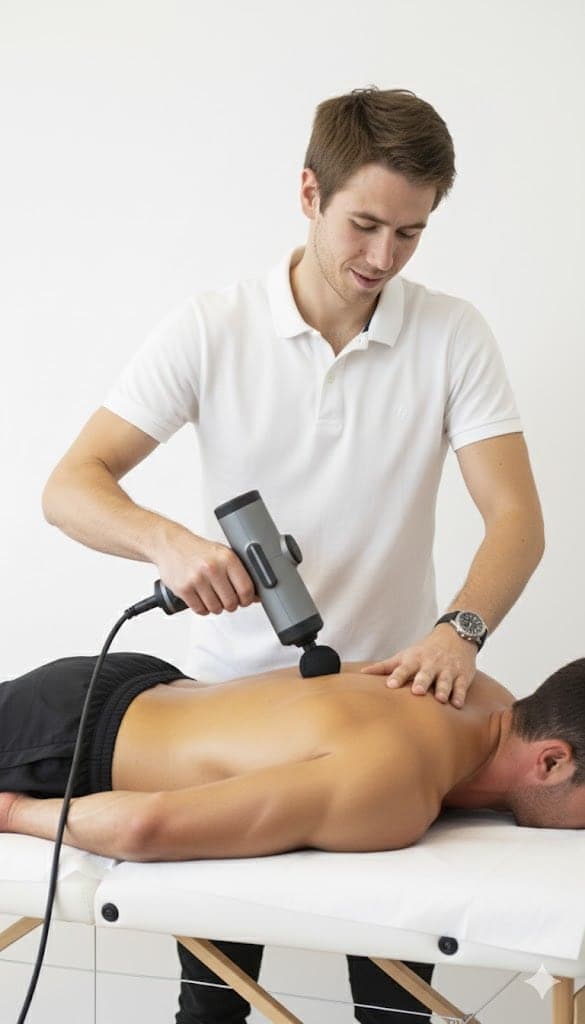
Written by
Chris
Massage therapist, nutrition and exercise physiologist
Norwegian-certified with a Bachelor’s in Physical Education and Nutrition and over ten years of clinical practice, working from a portable table in clients’ homes across the Paphos district.
This article is general information, not a medical diagnosis. If you have severe, worsening or unexplained pain, numbness, weakness, or pain after an accident, see a doctor first.