
IT Band Syndrome Treatment Paphos Area: Expert Solutions for Lasting Relief
In short
Discover comprehensive IT band syndrome treatment in Paphos with specialized mechanical deep-tissue therapy. Evidence-based approach combining precision biomechanics and clinical expertise for lasting results.
The sharp, stabbing pain on the lateral side of your knee. That burning sensation along the outside of your thigh. The frustration of watching your running distance shrink week by week. If you’re experiencing iliotibial band syndrome in Paphos, you already know how this condition can transform from a minor irritation into a debilitating obstacle that fundamentally alters your lifestyle.
I’ve spent a decade working with athletes, weekend warriors, and active individuals whose IT band syndrome has been misdiagnosed, undertreated, or simply managed with superficial interventions that address symptoms rather than biomechanical root causes. Through my university education in Physical Education and Nutrition and ten years of clinical practice, I’ve developed an approach to IT band syndrome treatment that fundamentally differs from conventional massage therapy or generic physiotherapy protocols.
Understanding IT Band Syndrome: Beyond the Surface Diagnosis
The iliotibial band is not a muscle—it’s a thick fascial structure extending from the iliac crest to the lateral condyle of the tibia. This distinction matters profoundly when we discuss treatment. Unlike muscle tissue, fascia responds differently to mechanical intervention, requiring specific pressure angles, sustained compression, and precise depth to create lasting structural change.
Most practitioners in the Paphos area approach IT band syndrome with foam rolling recommendations, ice therapy, and rest protocols. These interventions provide temporary symptomatic relief while the underlying biomechanical dysfunction—typically involving hip abductor weakness, tensor fasciae latae overactivation, or gait pattern abnormalities—continues unchecked.
The Biomechanical Reality
After evaluating hundreds of cases, I can tell you that IT band syndrome rarely originates at the pain site. The lateral knee pain you’re experiencing is the symptom, not the cause. The actual dysfunction typically involves:
- Excessive tension in the tensor fasciae latae and gluteus maximus, creating abnormal traction on the IT band
- Weakness in the gluteus medius, forcing compensatory patterns that overload lateral structures
- Adhesions along the fascial plane between the vastus lateralis and the IT band itself
- Hip internal rotation during gait, increasing friction at the lateral epicondyle
- Inadequate fascial mobility throughout the entire kinetic chain
Standard massage therapy cannot address these issues effectively because human hands lack the precision, consistency, and penetration depth required to release dense fascial adhesions and restore proper tissue mechanics.
Why Conventional IT Band Syndrome Treatment Falls Short
In my first three years of practice, I used traditional manual therapy techniques. I witnessed clients experience temporary improvement followed by inevitable relapse. The pattern repeated itself predictably: initial optimism, gradual return of symptoms, frustration, and eventually acceptance of chronic limitation.
The problem wasn’t effort—it was methodology. Human hands, regardless of the therapist’s skill level, face inherent limitations when treating dense fascial structures like the IT band. Finger strength deteriorates throughout a session. Pressure angles become inconsistent. The depth required to reach adhesions located beneath multiple tissue layers proves physiologically impossible to maintain.
The Machine Advantage: Precision, Power, and Consistency
Four years ago, I transitioned entirely to specialized mechanical deep-tissue therapy. This wasn’t simply adopting a new tool—it represented a fundamental shift in what outcomes become achievable.
The machine I use delivers sustained, precisely calibrated pressure that penetrates deeper than manual techniques while maintaining absolute consistency. Where hands fatigue and vary in effectiveness, mechanical therapy provides:
Controlled depth progression: We can work systematically through superficial layers, intermediate fascia, and deep structures with graduated pressure that manual therapy cannot replicate.
Sustained compression: Releasing mature fascial adhesions requires prolonged mechanical stress. The machine maintains optimal pressure for extended periods, creating structural change that temporary manual pressure cannot achieve.
Reproducible results: Every session delivers identical quality. There are no “off days,” no variation based on therapist fatigue or technique inconsistency.
Evidence-Based IT Band Syndrome Treatment Protocol
When clients come to me for IT band syndrome treatment in Paphos, they’re not purchasing a massage—they’re investing in a systematic approach to biomechanical restoration. The distinction matters.
Phase One: Structural Assessment and Tissue Release
During initial sessions, I perform comprehensive evaluation of the entire lower kinetic chain. IT band syndrome never exists in isolation. I assess:
| Assessment Area | Evaluation Focus | Treatment Implication |
|---|---|---|
| Hip Complex | Abductor strength, internal/external rotation range, capsular restriction | Determines proximal treatment strategy |
| Tensor Fasciae Latae | Hypertonicity, trigger point density, fascial mobility | Primary intervention site for reducing IT band tension |
| Gluteal Region | Activation patterns, medius weakness, adhesions between muscle layers | Addresses compensatory overload patterns |
| Lateral Thigh | IT band mobility, vastus lateralis adhesions, tissue quality | Direct symptom site requiring deep fascial release |
| Knee Mechanics | Tracking patterns, lateral compression syndrome, bursal inflammation | Guides intensity and timing of local treatment |
The mechanical therapy addresses each dysfunction with targeted precision. I adjust depth, angle, and duration based on real-time tissue response, working systematically through layers that conventional treatment cannot access.
Phase Two: Pattern Correction and Functional Integration
Releasing tissue restrictions represents only half the solution. Lasting resolution requires addressing the movement patterns that created the problem initially.
I guide clients through specific corrective exercises between sessions—not generic stretching protocols, but targeted interventions addressing their individual biomechanical deficits. A runner with weak hip abductors receives different programming than a cyclist with excessive internal rotation during pedal stroke.
This partnership approach distinguishes my practice from transactional massage services. We work together systematically toward measurable outcomes: pain-free activity, restored performance capacity, and biomechanical optimization that prevents recurrence.
Treatment Options Available in Paphos Area
The Paphos region offers several approaches to IT band syndrome treatment. Understanding the distinctions helps you make informed decisions about your care.
General Physiotherapy Clinics
Most physiotherapy practices in Paphos provide standard care protocols: ultrasound therapy, basic massage, stretching instruction, and exercise prescription. These services offer value for acute injuries requiring rehabilitation guidance.
For chronic IT band syndrome with underlying biomechanical dysfunction, however, general physiotherapy often proves insufficient. The treatment depth and specialized focus required to address mature fascial adhesions exceeds what general practices typically provide.
Sports Medicine Specialists
Several physicians in the Paphos area specialize in sports-related injuries. They provide accurate diagnosis, appropriate imaging when necessary, and medical management including anti-inflammatory protocols.
Medical diagnosis serves an important role, particularly in ruling out stress fractures, meniscal pathology, or other conditions that may mimic IT band syndrome. However, physicians rarely provide the hands-on therapeutic intervention required for fascial release and biomechanical correction.
Traditional Massage Therapy
Numerous massage therapists operate throughout Paphos, offering relaxation-focused services and general Swedish massage. These practitioners serve a legitimate purpose for stress management and general wellness.
They do not, however, possess the specialized training, clinical focus, or technical capability required for effective IT band syndrome treatment. Relaxation massage and clinical biomechanical therapy represent entirely different disciplines.
Specialized Mechanical Deep-Tissue Therapy
My practice stands apart because I focus exclusively on results-driven, mechanically-assisted deep-tissue intervention for chronic musculoskeletal conditions. This isn’t a spa service—it’s clinical treatment designed to produce measurable, lasting structural change.
I travel directly to your location in Paphos with professional equipment, eliminating the inconvenience of clinic visits while providing a treatment environment tailored to your needs. The mobile approach doesn’t compromise clinical quality—it enhances accessibility without sacrificing the systematic, thorough methodology required for lasting results.
What Makes Mechanical Deep-Tissue Therapy Superior for IT Band Syndrome
I’ve treated clients who previously tried every conventional option available in Paphos: months of physiotherapy, countless massage sessions, acupuncture, chiropractic adjustments, and various self-treatment protocols. They come to me after these approaches failed to provide lasting relief.
The difference isn’t mysterious—it’s mechanical. Effective IT band treatment requires:
Sufficient depth: The IT band sits beneath subcutaneous fat and superficial fascia. Adhesions between the IT band and underlying vastus lateralis require penetration depth that manual pressure cannot consistently achieve. The machine accesses these structures reliably.
Sustained pressure: Fascial release follows a time-dependent stress-relaxation curve. Adequate pressure must be maintained for 60-90 seconds or longer at specific sites. Human hands fatigue within 15-20 seconds at the force required. Mechanical therapy maintains optimal pressure indefinitely.
Precise control: Effective treatment operates within a specific therapeutic window—sufficient force to create structural change without causing tissue damage or excessive inflammation. The machine delivers exactly calibrated pressure, adjusted in real-time based on tissue response.
Consistent quality: My effectiveness doesn’t vary based on how many clients I’ve seen that day or whether my hands are fatigued. Every treatment session provides identical clinical quality.
Real Results From Real Cases
Three months ago, I worked with a competitive trail runner whose IT band syndrome had progressed to the point where he couldn’t run more than two kilometers without debilitating lateral knee pain. He’d undergone six weeks of conventional physiotherapy with minimal improvement.
During our initial assessment, I identified severe hypertonicity in his tensor fasciae latae, significant adhesions along the entire length of his IT band, and profound weakness in his gluteus medius. His hip showed restricted external rotation and his running gait demonstrated excessive internal rotation during stance phase.
We implemented a systematic treatment protocol: twice-weekly mechanical deep-tissue sessions focusing on comprehensive release of his lateral chain, combined with specific corrective exercises addressing his hip weakness and rotation patterns.
After three weeks, he ran five kilometers pain-free. After six weeks, he completed a fifteen-kilometer trail run without symptoms. Two months post-treatment, he finished a mountain ultra-marathon—something he’d considered impossible during his injury phase.
This outcome wasn’t luck or placebo effect. It resulted from addressing the actual biomechanical dysfunction rather than simply managing symptoms.
The Investment Perspective: Cost Versus Value
Clients occasionally express concern about the cost of specialized mechanical therapy compared to general massage services available throughout Paphos. This perspective conflates price with value.
A relaxation massage costing €40 provides temporary stress relief—a legitimate service, but fundamentally different from clinical treatment designed to durably resolve chronic musculoskeletal dysfunction.
Consider the actual cost of unresolved IT band syndrome:
- Months or years of restricted activity and reduced quality of life
- Multiple failed treatment attempts with conventional approaches
- Ongoing expense of temporary symptom management without structural improvement
- Potential progression to more severe pathology requiring medical intervention
- Performance limitations affecting athletic goals or daily function
Specialized treatment represents an investment in lasting resolution rather than an ongoing expense for temporary symptom suppression. Most clients achieve significant improvement within 4-6 sessions, with many experiencing complete resolution that remains stable long-term.
Frequently Asked Questions About IT Band Syndrome Treatment
How quickly will I see improvement?
Most clients notice reduced symptoms within 1-2 treatment sessions. However, symptom reduction differs from biomechanical correction. While pain may decrease quickly, achieving lasting structural change and preventing recurrence typically requires 4-6 weeks of systematic treatment combined with corrective exercise.
The timeline varies based on chronicity—acute IT band syndrome responds faster than chronic cases with mature adhesions and established compensatory patterns. I provide realistic expectations during initial assessment based on your specific presentation.
Can mechanical therapy damage tissue or cause injury?
When performed by a qualified practitioner with appropriate training, mechanical deep-tissue therapy is extremely safe. The machine allows precise control impossible with manual pressure, reducing injury risk compared to aggressive manual techniques.
Clients experience therapeutic discomfort during treatment—we’re creating structural change in dense fascial tissue, which isn’t painless. However, this differs entirely from harmful pain. I continuously adjust pressure based on your feedback and tissue response, maintaining optimal therapeutic intensity without exceeding safe limits.
Post-treatment soreness lasting 24-48 hours is normal and expected, similar to muscle soreness after intense exercise. This reflects tissue remodeling, not damage.
Do I need a diagnosis before starting treatment?
While formal medical diagnosis can be helpful, it’s not mandatory for beginning treatment. During initial assessment, I evaluate your presentation and determine whether your symptoms indicate IT band syndrome or suggest alternative pathology requiring medical evaluation.
If assessment reveals red flags—suspected stress fracture, meniscal tear, or other conditions outside my scope—I’ll recommend appropriate medical consultation before proceeding with treatment.
How does your approach differ from physiotherapy?
Physiotherapy and specialized mechanical therapy serve complementary but distinct roles. Physiotherapists excel at rehabilitation programming, exercise prescription, and general musculoskeletal care across diverse conditions.
My practice focuses exclusively on advanced soft-tissue intervention for chronic conditions. I don’t provide general rehabilitation—I specialize in deep fascial release and biomechanical correction using mechanical therapy that exceeds what manual techniques can achieve.
Many clients benefit from combining both approaches: specialized mechanical therapy to address deep tissue dysfunction, followed by physiotherapy guidance for comprehensive rehabilitation and return-to-sport programming.
Will I need ongoing maintenance treatment?
The goal is lasting resolution, not dependency on continued treatment. Once we’ve achieved complete fascial release, corrected movement patterns, and restored proper biomechanics, most clients don’t require ongoing therapy for their IT band syndrome.
Some athletes choose occasional maintenance sessions during heavy training periods as preventive care, but this differs from requiring continuous treatment to manage unresolved dysfunction.
I view successful treatment as making myself unnecessary—you should achieve independent, lasting function without lasting dependence on therapeutic intervention.
Can treatment help if I’ve had IT band syndrome for years?
Chronic IT band syndrome often responds better to mechanical therapy than recent-onset cases. While acute inflammation may resolve with rest and basic intervention, chronic cases involve mature fascial adhesions and established compensatory patterns that require specialized mechanical release.
I’ve successfully treated clients with IT band syndrome persisting for 3-5 years who’d accepted their condition as lasting. Duration doesn’t preclude effective treatment—it simply indicates that previous interventions failed to address underlying biomechanical dysfunction.
What should I expect during a treatment session?
I travel to your location in Paphos with a professional treatment bench and all necessary equipment. Sessions typically last 60-90 minutes, beginning with assessment of your current status and any changes since previous treatment.
The mechanical therapy itself involves systematic work through your entire lateral chain—hip complex, tensor fasciae latae, gluteal region, IT band, and associated structures. Pressure depth is adjusted continuously based on tissue response and your feedback.
Treatment produces therapeutic discomfort—we’re releasing dense fascial restrictions that have existed for months or years. The sensation differs from relaxation massage, but clients consistently report that the discomfort feels “productive” rather than harmful.
After treatment, I provide specific guidance for the subsequent 24-48 hours: activity modifications, hydration recommendations, and any corrective exercises relevant to your current phase.
Do you treat only IT band syndrome or other conditions as well?
While I specialize in mechanical deep-tissue therapy for various chronic musculoskeletal conditions, IT band syndrome represents one of the presentations where this approach proves particularly effective. The mechanical advantage becomes especially evident with dense fascial structures like the iliotibial band that respond poorly to conventional manual therapy.
I work extensively with runners, cyclists, and active individuals throughout Paphos dealing with overuse injuries, chronic pain patterns, and biomechanical dysfunction that hasn’t responded adequately to standard care.
Taking Action: Next Steps for IT Band Syndrome Treatment in Paphos
If you’re experiencing IT band syndrome in the Paphos area, you face a decision: continue managing symptoms with approaches that haven’t produced lasting results, or invest in specialized treatment designed to address the biomechanical root cause.
My practice isn’t appropriate for everyone. If you’re seeking relaxation massage, general wellness services, or unwilling to engage actively in your recovery process, conventional massage therapy better serves your needs.
However, if you want lasting resolution of your IT band syndrome—if you’re frustrated with temporary relief that never translates to lasting function—specialized mechanical deep-tissue therapy offers a fundamentally different approach with outcomes that conventional treatment cannot match.
The Partnership Approach
Effective treatment requires collaboration. I provide specialized intervention that addresses tissue dysfunction beyond what you can achieve independently. You implement the corrective exercises and movement modifications necessary for lasting biomechanical change.
This partnership model differs from passive treatment where you simply receive therapy without active participation. Lasting resolution requires both components: expert mechanical intervention plus your committed engagement in the correction process.
Why Location Flexibility Matters
I travel throughout the Paphos area because convenience shouldn’t compromise access to specialized care. Driving to clinic appointments, dealing with scheduling complications, and navigating unfamiliar facilities add unnecessary obstacles when you’re already dealing with injury.
Providing treatment at your location eliminates these barriers while maintaining full clinical quality. You receive the same systematic, thorough intervention you’d experience in a traditional clinic setting, but in an environment convenient to your life.
Understanding Treatment Success: Realistic Expectations
Successful IT band syndrome treatment produces several measurable outcomes:
Pain elimination: Complete resolution of lateral knee pain and thigh discomfort, not just temporary reduction.
Restored function: Return to full activity without limitation—running, cycling, hiking, whatever movements your IT band syndrome previously restricted.
Biomechanical optimization: Corrected movement patterns and improved tissue quality that prevent recurrence rather than simply postponing inevitable relapse.
Performance enhancement: Many clients report improved athletic performance beyond their pre-injury baseline because treatment addresses compensatory patterns and inefficiencies they’d developed over years.
These outcomes require time, systematic progression, and active participation. Clients seeking immediate, effortless resolution will be disappointed. Those willing to invest in thorough, evidence-based correction achieve results that conventional approaches cannot deliver.
The Fundamental Question: Symptoms or Solutions?
After a decade of treating chronic musculoskeletal conditions, I’ve observed a consistent pattern: most people receive excellent symptom management but inadequate solutions.
Conventional IT band syndrome treatment in Paphos and elsewhere focuses predominantly on reducing inflammation, decreasing pain, and managing acute symptoms. These interventions have value—they make you more comfortable. But comfortable dysfunction remains dysfunction.
Specialized mechanical deep-tissue therapy targets the structural and biomechanical factors causing your symptoms. Treatment isn’t comfortable in the moment—creating lasting fascial release requires therapeutic intensity that exceeds what relaxation-focused massage provides. But the outcome differs fundamentally: lasting resolution instead of temporary relief.
You ultimately decide whether symptom management or actual solution better serves your goals. Both approaches have legitimate applications. If you’re satisfied with ongoing management of controlled dysfunction, conventional care suffices. If you want complete resolution and optimal function, specialized treatment becomes necessary.
My practice exists for individuals choosing the latter—those willing to invest in thorough correction rather than indefinite symptom suppression. If that describes your priorities, I have both the expertise and the methodology to deliver outcomes that conventional approaches cannot match.
Moving Forward With Confidence
IT band syndrome doesn’t have to become a lasting limitation defining what activities remain accessible versus impossible. With appropriate treatment addressing actual biomechanical dysfunction rather than superficial symptoms, complete resolution represents a realistic expectation rather than optimistic hope.
The specialized mechanical therapy I provide in the Paphos area offers a proven alternative when conventional approaches have failed to produce lasting results. The method works because it addresses the depth, precision, and consistency requirements that effective fascial treatment demands—requirements that manual therapy cannot meet regardless of practitioner skill.
Your IT band syndrome developed over time through accumulated mechanical stress and gradually worsening biomechanical dysfunction. Reversing this process requires systematic intervention that matches the complexity of the problem. Quick fixes and superficial treatments prove inadequate because they don’t engage with the structural reality of mature fascial adhesions and established compensatory patterns.
If you’re ready to move beyond symptom management toward actual resolution—if you want to understand why you developed IT band syndrome and how to correct the underlying dysfunction durably—specialized mechanical deep-tissue therapy provides the methodology and results that make this outcome achievable.
The question isn’t whether your IT band syndrome can improve. With appropriate treatment, improvement is inevitable. The question is whether you’re prepared to invest in thorough correction rather than accepting comfortable limitation as lasting reality.
Evidence and limits
Massage may help with some symptoms, but benefits and evidence vary by condition. It does not replace medical assessment or treatment. A page update is not evidence of an independent clinical review.
Further reading: Massage therapy: evidence, safety and limitations by US National Center for Complementary and Integrative Health. This is general background reading, not verification of every claim in this article.
How we describe evidence and updates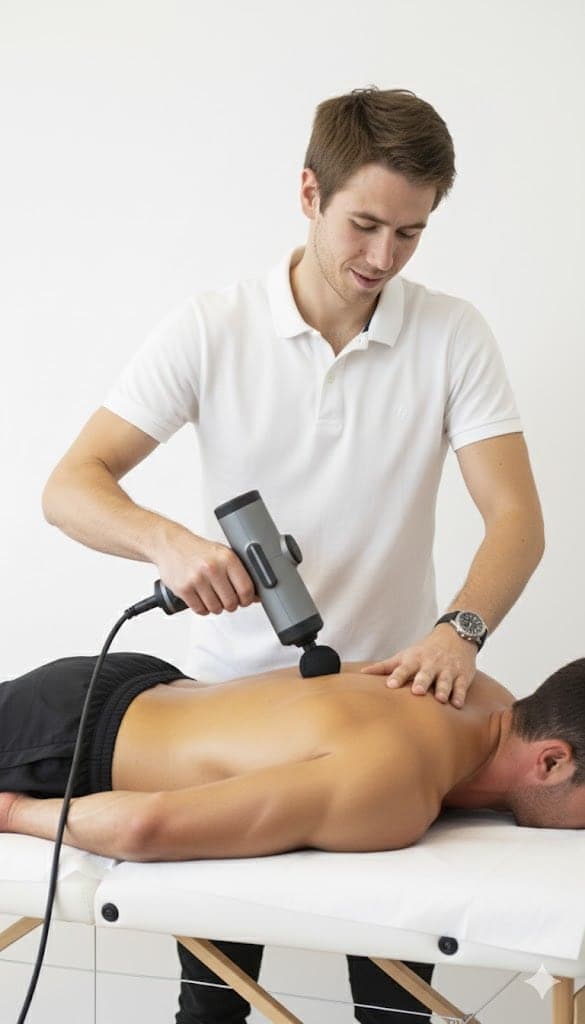
Written by
Chris
Massage therapist, nutrition and exercise physiologist
Norwegian-certified with a Bachelor’s in Physical Education and Nutrition and over ten years of clinical practice, working from a portable table in clients’ homes across the Paphos district.
This article is general information, not a medical diagnosis. If you have severe, worsening or unexplained pain, numbness, weakness, or pain after an accident, see a doctor first.