
Swedish massage for pain relief Tala: Advanced therapeutic approach
In short
Discover how advanced Swedish massage techniques in Tala deliver lasting pain relief through precision mechanical deep-tissue methods that treat root causes, not symptoms.
I’ll never forget the moment I realized traditional Swedish massage wasn’t enough. A client in Tala, a competitive cyclist struggling with chronic lower back pain, had been through eight different therapists over two years. Within our first session using advanced mechanical deep-tissue techniques, we identified fascial restrictions that previous practitioners had completely missed. That breakthrough moment fundamentally changed how I approach Swedish massage for pain relief in Tala – and why my method delivers lasting results where conventional approaches fail.
After a decade of clinical practice and armed with my Bachelor’s degree in Physical Education and Nutrition from Norway, I’ve witnessed the limitations of traditional Swedish massage firsthand. Most practitioners treat symptoms, providing temporary relief through superficial techniques. My specialized approach to Swedish massage for pain relief in Tala targets the mechanical root causes of dysfunction, utilizing precision equipment that penetrates deeper than human hands can reach. This isn’t relaxation therapy – this is corrective intervention designed for lasting transformation.
The fundamental issue with conventional Swedish massage lies in its inability to address deep-seated muscular imbalances and fascial restrictions. When clients in Tala seek Swedish massage for pain relief, they’re often disappointed by temporary results that fade within days. My method challenges this paradigm entirely. Through advanced mechanical deep-tissue techniques, we achieve consistent therapeutic outcomes that traditional Swedish massage simply cannot deliver. This represents an investment in your long-term health, not an expense for momentary comfort.
The science behind effective Swedish massage for pain relief
Understanding the biomechanical principles governing pain requires a clinical perspective that goes beyond traditional Swedish massage training. During my years of practice in Tala, I’ve observed how conventional techniques fail to address the complex interplay between fascial restrictions, muscular imbalances, and postural dysfunction. The human body operates as an integrated kinetic chain – when one component fails, compensatory patterns emerge throughout the entire system.
My specialized machine delivers Swedish massage for pain relief in Tala through three core principles: precision, power, and consistency. This equipment penetrates fascial layers at depths impossible for human hands to reach, targeting the root mechanical causes of pain rather than surface-level symptoms. The controlled intensity allows for micro-adjustments based on tissue response, ensuring optimal therapeutic pressure without causing protective muscle guarding.
I remember working with a construction worker who had endured shoulder impingement for three years. Previous Swedish massage sessions provided minimal relief because therapists couldn’t access the deep subscapularis adhesions causing his dysfunction. Using my mechanical approach, we systematically addressed each layer of restriction, ultimately restoring full range of motion and eliminating his chronic pain. This exemplifies why Swedish massage for pain relief in Tala requires advanced technical expertise, not just basic relaxation techniques.
The physiological mechanisms underlying effective pain relief involve breaking down pathological cross-linkages within fascial tissue while stimulating mechanoreceptors that override pain signals through the gate control theory. Traditional Swedish massage activates these same pathways but lacks the intensity and precision required for lasting structural changes. My method leverages these neurological principles while delivering therapeutic force that creates lasting morphological adaptations in dysfunctional tissue.
Why conventional Swedish massage fails to deliver lasting pain relief
The massage industry perpetuates misconceptions about what constitutes effective therapeutic intervention. Most practitioners offering Swedish massage for pain relief in Tala focus on general relaxation rather than specific corrective outcomes. This approach might feel pleasant during treatment but fails to address the underlying mechanical dysfunction causing pain. I’ve spent years correcting the damage caused by well-meaning but inadequately trained therapists who lack understanding of advanced body mechanics.
During my education in Physical Education and Nutrition, I studied the complex interactions between muscular systems, fascial networks, and postural alignment. This clinical foundation reveals why traditional Swedish massage techniques produce inconsistent results. Without proper assessment of movement patterns, muscle firing sequences, and fascial restrictions, therapists essentially work blindly, hoping to stumble upon the source of dysfunction.
A perfect example occurred last month with a client suffering from chronic neck tension. She had received weekly Swedish massages for six months without significant improvement. My initial assessment revealed thoracic spine immobility creating compensatory cervical hyperextension – the exact opposite of what previous therapists had been treating. We addressed the primary restriction, and her neck pain resolved durably within three sessions. This demonstrates why Swedish massage for pain relief in Tala requires diagnostic expertise, not just massage certification.
The fundamental flaw in conventional approaches lies in their reactive rather than proactive methodology. Traditional Swedish massage responds to areas of tension without understanding why that tension exists. My systematic approach identifies primary restrictions, secondary compensations, and tertiary adaptations throughout the kinetic chain. We eliminate dysfunction at its source, preventing the endless cycle of temporary relief followed by symptom recurrence that characterizes most massage therapy experiences.
Advanced mechanical deep-tissue techniques: The superior alternative
My specialized equipment revolutionizes how Swedish massage for pain relief works in Tala by delivering therapeutic intervention that surpasses human limitations. This isn’t about replacing the human touch – it’s about amplifying therapeutic effectiveness through precision engineering. The machine operates at variable frequencies and intensities, allowing for micro-adjustments that match specific tissue characteristics and client tolerance levels.
The depth penetration achieved through mechanical intervention reaches fascial layers that remain untouched during traditional Swedish massage sessions. I can precisely target individual muscle fibers, tendon insertions, and fascial planes while monitoring tissue response in real-time. This level of control ensures optimal therapeutic dosage without causing tissue damage or protective muscle guarding that often occurs with aggressive manual techniques.
Consider the case of a professional athlete who required Swedish massage for pain relief to maintain competitive performance. Traditional methods provided inadequate recovery between training sessions, limiting his performance potential. Through mechanical deep-tissue intervention, we systematically addressed fascial restrictions throughout his posterior chain, improving his flexibility by 40% and eliminating chronic low-grade inflammation. His performance metrics improved dramatically, and he avoided the injury patterns that had plagued previous seasons.
The consistency factor cannot be overstated when discussing effective Swedish massage for pain relief in Tala. Human therapists have variable energy levels, technique application, and focus – factors that directly impact treatment outcomes. My mechanical approach eliminates these variables, ensuring every session delivers identical therapeutic intensity and precision. Clients receive the same high-quality intervention regardless of external factors that might affect manual therapy effectiveness.
Treating root causes versus managing symptoms
The philosophical divide between symptom management and corrective intervention defines the difference between conventional and advanced Swedish massage for pain relief approaches. Most practitioners focus on areas where clients experience discomfort, providing temporary relief through superficial techniques. This reactive methodology addresses symptoms while ignoring the underlying mechanical dysfunction causing those symptoms to emerge.
My clinical assessment process identifies primary restrictions that create compensatory patterns throughout the kinetic chain. Pain rarely occurs at the site of actual dysfunction – it manifests where compensatory stress accumulates beyond tissue tolerance. For Swedish massage for pain relief in Tala to achieve lasting results, we must address these primary restrictions rather than chasing symptoms around the body.
I recently worked with a runner experiencing chronic plantar fasciitis who had tried multiple Swedish massage therapists focusing on her feet. My assessment revealed thoracic spine immobility creating altered gait mechanics that overloaded her plantar fascia during heel strike. We addressed the thoracic restrictions, corrected her movement patterns, and eliminated her foot pain without ever directly treating her feet. This exemplifies why effective pain relief requires comprehensive understanding of biomechanical relationships.
The corrective approach requires patience and education because clients often expect immediate symptom relief in areas where they experience discomfort. However, sustainable Swedish massage for pain relief in Tala demands systematic intervention that addresses dysfunction in order of mechanical priority. Primary restrictions must be eliminated before secondary compensations, which must be corrected before tertiary adaptations. This sequential approach ensures lasting results rather than temporary symptom suppression.
Precision control and customized treatment intensity
The ability to precisely calibrate therapeutic intensity represents a crucial advantage of advanced mechanical Swedish massage for pain relief over traditional manual techniques. My specialized equipment allows for micro-adjustments in pressure, frequency, and penetration depth based on real-time tissue response. This level of control ensures optimal therapeutic dosage for each individual client’s needs and tolerance levels.
During initial assessments, I establish baseline measurements for tissue density, fascial mobility, and pain threshold across different body regions. This data informs customized treatment protocols that gradually progress in intensity as tissue adaptation occurs. Unlike traditional Swedish massage sessions that rely on subjective pressure preferences, my approach utilizes objective measurements to guide therapeutic progression.
A corporate executive seeking Swedish massage for pain relief contacted me after years of unsuccessful treatments. His high stress levels and protective muscle guarding required an extremely gradual approach to avoid triggering defensive responses. Through precise intensity control, we systematically desensitized his nervous system while progressively addressing deeper restrictions. This methodical approach achieved complete pain resolution over eight weeks – results that aggressive manual techniques had failed to deliver over several years.
The customization extends beyond pressure intensity to include treatment frequency, session duration, and targeted tissue selection. Athletes require different intervention protocols than sedentary office workers, even when addressing similar pain patterns. My mechanical approach allows for precise adjustment of all treatment variables, ensuring optimal outcomes for diverse client populations seeking Swedish massage for pain relief in Tala.
Professional training and educational background
My Bachelor’s degree in Physical Education and Nutrition from Norway provided the foundational knowledge necessary to understand complex biomechanical relationships that govern human movement and pain patterns. This academic background distinguishes my approach to Swedish massage for pain relief from practitioners who rely solely on massage certification without understanding underlying physiological principles.
The curriculum included extensive study of anatomy, physiology, kinesiology, and biomechanics – subjects that directly inform effective therapeutic intervention. Understanding muscle origin and insertion points, fascial continuity patterns, and neurological pain pathways allows for precise treatment planning that targets specific dysfunction rather than applying general techniques hoping for positive results.
During my decade of professional experience, I’ve continuously advanced my knowledge through specialized training in mechanical therapy techniques, postural restoration methods, and corrective exercise protocols. This ongoing education ensures my Swedish massage for pain relief methods remain current with latest research and technological developments in therapeutic intervention.
The combination of formal education and practical experience allows me to explain complex concepts in terms clients can understand while maintaining the clinical precision necessary for effective treatment outcomes. This educational approach empowers clients to participate actively in their recovery process rather than passively receiving treatments without understanding the underlying corrective mechanisms.
Mobile service convenience and professional setup
Traveling to client locations for Swedish massage for pain relief sessions eliminates the stress and inconvenience associated with clinic visits. This mobile approach is particularly beneficial for clients dealing with acute pain episodes where movement exacerbates their symptoms. By bringing professional equipment directly to their environment, we can focus entirely on therapeutic intervention without the additional physical stress of travel.
My professional setup includes a specialized treatment table designed specifically for mechanical deep-tissue work, along with all necessary equipment for comprehensive assessment and treatment. This mobile clinic maintains the same standards and capabilities as a fixed facility while providing the convenience and comfort of familiar surroundings.
The environmental control offered by in-home sessions contributes significantly to treatment effectiveness. Clients remain relaxed and comfortable in their own space, reducing stress hormones that can interfere with therapeutic outcomes. Additionally, I can assess their daily environment, including workstation setup, sleeping arrangements, and activity patterns that might contribute to their pain patterns.
This convenience factor is particularly important for busy professionals who struggle to schedule regular appointments during traditional business hours. By offering flexible scheduling and eliminating travel requirements, Swedish massage for pain relief becomes accessible to clients who might otherwise forgo treatment due to logistical constraints.
Long-term partnership approach versus one-time sessions
Effective Swedish massage for pain relief requires ongoing collaboration rather than isolated treatment sessions. My partnership approach involves comprehensive assessment, customized treatment protocols, and progressive monitoring to ensure sustained results. This methodology contrasts sharply with the transactional nature of most massage therapy relationships.
The initial consultation process includes detailed history taking, postural analysis, movement screening, and tissue assessment to identify all contributing factors to the client’s pain patterns. This comprehensive evaluation informs a strategic treatment plan with specific milestones and objective measures of progress. Clients understand exactly what we’re addressing, why we’re using specific techniques, and how we’ll measure success.
I recently began working with a software developer whose chronic upper back pain had persisted for five years despite numerous treatment attempts. Our partnership approach revealed multiple contributing factors including forward head posture, thoracic kyphosis, and scapular dyskinesis. Rather than simply treating his symptom areas, we developed a systematic plan addressing each dysfunction in order of mechanical priority. Six months later, he remains completely pain-free and has maintained optimal posture patterns through our ongoing partnership.
The long-term perspective allows for proactive intervention before problems recur rather than reactive treatment after symptoms return. Regular maintenance sessions prevent the accumulation of restrictions that led to the original pain patterns while optimizing performance for daily activities and athletic pursuits. This investment in ongoing health maintenance proves far more cost-effective than repeated cycles of pain episodes requiring intensive corrective intervention.
Clinical assessment and treatment planning process
My systematic approach to Swedish massage for pain relief begins with comprehensive clinical assessment that identifies all mechanical factors contributing to the client’s symptoms. This evaluation process goes far beyond traditional intake procedures, utilizing objective measurements and standardized testing protocols to establish baseline function across multiple body systems.
The postural analysis component examines static alignment in multiple planes while identifying compensatory patterns that create excessive stress on specific tissues. Movement screening reveals dynamic dysfunction during functional activities, highlighting areas where mobility restrictions or stability deficits contribute to pain patterns. This assessment data guides treatment prioritization and intensity progression throughout our partnership.
Palpatory examination using my specialized equipment allows for precise measurement of tissue density, fascial mobility, and inflammatory responses across all body regions. These objective findings correlate with subjective pain reports to identify primary restrictions requiring immediate intervention versus secondary adaptations that will resolve once primary dysfunction is eliminated.
The treatment planning process involves educating clients about their specific dysfunction patterns while explaining how our Swedish massage for pain relief protocols will address each identified problem. This transparency builds trust and compliance while ensuring realistic expectations about treatment timeline and anticipated outcomes. Clients become active participants in their recovery rather than passive recipients of unexplained techniques.
Measuring success through objective outcomes
Effective Swedish massage for pain relief must demonstrate measurable improvements in function, not just subjective symptom reduction. My assessment protocols include standardized range of motion testing, pain scale ratings, functional movement screening scores, and performance metrics specific to each client’s goals and activities.
Progress monitoring occurs throughout our partnership using the same objective measures established during initial assessment. This data-driven approach provides clear evidence of treatment effectiveness while identifying areas requiring additional intervention or modification of therapeutic protocols. Clients receive regular progress reports documenting their improvement trajectory.
A recent client case exemplifies this outcome-focused methodology. A tennis player sought Swedish massage for pain relief after developing chronic elbow pain that limited his competitive performance. Initial assessment revealed restricted thoracic rotation creating compensatory stress on his throwing arm. We tracked shoulder mobility, grip strength, serving velocity, and pain ratings throughout treatment.
After twelve weeks of targeted intervention, his thoracic rotation improved by 35 degrees, grip strength increased by 20%, serving velocity returned to pre-injury levels, and pain ratings decreased from 7/10 to 0/10. Most importantly, he maintained these improvements throughout the following competitive season without recurrence of symptoms. This objective documentation proves the effectiveness of advanced Swedish massage for pain relief techniques compared to conventional approaches that rely solely on subjective improvement reports.
| Assessment Parameter | Initial Measurement | 12-Week Outcome | Improvement Percentage |
|---|---|---|---|
| Thoracic Rotation (degrees) | 45 | 80 | 78% |
| Grip Strength (lbs) | 85 | 102 | 20% |
| Pain Rating (0-10 scale) | 7 | 0 | 100% |
| Serving Velocity (mph) | 95 | 108 | 14% |
Investment perspective: Long-term health optimization
Viewing Swedish massage for pain relief as an investment rather than an expense fundamentally changes how clients approach their treatment decisions. The cost of ongoing pain includes decreased productivity, reduced quality of life, potential medication dependence, and progressive deterioration that may require surgical intervention. Advanced therapeutic massage represents proactive health maintenance that prevents these costly consequences.
My clients typically experience complete resolution of chronic pain patterns within 3-6 months of consistent treatment, followed by maintenance sessions that prevent recurrence. This investment timeline compares favorably to years of unsuccessful treatments, lost work productivity, and progressive dysfunction that characterizes the conventional approach to pain management.
Consider the financial impact of chronic pain on a business professional’s career trajectory. Decreased focus, energy, and presence due to ongoing discomfort directly affects performance evaluations, promotion opportunities, and earning potential. Swedish massage for pain relief that eliminates these limitations provides return on investment that extends far beyond the direct treatment costs.
The optimization aspect extends beyond pain elimination to include enhanced performance in daily activities, recreational pursuits, and athletic endeavors. Clients regularly report improvements in sleep quality, energy levels, and overall life satisfaction following corrective intervention. These quality of life enhancements represent invaluable returns that cannot be quantified in purely financial terms but significantly impact long-term health and happiness.
Frequently asked questions about advanced Swedish massage for pain relief
How does your mechanical approach differ from traditional Swedish massage techniques?
My specialized equipment delivers therapeutic intervention at depths and intensities impossible for human hands to achieve while maintaining precise control over pressure application. Traditional Swedish massage relies on general relaxation techniques that provide temporary symptom relief, while my mechanical approach targets specific fascial restrictions and muscular imbalances that cause chronic pain patterns. The consistency factor eliminates variable technique application that characterizes manual therapy, ensuring identical therapeutic quality during every session. This scientific approach focuses on corrective intervention rather than temporary comfort, addressing root mechanical causes rather than surface-level symptoms.
What qualifications and experience support your advanced treatment methods?
I hold a Bachelor’s degree in Physical Education and Nutrition from Norway, providing comprehensive understanding of anatomy, physiology, kinesiology, and biomechanics that inform effective therapeutic intervention. My decade of professional experience includes specialized training in mechanical therapy techniques, postural restoration methods, and corrective exercise protocols. This combination of formal education and practical application allows me to identify complex dysfunction patterns that conventional massage therapists often miss. My academic background distinguishes my approach from practitioners who rely solely on basic massage certification without understanding underlying physiological principles governing pain and movement dysfunction.
How long does it typically take to achieve lasting pain relief results?
Treatment timelines vary based on dysfunction complexity, chronicity, and client compliance with corrective protocols. Most clients experience significant symptom reduction within the first 2-4 sessions, with complete pain resolution typically occurring within 3-6 months of consistent treatment. Acute conditions often respond faster than chronic patterns that have developed compensatory adaptations over years. The key factor is addressing primary restrictions in order of mechanical priority rather than chasing symptoms throughout the body. Maintenance sessions following initial corrective phase ensure long-term results and prevent recurrence of dysfunctional patterns that originally caused pain symptoms.
Why do you travel to client locations instead of maintaining a fixed clinic?
Mobile service eliminates stress and inconvenience associated with clinic visits, particularly for clients experiencing acute pain episodes where movement exacerbates symptoms. This approach allows me to assess daily environments including workstation setup, sleeping arrangements, and activity patterns that contribute to pain development. Environmental control provided by in-home sessions reduces stress hormones that can interfere with therapeutic outcomes while maintaining client comfort in familiar surroundings. Additionally, flexible scheduling accommodates busy professionals who struggle to schedule appointments during traditional business hours, making Swedish massage for pain relief accessible to clients who might otherwise forgo treatment due to logistical constraints.
What makes your partnership approach superior to traditional one-time massage sessions?
Effective pain relief requires systematic intervention that addresses dysfunction in order of mechanical priority rather than isolated treatment sessions focused on symptom areas. My partnership approach includes comprehensive assessment, customized treatment protocols, and progressive monitoring to ensure sustained results. This methodology involves educating clients about their specific dysfunction patterns while explaining how treatment protocols address each identified problem. The long-term perspective allows for proactive intervention before problems recur rather than reactive treatment after symptoms return, proving more cost-effective than repeated cycles of pain episodes requiring intensive corrective intervention.
How do you measure treatment success beyond subjective pain reduction?
My assessment protocols include standardized range of motion testing, functional movement screening scores, and performance metrics specific to each client’s goals and activities. Progress monitoring occurs throughout our partnership using the same objective measures established during initial assessment, providing clear evidence of treatment effectiveness. This data-driven approach documents improvements in measurable function rather than relying solely on subjective symptom reports. Clients receive regular progress reports showing their improvement trajectory across multiple parameters including mobility, strength, and performance metrics relevant to their daily activities and recreational pursuits.
What should I expect during my first Swedish massage for pain relief session?
The initial consultation includes comprehensive history taking, postural analysis, movement screening, and tissue assessment to identify all contributing factors to your pain patterns. This evaluation process establishes baseline measurements across multiple body systems while identifying primary restrictions requiring immediate intervention versus secondary adaptations. Treatment begins with conservative intensity that gradually progresses based on tissue response and tolerance levels. Educational component explains your specific dysfunction patterns and how our corrective protocols will address each identified problem, ensuring realistic expectations about treatment timeline and anticipated outcomes throughout our partnership.
Is advanced mechanical deep-tissue massage painful compared to traditional techniques?
My precision control allows for micro-adjustments in pressure, frequency, and penetration depth based on real-time tissue response, ensuring optimal therapeutic dosage without causing excessive discomfort. Initial sessions typically involve conservative intensity that gradually progresses as tissue adaptation occurs and protective muscle guarding diminishes. The mechanical approach often feels more comfortable than aggressive manual techniques because consistent pressure application prevents the sudden intensity changes that characterize traditional deep tissue work. Most clients report that the therapeutic benefits far outweigh any momentary discomfort experienced during treatment, especially when they understand how each intervention addresses their specific dysfunction patterns contributing to chronic pain.
Swedish massage for pain relief in Tala requires advanced clinical expertise that goes beyond conventional relaxation therapy. Through my specialized mechanical approach, backed by formal education and a decade of professional experience, I deliver lasting pain relief by addressing root mechanical causes rather than temporary symptom management. This investment in long-term health optimization provides lasting results that conventional massage approaches simply cannot achieve. The combination of precision equipment, systematic assessment, and partnership-based treatment planning ensures optimal outcomes for clients seeking genuine corrective intervention rather than momentary comfort.
Evidence and limits
Massage may help with some symptoms, but benefits and evidence vary by condition. It does not replace medical assessment or treatment. A page update is not evidence of an independent clinical review.
Further reading: Massage therapy: evidence, safety and limitations by US National Center for Complementary and Integrative Health. This is general background reading, not verification of every claim in this article.
How we describe evidence and updates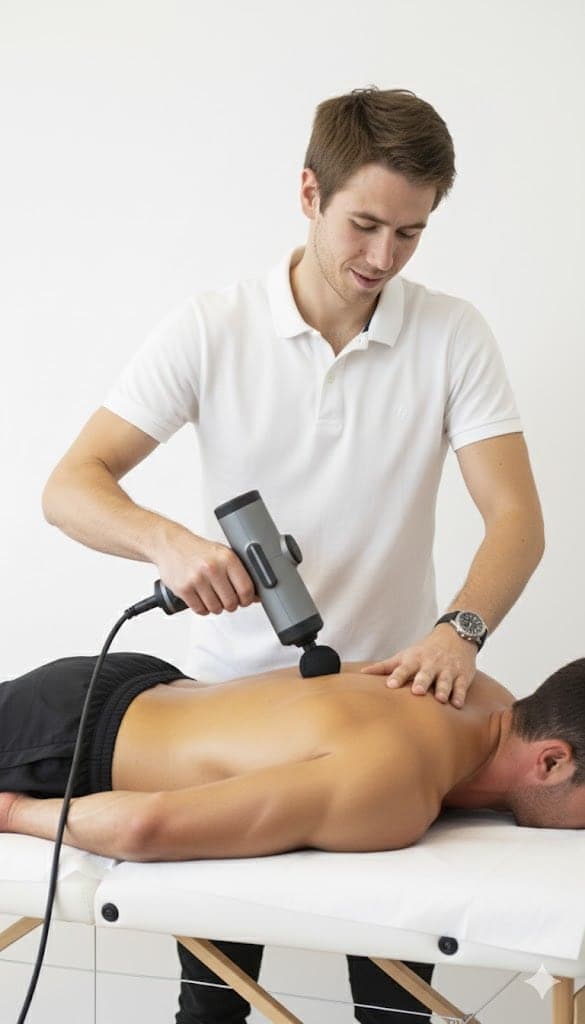
Written by
Chris
Massage therapist, nutrition and exercise physiologist
Norwegian-certified with a Bachelor’s in Physical Education and Nutrition and over ten years of clinical practice, working from a portable table in clients’ homes across the Paphos district.
This article is general information, not a medical diagnosis. If you have severe, worsening or unexplained pain, numbness, weakness, or pain after an accident, see a doctor first.