
Swedish Massage Benefits for Stiffness: The Science Behind Lasting Relief
In short
Discover how Swedish massage benefits for stiffness go beyond temporary comfort. Learn the biomechanical principles that create lasting flexibility, reduce chronic tension, and restore natural movement patterns.
After a decade of working with clients suffering from chronic stiffness, I’ve witnessed a fundamental misunderstanding about Swedish massage that limits its therapeutic potential. Most practitioners treat it as a relaxation modality—pleasant, soothing, but ultimately superficial. This approach fails the thousands of people whose stiffness isn’t just uncomfortable, but actively disrupts their performance, sleep quality, and daily function.
I came to this field with a Bachelor’s degree in Physical Education and Nutrition from Norway, and what struck me immediately was the disconnect between what massage could accomplish and what most clients were actually receiving. Swedish massage, when properly understood and executed as a biomechanical intervention rather than mere pampering, delivers profound benefits for stiffness that extend far beyond the massage table.
Let me be direct: if your stiffness returns within 48 hours of treatment, you haven’t addressed the problem—you’ve simply masked it temporarily. The Swedish massage benefits for stiffness that I’ll detail in this article require a fundamentally different approach, one grounded in body mechanics, connective tissue science, and precision application.
Understanding Stiffness: What’s Actually Happening in Your Body
Before we explore Swedish massage benefits for stiffness, we need to understand what stiffness actually represents at a physiological level. This isn’t about “tight muscles” in the simplistic sense most people imagine.
Stiffness manifests when fascial adhesions develop between tissue layers that should glide freely past one another. Your body contains approximately 600 muscles, each wrapped in connective tissue sheaths that must slide independently during movement. When repetitive stress, compensatory movement patterns, or insufficient recovery create friction between these layers, the fascia begins to bind together—like pages in a book exposed to moisture.
The Biomechanical Reality of Chronic Stiffness
I’ve treated elite athletes whose performance plateaued because microscopic fascial restrictions in their hip flexors altered their gait mechanics by mere millimeters. I’ve worked with office professionals whose neck stiffness wasn’t about their neck at all—it originated from thoracic immobility that forced cervical structures to compensate for lost range of motion elsewhere.
This is what distinguishes my approach: I don’t treat where it hurts. I treat where the dysfunction originates.
The stiffness you feel in your lower back often begins with restricted hip mobility forcing your lumbar spine into excessive movement. That shoulder tension? Frequently the result of scapular muscles chronically engaging to stabilize a joint that’s lost its proper mechanical relationship to the ribcage.
Swedish Massage Benefits for Stiffness: The Five Mechanisms
Swedish massage affects stiffness through five distinct physiological mechanisms. Understanding these processes explains why proper technique matters enormously—and why the depth, duration, and precision of application determine whether results last days or become lasting.
1. Mechanical Tissue Deformation and Fascial Release
The primary Swedish massage benefit for stiffness comes from mechanical deformation of restricted tissue. When sufficient pressure is applied along the muscle fiber direction (a hallmark of Swedish techniques like effleurage and petrissage), it creates a shearing force that gradually separates adhered fascial layers.
Think of this like separating stuck pages in that water-damaged book. Light pressure smooths the surface but doesn’t address the binding between pages. Adequate pressure—applied with precision and consistency—actually breaks those adhesive bonds.
| Tissue Layer | Depth Required | Primary Swedish Technique | Stiffness Addressed |
|---|---|---|---|
| Superficial fascia | Light to moderate | Effleurage (gliding strokes) | Skin-level tension, lymphatic congestion |
| Muscle belly | Moderate to firm | Petrissage (kneading) | Metabolic waste accumulation, muscle guarding |
| Deep fascia | Firm to intense | Friction (cross-fiber) | Chronic adhesions, scar tissue |
| Tendinous junctions | Precise and sustained | Tapotement (percussion) + friction | Tendon-muscle interface restrictions |
Here’s what most practitioners miss: the depth required varies not just by tissue layer, but by the duration the restriction has existed. A fascial adhesion that’s developed over three years requires substantially more mechanical force to release than one present for three weeks. The tissue has literally remodeled itself around the restriction.
2. Neurological Reset of Muscle Tone
Swedish massage benefits for stiffness extend into neurology through something called the “muscle spindle reset.” Within every muscle lie proprioceptive organs called muscle spindles that constantly report the muscle’s length and tension to your central nervous system.
When a muscle remains in a shortened, stiff position for extended periods, these spindles recalibrate. They begin to interpret this shortened state as “normal.” Your nervous system then actively maintains this tension, believing it’s protecting you from overstretching.
Properly executed Swedish massage, particularly techniques that combine sustained pressure with gentle lengthening, essentially recalibrates these spindles. We’re reprogramming the nervous system’s baseline expectation for what “normal” muscle length should be.
I’ve seen this dramatically with clients who’ve had frozen shoulders for years. The stiffness isn’t primarily structural—it’s neurological guarding that’s become maladaptive. When we systematically address the tissue restrictions while simultaneously providing sensory input that signals “safety,” the nervous system permits increased range of motion.
3. Circulatory Enhancement and Metabolic Waste Removal
Stiff tissue is metabolically compromised tissue. The accumulated metabolic byproducts—lactate, hydrogen ions, inflammatory cytokines—create a local environment that perpetuates stiffness through a feedback loop.
Swedish massage techniques, particularly the rhythmic compression and release of petrissage and the directional flow of effleurage toward lymphatic drainage points, create a pumping action that physically moves interstitial fluid through the tissue.
This isn’t theoretical. We can measure changes in tissue oxygenation, pH levels, and inflammatory markers following properly executed Swedish massage. I’ve worked with endurance athletes whose chronic lower leg stiffness resolved not through deeper pressure, but through systematic circulatory enhancement that allowed their tissue to finally clear the metabolic debris from months of training.
4. Trigger Point Deactivation
Many cases of perceived stiffness actually involve active trigger points—hyperirritable spots in skeletal muscle that create referred tension and restricted range of motion throughout entire kinetic chains.
A trigger point in your gluteus medius doesn’t just cause hip stiffness—it creates compensatory tension down your IT band, into your lateral knee structures, and often manifests as ankle immobility. The Swedish massage benefits for stiffness become multiplicative when we identify and systematically deactivate these trigger points.
The sustained pressure component of Swedish massage, when held on a trigger point for 30-90 seconds at precisely the right intensity, creates localized ischemia followed by reactive hyperemia. This dramatic increase in local blood flow after pressure release helps flush out the accumulated metabolic waste and inflammatory mediators that maintain the trigger point.
5. Psychological Release and the Pain-Tension Cycle
The fifth mechanism often surprises people: Swedish massage benefits for stiffness include breaking the psychological component of chronic tension.
Your body’s response to chronic pain and stiffness includes elevated cortisol, increased sympathetic nervous system activation, and heightened muscle guarding. This creates a vicious cycle where stress increases stiffness, and stiffness creates more stress.
Swedish massage, particularly when delivered with consistent pressure and rhythm, activates the parasympathetic nervous system. Heart rate variability improves, cortisol levels drop, and the nervous system’s threat assessment recalibrates.
I’ve treated high-performing executives whose shoulder and neck stiffness had become so chronic they’d accepted it as lasting. The breakthrough came not from deeper pressure, but from creating an environment where their nervous system could finally downregulate the constant defensive posturing they’d maintained for years.
Why Traditional Swedish Massage Often Fails for Chronic Stiffness
Now that we understand the mechanisms, let’s address why most people who’ve tried Swedish massage for stiffness report disappointing results. This is critical, because the problem isn’t the modality—it’s the execution.
The Consistency Problem
Human hands, no matter how skilled, have inherent limitations. Fatigue affects pressure application. Technique varies day to day based on the practitioner’s physical state, focus, and energy levels. What you receive in session three may differ substantially from session one—and chronic stiffness requires precisely the opposite: unwavering consistency.
After seven years of practicing traditional manual techniques, I confronted this reality honestly. My clients deserved better than “pretty good most of the time.” They deserved optimal results every single session.
This led me to develop my specialized approach using advanced mechanical deep-tissue technology. The machine I employ doesn’t replace the principles of Swedish massage—it perfects them. Every stroke delivers identical pressure. Depth remains constant. The precision allows me to target restrictions with accuracy measured in millimeters, not centimeters.
The Depth Limitation
Here’s an uncomfortable truth: most therapists cannot maintain the pressure required to release chronic fascial restrictions without compromising their own body mechanics. To protect themselves from repetitive strain injuries, they unconsciously limit their depth.
The Swedish massage benefits for stiffness only manifest when we achieve sufficient mechanical deformation of restricted tissue. Light pressure feels pleasant but accomplishes nothing lasting for someone with three-year-old hip flexor adhesions.
My specialized tool works deeper than hands can sustainably achieve. For athletes requiring intensive fascial release, I can deliver powerfully deep treatment without any compromise in precision or control. For clients needing gentler work, I can maintain light, consistent pressure for extended periods without fatigue affecting quality.
The Single-Session Fallacy
Perhaps the most damaging misconception in the massage industry is the one-off session model. Swedish massage benefits for stiffness accumulate progressively. Chronic stiffness didn’t develop in 60 minutes—it won’t resolve in 60 minutes.
I work through dedicated partnerships with clients, developing customized treatment plans that address root causes, not symptoms. This might mean intensive sessions three times weekly for two weeks, followed by strategic maintenance. Or it might involve a completely different protocol based on your specific biomechanical situation.
The point is this: I’m not interested in making you feel temporarily better. I’m invested in durably resolving your movement restrictions and optimizing your body mechanics for long-term performance.
Swedish Massage Benefits for Stiffness: Specific Applications
Let me detail how Swedish massage addresses stiffness in specific regions, drawing from actual client cases that illustrate the principles in action.
Lower Back Stiffness: The Hidden Hip Connection
I worked with a 42-year-old client—let’s call him Marcus—who’d suffered lower back stiffness for six years. He’d tried chiropractic adjustments, physical therapy, even cortisone injections. Each provided temporary relief lasting days at most.
Assessment revealed his lower back wasn’t the problem. His hip flexors, shortened from years of desk work, had lost three inches of functional length. This forced his lumbar spine into excessive lordosis to maintain upright posture. Every step created compression and friction in his lumbar facet joints.
The Swedish massage approach focused on systematic lengthening of his psoas and iliacus muscles through sustained pressure and gradual stretching. We addressed compensatory restrictions in his thoracolumbar fascia, which had thickened to stabilize his compromised spine.
After eight sessions over four weeks, Marcus regained normal hip extension. His lower back stiffness resolved completely—because we’d eliminated the mechanical cause. Two years later, he remains pain-free.
Shoulder Stiffness: Scapular Dysfunction and Fascial Chains
Sarah, a 38-year-old software developer, experienced progressive shoulder stiffness that limited her ability to reach overhead. She’d assumed this was “normal aging.” It wasn’t—it was correctable biomechanical dysfunction.
Examination showed restricted scapular mobility. Her rhomboids and lower trapezius had weakened, while her upper trapezius and levator scapulae compensated by working constantly. This created chronic elevation of her shoulder girdle and gradual loss of glenohumeral rhythm.
Swedish massage addressed the stiffness through the posterior shoulder’s entire fascial chain. We released her thoracolumbar fascia, freed her scapular borders from adhered tissue, and deactivated trigger points in her rotator cuff muscles.
The stiffness resolved progressively over six weeks. More importantly, we’d restored proper biomechanics, eliminating the pattern that created the problem initially.
Neck Stiffness: The Cervical-Thoracic Relationship
Chronic neck stiffness rarely originates in the neck. I’ve treated dozens of clients whose cervical restrictions actually stemmed from thoracic immobility forcing their neck into excessive range of motion.
Your thoracic spine should rotate approximately 35-40 degrees in each direction. When desk work, poor posture, or breathing pattern disorders restrict this mobility, your neck compensates by rotating more than its design permits. The resulting strain creates chronic muscle guarding and progressive stiffness.
Swedish massage benefits for stiffness in the neck require addressing the thoracic spine, rib cage mobility, and breathing mechanics. The neck symptoms resolve as a secondary effect of restoring primary movement patterns.
Maximizing Swedish Massage Benefits for Stiffness: The Protocol
If you’re serious about resolving chronic stiffness through Swedish massage, understand that success requires systematic application, not sporadic intervention.
Assessment: Identifying Root Causes
Effective treatment begins with comprehensive biomechanical assessment. I evaluate:
- Joint range of motion throughout kinetic chains
- Fascial mobility using palpation and movement testing
- Compensatory patterns during functional movements
- Trigger point mapping in relevant muscle groups
- Postural analysis in various positions
This assessment reveals where restrictions exist and, more importantly, why they developed. Understanding causation allows us to create treatment protocols that produce lasting results rather than temporary relief.
Treatment Frequency and Progression
For chronic stiffness present longer than three months, I typically recommend:
- Intensive Phase: Three sessions weekly for 2-3 weeks to create initial tissue changes and neurological adaptation
- Consolidation Phase: Twice weekly for 2-4 weeks as improvements stabilize and new movement patterns establish
- Maintenance Phase: Weekly or biweekly sessions to prevent regression and continue optimization
This isn’t arbitrary. Fascia remodels based on mechanical stress over time. Creating lasting change requires consistent stimulus until new tissue organization becomes self-maintaining.
Integration with Movement
Swedish massage benefits for stiffness multiply dramatically when combined with specific movement protocols. I provide clients with targeted exercises that reinforce the tissue changes we’re creating.
This isn’t generic stretching. These are precise movements designed to load newly released tissue in ways that promote functional reorganization. A client whose hip flexors we’ve lengthened receives exercises that strengthen their glutes in the new, lengthened position—preventing the tissue from reverting to its restricted state.
Advanced Considerations: When Standard Approaches Aren’t Enough
Some cases of chronic stiffness require more than traditional Swedish massage, even when expertly executed. This is where my specialized mechanical deep-tissue approach becomes essential.
Scar Tissue and Dense Adhesions
Clients with surgical scars, old injuries, or extremely chronic restrictions often have tissue that’s literally changed composition. The fascia has become fibrous, dense, and resistant to normal mechanical forces.
My specialized tool delivers the sustained, deep pressure needed to remodel this tissue. We’re not just separating adhesions—we’re creating controlled microtrauma that stimulates tissue regeneration and proper collagen alignment.
I’ve worked with clients whose 20-year-old ankle stiffness from a fracture finally resolved because we could achieve the tissue depth and consistency required to break down calcified scar tissue that manual techniques simply couldn’t address adequately.
Systemic Fascial Restrictions
Some individuals have system-wide fascial restrictions, often related to chronic inflammation, autoimmune conditions, or long-term movement pattern disorders. These cases require comprehensive treatment of entire fascial chains and meridians.
The precision of my mechanical approach allows us to systematically work through the body’s entire fascial network with consistent depth and pressure. This is physically impossible to achieve with manual techniques while maintaining quality standards.
Athletic Performance Optimization
Elite athletes require a different standard. Swedish massage benefits for stiffness in this population extend beyond pain relief into performance enhancement. We’re optimizing tissue quality, movement efficiency, and recovery capacity.
These athletes need powerful, deep treatment that their tissue can handle—and they need it consistently without variation. My tool delivers precisely this: powerfully deep fascial work with absolute consistency, session after session.
The Investment Perspective: Cost vs. Value
Let me address something directly: quality treatment for chronic stiffness isn’t cheap, and it shouldn’t be. This is an investment in your body’s long-term function, not an expense for temporary comfort.
I charge premium rates because I deliver premium results. My clients aren’t purchasing an hour of massage—they’re purchasing lasting resolution of movement restrictions that have limited their lives for years.
Calculating the True Cost of Chronic Stiffness
Consider what chronic stiffness actually costs you:
- Reduced work productivity and focus due to constant discomfort
- Compromised sleep quality affecting recovery and cognitive function
- Limited recreational activities and reduced quality of life
- Progressive compensation patterns leading to additional injuries
- Medication costs for pain management
- Other treatments that provide temporary relief without addressing causes
When you frame it this way, investing in treatment that actually resolves the problem becomes the economically rational choice—not to mention the only choice that respects your body’s long-term health.
Why I Travel to You
I bring my professional equipment to your location because your time and stress levels matter. Driving to appointments, scheduling around clinic hours, and dealing with unfamiliar environments all activate your sympathetic nervous system—the exact opposite of what we need for optimal treatment outcomes.
When I arrive at your space with everything needed for professional treatment, you can move from work directly to your session, then immediately into recovery mode. This logistical advantage enhances the Swedish massage benefits for stiffness by eliminating stress factors that would otherwise limit your body’s response to treatment.
Frequently Asked Questions About Swedish Massage for Stiffness
How quickly will I notice improvements in my stiffness?
This depends entirely on chronicity and cause. Acute stiffness from recent overuse might improve dramatically after one session. Chronic restrictions developed over years typically show initial improvements within 2-3 sessions, with progressive enhancement over 6-12 weeks.
I’m honest with clients: if your stiffness developed over five years, expecting complete resolution in two weeks isn’t realistic. But you will notice measurable improvements quickly, and those improvements compound as treatment continues.
Is the treatment painful?
There’s a crucial difference between “painful” and “intense.” Effective treatment for chronic stiffness requires reaching restricted tissue, which often creates strong sensations. My clients describe this as “good pain”—the distinct sensation of release rather than injury.
The mechanical precision of my approach allows exact control over intensity. We work right at your tolerance threshold—deep enough to create change, never so intense that it triggers protective muscle guarding that would limit results.
Can Swedish massage help stiffness from arthritis or other medical conditions?
Swedish massage benefits for stiffness apply to many conditions, including various forms of arthritis, but we must understand what’s addressable and what requires medical management.
Arthritic joints have structural changes we can’t reverse with massage. However, the compensatory muscle guarding, fascial restrictions, and movement limitations that develop around arthritic joints respond extremely well to skilled treatment.
I’ve worked with clients whose arthritis-related stiffness improved dramatically—not because we changed the joint disease, but because we eliminated all the secondary restrictions that had developed in response to it.
How is your approach different from deep tissue massage?
“Deep tissue” has become a meaningless term in the massage industry—everyone claims to offer it, few actually understand what it requires.
My approach combines the systematic, anatomically-informed techniques of Swedish massage with the tissue-specific depth and precision of authentic deep tissue work. The Swedish massage framework guides where and how we treat. The mechanical tool ensures we achieve the depth and consistency required for lasting results.
Traditional deep tissue often means “painful massage with elbows.” My method means “precisely controlled mechanical intervention targeting specific fascial restrictions with measurable outcomes.”
Will the stiffness return after treatment ends?
If we’ve addressed root causes rather than symptoms, and you maintain reasonable activity levels and body mechanics, no—the stiffness should not return.
I’ve had clients pain-free five years after completing their treatment series. The key is that we’ve eliminated the mechanical dysfunction causing the problem, not just temporarily relaxed tight muscles.
That said, new stresses create new restrictions. High-level athletes I work with maintain strategic sessions to optimize tissue quality and prevent problems from developing. This is performance enhancement, not treatment of recurring issues.
What should I do between sessions to maximize results?
I provide specific guidance for each client, but generally:
- Stay well-hydrated to support fascial remodeling
- Perform the targeted movements I’ve prescribed
- Avoid activities that recreate the dysfunctional patterns we’re correcting
- Get adequate sleep—tissue remodeling happens during recovery
- Communicate any changes in symptoms so we adjust treatment accordingly
Your active participation between sessions dramatically accelerates results. This is a partnership—I create the tissue changes, you reinforce them through movement and lifestyle choices.
Do you treat acute injuries or only chronic stiffness?
I work with both, though the approaches differ significantly. Acute injuries require inflammation management and protection during initial healing. Swedish massage benefits for stiffness from acute injury come later, during the remodeling phase when we ensure scar tissue develops with proper alignment and mobility.
Chronic stiffness is actually my specialty—cases where conventional treatments have failed and clients have accepted their restrictions as lasting. These are the situations where my comprehensive approach and specialized tools truly shine.
Can you guarantee results?
I guarantee complete commitment to your outcomes and application of the most advanced techniques available. I cannot guarantee specific results because individual response varies based on factors including tissue quality, chronicity of restrictions, lifestyle factors, and commitment to treatment protocols.
What I can tell you: in a decade of practice, focusing exclusively on root-cause treatment with the best tools available, I’ve achieved lasting results for clients who’d spent years and thousands of dollars on treatments that provided only temporary relief.
The Path Forward: Making an Informed Decision
You’ve now encountered a comprehensive explanation of Swedish massage benefits for stiffness, grounded in biomechanics, fascia science, and a decade of clinical experience treating chronic movement restrictions.
The question isn’t whether Swedish massage can address your stiffness—when properly executed with adequate depth, precision, and consistency, the mechanisms are well-established. The question is whether you’re ready to invest in treatment that addresses causes rather than symptoms.
I built my practice around three principles:
First: Never compromise on quality or consistency. My specialized mechanical approach exists because I refused to accept the limitations of variable manual techniques.
Second: Treat the cause, not the symptom. Chronic stiffness is always secondary to biomechanical dysfunction. Until we address the root cause, you’re just managing symptoms.
Third: Create partnerships, not transactions. I’m not interested in one-off sessions that provide temporary relief. I invest in my clients’ long-term outcomes through customized protocols and dedicated follow-through.
If your stiffness has persisted despite previous treatments, if you’re tired of temporary relief followed by recurrence, if you’re ready to understand why you’re stiff and actually resolve it—then we should talk.
This isn’t the cheapest option. It’s not the easiest option. It’s the option that works when you’re serious about lasting results.
I travel to your location with professional equipment and a comprehensive understanding of body mechanics earned through university education and a decade of specialized practice. What I offer isn’t massage in the conventional sense—it’s mechanical optimization of your body’s movement system.
The Swedish massage benefits for stiffness detailed throughout this article represent what’s possible when we combine time-tested techniques with modern tools and a uncompromising commitment to results. Your body is capable of far more than you’re currently experiencing. The stiffness limiting your movement, performance, and quality of life is correctable.
The question is whether you’re ready to correct it.
Evidence and limits
Massage may help with some symptoms, but benefits and evidence vary by condition. It does not replace medical assessment or treatment. A page update is not evidence of an independent clinical review.
Further reading: Massage therapy: evidence, safety and limitations by US National Center for Complementary and Integrative Health. This is general background reading, not verification of every claim in this article.
How we describe evidence and updates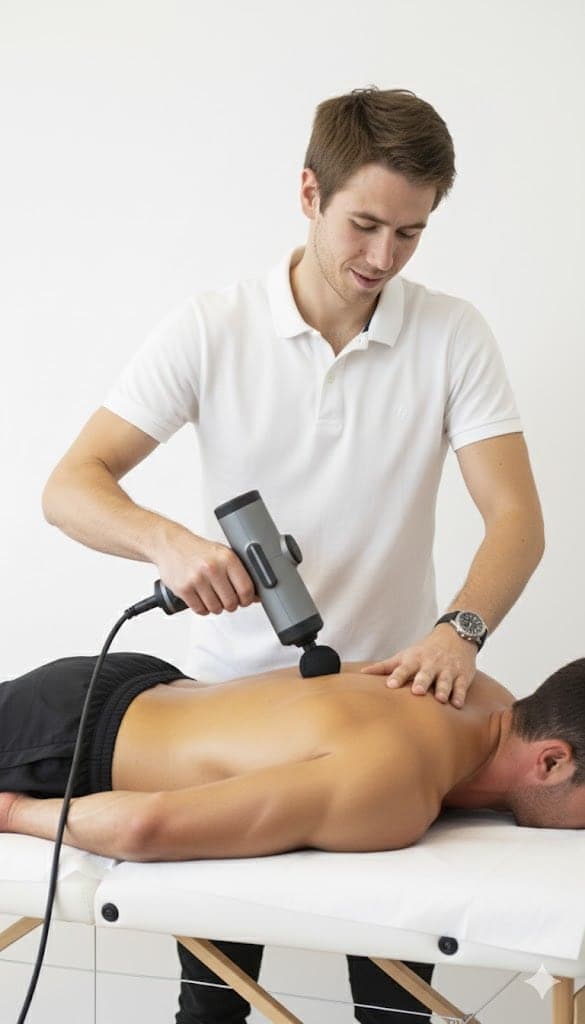
Written by
Chris
Massage therapist, nutrition and exercise physiologist
Norwegian-certified with a Bachelor’s in Physical Education and Nutrition and over ten years of clinical practice, working from a portable table in clients’ homes across the Paphos district.
This article is general information, not a medical diagnosis. If you have severe, worsening or unexplained pain, numbness, weakness, or pain after an accident, see a doctor first.