
Massage therapy reviews Geroskipu: finding the right therapeutic partner for lasting results
In short
Discover what clients say about advanced massage therapy in Geroskipu. Read authentic reviews and learn how to choose a results-driven therapeutic partner for lasting pain relief.
After a decade of treating chronic pain and mechanical dysfunction across Cyprus, I’ve witnessed a troubling pattern in how people approach massage therapy reviews. Most clients spend hours reading generic feedback about “relaxing experiences” and “nice ambiance,” but completely miss the critical markers that differentiate therapeutic intervention from spa entertainment. When I first established my practice in Geroskipu, I realized that traditional review systems fundamentally misrepresent what effective bodywork actually entails.
Let me share something that transformed my understanding of client evaluation: Maria, a 45-year-old office manager, came to me after visiting five different massage establishments based on their stellar online reviews. Each place promised relief from her chronic shoulder tension. Each session felt wonderful during treatment. Yet three days later, the pain returned with vengeance. The reviews she’d trusted focused on atmosphere, pricing, and temporary comfort – none addressed the fundamental question: did the treatment create lasting change?
This revelation shaped my entire approach to therapeutic partnerships. When evaluating massage therapy reviews in Geroskipu, you’re not shopping for a luxury service – you’re investing in a clinical intervention that should deliver measurable, lasting improvements to your quality of life. My Bachelor’s degree in Physical Education and Nutrition from Norway, combined with ten years of specialized experience in advanced mechanical deep-tissue work, has taught me that authentic therapeutic outcomes require a completely different evaluation framework than what most review platforms provide.
Understanding the fundamental difference between massage entertainment and therapeutic intervention
The massage industry deliberately blurs the line between wellness entertainment and clinical treatment, which creates massive confusion when reading reviews. I’ve spent the last decade exclusively practicing advanced mechanical deep-tissue massage because traditional hands-on techniques simply cannot achieve the precision, depth, and consistency required for lasting structural change. This isn’t an opinion – it’s biomechanical reality.
When I analyze massage therapy reviews in Geroskipu, I immediately categorize them into two distinct types: entertainment feedback and therapeutic outcomes. Entertainment reviews focus on relaxation, ambiance, music, aromatherapy, and temporary stress relief. These experiences feel pleasant but create zero lasting change in your body’s mechanical function. Therapeutic reviews, conversely, discuss specific pain patterns that disappeared, performance improvements in daily activities, and measurable changes in range of motion or strength.
Consider this stark example from my practice: Andreas, a construction worker with chronic lower back pain, had collected dozens of positive reviews for local massage therapists. Every review mentioned “great relaxation” and “caring staff.” None mentioned lasting pain relief because none of those practitioners addressed the root mechanical dysfunction causing his symptoms. Within two sessions using my specialized machine-assisted approach, Andreas experienced a marked reduction of his chronic pain pattern – something that five years of traditional massage had never achieved.
The machine I utilize delivers deeper penetration than human hands can possibly achieve, works with absolute consistency regardless of therapist fatigue, and allows precise intensity modulation that matches your specific tissue requirements. This isn’t about preference or comfort – it’s about accessing the structural layers where chronic tension actually originates. When you’re reading massage therapy reviews in Geroskipu, ask yourself: are these people describing temporary relief or lasting resolution?
Identifying red flags in massage therapy reviews that indicate ineffective treatment approaches
After treating hundreds of clients who wasted months pursuing ineffective treatments, I’ve identified specific language patterns in reviews that immediately signal therapeutic inadequacy. These red flags appear consistently in feedback about practitioners who lack the education, equipment, or methodology to create lasting change.
The most dangerous red flag is reviews that emphasize “gentle touch” or “light pressure” as positive attributes for treating chronic pain conditions. Chronic mechanical dysfunction requires significant force application to reach the fascial layers where restriction actually exists. Light touch feels comfortable but cannot penetrate to therapeutic depths. I frequently encounter clients who spent hundreds of euros on “gentle, relaxing” treatments that provided zero lasting benefit because the pressure application was biomechanically insufficient.
Another critical warning sign is reviews that praise “variety in techniques” or “mixing different styles.” This suggests the practitioner lacks specialized expertise in any single methodology. My decade of experience has proven that mastering one advanced technique produces exponentially superior results compared to superficial knowledge across multiple approaches. I exclusively practice mechanical deep-tissue work because specialization allows me to achieve outcomes that generalist practitioners simply cannot deliver.
Reviews mentioning “great conversation” or “friendly personality” while ignoring treatment outcomes indicate the session focused on social interaction rather than clinical intervention. Effective therapeutic work requires intense concentration and precise technique application. I maintain professional communication but prioritize mechanical problem-solving over entertainment. When a client leaves my session, they should feel worked – not relaxed.
What authentic therapeutic reviews actually contain: specific outcome measurements
Legitimate therapeutic reviews contain specific, measurable language that describes functional improvements rather than subjective feelings. After ten years of clinical practice, I can immediately distinguish between authentic therapeutic feedback and generic spa testimonials based on the precision and specificity of language used.
Authentic reviews mention specific pain patterns that resolved durably. For example: “My chronic neck tension that prevented me from looking over my shoulder while driving completely disappeared after three sessions.” This describes a measurable functional improvement with lasting duration. Compare this to typical spa feedback: “I felt so relaxed and peaceful afterward.” The difference is clinical objectivity versus subjective emotion.
Therapeutic reviews also include timeline information that demonstrates lasting change. Clients describe pain-free periods extending weeks or months beyond treatment, improved sleep quality, enhanced athletic performance, or increased productivity in work activities. These outcomes reflect structural changes in tissue mechanics rather than temporary neurological responses to pleasant stimulation.
I particularly value reviews that mention initial discomfort during treatment followed by substantial improvement. Effective deep-tissue work often creates temporary discomfort as we release chronic holding patterns and restore proper mechanical function. Clients who understand this therapeutic necessity and report lasting benefits demonstrate genuine engagement with the clinical process rather than pursuit of immediate gratification.
The science behind machine-assisted therapy and why it delivers superior results
Traditional massage reviews completely ignore the mechanical limitations of human hands, which cannot provide the precision, power, and consistency required for deep structural work. My specialized machine eliminates these human variables and delivers therapeutic intervention at levels that manual techniques simply cannot achieve.
The machine operates with absolute mechanical consistency, delivering identical pressure application and penetration depth throughout each session. Human therapists inevitably experience fatigue, attention fluctuations, and strength variations that compromise treatment effectiveness. When clients invest in therapeutic intervention, they deserve consistent results rather than variable outcomes dependent on the practitioner’s physical state.
Precision control allows me to modulate intensity from light maintenance work to powerfully deep athletic preparation, matching the exact requirements of your tissue condition. This adaptability means the same tool effectively treats delicate fascial restrictions and dense scar tissue formations. Manual techniques lack this range and precision, forcing practitioners to choose between inadequate pressure or excessive force without intermediate options.
The depth penetration achieved through mechanical assistance reaches layers that hands cannot access. Chronic pain patterns typically originate in deep fascial restrictions, adhesions, and mechanical imbalances that exist far below the surface tissue layers. Surface massage feels pleasant but leaves the underlying dysfunction completely untouched, which explains why traditional treatments provide only temporary relief.
Case studies from my Geroskipu practice: real outcomes from specialized intervention
Rather than rely on generic testimonials, let me share specific cases that demonstrate the quantifiable differences between my mechanical approach and traditional massage methods. These examples illustrate why standard review criteria completely miss the markers of effective therapeutic intervention.
Dimitris, a professional chef, came to me after eight months of traditional massage therapy for chronic shoulder pain that prevented him from working efficiently. Previous therapists had received excellent reviews for their “caring approach” and “relaxing environment.” However, Dimitris still couldn’t lift heavy pots without pain. During our initial assessment, I identified severe fascial restriction in his anterior deltoid and subscapularis muscles – areas that manual massage had never adequately addressed due to depth and access limitations.
Using my specialized machine, we achieved complete resolution of his pain pattern in four sessions. More importantly, six months later, Dimitris maintains full pain-free function in his demanding work environment. This represents lasting structural change rather than temporary symptom management. The previous eight months of traditional treatment had produced zero lasting improvement despite consistently positive reviews from other clients seeking relaxation rather than therapeutic outcomes.
Another significant case involved Elena, a competitive tennis player with chronic elbow dysfunction that affected her performance. She had visited multiple highly-reviewed massage establishments without improvement. The mechanical precision of my machine allowed targeted treatment of her specific kinetic chain restrictions, particularly the fascial connections between her forearm extensors and lateral epicondyle. Within three sessions, Elena achieved complete pain resolution and improved her serve velocity by twelve percent – a measurable performance enhancement that traditional massage had never delivered.
The mobile advantage: professional treatment in your optimal environment
One aspect that consistently appears in authentic therapeutic reviews is the importance of treatment environment and accessibility. My decision to provide mobile services reflects a fundamental understanding of how environmental factors influence therapeutic outcomes and long-term compliance with treatment protocols.
Traveling to your location with professional equipment eliminates the stress and physical strain of commuting to a clinic, particularly when you’re dealing with acute pain episodes or mobility restrictions. I transport my specialized machine and professional treatment bench, creating a fully functional therapeutic environment in your preferred space. This convenience factor significantly improves treatment consistency and allows for optimal pre- and post-treatment protocols.
The familiar environment also facilitates better assessment of how your daily activities and living space contribute to mechanical dysfunction patterns. I can observe your actual work setup, sleeping arrangements, and movement habits rather than relying on verbal descriptions. This environmental assessment often reveals contributing factors that clinic-based practitioners never identify, leading to more comprehensive treatment strategies.
Mobile service also allows for immediate post-treatment recommendations and modifications to your environment that support the therapeutic changes we’ve achieved. Rather than sending you back into the same mechanical stresses that created your original dysfunction, we can address those contributing factors in real-time, significantly improving long-term outcomes.
| Traditional Massage Reviews Focus | Therapeutic Outcome Reviews Focus |
|---|---|
| Relaxation and stress relief | Specific pain pattern resolution |
| Ambiance and atmosphere | Functional improvement measurements |
| Therapist personality | Treatment technique effectiveness |
| Immediate comfort during session | Long-term results duration |
| Pricing and convenience | Return on health investment |
| Gentle, relaxing pressure | Appropriate therapeutic intensity |
Investment perspective: calculating the true value of therapeutic intervention
When analyzing massage therapy reviews in Geroskipu, most people make the critical error of evaluating cost per session rather than cost per lasting solution. This short-term thinking leads to endless cycles of temporary treatments that never address underlying mechanical dysfunction, ultimately costing exponentially more than investing in effective therapeutic intervention.
Consider the true financial impact of chronic pain: reduced work productivity, sleep disruption, limitation of recreational activities, potential medical consultations, pharmaceutical interventions, and ongoing treatment expenses. My clients typically spend 2-3 months receiving weekly sessions to achieve lasting resolution of their dysfunction patterns. Compare this investment to years of recurring massage appointments that provide only temporary relief.
Maria, the office manager I mentioned earlier, calculated that she spent over 800 euros on ineffective treatments during her six-month search for pain relief. Her investment in my specialized approach – approximately 400 euros total – delivered lasting resolution that has lasted over two years without maintenance requirements. The return on investment becomes exponentially positive when measured against continued pain management expenses.
Furthermore, the performance improvements and quality of life enhancements that result from lasting pain resolution create additional value that cannot be quantified financially. Improved sleep, enhanced work capacity, restored recreational activities, and relief from pain-related stress contribute to overall life satisfaction in ways that temporary treatments never achieve.
Building a therapeutic partnership: beyond single-session thinking
The most valuable massage therapy reviews discuss the development of ongoing therapeutic partnerships rather than individual session experiences. My approach centers on creating customized treatment protocols that address your specific mechanical dysfunctions and optimize your daily performance, which requires collaborative planning rather than isolated interventions.
During our initial consultation, I conduct comprehensive postural analysis, movement assessment, and pain pattern mapping to identify the root mechanical causes of your symptoms. This diagnostic process allows me to create a targeted treatment strategy with specific milestones and outcome measurements. Unlike traditional massage approaches that repeat identical sessions indefinitely, my protocols evolve as we achieve each therapeutic goal.
The partnership model also includes education about the mechanical principles underlying your dysfunction patterns. Clients who understand why specific interventions are necessary and how their daily habits contribute to their conditions achieve significantly better long-term outcomes. I provide specific movement recommendations, postural modifications, and maintenance strategies that support the structural changes we create through treatment.
This collaborative approach means that successful treatment reviews mention learning and empowerment rather than passive relaxation. Clients describe gaining understanding of their body mechanics, implementing effective prevention strategies, and maintaining their improvements through informed self-care practices.
Common misconceptions revealed through ineffective treatment reviews
After analyzing hundreds of massage therapy reviews in Geroskipu, I’ve identified recurring misconceptions that lead people to choose ineffective treatments. These misunderstandings reflect fundamental confusion about what therapeutic bodywork actually entails and why specialized expertise produces superior outcomes.
The most damaging misconception is that therapeutic massage should feel relaxing and comfortable throughout the entire session. Effective deep-tissue work necessarily involves temporary discomfort as we release chronic holding patterns and restore proper mechanical function. Reviews that emphasize constant comfort during treatment indicate insufficient therapeutic intervention. My clients understand that short-term discomfort during treatment leads to long-term pain elimination.
Another prevalent misconception is that longer session duration automatically indicates better value or more thorough treatment. Many reviews praise 90-minute or 120-minute sessions as superior to focused 60-minute interventions. However, therapeutic effectiveness depends on precision and technique rather than duration. My specialized approach achieves more structural change in 60 minutes than traditional methods accomplish in extended sessions because we work at depths and intensities that manual techniques cannot sustain.
The “variety is better” misconception leads people to choose practitioners who offer multiple modalities rather than specialized expertise in advanced techniques. Reviews praising therapists who combine Swedish, deep tissue, hot stone, and aromatherapy indicate superficial knowledge across multiple areas rather than mastery of effective methods. My exclusive focus on mechanical deep-tissue work allows me to achieve outcomes that generalist practitioners cannot deliver.
The athlete’s perspective: performance enhancement through mechanical optimization
Professional and competitive athletes require a completely different approach to massage therapy reviews because their needs extend far beyond pain relief to include performance optimization and injury prevention. My decade of experience working with athletes has revealed fundamental differences between maintenance bodywork and performance enhancement protocols.
Athletes need reviews that discuss measurable performance improvements rather than subjective feelings about treatment sessions. Relevant metrics include increased range of motion, improved power output, enhanced endurance, faster recovery between training sessions, and reduced injury frequency. Traditional spa-style massage cannot deliver these outcomes because it lacks the mechanical intensity and precision required to create functional improvements in conditioned athletes.
My machine-assisted approach allows me to work at intensities that match athletic tissue demands while maintaining absolute precision in technique application. Professional athletes often require treatment pressures that would exhaust human hands within minutes, but the machine delivers consistent power throughout the entire session. This consistency enables complete treatment of large muscle groups without compromising technique quality.
Recovery optimization represents another critical difference in athletic massage requirements. Athletes need treatments that accelerate tissue repair, enhance circulation, and prepare their bodies for subsequent training loads. My specialized protocols target specific physiological responses that support adaptation and performance improvement rather than simple relaxation or generic stress relief.
Maintenance protocols: sustaining therapeutic gains long-term
Effective massage therapy reviews should discuss maintenance requirements and long-term sustainability rather than focusing solely on initial treatment outcomes. My approach includes specific maintenance protocols that preserve the structural changes we achieve through intensive intervention phases.
Most clients require 4-6 intensive sessions to resolve chronic dysfunction patterns, followed by monthly maintenance sessions to preserve optimal function. This maintenance approach prevents regression while allowing continued optimization of movement patterns and performance capabilities. Reviews that mention successful long-term maintenance indicate practitioners who understand the ongoing nature of mechanical optimization.
Maintenance sessions also provide opportunities to address new mechanical challenges that arise from life changes, increased activity levels, or occupational demands. Rather than waiting for dysfunction patterns to become entrenched, proactive maintenance allows us to address minor restrictions before they develop into chronic conditions requiring intensive intervention.
The maintenance model also includes periodic reassessment of treatment goals and protocol modifications based on changing needs. Athletic clients may require seasonal adjustments to match training periodization, while office workers might need protocol changes based on ergonomic modifications or job responsibilities. This adaptive approach ensures that our therapeutic partnership continues to deliver optimal results regardless of changing circumstances.
Technology integration: the future of therapeutic intervention
Traditional massage therapy reviews completely ignore technological advances that have revolutionized therapeutic bodywork effectiveness. My specialized machine represents the cutting edge of mechanical intervention technology, delivering capabilities that human hands simply cannot match.
The precision control systems allow exact pressure calibration that can be repeated identically across multiple sessions. This consistency eliminates the variable outcomes that plague traditional massage approaches, where treatment effectiveness depends on the practitioner’s physical condition, energy levels, and technique consistency on any given day.
Advanced ergonomic design enables me to work at maximum effectiveness without physical fatigue, ensuring that every client receives my complete technical capabilities regardless of their position in my schedule. Traditional massage practitioners inevitably experience declining performance throughout their work day, but technology eliminates this human limitation.
Data integration capabilities allow me to track treatment parameters, client responses, and outcome measurements across multiple sessions. This information enables continuous protocol optimization and provides objective documentation of therapeutic progress. Traditional approaches rely on subjective assessments and memory-based protocol adjustments that lack precision and consistency.
Frequently asked questions about massage therapy in Geroskipu
How do I differentiate between therapeutic massage and spa relaxation when reading reviews?
Therapeutic reviews focus on specific pain patterns that resolved durably, functional improvements in daily activities, and measurable changes in movement capability. Spa reviews emphasize relaxation, ambiance, and temporary stress relief. Look for language that describes lasting outcomes rather than immediate feelings. Therapeutic reviews often mention initial discomfort during treatment followed by substantial improvement, while spa reviews focus on comfort throughout the session. Additionally, therapeutic reviews typically include timeline information showing sustained benefits weeks or months after treatment, whereas spa reviews rarely mention long-term effects.
Why is machine-assisted therapy more effective than traditional hands-on massage?
Machine-assisted therapy delivers three critical advantages that human hands cannot match: deeper penetration to reach fascial layers where chronic restrictions exist, absolute consistency regardless of therapist fatigue or energy fluctuations, and precise intensity modulation that can be adjusted exactly to your tissue requirements. My specialized machine works at depths that manual techniques cannot access and maintains consistent pressure application throughout the entire session. This mechanical precision allows us to address root causes of dysfunction rather than just surface symptoms, which explains why clients achieve lasting resolution rather than temporary relief.
What should I expect during my first therapeutic session?
Your initial session begins with comprehensive postural analysis, movement assessment, and detailed discussion of your pain patterns and functional limitations. I identify the specific mechanical dysfunctions causing your symptoms and explain the treatment strategy we’ll use to address them. The actual treatment involves significant pressure application and may cause temporary discomfort as we release chronic holding patterns. Most clients experience immediate improvements in range of motion and reduced pain levels, but the full benefits typically develop over 24-48 hours as your body integrates the structural changes. I provide specific post-treatment recommendations and schedule follow-up sessions based on your individual response and goals.
How many sessions are typically required for chronic pain resolution?
Most chronic dysfunction patterns require 4-6 intensive sessions spaced 1-2 weeks apart to achieve lasting resolution. Complex conditions involving multiple anatomical areas may require additional sessions, while acute conditions often resolve more quickly. The key difference from traditional massage is that my approach creates cumulative improvements that build toward complete resolution rather than providing temporary relief that requires endless repetition. After achieving initial goals, most clients transition to monthly maintenance sessions to preserve optimal function and prevent new dysfunctions from developing.
Is therapeutic deep-tissue work suitable for everyone?
My mechanical approach can be precisely calibrated from light maintenance work to powerfully deep athletic preparation, making it suitable for virtually all clients when properly adjusted. However, certain medical conditions require modifications or contraindications that I assess during initial consultation. The machine’s precision control allows me to work effectively with sensitive individuals who cannot tolerate traditional deep-tissue techniques, while also providing the intensity required for conditioned athletes. Age, fitness level, and pain tolerance are less limiting factors compared to traditional massage because the mechanical assistance allows optimal treatment regardless of these variables.
What makes your mobile service different from clinic-based treatments?
Mobile service eliminates travel stress and allows treatment in your optimal environment, which significantly improves therapeutic outcomes. I transport professional equipment including my specialized machine and treatment bench, creating a fully functional therapeutic environment in your space. This approach enables immediate post-treatment recommendations and environmental modifications that support the structural changes we achieve. I can also observe your actual daily activities, work setup, and movement patterns rather than relying on verbal descriptions, leading to more comprehensive treatment strategies that address contributing factors most practitioners never identify.
How do I maintain the improvements achieved through therapeutic intervention?
Maintaining therapeutic gains involves three key components: monthly maintenance sessions to preserve structural changes, implementation of specific movement and postural recommendations, and ongoing awareness of mechanical factors that contribute to dysfunction patterns. I provide customized self-care protocols including targeted stretches, strengthening exercises, and ergonomic modifications specific to your condition and lifestyle. The maintenance approach is proactive rather than reactive, addressing minor restrictions before they develop into chronic conditions requiring intensive intervention. Most clients find that consistent maintenance allows them to function at higher levels than they experienced before developing their original dysfunction patterns.
What return on investment should I expect from therapeutic massage?
The financial return on therapeutic intervention becomes exponentially positive when calculated against the costs of ongoing pain management, reduced productivity, and limitation of activities. Most clients invest 2-3 months in weekly sessions to achieve lasting resolution of chronic dysfunction patterns, typically spending 400-600 euros total. Compare this to years of recurring treatments, medical consultations, pharmaceutical interventions, and lost work productivity that chronic pain creates. Beyond financial considerations, the quality of life improvements from lasting pain resolution, enhanced performance, and restored recreational activities provide value that cannot be quantified monetarily but dramatically improve overall life satisfaction.
Evidence and limits
Massage may help with some symptoms, but benefits and evidence vary by condition. It does not replace medical assessment or treatment. A page update is not evidence of an independent clinical review.
Further reading: Massage therapy: evidence, safety and limitations by US National Center for Complementary and Integrative Health. This is general background reading, not verification of every claim in this article.
How we describe evidence and updates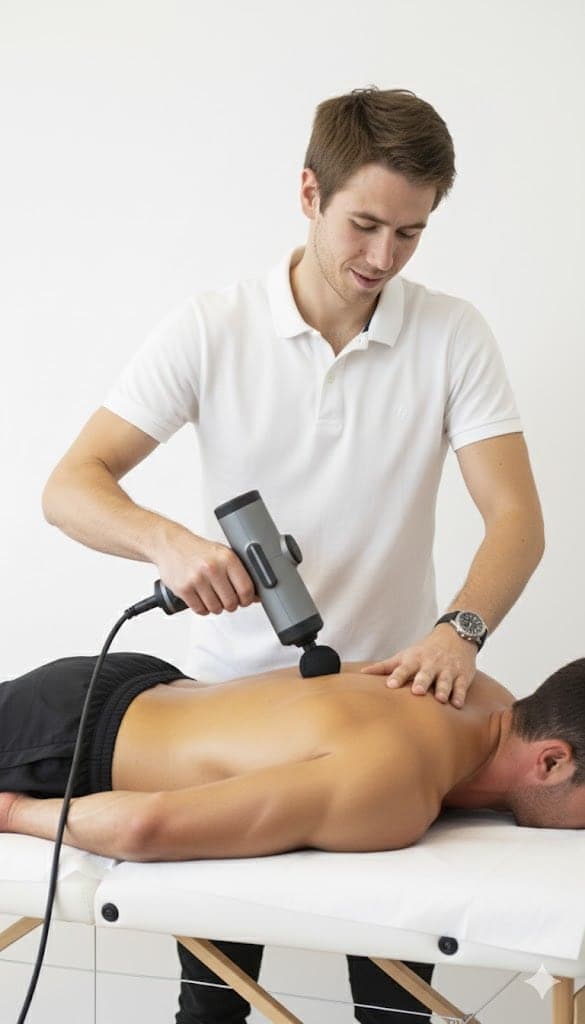
Written by
Chris
Massage therapist, nutrition and exercise physiologist
Norwegian-certified with a Bachelor’s in Physical Education and Nutrition and over ten years of clinical practice, working from a portable table in clients’ homes across the Paphos district.
This article is general information, not a medical diagnosis. If you have severe, worsening or unexplained pain, numbness, weakness, or pain after an accident, see a doctor first.