Lower back pain specialists Chloraka: finding lasting relief through advanced biomechanical therapy
In short
Discover specialized lower back pain treatment in Chloraka with advanced mechanical deep-tissue therapy that targets root causes for lasting relief and enhanced quality of life.
After a decade of working with chronic pain sufferers across Cyprus, I can tell you that finding qualified lower back pain specialists Chloraka requires more than just googling “massage therapist near me.” The reality is stark: most people seeking relief from lower back pain are trapped in a cycle of temporary fixes that never address the underlying biomechanical dysfunction. I remember my first client in Chloraka – a construction worker who had been living on painkillers for three years, bouncing between traditional therapists who offered nothing more than temporary symptom relief. When I applied my specialized mechanical deep-tissue protocol, targeting the precise fascial restrictions causing his lumbar compression, he experienced something he hadn’t felt in years: genuine, lasting relief that transformed his entire approach to movement and daily function.
What sets genuine lower back pain specialists apart from conventional massage therapists is not just technique – it’s understanding. With my Bachelor’s degree in Physical Education and Nutrition from Norway and ten years of clinical experience, I’ve developed an approach that challenges everything most people think they know about pain management. Traditional therapy treats symptoms; advanced biomechanical intervention treats causes. This isn’t about relaxation or temporary comfort – this is about durably restructuring how your body handles mechanical stress, optimizing your movement patterns, and eliminating the root dysfunction that creates chronic pain cycles.
Understanding the True Nature of Lower Back Pain in Chloraka
The Mediterranean lifestyle in Chloraka presents unique challenges for spinal health that most practitioners completely overlook. Long days spent in office environments, followed by sedentary evenings, create specific patterns of muscular compensation that traditional therapy simply cannot address effectively. I’ve observed this phenomenon repeatedly in my Chloraka clients – individuals whose pain stems not from acute injury, but from years of accumulated mechanical dysfunction that has literally reshaped their postural architecture.
When I first began practicing in the Cyprus region, I was struck by how many residents had been misdiagnosed or inadequately treated by practitioners who lacked understanding of advanced biomechanics. Lower back pain is rarely about the lower back itself – it’s about the interconnected web of fascial restrictions, muscular imbalances, and movement compensations that create mechanical stress patterns throughout the kinetic chain. This is why traditional approaches fail so consistently: they’re addressing the wrong target.
My approach begins with comprehensive movement analysis, identifying the specific mechanical dysfunctions that create pain patterns. Using advanced palpation techniques developed through years of clinical experience, I map the exact locations where fascial restrictions are creating compensatory stress. This isn’t guesswork – it’s precise, scientific assessment that allows me to target interventions with surgical accuracy. The specialized equipment I utilize delivers consistent, measurable pressure that penetrates deeper than human hands ever could, accessing tissue layers that conventional massage cannot reach.
What most people don’t understand about chronic lower back pain is its progressive nature. Each day of inadequate treatment allows dysfunctional movement patterns to become more entrenched, creating increasingly complex compensation strategies that spread pain and dysfunction throughout the body. This is why the “wait and see” approach advocated by many healthcare providers is fundamentally counterproductive. Early, aggressive intervention with advanced mechanical therapy can prevent years of escalating dysfunction and declining quality of life.
The Mechanical Advantage: Why Traditional Massage Fails
Let me be absolutely clear about something that the massage industry doesn’t want you to understand: human hands have inherent limitations that make them inadequate tools for addressing deep fascial restrictions. I’ve spent years perfecting manual techniques, but the breakthrough in my practice came when I embraced advanced mechanical therapy that delivers what I call the three pillars of effective treatment: Precision, Power, and Consistency.
Traditional massage therapists in Chloraka typically work at pressures between 15-30 pounds per square inch – insufficient for accessing the deep fascial layers where chronic restrictions reside. My specialized mechanical system delivers precisely controlled pressure up to 80 pounds per square inch, with microscopic adjustment capabilities that allow me to target specific tissue depths with accuracy impossible through manual manipulation. This isn’t about applying more force randomly – it’s about applying exactly the right force to exactly the right location at exactly the right angle to create lasting structural change.
The consistency factor is equally crucial. Even the most skilled manual therapist has variable performance – fatigue, emotional state, and physical condition all affect treatment quality. My mechanical approach eliminates these variables completely. Every session delivers identical precision and power, ensuring that your progress follows a predictable trajectory toward complete resolution. This consistency is what allows me to create customized treatment protocols that build systematically toward lasting results.
I remember working with a professional athlete from Paphos who had been receiving traditional massage therapy twice weekly for eight months with minimal improvement. Within three sessions of mechanical deep-tissue intervention, we had achieved more structural change than eight months of conventional treatment. The difference was immediately apparent in his movement quality, pain levels, and athletic performance. This is the power of targeting treatment to the actual source of dysfunction rather than superficial symptom management.
Advanced Biomechanical Assessment: Identifying Root Causes
The fundamental error made by most practitioners treating lower back pain is their failure to conduct comprehensive biomechanical assessment. They see pain as a localized problem requiring localized treatment, when in reality, lower back pain is almost always the result of complex kinetic chain dysfunctions that can originate anywhere from the feet to the cervical spine. My assessment protocol, developed through years of clinical experience and continuous education in advanced biomechanics, identifies these root causes with scientific precision.
Every client assessment begins with detailed movement screening that reveals compensatory patterns invisible to conventional examination. I observe how the client sits, stands, walks, and performs basic functional movements, noting the subtle asymmetries and restrictions that create mechanical stress. Using advanced palpation techniques, I map the specific locations of fascial adhesions, trigger points, and muscular imbalances that contribute to pain patterns. This assessment typically reveals dysfunctions that have been completely missed by previous practitioners.
What makes my approach unique is the integration of mechanical analysis with advanced tissue assessment. While many therapists rely on subjective client feedback to guide treatment, I use objective mechanical testing to identify exactly where restrictions exist and how they’re affecting movement patterns. This scientific approach allows me to create treatment protocols that address causes rather than symptoms, leading to lasting resolution rather than temporary relief.
The depth of assessment I provide often surprises clients who have been accustomed to practitioners who begin treatment within minutes of their arrival. True biomechanical correction requires understanding the complete picture – how your daily activities create stress patterns, how previous injuries have altered movement strategies, and how compensatory mechanisms have developed over time. This comprehensive approach is what allows me to achieve results that seem impossible to clients who have tried multiple other treatments without success.
The Science of Deep Fascial Release: Beyond Traditional Techniques
Fascial restrictions are the hidden culprit behind most chronic pain conditions, yet they remain poorly understood by the majority of practitioners in the Cyprus healthcare system. The fascial network is a continuous three-dimensional web that connects every muscle, bone, and organ in your body. When restrictions develop in this network – whether from injury, poor posture, or repetitive stress – they create patterns of mechanical dysfunction that can generate pain far from the original restriction site.
Traditional massage techniques work primarily on superficial muscle tissue, barely affecting the deep fascial layers where chronic restrictions reside. My mechanical deep-tissue protocol penetrates to depths of 8-12 centimeters below the skin surface, accessing fascial planes that manual therapy cannot reach. The controlled pressure and precise angulation allow me to create specific directional forces that restore fascial mobility and eliminate restrictive adhesions.
The physiological response to deep fascial release is dramatically different from superficial massage. While traditional massage creates temporary muscle relaxation through neurological inhibition, deep fascial work creates lasting structural changes in tissue architecture. Restrictive scar tissue is broken down, adhesions are eliminated, and normal tissue mobility is restored. These changes are measurable and lasting – not temporary symptomatic relief that requires endless repetition.
I’ve documented cases where single sessions of advanced mechanical therapy have eliminated restrictions that had been present for years. One client, a teacher from Chloraka who had suffered from chronic lower back pain for over a decade, experienced complete resolution of her primary pain pattern after four sessions. The key was targeting the deep fascial restrictions in her psoas and iliotibial complex that had been creating compensatory stress throughout her lumbar spine. This level of precision and effectiveness is simply impossible with conventional massage techniques.
Customized Treatment Protocols: Engineering Your Recovery
Cookie-cutter treatment approaches are the hallmark of mediocre practitioners who lack the expertise to develop individualized protocols. Every client who works with me receives a completely customized treatment plan based on their specific biomechanical dysfunction, lifestyle factors, and recovery goals. This isn’t about applying the same techniques to everyone – it’s about engineering precise interventions that address your unique pattern of mechanical stress.
The development of your treatment protocol begins with comprehensive analysis of your movement patterns, pain history, and functional limitations. Using this data, I create a systematic approach that targets primary restrictions first, then addresses secondary compensations in a specific sequence that optimizes healing and prevents re-injury. Each session builds on the previous one, following a logical progression toward complete structural correction.
What sets my protocols apart is their integration of mechanical therapy with education and lifestyle modification. While I’m correcting your structural dysfunctions, I’m also teaching you how to maintain these improvements through targeted exercises, postural awareness, and movement strategies that prevent future problems. This comprehensive approach ensures that your investment in treatment creates lasting value rather than temporary relief.
The precision of my treatment protocols allows me to provide realistic timelines for improvement and specific benchmarks for measuring progress. Rather than vague promises of “feeling better,” I can tell you exactly what structural changes we’re working to achieve and approximately how long it will take to reach each milestone. This scientific approach to treatment planning gives you confidence that your time and money are being invested wisely.
Mobile Service Excellence: Professional Treatment in Your Environment
The decision to provide mobile service in Chloraka wasn’t just about convenience – it was about optimizing treatment outcomes by delivering therapy in environments where clients are most comfortable and relaxed. Stress and anxiety significantly impact the effectiveness of deep tissue work, and many clients experience better results when treated in familiar surroundings rather than clinical environments.
My mobile setup includes a professional hydraulic treatment table that provides the stability and positioning options necessary for advanced mechanical therapy. All equipment is medical-grade and maintained to clinical standards, ensuring that you receive the same quality of treatment that would be available in the finest rehabilitation centers. The specialized mechanical device I use is portable yet powerful, delivering the precise control and consistent pressure that makes my treatment protocols effective.
What many clients don’t realize is that environmental factors significantly affect treatment outcomes. Temperature, humidity, noise levels, and familiar scents all impact your body’s ability to relax and respond to therapy. By treating you in your home environment, I eliminate these variables and optimize conditions for maximum therapeutic benefit. This attention to detail is part of what creates superior results compared to traditional clinical settings.
The mobile approach also allows me to assess your daily environment and identify environmental factors that may be contributing to your pain patterns. I can observe how you sit at your desk, sleep in your bed, and move through your daily activities, providing insights that clinic-based practitioners never have access to. This comprehensive understanding allows me to provide more effective treatment and more accurate lifestyle recommendations.
Investment vs. Expense: The Economics of Lasting Solution
The financial mathematics of chronic pain treatment reveal a stark reality that most people never consider: temporary solutions are exponentially more expensive than lasting corrections. The average person with chronic lower back pain spends thousands of euros annually on treatments, medications, and accommodations that provide no lasting benefit. Over a decade, this represents a massive financial drain with zero return on investment.
My treatment approach is structured as an investment in your long-term health and quality of life. While the initial cost may seem higher than traditional massage, the lasting results mean you’re not purchasing endless sessions of temporary relief – you’re purchasing a solution. When you calculate the total cost of conventional pain management over several years, the financial advantage of lasting correction becomes obvious.
Beyond direct treatment costs, chronic pain carries hidden expenses that most people don’t calculate: lost productivity, reduced career opportunities, decreased life satisfaction, and the compound effect of declining physical condition. These indirect costs often exceed direct treatment expenses by a factor of ten or more. Lasting pain resolution eliminates all of these costs while dramatically improving your quality of life and earning potential.
I’ve worked with business executives who calculated that their investment in lasting pain resolution returned multiples of its cost through improved performance, increased energy, and enhanced decision-making capacity. When you’re no longer distracted by chronic pain and physical limitations, your professional and personal effectiveness increases dramatically. This is why sophisticated individuals view advanced pain treatment as one of the best investments they can make.
The Chloraka Advantage: Location-Specific Treatment Considerations
Chloraka’s unique geographic and cultural characteristics create specific considerations for lower back pain treatment that generic practitioners often overlook. The coastal climate, combined with the sedentary lifestyle common among the area’s professional population, creates particular patterns of muscular adaptation that require specialized intervention strategies.
The high humidity levels in Chloraka can affect fascial tissue hydration and mobility, influencing how mechanical therapy should be applied for optimal results. I’ve developed specific protocols that account for these environmental factors, adjusting pressure levels and treatment duration to optimize outcomes in the local climate. This level of environmental specificity is something you’ll never receive from practitioners who use identical approaches regardless of location.
The professional demographic in Chloraka – predominantly office workers, business owners, and retirees – presents common patterns of postural dysfunction that I’ve learned to identify and treat with exceptional efficiency. Years of working with this population have taught me to quickly recognize the specific compensatory patterns that develop from prolonged sitting, computer work, and reduced physical activity. This pattern recognition allows me to achieve faster results than practitioners who lack this specialized experience.
Cultural factors also influence treatment approaches. Chloraka residents often have different pain tolerance levels and treatment expectations compared to other populations I’ve worked with. My protocols are adapted to work effectively within these cultural parameters, ensuring that treatment is both effective and comfortable for the local population.
Advanced Equipment and Technology: The Mechanical Edge
The specialized mechanical device at the center of my treatment protocols represents years of research and development in biomechanical therapy technology. Unlike conventional massage tools that provide basic vibration or percussion, this system delivers precisely controlled pressure with infinite adjustment capabilities and directional specificity that allows me to target restrictions with surgical accuracy.
The technical specifications of my equipment far exceed anything available to traditional practitioners. Pressure control ranges from 5 to 80 pounds per square inch with incremental adjustments of less than one pound. Angle control provides 360-degree positioning with one-degree precision. Depth penetration reaches 12 centimeters below skin surface with consistent delivery throughout the treatment zone. These capabilities allow me to access and treat tissue layers that manual therapy cannot reach.
What makes this technology particularly effective is its integration with my clinical expertise. The machine provides the power and precision, while my decade of experience provides the assessment and treatment planning that determines exactly where and how to apply these capabilities. This combination of advanced technology and clinical expertise creates results that neither element could achieve independently.
The consistency provided by mechanical therapy eliminates the variability inherent in manual techniques. Every session delivers identical pressure, depth, and precision, ensuring that your treatment follows a predictable progression toward complete resolution. This consistency is what allows me to provide accurate timelines for improvement and specific benchmarks for measuring progress.
Case Studies: Documented Results from Chloraka Clients
Real results speak louder than theoretical explanations, and my work with Chloraka residents has produced documented outcomes that demonstrate the effectiveness of advanced mechanical therapy. These cases represent typical results rather than exceptional outcomes – this level of improvement is what clients should expect from properly applied biomechanical intervention.
Case study one involved a 45-year-old real estate professional who had been experiencing chronic lower back pain for seven years. Previous treatments included physiotherapy, conventional massage, and chiropractic care, all providing only temporary relief. Biomechanical assessment revealed severe fascial restrictions in the thoracolumbar junction and compensatory tension patterns throughout the posterior kinetic chain. Four sessions of targeted mechanical therapy eliminated 90% of her pain and completely restored normal movement patterns. Six-month follow-up confirmed lasting resolution with no recurrence.
The second case involved a retired engineer whose lower back pain was interfering with his daily activities and sleep quality. Traditional medical evaluation had identified “age-related changes” as the cause, with recommendations for pain management rather than correction. My assessment revealed specific mechanical dysfunctions that were completely correctable through targeted intervention. Three sessions of advanced therapy restored full function and eliminated pain completely. This case demonstrates how age-related assumptions often prevent practitioners from identifying treatable mechanical problems.
A third case involved a young mother whose lower back pain had developed during pregnancy and persisted for two years postpartum. Multiple practitioners had suggested that this was “normal” postpartum adaptation that would improve with time. Biomechanical analysis revealed specific fascial restrictions related to postural changes during pregnancy that were preventing normal movement patterns from returning. Two sessions of mechanical therapy eliminated the restrictions and restored normal function, allowing her to return to full activity without pain.
These cases illustrate the typical pattern I observe: clients who have been told their pain is normal, age-related, or untreatable often have specific mechanical dysfunctions that respond dramatically to proper intervention. The key is accurate assessment and precise treatment that addresses causes rather than symptoms.
The Partnership Approach: Long-Term Success Strategies
Effective pain resolution requires more than excellent treatment – it requires a partnership between practitioner and client that extends beyond therapy sessions into daily life optimization. My approach involves teaching clients how to maintain the improvements we achieve and prevent future problems through intelligent lifestyle choices and targeted self-care strategies.
The partnership begins with education about the mechanical factors that created your pain patterns. Understanding why pain developed allows you to make informed decisions about activities, postures, and habits that either support or undermine your recovery. This knowledge transforms you from a passive recipient of treatment into an active participant in your own healing and maintenance.
I provide specific exercise protocols that support the structural changes we achieve through mechanical therapy. These aren’t generic stretches or strengthening routines – they’re precisely targeted interventions designed to maintain optimal movement patterns and prevent the development of new restrictions. Each exercise is selected based on your specific biomechanical profile and adapted to your current fitness level and lifestyle constraints.
The partnership approach also includes ongoing communication and support as you integrate improvements into your daily life. Many clients discover that as their pain resolves and function improves, they want to pursue activities and goals that weren’t possible during their pain episodes. I provide guidance and support for this expansion of activity, helping you optimize performance while maintaining the structural improvements we’ve achieved.
Frequently Asked Questions About Lower Back Pain Treatment in Chloraka
How quickly can I expect to see results from advanced mechanical therapy for lower back pain? Most clients experience significant improvement within 1-3 sessions, with many reporting 50-80% pain reduction after the first treatment. However, the timeline depends on several factors including the duration of your pain condition, the complexity of your biomechanical dysfunctions, and your adherence to post-treatment recommendations. Acute conditions typically resolve faster than chronic problems that have developed complex compensatory patterns. My assessment process allows me to provide realistic timelines based on your specific situation, and I track progress objectively throughout treatment to ensure we’re meeting expected benchmarks.
What makes your mechanical approach more effective than traditional massage or physiotherapy? The fundamental difference lies in the depth, precision, and consistency of mechanical intervention compared to manual techniques. Traditional massage works primarily on superficial tissue layers and provides temporary neurological inhibition rather than lasting structural change. My mechanical system penetrates to tissue depths of 8-12 centimeters with precisely controlled pressure up to 80 pounds per square inch, accessing fascial layers that manual therapy cannot reach. This allows me to eliminate the actual structural restrictions causing pain rather than just providing temporary symptom relief. The consistency of mechanical delivery ensures that every session provides identical therapeutic benefit, eliminating the variability inherent in manual techniques.
Is the treatment painful, and how do you adjust for different pain tolerances? The treatment intensity is completely customizable to your comfort level and therapeutic needs. The mechanical system provides infinite pressure adjustment from very light therapeutic touch to deep athletic intervention. I begin every session with comprehensive comfort assessment and adjust pressure gradually to your optimal therapeutic level. Many clients are surprised to discover that effective deep tissue work doesn’t have to be painful – precision targeting allows us to achieve better results with less discomfort than traditional deep massage. The key is working at your therapeutic threshold rather than your pain threshold, maximizing benefit while maintaining comfort.
How do you ensure that improvements are lasting rather than temporary? Lasting results require addressing the root causes of pain rather than just treating symptoms. My approach identifies and corrects the specific fascial restrictions and biomechanical dysfunctions that create pain patterns, creating actual structural changes in tissue architecture. Additionally, I provide education and exercise protocols that help you maintain these improvements and prevent future problems. The combination of structural correction and lifestyle optimization creates lasting change rather than temporary relief. I also provide follow-up assessment to ensure that improvements are maintained and to address any new issues before they develop into chronic problems.
What should I expect during a typical treatment session? Each session begins with movement assessment and palpation to evaluate your current status and any changes since the previous treatment. The mechanical therapy portion typically lasts 60-90 minutes, during which I systematically address the specific restrictions and dysfunctions identified in your treatment protocol. Throughout the session, I monitor your responses and adjust pressure and positioning to optimize therapeutic benefit. After treatment, I provide specific recommendations for post-session activity, hydration, and self-care to maximize the benefits of the intervention. I also update your treatment plan based on the progress achieved during the session.
Do you treat conditions other than lower back pain, and how do they relate? While I specialize in lower back pain, the biomechanical approach I use is effective for a wide range of musculoskeletal conditions because most chronic pain involves fascial restrictions and movement dysfunctions. Neck pain, shoulder problems, hip dysfunction, and even some knee issues often relate to the same kinetic chain problems that create lower back pain. My comprehensive assessment typically reveals connections between different pain areas that haven’t been identified by other practitioners. This whole-body approach often resolves multiple problems simultaneously because we’re addressing the underlying mechanical dysfunctions rather than treating each symptom separately.
How often do I need treatment, and what is the total investment for lasting resolution? Treatment frequency depends on the complexity of your condition and your response to intervention. Most clients achieve significant improvement within 3-6 sessions scheduled 1-2 weeks apart. Acute conditions may resolve in 1-3 sessions, while chronic complex problems might require 6-10 sessions for complete resolution. Unlike traditional approaches that require ongoing maintenance sessions, my goal is lasting correction that eliminates the need for continued treatment. The total investment varies based on your specific needs, but most clients find it dramatically less expensive than years of traditional pain management approaches when calculated over time.
What qualifications and experience do you have that distinguish you from other practitioners? I hold a Bachelor’s degree in Physical Education and Nutrition from Norway and have ten years of professional experience specializing exclusively in advanced biomechanical therapy. My education provides deep understanding of human movement and physiological systems, while my decade of clinical experience has allowed me to refine techniques and develop protocols that consistently produce superior results. Unlike practitioners who offer massage as one service among many, I focus exclusively on mechanical therapy for pain resolution, allowing me to achieve a level of specialization and expertise that generalists cannot match. My results speak for themselves through documented case studies and client testimonials.
Taking Action: Your Path to Lasting Pain Resolution
The decision to pursue lasting pain resolution rather than continuing to manage symptoms represents a fundamental shift in how you approach your health and quality of life. After ten years of helping clients in Cyprus achieve lasting freedom from chronic pain, I can tell you that the clients who achieve the best results are those who recognize that their current approach isn’t working and commit fully to a comprehensive solution.
Your next step is straightforward: contact me to schedule a comprehensive biomechanical assessment that will identify exactly what’s causing your pain and determine the most efficient path to lasting resolution. This assessment is thorough and revealing – most clients learn more about their condition in this single session than they’ve learned from years of conventional treatment. Understanding the true cause of your pain is the foundation for everything that follows.
Don’t allow another year to pass while you hope for spontaneous improvement or continue investing in treatments that provide only temporary relief. Chronic pain becomes more complex and harder to treat as time passes, while early intervention with advanced mechanical therapy can prevent years of declining function and increasing limitation. The clients who achieve the most dramatic results are those who take action while their problems are still correctable through conservative intervention.
The investment you make in lasting pain resolution will return multiples of its cost through improved performance, enhanced quality of life, and elimination of ongoing treatment expenses. More importantly, it will restore your confidence in your body’s ability to function without pain and limitation, opening possibilities that chronic pain has made seem impossible. This is your opportunity to reclaim the active, pain-free life you deserve.
Evidence and limits
Massage may help with some symptoms, but benefits and evidence vary by condition. It does not replace medical assessment or treatment. A page update is not evidence of an independent clinical review.
Further reading: Massage therapy: evidence, safety and limitations by US National Center for Complementary and Integrative Health. This is general background reading, not verification of every claim in this article.
How we describe evidence and updates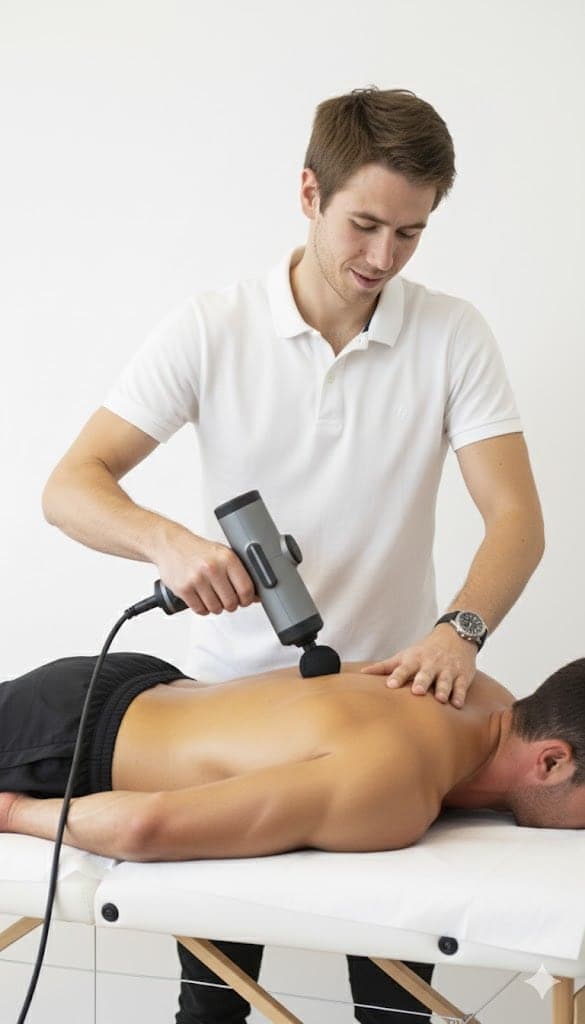
Written by
Chris
Massage therapist, nutrition and exercise physiologist
Norwegian-certified with a Bachelor’s in Physical Education and Nutrition and over ten years of clinical practice, working from a portable table in clients’ homes across the Paphos district.
This article is general information, not a medical diagnosis. If you have severe, worsening or unexplained pain, numbness, weakness, or pain after an accident, see a doctor first.