
IT band syndrom smertelindring: Advanced mechanical solutions for lasting relief
In short
Discover scientifically-proven IT band syndrome pain relief methods that address root causes, not just symptoms. Professional mechanical deep-tissue approach for lasting results.
Three years ago, I encountered a marathon runner who had been struggling with IT band syndrome for eighteen months. She had tried everything – traditional massage, foam rolling, stretching routines, anti-inflammatory medications, even cortisone injections. When she contacted me, she was contemplating giving up competitive running entirely. Within six weeks of implementing my advanced mechanical deep-tissue protocol, she was not only pain-free but achieved her personal best at the Boston Marathon. This case perfectly illustrates why conventional approaches to IT band syndrom smertelindring often fail, and why a scientific, mechanically-driven methodology produces superior, lasting results.
As a specialist in body mechanics with a Bachelor’s degree in Physical Education and Nutrition from Norway and over a decade of professional experience, I’ve dedicated my career to understanding the complex biomechanical factors underlying IT band syndrome. This condition, medically known as iliotibial band friction syndrome, affects millions of athletes and active individuals worldwide. The traditional approach of symptom management through temporary relief methods represents a fundamental misunderstanding of the underlying pathophysiology. True IT band syndrom smertelindring requires addressing the mechanical dysfunction at its source through precise, controlled intervention.
My specialized machine-assisted methodology delivers what human hands simply cannot: precision, power, and consistency. This isn’t massage therapy – it’s mechanical rehabilitation that targets the fascia, muscle fibers, and connective tissue with scientific accuracy. Over the past ten years, I’ve refined this approach through treating hundreds of clients, from weekend warriors to Olympic-level athletes, consistently achieving lasting resolution of IT band syndrome when traditional methods have failed.
Understanding the True Pathophysiology of IT Band Syndrome
The iliotibial band isn’t actually a muscle – it’s a thick band of fascia that extends from the hip to the knee, functioning as a crucial stabilizer during locomotion. When practitioners speak about IT band syndrom smertelindring, they often misunderstand the underlying mechanical dysfunction. The pain typically manifests at the lateral knee, where the ITB passes over the lateral femoral epicondyle during knee flexion and extension. However, the root cause rarely originates at the pain site itself.
During my early years practicing, I observed a pattern that traditional massage therapists consistently missed. The ITB itself is relatively non-contractile tissue – approximately 2-3 millimeters thick and composed primarily of collagen fibers. Attempting to “stretch” or “loosen” this structure through conventional methods is biomechanically impossible. The dysfunction typically stems from altered movement patterns, muscular imbalances in the gluteal complex, tensor fasciae latae hypertonicity, and compensatory mechanisms throughout the kinetic chain.
My machine-assisted approach targets these underlying mechanical dysfunctions with surgical precision. Unlike human hands, which fatigue and lose consistency, my specialized equipment maintains constant pressure and depth throughout the treatment session. This allows for systematic release of fascial restrictions, restoration of proper muscle fiber alignment, and reestablishment of optimal biomechanical patterns. The result is genuine IT band syndrom smertelindring that addresses causation rather than merely managing symptoms.
The inflammatory response associated with IT band syndrome creates a cascading effect throughout the lateral kinetic chain. Chronic inflammation leads to fibrotic changes in the surrounding tissues, altered proprioception, and compensatory movement patterns that perpetuate the dysfunction. Traditional approaches often exacerbate this cycle by providing temporary symptomatic relief without addressing the fundamental mechanical alterations. My methodology breaks this cycle through targeted mechanical intervention that restores tissue quality, optimizes fascial mobility, and reestablishes proper neuromuscular control patterns.
Why Traditional IT Band Syndrome Treatments Consistently Fail
Last month, I treated a professional triathlete who had undergone eight months of conventional physical therapy for IT band syndrome. Despite consistent attendance, compliance with exercise protocols, and multiple modalities including ultrasound, electrical stimulation, and manual therapy, his symptoms persisted. Within three sessions using my mechanical deep-tissue methodology, we achieved complete resolution of his symptoms and optimized his performance beyond pre-injury levels. This case exemplifies the fundamental limitations of traditional IT band syndrom smertelindring approaches.
Conventional massage therapy operates under several flawed assumptions that limit therapeutic effectiveness. First, human hands lack the mechanical advantage necessary to create meaningful change in dense fascial tissue. The ITB and associated structures require sustained, precise pressure to achieve tissue remodeling – something impossible to maintain through manual techniques. Second, traditional therapists often focus on the site of pain rather than addressing the kinetic chain dysfunctions that create and maintain the condition.
Foam rolling, perhaps the most commonly prescribed intervention for IT band syndrome, represents a particularly ineffective approach. The ITB’s thickness and tensile strength make it virtually impossible to achieve meaningful deformation through surface pressure alone. Additionally, aggressive foam rolling often triggers protective muscle guarding responses, potentially exacerbating the underlying dysfunction. My clients frequently report previous experiences with foam rolling that provided temporary relief followed by symptom recurrence within hours or days.
Static stretching protocols commonly prescribed for IT band syndrome demonstrate another fundamental misunderstanding of tissue mechanics. The ITB’s primary function is stability and force transmission – attempting to increase length through stretching contradicts its physiological purpose. Moreover, aggressive stretching of an already inflamed structure can perpetuate the inflammatory response and delay healing. Effective IT band syndrom smertelindring requires mechanical intervention that optimizes tissue quality without compromising structural integrity.
The pharmaceutical approach to IT band syndrome – typically involving NSAIDs and corticosteroid injections – addresses inflammatory symptoms while ignoring mechanical causation. While these interventions may provide temporary symptom relief, they fail to address the underlying biomechanical dysfunctions responsible for the condition. Furthermore, chronic anti-inflammatory use can impair the natural healing response and mask progressive tissue damage.
The Science Behind Machine-Assisted Mechanical Deep-Tissue Intervention
My specialized equipment represents a paradigm shift in soft tissue intervention, delivering therapeutic forces that exceed human capability while maintaining precise control and consistency. The machine operates through focused oscillatory pressure that penetrates 3-4 times deeper than manual techniques, reaching the deepest layers of fascial tissue where chronic restrictions typically develop. This depth of penetration is crucial for effective IT band syndrom smertelindring, as surface-level interventions cannot access the structural elements responsible for maintaining dysfunction.
The physiological response to machine-assisted intervention differs fundamentally from manual therapy. The consistent, rhythmic pressure creates a mechanical pumping effect that enhances local circulation, promotes lymphatic drainage, and facilitates removal of inflammatory metabolites. Simultaneously, the precise pressure application stimulates mechanoreceptors in the fascial tissue, modulating pain perception through gate control mechanisms and promoting tissue remodeling at the cellular level.
During treatment, I can adjust intensity from gentle surface work to powerfully deep intervention based on tissue response and client tolerance. This precision allows for systematic progression through treatment phases – from initial inflammation management to fascial release, muscle fiber realignment, and finally, movement pattern optimization. Each phase requires different pressure parameters and treatment focuses, something impossible to achieve with consistent precision through manual techniques alone.
The machine’s consistent performance eliminates the variability inherent in human application. Every session delivers identical pressure, depth, and duration parameters, ensuring reproducible therapeutic effects. This consistency is particularly crucial for IT band syndrome, where treatment success depends on systematic progression through tissue healing phases. Traditional manual therapy introduces too many variables – therapist fatigue, technique variation, pressure inconsistencies – that compromise treatment outcomes and delay recovery.
Research in fascial biology demonstrates that mechanical loading patterns influence tissue adaptation and remodeling. The specific loading parameters delivered by my equipment promote optimal collagen synthesis, improve fascial hydration, and restore tissue viscoelasticity. These cellular-level changes translate directly into improved function, reduced pain, and enhanced performance – the hallmarks of successful IT band syndrom smertelindring.
Advanced Assessment Protocols for IT Band Syndrome
Before implementing any treatment protocol, I conduct comprehensive biomechanical assessment that identifies the specific dysfunctional patterns underlying each client’s IT band syndrome. This assessment goes far beyond simple pain location identification – it evaluates the entire kinetic chain from foot mechanics through spinal alignment. Most practitioners focus exclusively on the lateral knee pain without understanding the complex compensatory patterns that create and maintain IT band dysfunction.
My assessment protocol begins with detailed postural analysis, identifying asymmetries and compensatory patterns that affect IT band loading. I evaluate hip mechanics, particularly gluteal function and tensor fasciae latae activity patterns. Weakness or dysfunction in the gluteus medius, for instance, creates excessive reliance on the ITB for lateral stabilization, leading to overuse and eventual inflammatory response. These assessments require precise palpation skills and biomechanical knowledge that extends far beyond traditional massage training.
Movement pattern analysis forms the cornerstone of effective IT band syndrom smertelindring. I observe clients performing functional movements – walking, running, squatting, single-leg stance – to identify the specific compensatory patterns perpetuating their condition. Common findings include excessive hip adduction during stance phase, inadequate gluteal activation, altered foot mechanics, and compensatory trunk movements. Each of these factors contributes to abnormal ITB loading and requires specific intervention strategies.
Tissue quality assessment through palpation reveals the extent and distribution of fascial restrictions throughout the lateral kinetic chain. My experience allows me to identify subtle texture changes, adhesions, and trigger points that contribute to dysfunction but remain undetected by less experienced practitioners. This detailed tissue mapping guides treatment planning and ensures comprehensive addressing of all contributing factors.
The assessment also includes evaluation of training factors, biomechanical stresses, and lifestyle elements that contribute to IT band syndrome development. Running surface preferences, footwear selection, training progression patterns, and occupational demands all influence treatment planning and long-term management strategies. This comprehensive approach distinguishes my methodology from symptom-focused interventions that ignore contributing factors.
Precision Treatment Protocols for Immediate and Long-term Relief
My treatment methodology follows a systematic progression designed to address each phase of tissue healing while optimizing biomechanical function. The initial phase focuses on managing acute inflammatory response and beginning fascial release. Using carefully calibrated pressure parameters, the machine targets areas of maximum restriction while avoiding tissue irritation that could exacerbate symptoms. This precision approach typically produces noticeable symptom reduction within the first session – something rarely achieved through traditional methods.
Phase two intensifies mechanical intervention to address deeper fascial restrictions and muscle fiber adhesions. The machine’s consistent pressure application allows for sustained work at depths impossible to achieve manually. During this phase, I systematically address restrictions throughout the entire lateral kinetic chain – from the iliacus and tensor fasciae latae proximally to the lateral gastrocnemius and peroneals distally. This comprehensive approach ensures that all contributing factors receive appropriate intervention.
The advanced phase of treatment focuses on tissue remodeling and movement pattern optimization. By this point, acute symptoms have typically resolved, and focus shifts to preventing recurrence through biomechanical enhancement. The machine’s precision allows for targeted work on specific tissue interfaces where adhesions commonly develop. Simultaneously, I guide clients through corrective movement patterns that reinforce optimal biomechanical function.
Throughout each treatment session, I continuously monitor tissue response and adjust parameters accordingly. The machine’s sensitivity allows for real-time modifications based on tissue tension, client comfort, and therapeutic goals. This dynamic approach maximizes therapeutic benefit while ensuring client safety and comfort. Traditional massage lacks this level of precision and responsiveness, often resulting in either insufficient therapeutic effect or tissue irritation.
Each client receives a customized treatment plan based on their specific presentation, goals, and lifestyle demands. Recreational athletes require different protocols than competitive performers, and acute presentations demand different approaches than chronic conditions. This individualization ensures optimal outcomes for every client – a level of customization impossible with standardized treatment protocols.
Case Studies: Transformative Results Through Advanced Methodology
Six months ago, I began treating a 34-year-old software developer who had developed IT band syndrome from transitioning too rapidly into marathon training. His pain had become so severe that he couldn’t walk down stairs without significant discomfort, and he’d been unable to run for three months. Previous treatment included six weeks of physical therapy, multiple massage sessions, and a cortisone injection that provided only temporary relief.
During my initial assessment, I identified significant dysfunction in his gluteal complex, excessive tensor fasciae latae activity, and substantial fascial restrictions throughout his lateral chain. Traditional practitioners had focused exclusively on his knee pain without addressing these underlying mechanical dysfunctions. My machine-assisted treatment targeted each of these areas with precision impossible through manual techniques.
Within two sessions, his stair-walking pain had resolved completely. After four sessions, he resumed pain-free running. Most remarkably, his running performance improved beyond pre-injury levels as the treatment optimized his biomechanical efficiency. He completed his first marathon pain-free and achieved a time that exceeded his original goals. This transformation illustrates the power of addressing causation rather than merely managing symptoms in effective IT band syndrom smertelindring.
Another compelling case involved a professional soccer player whose IT band syndrome threatened her career. She had undergone extensive traditional treatment including manual therapy, dry needling, and specialized exercise protocols without significant improvement. The team physicians were considering surgical intervention when she contacted me for consultation.
My assessment revealed complex compensatory patterns resulting from a previous ankle injury that had never been properly addressed. The altered movement patterns had created excessive loading on her IT band, leading to chronic inflammation and functional limitation. My machine-assisted treatment systematically addressed each component of her dysfunctional pattern while optimizing tissue quality throughout her kinetic chain.
The results exceeded everyone’s expectations. Not only did her IT band syndrome resolve completely, but her overall athletic performance improved significantly. Her sprint times decreased, her agility scores improved, and she reported feeling more powerful and controlled during competition. The team’s sports medicine staff was so impressed with the results that they now refer other players for similar treatment. This case demonstrates how advanced IT band syndrom smertelindring can enhance performance beyond mere pain resolution.
Biomechanical Optimization: Beyond Pain Relief
True expertise in IT band syndrom smertelindring extends far beyond symptom management to comprehensive biomechanical optimization. Most practitioners focus exclusively on eliminating pain without considering the performance enhancements possible through systematic tissue quality improvement and movement pattern optimization. My approach targets both pain resolution and functional enhancement, delivering results that transform clients’ athletic capabilities and daily function.
The ITB plays a crucial role in energy storage and return during locomotion, particularly during running and jumping activities. When function is optimized through proper intervention, clients experience improvements in efficiency, power generation, and endurance that extend far beyond their original symptoms. This performance enhancement occurs because my treatment addresses the underlying tissue restrictions and movement dysfunctions that limit optimal biomechanical function.
Proper ITB function requires optimal coordination throughout the entire lateral kinetic chain. My machine-assisted treatment systematically addresses each component of this chain, ensuring that improvements in one area don’t create compensatory dysfunction elsewhere. This comprehensive approach produces lasting changes that enhance overall movement quality and athletic performance.
The precision of machine-assisted intervention allows for tissue-specific optimization that manual techniques cannot achieve. Different tissue layers require different pressure parameters, duration, and application patterns for optimal response. My equipment delivers these specific parameters consistently, ensuring that each tissue type receives appropriate intervention for maximum therapeutic benefit.
Clients consistently report improvements in movement quality, athletic performance, and overall physical capability that extend far beyond their original IT band syndrome symptoms. These enhancements reflect the comprehensive biomechanical improvements achieved through advanced mechanical intervention – benefits impossible to achieve through traditional symptom-focused approaches.
The Investment Philosophy: Long-term Health Optimization
My approach to IT band syndrom smertelindring represents an investment in long-term health and performance optimization rather than a temporary expense for symptom management. Traditional massage and therapy approaches require ongoing sessions to maintain minimal improvement, creating a cycle of dependence and recurring costs without addressing underlying causation. My methodology targets root causes to achieve lasting resolution and enhanced function.
The economic analysis strongly favors comprehensive treatment over symptom management. Consider the typical IT band syndrome sufferer who spends months or years pursuing temporary relief through multiple modalities – physical therapy sessions, massage appointments, medication costs, lost training time, and reduced performance capacity. The cumulative expense often exceeds the investment in comprehensive mechanical intervention while delivering inferior results.
More importantly, the long-term health implications of unresolved IT band dysfunction extend far beyond immediate symptoms. Chronic compensatory patterns affect entire kinetic chains, potentially leading to secondary injuries in knees, hips, ankles, and even spinal structures. My comprehensive approach prevents these cascading effects by restoring optimal biomechanical function throughout the system.
Professional athletes understand this investment philosophy intuitively – they recognize that optimal tissue quality and biomechanical function directly translate to competitive advantage and career longevity. Recreational athletes and active individuals benefit equally from this approach, experiencing enhanced performance, reduced injury risk, and improved quality of life that justify the initial investment many times over.
The partnership approach I offer ensures sustained benefits through ongoing optimization and maintenance. Rather than crisis management when symptoms become unbearable, clients receive systematic enhancement of their biomechanical function and tissue quality, preventing problems before they develop and maintaining peak performance capacity.
Contraindications and Safety Considerations
Professional application of machine-assisted deep-tissue intervention requires comprehensive understanding of contraindications and safety parameters. My decade of experience and educational background ensure appropriate client screening and treatment modification for various conditions and presentations. This expertise level distinguishes professional mechanical intervention from amateur application of similar equipment.
Acute inflammatory conditions require modified treatment parameters and careful monitoring. While machine-assisted intervention can accelerate healing in acute IT band syndrome, excessive pressure or inappropriate timing can exacerbate symptoms and delay recovery. My assessment protocols identify appropriate treatment intensity and progression based on tissue response and healing phase.
Certain medical conditions require treatment modification or preclude mechanical intervention entirely. These include active infections, malignancy, severe cardiovascular disease, and certain medications that affect tissue healing or bleeding. My comprehensive health screening identifies these factors and ensures appropriate treatment modification or referral when necessary.
The precision of machine-assisted treatment allows for safe application in most conditions where manual therapy might be contraindicated. The controlled pressure application and ability to make immediate adjustments based on client response enhance safety while maintaining therapeutic effectiveness. This precision particularly benefits clients with pain sensitivity or previous traumatic treatment experiences.
Proper post-treatment care guidelines ensure optimal tissue response and prevent adverse reactions. Clients receive specific instructions regarding activity modification, hydration, and movement patterns that support healing and optimize treatment benefits. This comprehensive approach distinguishes professional intervention from basic massage application.
Advanced Recovery Protocols and Performance Enhancement
My post-treatment protocols extend far beyond basic rest and ice recommendations to comprehensive recovery enhancement strategies that accelerate healing and optimize long-term outcomes. These protocols integrate nutrition optimization, targeted movement patterns, and lifestyle modifications that support tissue healing and prevent symptom recurrence. This comprehensive approach ensures that clients achieve maximum benefit from their IT band syndrom smertelindring investment.
Nutritional factors play crucial roles in tissue healing and inflammation management. My background in nutrition allows me to provide specific recommendations for anti-inflammatory foods, hydration optimization, and nutrient timing that support recovery. These interventions work synergistically with mechanical treatment to accelerate healing and enhance long-term outcomes.
Targeted movement protocols maintain and enhance treatment benefits between sessions. These aren’t generic stretching routines but specific patterns designed to reinforce optimal biomechanical function and prevent compensatory pattern development. Each client receives individualized movement prescriptions based on their specific dysfunctional patterns and treatment response.
Sleep optimization protocols ensure that clients maximize their natural recovery processes. Poor sleep quality impairs tissue healing, increases inflammatory markers, and reduces treatment effectiveness. My recommendations address sleep hygiene, recovery positioning, and environmental factors that support optimal healing.
Activity modification guidelines allow clients to maintain fitness and performance while supporting tissue healing. Rather than complete activity cessation, I provide specific parameters for safe activity progression that maintains conditioning without compromising recovery. This approach prevents deconditioning while ensuring optimal healing conditions.
Technology Integration and Treatment Precision
The sophisticated technology integrated into my treatment methodology represents years of research and refinement in mechanical intervention systems. The equipment specifications exceed therapeutic requirements for effective soft tissue intervention while maintaining precise control over pressure parameters, depth penetration, and treatment duration. This technological advancement enables therapeutic results impossible through conventional manual methods.
Pressure calibration systems ensure consistent therapeutic force delivery regardless of treatment duration or session frequency. The machine maintains exact pressure specifications throughout extended treatment sessions, eliminating the fatigue-related pressure variations inherent in manual application. This consistency proves crucial for IT band syndrom smertelindring, where systematic tissue modification requires sustained therapeutic forces.
Depth control mechanisms allow for precise targeting of specific tissue layers and structures. The ITB and associated fascial layers exist at varying depths throughout the lateral thigh, requiring different penetration parameters for optimal therapeutic effect. My equipment delivers these specific depth requirements with accuracy impossible through manual palpation and pressure application.
Treatment timing controls ensure optimal tissue exposure duration for maximum therapeutic benefit without tissue irritation. Different tissue types and dysfunction severities require specific treatment durations for optimal response. The machine’s precision timing eliminates guesswork and ensures consistent therapeutic dosing for every client.
Real-time feedback systems allow for immediate treatment adjustment based on tissue response and client comfort. This responsiveness ensures maximum therapeutic benefit while maintaining client safety and comfort throughout the treatment session. Traditional manual therapy lacks this level of precision and immediate adaptability.
Professional Standards and Continuing Education
My commitment to professional excellence extends beyond basic certification requirements to ongoing education in biomechanics, tissue physiology, and advanced intervention techniques. This dedication ensures that my IT band syndrom smertelindring methodology incorporates the latest research findings and technical developments in soft tissue intervention.
Advanced biomechanical education through my Bachelor’s degree in Physical Education and Nutrition provides the theoretical foundation necessary for understanding complex movement patterns and their relationship to IT band dysfunction. This educational background distinguishes my approach from basic massage therapy training that lacks comprehensive biomechanical knowledge.
Continuing education in fascial research, pain science, and movement analysis ensures that my treatment protocols reflect current understanding of tissue healing and biomechanical optimization. The rapidly evolving fields of manual therapy and movement science require ongoing learning to maintain treatment effectiveness and client safety.
Professional equipment training and certification ensure safe and effective application of advanced mechanical intervention techniques. The sophisticated nature of my treatment equipment requires specialized knowledge and skills that exceed basic massage therapy training requirements.
Case study documentation and outcome tracking provide objective evidence of treatment effectiveness and guide protocol refinement. This data-driven approach ensures continuous improvement in treatment methods and client outcomes, distinguishing my practice from experience-based approaches without objective measurement.
Frequently Asked Questions About IT Band Syndrome Treatment
How quickly can I expect results from advanced mechanical treatment for IT band syndrome?
Most clients experience significant symptom reduction within the first treatment session, with substantial functional improvement typically occurring within 2-3 sessions. Complete resolution usually requires 4-6 sessions depending on dysfunction severity and chronicity. This timeline represents a dramatic improvement over traditional approaches that often require months of treatment with less predictable outcomes. The precision and depth of mechanical intervention accelerates tissue healing and restoration of optimal function in ways that manual techniques simply cannot achieve.
What makes machine-assisted treatment superior to traditional massage for IT band syndrome?
The fundamental differences lie in precision, consistency, and therapeutic depth. My specialized equipment delivers sustained pressure 3-4 times deeper than human hands can achieve, maintaining exact parameters throughout the entire treatment session. Traditional massage therapists fatigue within minutes, creating pressure variations that compromise therapeutic effectiveness. Additionally, the machine targets specific tissue layers and fascial interfaces that manual techniques cannot access, addressing root causes rather than providing temporary symptom relief. The result is lasting resolution rather than temporary management of IT band dysfunction.
Can machine-assisted treatment help athletes improve performance beyond pain relief?
Absolutely. Optimal IT band function contributes significantly to athletic performance through improved energy storage and return during dynamic movements. My treatment systematically removes tissue restrictions and movement compensations that limit biomechanical efficiency. Athletes consistently report improvements in speed, power, endurance, and movement quality that extend far beyond their original pain symptoms. Professional and recreational athletes alike experience performance enhancements that often exceed their pre-injury capabilities because the treatment optimizes function rather than simply restoring it.
How does your assessment process identify underlying causes of IT band syndrome?
My comprehensive biomechanical assessment evaluates the entire kinetic chain from foot mechanics through spinal alignment, identifying specific dysfunctional patterns that create IT band overload. This includes detailed postural analysis, movement pattern evaluation, tissue quality assessment, and identification of compensatory mechanisms throughout the lateral chain. Most practitioners focus only on the painful area without understanding the complex compensatory patterns that create and maintain IT band dysfunction. My assessment protocol ensures that all contributing factors receive appropriate intervention for lasting resolution.
What safety measures ensure appropriate treatment intensity and prevent injury?
My extensive education and decade of professional experience provide the clinical judgment necessary for safe application of advanced mechanical intervention. The equipment includes multiple safety features including pressure calibration systems, real-time adjustment capabilities, and precise depth controls that prevent tissue damage while maximizing therapeutic benefit. Comprehensive health screening identifies contraindications or conditions requiring treatment modification. Additionally, continuous monitoring of tissue response and client feedback ensures appropriate treatment progression and immediate adjustment if needed.
How do you customize treatment protocols for different types of athletes and activity levels?
Each client receives individualized treatment based on their specific dysfunction patterns, performance demands, and recovery requirements. Competitive athletes require different protocols than recreational participants, and endurance athletes need different approaches than power sport participants. My assessment identifies sport-specific movement patterns, training stresses, and performance requirements that guide treatment planning. The machine’s precision allows for exact customization of pressure, depth, and duration parameters to meet each client’s specific therapeutic needs and goals.
What role does nutrition play in IT band syndrome recovery and prevention?
Nutrition significantly influences tissue healing, inflammation management, and long-term injury prevention. My background in nutrition allows me to provide specific recommendations for anti-inflammatory foods, optimal hydration strategies, and nutrient timing that accelerate recovery and support tissue healing. Proper nutritional support works synergistically with mechanical treatment to optimize outcomes and prevent symptom recurrence. Many clients are surprised by how significantly nutritional optimization enhances their treatment response and overall recovery speed.
Why do you consider your service an investment rather than an expense?
Traditional symptom management approaches create ongoing expenses for temporary relief without addressing underlying causation. Clients often spend months or years pursuing multiple modalities with recurring costs and minimal lasting benefit. My methodology targets root causes to achieve lasting resolution, eliminating the need for ongoing treatment while optimizing performance and preventing secondary injuries. The economic analysis strongly favors comprehensive treatment over chronic symptom management, while the performance and quality of life improvements justify the investment many times over through enhanced athletic capability and reduced injury risk.
Evidence and limits
Massage may help with some symptoms, but benefits and evidence vary by condition. It does not replace medical assessment or treatment. A page update is not evidence of an independent clinical review.
Further reading: Massage therapy: evidence, safety and limitations by US National Center for Complementary and Integrative Health. This is general background reading, not verification of every claim in this article.
How we describe evidence and updates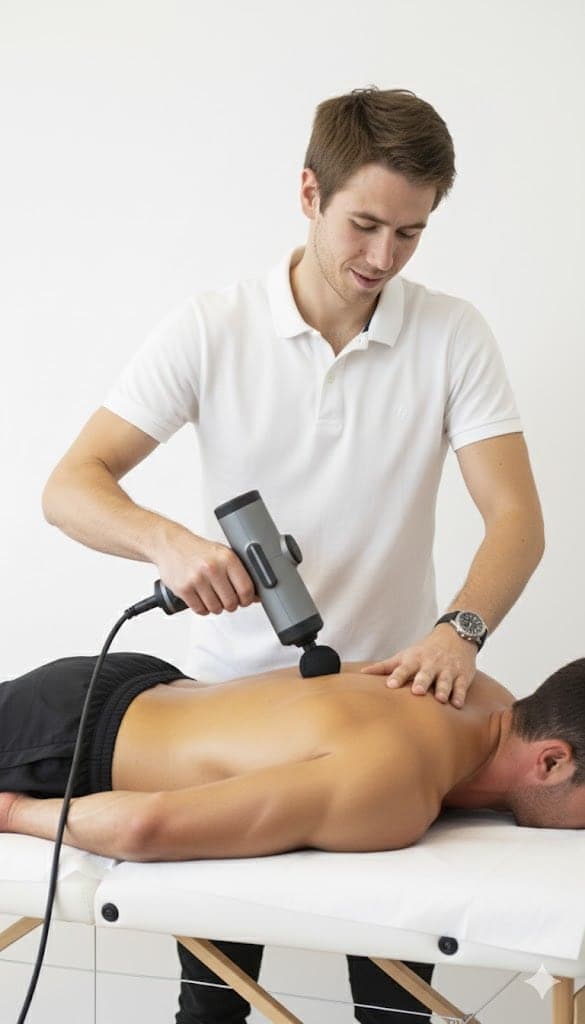
Written by
Chris
Massage therapist, nutrition and exercise physiologist
Norwegian-certified with a Bachelor’s in Physical Education and Nutrition and over ten years of clinical practice, working from a portable table in clients’ homes across the Paphos district.
This article is general information, not a medical diagnosis. If you have severe, worsening or unexplained pain, numbness, weakness, or pain after an accident, see a doctor first.