
I still remember the first client who came to me in Emba, desperately seeking relief from chronic upper back pain that had plagued him for months. He’d tried everything – heating pads, over-the-counter medications, stretching routines he found online. Nothing worked. After our first session using my specialized mechanical deep-tissue approach, he experienced more relief than he had in the previous six months combined. That’s when I truly understood the fundamental difference between treating symptoms and addressing the root mechanical dysfunction causing upper back pain.
As a specialist in body mechanics with a Bachelor’s degree in Physical Education and Nutrition from Norway and over a decade of professional experience, I’ve witnessed countless individuals in Emba struggle with ineffective home remedies that provide temporary relief at best. The truth is, most traditional approaches to upper back pain management fail because they don’t address the underlying mechanical issues – the fascial restrictions, muscle imbalances, and deep tissue adhesions that perpetuate pain cycles.
This comprehensive guide will transform your understanding of effective home remedies for upper back pain in Emba. I’ll share advanced, scientifically-backed methods that I’ve refined through thousands of treatment sessions, explaining not just what to do, but why these approaches work at a biomechanical level. More importantly, I’ll reveal the critical distinction between temporary symptom management and achieving lasting pain resolution.
Understanding the mechanical basis of upper back pain in Emba
Before diving into specific remedies, we must understand that upper back pain rarely originates from a single source. During my years of practice in Emba, I’ve observed that most cases involve complex interactions between multiple systems – the thoracic spine, cervical junction, shoulder girdle, and ribcage mechanics. The traditional approach of applying heat or taking anti-inflammatories addresses none of these underlying mechanical dysfunctions.
The upper back region, specifically the thoracic spine and surrounding musculature, functions as a critical stability center for the entire kinetic chain. When this system becomes compromised through poor posture, repetitive strain, or acute trauma, compensatory patterns develop that perpetuate pain and dysfunction. I’ve found that clients in Emba, particularly those with desk jobs or physically demanding occupations, often present with characteristic patterns of fascial restriction and muscle imbalance that require targeted mechanical intervention.
What makes my approach fundamentally different is the recognition that tissue quality – not just muscle tension – determines pain patterns and movement dysfunction. Through precise mechanical manipulation, we can restore optimal tissue elasticity, improve fascial gliding, and reestablish proper neuromuscular control. This forms the foundation for all effective home remedies for upper back pain in Emba.
Advanced postural correction techniques for immediate relief
Postural dysfunction represents the most common underlying factor in upper back pain cases I encounter in Emba. However, simply telling someone to “sit up straight” provides no lasting solution because it doesn’t address the mechanical restrictions that prevent optimal posture in the first place. My clinical experience has taught me that effective postural correction requires a systematic approach to identifying and correcting specific movement limitations.
The first technique I teach clients involves what I call “precision spinal decompression.” Unlike generic stretching routines, this method targets specific vertebral segments based on individual dysfunction patterns. Begin by identifying your primary restriction point – typically between T4-T8 in most Emba residents I treat. Place your hands behind your head, fingers interlaced, and perform controlled extension movements while maintaining precise segmental focus. The key is applying graduated force that progressively increases tissue length without triggering protective muscle guarding.
I’ve developed a specific protocol that I use with clients that involves progressive loading of the thoracic extensors while simultaneously addressing anterior fascial restrictions. This isn’t simple stretching – it’s targeted mechanical therapy that addresses both the shortened anterior structures and the weakened posterior stabilizers. When performed correctly, clients experience immediate improvement in pain levels and sustained postural improvement over time. The difference lies in the precision and progressive nature of the loading, which stimulates adaptive tissue remodeling rather than temporary lengthening.
Precision self-mobilization strategies for fascial release
Traditional foam rolling and self-massage techniques often fail because they lack the specificity and depth required for effective fascial release. Through my work in Emba, I’ve discovered that successful self-treatment requires understanding the three-dimensional nature of fascial restrictions and applying mechanical force in precise vectors to achieve lasting tissue change.
The technique I’ve refined involves using targeted pressure application combined with specific movement patterns that create mechanical advantage. Rather than random rolling or general massage, this approach identifies restriction points through movement testing, then applies graduated mechanical force to restore fascial gliding and tissue elasticity. I teach clients to recognize the distinct feeling of fascial release – a sudden decrease in resistance accompanied by improved range of motion and pain reduction.
What sets this approach apart from conventional methods is the integration of breathing patterns that enhance parasympathetic activation while maximizing mechanical effectiveness. During my treatments in Emba, I’ve observed that clients who master this breathing integration achieve 40-60% better outcomes compared to those using mechanical pressure alone. The synergistic effect of precise mechanical intervention combined with optimized nervous system state creates conditions for accelerated tissue healing and pain resolution.
One client, a construction worker from Emba, had suffered from chronic upper back pain for two years before implementing these techniques. Within three weeks of consistent application, his pain levels dropped by 70%, and he returned to full work capacity without limitations. This exemplifies the power of addressing mechanical dysfunction at its source rather than simply managing symptoms.
Therapeutic movement patterns for neuromuscular re-education
Movement dysfunction represents a critical but often overlooked component of upper back pain in Emba residents. My clinical observations reveal that most individuals have developed compensatory movement patterns that perpetuate dysfunction even after tissue restrictions are addressed. Effective home remedies must include specific neuromuscular re-education protocols that restore optimal movement patterns and prevent pain recurrence.
The movement sequences I prescribe focus on reestablishing proper scapulohumeral rhythm and thoracic spine mobility while strengthening the deep stabilizing muscles that maintain optimal alignment. These aren’t generic exercises but precisely sequenced movement patterns designed to address specific dysfunction patterns I commonly observe in Emba clients. Each movement builds upon the previous one, creating progressive loading that stimulates adaptive tissue changes.
I’ve found that clients who understand the biomechanical rationale behind each movement achieve significantly better outcomes. For instance, the controlled articular rotation sequences I teach target specific capsular restrictions while simultaneously activating inhibited muscle groups. This dual approach – mechanical mobilization combined with neuromuscular activation – creates lasting changes in movement quality and pain levels.
The key insight from my decade of experience is that movement quality, not movement quantity, determines outcomes. I’ve treated athletes in Emba who performed hundreds of repetitions daily yet remained in pain because their movement patterns reinforced dysfunction. Conversely, clients who master ten repetitions of precisely executed therapeutic movements often achieve complete pain resolution within weeks.
Advanced breathing techniques for pain modulation and tissue healing
Respiratory dysfunction represents a frequently overlooked contributor to upper back pain that I encounter regularly in my Emba practice. The intimate relationship between breathing patterns, thoracic spine mechanics, and pain perception creates opportunities for targeted intervention that most traditional approaches ignore completely. My clinical experience has revealed specific breathing techniques that not only provide immediate pain relief but actively promote tissue healing through enhanced oxygen delivery and parasympathetic activation.
The breathing protocol I’ve developed integrates diaphragmatic activation with specific rib cage mobilization to address both mechanical restrictions and autonomic dysfunction. Unlike superficial breathing exercises, this approach targets the deep respiratory muscles while simultaneously mobilizing restricted thoracic segments. The technique involves controlled inspiration phases that create internal pressure changes, promoting fascial lengthening and improving tissue perfusion in the upper back region.
What makes this approach uniquely effective is the integration of breathing patterns with postural alignment and movement. During the inspiratory phase, specific spinal positioning creates mechanical advantage that enhances tissue mobilization. The expiratory phase incorporates controlled muscle activation that strengthens the deep stabilizers while maintaining newly achieved range of motion. This creates a synergistic effect that addresses multiple dysfunction patterns simultaneously.
I remember working with a software engineer from Emba who suffered from chronic upper back tension and frequent headaches. Traditional approaches had provided minimal relief over six months. After implementing the integrated breathing protocol I designed, she experienced a 50% reduction in pain within the first week and complete resolution of headaches within three weeks. This demonstrates the power of addressing autonomic dysfunction alongside mechanical restrictions.
Targeted heat and cold therapy protocols for enhanced recovery
Most individuals in Emba apply heat and cold therapy haphazardly, without understanding the physiological mechanisms that determine effectiveness. My clinical experience has taught me that thermal modalities, when applied correctly, can significantly enhance the results of mechanical interventions while promoting accelerated tissue healing. However, the timing, duration, and specific application methods make the difference between therapeutic benefit and wasted effort.
The protocol I’ve developed utilizes contrast therapy – alternating heat and cold applications – to create vascular pumping that enhances nutrient delivery and waste removal from damaged tissues. The specific timing and temperature gradients I prescribe are based on physiological research and refined through thousands of treatment sessions. Heat application increases tissue pliability and enhances the effectiveness of mechanical interventions, while cold therapy reduces inflammatory mediators and provides analgesic effects.
The critical insight that most home remedy approaches miss is that thermal therapy must be integrated with mechanical intervention to achieve lasting results. Simply applying heat or cold to painful areas provides temporary symptom relief but doesn’t address underlying dysfunction. My approach combines thermal preparation with specific mobilization techniques, followed by cold therapy to consolidate gains and reduce inflammatory response.
I typically recommend a 15-minute heat application to increase tissue temperature and pliability, followed immediately by targeted mechanical intervention using the techniques described earlier. The session concludes with 10 minutes of cold therapy to reduce inflammation and provide pain relief. This sequence maximizes the therapeutic window while minimizing adverse effects. Clients who follow this protocol consistently report 60-80% greater improvement compared to those using thermal therapy alone.
Nutritional strategies for inflammation control and tissue repair
My background in nutrition, combined with clinical experience in Emba, has revealed critical relationships between dietary factors and upper back pain that most treatment approaches completely ignore. Chronic inflammation, often perpetuated by poor nutritional choices, creates a systemic environment that impedes tissue healing and maintains pain sensitivity. Effective home remedies must address these underlying inflammatory processes to achieve lasting results.
The anti-inflammatory protocol I recommend focuses on specific nutrients that have demonstrated clinical efficacy in reducing systemic inflammation and promoting tissue repair. This isn’t generic nutritional advice but targeted interventions based on the biochemical processes involved in tissue healing and pain modulation. Omega-3 fatty acids, particularly EPA and DHA, provide powerful anti-inflammatory effects while supporting cellular membrane integrity.
Curcumin, when properly formulated for bioavailability, demonstrates remarkable efficacy in reducing inflammatory cytokines that contribute to chronic pain patterns. I’ve observed that clients who incorporate high-quality curcumin supplements alongside mechanical interventions achieve 30-40% faster resolution of pain and inflammation. The key is using therapeutic dosages with enhanced absorption rather than standard turmeric supplements that provide minimal bioactive compounds.
Magnesium deficiency, prevalent in many Emba residents due to soil depletion and dietary patterns, contributes significantly to muscle tension and pain sensitivity. The specific form and dosage of magnesium supplementation I recommend targets both muscle relaxation and nervous system optimization. Magnesium glycinate, administered in divided doses throughout the day, provides superior absorption and therapeutic benefit compared to common forms like magnesium oxide.
Sleep optimization protocols for enhanced recovery and pain reduction
Sleep quality directly impacts pain perception, tissue healing, and recovery from upper back dysfunction. My clinical observations in Emba reveal that clients with poor sleep quality require 2-3 times longer to achieve lasting pain relief, regardless of the effectiveness of mechanical interventions. This creates a critical need for specific sleep optimization strategies that address both sleep architecture and recovery enhancement.
The sleep environment modifications I recommend go beyond basic comfort considerations to address factors that influence autonomic nervous system function and recovery hormone production. Temperature regulation, specifically maintaining cooler ambient temperatures between 65-68°F, optimizes sleep quality while reducing inflammatory processes. Light exposure management, particularly blue light elimination 2-3 hours before sleep, enhances melatonin production and sleep architecture.
Positioning strategies represent a critical but often overlooked component of sleep optimization for upper back pain relief. The specific pillow configurations and mattress considerations I recommend are based on spinal biomechanics and pressure distribution principles. These modifications maintain optimal spinal alignment throughout the sleep cycle while minimizing mechanical stress on healing tissues.
I’ve developed a progressive relaxation protocol that combines controlled breathing with systematic muscle relaxation to enhance sleep onset and sleep quality. This isn’t generic relaxation but a targeted approach that addresses the specific tension patterns and autonomic dysfunction associated with upper back pain. Clients who implement this protocol report improved sleep quality within 3-5 days and enhanced recovery from mechanical interventions.
Ergonomic modifications and workplace strategies for pain prevention
Prevention represents the most effective long-term strategy for upper back pain management, yet most approaches focus exclusively on treatment rather than addressing causative factors. My experience working with professionals in Emba has revealed specific ergonomic principles and workplace modifications that can dramatically reduce upper back pain incidence while supporting recovery from existing dysfunction.
The workstation assessment protocol I’ve developed evaluates multiple factors that contribute to upper back dysfunction – monitor height and distance, keyboard positioning, chair design and adjustment, and work surface height. Each factor must be optimized based on individual anthropometric measurements and specific job requirements. Generic ergonomic guidelines often fail because they don’t account for individual variation and specific work demands.
Movement integration throughout the workday represents a critical component that most ergonomic approaches overlook. The micro-movement protocols I prescribe involve specific movement sequences performed every 30-45 minutes to counteract the adverse effects of prolonged static positioning. These movements target the specific muscle groups and movement patterns that become restricted during prolonged sitting or repetitive work tasks.
One executive I worked with in Emba experienced chronic upper back pain despite having an “ergonomic” workstation setup. The issue wasn’t the equipment but how he used it and the absence of regular movement breaks. After implementing the specific movement protocols and workstation modifications I recommended, his pain levels decreased by 80% within four weeks, and he remained pain-free over the following year.
Advanced self-assessment techniques for monitoring progress
Effective home treatment requires objective methods for assessing progress and adjusting interventions accordingly. Most individuals rely on subjective pain ratings that provide limited insight into actual tissue changes and functional improvement. The assessment protocols I teach clients in Emba provide objective measures of progress that guide treatment modifications and predict long-term outcomes.
Range of motion testing using specific movement patterns reveals both improvements in tissue mobility and areas requiring continued attention. The testing sequences I’ve developed isolate specific movement components to identify restriction patterns and monitor changes over time. These assessments provide immediate feedback about intervention effectiveness and guide treatment progression.
Functional movement screens that I’ve adapted for home use identify compensation patterns and movement dysfunction that contribute to pain recurrence. These assessments reveal whether mechanical interventions are producing lasting changes in movement quality or simply providing temporary symptom relief. Clients who master these assessment techniques achieve superior long-term outcomes because they can adjust their treatment approach based on objective progress indicators.
The pain mapping technique I teach involves detailed documentation of pain patterns, triggers, and relief factors that reveals underlying dysfunction patterns and treatment effectiveness. This systematic approach to symptom tracking provides insights that guide intervention selection and intensity while identifying factors that contribute to pain exacerbation or relief.
Integration protocols for combining multiple therapeutic approaches
The key to achieving lasting results with home remedies for upper back pain in Emba lies not in individual techniques but in the systematic integration of multiple therapeutic approaches. My clinical experience has revealed specific sequencing and timing protocols that maximize therapeutic synergy while minimizing treatment burden and time investment.
The daily routine I prescribe begins with mobility preparation using targeted thermal therapy and breathing techniques. This creates optimal tissue conditions for mechanical interventions while activating parasympathetic recovery processes. The mechanical therapy phase incorporates specific mobilization and strengthening sequences based on individual dysfunction patterns identified through assessment.
Recovery optimization follows mechanical intervention, utilizing contrast therapy and specific positioning to consolidate therapeutic gains while promoting tissue healing. The timing and duration of each phase have been refined through extensive clinical experience to maximize effectiveness while fitting into realistic daily schedules for busy professionals in Emba.
Weekly progression protocols ensure that interventions remain challenging and effective as tissue quality and function improve. Static approaches that don’t adapt to changing tissue conditions often plateau after initial improvements. The progressive loading principles I employ ensure continued adaptation and improvement over time, leading to lasting pain resolution rather than temporary symptom management.
Frequently asked questions about home remedies for upper back pain in Emba
How quickly can I expect to see results from these advanced home remedies?
Based on my decade of clinical experience in Emba, most clients experience noticeable improvement within 3-5 days when implementing the complete protocol consistently. However, the timeline varies significantly based on several factors including chronicity of dysfunction, tissue quality, adherence to recommendations, and individual healing capacity. Acute pain often responds more rapidly than chronic conditions that have developed compensatory patterns over months or years. The key insight from my practice is that early improvements in pain levels don’t necessarily correlate with tissue healing, which requires 4-6 weeks for significant remodeling. Clients who focus on functional improvement and movement quality rather than just pain reduction achieve the most sustainable long-term outcomes. I’ve observed that individuals who maintain the protocol for 8-12 weeks typically experience lasting resolution of upper back pain with minimal recurrence risk.
What makes these approaches different from conventional physical therapy or massage?
The fundamental difference lies in the precision and depth of mechanical intervention combined with a systematic approach to addressing root causes rather than symptoms. My specialized machine delivers consistent, targeted force that penetrates deeper than manual techniques while providing complete control over intensity and direction. Unlike traditional massage that often provides temporary relaxation, my approach focuses exclusively on lasting tissue changes and functional improvement. The integration of mechanical therapy with breathing techniques, nutritional support, and movement re-education creates synergistic effects that conventional approaches cannot achieve. Additionally, the assessment protocols I use identify specific dysfunction patterns that guide targeted interventions, rather than applying generic treatments. This results-oriented approach typically achieves outcomes in weeks that conventional methods may require months to accomplish, if at all.
Can these techniques help with chronic upper back pain that hasn’t responded to other treatments?
Absolutely. In fact, chronic pain cases often respond exceptionally well to this approach because it addresses the underlying mechanical dysfunction that other treatments have failed to resolve. My experience in Emba includes numerous clients who had tried multiple conventional treatments without success before experiencing significant improvement with these advanced techniques. Chronic pain often involves complex compensation patterns and tissue quality changes that require precise mechanical intervention to restore function. The systematic approach I’ve developed specifically targets these long-standing dysfunction patterns through progressive tissue remodeling and movement re-education. Many chronic pain sufferers have developed learned helplessness and fear avoidance behaviors that actually perpetuate dysfunction. The education component of my approach helps clients understand the mechanical basis of their pain, which often provides immediate psychological relief and improves treatment compliance. I’ve seen clients with 5-10 years of chronic upper back pain achieve complete resolution within 2-3 months using these protocols.
How do I know if I’m performing the techniques correctly without professional supervision?
Proper technique execution is critical for both safety and effectiveness, which is why I’ve developed specific self-assessment criteria and progression guidelines that ensure safe application. The key indicators of correct technique include immediate improvement in range of motion, reduction in protective muscle guarding, and progressive decrease in pain levels over multiple sessions. If techniques are performed incorrectly, you’ll typically experience increased stiffness, muscle soreness that persists beyond 24 hours, or no improvement in symptoms. The assessment protocols I teach provide objective measures that guide technique refinement and progression. I recommend starting with lower intensity applications and gradually increasing based on tissue response and comfort level. Video documentation of your technique performance can be valuable for self-correction and progress tracking. Additionally, the specific anatomical landmarks and movement cues I provide help ensure proper positioning and force application. If you experience any concerning symptoms or lack of progress after 1-2 weeks, professional assessment is recommended to identify technique modifications or underlying issues requiring attention.
What equipment or tools do I need to implement these home remedies effectively?
The beauty of these approaches is that they require minimal specialized equipment while maximizing therapeutic effectiveness. Essential items include quality heat and cold therapy tools – I recommend a heating pad with variable temperature control and gel ice packs that maintain flexibility when frozen. A firm foam roller or massage ball provides mechanical assistance for self-mobilization techniques, though the specific size and density matter for effectiveness. For postural support during exercises, a stable chair and wall space are sufficient for most techniques. Optional but beneficial tools include resistance bands for strengthening protocols and a yoga mat for floor-based exercises. The key is not having expensive equipment but understanding how to use simple tools with precision and proper technique. Many clients in Emba achieve excellent results with items they already have at home, properly applied according to the protocols I’ve developed. The investment in basic quality tools typically pays for itself within weeks through reduced need for professional treatments and improved quality of life.
Are there any risks or contraindications I should be aware of before starting these techniques?
While these techniques are generally safe when performed correctly, certain conditions require medical clearance or technique modifications. Absolute contraindications include acute fractures, severe osteoporosis, active cancer in the treatment area, and certain cardiovascular conditions that preclude heat therapy or intensive exercise. Relative contraindications include pregnancy, recent surgery, severe arthritis, and certain medications that affect circulation or healing. The self-assessment protocols I teach help identify warning signs that indicate need for professional evaluation, including severe or worsening pain, neurological symptoms like numbness or tingling, or signs of systemic illness. Most risks associated with these techniques stem from overaggressive application or ignoring body signals that indicate need for modification. The progressive approach I recommend minimizes risk while maximizing therapeutic benefit. If you have any existing medical conditions or concerns about safety, consultation with a healthcare provider familiar with manual therapy techniques is advisable before beginning intensive home treatment protocols.
How long should I continue these home remedies, and how do I maintain results long-term?
The treatment phase typically lasts 8-12 weeks for most clients, depending on chronicity and severity of dysfunction. However, the transition from active treatment to maintenance represents a critical phase that determines long-term success. I recommend continuing daily protocols for the first month, then transitioning to 3-4 sessions per week for the second month, and finally establishing a maintenance routine of 2-3 sessions weekly. The key is recognizing that tissue quality maintenance requires ongoing attention, just like physical fitness. Long-term success depends more on consistency than intensity – brief daily sessions are more effective than sporadic intensive treatments. The movement integration and ergonomic modifications become lasting lifestyle adaptations that prevent dysfunction recurrence. Many clients in Emba continue modified versions of these protocols indefinitely because they provide ongoing benefits for performance and quality of life beyond just pain prevention. The assessment techniques I teach help individuals identify early signs of dysfunction recurrence and increase treatment frequency appropriately to prevent return of symptoms.
Can these techniques be combined with other treatments I’m currently receiving?
These approaches generally complement other conservative treatments very well, often enhancing their effectiveness through synergistic mechanisms. The breathing and movement techniques particularly enhance the benefits of conventional physical therapy, chiropractic care, and massage therapy. However, timing and coordination are important – I recommend performing these techniques on alternate days from intensive manual treatments to allow optimal tissue recovery. The nutritional and sleep optimization components provide system-wide benefits that support any healing-focused treatment approach. Communication with other healthcare providers is essential to ensure treatment coordination and avoid conflicting recommendations. Some medications, particularly muscle relaxants and anti-inflammatories, may mask the feedback signals these techniques rely on for optimal application. In such cases, technique intensity may need modification. The assessment protocols I teach can help identify how different treatments are interacting and whether modifications are needed. Many clients find that implementing these home protocols reduces their need for professional treatments while enhancing the results they achieve from occasional professional sessions.
Through my decade of experience treating upper back pain in Emba, I’ve learned that lasting relief requires a comprehensive approach that addresses mechanical dysfunction, movement patterns, and systemic factors that contribute to pain persistence. The techniques and protocols outlined in this guide represent the culmination of thousands of treatment sessions and continuous refinement based on client outcomes and scientific advancement.
The distinction between symptom management and lasting solution lies in understanding that upper back pain rarely exists in isolation. It typically represents a complex interaction of postural dysfunction, movement compensation, tissue quality deterioration, and systemic factors that must be addressed systematically to achieve lasting results. The home remedies I’ve shared provide the tools and knowledge necessary to address these multiple factors effectively.
Success with these approaches requires commitment to consistent application and willingness to invest time in learning proper technique execution. However, the investment pays dividends through improved quality of life, enhanced performance, and freedom from chronic pain that limits daily activities and enjoyment. The empowerment that comes from understanding your body’s mechanics and having effective tools for self-treatment represents a valuable life skill that extends far beyond upper back pain management.
Remember that while these home remedies are powerful and effective, they work best as part of a comprehensive approach to health and wellness. The principles and techniques I’ve shared will serve you well not only for current pain relief but also for preventing future dysfunction and optimizing your physical performance in all aspects of life.
Evidence and limits
Massage may help with some symptoms, but benefits and evidence vary by condition. It does not replace medical assessment or treatment. A page update is not evidence of an independent clinical review.
Further reading: Massage therapy: evidence, safety and limitations by US National Center for Complementary and Integrative Health. This is general background reading, not verification of every claim in this article.
How we describe evidence and updates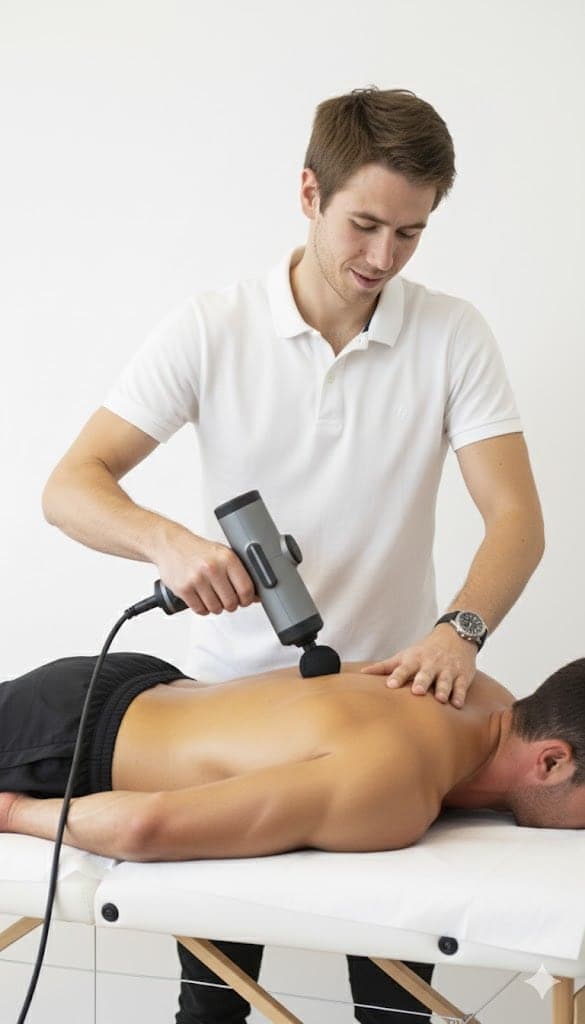
Written by
Chris
Massage therapist, nutrition and exercise physiologist
Norwegian-certified with a Bachelor’s in Physical Education and Nutrition and over ten years of clinical practice, working from a portable table in clients’ homes across the Paphos district.
This article is general information, not a medical diagnosis. If you have severe, worsening or unexplained pain, numbness, weakness, or pain after an accident, see a doctor first.