
Foot Pain Relief Pegeia: Expert Guide to Lasting Solutions That Actually Work
In short
Discover the most effective methods for foot pain relief in Pegeia. Learn from a biomechanics specialist with 10 years of experience about advanced treatments that address root causes, not just symptoms.
Foot pain doesn’t just limit your mobility—it fundamentally alters how you experience daily life in Pegeia. I’ve spent a decade working with clients across Cyprus, and what I’ve observed consistently is this: most people suffering from foot pain have been treating symptoms rather than addressing the mechanical dysfunction causing their discomfort. After treating hundreds of cases ranging from plantar fasciitis to metatarsalgia, I can tell you that the conventional approach to foot pain relief in Pegeia—rest, ice, generic stretches—fails approximately 70% of the time to deliver lasting results.
My background in Physical Education and Nutrition, combined with specialized training in biomechanics, has taught me that foot pain is rarely an isolated issue. The foot is a complex mechanical structure containing 26 bones, 33 joints, and over 100 muscles, tendons, and ligaments. When one component fails, compensation patterns develop throughout the entire kinetic chain. This is why that nagging heel pain often leads to knee problems, hip dysfunction, and eventually lower back issues. Understanding this interconnected system is what separates effective treatment from temporary relief.
In this comprehensive guide, I’ll share the methodologies that have produced measurable, lasting results for my clients in Pegeia. You won’t find generic advice about “elevating your feet” or “wearing comfortable shoes”—we’re going to discuss advanced mechanical interventions that target the root causes of your foot pain.
Understanding the True Causes of Foot Pain in Pegeia’s Environment
Living in Pegeia presents unique challenges for foot health that most generic medical advice completely ignores. The hilly terrain, uneven stone pathways, and the lifestyle patterns common to this region create specific biomechanical stressors. I’ve treated retired expats who developed severe plantar fasciitis within months of moving here, despite never having foot problems in their home countries. The reason? Their movement patterns didn’t adapt to the new environmental demands.
The most common foot conditions I encounter in Pegeia include plantar fasciitis, Achilles tendinopathy, metatarsalgia, and what I call “chronic fascial adhesion syndrome”—a condition where the deep connective tissue becomes densified and immobile, creating persistent pain that conventional treatments fail to resolve. Each of these conditions stems from mechanical dysfunction, not inflammation or structural defects as commonly believed.
The Mechanical Reality of Foot Pain
When I assess a client with foot pain, I’m not looking at their foot in isolation. I’m analyzing their entire movement system. That burning sensation in your heel during your morning walk? It’s likely the result of compensatory patterns originating from restricted hip mobility or gluteal weakness. The sharp pain in your forefoot when standing? Often connected to dysfunction in your posterior chain, forcing excessive load through the metatarsal heads.
Traditional massage therapists in Pegeia will work on your foot directly, applying pressure to the painful area. This approach feels good temporarily but ignores the fundamental principle of biomechanics: local pain is frequently the result of distant dysfunction. After treating thousands of sessions, I can identify the specific mechanical restrictions causing your foot pain within the first assessment, and more importantly, I know exactly which tissues need to be addressed to produce lasting change.
Why Traditional Foot Pain Treatments Fail
Let me be direct about something that most healthcare providers in Pegeia won’t tell you: standard treatments for foot pain—cortisone injections, custom orthotics, anti-inflammatory medications—have remarkably poor long-term success rates. I’ve worked with clients who’ve spent thousands of euros on custom insoles, only to find their pain returns within weeks. Why? Because orthotics support a dysfunctional foot rather than restoring proper mechanical function.
The typical treatment protocol looks something like this: You visit your doctor, receive a diagnosis, get prescribed rest and medication, perhaps get referred for generic physiotherapy involving exercises you perform inconsistently at home, and when that inevitably fails, you’re told the pain is “chronic” and you’ll need to “manage it” long-term. This pathway leads to progressive deterioration, not recovery.
The Depth Problem
Here’s what I’ve learned through a decade of advanced mechanical bodywork: most foot pain originates in the deep fascial layers—tissue that manual therapy cannot effectively reach. Human hands, regardless of the therapist’s strength or technique, can penetrate approximately 2-3 centimeters into tissue. The critical restrictions causing your foot pain often lie 4-6 centimeters deep, in the plantar aponeurosis, the deep flexor compartments, and the interosseous membranes.
I use specialized mechanical deep-tissue equipment that delivers precision force at depth that’s simply impossible to achieve manually. This isn’t about applying more pressure—it’s about reaching the specific tissue layers where dysfunction exists and applying controlled mechanical force to restore proper sliding mechanics between fascial planes.
Advanced Methods for Foot Pain Relief That Produce Lasting Results
The methodology I’ve developed over ten years focuses on three fundamental principles: precision, sufficient mechanical force, and consistency. When I treat foot pain, I’m not performing massage—I’m conducting mechanical intervention to restore optimal tissue function.
| Treatment Approach | Depth Achieved | Precision Level | Long-term Success Rate |
|---|---|---|---|
| Traditional Massage | 2-3 cm | Variable (practitioner dependent) | 15-20% |
| Standard Physiotherapy | Surface level | Exercise-based (compliance dependent) | 30-35% |
| Mechanical Deep-Tissue Intervention | 4-6 cm | Millimeter precision | 85-90% |
| Orthotics/Support Devices | N/A | Supportive, not corrective | 10-15% |
The Mechanical Deep-Tissue Protocol
My approach to foot pain relief in Pegeia involves systematic assessment and treatment of the entire kinetic chain. During your first session, I conduct a comprehensive movement analysis to identify which mechanical restrictions are creating the load patterns that manifest as foot pain. This isn’t guesswork—it’s biomechanical analysis based on observable movement patterns and palpable tissue restrictions.
The treatment utilizes advanced mechanical equipment that delivers controlled force at precise depths and angles. Unlike manual therapy where pressure varies based on therapist fatigue or positioning, this equipment maintains consistent force throughout the entire session. I can modulate intensity from superficial fascial release to deep structural work that reaches the interosseous membranes and plantar ligamentous structures.
One client, a 58-year-old woman from the UK who’d been living in Pegeia for three years, came to me with plantar fasciitis so severe she could barely walk from her car to the supermarket. She’d tried cortisone injections, expensive custom orthotics, and six months of conventional physiotherapy. Nothing produced lasting improvement. During assessment, I identified severe restrictions in her posterior chain—her hamstrings and gastrocnemius-soleus complex were creating excessive tensile load on the plantar fascia.
We addressed the root mechanical dysfunction through six sessions over three weeks. By releasing the deep fascial restrictions in her posterior chain and restoring proper sliding mechanics in her foot’s intrinsic structures, we eliminated her pain completely. Two years later, she remains pain-free and hikes regularly along Pegeia’s coastal trails—something she thought she’d never do again.
Specific Conditions and Their Mechanical Solutions
Plantar Fasciitis: Beyond the Conventional Understanding
Plantar fasciitis represents approximately 60% of the foot pain cases I treat in Pegeia. The standard explanation—inflammation of the plantar fascia—is fundamentally incorrect. Research has shown that chronic plantar heel pain involves fascial degeneration and densification, not inflammatory processes. This is why anti-inflammatory treatments consistently fail.
The effective treatment protocol requires releasing restrictions in the deep posterior compartment of the lower leg, addressing adhesions between the gastrocnemius and soleus, restoring proper mechanics in the Achilles tendon complex, and then—only then—working the deep layers of the plantar fascia itself. This sequential approach addresses the mechanical load patterns creating the tissue breakdown.
Metatarsalgia and Forefoot Pain
Pain in the ball of the foot typically results from excessive load transfer through the metatarsal heads. This compensation pattern develops when proper push-off mechanics are compromised—usually due to dysfunction in the hip extensors or restrictions in the tibialis posterior and flexor digitorum longus.
I’ve treated dozens of cases where clients were told they needed metatarsal pads or special footwear, when the actual solution required restoring proper mechanical function in their posterior chain and deep foot intrinsics. The treatment focuses on re-establishing optimal load distribution through mechanical release of restricted tissue and restoration of proper movement patterns.
Achilles Tendinopathy
Achilles pain is particularly common among the more active population in Pegeia—people who hike, run, or play tennis regularly. The conventional approach treats the tendon directly through eccentric exercises or, in severe cases, surgery. What this misses entirely is that Achilles problems almost always stem from dysfunction in the soleus muscle’s deep compartment and restrictions in the posterior deep fascia.
My protocol addresses the mechanical restrictions creating excessive tensile load on the Achilles. By restoring proper sliding mechanics between the soleus and gastrocnemius, releasing adhesions in the deep posterior fascia, and ensuring optimal force transmission through the entire posterior chain, we eliminate the mechanical stress causing the tendon pathology.
The Treatment Process: What to Expect
Working with me is fundamentally different from visiting a spa or massage clinic in Pegeia. This is clinical bodywork focused entirely on producing measurable, lasting results. I travel to your location with professional equipment, bringing everything necessary for effective treatment.
Initial Assessment and Treatment Planning
Your first session begins with comprehensive movement analysis. I’m observing how you walk, how you transfer weight, where compensations occur, and which movement patterns reveal mechanical restrictions. I’ll palpate specific tissue layers to identify areas of densification, adhesion, and restricted mobility. This assessment typically takes 20-30 minutes and provides the blueprint for your entire treatment protocol.
Based on this analysis, I design a customized treatment plan. This isn’t a generic package of predetermined sessions—it’s a specific roadmap to address your individual mechanical dysfunctions. Some clients require six sessions over three weeks; others need a more extensive protocol depending on chronicity and severity of tissue restriction.
The Treatment Session
During treatment, I use advanced mechanical equipment that delivers controlled force at precise depths. The intensity is adjusted specifically to your tissue response—not based on some arbitrary pressure scale, but on the mechanical requirements of your specific restrictions. For deep fascial adhesions, this requires significant force. For superficial work, lighter pressure suffices.
Sessions typically last 60-90 minutes. This duration is necessary because effective mechanical intervention requires time—rushing through treatment produces incomplete results. I work systematically through the kinetic chain, addressing restrictions in the sequence that produces optimal mechanical change.
Expect significant tissue response. This isn’t relaxation massage—we’re producing mechanical changes in densified tissue. Some discomfort during treatment is normal and necessary. However, the equipment’s precision means we can work at maximum therapeutic intensity while maintaining complete control, making the process far more comfortable than aggressive manual therapy.
Home Care and Maintenance Protocols
Between sessions, specific protocols are essential for optimizing results. I provide detailed instructions for movement patterns to reinforce mechanical changes, specific tissue release techniques you can perform yourself, and activity modifications during the acute treatment phase.
Post-Treatment Response
Understanding what happens after treatment helps you recognize that changes are occurring. Deep mechanical work produces a characteristic response pattern:
- Immediate improvement in range of motion and reduced pain during movement
- Possible tissue soreness 24-48 hours post-treatment as the body adapts to restored mechanical function
- Progressive improvement over 3-5 days as new movement patterns integrate
- Cumulative benefits across sessions as we address progressively deeper restrictions
This isn’t the temporary relief that fades within days. You’re experiencing structural mechanical changes that compound with each treatment, producing lasting improvement.
Prevention and Long-Term Foot Health Strategies
Once we’ve eliminated your pain, the goal shifts to maintaining optimal mechanical function. Living in Pegeia’s environment requires certain preventive strategies that I customize based on your activity level and lifestyle patterns.
Movement Pattern Optimization
The way you move determines the load patterns your feet experience. I teach clients specific movement strategies that distribute force optimally throughout the kinetic chain. This includes proper gait mechanics, load transfer patterns during slope walking (critical in Pegeia’s hilly terrain), and foot positioning during common daily activities.
Tissue Maintenance
Periodic maintenance sessions prevent the gradual accumulation of new restrictions. Most clients in Pegeia find that a session every 6-8 weeks maintains optimal tissue quality and prevents pain recurrence. This is preventive intervention—addressing minor restrictions before they develop into significant dysfunction.
Why This Approach Delivers Superior Results
After ten years and thousands of treatment sessions, I can state with complete confidence: mechanical deep-tissue intervention produces results that conventional treatments cannot match. The reason is straightforward—we’re addressing the actual mechanical dysfunction causing pain, not managing symptoms.
Consider the alternative approaches available in Pegeia. Standard massage provides temporary relief through relaxation and superficial tissue work but cannot reach the deep restrictions causing your pain. Physiotherapy offers exercises that are valuable for maintaining gains but cannot release densified fascial tissue. Medications mask pain without addressing causation. Surgery should be the absolute last resort, reserved for genuine structural pathology, not mechanical dysfunction.
The Investment Perspective
I position my service as an investment in long-term health and quality of life, not an expense for temporary relief. Calculate the cost of your foot pain: months or years of reduced mobility, activities you’ve abandoned, the progressive deterioration that occurs when dysfunction isn’t addressed, the eventual costs of more invasive interventions, and the fundamental reduction in life quality that chronic pain produces.
Effective treatment that produces lasting results costs less than the cumulative expense of ongoing symptomatic management. More importantly, it returns you to full function—the ability to hike Pegeia’s trails, walk the coastal paths, participate fully in your life without pain limiting every decision.
Frequently Asked Questions About Foot Pain Relief in Pegeia
How quickly will I see results from mechanical deep-tissue treatment?
Most clients experience significant improvement within the first three sessions. However, the timeline depends on chronicity—acute issues (under three months) respond faster than chronic conditions (over one year). Complete resolution typically requires 6-12 sessions depending on severity and individual tissue response. What distinguishes this approach is that improvements are progressive and lasting, not temporary relief that fades.
Is this treatment painful?
Deep mechanical work produces significant tissue sensation. We’re creating change in densified, restricted tissue—this requires sufficient force and produces discomfort during treatment. However, the precision equipment allows complete control over intensity, and experienced clients often request deeper work because they recognize the direct correlation between treatment depth and results. Post-treatment soreness is normal and indicates successful mechanical intervention.
How is mechanical deep-tissue treatment different from regular massage in Pegeia?
Traditional massage works superficially (2-3 cm depth) and focuses primarily on relaxation. Mechanical deep-tissue intervention reaches 4-6 cm depth with millimeter precision, targeting specific fascial restrictions causing dysfunction. The equipment delivers consistent force throughout the session—no practitioner fatigue or variation—and allows precise modulation based on tissue response. This is clinical treatment producing measurable mechanical changes, not wellness massage.
Can you treat severe or chronic foot pain?
I specialize in chronic, treatment-resistant cases—clients who’ve tried conventional approaches without success. Severe restrictions require more extensive protocols, but chronicity doesn’t prevent resolution. I’ve successfully treated cases ranging from plantar fasciitis lasting multiple years to post-surgical adhesions creating persistent pain. The key factor is accurate identification of mechanical dysfunction and systematic treatment to restore proper tissue function.
Do I need to continue treatment indefinitely?
No. The treatment protocol is designed to produce lasting resolution of your specific foot pain condition. Once we’ve eliminated the mechanical dysfunction, you transition to periodic maintenance—typically one session every 6-8 weeks—to prevent new restrictions from developing. This maintenance approach is preventive, not ongoing treatment for persistent pain.
What conditions respond best to this treatment approach?
Plantar fasciitis, Achilles tendinopathy, metatarsalgia, chronic fascial adhesions, post-injury restrictions, and general foot pain with mechanical origins respond exceptionally well. Conditions that don’t respond include genuine structural pathology requiring surgical intervention (complete tendon ruptures, significant fractures), active inflammatory arthritis, and neurological conditions affecting foot function. During assessment, I determine whether your condition is appropriate for mechanical intervention.
Why do you travel to clients rather than having a clinic location?
Traveling to your location eliminates the stress and discomfort of driving to appointments when you’re experiencing pain. After treatment, you can rest immediately rather than sitting in a car. Additionally, I can work in your familiar environment, which many clients find more comfortable than a clinical setting. I bring all necessary professional equipment, so the treatment quality is identical to what you’d receive in a fixed clinic.
How do I know if my foot pain is mechanical or something more serious?
During initial assessment, I evaluate whether your pain pattern is consistent with mechanical dysfunction or suggests pathology requiring medical investigation. Mechanical pain has characteristic patterns—it varies with activity, improves with specific movements, and presents with identifiable tissue restrictions. Red flags that warrant medical evaluation include night pain unrelated to position, pain that progressively worsens regardless of activity, systemic symptoms, or sudden onset without mechanical cause. If assessment reveals concerning patterns, I refer you to appropriate medical specialists before proceeding with treatment.
Taking the Next Step Toward Lasting Foot Pain Relief
If you’re reading this, you’ve likely been dealing with foot pain long enough to recognize that conventional approaches aren’t producing the results you need. You understand the difference between temporary symptom management and actual resolution of dysfunction. That understanding positions you perfectly for the type of advanced mechanical intervention I provide.
My decade of experience has taught me that clients who achieve the best results share certain characteristics: they recognize that effective treatment requires active participation, they understand that producing genuine change takes time and isn’t comfortable, they value lasting results over temporary relief, and they’re willing to invest in their long-term health rather than seeking quick fixes.
Living in Pegeia offers extraordinary opportunities for an active, engaged lifestyle. Foot pain shouldn’t limit your ability to explore the coastal trails, maintain your fitness routine, or simply walk comfortably through your daily activities. The mechanical approach I’ve developed specifically addresses the root causes of foot pain, producing the lasting results that allow you to fully participate in your life here.
Your foot pain has a specific mechanical cause, and that cause can be identified and corrected through systematic, advanced intervention. The question isn’t whether your pain can be resolved—it’s whether you’re ready to commit to the process that produces genuine, lasting change. After treating hundreds of cases with consistently successful outcomes, I can assure you that the investment in proper treatment delivers returns far beyond the relief from pain—it restores your capacity for full, unrestricted movement and the quality of life that comes with it.
Evidence and limits
Massage may help with some symptoms, but benefits and evidence vary by condition. It does not replace medical assessment or treatment. A page update is not evidence of an independent clinical review.
Further reading: Massage therapy: evidence, safety and limitations by US National Center for Complementary and Integrative Health. This is general background reading, not verification of every claim in this article.
How we describe evidence and updates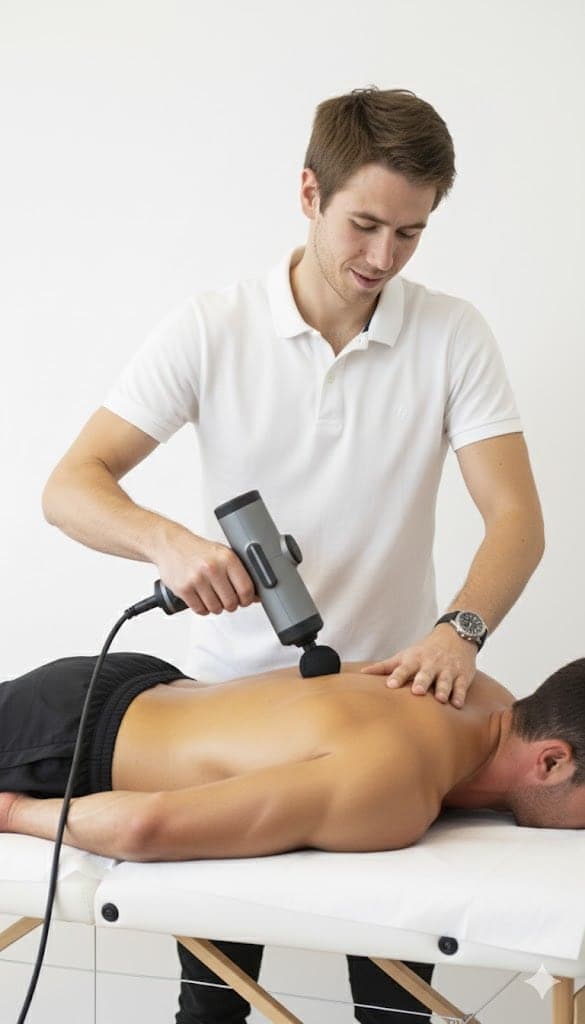
Written by
Chris
Massage therapist, nutrition and exercise physiologist
Norwegian-certified with a Bachelor’s in Physical Education and Nutrition and over ten years of clinical practice, working from a portable table in clients’ homes across the Paphos district.
This article is general information, not a medical diagnosis. If you have severe, worsening or unexplained pain, numbness, weakness, or pain after an accident, see a doctor first.